
Understanding the latest Social Security proposal gives you a crucial advantage in securing your financial future. Lawmakers are currently weighing significant policy changes that could alter how your benefits are calculated, taxed, and distributed over the next decade. With over sixty-seven million Americans relying on these monthly checks to cover essential expenses, even minor legislative tweaks ripple directly into your household budget. You need to know exactly how these proposed adjustments impact your retirement timeline, your potential tax liabilities, and your broader strategy for lifelong independence. By examining the nuances of this emerging legislation, you can proactively adapt your income plan and protect your hard-earned benefits before any new rules take effect.
A Snapshot of the Current Legislative Landscape
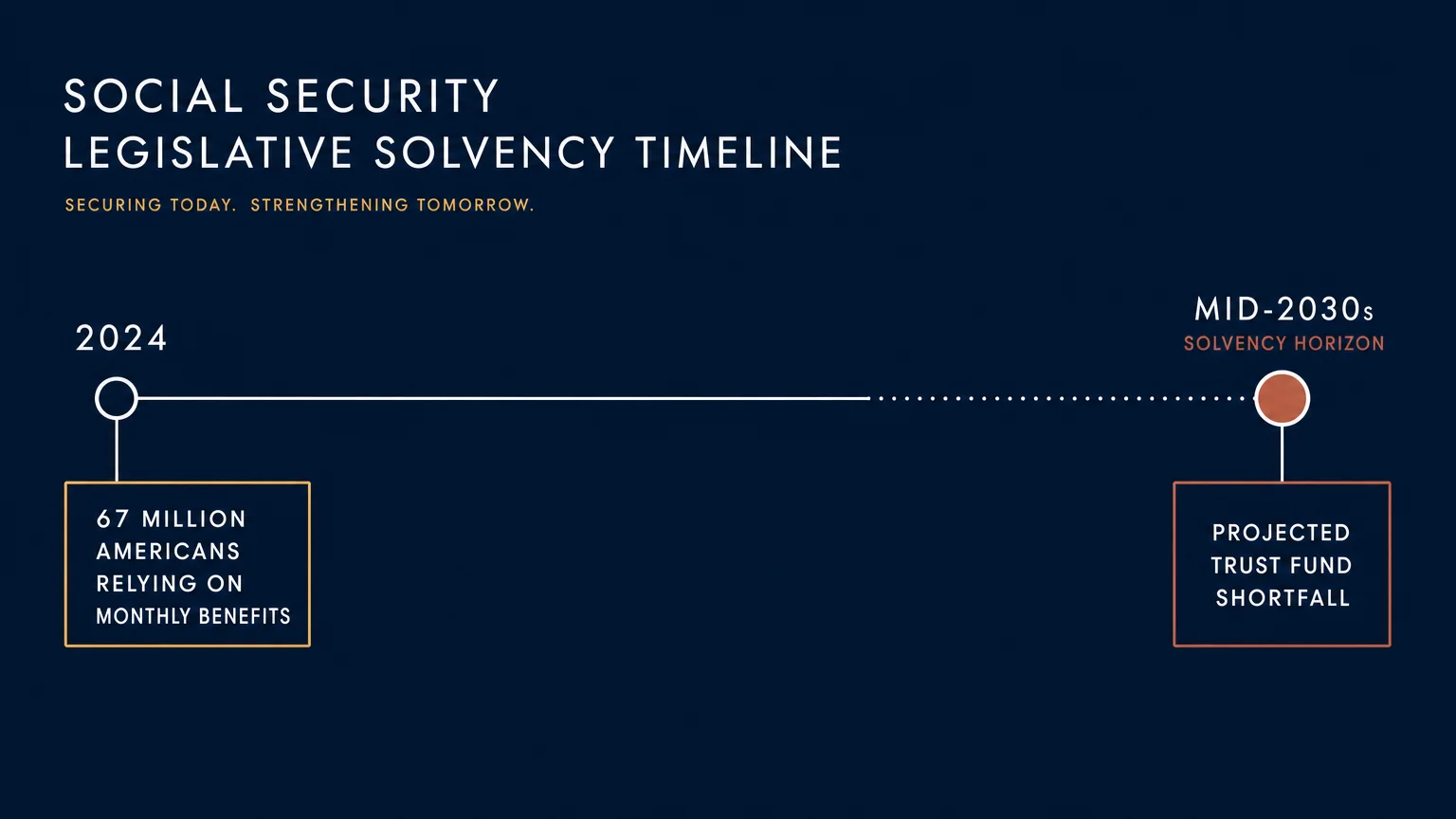
The conversation surrounding retirement legislation has intensified as Washington debates new frameworks aimed at fortifying the system’s long-term solvency. The annual trustees report from the Social Security Administration consistently highlights a projected shortfall in the combined trust funds by the mid-2030s; this approaching deadline has prompted serious policy discussions across the political spectrum. Current retirement news centers on a multifaceted approach that could potentially alter the full retirement age, adjust the payroll tax cap for high earners, or modify the formula used to calculate your initial benefit amount. These benefit discussions go far beyond abstract political talking points—they directly influence the financial security and purchasing power of millions of older adults. You must monitor these legislative developments closely because they dictate the foundation of your future fixed income. While no sweeping legislation has passed into law just yet, the sheer volume of proposals indicates that structural change is virtually inevitable. Understanding the broad strokes of these policy adjustments allows you to model different financial scenarios, assess your exposure to potential benefit reductions, and make highly informed choices about the optimal time to exit the workforce.

Strategy Pillars: Adapting to Policy Changes
Income Planning: Stress-Testing Your Cash Flow
Adapting to legislative uncertainty requires a highly proactive approach to your income planning. If future policy changes result in reduced benefit payouts or delayed eligibility timelines, you need a robust alternative to replace that lost income. Start by stress-testing your monthly cash flow against various legislative outcomes. Calculate your projected living expenses and compare them to your guaranteed income streams, such as pensions and annuities, entirely excluding Social Security. This exercise immediately reveals your actual financial vulnerability to federal policy shifts. To effectively mitigate this risk, you must diversify the tax structure of your retirement accounts. Utilizing a calculated mix of tax-deferred and tax-free vehicles offers you critical flexibility when navigating an unpredictable legislative environment. Familiarizing yourself with the withdrawal rules outlined by the Internal Revenue Service empowers you to optimize your annual distributions and minimize your overall tax burden. Consider executing strategic Roth conversions during years when your income temporarily falls into a lower tax bracket. This proactive maneuver reduces your future required minimum distributions and shields your invested assets from potentially higher tax rates driven by future federal deficits. Building a dedicated cash reserve equivalent to one or two years of living expenses further insulates your portfolio, preventing you from selling investments at a loss during market downturns simply to cover daily bills.
Lifestyle Design: Budgeting for Maximum Flexibility
Strategic lifestyle design plays an equally vital role in weathering sudden policy transitions. Your daily expenses and housing costs dictate exactly how far your retirement dollars can stretch, especially if new benefit adjustments squeeze your monthly operating budget. Evaluating your geographical location presents a primary opportunity to reclaim control over your outflow. Moving to a state with favorable tax policies for retirees or relocating to a region with a significantly lower cost of living provides immediate budgetary relief that offsets potential Social Security cuts. If you prefer to age in place within your current community, proactively addressing home maintenance and accessibility modifications prevents sudden, massive outflows of cash later in life. Installing permanent grab bars, widening primary doorways, and moving essential living spaces to the ground floor ensures your home effortlessly accommodates your needs regardless of varying mobility levels. You must align your everyday spending habits with your core values, ruthlessly cutting discretionary expenses that fail to enhance your daily quality of life. Embracing a streamlined, intentional approach to consumption frees up vital capital that you can redirect toward savings or experiences that genuinely matter to you and your family.
Health and Wellness: Managing the Medicare Overlap
Healthcare costs consistently rank as the most unpredictable and stressful expense in retirement, and shifts in Social Security often create a direct ripple effect across your medical planning. Your Medicare Part B premiums are deducted directly from your monthly Social Security check before you ever see the money. Therefore, any stagnation in your gross benefit—or a legislative change in how cost-of-living adjustments are calculated—instantly impacts your net income if healthcare premiums outpace general inflation. You must integrate your healthcare strategy directly with your broader financial plan. Educate yourself on the income-related monthly adjustment amount, or IRMAA, which imposes steep surcharges on your premiums if your modified adjusted gross income exceeds certain legislative thresholds. Navigating the official resources provided by Medicare helps you anticipate these hidden costs and adjust your taxable income distributions accordingly. Preventive care serves as your most effective financial defense against exorbitant medical bills. Investing time and resources into maintaining your physical health delays the onset of chronic conditions and drastically reduces your dependence on the expensive commercial healthcare system. Furthermore, recent AARP research initiatives emphasize that strong social connections and a clear sense of daily purpose contribute significantly to cognitive health and overall longevity.

Expert Voices on the Evolving Retirement Safety Net
Financial professionals and leading gerontologists emphasize that personal flexibility remains your most potent weapon against ongoing legislative uncertainty. Certified Financial Planner professionals routinely advise their clients to strictly separate essential living expenses from discretionary spending goals. By ensuring that reliable, guaranteed income sources cover your absolute necessities—such as housing, utilities, food, and basic healthcare—you construct a solid financial floor that federal policy changes cannot easily fracture. Wealth managers frequently suggest viewing Social Security as a longevity insurance policy designed to protect against outliving your assets, rather than treating it as your primary economic engine. Gerontologists further highlight the immense psychological impact of continuously navigating shifting retirement legislation. The constant barrage of retirement news often induces severe anxiety, particularly for individuals living on strict, fixed budgets with limited mobility. Aging specialists recommend focusing your mental energy entirely on the variables existing within your direct control. You cannot dictate congressional voting patterns or federal budget deficits, but you hold complete authority over your asset allocation, your annual withdrawal rate, and your physical health habits. Engaging with a qualified fiduciary advisor provides you with personalized guidance tailored to your specific cultural background and family dynamics, transforming generalized legislative fear into calculated, actionable preparation.

Recognizing Risks and Safeguarding Your Benefits
The complex landscape of evolving retirement legislation inevitably breeds specific risks and hazards that you must navigate with extreme caution. The primary threat stems directly from sophisticated financial scams designed to exploit your natural anxiety over impending benefit discussions. Criminals frequently impersonate federal agents, contacting older adults via aggressive phone calls or deceptive emails, claiming that urgent action is required to protect their monthly checks under a newly passed proposal. You must remember that federal agencies never initiate unsolicited contact requesting personal information, nor do they ever demand immediate payment via retail gift cards or wire transfers. Beyond outright fraud, you face the structural, systemic risk of inflation mismatch. Proposals that adjust the inflation metric to reflect the specific spending habits of older adults frequently spark intense debate over long-term accuracy. The Bureau of Labor Statistics meticulously tracks various inflation indices; however, if legislative changes adopt a mathematically less generous formula, your purchasing power will steadily erode over a two-decade retirement. Additionally, working retirees must remain highly vigilant about the federal earnings test. Earning income above specific thresholds while claiming benefits before your full retirement age results in temporary withholdings. Failing to account for these precise legislative nuances when planning a phased retirement can trigger sudden, severe cash flow shortages.
Frequently Asked Questions About the New Social Security Proposal
How quickly could these proposed changes take effect?
Legislative overhauls of this magnitude rarely happen overnight. Even if Congress passes a comprehensive Social Security proposal this year, lawmakers typically build in a gradual phase-in period spanning several years or even decades. This deliberate delay prevents sudden financial shocks to the economy and allows near-retirees sufficient time to adjust their savings strategies. You should monitor the news but avoid making panicked, immediate alterations to your long-term portfolio based on preliminary political debates.
Will this legislation impact current retirees or only future claimants?
Historically, Congress structures major retirement policy changes to legally protect those who are already receiving their monthly checks. Most current proposals focus heavily on adjusting the full retirement age or modifying the benefit formula for workers who are currently in their forties or fifties. However, current retirees must still pay attention to proposed changes regarding the taxation of benefits and modifications to the annual cost-of-living adjustment, as these specific elements could influence your net income moving forward.
How does the proposal address the annual cost-of-living adjustment?
Several ongoing benefit discussions focus intensely on modifying the specific inflation metric used to calculate your annual raise. Lawmakers are debating a shift toward the Consumer Price Index for the Elderly, which places a heavier mathematical weighting on healthcare and housing costs—expenses that disproportionately affect older adults. While this shift could potentially result in slightly higher annual increases, other competing proposals suggest reducing the adjustment formula to slow the depletion of the federal trust funds.
Should I claim my benefits early to avoid potential cuts?
Claiming your benefits early out of fear frequently results in a permanent, irreversible reduction of your baseline monthly income. If you file at age sixty-two, you lock in a significantly reduced payout for the rest of your life, which compounds negatively over time due to smaller annual inflation adjustments. Financial experts overwhelmingly advise basing your claiming strategy on your personal health metrics, your family longevity history, and your immediate cash flow needs, rather than reacting defensively to unresolved legislative proposals.
Empower Your Financial Future Today
You hold the power to insulate your retirement lifestyle from Washington’s political gridlock and shifting legislative priorities. While the sheer volume of retirement news can feel overwhelming, focusing on concrete financial mechanics provides you with immediate clarity and peace of mind. Within the next forty-eight hours, take one decisive step to strengthen your financial foundation: log into your official online Social Security account, download your most recent earnings statement, and verify that your work history is recorded accurately. This simple, five-minute action ensures your future baseline calculations are correct and grounds your broader planning in verifiable data. By taking control of the details today, you guarantee your financial independence tomorrow.