
Stretching a fixed budget does not mean sacrificing sunshine or quality of life in your golden years. You can comfortably retire on $1750 a month by strategically relocating to affordable retirement cities that offer warm climates and excellent amenities. Recent data indicates housing and healthcare consume the largest portion of a fixed income, making geographic relocation your most powerful financial tool. Moving to a low cost of living area shields you from inflation while keeping everyday expenses manageable. Whether you rely solely on Social Security or a modest pension, finding the best places to retire allows you to prioritize health, community, and personal fulfillment rather than constantly stressing over rising grocery costs and utility bills.
Understanding the Current Retirement Landscape
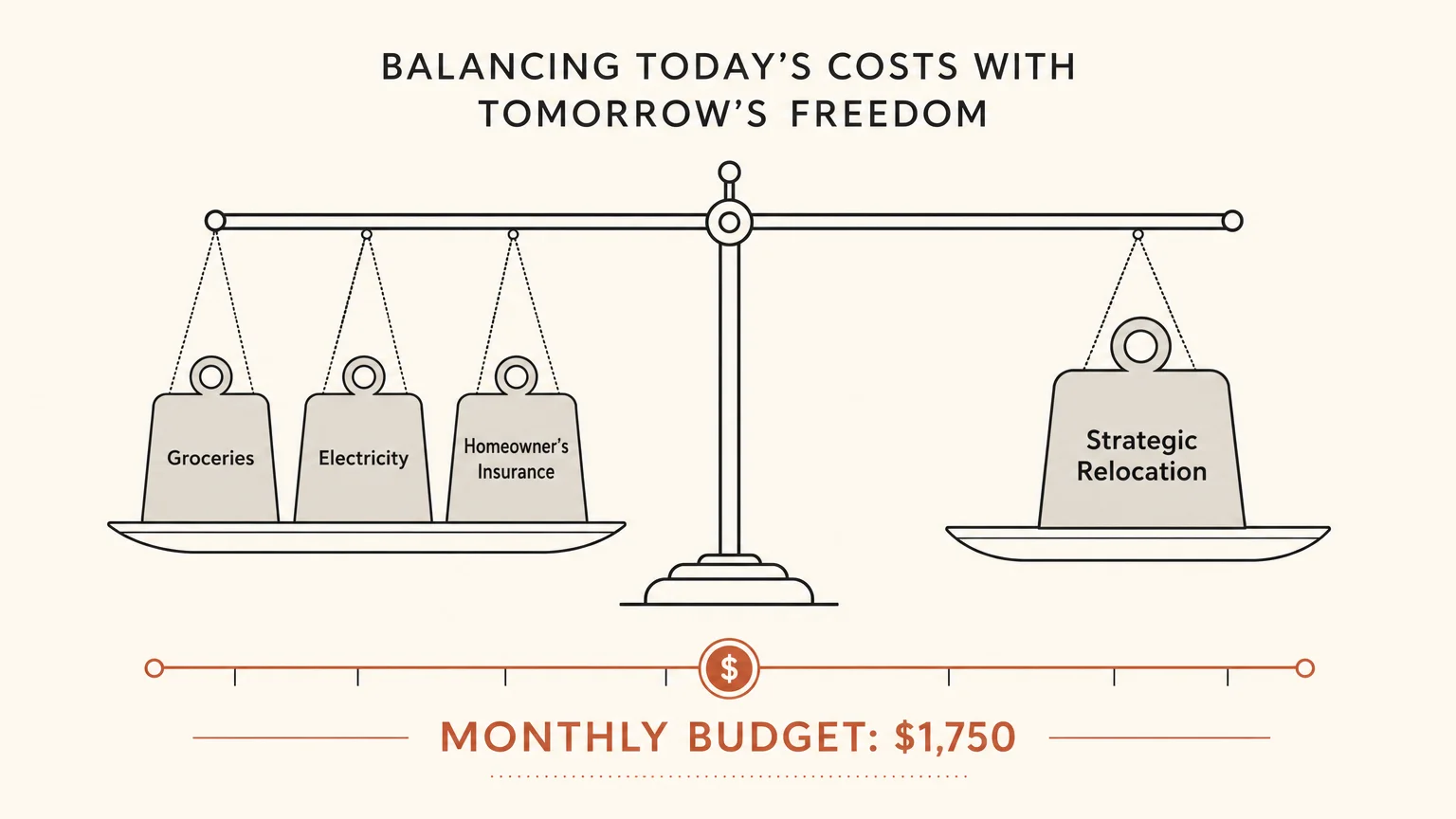
Navigating retirement on a strict budget requires a clear-eyed view of the current economic environment. While recent inflation rates have cooled from their historic peaks, the cumulative effect of rising prices continues to squeeze fixed-income households. You face higher baseline costs for essentials like groceries, electricity, and homeowner’s insurance. To combat this pressure, you must look beyond clipping coupons and start making larger structural changes to your financial life; moving to a more affordable region represents the most impactful adjustment you can make. By significantly lowering your core housing expenses, you instantly free up cash flow for healthcare, recreation, and unexpected emergencies.
Federal policy adjustments provide some relief, yet they rarely outpace the true cost of living in major metropolitan areas. The Social Security Administration implements annual cost-of-living adjustments, but these modest increases often lag behind localized spikes in rent and medical care. Consequently, finding a location that naturally aligns with a budget retirement is no longer just an alternative lifestyle choice—it is a financial necessity. Relocating empowers you to take control of your economic destiny, ensuring your monthly income provides a comfortable, dignified lifestyle rather than a constant struggle to stay afloat.

Five Sunny and Affordable Retirement Cities
1. McAllen, Texas: Southern Warmth and Unbeatable Affordability
Deep in the Rio Grande Valley, McAllen offers an extraordinarily low cost of living without compromising on vibrant culture or warm weather. You can secure comfortable housing in this region for a fraction of the national average, making it an ideal destination if you need to stretch a monthly budget of $1,750. Renting a modern one-bedroom apartment or owning a modest manufactured home leaves ample room in your budget for dining out, entertainment, and pursuing new hobbies. The local economy caters heavily to retirees and winter visitors, meaning you will find widespread senior discounts and a community infrastructure designed to support older adults.
Beyond basic affordability, McAllen provides a unique blend of cultural richness and practical convenience. Texas famously levies no state income tax, which allows you to keep every cent of your pension or Social Security benefits. The subtropical climate ensures you rarely have to worry about winter heating bills or shoveling snow. Furthermore, the city boasts beautiful public parks, extensive bird-watching reserves, and a thriving arts district. You easily maintain an active, engaging lifestyle here without spending a fortune, proving that a low cost of living does not require sacrificing your quality of life.
2. Yuma, Arizona: Year-Round Sunshine on a Budget
Holding the title of the sunniest city on Earth, Yuma provides a desert oasis for retirees who crave endless blue skies and manageable living expenses. Located near the Colorado River, this city has long served as a haven for snowbirds seeking refuge from harsh northern winters. However, establishing year-round residency in Yuma unlocks incredible financial benefits. Housing costs remain remarkably suppressed compared to metropolitan areas like Phoenix or Tucson. You can comfortably rent a spacious apartment or purchase a home in a retirement-focused community while staying well within your $1,750 monthly limit.
The social environment in Yuma naturally facilitates a budget retirement. Because the city accommodates a massive influx of retirees every year, the local culture revolves around affordable recreation and community connection. You can spend your days exploring historic parks, participating in events at bustling senior centers, or enjoying the scenic riverfront—all of which cost little to nothing. Medical facilities in the area specifically tailor their services to the aging population, ensuring you have access to essential care. Yuma proves that you can enjoy a resort-like climate on a fixed income.
3. Pensacola, Florida: Coastal Living Without the Premium Price Tag
Florida remains a premier retirement destination, yet many coastal cities have priced out fixed-income residents. Pensacola stands out as a brilliant exception, offering stunning white-sand beaches and a rich historical downtown without the exorbitant costs associated with Miami or Naples. Nestled in the Florida Panhandle, Pensacola allows you to embrace a relaxed coastal lifestyle on $1,750 a month. You will find affordable residential neighborhoods just a short drive from the Gulf of Mexico, providing the perfect balance between daily convenience and vacation-style amenities.
Financially, Pensacola delivers multiple layers of relief for retirees. Like Texas, Florida imposes no state income tax on its residents. The strong military presence in the area also means the city maintains excellent infrastructure, robust medical facilities, and a secure, community-oriented atmosphere. You can spend your afternoons walking the historic Pensacola Village, attending free community concerts, or fishing along the pier. By choosing this panhandle gem, you secure the coveted Florida retirement experience while keeping your finances firmly in the black.
4. Augusta, Georgia: Historic Charm and Tax-Friendly Policies
If you prefer a location that offers distinct seasons without the brutal cold of northern winters, Augusta provides a spectacular middle ground. Known globally for its golf culture, Augusta extends far beyond the fairways to offer a highly affordable, culturally engaging environment for retirees. The housing market here remains significantly cooler than in nearby Atlanta, allowing you to rent a comfortable home or apartment while preserving your monthly cash flow. The city features a beautiful Riverwalk, excellent local museums, and a deeply rooted sense of Southern hospitality that makes newcomers feel instantly welcome.
Georgia actively courts retirees through highly favorable tax policies. The state entirely exempts Social Security benefits from state income tax and offers generous deductions for other types of retirement income. These systemic financial advantages allow your $1,750 to stretch remarkably far. You can invest your saved capital into enjoying the vibrant local culinary scene, taking continuing education classes, or simply relaxing in the city’s numerous lush, tree-canopied parks. Augusta seamlessly blends historic elegance with modern affordability.
5. Las Cruces, New Mexico: Desert Beauty and High-Quality Healthcare
Set against the stunning backdrop of the Organ Mountains, Las Cruces offers a tranquil, picturesque environment for a budget retirement. This high-desert city provides over 300 days of sunshine a year, characterized by warm days and pleasantly cool nights. The overall cost of living in Las Cruces sits well below the national average; you can easily manage housing, utilities, and groceries on a strict $1,750 monthly income. The city exudes a relaxed, artistic vibe, heavily influenced by its rich Hispanic heritage and the presence of New Mexico State University.
The university fundamentally enhances the local retirement experience. You gain access to inexpensive cultural events, collegiate sports, and lifelong learning programs designed specifically for seniors. Additionally, Las Cruces serves as a regional healthcare hub, providing access to specialized medical facilities that are rarely found in cities of similar affordability. The combination of spectacular outdoor recreation, vibrant intellectual opportunities, and rock-solid affordability makes Las Cruces a premier destination for retirees looking to maximize their lifestyle on a fixed budget.
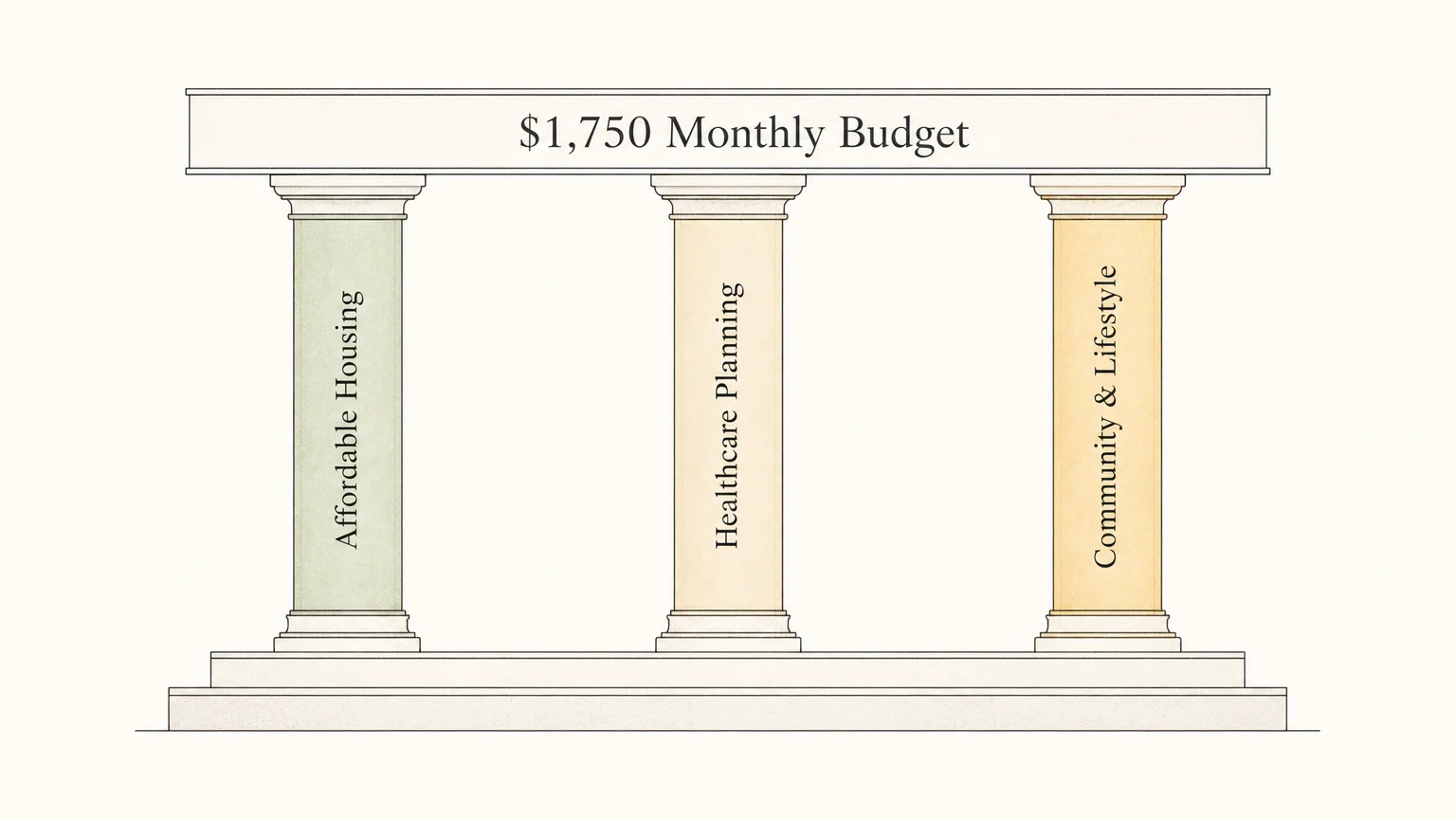
Three Pillars of a Successful Budget Retirement
Mastering Income Planning and Cash Flow
Thriving on $1,750 a month requires meticulous management of your cash flow. You must transition from simply tracking your bank balance to aggressively directing where every dollar goes. Start by utilizing the Bureau of Labor Statistics consumer expenditure data to understand typical spending patterns for older adults, then build a localized budget based on your new city. Separate your expenses into non-negotiable fixed costs—like rent, Medicare premiums, and utilities—and flexible spending for groceries and entertainment. Automate your bill payments to avoid late fees, and establish a small emergency buffer to cover unexpected expenses like vehicle repairs or sudden dental work.
Additionally, you must fiercely advocate for your own savings by uncovering local discounts and municipal benefits. Many affordable retirement cities offer robust property tax relief for seniors, discounted utility rates for low-income residents, and subsidized public transportation. Treat finding these discounts as a part-time job; the money you save directly funds your leisure activities and peace of mind. Consistently monitoring your cash flow prevents minor overspending from snowballing into debt, ensuring your financial foundation remains indestructible.
Designing a Fulfilling and Low-Cost Lifestyle
A joyous retirement does not require expensive country club memberships or luxury travel. You build a fulfilling lifestyle by leveraging the free and low-cost amenities abundant in your chosen city. Focus on establishing daily routines that get you out of the house and engaged with your community. Utilize local public libraries, which often serve as community hubs offering free classes, lecture series, and digital media access. Explore municipal parks, botanical gardens, and community centers that host daily activities specifically designed for active older adults.
You also enrich your life by volunteering your time and expertise. Local charities, food banks, and animal shelters constantly seek reliable volunteers. Committing your time to these organizations provides profound a sense of purpose, structured socialization, and a direct connection to your new neighbors. By centering your lifestyle around community engagement and outdoor recreation, you effectively decouple your personal happiness from your financial expenditure. You will quickly discover that the most rewarding retirement experiences cost absolutely nothing.
Prioritizing Health and Wellness Accessibility
Healthcare expenses can rapidly derail a fixed-income budget if left unmanaged. When relocating, you must proactively secure your physical and financial health by establishing a strong local medical network immediately. Before you even sign a lease, verify that your prospective city features reputable local clinics, urgent care centers, and hospitals. Prioritize preventive care by utilizing the free wellness visits and screenings covered under your Medicare plan. Staying physically active through daily walking, community yoga, or swimming pays massive dividends by reducing your risk of chronic illness and the associated medical bills.
Navigating the insurance landscape in a new state requires precision. Use the official Medicare plan comparison tool to evaluate how moving impacts your specific coverage. Network boundaries change drastically across state and county lines; a plan that served you perfectly in your old home might leave you entirely out of network in your new one. Ensure you transition your coverage seamlessly to avoid gaps in care or terrifying out-of-pocket expenses. Protecting your health is synonymous with protecting your wallet.

Navigating Risks: Scams, Benefit Cliffs, and Healthcare Pitfalls
While relocating to a sunny, low-cost city offers massive benefits, you must stay vigilant against the inherent risks of moving on a fixed income. The primary threat comes from sophisticated relocation and rental scams. Fraudsters frequently target out-of-state retirees by advertising beautiful, cheap apartments that do not actually exist. Never wire money or send a security deposit for a property you have not physically toured or verified through a licensed local real estate agent. Consult AARP livable communities research and fraud prevention networks to educate yourself on the latest tactics used by local scammers.
You must also carefully evaluate potential “benefit cliffs” before crossing state lines. If you currently rely on state-specific assistance programs for property tax relief, utility subsidies, or supplemental nutrition, recognize that these benefits do not automatically transfer to a new state. Each state maintains its own eligibility requirements and funding levels. Moving to a state with a lower general cost of living might inadvertently disqualify you from aid you currently depend on. Calculate your net financial position by factoring in the loss of these targeted local benefits.
Finally, avoid the pitfall of underestimating hidden relocation costs. Hiring professional movers, shipping a vehicle, and paying new utility deposits can easily consume several months of your budget. You must save specifically for the transition period, ensuring you do not drain your essential emergency fund just to get your furniture across the country. Plan your move during off-peak seasons—typically late fall or winter—to secure lower rates on moving trucks and temporary lodging.

Expert Voices: Perspectives on Thriving with Less
Certified Financial Planner professionals consistently emphasize that housing represents the ultimate lever in retirement planning. By drastically reducing your housing footprint through geographic relocation, you eliminate the highest-stress variable in your financial life. Financial experts advise that keeping your total housing costs—including rent, utilities, and insurance—below forty percent of your monthly income is the absolute key to surviving on a $1,750 budget. This disciplined approach leaves enough liquid capital to cover medical copays, healthy groceries, and the occasional leisure activity without relying on high-interest credit cards.
Gerontologists offer a complementary perspective, noting that social connection and environmental suitability predict longevity far better than sheer wealth. Aging specialists advocate for moving to communities that naturally encourage walking, feature accessible public spaces, and harbor a high concentration of peer-aged residents. When you relocate to a sunny, affordable city, you remove the physical barriers of harsh weather and the emotional barrier of financial anxiety. Experts agree that finding a community where you feel safe, financially secure, and socially engaged is the true hallmark of a successful retirement strategy.
Frequently Asked Questions
How can I accurately estimate my healthcare costs in a new state?
You can accurately project your healthcare expenses by reviewing the specific Medicare Advantage and Part D prescription drug plans available in your target zip code. Costs vary wildly by county. Create a list of your current prescription medications and preferred specialists, then contact local insurance brokers in your prospective city to verify network inclusions. Budgeting for localized premium changes and out-of-pocket maximums ensures you are not blindsided by medical expenses after your move.
Will moving to a new city affect my Social Security benefits?
Your base federal Social Security benefit remains exactly the same regardless of where you live within the United States. However, your net take-home pay might change based on state tax laws. Several states tax Social Security benefits at the state level, while others—like Florida and Texas—do not. Review the Internal Revenue Service guidance for seniors alongside the specific department of revenue website for your destination state to understand your exact tax liabilities.
What are the hidden costs of relocating for retirement?
The most common hidden relocation costs include new utility connection fees, vehicle registration changes, and restocking your pantry with basic staples. You will also face expenses related to establishing a new household, such as buying climate-appropriate clothing or adjusting your auto insurance policy to reflect your new zip code. Build a dedicated moving fund that equates to at least two months of your total budget to absorb these friction costs without generating credit card debt.
How do I build a new social network after moving?
You build a new social network by treating socialization as a daily routine. Immediately visit your local senior center, sign up for a class at the community college, or join a local religious or civic organization. Volunteer for a cause you care about; working alongside others provides a natural, low-pressure environment for forging meaningful friendships. Consistency is key—showing up to the same local coffee shop, dog park, or walking trail at the same time every week quickly transforms strangers into neighbors.
Take Your Next Step Toward a Sunny Retirement
You possess the power to design a retirement that is both financially secure and deeply fulfilling, even on a strict budget of $1,750 a month. The sunny, affordable cities highlighted above prove that you do not have to accept financial anxiety as a normal part of aging. Over the next 48 hours, take one concrete step toward your new life: calculate your current monthly housing and utility expenses, then compare them against rental listings in just one of these five locations. Seeing the tangible financial difference on paper will give you the confidence to start planning your move toward a brighter, warmer, and more comfortable future.