
You can turn decades of accumulated professional expertise into a predictable, flexible stream of income during retirement without sacrificing your freedom. Monetizing your established skill set through freelancing gives you complete control over your schedule while bolstering your financial nest egg against inflation. Recent market data shows that millions of older Americans actively replace traditional full-time jobs with targeted contract assignments. By offering in-demand services such as management consulting, financial bookkeeping, or technical writing, you generate continuous revenue on your own terms. This guide breaks down seven lucrative skills that transition seamlessly into remote freelance opportunities, alongside the practical tax, Social Security, and pricing strategies you need to maximize your bottom line safely.
The Shift Toward Freelancing in Retirement
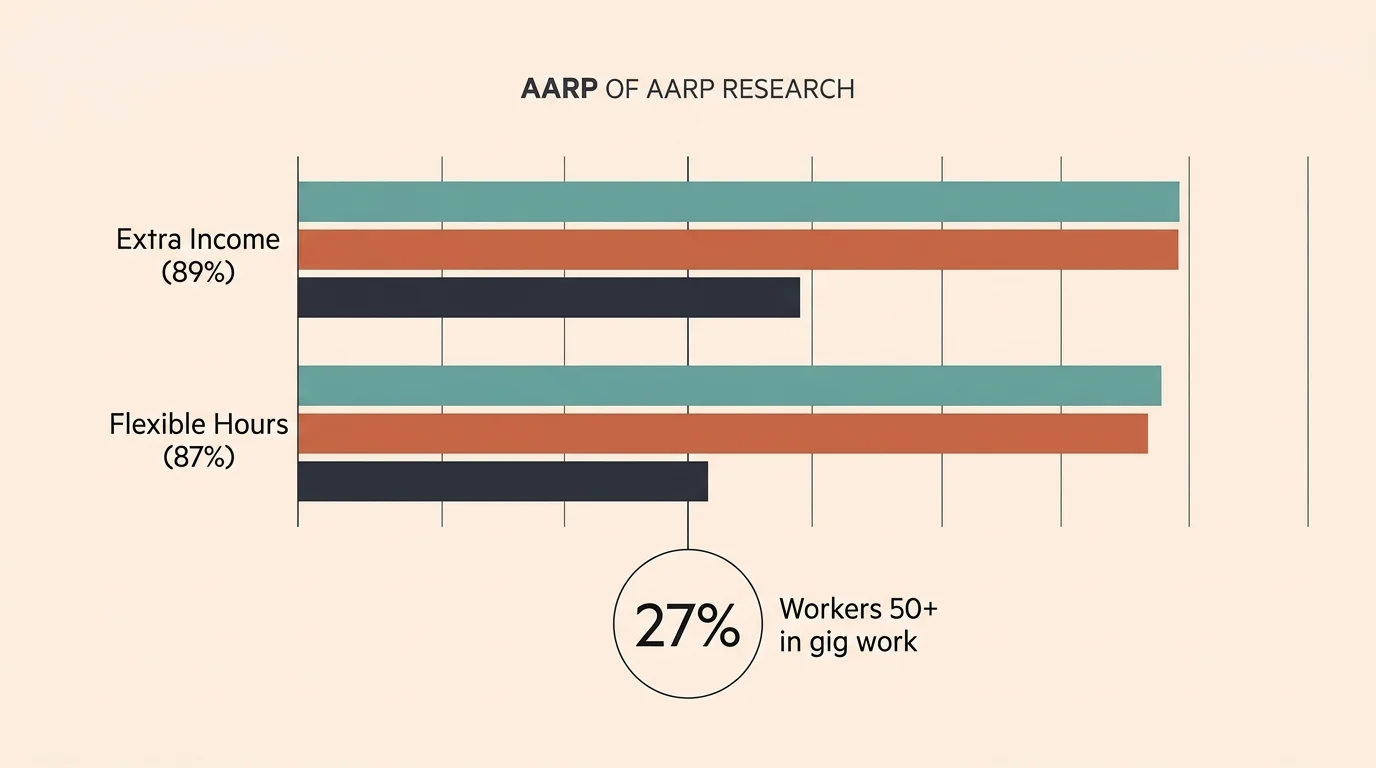
Retirement no longer signifies a complete withdrawal from active work; instead, it offers an opportunity to redefine how, when, and where you work. According to AARP research, approximately 27% of workers aged 50 and older perform freelance or gig work, with extra income (89%) and flexible hours (87%) driving their participation. Furthermore, Upwork survey data reveals that 20% of Baby Boomers actively engage in the freelance economy. This widespread movement reflects a desire among retirees to leverage their professional wisdom, preserve financial independence, and maintain cognitive sharpness without the burdens of corporate life.
Current market benchmarks place the average U.S. freelance hourly rate between $39 and $47.71 per hour across all industries, while specialized senior consultants command significantly higher rates. Rather than answering to corporate managers or commuting to physical offices, older freelancers select projects that align with their personal interests and energy levels. Monetizing your existing skills allows you to scale your workload up or down—taking on client projects during certain months while reserving ample time for travel, hobbies, and family commitments.

7 High-Demand Freelance Skills for Retirees
1. Executive Consulting and Business Strategy
Decades of leadership, operational management, and crisis navigation make mature professionals exceptionally valuable to expanding companies. Small and mid-sized businesses frequently retain executive consultants to refine business operations, oversee restructurings, or mentor emerging leaders without adding permanent executive salaries to their payrolls. Senior financial, business, and management consultants typically command rates between $75 and $250+ per hour, depending on specialization. Pitching monthly retainer agreements guarantees steady cash flow while keeping your weekly hours manageable.
2. Freelance Bookkeeping and Financial Management
Maintaining organized financial ledgers presents an ongoing struggle for busy entrepreneurs who lack specialized accounting skills. If you possess a background in banking, corporate finance, or accounting, offering independent bookkeeping services yields predictable, long-term client relationships. Freelance bookkeepers across the United States generally earn $25 to $90 per hour, with national mid-level averages ranging from $45 to $65 per hour. Experienced financial specialists offering fractional CFO services command between $110 and $183+ per hour by providing high-level budgeting, forecasting, and financial strategy.
3. Copywriting, Editing, and Technical Writing
Clear written communication powers digital marketing, regulatory filings, and corporate growth, creating persistent demand for skilled writers. Businesses in healthcare, technology, law, and finance seek experienced professionals who can translate complex technical topics into engaging articles, grant proposals, white papers, and promotional material. Older writers often excel here due to superior attention to detail, polished grammar, and real-world domain knowledge. You can establish lucrative contract agreements by offering specialized technical writing, proofreading, or content editing services to regional companies.
4. Virtual Assistance and Remote Project Management
Modern organizations rely on remote administrative specialists to keep multi-layered projects moving forward smoothly. If your career involved calendar management, client relations, administrative logistics, or event planning, working as a freelance virtual assistant or project coordinator provides a natural fit. You manage communication flows, audit project schedules, organize executive calendars, and resolve administrative hurdles from your home office. Small business owners eagerly pay premium rates for dependable freelancers who display strong professional etiquette and independent problem-solving abilities.
5. Specialized Tutoring, Training, and Online Teaching
If you accumulated career experience in education, corporate training, engineering, or foreign languages, your teaching abilities remain highly marketable. Educational platforms, private test-preparation companies, and international corporations hire mature instructors to coach students, executives, and language learners. You can conduct individual virtual tutoring sessions, develop custom corporate training materials, or teach English online. This work grants complete schedule autonomy, letting you set your teaching availability around your retirement lifestyle.
6. Corporate Coaching and Professional Mentorship
Emerging managers and mid-level leaders frequently face difficult team dynamics, communication breakdowns, and strategic planning hurdles where experienced counsel proves invaluable. Organizations regularly contract corporate alumni as executive coaches to mentor high-potential staff, facilitate leadership workshops, and foster professional development. Unlike management consulting, which targets operational systems, corporate coaching focuses on human leadership and emotional intelligence. Building a coaching client roster through virtual video sessions yields high hourly compensation alongside meaningful personal fulfillment.
7. Translation, Transcription, and Voiceover Work
Linguistic precision and strong listening skills unlock remote opportunities that require zero physical exertion. Medical practices, legal defense teams, and video production firms outsource document translation and audio transcription to human freelancers who can catch subtle linguistic nuances better than software. Additionally, retirees with clear, warm, or commanding speaking voices are finding success in commercial voiceover work, audiobook narration, and corporate e-learning modules. These niches reward accuracy and patience, making them ideal for home-based work.

Strategic Pillars for Freelancing Success
Income Planning and Pricing Strategy
Setting effective prices requires shifting your focus from an hourly employee mindset to a business owner orientation. According to Bureau of Labor Statistics reports, independent work requires factoring in overhead costs, software subscriptions, computer equipment, and self-employment taxes that employers previously covered. Avoid underpricing your services to compete with entry-level generalists; instead, ground your rates in your deep industry experience and problem-solving capability. Transitioning from hourly billing to monthly retainers or fixed project pricing secures consistent revenue and protects you against uncompensated administrative hours.
Lifestyle Design and Work-Life Boundaries
Freelancing in retirement must enrich your personal life rather than duplicate corporate burnout. Establish clear boundaries regarding client availability, response times, and total weekly hours before accepting new assignments. Communicate your working hours clearly in contracts, and use online scheduling applications so clients can only book appointments during designated times. Reserving dedicated blocks of time for travel, family, and personal interests ensures your freelance enterprise fits comfortably around your retirement goals.
Health, Wellness, and Cognitive Vitality
Engaging in meaningful contract work delivers physical and mental health advantages that extend beyond monetary gain. Peer-reviewed gerontology research confirms that engaging in regular problem-solving and social connection preserves cognitive function and reduces isolation in older adults. However, protecting your physical ergonomics in your home office is equally essential. Invest in a high-quality office chair, adjustable monitor risers, and proper lighting to maintain joint health and vision while enjoying the mental stimulation that freelancing provides.

Navigating Financial Risks and Government Rules
Before taking on freelance clients, you must understand how self-employment income interacts with Social Security benefits, federal tax laws, and Medicare thresholds. For 2026, the Social Security Retirement Earnings Test limits early retirees under their Full Retirement Age (FRA) to $24,480 in annual earned income without affecting their benefits. If your net earnings exceed $24,480, Social Security withholds $1 in benefits for every $2 earned above the cap. During the calendar year you reach FRA, the earnings limit increases to $65,160 for the months prior to reaching FRA, withholding $1 for every $3 earned over the limit. Once you reach Full Retirement Age, the earnings test disappears entirely, allowing unlimited earnings without any benefit withholding. Review official Social Security Administration guidelines to coordinate your freelance schedule with your benefit distribution.
Furthermore, freelancers must manage federal tax obligations by paying quarterly estimated taxes. Per Internal Revenue Service rules, self-employed individuals pay a 15.3% self-employment tax—combining 12.4% for Social Security and 2.9% for Medicare—on net self-employment earnings of $400 or more. For 2026, the Social Security tax portion applies to net self-employment earnings up to $184,500. Working with a Certified Financial Planner (CFP®) or CPA helps you establish tax-advantaged retirement accounts, such as a Solo 401(k) or SEP IRA, which reduce your current taxable income while boosting your long-term wealth. Finally, guard your security by rejecting clients who request upfront fees, demand sensitive banking credentials, or refuse formal service contracts.
Frequently Asked Questions
How do I find my first freelance clients without an established portfolio?
Tap your professional network, former colleagues, and industry groups to announce your transition into specialized consulting or contract work. Reaching out to past business contacts with a clear explanation of the problems you solve often yields immediate consulting contracts. Additionally, updating your LinkedIn profile to highlight your freelance services attracts recruiters and business owners actively seeking experienced talent.
Do I need to form an LLC to work as a retiree freelancer?
Operating as a sole proprietor requires no complex legal filings in most states, allowing you to report business income directly on Schedule C of your tax return. However, establishing a Limited Liability Company (LLC) provides personal asset protection by separating your business liabilities from your personal savings. Consult an attorney or tax advisor to determine whether an LLC fits your specific legal and financial situation.
How does self-employment income impact my Medicare premiums?
Medicare Part B and Part D premiums depend on your Income-Related Monthly Adjustment Amount (IRMAA), calculated from your tax return two years prior. Substantial freelance profits can raise your modified adjusted gross income above federal thresholds, triggering temporary surcharges on your Medicare premiums. Tracking legitimate business deductions and contributing to self-employed retirement accounts help manage your taxable income below IRMAA thresholds.
Can I save my freelance earnings in a tax-deductible retirement account?
Yes, generating self-employment income opens access to specialized retirement plans like Solo 401(k) plans and SEP IRAs. These accounts permit significantly higher tax-deductible contributions than standard traditional IRAs. Contributing to these plans lowers your current taxable income while permitting your earnings to grow tax-deferred throughout retirement.
Your 48-Hour Action Plan
Launching a rewarding freelance enterprise starts with a single action step. Set aside thirty minutes over the next 48 hours to identify your top three professional strengths and draft a concise statement explaining how those skills solve problems for clients. Update your professional social media profile to show your availability for consulting, or send a brief message to three former colleagues announcing your new venture. Taking this proactive step today converts your lifelong experience into a continuous source of income, confidence, and purpose tomorrow.