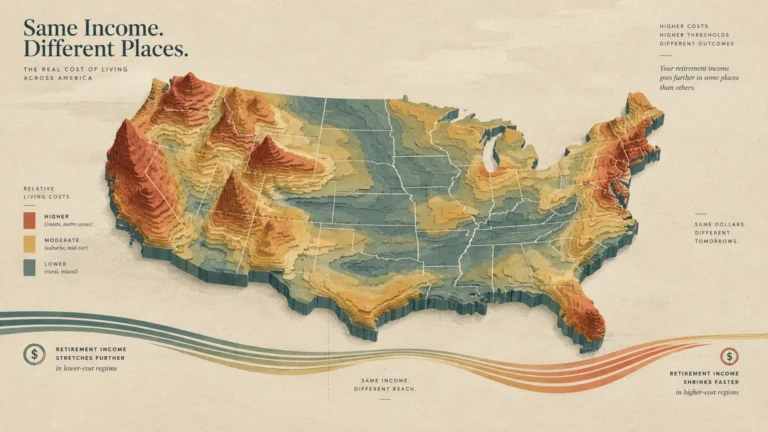
When the Social Security Administration delivered a 2.8 percent Cost-of-Living Adjustment in January 2026, the average monthly benefit check rose by roughly $56, bringing typical retirement payouts to $2,071 per month. While this increase offers welcome relief, rapid inflation across housing and healthcare continues to erode your real purchasing power in high-cost regions. Moving your retirement base to a state with a lower cost of living lets you capture dramatically higher real value from every dollar you receive. By understanding state-level tax exemptions, housing indices, and healthcare access, you can transform your fixed benefit income into a resilient, high-quality retirement strategy that safeguards your long-term wealth.

The 2026 Social Security Landscape and Purchasing Power
Heading into 2026, retirees face a shifting financial climate. The recent 2.8 percent Cost-of-Living Adjustment follows gains of 2.5 percent in 2025 and 3.2 percent in 2024, providing incremental relief for households managing elevated living costs. According to the Social Security Administration, the average retired worker now receives approximately $2,071 per month, representing an annual boost of about $672. Meanwhile, workers nearing retirement face a higher wage base cap, as maximum taxable earnings increased to $184,500 for 2026—up from $176,100 in 2025.
However, nationwide averages hide severe regional disparities. A monthly check of $2,071 buys vastly different lifestyles depending on where you live; high-cost urban centers eat away at monthly benefits through expensive housing and elevated local taxes, whereas low-cost states preserve your capital. To maximize your financial safety net, look beyond the sticker price of benefits and analyze your true local purchasing power. Data from the Bureau of Labor Statistics highlights how basic necessities like food, utilities, and healthcare fluctuate significantly across state borders.
Federal tax rules also impact how much of your benefit stays in your pocket. Up to 50 percent of your Social Security benefits become subject to federal income tax if your combined income falls between $25,000 and $34,000 for single filers, or $32,000 and $44,000 for married couples filing jointly; above those thresholds, up to 85 percent is taxable. Fortunately, recent federal tax code updates offer a substantial bright spot: eligible seniors aged 65 and older can now utilize a senior bonus tax deduction of up to $6,000 on top of their standard deduction for tax years 2025 through 2028. Combining federal tax relief with strategic relocation gives you an unprecedented opportunity to stretch your income.
10 US States Where Your COLA Check Stretches the Furthest
To identify where your dollar goes furthest, financial analysts rely on the Missouri Economic Research and Information Center cost of living index, which sets the national baseline average at 100. States scoring well below 100 deliver deep discounts on everyday expenses, with housing driving the most dramatic savings. Below are the top ten states where your COLA check provides exceptional purchasing power.
1. Oklahoma
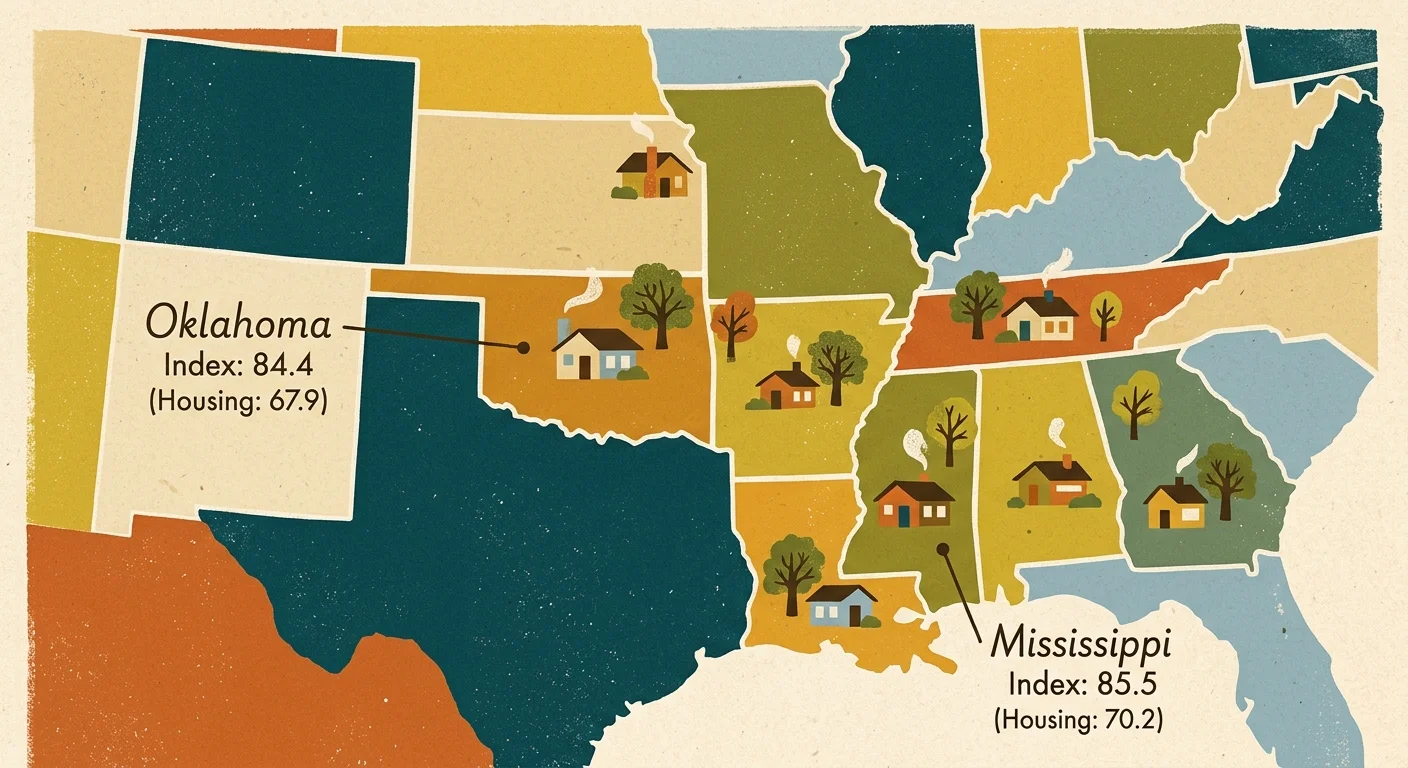
Oklahoma earns the top spot as the most affordable state in the nation, boasting an overall cost of living index of roughly 84.4. The real story lies in the housing market, where the state’s housing index sits at a remarkably low 67.9—more than 32 percent below the national average. Oklahoma exempts Social Security benefits from state income taxes entirely, allowing you to retain more of your monthly check. With affordable suburban communities near Tulsa and Oklahoma City, retirees enjoy accessible cultural amenities without sacrificing financial stability.
2. Mississippi
Mississippi ranks second with an overall living index of approximately 85.5 and a housing index of 70.2. Retirees in the Magnolia State benefit from complete state tax exemptions on all qualified retirement income, including Social Security, pension distributions, and IRA withdrawals. While property taxes remain notably low, retirees should carefully evaluate local healthcare access, as rural health infrastructure requires thoughtful navigation when selecting a town.
3. Alabama
Alabama features an overall cost index of roughly 87.9, backed by a housing index of 71.1. The state does not tax Social Security benefits or defined-benefit public and private pensions, making it a tax-friendly haven for retirees. Alabama also boasts low property tax rates; however, local sales taxes can be relatively high on general consumer purchases, so proper budget planning remains essential.
4. West Virginia
West Virginia offers an impressive overall cost index of approximately 88.1 and a housing index of 70.8. Crucially, 2026 marks a major financial milestone for the state: West Virginia has officially completed its phased-out tax elimination, making Social Security benefits 100 percent exempt from state income tax for all residents. Nestled in the Appalachian Mountains, this state provides scenic beauty, low land costs, and growing healthcare facilities tailored for mature residents.
5. Kansas
Kansas holds an overall living index of roughly 88.9, accompanied by a housing index of 77.5. Following comprehensive state tax reform, Kansas fully eliminated state taxes on Social Security benefits in 2024, removing a long-standing financial burden for middle-income retirees. The state provides quiet Midwestern living, strong community ties, and highly affordable single-family housing options.
6. Missouri
Missouri features an overall cost index of approximately 89.0 and a housing index of 77.8. Similar to Kansas, Missouri completely eliminated state income taxes on Social Security benefits starting in 2024, regardless of filing status or income limits. With vibrant medical hubs in St. Louis and Kansas City, alongside recreational regions like the Ozarks, Missouri offers a well-rounded mix of affordability and quality medical care.
7. Arkansas
Arkansas reports an overall cost index of roughly 89.3, supported by a housing index of 77.9. The Natural State fully exempts Social Security benefits from state income tax and maintains low overall property tax rates. Outdoor enthusiasts thrive here, enjoying abundant state parks, pristine lakes, and small-town communities where home prices stay comfortably below national averages.
8. Tennessee
Tennessee stands out with an overall living index of approximately 90.3 and a housing index of 83.0. As one of nine states with no general state income tax, Tennessee imposes zero income tax on Social Security, retirement account withdrawals, or pension payouts. While housing prices in major hubs like Nashville have risen, smaller surrounding cities offer attractive value, balanced by a modest increase in local sales tax rates.
9. Iowa
Iowa posts an overall cost of living index of roughly 90.3, alongside a housing index of 77.2. Iowa exempts Social Security benefits and most retirement income from state taxation for residents aged 55 and older. The state features top-tier healthcare systems, excellent regional infrastructure, and affordable quiet neighborhoods ideal for retirees seeking a steady pace of life.
10. Indiana
Indiana rounds out the top ten with an overall cost index of approximately 90.6 and a housing index of 76.2. Indiana exempts Social Security income from state taxation, though standard state income tax applies to withdrawals from tax-deferred IRAs and 401(k) accounts. Affordable real estate, manageable property tax caps, and central Midwestern geography make Indiana a durable choice for long-term budget management.
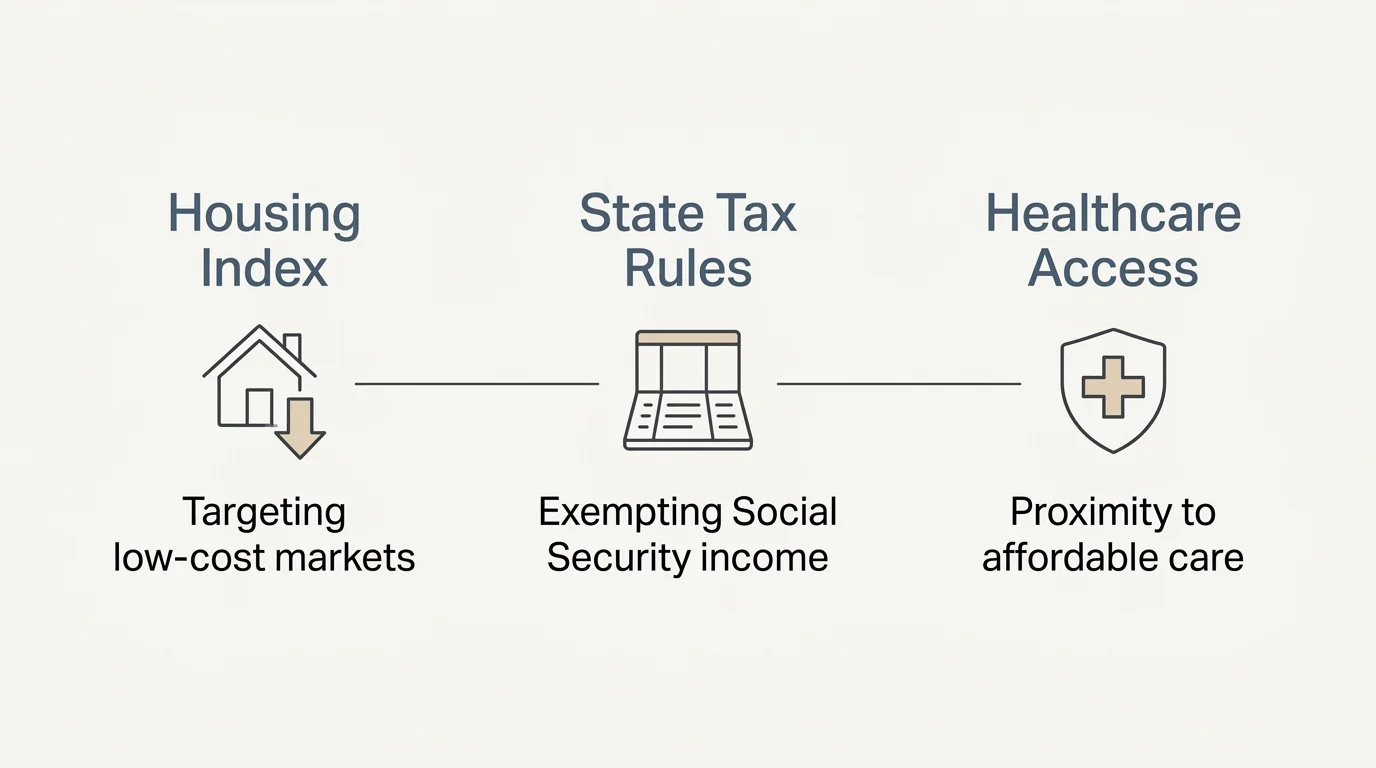
Three Pillars for Maximizing Your Retirement Dollars
Income Planning and Tax Efficiency
Relocating to a low-cost state represents only part of a successful retirement plan; you must also manage income timing. Because 42 states plus Washington, D.C., do not tax Social Security benefits, strategic tax planning shifts toward federal taxation and private account distributions. Only eight states—Colorado, Connecticut, Minnesota, Montana, New Mexico, Rhode Island, Utah, and Vermont—still tax Social Security income, often with income-based exemptions. By coordinating distributions from pre-tax IRAs, Roth accounts, and taxable accounts, you keep your federal combined income below key tax thresholds. Consult resources at the Internal Revenue Service to understand how different income streams affect your tax return.
Lifestyle Design and Location Optimization
Optimizing your lifestyle requires aligning your housing needs with local infrastructure. Housing accounts for the largest share of retiree budgets; selecting a state with a housing index below 80 can instantly free up hundreds of dollars each month. Look beyond property price tags to evaluate property tax structures, local sales taxes, and homeowners insurance rates. Downsizing into a smaller home or moving into a community with low maintenance fees protects your savings while keeping your living environment manageable as mobility needs evolve.
Healthcare and Wellness Infrastructure
Lower living costs should never come at the expense of quality healthcare access. When evaluating affordable states, research hospital quality ratings, specialist availability, and primary care physician ratios. Utilize official comparison tools on Medicare.gov to ensure your preferred Medicare Advantage or Medigap plans operate effectively in your target ZIP code. Maintaining access to preventive care and specialty clinics prevents catastrophic medical costs down the road, ensuring your budget remains secure.

Expert Perspectives on Location Strategy
Financial and gerontological experts emphasize that relocating during retirement involves both mathematical calculations and personal adjustments. Certified Financial Planner practitioners frequently point out that moving from a high-tax state to a state without income tax—like Tennessee—can increase effective retirement spending power by 10 to 15 percent without altering investment risks. However, financial planners caution against focusing solely on tax rates; local property taxes and sales tax rates can offset income tax savings if you do not analyze the full balance sheet.
Gerontologists and longevity experts stress the importance of social networks and community infrastructure. Research published through AARP underscores that social isolation poses a severe health risk for older adults. Relocating closer to family, accessible public transit, and vibrant senior centers creates a strong support system that enhances emotional and physical well-being. Ultimately, the ideal retirement destination balances low financial friction with high social connection.

Navigating Risks, Tax Cliffs, and Hidden Costs
While lower costs of living sound appealing, you must avoid unexpected financial traps. Certain states offset low income taxes with high local sales taxes or elevated property taxes, which can erode your expected savings over time. Furthermore, entering a new state requires updating legal documents, including wills, powers of attorney, and healthcare proxies, to comply with local statutes.
You must also safeguard against benefit cliffs and predatory scams targeting seniors during relocation. Moving into a lower-income bracket or changing residency can alter your eligibility for state-specific senior property tax freezes or pharmaceutical assistance programs. Always verify local residency rules before making financial commitments, and guard personal details against unsolicited moving or home equity schemes.
Frequently Asked Questions
How does state taxation of Social Security work across different states?
Currently, 42 states and Washington, D.C., refrain from taxing Social Security benefits. Recent state-level tax reforms eliminated these taxes in states like Missouri, Kansas, and West Virginia. Only eight states retain taxes on Social Security benefits, though most of those offer generous income thresholds that exempt moderate-income retirees.
Will moving to a low-cost state alter my monthly Social Security check amount?
No, your core monthly Social Security benefit amount remains identical regardless of where you reside within the United States. The federal government calculates your payment using your career earnings history, not your location. Moving to a low-cost state simply increases your purchasing power, allowing that same dollar amount to cover more goods and services.
How do state income taxes affect my traditional IRA and 401(k) withdrawals?
State income tax rules for tax-deferred accounts vary widely. Nine states impose no general state income tax, making distributions completely free from state tax. Other states, like Mississippi and Iowa, specifically exempt qualified retirement income from taxation, while states like Indiana tax 401(k) and traditional IRA withdrawals while exempting Social Security benefits.
What federal tax relief is available for older retirees in 2026?
Seniors aged 65 and older can take advantage of an enhanced senior tax deduction of up to $6,000 on top of their standard deduction for tax years 2025 through 2028. This temporary deduction reduces overall taxable income, helping offset federal taxes on combined income sources.
Take Action Today
Unlocking greater financial freedom in retirement starts with a single concrete step. Within the next 48 hours, gather your latest Social Security benefit statement alongside your monthly expenditure log. Compare your current expenses against housing and tax benchmarks in top affordable states like Oklahoma, West Virginia, or Tennessee. Analyzing these real numbers today puts you in direct control of your financial security, empowering you to design a confident, comfortable retirement.