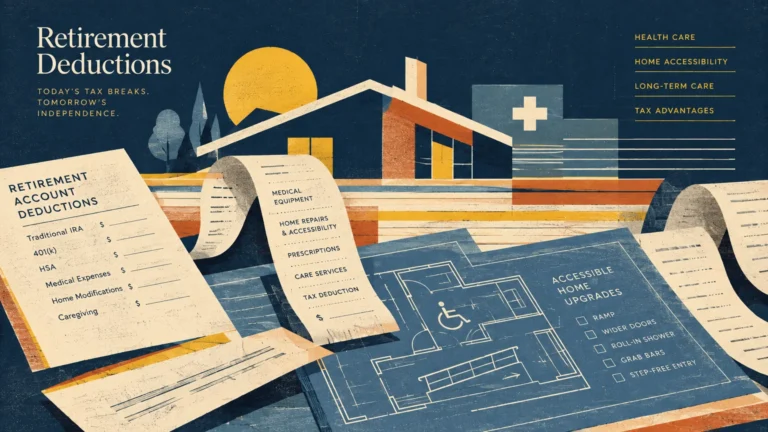
Knowing exactly how much you can expect from Social Security is vital for building a secure retirement. Current program data reveals that retired women receive an average monthly check between $1,780 and $1,924, compared to $2,181 to $2,400 for men.
This disparity creates an annual income gap of roughly $4,800 to $5,250. Because women live longer on average, this deficit compounds over decades and directly threatens financial independence.
Fortunately, understanding how your lifetime earnings, claiming age, and spousal rules interact gives you the power to maximize your monthly benefit and safeguard your future.

The Reality of the Social Security Gender Gap in Numbers
The gender gap in retirement income is not a theoretical abstraction; it represents real money missing from women’s monthly household budgets. Official program statistics from the Social Security Administration show that retired female workers receive roughly 18% to 20% less in monthly benefits than retired male workers. This means that, on average, a retired woman receives between $400 and $438 less every single month, translating to an annual shortfall exceeding $5,000.
The timing of your claim also significantly alters these figures. Women who claim early at age 62 receive an average monthly benefit of approximately $1,286, whereas men claiming at the same age average $1,573. If you delay claiming until age 70, the average female benefit rises to roughly $2,204 per month, compared to $2,530 for men. While delaying increases the monthly payout for everyone, the structural gap between the sexes remains visible across every age tier.
Demographic data underscores why this disparity is so critical. Women represent roughly 54.5% to 55% of all Social Security recipients, and they make up nearly 95% of all individuals receiving spousal or survivor benefits. Furthermore, Social Security constitutes 50% or more of total household income for approximately 60% of older beneficiaries. For unmarried older women—including those who are widowed, divorced, or never married—the program provides over half of their total retirement income; for roughly 25% of these women, that monthly check represents virtually their only source of financial support.
Why the Social Security Pay Gap Persists
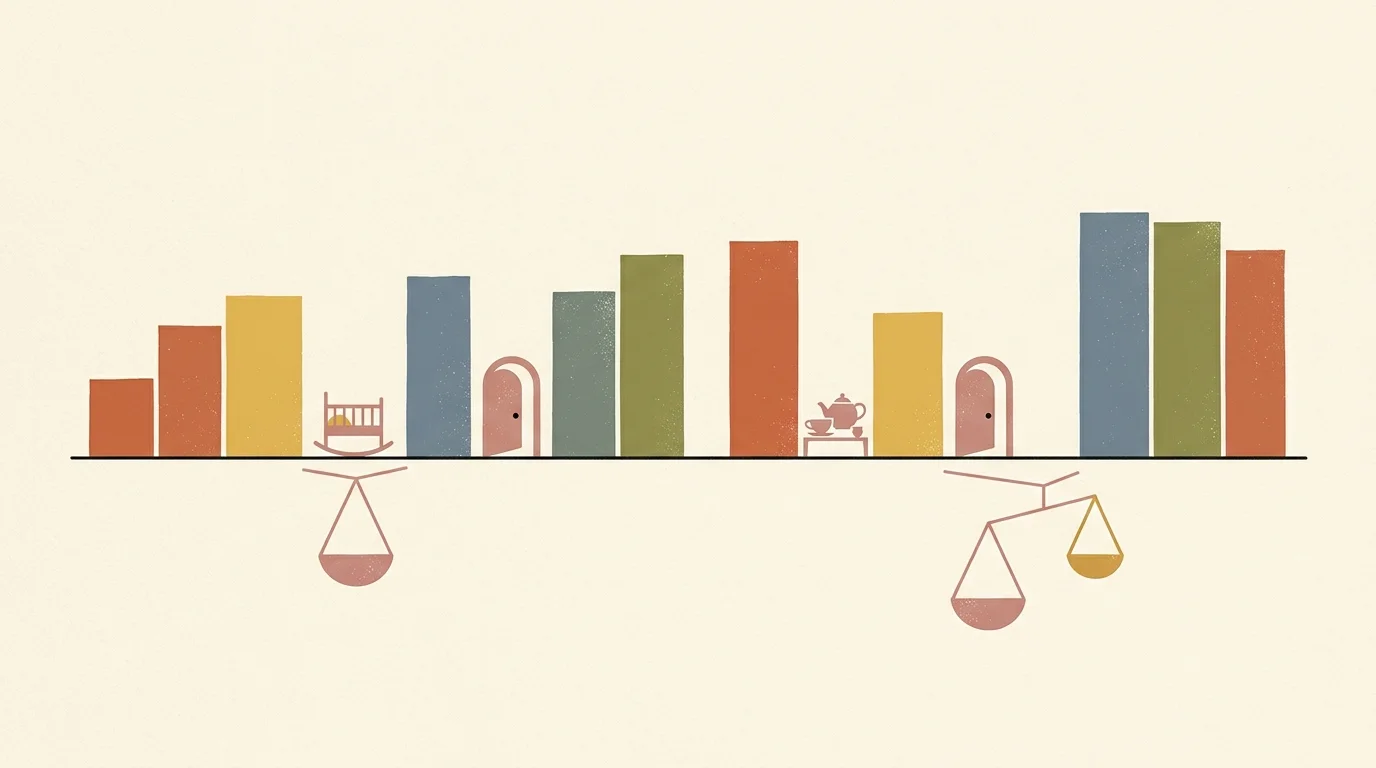
To understand why women receive less money from Social Security, you must examine how the federal government calculates retirement benefits. The system uses a gender-neutral formula based on your highest 35 years of earnings, indexed for historical wage growth. If you work fewer than 35 years in covered employment, the Social Security Administration enters a zero for each missing year. Those zero-earning years drag down your Average Indexed Monthly Earnings, resulting in a permanently lower base benefit, known as your Primary Insurance Amount.
This 35-year calculation structure disproportionately harms women because of caregiving responsibilities. According to the Bureau of Labor Statistics, women make up over 60% of family caregivers in the United States. Women frequently step out of the paid labor force or shift to part-time hours to care for young children, aging parents, or an ailing spouse. These caregiving years often translate into zeroes or reduced earnings in the Social Security formula, creating a substantial financial penalty in retirement.
The persistent national wage gap compounds this structural challenge. Women in the workforce still earn approximately 83 to 84 cents for every dollar earned by men. When you earn less during your career, you pay less in payroll taxes, which leads directly to a smaller Social Security calculation. Finally, claiming patterns exacerbate the deficit: program data indicates that 64.9% of female retirees claim reduced benefits before reaching their Full Retirement Age, compared to 59.1% of male retirees. Claiming early permanently reduces your monthly check by up to 30%, cementing a lifetime of lower payments.
Three Strategic Pillars to Protect and Maximize Your Retirement Income
Overcoming these systemic hurdles requires proactive planning and intentional decision-making. You can deploy clear strategies across three distinct domains to strengthen your financial footing, protect your longevity, and extract the maximum possible benefit from the Social Security system.
Pillar 1: Strategic Income Planning and Claiming Optimization
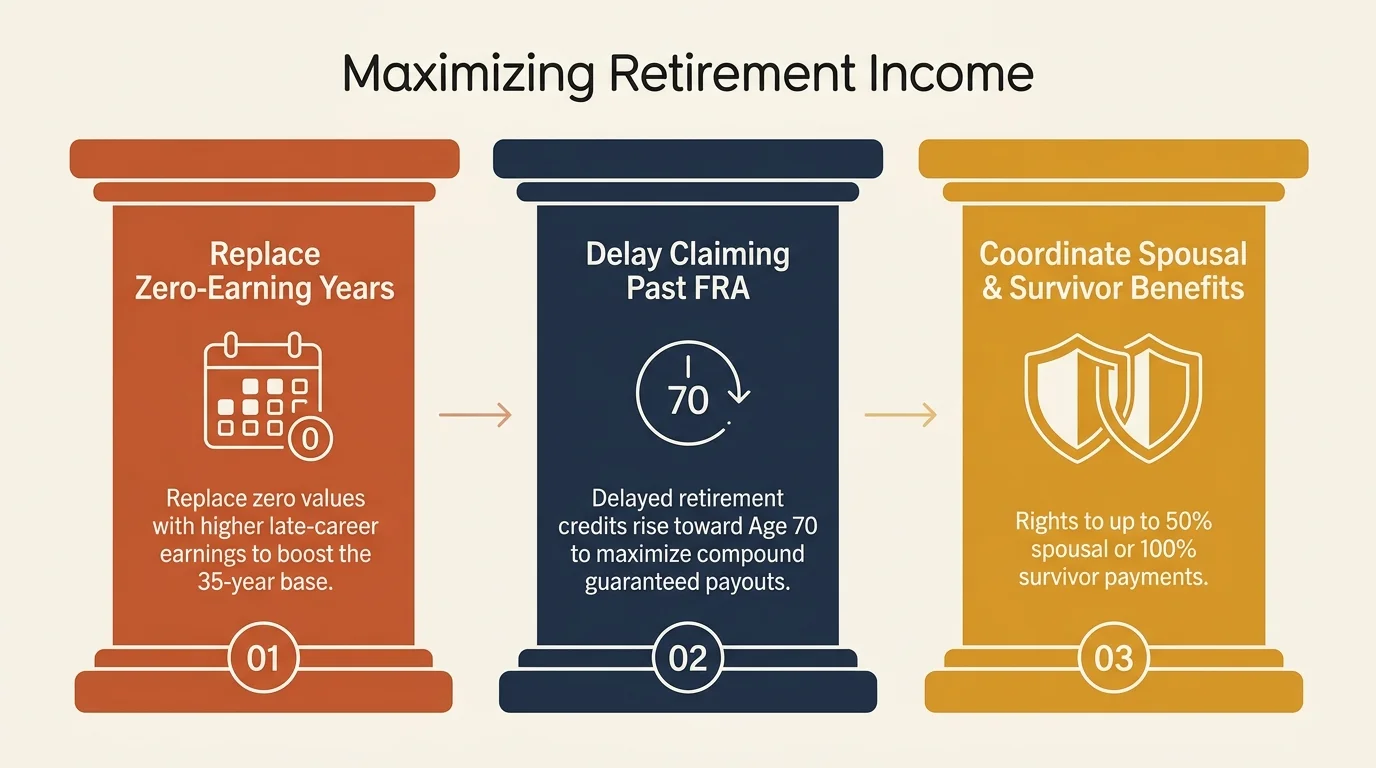
Your claiming age remains the single most powerful lever under your direct control. Your Full Retirement Age falls between 66 and 67, depending on the year you were born. If you delay claiming past your Full Retirement Age, your benefit grows by 8% per year in delayed retirement credits until you reach age 70. This guaranteed growth offers an inflation-adjusted return that no commercial annuity can match.
If you are married, coordinate your claiming strategy with your spouse rather than viewing your benefits in isolation. Under federal rules, you can claim a spousal benefit worth up to 50% of your spouse’s Full Retirement Age benefit if that amount exceeds your own earned benefit. If you are divorced after a marriage that lasted at least 10 consecutive years, you can claim benefits based on your ex-spouse’s work record at age 62 or older, provided you are currently unmarried. This claim does not reduce your ex-spouse’s check or affect their current family in any way.
You can also eliminate zero-earning years from your calculation by extending your working years. Because the Social Security Administration recalculates your benefit annually, earning a solid income in your 60s will automatically replace earlier low-earning or zero-earning years, permanently boosting your Primary Insurance Amount.
Pillar 2: Dynamic Lifestyle Design and Budget Agility
Managing on a fixed retirement budget requires intentional lifestyle design, especially as mobility changes over time. You should evaluate your housing costs early, as housing represents the largest single expense for older adults. Downsizing to a single-story home, relocating to an area with lower property taxes, or exploring shared housing models can free up significant monthly cash flow and eliminate maintenance burdens.
Engaging with local community resources through nonprofit organizations like AARP connects you with subsidized transportation programs, property tax relief initiatives, and accessible wellness centers. Designing a lifestyle that incorporates free or low-cost cultural, social, and physical activities allows you to maintain a high quality of life without depleting your financial reserves.
Pillar 3: Proactive Healthcare and Longevity Protection
Longevity is both a blessing and a serious financial risk. Actuarial data shows that a 65-year-old woman is projected to live roughly 2.5 years longer than a 65-year-old man, with many women living well into their late 80s and 90s. This extended lifespan means your money must stretch further while you absorb substantial late-life healthcare and long-term care expenses.
Protect yourself by mastering your enrollment timeline on Medicare.gov. Signing up during your Initial Enrollment Period around your 65th birthday prevents expensive, permanent late-enrollment penalties on Medicare Part B and Part D. If you are still working and enrolled in a high-deductible health plan, max out a Health Savings Account; these funds grow triple tax-free and can cover out-of-pocket medical, dental, and vision costs throughout your retirement years.

Expert Insights on Navigating the Benefit Divide
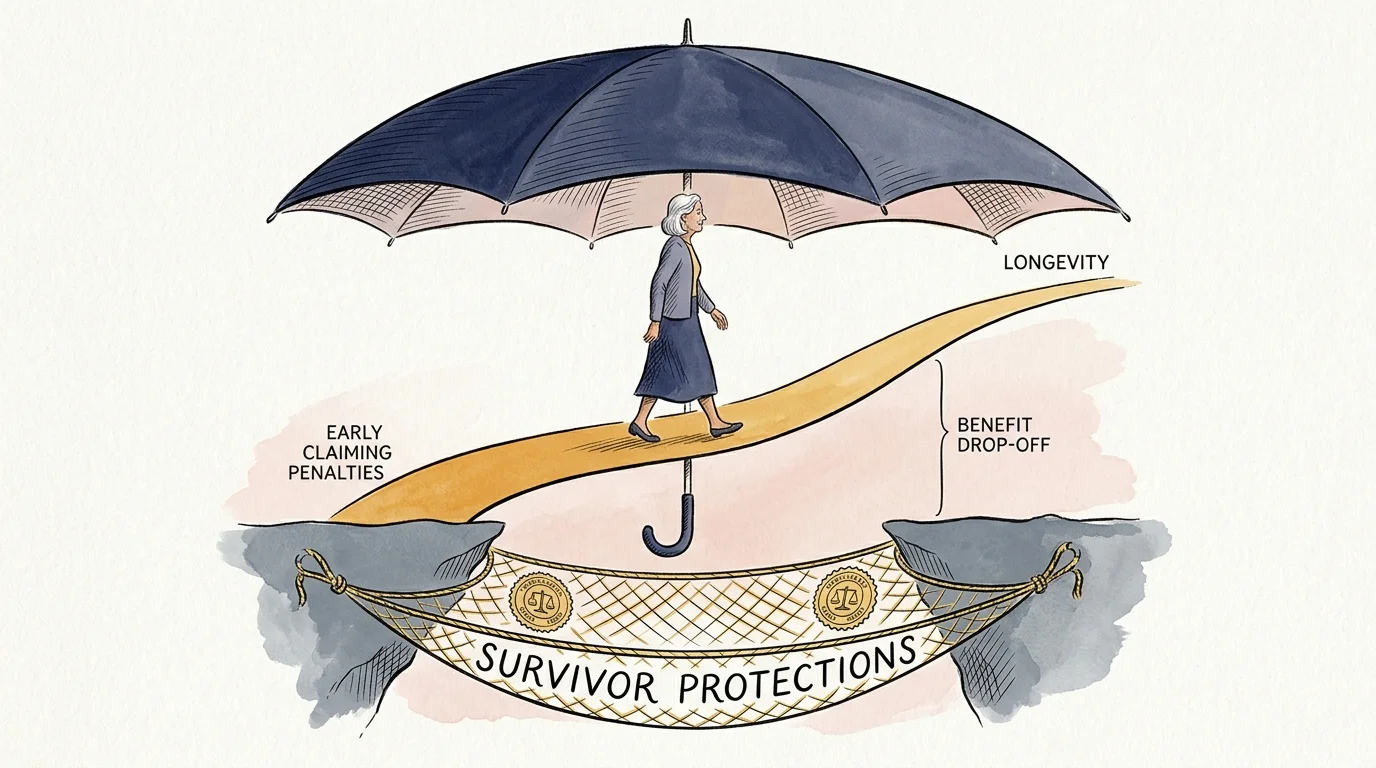
Financial planners emphasize that married couples must plan specifically for the inevitable transition to a single-income household. Certified Financial Planner professionals frequently highlight the danger of the survivor benefit cliff. When one spouse dies, the surviving spouse inherits the higher of the two monthly Social Security checks, but the smaller check vanishes completely. Because women outlive men on average, women overwhelmingly bear the brunt of this sudden income drop.
Gerontologists and aging specialists also note that financial stability directly influences physical and emotional well-being. Chronic financial stress in late life accelerates cognitive decline and limits access to nutritious food, reliable transportation, and preventative medical care. Establishing a predictable baseline of guaranteed income—anchored by an optimized Social Security check—serves as a vital buffer against late-life vulnerability.
Consider the experience of Margaret, a retired teacher’s aide who took eight years off work in her thirties to raise children and care for her mother. At age 62, facing early retirement, she reviewed her earnings statement and realized her estimated monthly benefit was just $1,150. By working part-time until age 67, she replaced several zero-earning years on her record and allowed her benefit to reach its full potential of $1,820 per month. That additional $670 every month provided the exact cushion she needed to remain comfortably in her own home.
Critical Risks, Benefit Cliffs, and Financial Safeguards
As you structure your retirement income, you must navigate several hidden traps that can erode your purchasing power. One major hazard involves the federal taxation of Social Security benefits. Under guidelines administered by the Internal Revenue Service, if your combined provisional income—which includes adjusted gross income, nontaxable interest, and half of your Social Security benefit—exceeds $25,000 for single filers or $32,000 for joint filers, up to 85% of your benefits become subject to federal income tax. Because Congress has never adjusted these thresholds for inflation since establishing them decades ago, even modest withdrawals from a traditional IRA can trigger an unexpected tax bill.
Another critical risk is the Income-Related Monthly Adjustment Amount, or IRMAA. If your income crosses specific thresholds, Medicare adds a substantial surcharge to your Part B and Part D monthly premiums, reducing your net Social Security payment. Careful distribution planning from taxable, tax-deferred, and Roth accounts helps keep your income below these costly thresholds.
Finally, remain vigilant against aggressive government imposter scams. Fraudsters frequently target older women through automated calls, text messages, and deceptive emails claiming that the government has suspended their Social Security number due to suspicious activity. The Social Security Administration will never call you out of the blue to threaten your benefits, demand immediate wire transfers, or request payment via retail gift cards. If you receive an unsolicited communication demanding urgent action, hang up immediately and access your official account directly through secure government portals.
Frequently Asked Questions About Women’s Social Security Benefits
Can I claim Social Security on my ex-husband’s work record without his knowledge?
Yes. If you were married for at least 10 consecutive years, have been divorced for at least two years, are at least 62 years old, and are currently unmarried, you can apply for divorced spousal benefits directly through the Social Security Administration. Your ex-spouse will not be notified, and your claim will not reduce his payments or impact his current spouse’s benefits in any way.
How does working in retirement affect my monthly benefit if I claim early?
If you claim benefits before reaching your Full Retirement Age and continue to work, your payments may be subject to the Retirement Earnings Test. If your annual earnings exceed the annual statutory limit, Social Security temporarily withholds $1 in benefits for every $2 earned above the cap. However, once you reach your Full Retirement Age, the agency recalculates your monthly payment upward to credit you for the withheld amounts.
What happens to my Social Security check if my spouse passes away?
As a surviving spouse, you are entitled to receive up to 100% of your deceased spouse’s actual Social Security benefit, provided you have reached your own Full Retirement Age. If their monthly benefit was higher than your own, your payment will step up to match their higher amount, while your previous smaller payment stops. You can claim survivor benefits as early as age 60, though doing so results in a permanent reduction.
Can I switch from my own retirement benefit to a spousal benefit later?
Under current deemed filing rules, when you apply for retirement benefits, you automatically apply for both your own worker benefit and any spousal benefit you are eligible for at that time. However, if your spouse has not yet filed for their own benefits when you claim, you will receive your own worker benefit first. Once your spouse subsequently files, you can step up to the higher spousal amount if 50% of their Full Retirement Age benefit exceeds your payment.
Taking Charge of Your Retirement in the Next 48 Hours
The gender gap in Social Security presents real financial hurdles, but you possess the tools to build a resilient retirement plan. Waiting to address these gaps only narrows your options, whereas taking immediate action puts you in control of your financial destiny.
Within the next 48 hours, navigate to the official Social Security website and create or log into your personal account. Download your comprehensive Social Security Statement, verify that every year of your earnings history is accurate, and calculate your projected monthly benefit at age 62, Full Retirement Age, and age 70. Identifying discrepancies now and choosing an optimal claiming age will secure thousands of extra dollars for your future.