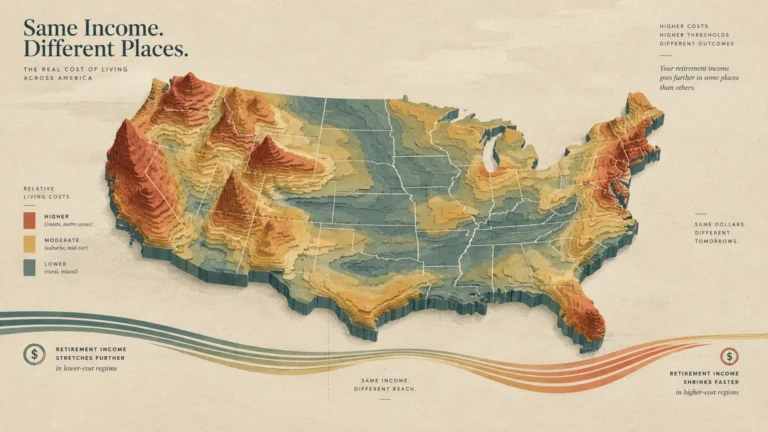
Navigating retirement without a spouse gives you complete autonomy over your financial choices. However, federal Social Security rules treat lifelong single workers quite differently than married households.
If you never married, you rely entirely on your personal earnings record without access to secondary spousal cushions. Understanding these distinct regulations allows you to maximize every monthly dollar you earned.
From delayed filing credits to fixed taxation thresholds, solo claiming decisions carry immense lifelong significance. Taking control of your customized benefit strategy today protects your future standard of living.

The Financial Landscape for Single Beneficiaries
Demographic shifts show a rapidly growing population of solo retirees across the country. According to data from the Bureau of Labor Statistics, single-person households face distinct expenditure challenges in late life.
Unlike married couples who share fixed household overhead, you absorb housing and utility costs alone. A single Social Security check must carry expenses that two earners often split.
Certified Financial Planner Marcus Vance notes that single filers cannot afford casual claiming mistakes. You lack a partner whose benefit might bridge unexpected financial gaps down the road.
10 Things That Happen to Social Security If You Never Married
1. You Forfeit Spousal Benefit Top-Offs
Under federal guidelines, married individuals can claim up to 50% of their living spouse’s Primary Insurance Amount. This provision offers a valuable boost when one spouse earned significantly less.
As a lifelong single person, you cannot access this secondary calculation. Your monthly deposit reflects your personal contributions alone, regardless of household financial demands.
Cohabitating or domestic partnerships offer zero legal standing under these program rules. The Social Security Administration reserves auxiliary spousal payments exclusively for legal marriages.
2. Survivor Benefits Cannot Expand Your Income
Widows and widowers frequently receive up to 100% of their deceased partner’s higher benefit. This survival provision prevents household income from crashing after a partner passes away.
If you never married, this safety valve simply does not exist for your household. You never step into a higher check through a partner’s work history.
Your financial plan must sustain your longevity independently without anticipated survivor step-ups. Planning for full self-sufficiency eliminates reliance on benefits you cannot claim.
3. Your Lifetime 35-Year Calculation Stands Alone
The government calculates your monthly retirement check using your 35 highest-earning years, adjusted for wage growth. Each year without recorded earnings enters your formula as a zero.
Married workers with extended career gaps often lean on spousal provisions to compensate for lower averages. You do not have that structural backstop.
Every zero in your calculation drags down your monthly payout permanently. Working additional years to replace low-earning or missing periods directly protects your solo income baseline.
4. Delayed Retirement Credits Become Your Strongest Hedge
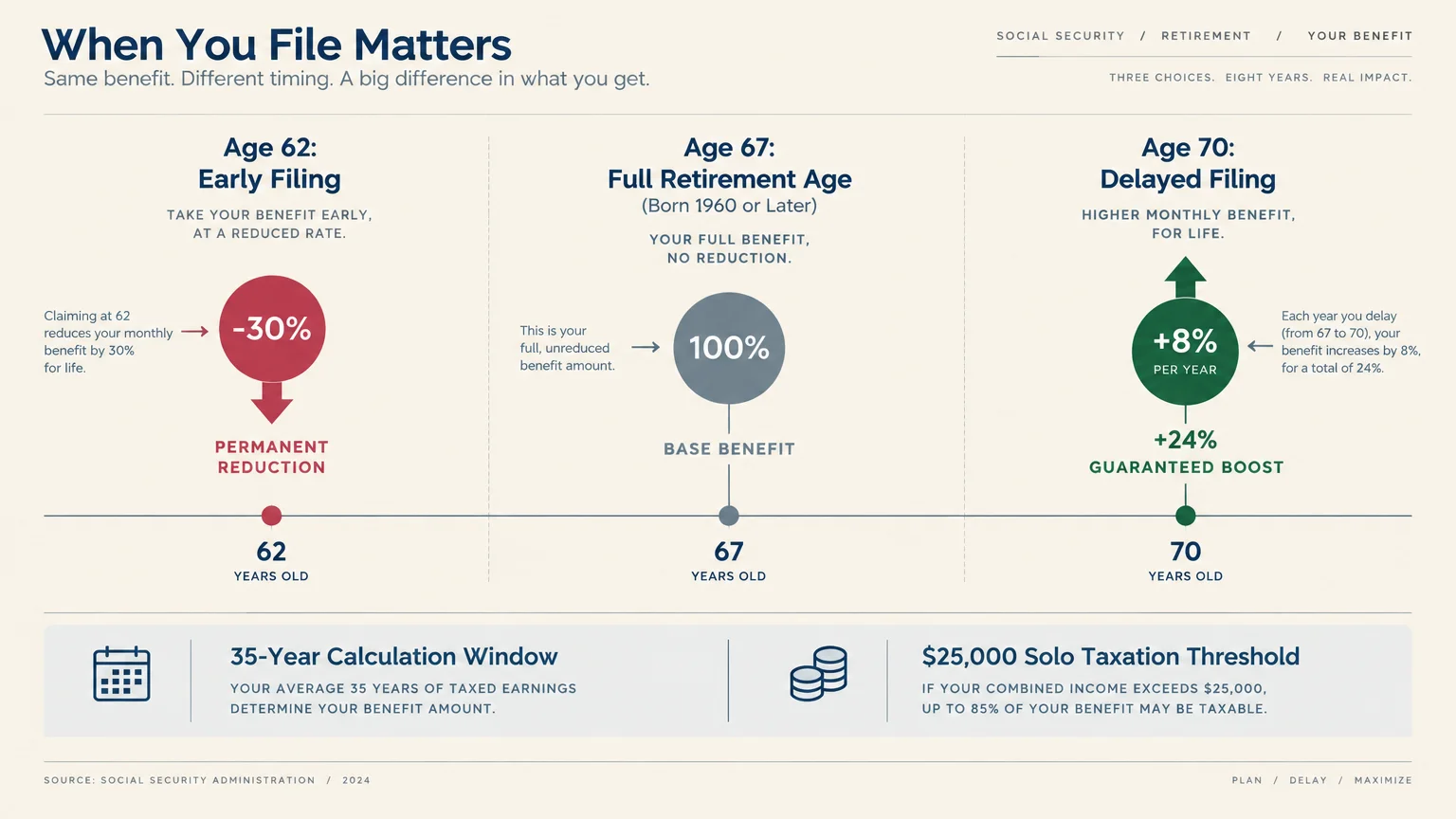
For individuals born in 1960 or later, Full Retirement Age sits at 67. Claiming your benefit early at age 62 triggers a permanent reduction of up to 30%.
Conversely, waiting past your standard age earns you delayed retirement credits of 8% per year. Delaying until age 70 guarantees a permanent 24% boost above your base amount.
Because you rely on a single income stream, maximizing this guaranteed, inflation-indexed payment provides peerless longevity insurance. It serves as your primary defense against outliving your capital.
5. The Rigid $25,000 Tax Torpedo Hits You Faster
Retirees often pay federal income taxes on their benefits once their combined income crosses certain limits. The Internal Revenue Service calculates combined income using your adjusted gross income, nontaxable interest, and half your benefit.
For single filers, combined income between $25,000 and $34,000 makes up to 50% of benefits taxable. Exceeding $34,000 exposes up to 85% of your benefits to federal tax.
Congress established these thresholds in 1983 and 1993 without indexing them for inflation. As regular cost-of-living adjustments push your checks higher, you slip into taxable territory rapidly.
6. The 40-Work-Credit Hurdle Requires Complete Self-Reliance
To receive any retirement benefit on your own record, you must accumulate 40 quarterly work credits. That threshold represents roughly ten full years of covered employment.
In 2026, you earn one credit for every $1,890 of covered wages, requiring $7,560 for the annual four-credit maximum. This reflects an increase from the $1,810 credit value applied during 2025.
If you fall short of 40 credits, you receive zero retirement benefits from the program. Unmarried workers cannot qualify through a spouse’s career, making careful credit tracking mandatory.
7. The $255 Lump-Sum Death Benefit Is Permanently Forfeited
Social Security includes a minor one-time death payment of $255 intended to assist with burial expenses. However, federal statutes restrict this payment strictly to surviving spouses or eligible minor children.
If you die unmarried without qualifying dependent children, the agency retains this money. It does not transfer to adult children, siblings, or your named estate executor.
Solo retirees must arrange alternative funding for final expenses through savings, payable-on-death accounts, or specialized insurance. You cannot count on federal death benefits to assist surviving relatives.
8. Dependent Parents May Qualify for Survivor Payouts
Many people assume an unmarried person’s death benefits vanish entirely upon their passing. Yet federal law provides unique protections for aging parents who relied on you for support.
If you provide at least half of your parent’s living expenses, they may claim parent survivor benefits at age 62. A single surviving parent can receive up to 82.5% of your primary benefit.
When two dependent parents qualify, each parent receives up to 75% of your base benefit. This little-known rule offers meaningful relief for multi-generational solo households.
9. Dependent and Disabled Children Retain Full Protection
Marital status has zero bearing on your ability to pass benefits to your children. Your unmarried biological or legally adopted children qualify for auxiliary payouts based on your work record.
Children under 18—or 19 if still attending secondary school—can receive up to 75% of your benefit. The same percentage applies to adult children who developed qualifying disabilities prior to age 22.
Your contributions create an essential safety net for vulnerable dependents, regardless of your personal relationship status. Solo parenthood does not compromise these fundamental family guarantees.
10. The Retirement Earnings Test Directly Squeezes Early Filers
If you collect benefits before your Full Retirement Age while working, earnings caps apply directly to your check. Married couples can balance wage penalties across multiple income streams; you cannot.
In 2026, the baseline earning limit sits at $24,480, up from $23,400 in 2025. The government withholds $1 of benefits for every $2 you earn above this benchmark.
During the year you reach full retirement age, the limit expands to $65,160 for 2026. Forfeiting cash flow hurts single earners deeply, making deliberate filing timing vital.
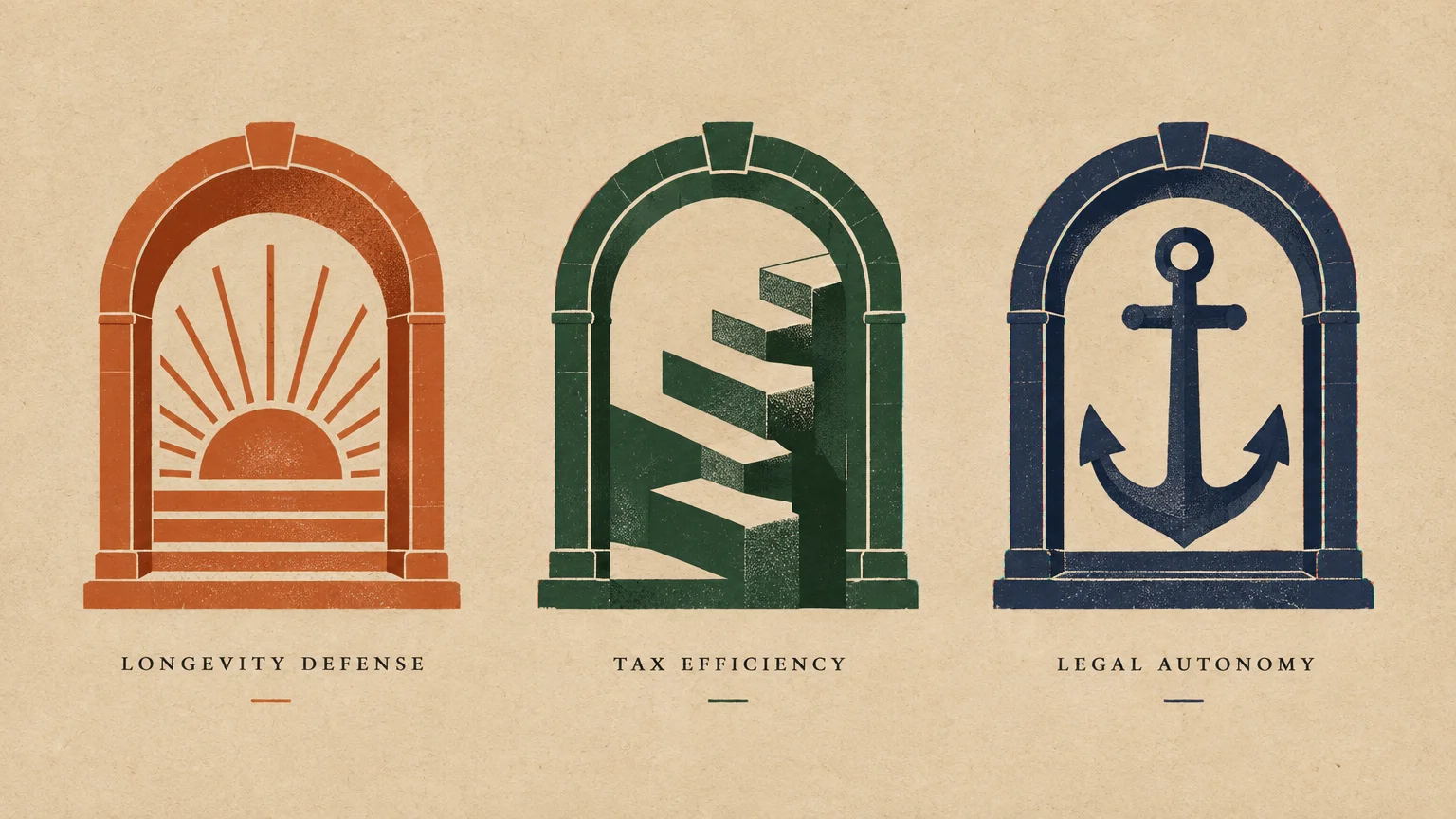
Three Strategic Pillars for Single Retirees
Income Planning and Strategic Tax Diversification
Solo retirees must orchestrate their withdrawals carefully to avoid aggressive taxation on Social Security. Balancing distributions between traditional accounts, Roth vehicles, and cash reserves helps suppress your combined income metric.
Executing strategic Roth conversions before claiming your benefit reduces future required minimum distributions. Gerontologists and financial planners stress that steady income control preserves your lifestyle choices.
Keeping your taxable footprint predictable prevents unexpected jumps in Medicare premiums and Social Security clawbacks. Proactive income staging puts you in control of your monthly bottom line.
Lifestyle Design and Independent Housing Solutions
Solo aging requires proactive choices regarding your living arrangements and geographic support networks. According to aging specialists at AARP, community connection strongly correlates with financial resilience and emotional health.
Explore cooperative housing, active adult villages, or home-sharing models to lower monthly overhead. Sharing maintenance responsibilities creates breathing room inside a single-pension household budget.
Establishing durable powers of attorney ensures trusted individuals can manage financial affairs if your health falters. Preparing legal designations early shields your independence without marital defaults.
Solo Health and Long-Term Care Strategies
Married individuals often rely on spouses for unpaid informal caregiving when chronic conditions develop. Single retirees must construct a reliable healthcare infrastructure long before health challenges arise.
Evaluate comprehensive coverage options through Medicare alongside private supplemental policies to cap out-of-pocket exposure. Understanding deductible structures prevents catastrophic medical debts from depleting your assets.
Investigate hybrid long-term care insurance or dedicated health savings funds to finance in-home assistance. Securing dedicated care resources ensures you dictate your care conditions on your terms.

Risks, Safeguards, and Protecting Your Autonomy
Single seniors face heightened targeting by aggressive financial predators and impersonation scams. Fraudsters frequently target solo households, betting that no secondary partner will review questionable account transactions.
Set up automatic account alerts across your banking portals and monitor your monthly benefit deposits routinely. The government will never call unexpectedly demanding immediate fee payments via wire transfer.
Beware of sudden benefit cliffs when transitioning between employment, freelance consulting, and Social Security. Working closely with an accredited advisor prevents costly miscalculations that permanently diminish your monthly cash flow.
Frequently Asked Questions About Solo Social Security
Can an unmarried domestic partner receive my Social Security after I die?
No; federal rules require a recognized legal marriage to qualify for survivor or spousal benefits. Cohabitating partners have no legal claim to your Social Security record, regardless of relationship duration.
To protect a domestic partner financially, you must utilize wills, trusts, life insurance, or beneficiary designations on private accounts.
Does delaying Social Security make sense if I have health concerns?
Delaying benefits to age 70 offers the highest monthly payout, but your personal health profile matters. If you face chronic, life-limiting health conditions, claiming earlier may provide better total lifetime value.
Review your personal longevity expectations and family history alongside an objective financial planner before locking in an early claim.
What happens if I marry later in life?
If you marry down the road, you become eligible for spousal benefits after one year of marriage. You may also qualify for survivor benefits after nine months of legal marriage should your spouse pass away.
Marriage changes your filing options substantially, unlocking secondary avenues to supplement your personal earnings record.
How do I replace low-earning years in my 35-year calculation?
You can replace low or zero-earning years by continuing to work, even on a part-time basis. The agency recalculates your benefit annually and automatically substitutes higher earnings years into your top 35.
Even a few years of moderate consulting or freelance revenue can meaningfully lift your baseline calculation.
Take Action in the Next 48 Hours
Thriving as a single retiree starts with complete clarity surrounding your personal financial trajectory. You do not need a partner to build an enduring, prosperous retirement plan.
Log into your personal account on the official federal portal within the next two days. Review your recorded 35-year earnings history and verify that all past wages show up accurately.
Taking that straightforward administrative step today guarantees you claim every dollar you earned through decades of dedicated labor.