
Mastering Social Security terminology can save you tens of thousands of dollars in lifetime retirement income. Understanding these essential terms ensures you never leave hard-earned benefits on the table.
Roughly half of older Americans rely on Social Security for at least fifty percent of their income. Yet navigating agency handbooks often feels like deciphering a foreign language.
A single misunderstood definition can permanently slash your monthly checks or create unexpected tax liabilities. Let us clarify the ten most confusing terms so you can claim with total confidence.

Navigating the Modern Social Security Landscape
Economic pressures and policy shifts make understanding your benefits more urgent than ever. The Social Security Administration announced a 2.5 percent cost-of-living adjustment for 2025.
Meanwhile, the maximum taxable earnings cap rose to $176,100; higher earners now pay payroll taxes on more wages. Inflation and shifting rules mean you cannot afford to guess what agency notices mean.
When you understand the exact mechanics behind agency vocabulary, you protect your household against expensive, irreversible mistakes. Knowledge transforms an intimidating bureaucracy into a powerful financial foundation.
1. Full Retirement Age (FRA)
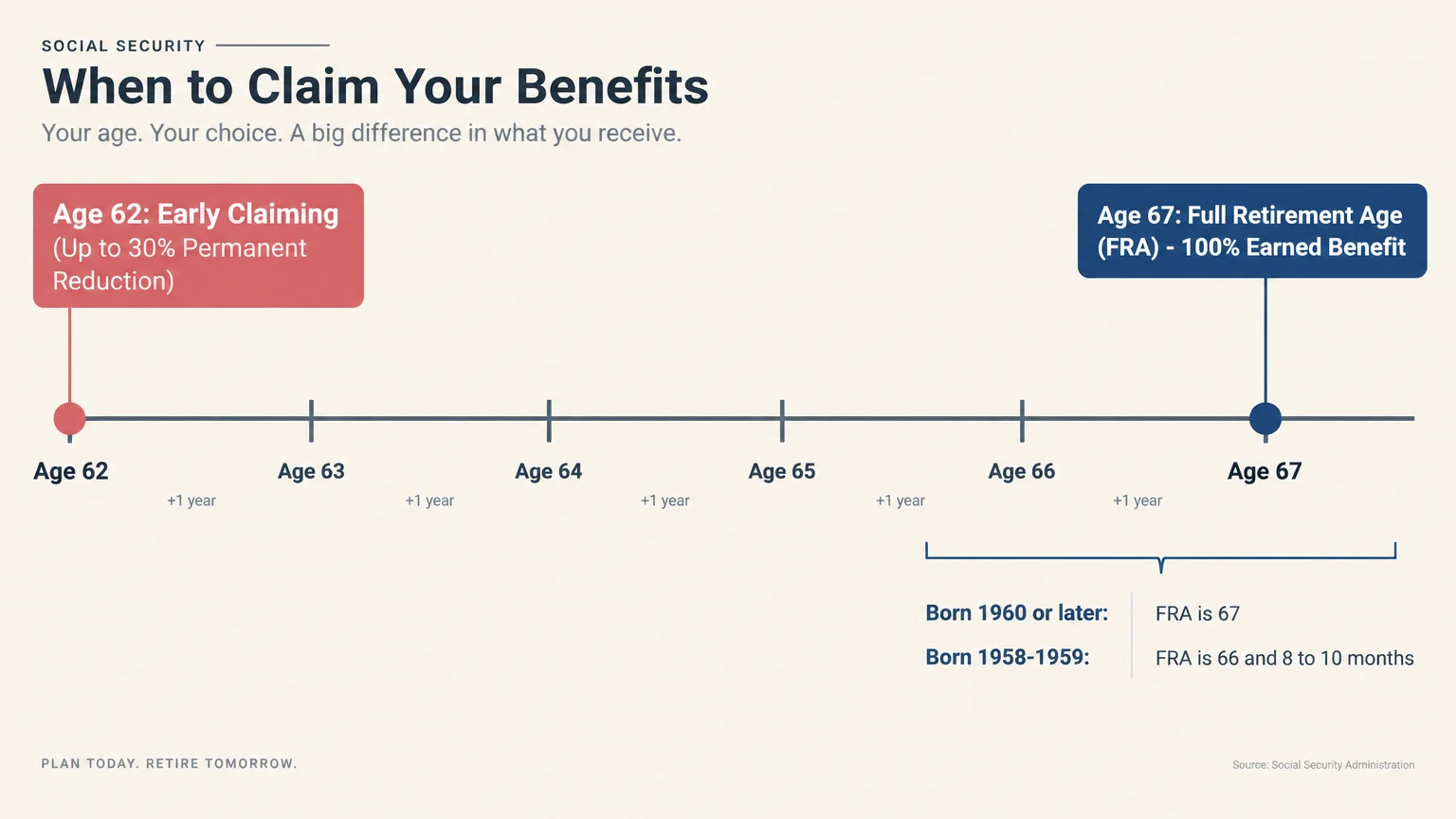
Many retirees assume their full retirement age is 65; this common myth causes expensive claiming errors. If you were born in 1960 or later, your official FRA is 67.
For those reaching FRA in 2025 who were born in 1958 or 1959, the threshold is 66 and 8 to 10 months. You must verify your exact birth year rather than rely on outdated assumptions.
Claiming at age 62 permanently reduces your monthly check by up to 30 percent. Waiting until your exact FRA guarantees you receive 100 percent of your earned monthly benefit.
2. Primary Insurance Amount (PIA)
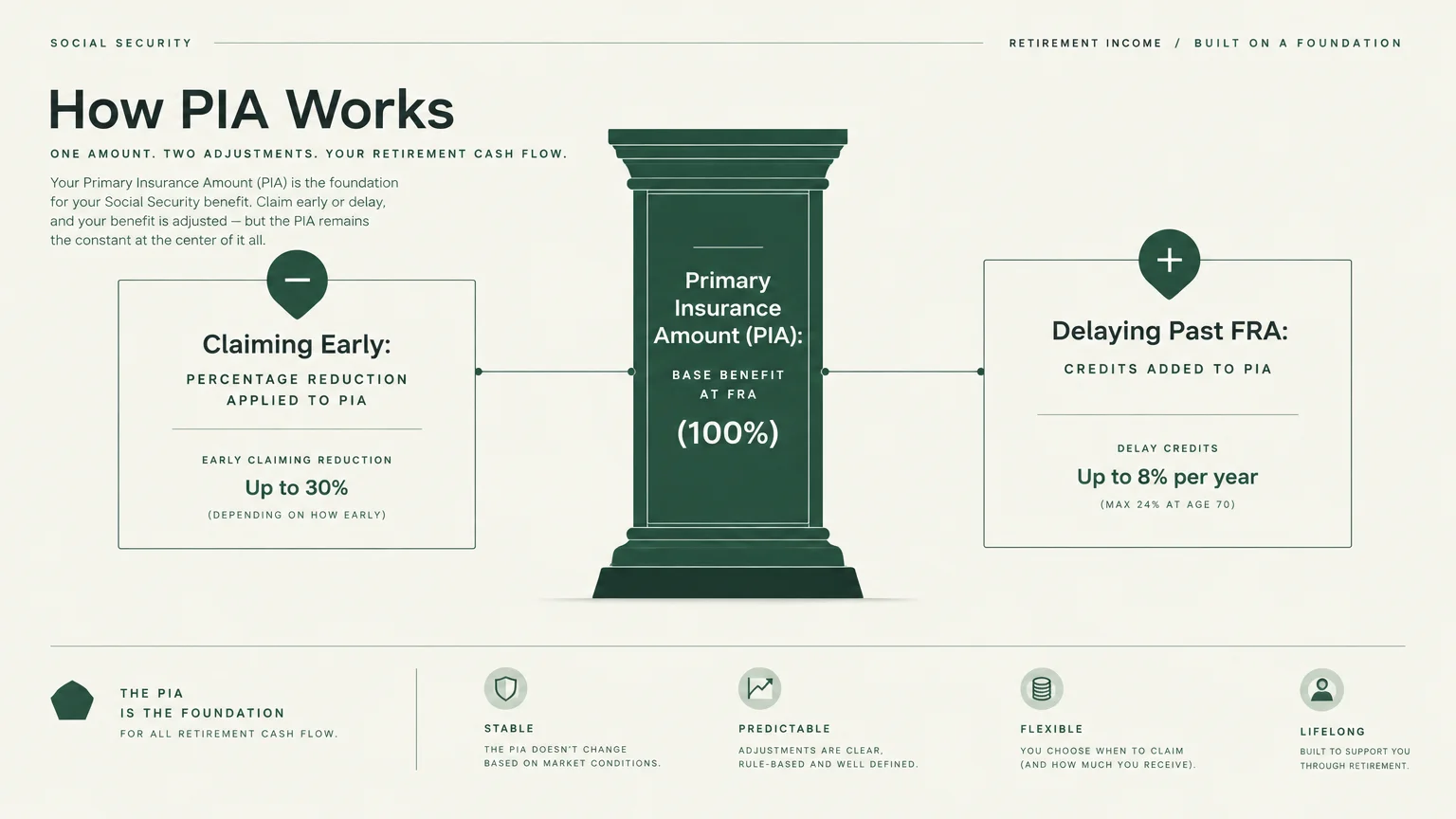
Your Primary Insurance Amount represents the core foundation of your retirement benefits. It is the exact dollar amount you receive if you claim precisely at your FRA.
Every adjustment—from early claiming cuts to delayed claiming boosts—calculates directly from this base figure. Knowing your PIA helps you compare different claiming ages accurately.
Financial advisors use this baseline number to model your long-term cash flow projections. You can locate your current PIA on your personal annual benefits statement.
3. Average Indexed Monthly Earnings (AIME)
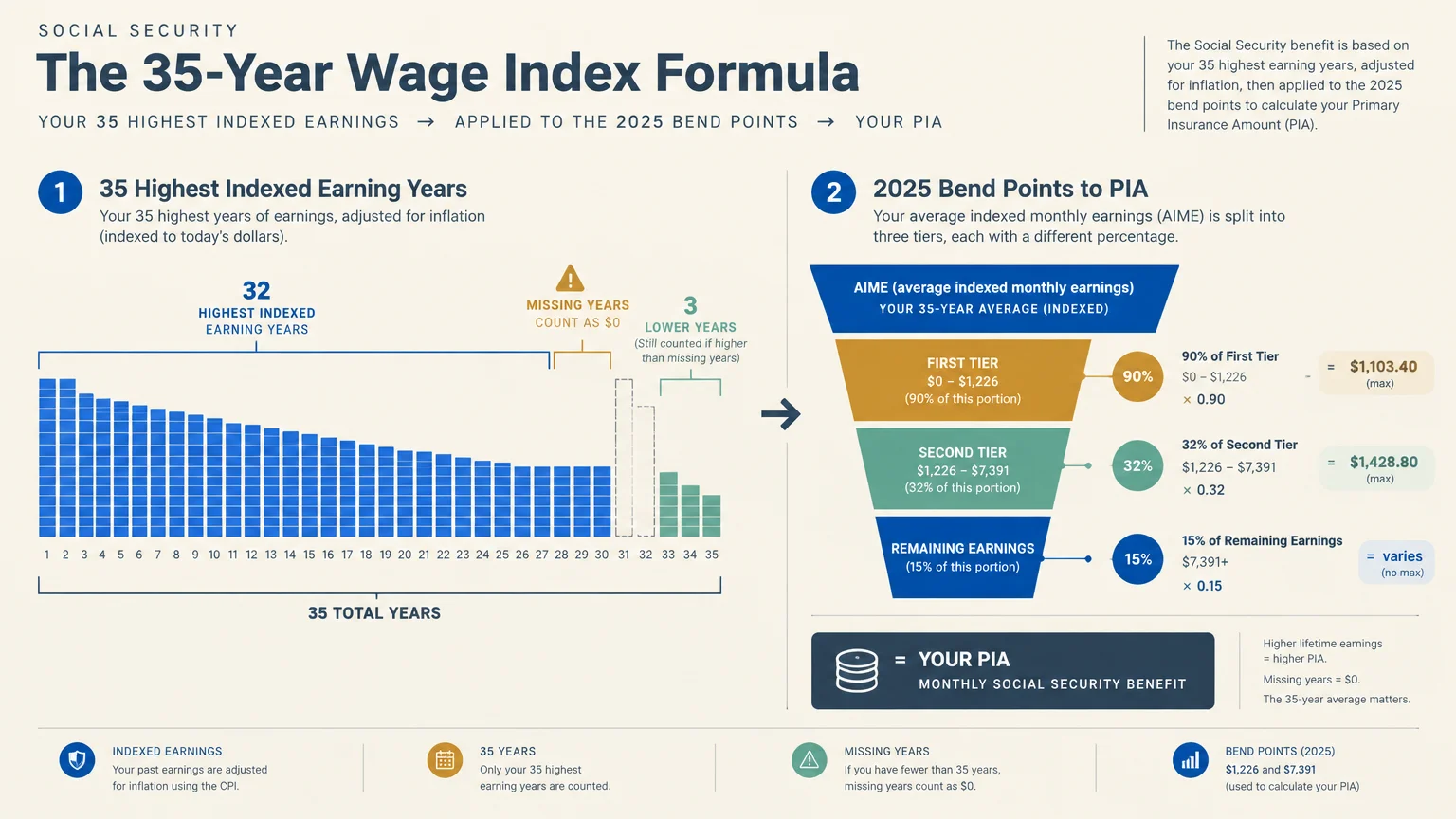
People often confuse PIA with AIME, but they serve two distinct roles. The agency calculates your AIME by indexing your highest 35 years of wage earnings.
If you worked fewer than 35 years, the agency inserts zero-dollar years into your average. These zeros significantly drag down your overall calculation and shrink your future checks.
In 2025, bend points apply formula percentages of 90, 32, and 15 percent to your AIME to determine your PIA. This progressive formula replaces a higher proportion of income for lower-wage earners.
4. Delayed Retirement Credits (DRCs)
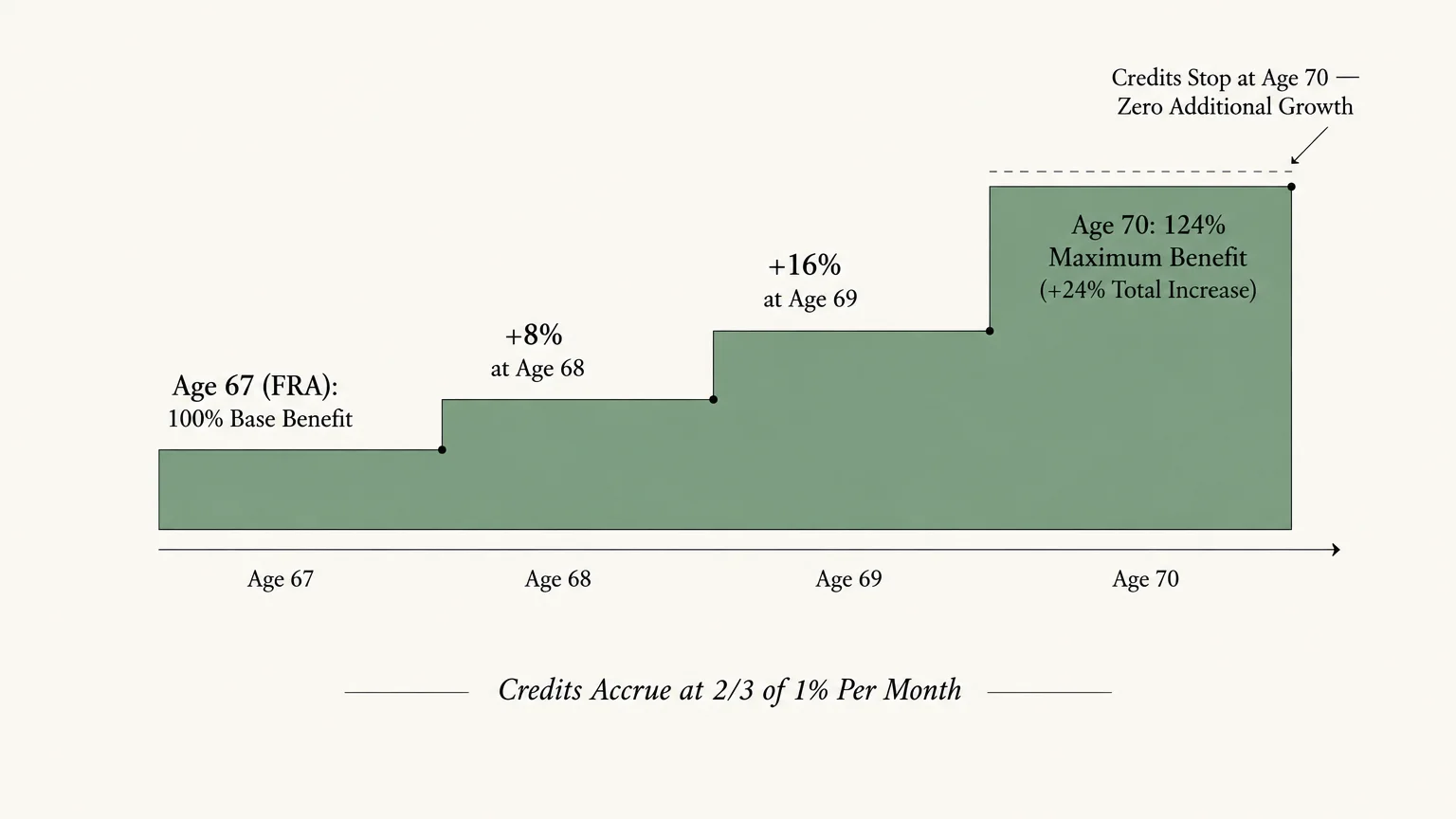
Delayed Retirement Credits reward you for postponing your benefit claim beyond your Full Retirement Age. For every year you delay claiming between FRA and age 70, your benefit permanently increases by 8 percent.
These credits accrue at two-thirds of one percent for each month you delay. Over three full years from age 67 to 70, you gain a permanent 24 percent raise.
Crucially, Delayed Retirement Credits stop accumulating the moment you celebrate your 70th birthday. Delaying beyond age 70 provides zero extra financial gain and leaves free money unclaimed.

5. Retirement Earnings Test (RET)
Many workers fear that the Retirement Earnings Test permanently penalizes working seniors. In reality, the earnings test only withholds benefits temporarily if you work before reaching your FRA.
In 2025, if you are under FRA all year, the agency withholds $1 for every $2 earned above $23,400. In the year you reach FRA, the limit rises to $62,160 before the withholding rule ends.
Once you reach your FRA, the agency recalculates your monthly benefit permanently to restore withheld funds. You never truly lose those dollars; the government simply delays their distribution.
6. Provisional Income
Retirees often assume Social Security benefits are completely tax-free; unfortunately, provisional income rules catch many off guard. The Internal Revenue Service uses provisional income to determine if your benefits are taxable.
Your provisional income equals your adjusted gross income, plus nontaxable interest, plus 50 percent of your annual Social Security benefits. If that combined sum crosses statutory thresholds, tax liability applies.
If provisional income exceeds $34,000 for single filers or $44,000 for married couples, up to 85 percent of benefits become taxable. Because Congress never indexed these thresholds for inflation, more middle-class retirees pay taxes every year.

7. Spousal Benefits
Spousal benefits allow married individuals to receive retirement income based on their partner’s career earnings history. You can receive up to 50 percent of your spouse’s PIA if you claim at your FRA.
Your spouse must already collect their own retirement benefits before you can claim spousal benefits. If you claim spousal benefits before reaching your own FRA, your payout faces permanent early-claiming reductions.
Unlike your personal retirement benefit, spousal benefits do not earn Delayed Retirement Credits past your FRA. Divorced individuals can also claim spousal benefits if the marriage lasted ten years or longer.

8. Survivor Benefits
Retirees frequently conflate spousal benefits with survivor benefits, but their rules and payout sizes differ substantially. While spousal benefits cap at 50 percent, survivor benefits provide up to 100 percent of the deceased worker’s check.
A surviving spouse inherits any Delayed Retirement Credits the primary earner accumulated prior to passing away. This makes delaying retirement an exceptional protective strategy for the lower-earning partner.
Surviving spouses can claim survivor benefits as early as age 60, though early claiming reduces monthly payouts. Widows and widowers can strategically claim survivor benefits first while letting their own benefit grow until age 70.
9. Windfall Elimination Provision (WEP)
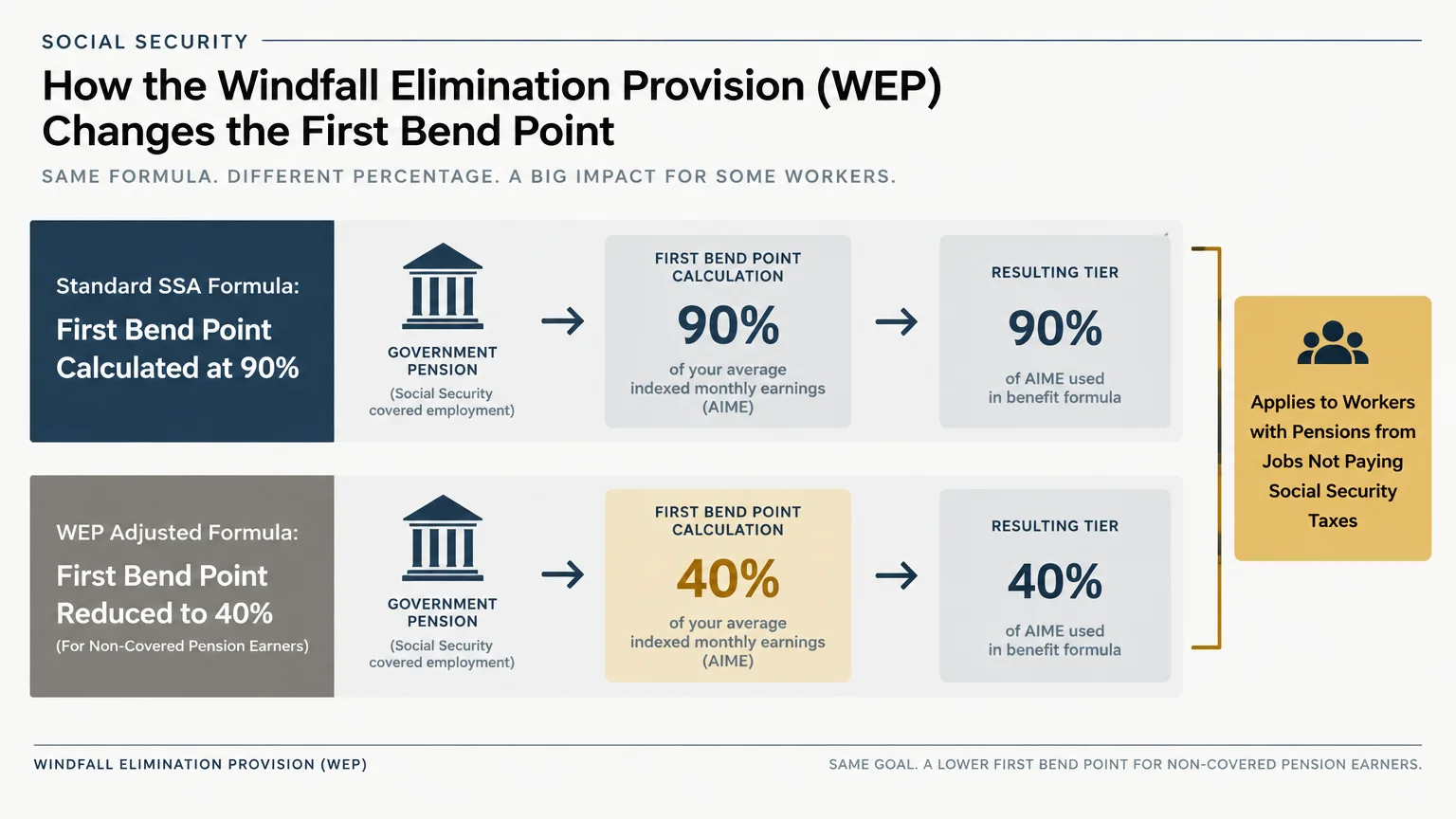
The Windfall Elimination Provision alters the benefit formula for retirees who earned pensions from non-covered employment. This commonly impacts retired state workers, municipal employees, and public school teachers.
If you worked a public job where you did not pay Social Security payroll taxes, WEP adjusts your retirement benefit. In 2025, the maximum monthly WEP reduction caps at $610, or half of your non-covered pension amount.
If you accumulate 30 or more years of substantial earnings under Social Security, WEP does not apply to you. Each substantial year between 21 and 29 years gradually phases out the reduction.
10. Government Pension Offset (GPO)
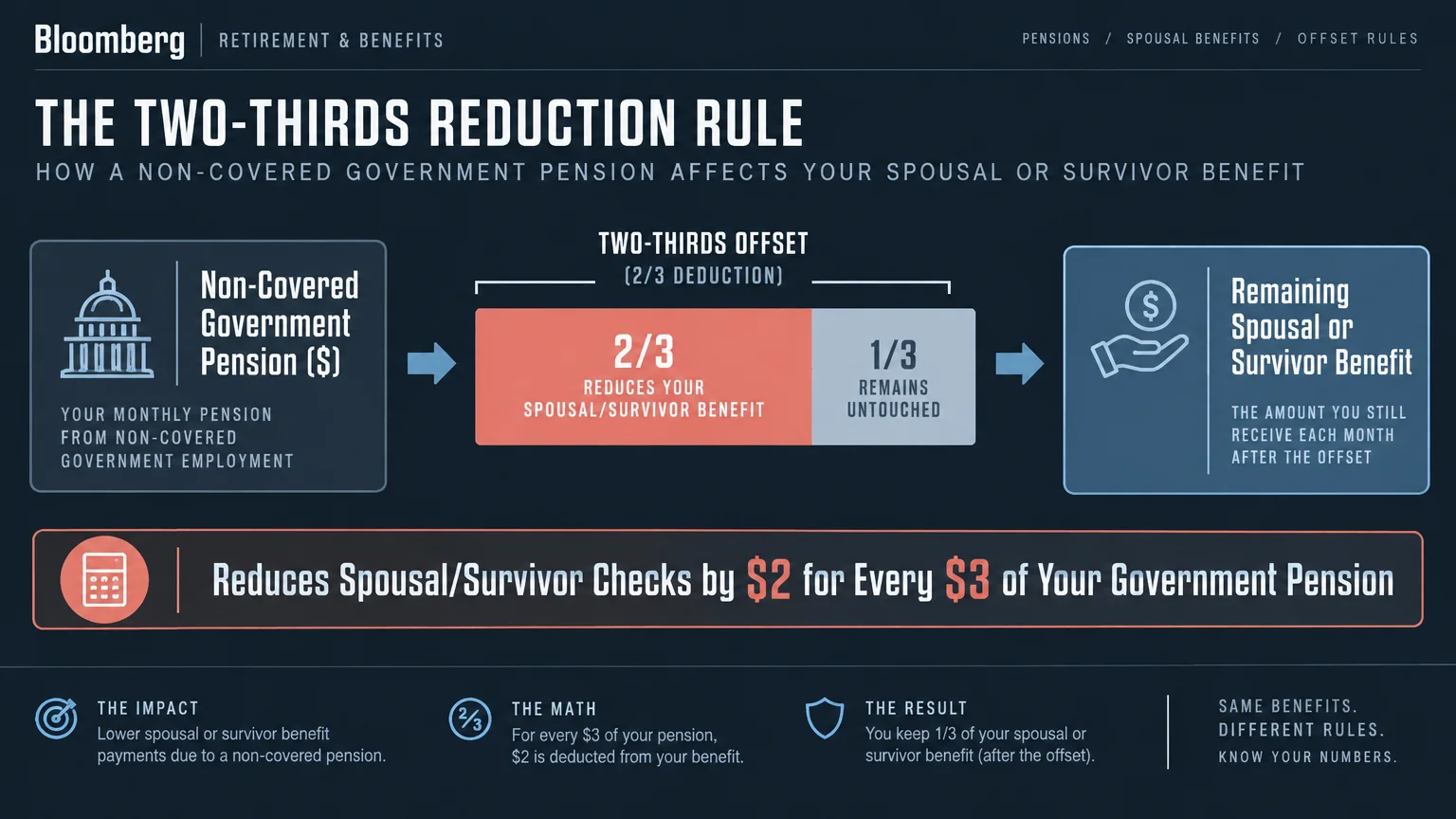
While WEP impacts your own retirement check, the Government Pension Offset reduces spousal or survivor benefits. The GPO applies if you receive a government pension from non-covered work and claim spousal support.
The offset reduces your spousal or survivor benefit by two-thirds of your non-covered government pension. For example, a monthly pension of $1,500 triggers a $1,000 reduction in your Social Security benefit.
Because many government pensions exceed $1,500, the GPO frequently wipes out spousal and survivor benefits entirely. Planning for this reality prevents unpleasant cash flow surprises in retirement.
Clarifying Work Credits and Program Distinctions
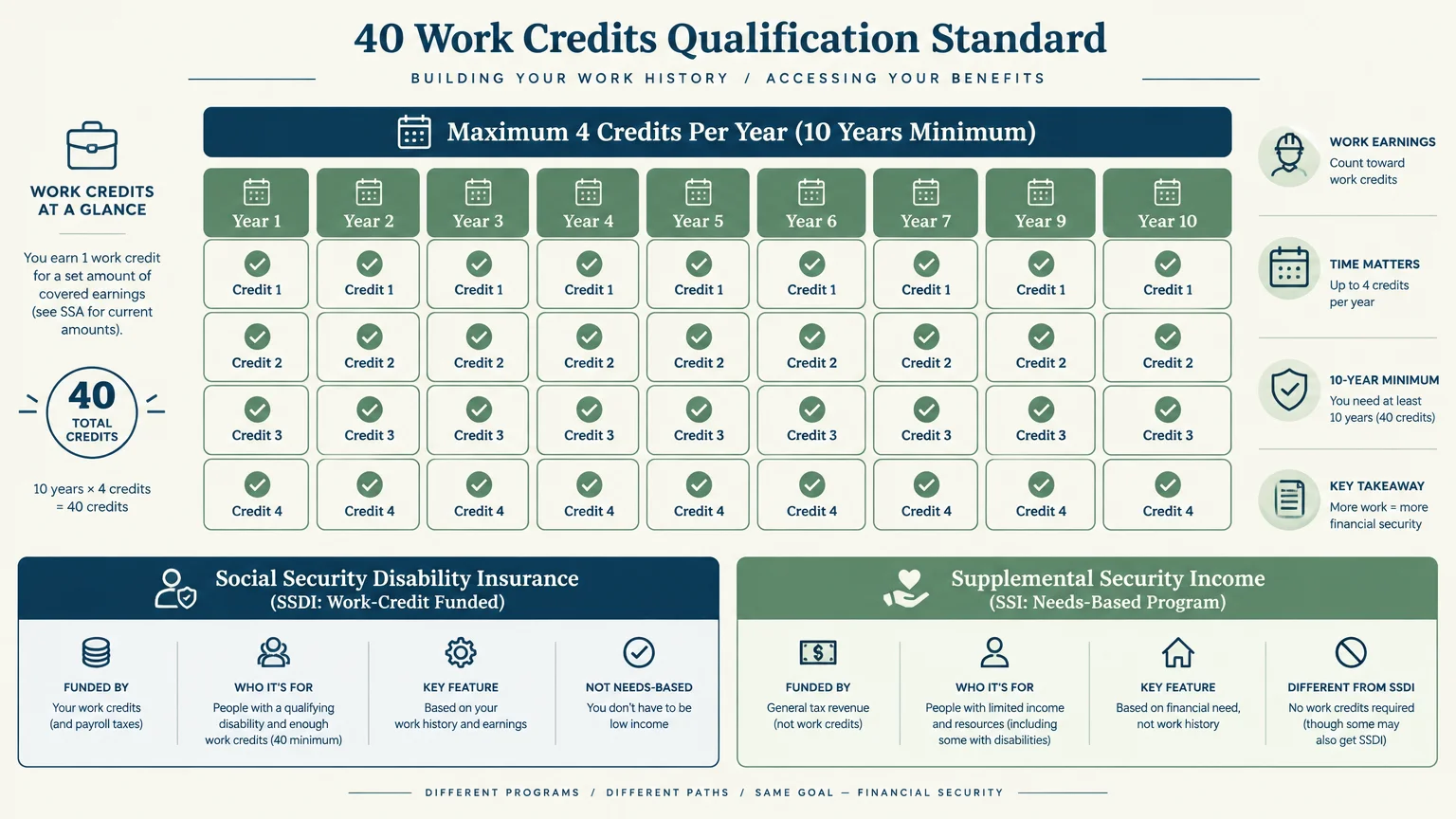
Many pre-retirees confuse earning Social Security credits with working specific calendar quarters. In 2025, you earn one credit for every $1,810 in covered earnings, up to four credits annually.
You can earn all four credits in a single month if you earn at least $7,240. Furthermore, accumulating more than 40 lifetime credits does not increase your monthly benefit payment.
Do not confuse Social Security retirement with Supplemental Security Income (SSI). SSI is a means-tested safety net capping individual assets at $2,000, whereas Social Security retirement carries zero asset limits.

Strategic Pillars for Your Claiming Decision
Income Planning and Longevity Protection
Coordinate your Social Security claiming date with your broader retirement asset portfolio. Drawing down traditional individual retirement accounts can bridge living expenses while your benefits grow by 8 percent annually.
Certified Financial Planner professionals recommend evaluating family health history alongside financial assets. Delaying your claim past your FRA provides superior longevity insurance if you expect to live past age 82.
Lifestyle Design and Phased Retirement
Modern retirement often includes phased transitions through consulting, volunteering, or part-time work. Navigating the earnings test enables you to supplement income without triggering unexpected cash flow disruptions.
Design a flexible lifestyle budget that accommodates changing energy levels and mobility. A stable Social Security foundation provides the financial peace of mind required to pursue meaningful personal goals.
Healthcare and Benefit Integration
Your Social Security claiming timing directly intersects with your healthcare planning. Most Americans become eligible for Medicare at age 65, regardless of whether they have started claiming retirement benefits.
If you collect Social Security at 65, Medicare automatically deducts Part B premiums from your monthly check. If you delay benefits, you must manually enroll in Medicare to avoid lifelong late-enrollment penalties.

What Research and Gerontologists Reveal
According to findings published by the AARP Public Policy Institute, claiming mistakes cost American retirees billions in foregone income annually. Misinterpreting terms like FRA and PIA leads many to file prematurely out of fear.
Data from the Bureau of Labor Statistics indicates that more older adults now work past traditional retirement ages. Gerontologists emphasize that financial clarity directly reduces anxiety and supports long-term cognitive and emotional health.

Safeguards Against Common Pitfalls and Scams
Scammers routinely exploit complex agency vocabulary to deceive seniors through threatening phone calls and phishing emails. The government will never call unexpectedly to threaten asset seizure or benefit suspension.
Never share your Social Security number or banking details with unverified callers. Hang up immediately and contact the agency directly using verified contact details if you suspect fraud.
Additionally, check your official earnings record annually to prevent reporting errors from artificially lowering your AIME. Correcting wage errors before you file ensures you receive every dollar you earned.
Frequently Asked Questions About Social Security
Can I change my mind after claiming Social Security early?
Yes; you have a one-time opportunity to withdraw your application within twelve months of first claiming. You must repay all benefits received, but your record resets as though you never filed.
Does my ex-spouse’s benefit reduce what I receive?
No; benefits paid to a divorced spouse do not affect your payout or your current spouse’s checks. To qualify, your marriage must have lasted at least ten consecutive years.
Are Social Security benefits inherited by adult children?
No; adult children do not inherit your monthly retirement checks when you die. However, children with permanent disabilities that began before age 22 may qualify for ongoing survivor benefits.
Will the annual cost-of-living adjustment trigger higher taxes on my benefits?
A higher monthly benefit increases your provisional income, which may push more of your benefits into taxable territory. Strategic withdrawal planning from tax-advantaged accounts helps you minimize this extra tax burden.
Take Action in the Next 48 Hours
Take charge of your retirement security by logging into your official online Social Security account today. Confirm your personal Full Retirement Age and review your top earning years for reporting accuracy.
Verifying your official record takes less than fifteen minutes and prevents costly lifetime claiming mistakes. Give yourself the clarity and financial peace of mind you deserve.