
Preparing your finances before losing a spouse protects your partner from catastrophic income drops and legal gridlock. Taking deliberate action today secures your household wealth and shields your family from administrative chaos.
Most surviving spouses face sudden cash flow disruptions and steep tax increases within months of their loss. Thorough pre-planning eliminates guesswork during grief and guarantees uninterrupted access to vital household funds.
By organizing legal titles, beneficiary files, and survivor benefits right now, you insulate your family against costly probate freezes and unnecessary penalties. Here are the ten vital steps you should complete together.
The Shifting Landscape of Late-Life Financial Planning
Retirement planning looks radically different today than in decades past. Modern retirees carry longer life expectancies and complex digital account footprints into their golden years.
Recent updates from the Social Security Administration and federal tax reforms have reshaped late-life wealth transfers. Ignoring these updates exposes surviving spouses to severe financial strain.
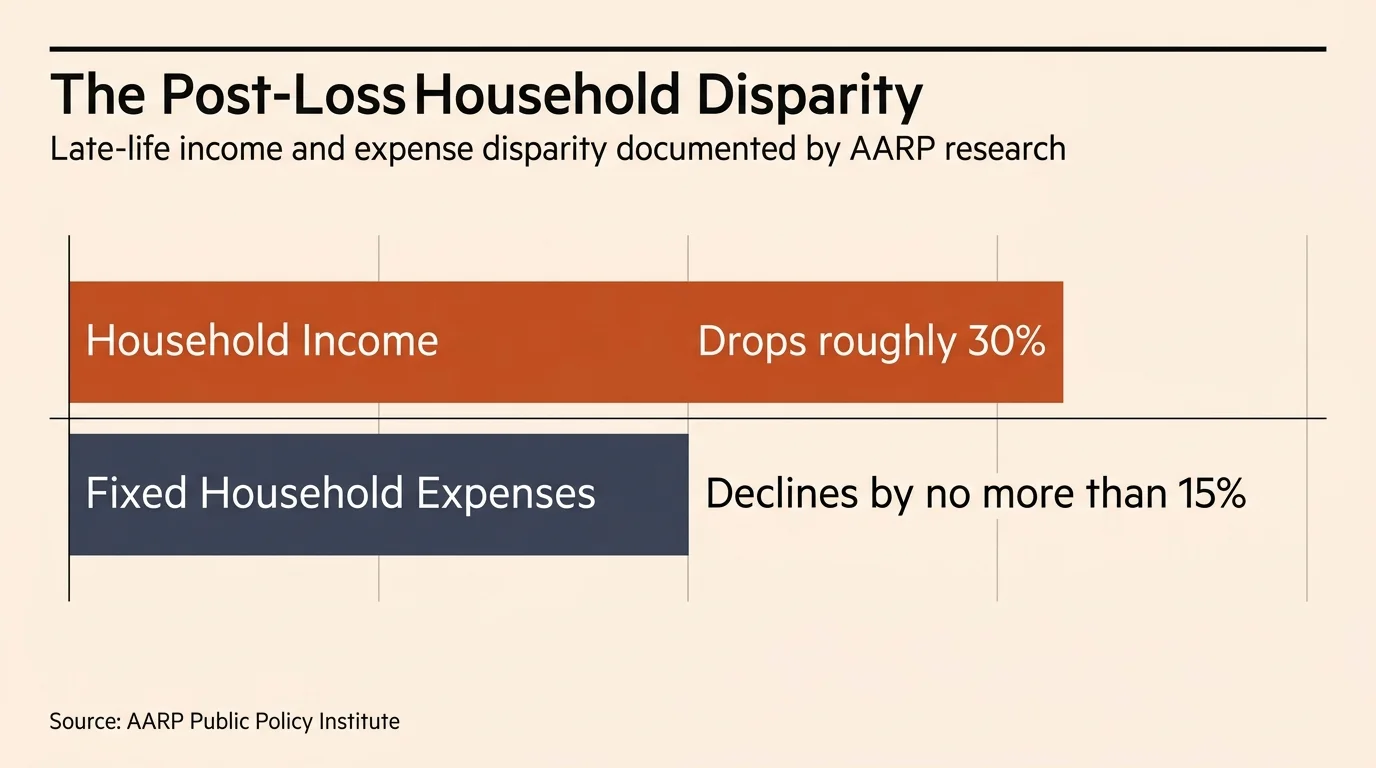
Research from the AARP Public Policy Institute shows household income drops roughly 30% after a spouse dies. Meanwhile, fixed household expenses rarely decline by more than 15%.
You can prevent this imbalance by coordinating your income, taxes, and healthcare. Taking proactive measures transforms an impending crisis into a manageable transition.

Pillar One: Income Planning and Cash Flow Continuity
Income continuity ensures that daily bills and mortgage payments proceed without interruption. You must establish guaranteed cash flow streams before medical emergencies arise.
1. Audit and Synchronize Beneficiary Designations
Beneficiary designations on life insurance and retirement accounts supersede instructions written in a will. A simple naming oversight can unintentionally direct critical funds to an ex-spouse.
Review every 401(k), IRA, and annuity alongside your partner to confirm primary and contingent beneficiaries. Keeping these designations current eliminates expensive probate court disputes.
Add payable-on-death (POD) and transfer-on-death (TOD) registrations to all individual accounts. These designations allow institutions to transfer capital immediately to your named survivor.
2. Establish Immediate Liquidity and Survivor Banking Access
A durable financial power of attorney terminates immediately upon death. Spouses often discover too late that an individual account freezes instantly once the bank learns of an owner’s passing.
Maintain at least one joint checking account funded with three to six months of expenses. Alternatively, hold separate accounts with reciprocal POD designations to guarantee cash access.
Credit cards present another liquidity trap. If a surviving partner is merely an authorized user, issuers routinely close the account upon death notification.
Ensure each spouse maintains an individual credit card with an adequate limit. This step preserves independent credit scores and prevents surprise account cancellations.
3. Maximize Social Security Survivor Benefits
When a spouse dies, your household loses the smaller of your two monthly Social Security checks. The surviving spouse retains only the larger benefit, reducing total income.
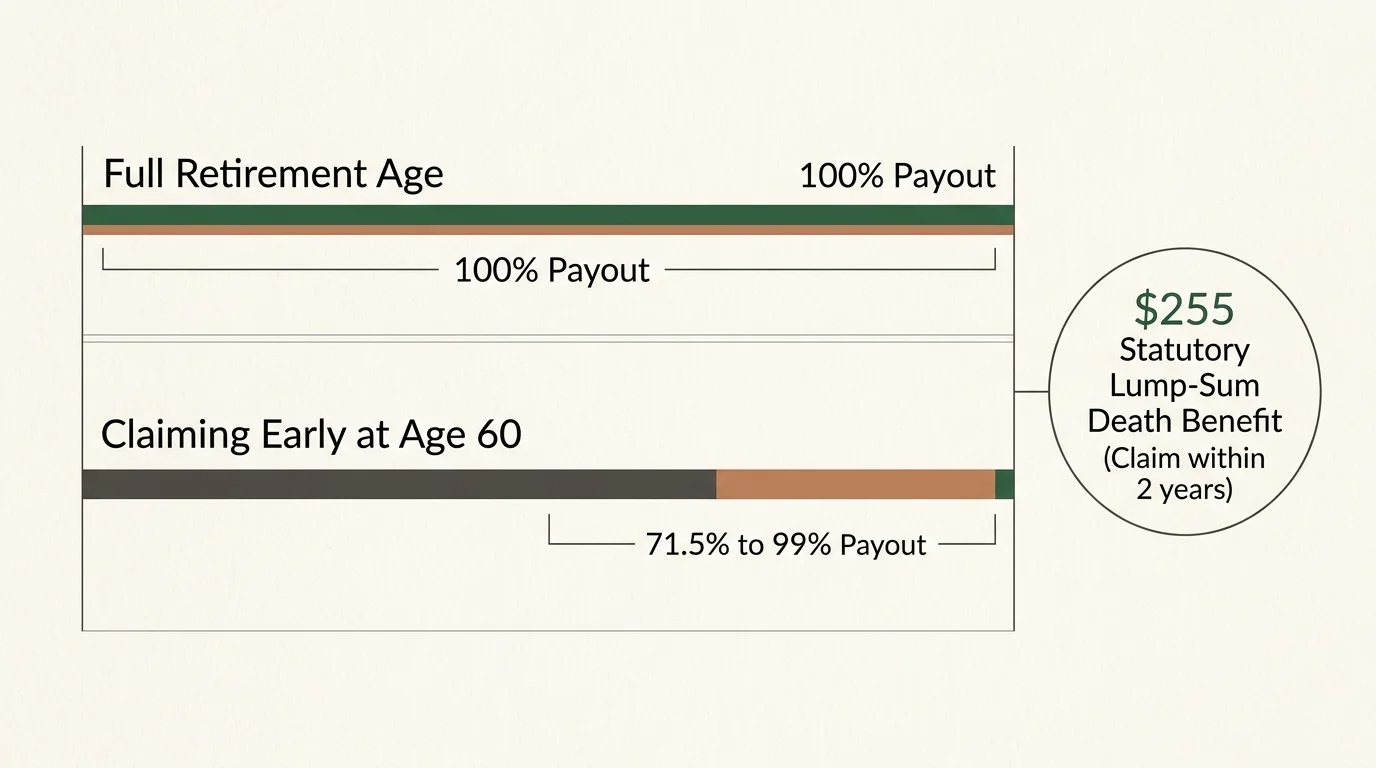
A survivor at Full Retirement Age receives 100% of that higher monthly benefit. However, claiming early at age 60 permanently reduces that payout to between 71.5% and 99%.
The federal government also pays a statutory lump-sum death benefit of exactly $255 to a qualifying spouse. You must apply for this payment within two years of death.
Certified Financial Planner™ practitioner Elaine Bradley advises couples to coordinate claiming ages carefully. Bradley notes that delaying the higher earner’s benefit until age 70 permanently maximizes the eventual survivor payout.
4. Implement SECURE 2.0 Spousal RMD Elections
Retirement distribution rules changed under Section 327 of the SECURE 2.0 Act. Surviving spouses who inherit an IRA can elect treatment as the deceased spouse for distribution calculations.
This provision allows a surviving spouse to delay annual distributions until the deceased spouse would have reached required beginning age. That age is 73, rising to 75 in 2033.
Furthermore, survivors can calculate distributions using the favorable Uniform Lifetime Table rather than the Single Life Table. This strategic election lowers required taxable withdrawals and preserves capital.
Pillar Two: Tax Optimization and Wealth Preservation
Taxes represent the single largest controllable expense for retirees. Losing a spouse reshapes your tax profile overnight and requires advance planning.
5. Prepare for the Widow’s Penalty Tax Shift
In the calendar year your spouse dies, you can file taxes under Married Filing Jointly status. In subsequent tax years, you must file your federal return as Single.
This transition triggers the widow’s penalty by cutting your standard deduction in half. For example, the married deduction of $31,500 drops to $15,750 for single filers.
Single tax brackets compress dramatically, pushing lower income into higher marginal brackets. Surviving spouses often pay more total tax despite supporting a smaller household.
Consider executing partial Roth conversions while both spouses live. Converting tax-deferred balances at joint rates shields your survivor from forced distributions in higher single brackets later.
6. Prevent the Medicare IRMAA Surcharge Cliff
Surviving spouses often face higher healthcare premiums due to Medicare Income-Related Monthly Adjustment Amounts. The federal government uses a two-year tax lookback to determine these surcharges.
Filing as a single taxpayer halves the income threshold for IRMAA surcharges. Surcharges apply above roughly $106,000 for single filers, compared to over $212,000 for joint returns.
You can inspect current surcharge brackets directly on Medicare.gov. Managing capital gains and IRA distributions before a spouse dies shields your partner from these surcharges.
7. Maximize Step-Up in Basis and Portability Rules
Under Section 1014 of the Internal Revenue Service code, taxable assets receive a step-up in cost basis to fair market value upon death. This step-up eliminates embedded capital gains taxes on accumulated investments.
In common law states, only the deceased spouse’s 50% share receives a basis step-up. However, couples in nine community property states receive a full 100% double step-up.
Couples should also protect the federal estate tax exemption, set at $13.99 million per individual for 2025. Surviving spouses preserve an unused exemption by filing Form 706 to elect portability.
Under IRS Revenue Procedure 2022-32, surviving spouses have up to five years after death to elect late portability. This election protects families from future statutory reductions in the estate tax threshold.

Pillar Three: Health, Lifestyle, and Legacy Security
Financial preparation must align with healthcare decisions and personal dignity. Integrating legal plans with financial choices ensures your wishes are honored without family conflict.
8. Establish Durable Legal Protections Beyond Power of Attorney
Every couple needs updated medical directives, living wills, and durable powers of attorney. Because a power of attorney expires upon death, relying on it for post-mortem transfers causes gridlock.
Establish a revocable living trust to hold real estate and investment assets. Assets titled inside a trust pass seamlessly to your successor trustee without probate delays.
Gerontologist Dr. Marcus Vance emphasizes that planning must occur while both partners retain cognitive health. Vance notes that sudden medical events frequently prevent individuals from executing binding legal documents.
9. Pre-Plan Funeral Arrangements Under the FTC Funeral Rule
According to the National Funeral Directors Association, the median cost of an adult funeral with burial is approximately $8,300. Adding a cemetery vault increases the median cost to nearly $10,000.
Median funeral costs with viewing and cremation run roughly $6,280 nationwide. Grieving spouses often overspend by thousands because they make hasty decisions under emotional duress.
Protect your partner by pre-planning service details under the Federal Trade Commission Funeral Rule. This federal regulation requires funeral providers to supply itemized price lists over the phone and in writing.
10. Assemble a Centralized Financial Transition Binder
Create a comprehensive binder that details account numbers, institutional contacts, outstanding debts, and insurance policies. Store this binder in a fireproof safe, and share its location with your personal representative.
Do not neglect digital accounts and utility portals when assembling your inventory. Include master passwords, two-factor authentication instructions, and household billing login credentials.
Schedule an annual financial walk-through date with your spouse to review every balance, document, and advisor contact. Keeping both partners informed eliminates the anxiety of navigating finances alone.

Critical Risks and Safeguards for Surviving Spouses
Surviving spouses frequently become targets for predatory financial scams, high-fee annuities, and contractor fraud. Con artists routinely monitor obituaries to exploit vulnerable widows during early bereavement.
Establish a personal safeguard: make no major investment changes or real estate sales for twelve months after death. This cooling-off period prevents hasty financial decisions driven by grief.
Check all healthcare policies to identify potential coverage cliffs. If your spouse received Medicare while you relied on their retiree health plan, their death could abruptly cancel your insurance.
Partner with an accredited fee-only financial planner and an elder law attorney who serve as fiduciaries. Establishing these relationships early ensures your spouse has trustworthy allies already in place.
Frequently Asked Questions
What happens to our debt when my spouse passes away?
A surviving spouse is generally not responsible for a deceased partner’s individual debts unless you co-signed the loan. The deceased partner’s estate settles debts before remaining assets distribute to heirs.
However, community property laws in states like California and Texas may treat marital debts as joint obligations. Additionally, joint credit cards and co-signed mortgages remain your full personal responsibility.
How quickly does the Social Security Administration learn of a death?
Funeral directors typically report a death directly to the Social Security Administration using the deceased’s number. You should confirm this notification yourself to prevent benefit overpayments that you must repay later.
Social Security pays benefits in the month following the month earned. Any payment received in the month of death for that current calendar month must be returned promptly.
Can my spouse keep my health insurance after I pass away?
If you rely on your spouse’s retiree health plan, coverage rules depend on plan documents. Many private plans terminate dependent coverage unless specific survivor options were elected at retirement.
Federal COBRA rules allow a spouse to purchase continuation coverage for up to 36 months following death. If you are age 65 or older, you should enroll in Medicare Part A and Part B.
Does a surviving spouse have to pay tax on inherited retirement accounts?
Inheriting a traditional IRA or 401(k) does not trigger an immediate lump-sum tax bill if handled properly. Surviving spouses can roll assets into their own IRA or treat the account as inherited.
Taxes become due only when you take cash distributions from traditional accounts. In contrast, inherited Roth IRAs provide income-tax-free withdrawals if the account satisfies the five-year aging rule.
Taking Your First Step Today
Facing the eventual loss of a partner is emotionally demanding, but practical preparation provides profound relief. Taking organized action together honors the life you built and protects your partner’s independence.
Do not attempt to overhaul your entire estate structure in a single afternoon. Overwhelming complexity often causes couples to delay making any decisions at all.
Choose one manageable task to complete within the next 48 hours. Gather your banking statements, log into your retirement accounts, and confirm that your beneficiary designations match your intentions.