
American workers leave behind tens of thousands of dollars in old workplace plans without realizing it. Tracking down these forgotten balances can instantly reinforce your financial freedom in retirement.
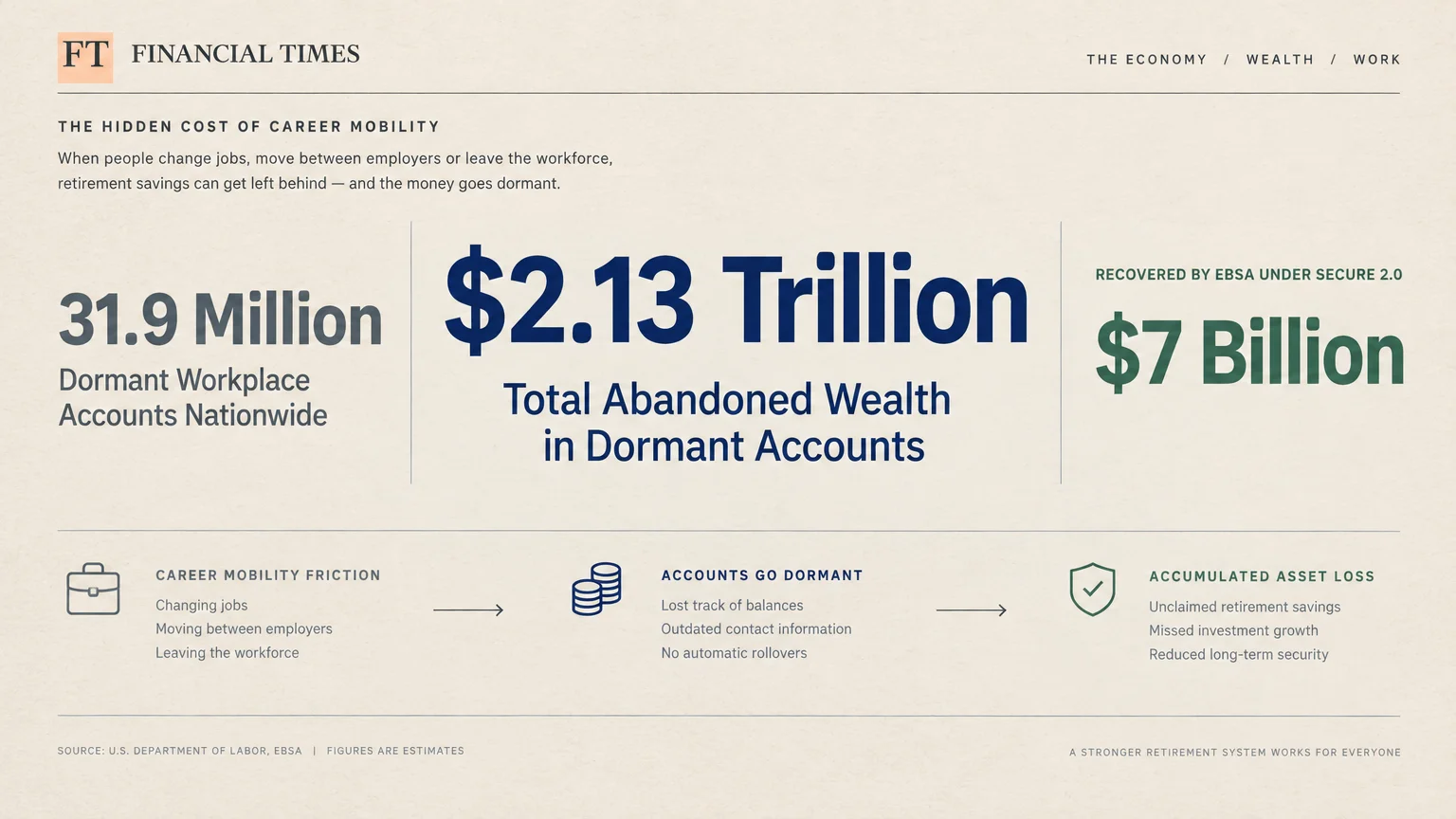
Research reveals that 31.9 million retirement accounts sit abandoned nationwide, representing over two trillion dollars in lost wealth. The average forgotten account holds nearly $67,000 in investable assets.
You may own neglected nest eggs from past jobs, temporary side ventures, or merged corporate plans. Finding and claiming this capital takes far less time than you think.
A Multitrillion-Dollar Blind Spot in American Retirement
Rapid career transitions define the modern workforce, yet our retirement system remains tied to individual employers. Workers frequently change jobs every few years, leaving behind scattered financial trails.
Recent estimates show American workers have abandoned approximately $2.13 trillion across tens of millions of dormant accounts. This staggering sum reflects lost retirement momentum and forgotten growth opportunities.
Millions of Americans work diligently for decades while unknowingly leaving their hard-earned compensation behind. Dispersed account balances frequently escape notice until individuals begin mapping out their actual retirement dates.
Job mobility has reached historic highs across every economic sector over the past thirty years. Each career move introduces another potential leak in a household’s long-term wealth accumulation pipeline.
Federal regulators recognized this systemic challenge and enacted significant reforms through the SECURE 2.0 Act. The law created a national search registry to reconnect workers with their missing nest eggs.
The Employee Benefits Security Administration has already recovered over $7 billion for missing participants. Even modest accounts accumulate substantial investment gains over decades of silent market compounding.
Ten Forgotten Accounts You Might Still Own
1. The Starter Job 401(k) Plan
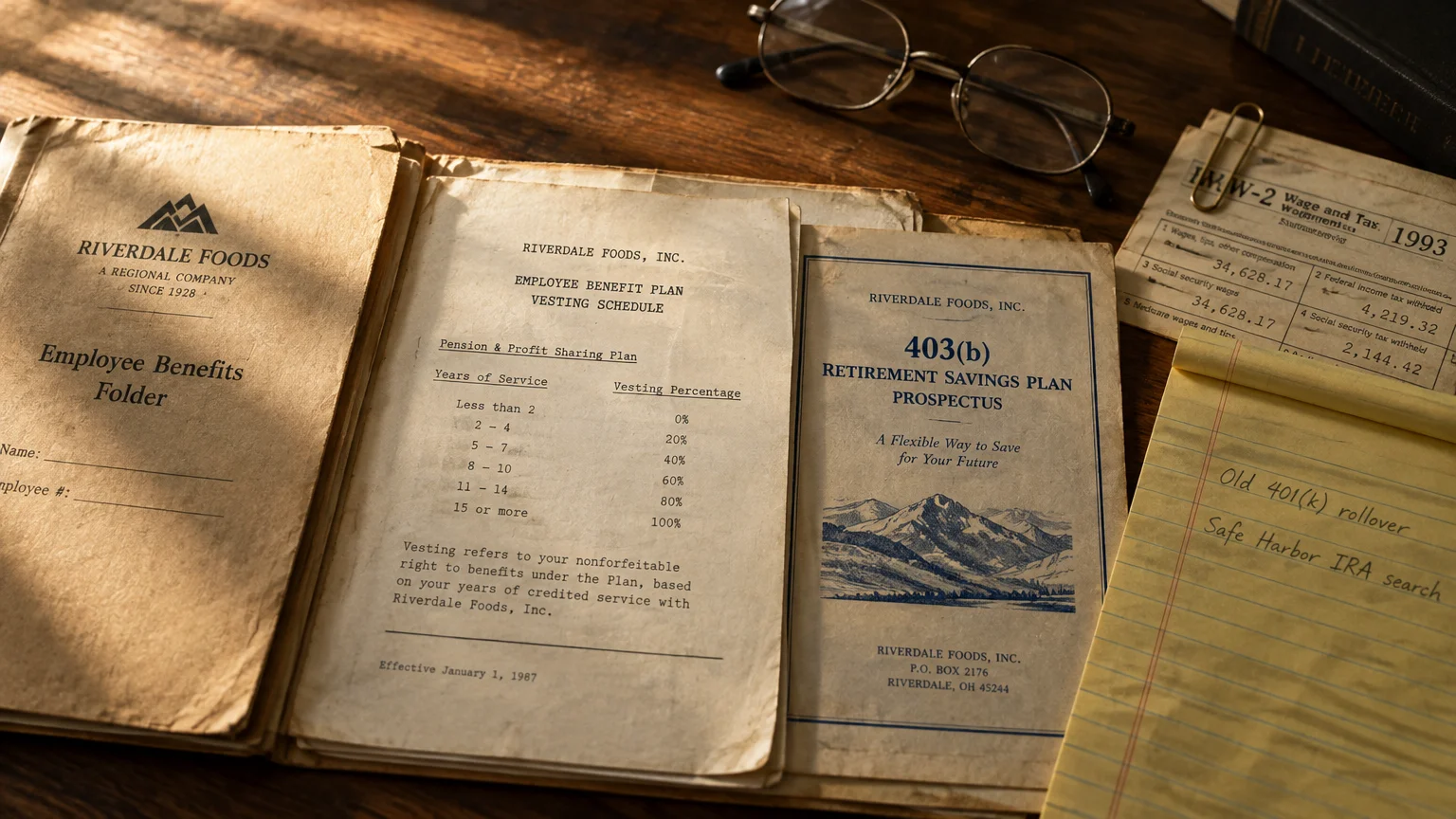
Early-career workers often contribute modest amounts to their initial workplace retirement plans before switching companies. Over several decades, standard index funds turn those small initial payroll deductions into significant five-figure balances.
Plan sponsors maintain ongoing fiduciary responsibilities to safeguard your vested funds indefinitely. You retain full ownership of those accumulated assets regardless of how many years have passed.
Even if an old employer closed its doors, plan assets remained protected in third-party trusts. You can reclaim these funds by contacting the original financial custodian that managed the plan.
2. Involuntary Safe Harbor IRAs
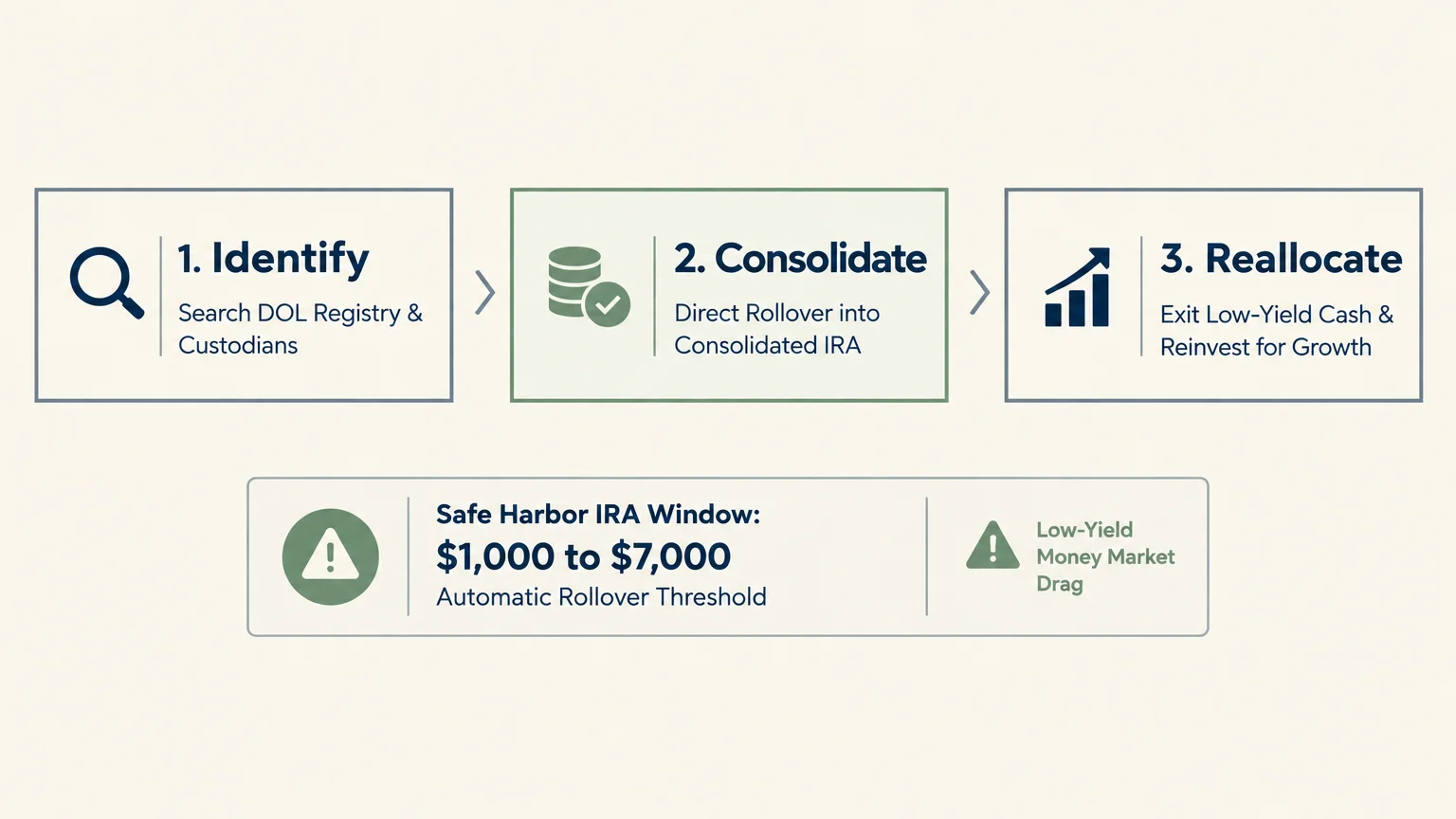
Federal law permits employers to remove departed employees from corporate plans under specific asset thresholds. Under the SECURE 2.0 Act, administrators can automatically transfer balances between $1,000 and $7,000 into default accounts.
These involuntary vehicles are known as Safe Harbor IRAs. Financial custodians typically park these balances in low-yield money market funds, leaving your money vulnerable to inflationary erosion.
Employers utilize this statutory provision to streamline administrative overhead and trim recordkeeping fees. Searching for these default accounts helps you move your money into active investment vehicles.
3. Dormant Non-Profit 403(b) Plans
Nurses, educators, and charity professionals frequently build retirement reserves inside 403(b) tax-sheltered annuity plans. Moving between regional school districts or healthcare networks often disconnects employees from these contracts.
Because multiple insurance carriers can service a single nonprofit, participant tracking becomes convoluted over time. You might hold valuable annuity guarantees with providers you have not contacted in decades.
4. Frozen Defined-Benefit Pensions
Corporate mergers and corporate bankruptcies prompted hundreds of private employers to freeze traditional pension obligations. Workers who completed five or ten years of service often retain earned monthly lifetime benefits.
The Pension Benefit Guaranty Corporation maintains comprehensive registries of unclaimed defined-benefit plans from dissolved corporations. Tens of thousands of retirees qualify for monthly payments without knowing these benefits exist.
Workers frequently underestimate the cumulative value of early pension service credits. These defined-benefit formulas calculate monthly payments using your service years, creating predictable income for life.
5. Solo 401(k)s and Forgotten SEP-IRAs
Many professionals establish specialized retirement plans during temporary periods of self-employment or freelancing. When returning to traditional corporate employment, savers routinely abandon these independent tax-advantaged structures.
These solo accounts retain their original tax-deferred status and continue compounding investment gains quietly. You preserve every legal right to rollover these funds into your primary retirement portfolio.
6. Overlooked Health Savings Accounts
Unlike flexible spending arrangements, Health Savings Accounts remain your personal property permanently after leaving a company. Transitioning to a standard health plan often causes workers to neglect their accumulated medical balances.
HSA balances roll over indefinitely and grow completely free of federal income taxation. Finding an old health account can immediately offset Medicare premiums or out-of-pocket prescription expenses.
Unlike standard retirement accounts, medical savings permit tax-free distributions for qualified healthcare expenses at any age. Reconnecting with lost balances provides a dedicated reserve for unexpected dental, vision, or medical bills.
7. State-Mandated Auto-IRAs
Numerous states now require small employers to enroll hourly and hospitality workers into automated retirement savings programs. If you completed seasonal or short-term work in these states, automatic payroll deductions established an account.
State agencies direct these automatic deductions into designated private custodial accounts on your behalf. Thousands of mobile workers relocate without realizing they established active retirement savings in another jurisdiction.
8. Cash Balance Pension Plans
Professional service partnerships—such as law firms, medical groups, and consultancies—frequently run cash balance plans alongside traditional 401(k)s. Departing partners often transfer their 401(k) balances while forgetting the separate cash balance structure.
Cash balance accounts credit participants with annual employer contributions plus guaranteed interest credits. Reconnecting with a former partnership can unlock substantial lump-sum distributions you legally earned years ago.
9. Abandoned Employee Stock Ownership Plans
Privately held corporations often reward loyalty by granting equity through Employee Stock Ownership Plans. When workers change careers, their allocated corporate shares remain held securely inside a company retirement trust.
Federal regulations mandate that employers eventually repurchase these shares from departed participants at fair market value. Forgotten shares in successful enterprises frequently appreciate dramatically over extended periods.
10. Inherited Accounts from Deceased Relatives
Surviving spouses and adult children often miss retirement accounts when settling the complex affairs of deceased relatives. Financial institutions hold billions of dollars simply because designated beneficiaries never submitted formal claims.
Custodians must maintain these funds safely until verified heirs come forward with proper documentation. Reviewing historical tax records for deceased family members can reveal life-changing inheritances.
Many individuals never discover these accounts because workplace plans name beneficiaries outside of standard wills. Reviewing probate paperwork and employer records often exposes accounts that bypassed initial estate distributions.
Three Strategic Pillars to Maximize Recovered Wealth
Income Planning and Strategic Consolidation
Discovering forgotten balances lets you streamline your overall distribution strategy and minimize paperwork. Moving disparate accounts into a unified IRA eliminates redundant maintenance charges and clarifies asset allocation.
Consolidated portfolios make calculating annual withdrawals and required distributions far simpler. You gain complete visibility over your cash flow, ensuring your assets support your retirement timeline.
Lifestyle Design and Purposeful Spending
Reclaiming abandoned funds can deliver sudden financial flexibility for meaningful life goals. You can direct unexpected capital toward home renovations, long-delayed travel, or family support without depleting core reserves.
Many retirees use reclaimed funds to reduce their working hours or embrace full retirement ahead of schedule. Aligning newly recovered resources with personal values revitalizes your daily sense of purpose.
Financial peace of mind allows you to engage more deeply with your community and loved ones. Eliminating financial mystery restores confidence in your long-term independence.
Health, Longevity, and Healthcare Reserves
Uncovering forgotten funds provides an essential buffer against escalating medical costs in retirement. Healthcare remains one of the largest out-of-pocket expenses older adults encounter throughout their golden years.
Earmarking newly discovered assets for medical emergencies safeguards your primary lifestyle income. This protective cushion shields your broader investment portfolio from sudden and costly health disruptions.
Seniors who organize their financial resources experience less stress-related health complications as they age. A well-ordered financial life provides tangible physical and emotional dividends.

Voices from the Field: Expert Perspectives
Certified Financial Planner Elena Rostova emphasizes the compounding drag that scattered accounts create over time. She notes that orphaned accounts consistently suffer from neglected investment allocations and high administrative fees.
Gerontologist Marcus Vance observes that financial organization directly impacts overall well-being in retirement. His research indicates that simplifying complex accounts significantly lowers chronic anxiety among aging seniors.
Retiree Linda Morales reclaimed $42,000 from an administrative job she left two decades ago. She used that recovered capital to pay off her remaining vehicle debt and fund volunteer travel.
Her experience proves that a brief investigative effort can yield dramatic, lasting benefits for everyday retirees. You deserve access to every dollar you earned throughout your working life.
Critical Risks, Pitfalls, and Financial Safeguards
Neglecting tax-deferred accounts can trigger severe tax penalties once you reach required distribution age. Under current law, retirement savers must begin taking minimum withdrawals upon reaching age 73.
According to Internal Revenue Service guidelines, failing to withdraw your full distribution incurs an excise penalty. The SECURE 2.0 Act lowered this penalty from 50% to 25%, with potential drops to 10%.
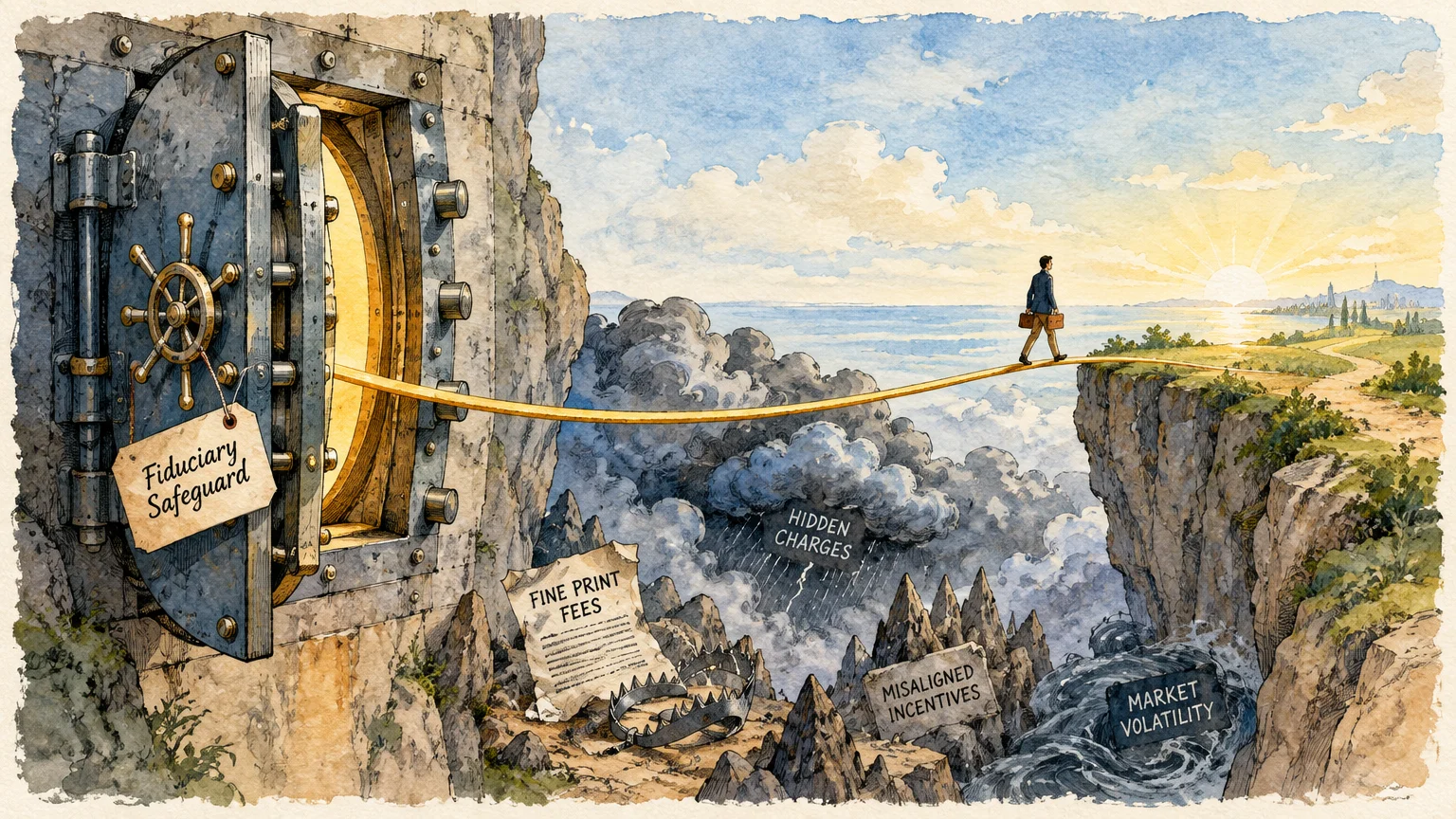
Forgotten accounts also face asset erosion from ongoing custodial maintenance fees. Leaving your savings unattended in default money market funds guarantees that inflation quietly destroys your purchasing power.
Failing to update your contact information with plan custodians increases the risk of misdirected mail and account dormancy. Keeping records current ensures you receive crucial plan amendments and tax documentation.
Be vigilant against private asset locator services that demand steep fees to recover lost retirement funds. Official resources like the Department of Labor search directory help you locate funds for free.
When institutions lose contact with you, they eventually surrender uncashed checks to state treasuries after three to five years. You can search these turned-over assets nationwide through the MissingMoney national database.
Frequently Asked Questions
How do I find a 401(k) from a company that went out of business?
Search federal databases managed by the Department of Labor and the Pension Benefit Guaranty Corporation. Regulators appoint independent fiduciaries to manage and distribute balances when corporate entities dissolve.
Will I owe taxes or penalties when I claim a forgotten account?
You owe no immediate taxes if you complete a direct trustee-to-trustee rollover into an existing IRA. Withdrawing funds directly as cash will trigger standard income taxes and potential early withdrawal penalties.
How do I discover if my balance became a Safe Harbor IRA?
Contact your former employer to identify the default financial institution handling their involuntary rollovers. You can also inspect credit reports and past correspondence for notices from unfamiliar custodial trust companies.
Can reclaiming an old retirement balance impact my Medicare premiums?
Transferring assets directly into a rollover IRA produces no taxable event and leaves Medicare premiums unaffected. However, cashing out large pre-tax balances increases your adjusted gross income, which can temporarily elevate Part B premiums.
Your 48-Hour Reclaim Challenge
Take charge of your financial history by obtaining your Social Security earnings record over the next forty-eight hours. This detailed document lists every employer that reported earnings on your behalf throughout your life.
Compare this historical employer list against your active retirement accounts and note any missing coverage gaps. Contact former plan administrators or check online registries to locate and reclaim your missing wealth.
Reclaiming your rightful savings puts your hard-earned money back to work for your future. Start your search today to build the comprehensive retirement security you earned.