
You can build lasting financial security in retirement without drastic lifestyle sacrifices. Modest adjustments to your tax planning, portfolio management, and healthcare choices generate compounding gains that steadily protect your nest egg.
Small wins preserve your hard-earned capital and reduce financial stress across a twenty-year or thirty-year retirement. Focusing on manageable, incremental victories keeps your budget resilient against economic volatility.
A handful of deliberate choices can free up thousands of dollars every year for the activities you cherish most. Here is how consistent actions create an enduring foundation for your future.

A Shifting Retirement Landscape
Recent legislative reforms and market shifts make proactive money management essential for American retirees. New rules from SECURE 2.0 and the Inflation Reduction Act have fundamentally reshaped prescription costs, retirement accounts, and distribution mandates.
Staying ahead of these policy adjustments ensures you avoid unexpected tax penalties and capture every available benefit. Small financial choices now carry far greater weight across your retirement lifespan.
Income Planning: Compounding Wealth Behind the Scenes
Smart income distribution forms the cornerstone of lasting financial security. Managing your withdrawals and timing rules protects your capital against unnecessary taxes and inflation.
1. Optimizing Social Security Timing
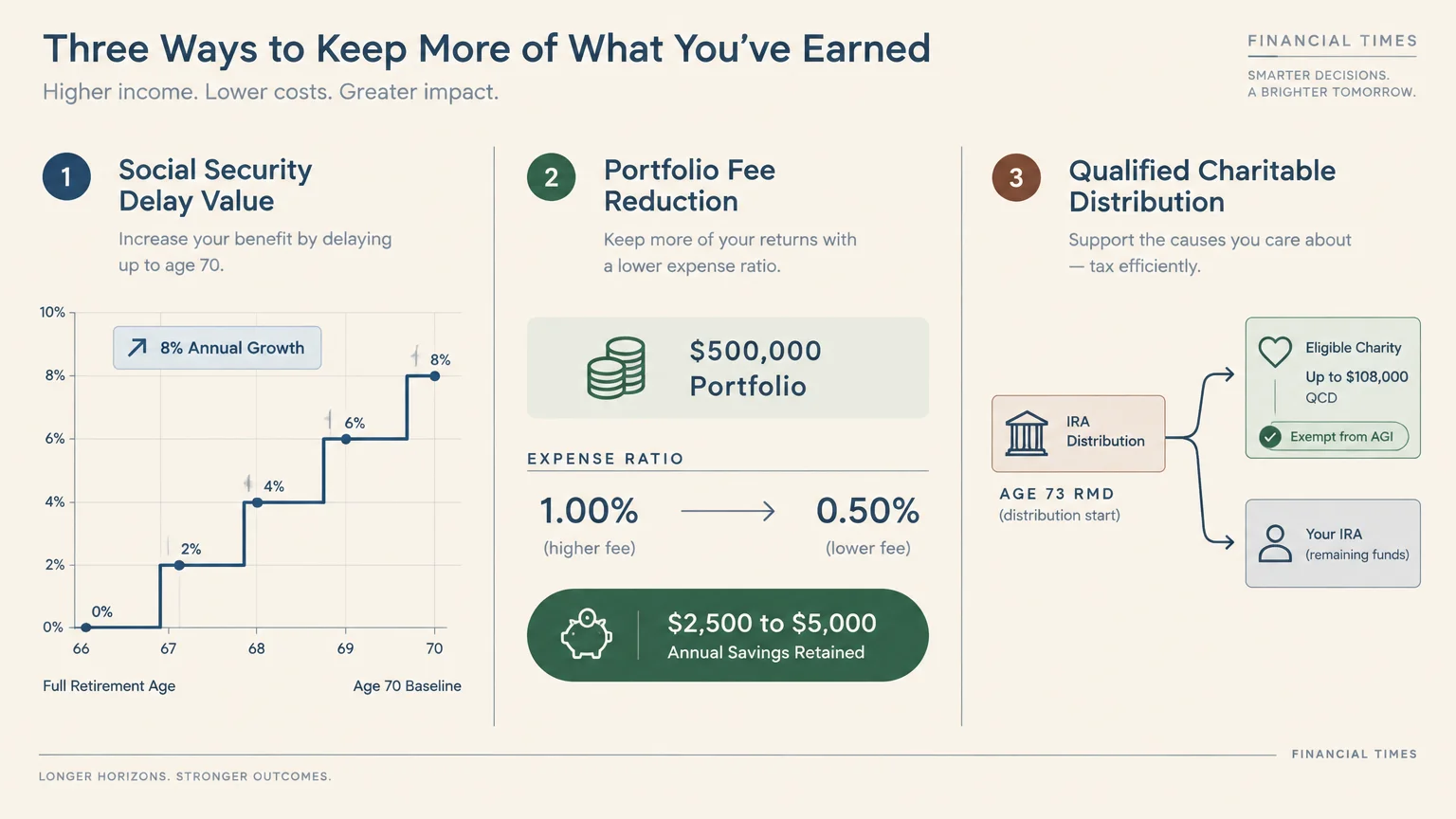
Delaying your Social Security claim past your Full Retirement Age yields substantial rewards. Your monthly benefit grows by an impressive 8% per year for every year you delay until age 70.
Claiming at age 70 locks in a permanently higher income baseline for the rest of your life. You can review your projected earnings history directly through the Social Security Administration.
This guaranteed cost-of-living-adjusted payout acts as powerful longevity insurance. Even waiting a single extra year can deliver thousands of additional dollars during your seventies and eighties.
2. Slashing Investment Expense Ratios
Excessive portfolio fees erode retirement wealth quietly over time. Trimming management fees and mutual fund expense ratios by just 0.50% to 1.00% can transform your portfolio balance.
On a $500,000 nest egg, that modest reduction retains between $2,500 and $5,000 each year. Over a twenty-year retirement, those preserved dollars compound into tens of thousands in retained wealth.
Certified Financial Planner™ professional Sarah Jenkins notes that investment fees represent one of the few variables retirees can completely control. Shifting into low-cost index funds gives your principal more room to grow.
3. Deploying Qualified Charitable Distributions
Giving back can also provide valuable tax relief if you structure your donations correctly. If you are age 70½ or older, you can transfer funds directly from a traditional IRA to an eligible charity.
Under updated guidelines, you can donate up to $108,000 annually through a Qualified Charitable Distribution. This transaction satisfies your Required Minimum Distribution without increasing your adjusted gross income.
Keeping your adjusted gross income lower shields you from higher tax brackets and reduces prospective Medicare surcharges. It is an exceptional method to support causes you love while keeping your taxes manageable.
4. Managing RMD Timelines Accurately
Recent legislation delayed the starting age for Required Minimum Distributions to age 73. Knowing your precise distribution timeline ensures you never surrender unnecessary funds to IRS penalties.
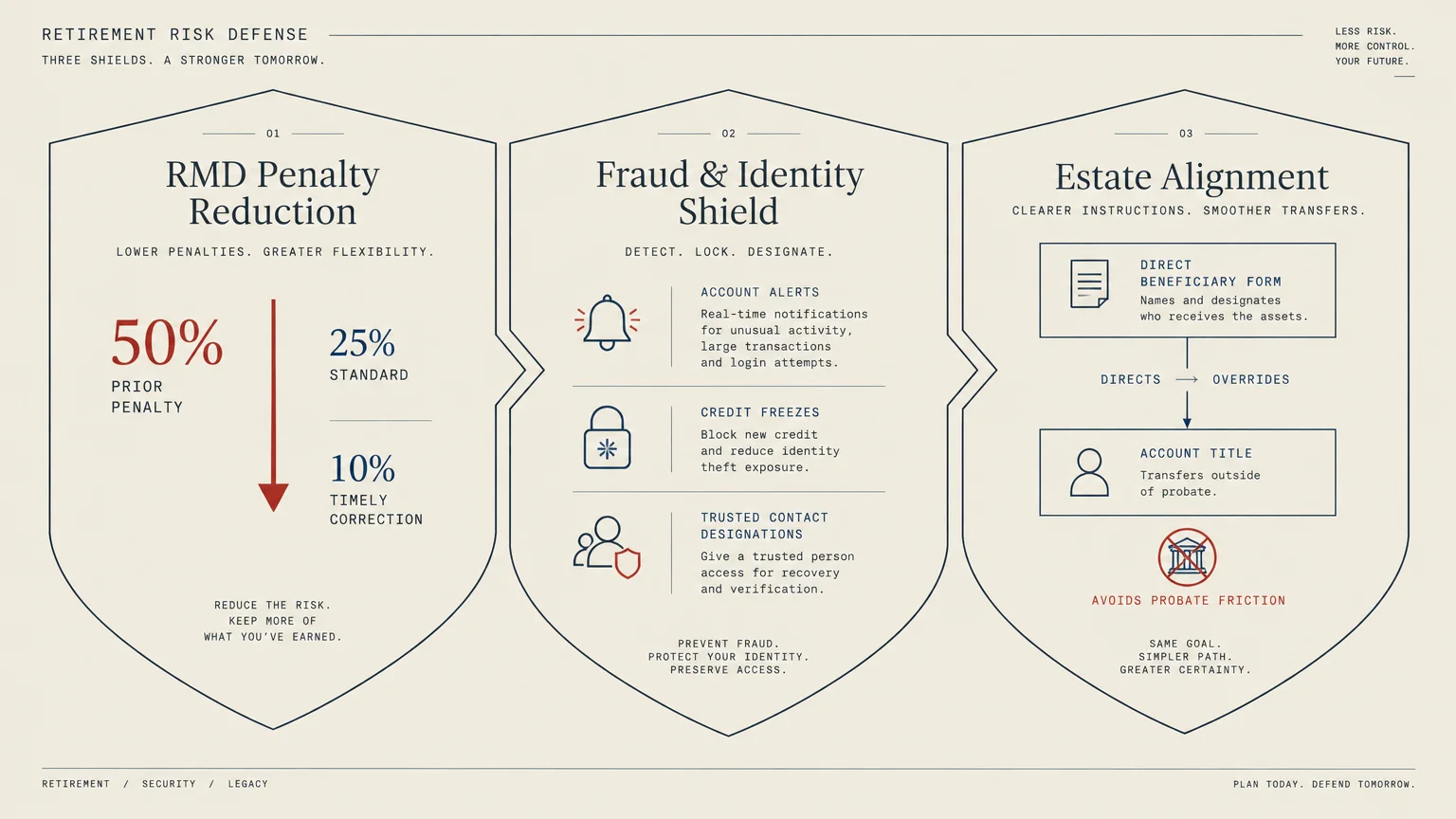
Failing to withdraw your full required distribution previously triggered an onerous 50% excise tax. Under current law, that penalty has dropped to 25%; it drops to 10% if corrected within two years.
Even with reduced penalties, missing a distribution remains a costly and avoidable mistake. Establishing automated withdrawal schedules with your custodian eliminates the risk of missed deadlines.

Health and Wellness: Guarding Your Medical Dollar
Healthcare spending frequently represents one of the largest expenses in retirement. Taking deliberate steps to manage coverage and preventive care keeps medical costs from derailing your budget.
5. Auditing Medicare Coverage Every Autumn
Many retirees assume their existing healthcare plans remain the best choice year after year. However, formularies, network coverage, and monthly premiums change annually across private insurance plans.
The Medicare Annual Open Enrollment period runs every year from October 15 through December 7. Using the official plan finder on Medicare lets you compare options side by side.
Spending two hours comparing plans each autumn routinely uncovers hundreds of dollars in drug premium savings. This simple seasonal check prevents costly billing surprises in the coming year.
6. Leveraging the Prescription Spending Cap
Landmark healthcare changes now protect retirees facing expensive specialty medication bills. The Inflation Reduction Act established an annual out-of-pocket prescription cap of $2,000 for Medicare Part D enrollees.
This provision eliminates the previous catastrophic co-insurance requirement that burdened many retirees. If you manage chronic conditions, this statutory limit shields your savings from catastrophic pharmaceutical bills.
Speak with your pharmacist to verify which medications apply to your annual deductible. Tracking these expenses ensures you take full advantage of current federal cost protections.
7. Monitoring Income to Sidestep IRMAA
The standard monthly premium for Medicare Part B is $185.00 with an annual deductible of $257. However, crossing specific income thresholds triggers substantial monthly surcharges known as IRMAA.
Surcharges begin when Modified Adjusted Gross Income exceeds $106,000 for single filers or $212,000 for joint filers. These premium adjustments apply to both Medicare Part B and Part D coverage.
Careful tax-bracket management prevents a single extra dollar of taxable income from raising your medical premiums for a full year. Timing Roth conversions and capital gains strategically keeps your income beneath these cliffs.
8. Prioritizing Preventive Care Benefits
Maintaining physical wellness offers direct financial rewards as you age. Gerontologist Dr. Marcus Vance emphasizes that preventive screenings prevent acute medical crises that deplete household savings.
Medicare covers an Annual Wellness Visit alongside cardiovascular screenings, bone density measurements, and diabetes checks at zero out-of-pocket cost. Utilizing these services catches emerging concerns before they require expensive interventions.
A healthy lifestyle minimizes routine prescription demands and co-pays over several decades. Investing time in your health today protects both your physical vitality and your wallet.

Lifestyle and Tax Design: Everyday Efficiencies
Intentional lifestyle choices allow you to stretch your retirement income without sacrificing joy. Daily savings habits compound quietly into significant financial resilience.
9. Claiming the Senior Standard Deduction
When filing federal income taxes, many retirees overlook the additional standard deduction available to older Americans. The Internal Revenue Service offers a meaningful tax perk once you reach age 65.
Qualified single taxpayers receive an extra $2,000 standard deduction, while married couples receive $1,600 per eligible spouse. This extra buffer shelters more of your investment distributions from federal taxation.
Confirming this box on your annual tax return requires virtually no effort. It provides immediate, risk-free tax savings that reduce your annual filing obligation.
10. Securing Lifetime National Park Access
Staying active and engaged does not require expensive club memberships or lavish vacation budgets. U.S. citizens and permanent residents age 62 and older qualify for the America the Beautiful Senior Pass.
Issued through the National Park Service, this $80 lifetime pass grants free entrance to over 2,000 federal recreation sites. An annual pass option is also available for just $20.
The pass covers entrance fees at national parks, national wildlife refuges, and national forests across the country. It delivers thousands of dollars in recreational value over a lifetime of travel.
11. Automating Property Tax Exemptions
Housing remains the single largest recurring expense for the vast majority of American retirees. Fortunately, hundreds of counties across the country offer senior property tax freezes or homestead exemptions.
These local programs reduce assessed valuations or cap property tax increases for homeowners once they reach age 65. In some jurisdictions, these exemptions save homeowners thousands of dollars each year.
Contact your county tax assessor to request an application for senior homestead relief. Filing the paperwork once can lock in substantial housing savings for years to come.
12. Right-Sizing Recurring Subscriptions and Insurance
Transitioning out of full-time employment changes your everyday driving habits and lifestyle demands. Many retirees continue paying for auto insurance policies calculated on long daily commutes.
Contacting your auto insurer to reclassify your vehicle as pleasure-use often reduces annual premiums by hundreds of dollars. Bundling homeowners and auto policies under one carrier yields additional rate discounts.
Similarly, conducting a quarterly audit of recurring streaming subscriptions, software licenses, and memberships eliminates unnecessary waste. Canceling unused services frees up cash flow for meaningful experiences.
Critical Safeguards: Protecting What You Build
Preserving wealth requires vigilance against predatory financial schemes and systemic traps. Retirees are prime targets for sophisticated impostor scams, false Medicare pitches, and high-commission financial products.
According to consumer protection data published by AARP, financial fraud strips billions of dollars from seniors annually. Never provide personal identifiers, banking details, or Medicare numbers over unsolicited phone calls.
Watch out for benefit cliffs where a slight increase in income triggers higher taxation or loss of local utility assistance. Always consult a fee-only fiduciary financial advisor before executing large retirement account withdrawals.
Frequently Asked Questions
How much can small financial wins realistically save me?
Over a twenty-year retirement, small adjustments in fees, taxes, and healthcare frequently add up to over $100,000 in preserved capital. Compounding investment returns and reduced tax liabilities magnify every dollar saved.
Does delaying Social Security make sense if I have health concerns?
Delaying benefits yields an 8% annual boost, but your personal health history should guide your claiming timeline. If family longevity is low, claiming closer to Full Retirement Age may prove more advantageous.
When should I start preparing for Required Minimum Distributions?
Begin planning your distribution strategy around age 60 to allow time for gradual Roth conversions. Taking proactive steps well before age 73 prevents large taxable distributions that could spike Medicare premiums.
Are property tax exemptions available to all retirees?
Eligibility requirements for property tax freezes and exemptions vary widely by state and county. Some regions set income caps, while others offer broad property tax relief based solely on reaching age 65.
Your 48-Hour Action Plan
Lasting financial freedom is built on consistent, intentional steps rather than sudden windfalls. You do not need to overhaul your entire financial structure in a single afternoon.
Choose one small win from this guide and take action on it within the next 48 hours. Review your recurring subscriptions, call your auto insurer, or examine your portfolio expense ratios.
Every small improvement creates momentum that protects your independence and strengthens your peace of mind. Taking charge of your finances today ensures you thrive throughout your retirement years.