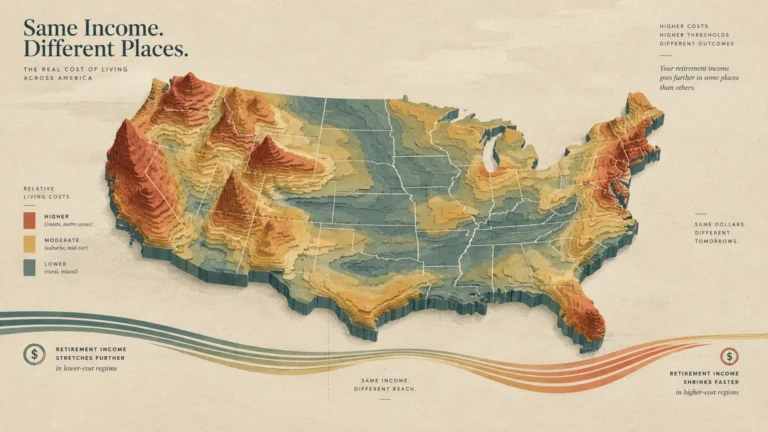
Over two million older Americans packed their bags and moved across state lines this past year to protect their nest eggs. Relocating to a more affordable region can immediately reduce your living expenses and preserve your retirement savings.
Deciding where to spend your golden years requires balancing tax burdens, healthcare access, and climate risks. Many retirees are discovering that their longtime home states now drain their fixed budgets too quickly.
Twelve specific states are experiencing dramatic net losses of older residents right now. Knowing which states retirees are fleeing helps you avoid costly relocation mistakes before you make your next move.
Why Retirees Are On the Move
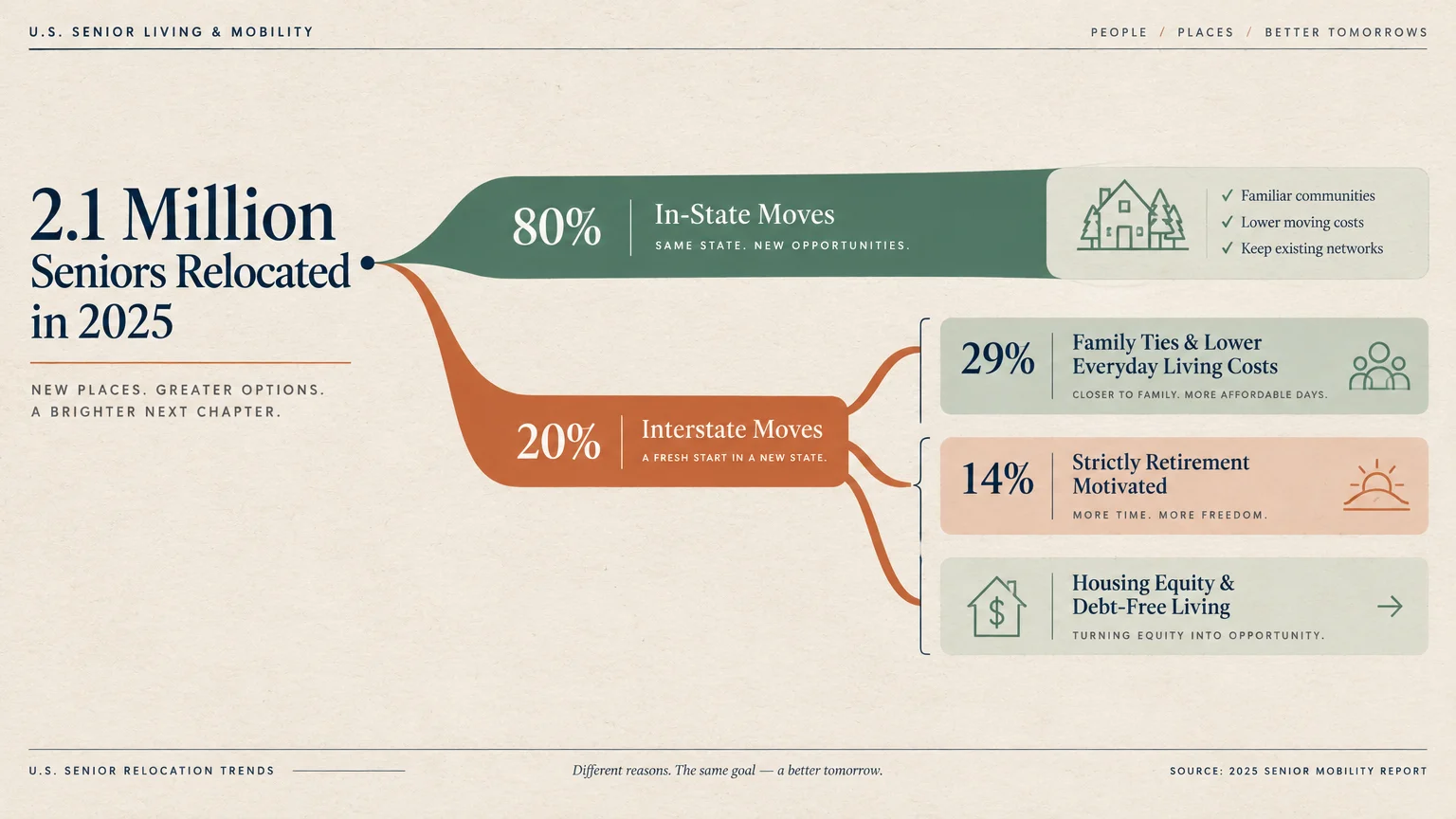
Data from the U.S. Census Bureau shows senior mobility reaching historic highs. Over 2.1 million adults age 65 and older relocated in 2025 alone.
Approximately 20 percent of those movers crossed state boundaries to establish residency elsewhere. While family ties drive many moves, financial survival increasingly dictates these geographic shifts.
Recent research reveals that 14 percent of interstate moves are motivated strictly by retirement. Another 29 percent of moves occur because retirees want proximity to family and lower everyday living costs.
Inflation has eroded the purchasing power of fixed pensions and investment distributions. When property taxes, utilities, and grocery prices surge, staying put often compromises your long-term security.
Housing markets across popular metropolitan hubs have unlocked substantial equity for longtime homeowners. Cashing out elevated home values provides instant liquidity for older adults seeking debt-free retirement living.
12 States Losing the Most Retirees
State fiscal policies and regional climate pressures directly accelerate these departures. The following twelve states represent the primary origins of outbound retiree migration across the country.
1. California
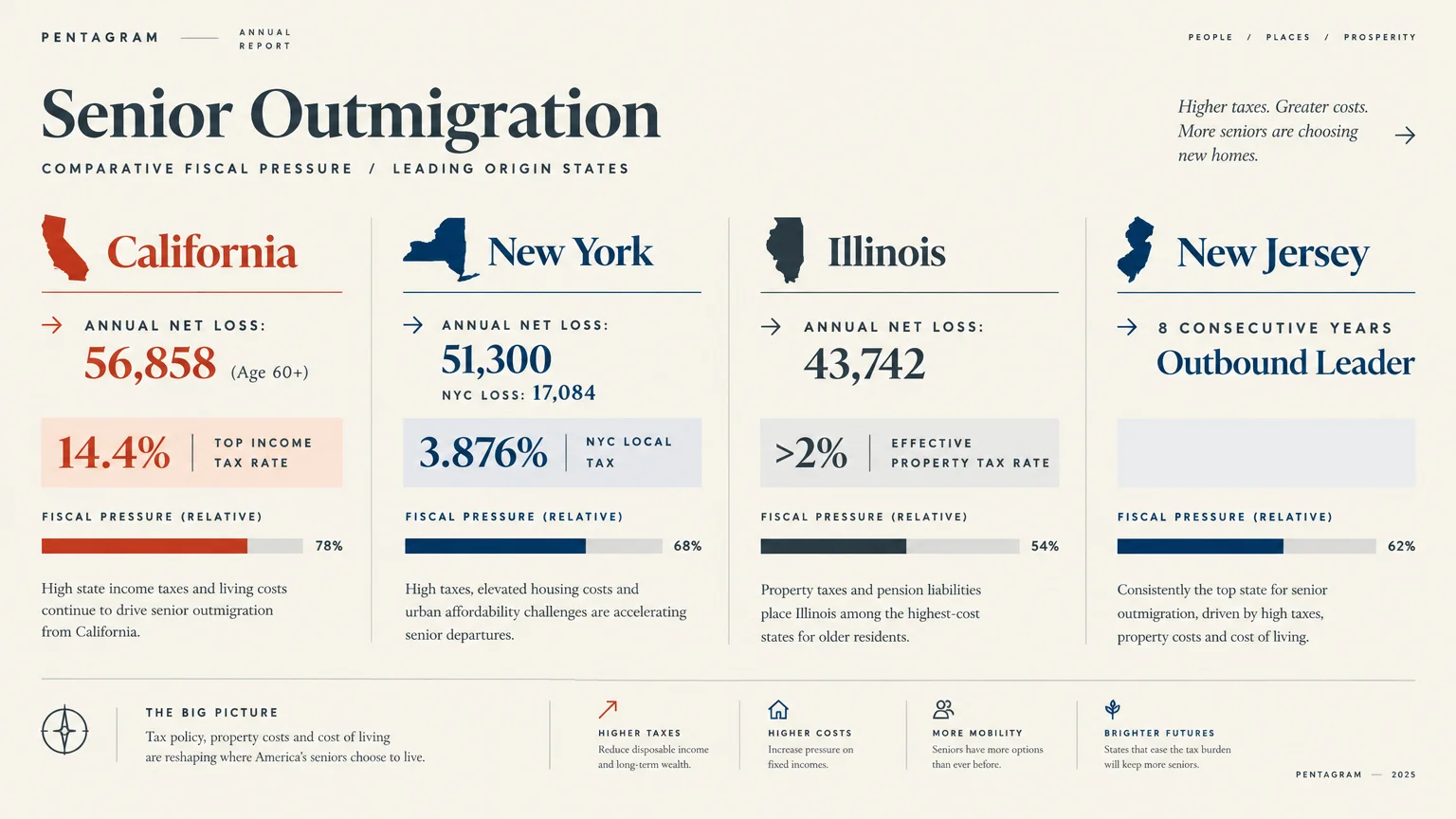
California consistently leads the nation in total net senior departures. Demographic studies show an annual net loss of 56,858 residents aged 60 and older.
The state accounts for over ten to eighteen percent of all interstate retiree moves originating nationwide. High baseline expenses and soaring utility rates make aging here financially unsustainable for middle-class retirees.
California imposes the nation’s highest marginal state income tax rate, reaching up to 14.4 percent. Furthermore, an escalating property insurance crisis driven by wildfire risks threatens fixed retirement budgets.
2. New York
New York ranks second nationally for net senior loss, shedding more than 51,300 older residents in a single year. Over 75,000 seniors moved out, while fewer than 25,000 moved into the state.
New York City alone recorded a net loss of 17,084 adults aged 60 and older. Harsh winter temperatures combined with dense urban living expenses accelerate these senior departures.
New York City residents face local income taxes reaching 3.876 percent on top of state income taxes. High sales taxes and inflated grocery costs continue to push fixed-income households southward.
3. Illinois
Illinois remains a top origin for outbound retiree migration. Thousands of older households depart annually to escape punishing regional tax structures.
The state features the second-highest effective property tax rate in the country, averaging above two percent. Even after you pay off your mortgage, your annual municipal property tax bill remains staggering.
These excessive carrying costs force older adults to spend thousands of dollars annually just to keep their family homes. Consequently, retirees seek shelter in states with lower local tax burdens.
4. New Jersey
New Jersey ranked first nationwide for outbound migration for eight consecutive years. In 2025, approximately 62 percent of all interstate moves within the state headed elsewhere.
Punishing residential property taxes represent the primary catalyst pushing seniors beyond state borders. With effective property tax rates averaging around two percent, maintaining a suburban home drains retirement portfolios rapidly.
Many older residents discover that their property taxes equal or exceed their original mortgage payments. Relocating to lower-tax jurisdictions allows them to preserve their cash flow without sacrificing quality of life.
5. Virginia
Virginia exhibits a striking pattern in national retirement migration trends. Nearly one in four Americans moving across state lines specifically to retire originated from Virginia.
Rapidly rising living costs and escalating home prices in Northern Virginia and Hampton Roads drive this exodus. Older homeowners frequently cash out their accumulated home equity to secure debt-free housing elsewhere.
By purchasing homes in lower-cost southern states, these retirees lower their living expenses. They also establish larger cash cushions for unexpected future healthcare costs.
6. Colorado
Colorado was long considered a premier retirement destination for mountain recreation. However, the state now ranks among the top five states losing retirees to out-migration.
Rapidly escalating home prices have priced out pre-retirees and strained existing senior homeowners. Median home values across the Denver metro area regularly exceed $550,000, driving up property taxes and maintenance costs.
Everyday living expenses in Colorado run roughly 12 percent above the national average. High heating costs and high altitudes also prompt older adults to seek warmer, lower-elevation environments.
7. Massachusetts
Massachusetts persistently loses older adults and pre-retirees to lower-tax southern destinations. The Bay State consistently ranks among the top ten outbound states for seniors seeking fiscal relief.
Median single-family home prices across the state now easily surpass $600,000. These exorbitant valuations translate into substantial property taxes, high maintenance costs, and costly homeowners insurance premiums.
Cold winters drive up heating oil and utility expenses throughout extended New England winters. State capital gains taxes also reduce the net investment income older adults rely on for living expenses.
8. Pennsylvania
Pennsylvania recorded over 14,000 outbound moves among retirement-age adults in 2025. While the state offers notable tax advantages, other local expenses drive retirees away.
The commonwealth exempts Social Security benefits and most pension payouts from state income taxes. However, heavy school district and county property taxes aggressively offset those tax savings.
Harsh winter conditions and aging, multi-story housing stock present significant mobility hurdles for aging residents. Many older Pennsylvanians relocate south to secure single-level homes in milder climates.
9. Maryland
Maryland frequently ranks near the top of outbound departure lists for affluent retirees and former federal workers. High combined income taxes make remaining in the state remarkably expensive.
Combined state and county income taxes can exceed 8.9 percent depending on your local jurisdiction. Maryland also remains one of the few states imposing both a state estate tax and an inheritance tax.
This dual death taxation threatens wealth preservation strategies for families planning to pass assets to heirs. Consequently, retirees relocate to states without death taxes to protect their legacy.
10. Connecticut
Connecticut maintains a persistent position on national high-outbound relocation indices. Nearly 60 percent of all interstate moves involving Connecticut households head out of state.
High personal income tax rates combine with aggressive municipal property levies to squeeze fixed-income budgets. Connecticut also levies gift and estate taxes that complicate legacy planning for older residents.
Expensive utility rates and harsh New England winters further convince residents to relocate elsewhere. Warmer climates with lower tax environments offer a much more forgiving lifestyle for retirees.
11. Michigan
Michigan continues to see steady senior out-migration, particularly from college towns and older industrial corridors. Communities like Ann Arbor have recorded significant net deficits of older residents relative to population size.
Prolonged, freezing winters present physical slip hazards and elevate seasonal home heating expenses substantially. Aging housing stock across the state frequently lacks accessibility modifications needed for comfortable aging in place.
Retirees often choose to relocate toward southern Sun Belt communities where warm weather facilitates outdoor recreation year-round. This geographic transition helps older adults maintain active social and physical routines.
12. Florida
Florida has long reigned as America’s retirement capital, but an emerging reversal deserves close attention. In 2025, over 44,000 adults aged 65 and older moved away from Florida.
This departure wave left the state with a net gain of just 815 older residents. Unprecedented homeowners insurance spikes and extreme summer heat are driving this surprising migration shift.
Mandatory post-Surfside condo reserve assessments have also generated five-figure fees for condominium owners. Many departing retirees become “halfbacks,” relocating midway north to North Carolina, South Carolina, or Tennessee.

Strategic Relocation Pillars for Modern Retirees
Relocating successfully requires looking far beyond real estate listings and climate charts. You must build your retirement transition upon three foundational pillars to safeguard your future.
Income Planning and Tax Optimization
State income taxes represent only one component of your overall retirement tax obligation. You must also evaluate property taxes, sales tax rates, and taxes on retirement distributions.
According to the Internal Revenue Service, required minimum distributions can push you into higher tax brackets. Choosing a destination with favorable tax rules prevents excessive taxation on mandatory withdrawals.
Lifestyle and Community Design
Relocation involves leaving behind established neighborhood connections, doctors, and familiar civic organizations. Building a resilient social network in your new home is critical for emotional well-being.
Prioritize universal design features when choosing a home, such as step-free entryways and wide hallways. Accessible housing allows you to maintain independence and age comfortably in place for decades.
Healthcare and Long-Term Wellness
Healthcare needs inevitably evolve as you advance through different stages of retirement. You must assess the quality, availability, and proximity of medical specialists before purchasing a home.
Review local coverage options through Medicare to ensure your preferred physicians and hospital networks participate. Many rapidly expanding retirement enclaves suffer from severe healthcare provider shortages.

Expert Perspectives and Key Safeguards
Financial planners urge retirees to test their target destinations before selling their primary residences. Renting for six months provides realistic insight into local seasons, traffic patterns, and community culture.
Gerontologists note that sudden relocations without strong support networks can trigger depression and anxiety. Engaging with local clubs and civic groups early accelerates your integration into a new community.
You must also remain vigilant against moving scams and unscrupulous contractors targeting relocated seniors. Verify moving company credentials through federal databases and never pay large upfront deposits in cash.
Review your benefit eligibility through the Social Security Administration before finalizing your move. Ensuring your address and direct deposit records are properly updated prevents disruptions to your monthly income.
Frequently Asked Questions
Which states do not tax retirement income?
Nine states have no state income tax: Alaska, Florida, Nevada, New Hampshire, South Dakota, Tennessee, Texas, Washington, and Wyoming. Several other states exempt pension payments and retirement distributions.
However, states without income taxes often rely on higher sales or property taxes to fund government operations. You must evaluate the complete tax picture before declaring a state financially advantageous.
Why are so many seniors leaving Florida recently?
Skyrocketing property insurance premiums and escalating homeowners association reserve requirements have severely impacted condo owners. Prolonged summer heatwaves and frequent hurricane threats also prompt retirees to reconsider their options.
Many older adults now move toward the mid-South to enjoy milder four-season climates and reduced living costs. States like Tennessee and the Carolinas offer attractive alternatives with lower overall maintenance costs.
How does interstate relocation impact Medicare coverage?
Original Medicare allows you to visit any provider across the nation that accepts Medicare assignment. However, Medicare Advantage and Part D prescription plans feature strict local service areas and network limits.
What is the most common financial mistake when relocating for retirement?
Many retirees focus exclusively on state income tax rates while overlooking local property and sales taxes. A state with zero income tax can still burden you with punishing property assessments and insurance premiums.
Retirees also frequently underestimate the financial and emotional toll of living far away from adult children and grandchildren. Travel expenses to visit family can easily erase any anticipated tax savings.
Take Your Next Step
Choosing where to live during retirement is one of the most consequential decisions you will ever make. Empower yourself by researching comprehensive cost-of-living metrics rather than relying on promotional marketing brochures.
Educational resources from organizations like AARP can help you evaluate community livability and healthcare accessibility. Planning ahead ensures your chosen destination aligns with your financial budget and lifestyle vision.
Take one concrete step in the next 48 hours to secure your retirement path. Sit down, list your non-negotiable living priorities, and review your current property tax assessment against emerging destination alternatives.