
You can slash your tax bill while making an immediate difference for causes you cherish. Strategic philanthropy transforms your hard-earned retirement assets into lasting community solutions.
Recent tax code shifts reward purposeful giving more than ever before. Smart planning shields your income from costly penalties and keeps your legacy firmly under your control.
Whether you live on a modest pension or manage sizable investments, tailored giving aligns your generosity with your financial security. Here is how you can maximize both your impact and your savings.
Navigating the Modern Giving Landscape
American retirees face an evolving financial landscape under current federal policies. The passage of the SECURE 2.0 Act altered fundamental milestones, including distribution ages and charitable giving caps.
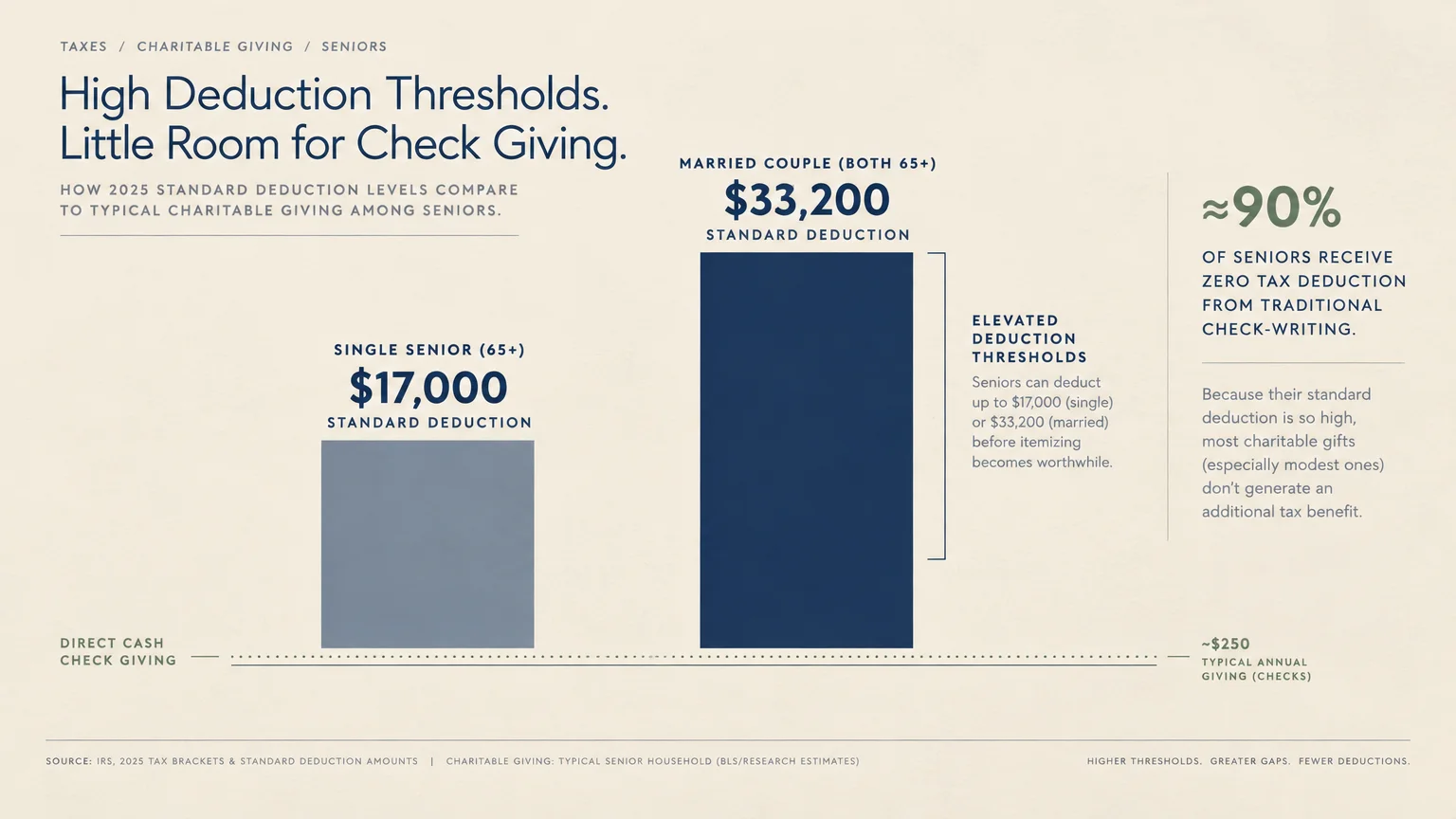
Writing a personal check to a nonprofit often leaves valuable tax advantages untapped. Because roughly ninety percent of seniors now claim the standard deduction, direct cash donations rarely create federal tax deductions.
For 2025, married couples where both spouses are sixty-five or older receive a standard deduction of $33,200. Single seniors claim an elevated standard deduction of $17,000.
These elevated thresholds place traditional itemized deductions out of reach for most households. Forward-thinking retirees now use proactive strategies to secure substantial tax relief while supporting their communities.
1. Execute Qualified Charitable Distributions Directly from Your IRA
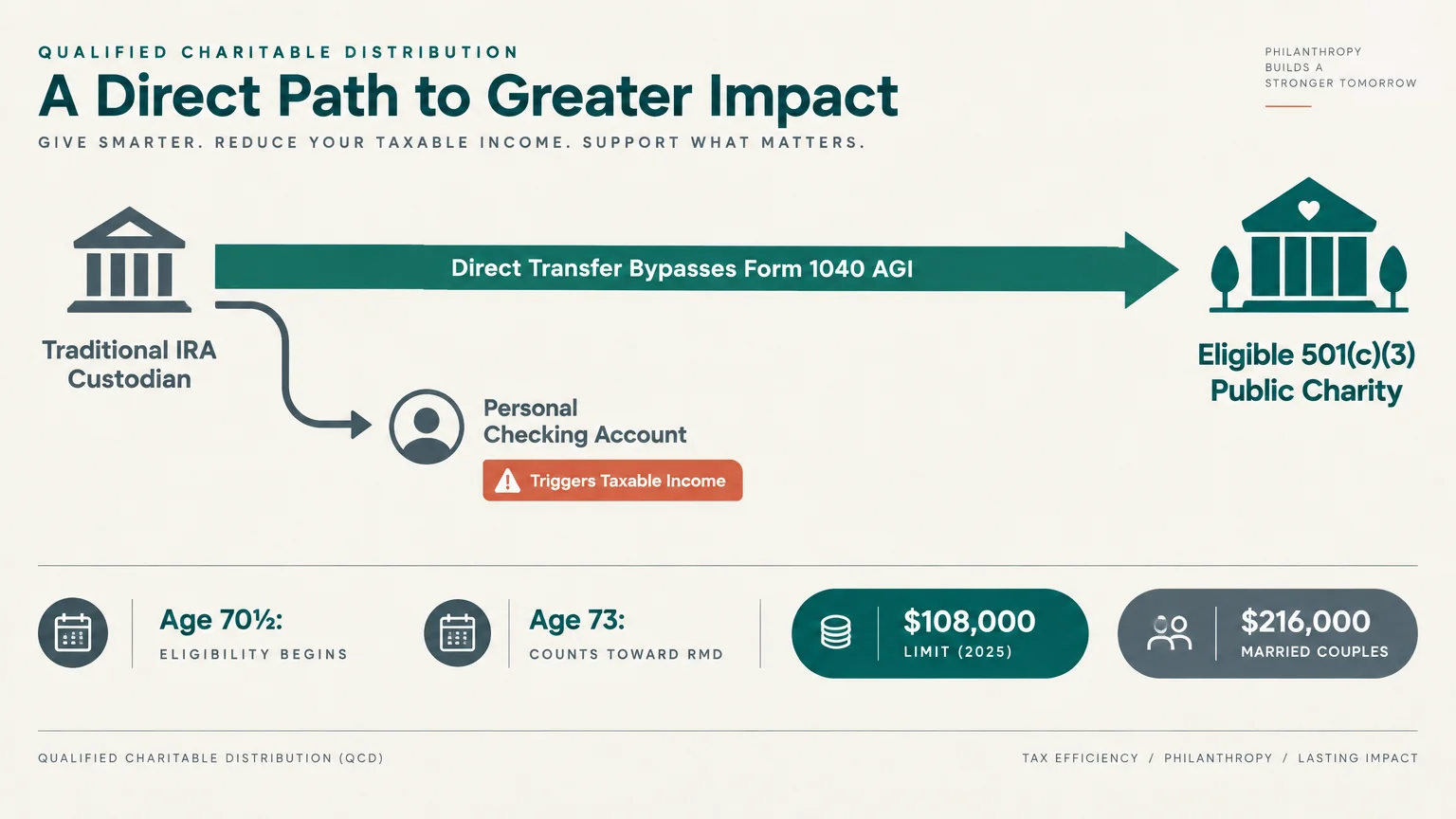
If you are at least age seventy and a half, the Internal Revenue Service allows you to make a Qualified Charitable Distribution. This rule authorizes direct transfers from a traditional IRA to an eligible charity.
You do not need to wait until age seventy-three, when mandatory distributions begin, to deploy this strategy. You can start donating tax-free as soon as you reach age seventy and a half.
The annual limit reached $105,000 per person in 2024 and expands to $108,000 in 2025. Married couples filing jointly can donate up to $216,000 if each spouse maintains an individual IRA.
A Qualified Charitable Distribution excludes the gifted money entirely from your adjusted gross income. Unlike standard withdrawals, these distributed funds bypass your tax return completely.
Once you reach age seventy-three, these gifts count toward your annual required minimum distribution. You satisfy your mandatory withdrawal obligation without generating additional taxable income.
Your IRA custodian must send the funds directly to a qualifying 501(c)(3) public charity. If the distribution check lands in your personal checking account first, the tax exemption vanishes completely.
2. Shield Your Social Security and Medicare Premiums with AGI Reduction
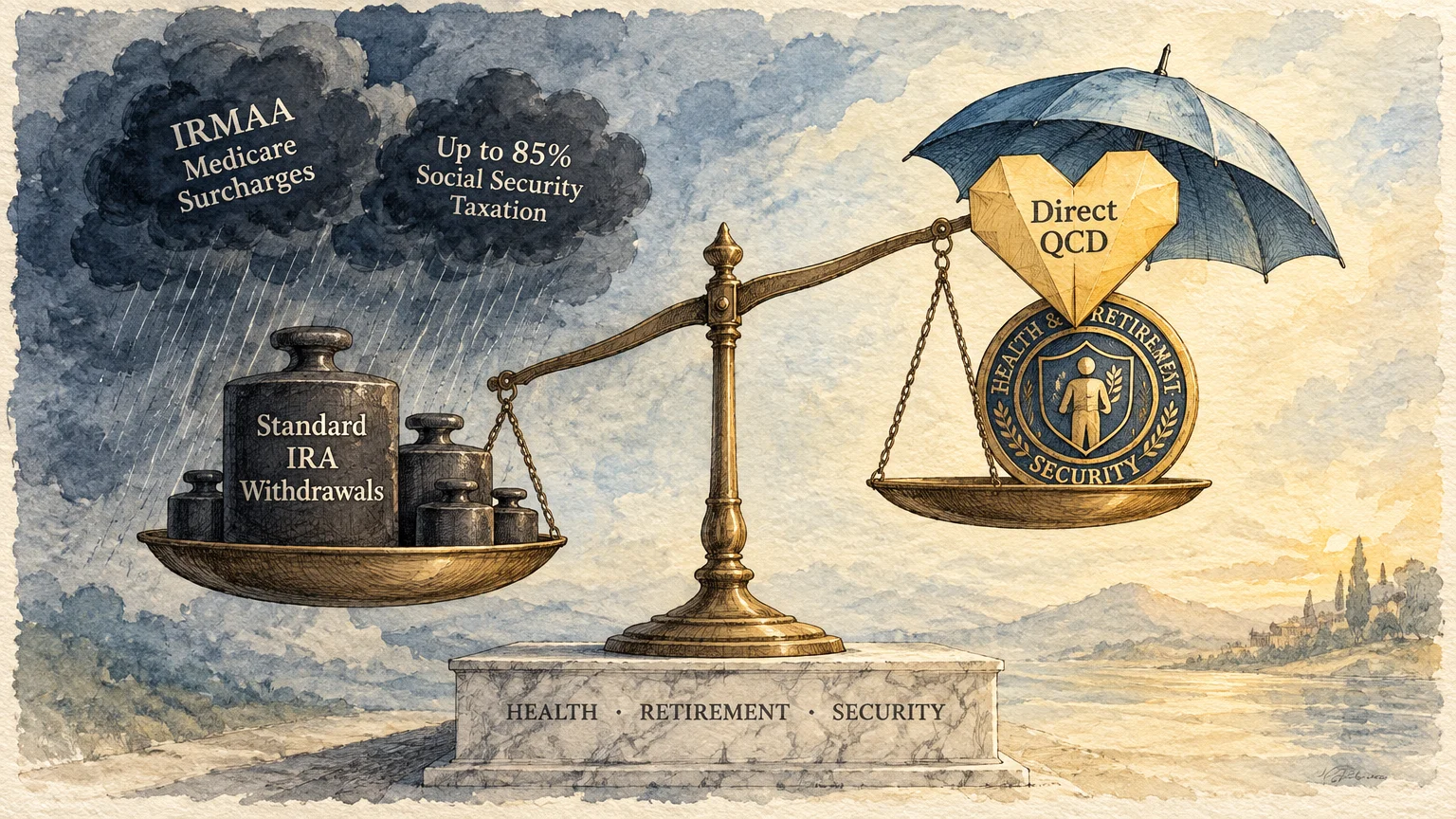
Retirees often overlook the hidden tax consequences of standard retirement account withdrawals. When you withdraw money from a pre-tax IRA, every dollar inflates your adjusted gross income.
Elevated earnings can trigger benefit taxation thresholds monitored by the Social Security Administration. Consequently, you may discover that up to eighty-five percent of your Social Security benefits face federal taxation.
Higher income also activates costly Medicare premium surcharges known as the Income-Related Monthly Adjustment Amount. The federal government computes these surcharges using your tax return from two years prior.
Higher brackets impose steep monthly surcharges on both Medicare Part B and Part D coverage. Reviewing your income tiers on Medicare.gov helps you avoid unwelcome premium hikes.
Direct charitable gifts keep your adjusted gross income lower throughout retirement. This deliberate reduction protects your healthcare premiums and shields your monthly Social Security payments from aggressive taxation.
It also helps high-income seniors avoid the 3.8 percent Net Investment Income Tax. Targeted giving preserves your living budget while funding organizations you believe in.

3. Establish a Split-Interest Gift for Guaranteed Lifetime Income
Current legislation created an attractive option for retirees seeking steady retirement income. You can make a once-in-a-lifetime transfer from your traditional IRA to fund a split-interest charitable gift.
This election allows you to establish a Charitable Gift Annuity or Charitable Remainder Trust directly from pre-tax assets. The indexed cap is $53,000 for 2024 and increases to $54,000 for 2025.
You must complete this election within a single calendar tax year. The transfer counts against that year’s overall annual charitable distribution ceiling.
The sponsoring charity provides guaranteed lifetime income distributions to you or your surviving spouse in return. These payments arrive on a predictable quarterly or monthly schedule.
While the annuity payments back to you count as ordinary taxable income, the initial transfer avoids immediate taxation. It also counts toward satisfying your mandatory distribution for the year.
This strategy suits retirees who want to back an important institution while preserving personal income stability. It unites philanthropic passion with personal cash-flow protection.
4. Bunch Contributions Using a Donor-Advised Fund
If you prefer to itemize deductions, a Donor-Advised Fund offers tremendous flexibility. This fund functions like a personal charitable investment account dedicated entirely to philanthropic grants.
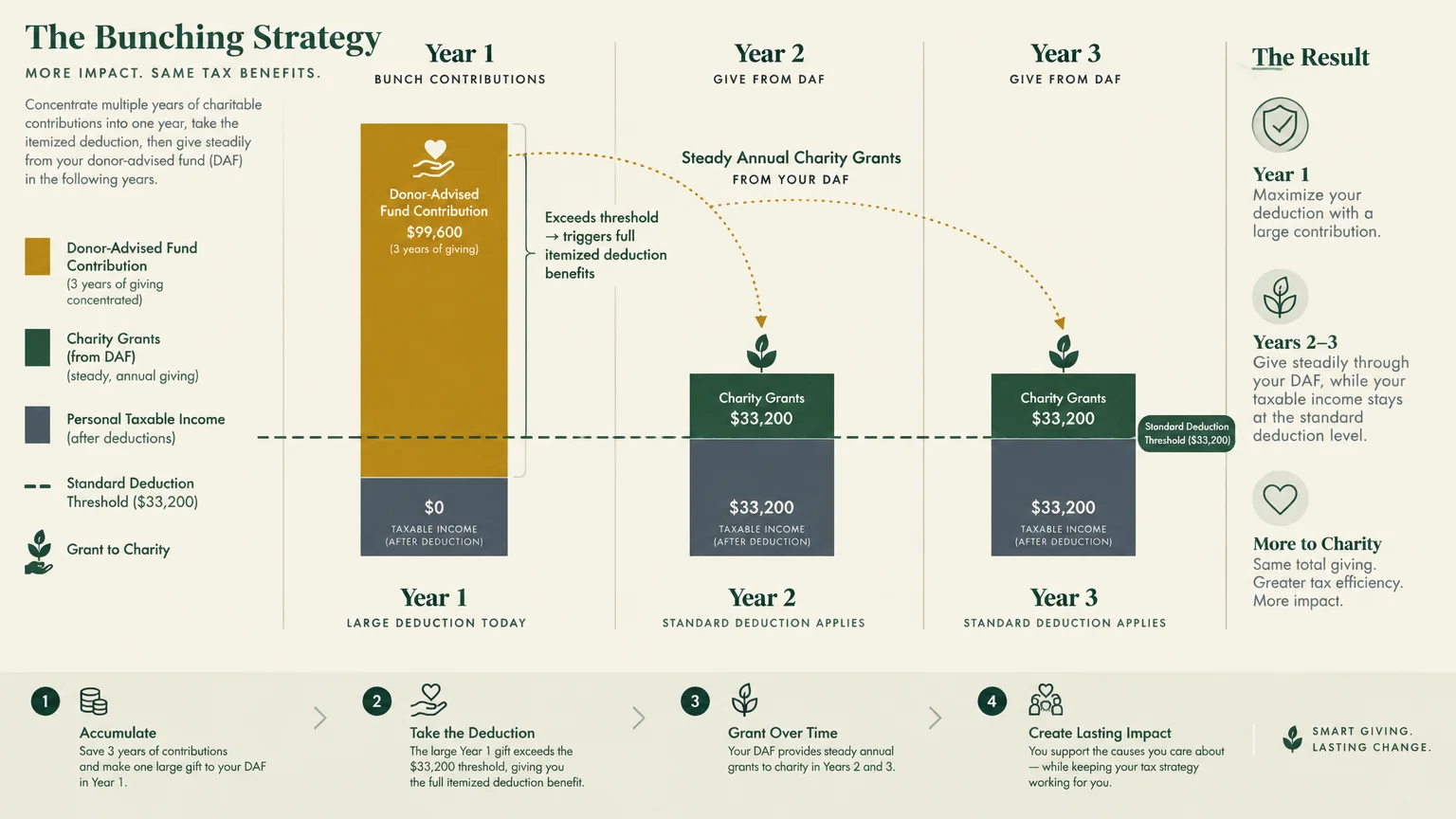
Because standard deductions remain high, giving smaller amounts each year rarely generates usable write-offs. To solve this dilemma, retirees use a powerful method called bunching.
You concentrate several years of planned charitable contributions into a single calendar tax year. You deposit that combined sum directly into your Donor-Advised Fund.
This large donation pushes your deductions above the standard deduction threshold. You secure a major itemized deduction during the contribution year.
You can then recommend grant distributions to your preferred charities over multiple upcoming years. Meanwhile, the invested balance grows completely tax-free inside the fund.
Federal law prevents you from transferring an IRA charitable distribution into a Donor-Advised Fund. You must fund these vehicles using taxable brokerage assets or personal cash.

5. Donate Appreciated Assets Instead of Cash
Donating via check or credit card remains popular among donors. However, writing checks is often the least tax-efficient method for seasoned investors.
If you hold taxable stocks, mutual funds, or exchange-traded funds with significant growth, consider donating the shares directly. Gifting appreciated securities held longer than one year erases all capital gains liability.
You avoid federal capital gains taxes of up to twenty percent on the unrealized gains. You also avoid the 3.8 percent Net Investment Income Tax on those earnings.
You claim a charitable deduction for the full fair market value of the gifted shares. The recipient nonprofit sells the stock tax-free, capturing one hundred percent of the proceeds.
Tax regulations allow you to deduct appreciated capital assets up to thirty percent of your adjusted gross income. You can carry forward any remaining deduction for up to five future years.
This maneuver allows you to rebalance an appreciated portfolio without incurring unnecessary tax liabilities. It protects your liquid cash while maximizing your charitable contribution.
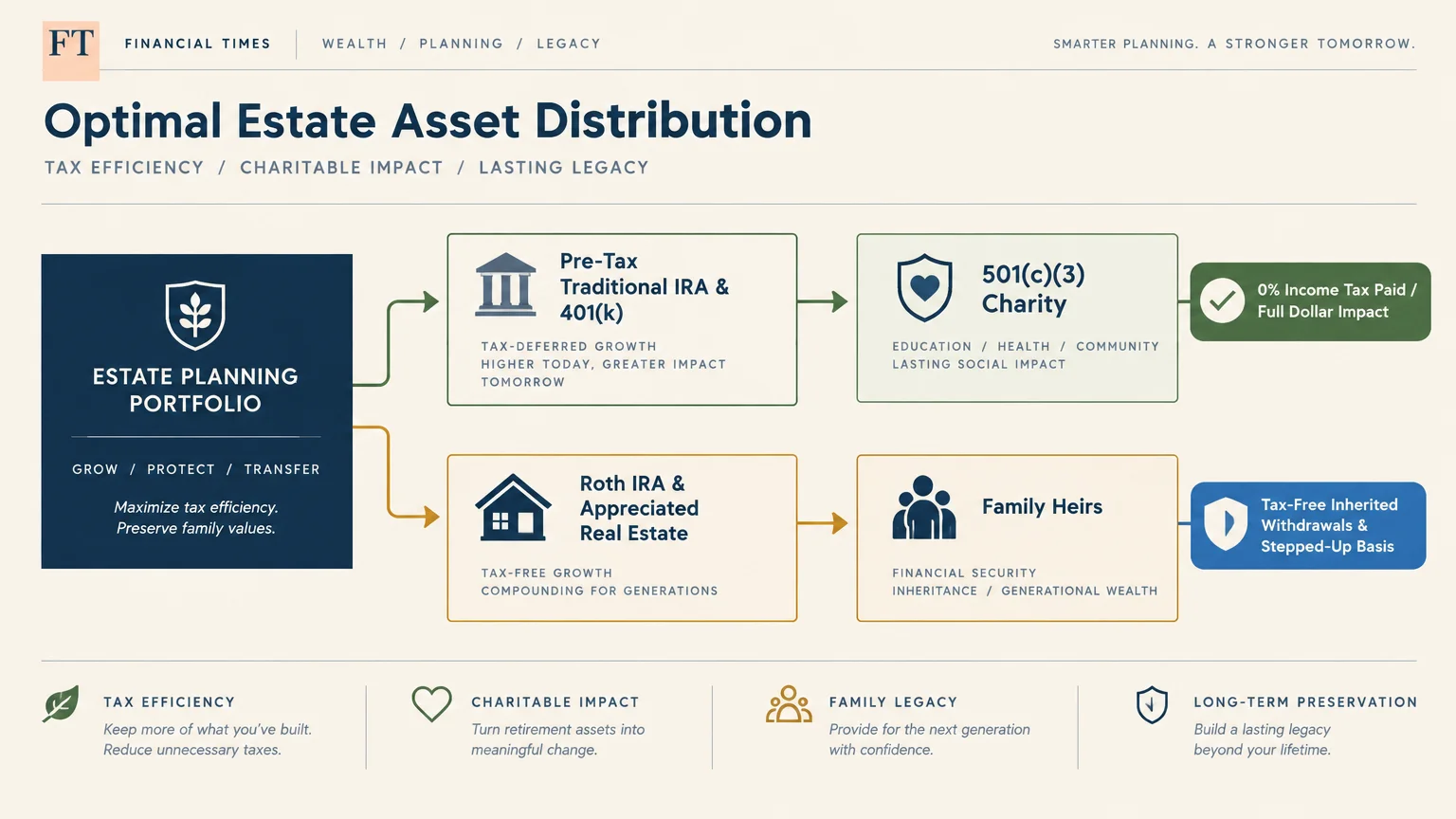
6. Optimize Beneficiary Designations Across Account Types
Thoughtful estate planning connects your charitable vision with family wealth transfer objectives. The account types you assign to loved ones versus charities dictate your family’s final tax liability.
Leaving a traditional IRA or 401(k) to non-spouse heirs creates significant tax exposure. Beneficiaries must generally withdraw the entire balance within ten years, paying ordinary income tax on every dollar.
If your heirs inherit pre-tax accounts during their peak career earnings, taxes could claim substantial wealth. In contrast, qualifying charities pay zero income tax on inherited retirement distributions.
Naming a charity as the beneficiary of your traditional IRA lets the nonprofit receive every dollar intact. You eliminate ordinary income taxes on those retirement funds.
You can leave your taxable brokerage accounts and physical real estate to family members instead. Under Section 1014 of the Internal Revenue Code, taxable assets receive a stepped-up cost basis upon death.
This basis adjustment eliminates all untaxed lifetime capital gains for your heirs. Your loved ones inherit assets tax-free, while your favorite charity receives your retirement balances untaxed.

7. Invest Your Time and Skills for Physical and Cognitive Health
Charitable impact extends well beyond monetary gifts and estate plans. Donating your professional skills and personal time offers profound benefits for your community and your well-being.
Evidence compiled by the AARP Public Policy Institute links regular volunteer service to measurable health advantages for seniors. Consistent volunteers demonstrate lower rates of depression, reduced chronic inflammation, and delayed cognitive decline.
Mentoring younger professionals, teaching adult literacy classes, or leading local nonprofit committees restores regular daily purpose. These meaningful engagements build vibrant social circles that protect against retirement isolation.
Volunteering also serves retirees on fixed incomes or those with limited mobility. Many national non-profit programs now offer virtual volunteer opportunities you can complete easily from home.
Sharing your hard-earned professional insight strengthens community institutions for the next generation. Meaningful service keeps you socially engaged and intellectually active as you age.
True retirement flourishing balances sound financial strategy with daily personal purpose. Combining fiscal stewardship with civic participation creates a rewarding, resilient lifestyle.
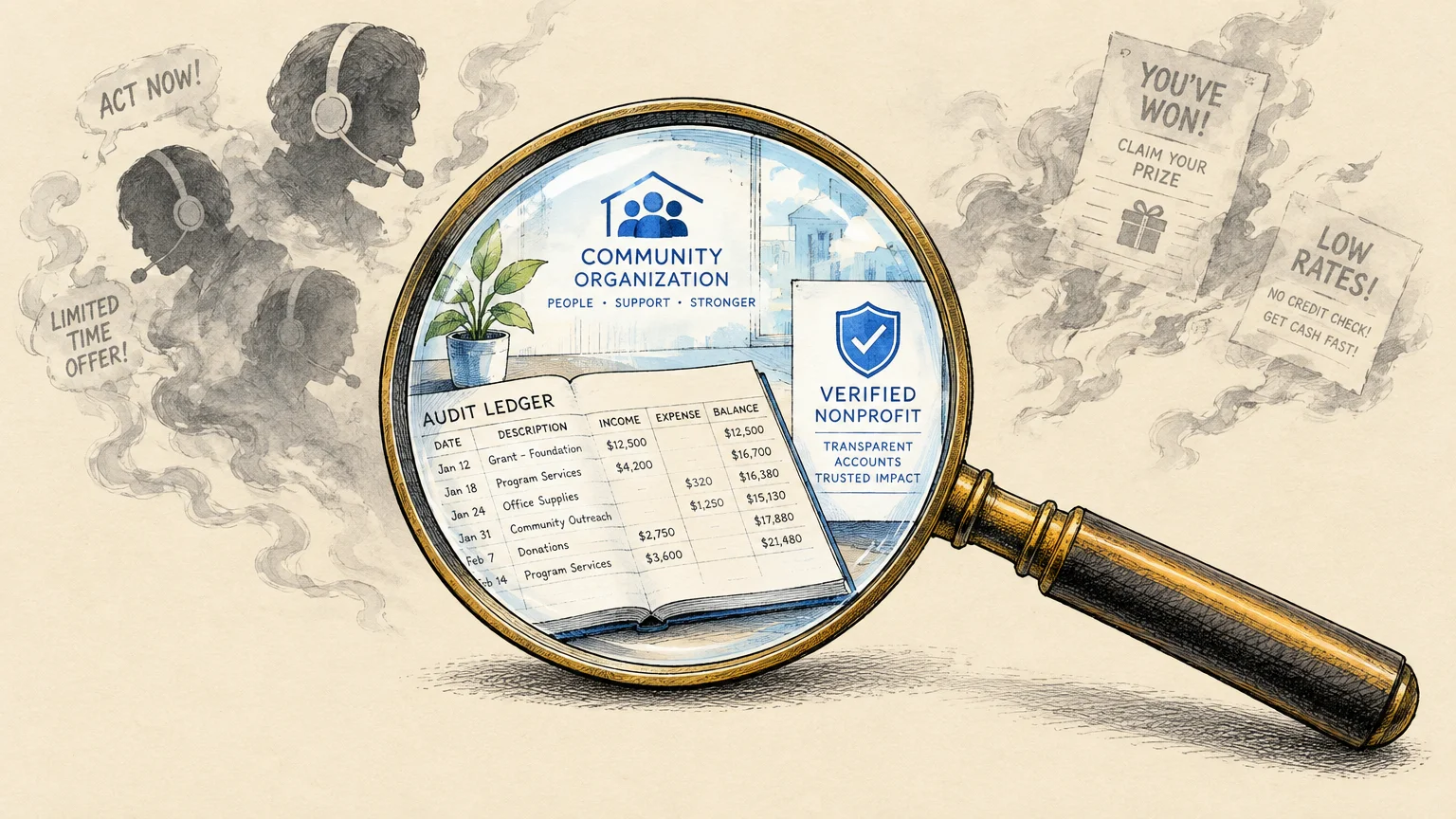
Protecting Your Generosity from Pitfalls and Fraud
As philanthropic techniques expand, you must defend your assets against procedural mistakes and predatory solicitors. Deceptive operators frequently target older adults using aggressive phone calls and misleading charity names.
Always verify a group’s tax-exempt credentials using the searchable database on the IRS website. Trustworthy charities readily furnish their tax identification number and audited financial statements upon request.
You must also track strict administrative calendars when processing charitable distributions from your accounts. A Qualified Charitable Distribution must leave your account by December thirty-first to count for that tax year.
Financial institutions encounter intense backlogs during the final weeks of December. Waiting too late risks processing delays that push your transaction into the following calendar year.
Missing a required distribution triggers significant excise taxes from the government. The SECURE 2.0 Act lowered the penalty to twenty-five percent, which drops to ten percent if corrected within two years.
Always obtain written donation receipts confirming that you received no goods or services in exchange for your gift. Keeping these records protects your deductions during potential tax examinations.

Expert Perspectives on Purpose-Driven Giving
Professional wealth managers recommend aligning your charitable commitments with personal longevity goals. You should always protect your essential living reserves before committing to irrevocable philanthropic gifts.
Certified Financial Planner™ practitioner Eleanor Vance notes that retirees sometimes donate aggressively before securing their healthcare plans. She counsels clients to model potential long-term care costs prior to finalizing large gifts.
Gerontologist Dr. Marcus Ruiz points out that purposeful giving generates measurable physical and psychological benefits. Giving stimulates positive brain chemistry and reinforces personal identity after formal careers conclude.
Merging prudent tax planning with personal generosity delivers enduring life satisfaction. When you plan each donation strategically, you protect your household lifestyle while creating meaningful community change.
Frequently Asked Questions
Can I transfer a Qualified Charitable Distribution directly to a Donor-Advised Fund?
Federal rules strictly prohibit moving Qualified Charitable Distributions into Donor-Advised Funds, private foundations, or supporting organizations. Direct IRA distributions must go to operating 501(c)(3) public charities, or the transfer becomes taxable ordinary income.
How do Qualified Charitable Distributions affect my required minimum distribution?
A Qualified Charitable Distribution satisfies your annual required minimum distribution dollar-for-dollar up to $108,000 in 2025. You must process the gift before or alongside your regular withdrawal so the funds remain non-taxable.
What happens if I miss the annual deadline for an RMD or charitable distribution?
Missing your required distribution deadline triggers a twenty-five percent federal excise tax penalty under SECURE 2.0. Correcting the mistake within two years reduces this penalty to ten percent, and Form 5329 can request full relief.
Can I write off out-of-pocket expenses incurred while volunteering?
You can deduct unreimbursed volunteer expenses like supplies, parking fees, and mileage at fourteen cents per mile if you itemize deductions. However, tax laws never allow you to deduct the value of your time or services.
Take Action in the Next 48 Hours
Turning charitable goals into measurable results begins with prompt personal action. Do not delay your retirement planning until the chaotic year-end rush arrives.
Over the next forty-eight hours, review your retirement accounts and verify your required distribution timeline. Check your expected adjusted gross income for the current tax year to spot possible bracket creep.
Select one charitable organization whose mission inspires you and verify its tax-exempt credentials online. Contact your account custodian to obtain their standard distribution transfer request form.
Completing this simple task puts your retirement capital to work efficiently. You will safeguard your lifetime savings, lower your tax liability, and build a lasting legacy starting today.