
Federal retirement rules alter your Social Security benefits in ways most financial advisors frequently misunderstand. Learning these seven unique provisions protects your monthly cash flow from unexpected reductions.
More than two million civil service retirees navigate complex pension offsets that private sector workers never face. A simple filing error can permanently diminish your hard-earned household income.
Securing your earned federal benefits demands proactive planning across civil service pensions and national insurance programs. You can optimize your total wealth by understanding the exact mechanisms governing your check.

The Policy Landscape for Federal Retirees
Federal retirement is experiencing significant legislative scrutiny as lawmakers debate public pension formulas. These discussions directly affect how the government calculates public servant benefits.
Meanwhile, the Bureau of Labor Statistics tracks persistent cost-of-living increases affecting retirees nationwide. Every dollar of your earned federal annuity remains vital to your household budget.
Modern federal retirees must balance multiple distinct income streams simultaneously. Understanding the interplay between civil service rules and national programs protects your financial future.
1. The Windfall Elimination Provision Reduces Earned Benefits
The Windfall Elimination Provision reduces Social Security benefits for workers receiving non-covered pensions. If you retired under CSRS without paying Social Security taxes, this rule applies directly to you.
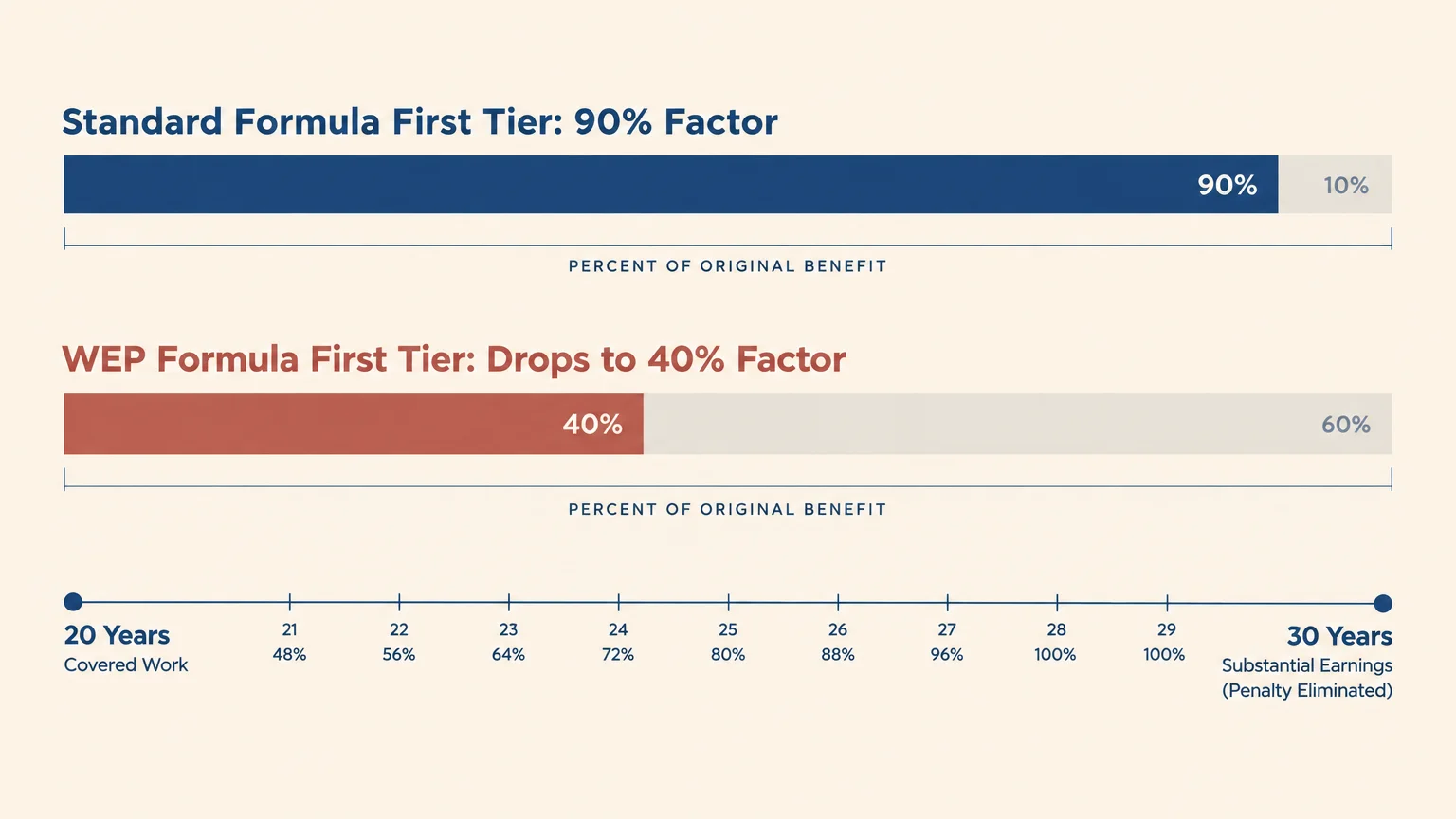
Standard formulas apply a ninety percent factor to your initial earnings tier. Under this provision, that factor drops to as low as forty percent, reducing your monthly check.
This reduction only impacts Social Security, leaving your civil service annuity intact. You can review exact calculation tables via the Social Security Administration offset portal.
However, thirty years of substantial earnings under covered employment eliminates the penalty entirely. Each year past twenty years of covered work gradually restores your benefit percentage.
2. The Government Pension Offset Curbs Spousal Benefits
The Government Pension Offset targets spousal and survivor benefits earned by your partner. It applies if you collect a pension from non-covered federal employment like CSRS.
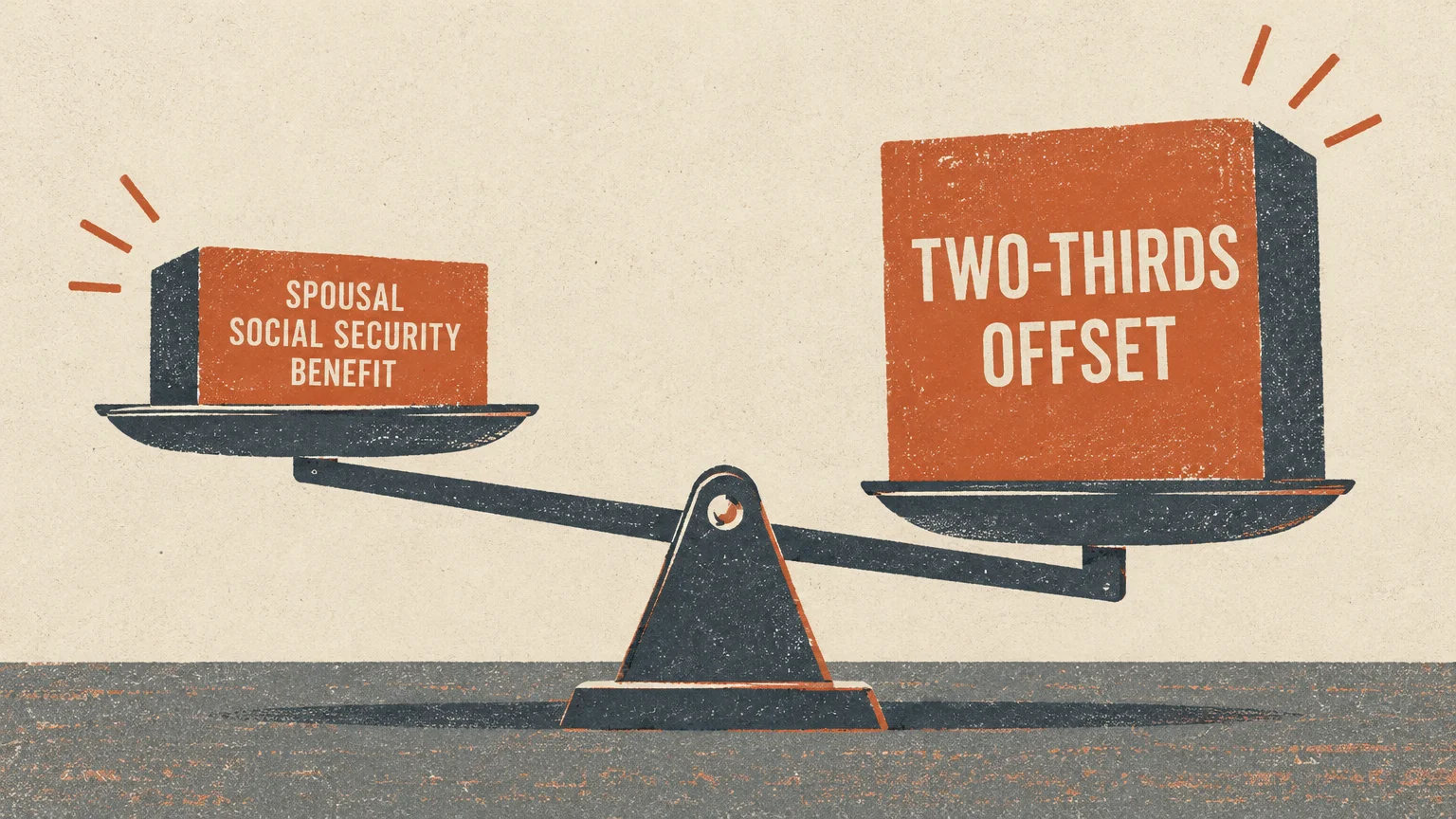
Under this mandate, the government reduces your potential spousal benefit by two-thirds of your federal annuity. In many situations, this calculation eliminates your spousal Social Security payment entirely.
Survivor benefits face the identical two-thirds offset calculation, which often catches surviving spouses unprepared. Creating dedicated survivor annuities helps shield your partner from unexpected income shortfalls.
FERS employees who pay full Social Security taxes remain completely exempt from this reduction. Knowing your retirement tier protects you from costly financial planning mistakes.
3. The FERS Annuity Supplement Serves as an Early Bridge
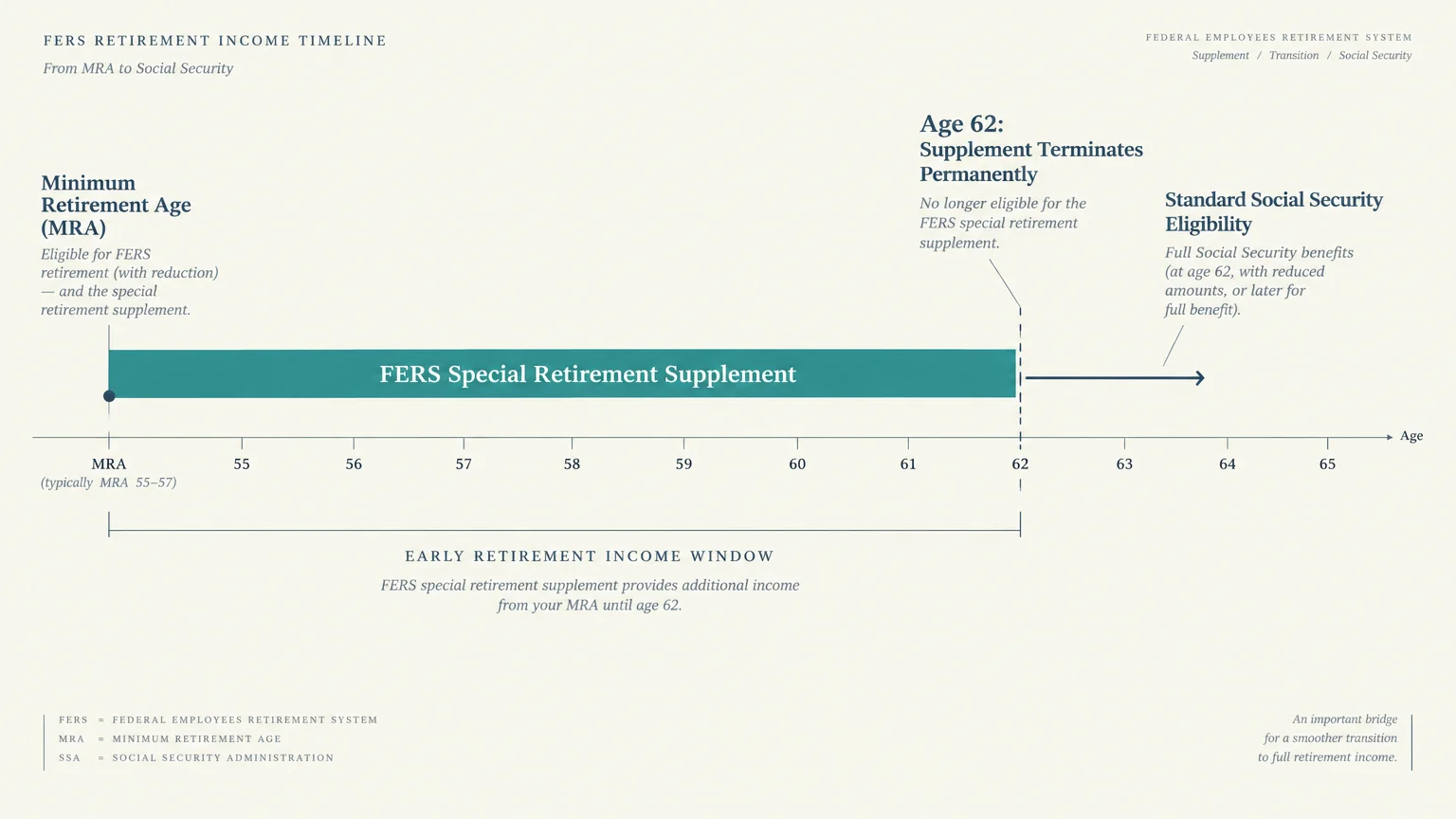
The FERS Special Retirement Supplement provides vital bridge income if you retire before sixty-two. This unique benefit applies exclusively to eligible FERS retirees reaching their Minimum Retirement Age.
The monthly payment mimics a portion of your future Social Security benefit earned during federal service. It begins immediately upon retirement and continues until you reach age sixty-two.
The Office of Personnel Management calculates this supplement using civilian service years. Military time and private employment do not count toward this specific payment calculation.
When you reach age sixty-two, the supplement terminates permanently. You must prepare your household budget in advance for this scheduled operational change.

4. The Earnings Test Caps Supplement Income
Working after taking early federal retirement can trigger financial penalties on your bridge benefit. The FERS supplement remains subject to the annual Social Security earnings limitation test.
If you earn more than the statutory limit from employment, your supplement drops. The government withholds one dollar of benefit for every two dollars earned above the threshold.
Investment income, pensions, and TSP distributions do not count toward this earnings cap. Only active wages and self-employment earnings trigger the reduction.
Once you reach age sixty-two, standard Social Security earnings rules govern your benefits. Careful tax planning keeps your post-retirement work profitable and fully compliant.

5. Catch-62 Rules Force Military Service Buybacks
Federal employees with honorable post-1956 military service face Catch-62 rules. This statute can reduce your federal annuity when you become eligible for Social Security.
If you do not pay a military deposit, OPM recomputes your annuity at sixty-two. They eliminate credit for your military years if you qualify for Social Security benefits.
Completing your military service deposit before retirement prevents this permanent reduction. This strategy protects your military service credit for both your pension and separate Social Security checks.
FERS employees must almost always pay this deposit to receive civil service retirement credit. You should consult human resources well before separating to resolve any deposit balance.
6. FEHB Coordinates With Medicare Part B and Social Security
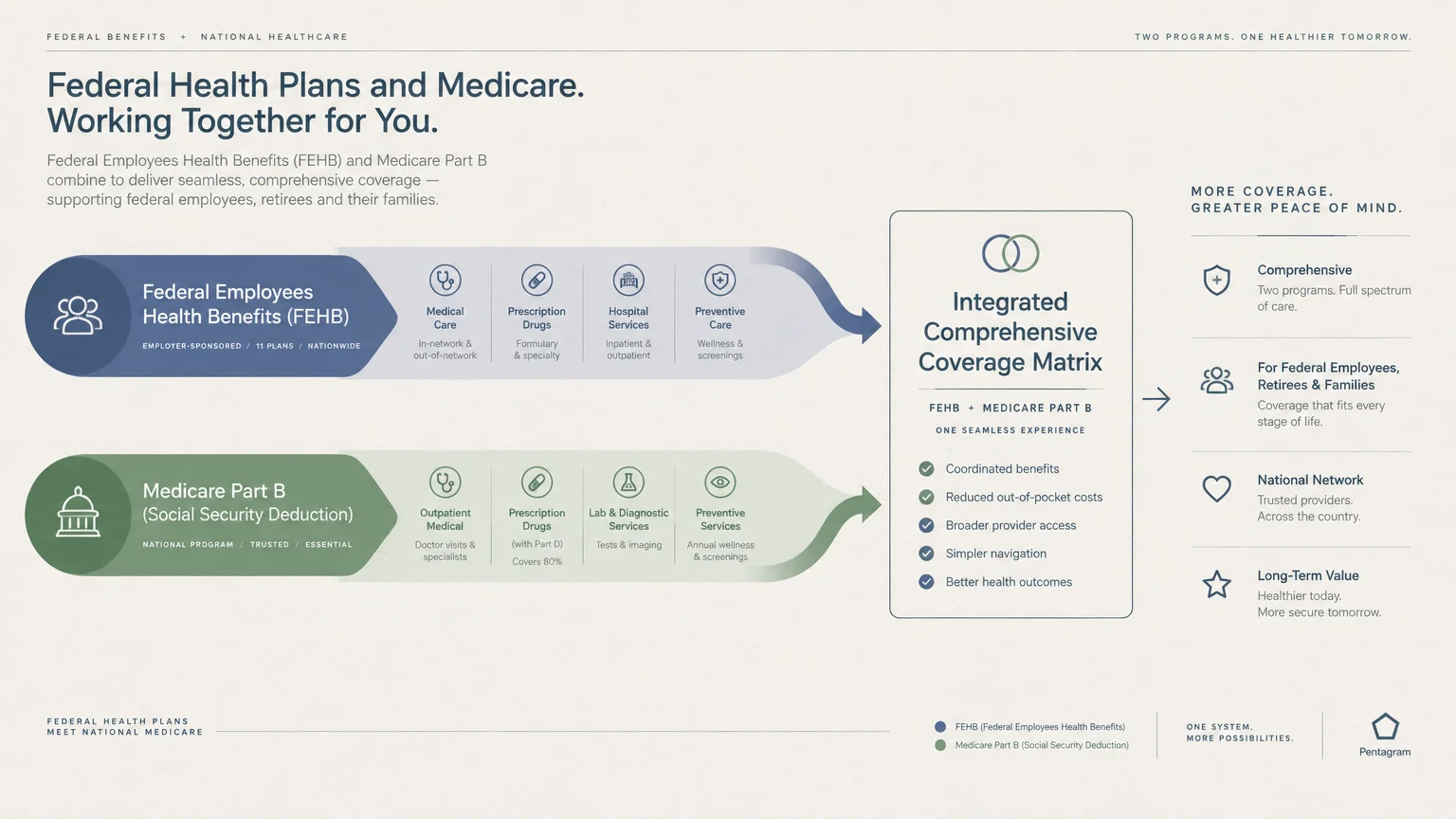
Federal retirees enjoy lifetime access to Federal Employees Health Benefits throughout retirement. When turning sixty-five, you must decide whether to enroll in Medicare Part B.
If you enroll in Part B, the government automatically deducts the premium from your Social Security. You can explore standard enrollment periods through Medicare enrollment guidelines.
Dual enrollment provides comprehensive coverage that eliminates most out-of-pocket medical co-payments. However, paying both FEHB premiums and Part B charges increases your monthly healthcare costs.
Some FEHB plans offer partial Part B premium reimbursements to reduce these expenses. Evaluating plan options ensures you maintain quality care without overspending on monthly coverage.

7. CSRS Offset Blends Two Systems Seamlessly
The CSRS Offset system covers federal employees who returned to service after a career break. It combines traditional civil service benefits with standard Social Security protections.
While working, you pay reduced civil service contributions alongside mandatory Social Security payroll taxes. This dual arrangement builds eligibility across both retirement programs simultaneously.
When you turn sixty-two, OPM reduces your CSRS pension by your offset amount. That exact reduction is matched by your newly available Social Security benefit.
Your combined gross retirement income remains stable throughout this scheduled administrative transition. The funding source simply shifts between two distinct federal programs.

Strategic Pillars: Protecting Your Federal Retirement
Income Planning and Tax Sequencing
Coordinating three distinct revenue sources requires a disciplined tax strategy during retirement. Your federal pension, Social Security benefits, and Thrift Savings Plan create complex tax obligations.
Up to eighty-five percent of your Social Security benefits become taxable under federal guidelines. You can confirm provisional income thresholds through Internal Revenue Service retirement guides.
Executing strategic Roth conversions from your TSP before claiming benefits lowers future mandatory distributions. Maintaining diversified accounts gives you precise control over your annual taxable income.
Lifestyle Design Across Diverse Budgets
Retirement success involves far more than tracking financial returns and pension percentages. Aligning your daily routine with personal purpose sustains cognitive health and emotional vitality.
Federal retirees frequently possess valuable technical and management skills that remain in high demand. Mentoring younger professionals or volunteering with local non-profits fosters meaningful community connections.
Consider regional cost-of-living differences when choosing your ultimate retirement residence. Relocating to areas with favorable state tax rules for federal annuities stretches your purchasing power.
Health, Longevity, and Wellness Integration
Maintaining physical mobility protects the personal freedom you earned through federal service. Regular exercise and proactive nutrition prevent chronic health issues that deplete retirement savings.
Take advantage of preventative wellness benefits built into your FEHB health coverage. Many federal plans offer fitness memberships and routine health screenings at no extra cost.
Cognitive engagement is equally essential for preserving independence throughout retirement. Participating in community workshops and creative hobbies stimulates executive brain function.

Expert Perspectives and Essential Safeguards
Financial planners recommend detailed modeling when coordinating civil service pensions with Social Security. Certified Financial Planner Marcus Vance notes that federal retirees frequently miscalculate their income by ignoring offsets.
He advises reviewing official benefit estimates at least five years before separating from service. This preparation provides sufficient time to adjust your personal savings inside the TSP.
Gerontologist Dr. Elena Ramirez emphasizes that identity transitions can surprise long-tenured federal employees. Transitioning away from public service requires cultivating new relationships and daily structure.
You must also protect your benefits against aggressive modern fraud schemes. Criminals frequently target retirees by impersonating OPM or Social Security officials seeking bank routing numbers.
Federal agencies never contact retirees demanding immediate wire transfers or gift card payments. Always verify suspicious communications by calling official phone numbers listed on agency websites.
Additionally, prepare for initial retirement processing delays by maintaining six months of emergency cash. Interim OPM payments often cover only partial benefits until your file completes full adjudication.
Frequently Asked Questions
Can CSRS retirees ever receive unreduced Social Security benefits?
Yes, CSRS retirees can receive full Social Security by earning thirty years of substantial covered employment. The Windfall Elimination Provision phases out gradually once you exceed twenty years of substantial earnings.
Review your annual Social Security earnings record to verify which years meet substantial income criteria. Correct records ensure you receive the highest benefit allowed under law.
Does the FERS Annuity Supplement receive annual cost-of-living adjustments?
No, the FERS Special Retirement Supplement does not receive cost-of-living adjustments. The benefit remains fixed at the amount calculated at your retirement until it ends at sixty-two.
Only your basic FERS pension receives cost-of-living adjustments once you reach age sixty-two. Factor this fixed amount into your early retirement spending plans.
How does the OPM adjudication process affect my initial Social Security claims?
OPM processing backlogs do not delay your eligibility to claim Social Security benefits. However, processing delays can complicate offset calculations under the Windfall Elimination Provision.
Notify the Social Security Administration as soon as your final federal pension is finalized. Prompt notification helps avoid unexpected overpayment claims that require reimbursement.
Will pending legislation repeal federal offsets automatically for current retirees?
Legislative proposals like the Social Security Fairness Act seek to eliminate WEP and GPO offsets. If enacted, federal agencies would recompute affected retirement checks under revised statutory standards.
You can track active advocacy updates through the AARP policy advocacy network. Until new legislation passes both chambers of Congress, existing statutory rules remain fully enforceable.
Take Action for Your Federal Retirement Today
Mastering federal retirement rules protects your financial stability and independence throughout retirement. Understanding how civil service formulas interact with national programs puts you in control of your future.
Never leave your earned benefits to administrative assumptions or last-minute calculations. Proactive planning today ensures you claim every single dollar of earned retirement income.
Take decisive action within the next forty-eight hours to secure your benefits. Access your official accounts at OPM and Social Security to verify your earnings records and military deposits.
Your dedicated federal service earned these comprehensive benefits over a long career. Take ownership of your numbers today to build a confident, rewarding retirement lifestyle.