Your monthly Social Security check provides a dependable financial foundation, but where you establish your home determines how far that income stretches. Bridging the gap between guaranteed federal benefits and a truly comfortable lifestyle requires calculating your state’s specific cost of living.
Baseline expenditures for older adults average nearly $60,000 nationwide, yet regional living costs create massive variations. Relocating across state borders can either instantly increase your discretionary spending or deplete your personal nest egg decades ahead of schedule.
Evaluating your personal savings against local housing, healthcare, and tax benchmarks helps you pinpoint the exact assets required to retire with confidence.
The Reality of Retirement Costs: Establishing the Comfort Benchmark
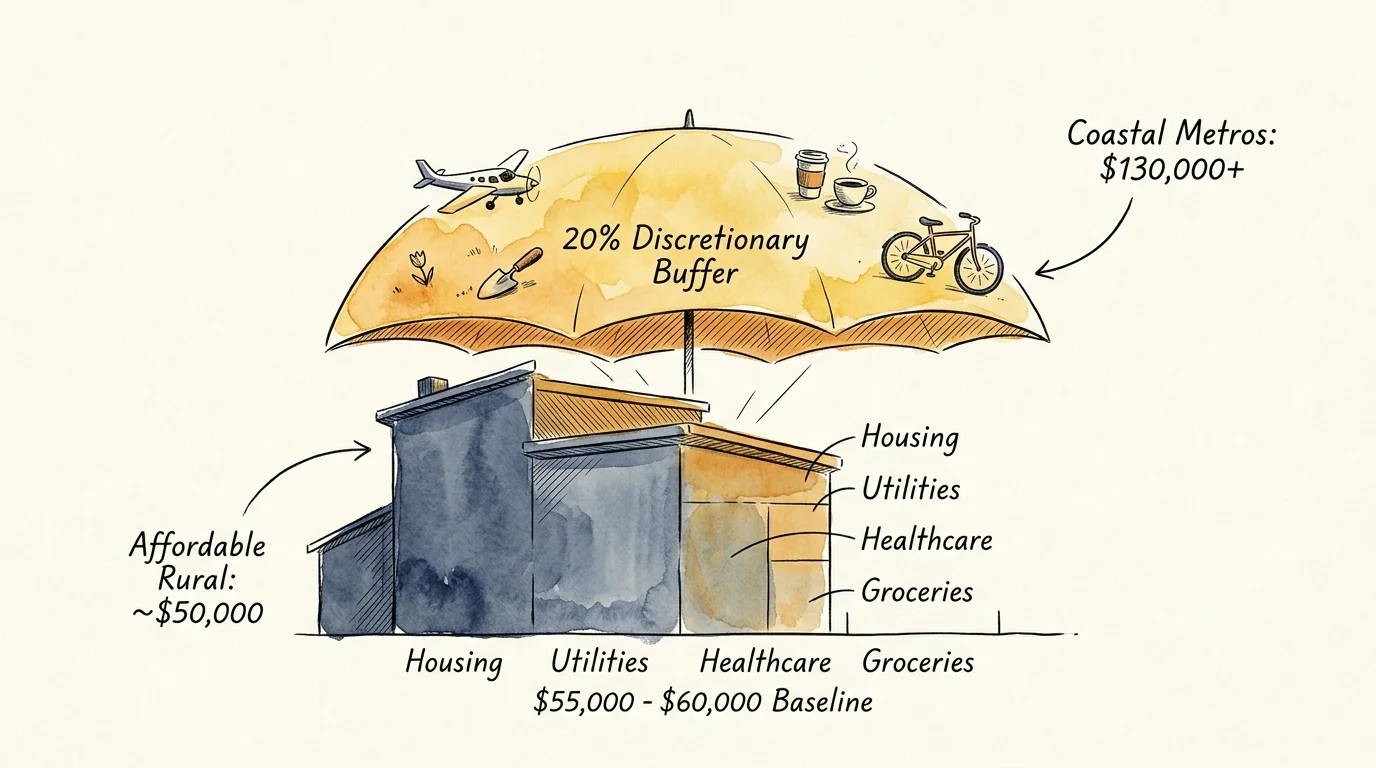
Determining your retirement budget requires moving past bare-bones survival figures to establish a sustainable standard of living. According to Consumer Expenditure Survey data from the Bureau of Labor Statistics, American households headed by an adult aged 65 or older spend between $55,000 and $60,000 annually on essential expenses. These non-negotiable costs encompass housing, property taxes, utilities, groceries, transportation, and routine healthcare services.
A truly comfortable retirement demands an additional 20% discretionary buffer above baseline necessities. This cushion finances travel, family visits, dining out, home improvements, recreational hobbies, and unexpected health expenses. Depending on your home state, this comfort benchmark elevates total annual spending targets from roughly $50,000 in affordable rural areas to more than $130,000 in high-cost coastal regions.
The Role of Social Security: Baseline Income Versus Real-World Spending
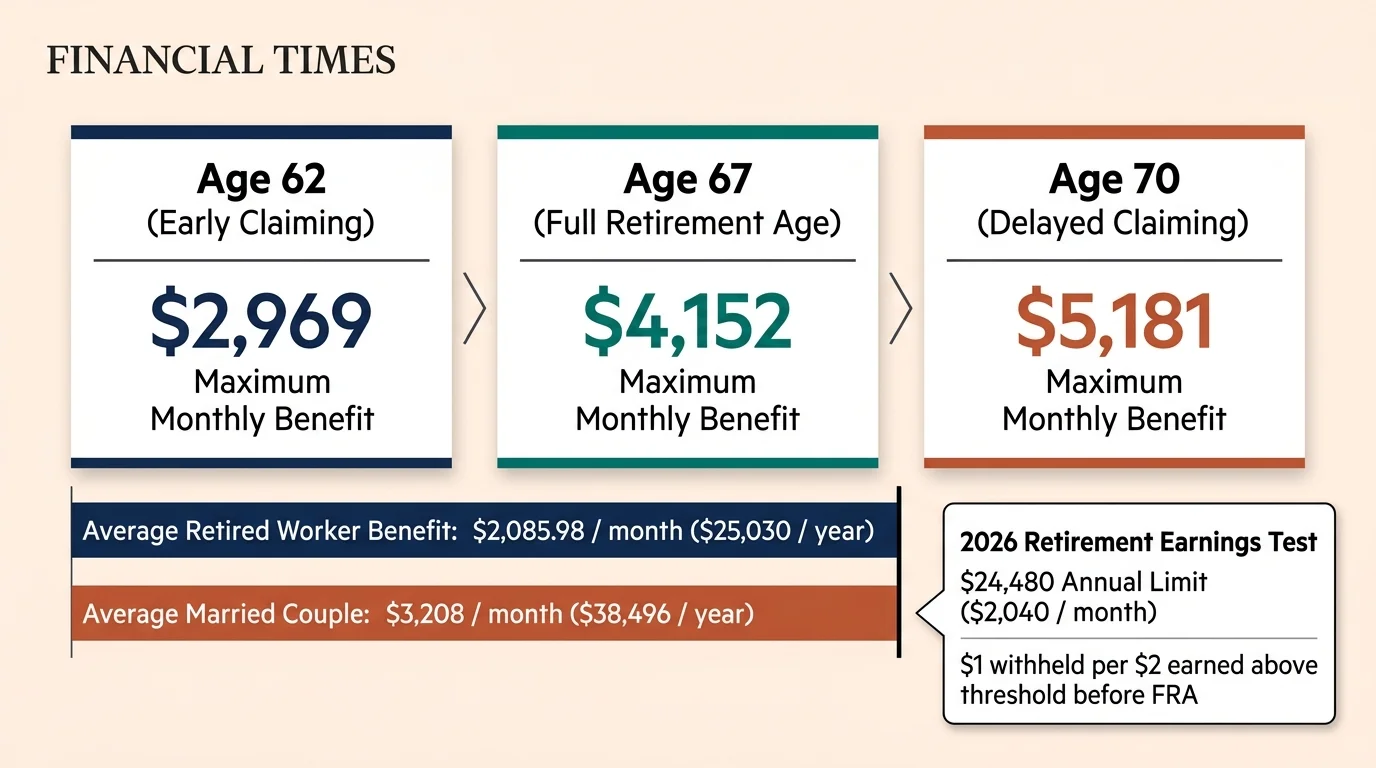
Social Security remains the bedrock of American retirement security, but it rarely covers total living expenses on its own. As of mid-2026, the average Social Security benefit for a retired worker stands at $2,085.98 per month, translating to roughly $25,030 per year. For married couples who both claim benefits, the average combined monthly payout reaches approximately $3,208, or about $38,496 annually. While these checks receive annual inflation protection—such as the 2026 2.8% Cost-of-Living Adjustment (COLA)—they leave significant funding gaps across every state.
Your claiming age directly dictates your monthly baseline income. Full Retirement Age (FRA) is 66 years and 10 months for workers born in 1959, and 67 years for anyone born in 1960 or later. Claiming early at age 62 permanently reduces your monthly check, capping the maximum early payout at $2,969 per month in 2026. Conversely, waiting until FRA elevates the maximum benefit to $4,152, while delaying benefits until age 70 unlocks a maximum monthly payout of $5,181.
If you plan to supplement your benefits with earned income prior to reaching FRA, you must also navigate the Retirement Earnings Test enforced by the Social Security Administration. In 2026, early claimers can earn up to $24,480 annually ($2,040 monthly) before the government temporarily withholds $1 in benefits for every $2 earned above that threshold. Once you attain your full retirement age, all earnings penalties vanish completely, allowing you to earn unlimited wages without benefit reductions.
The 4% Rule: Calculating Your State-by-State Savings Gap
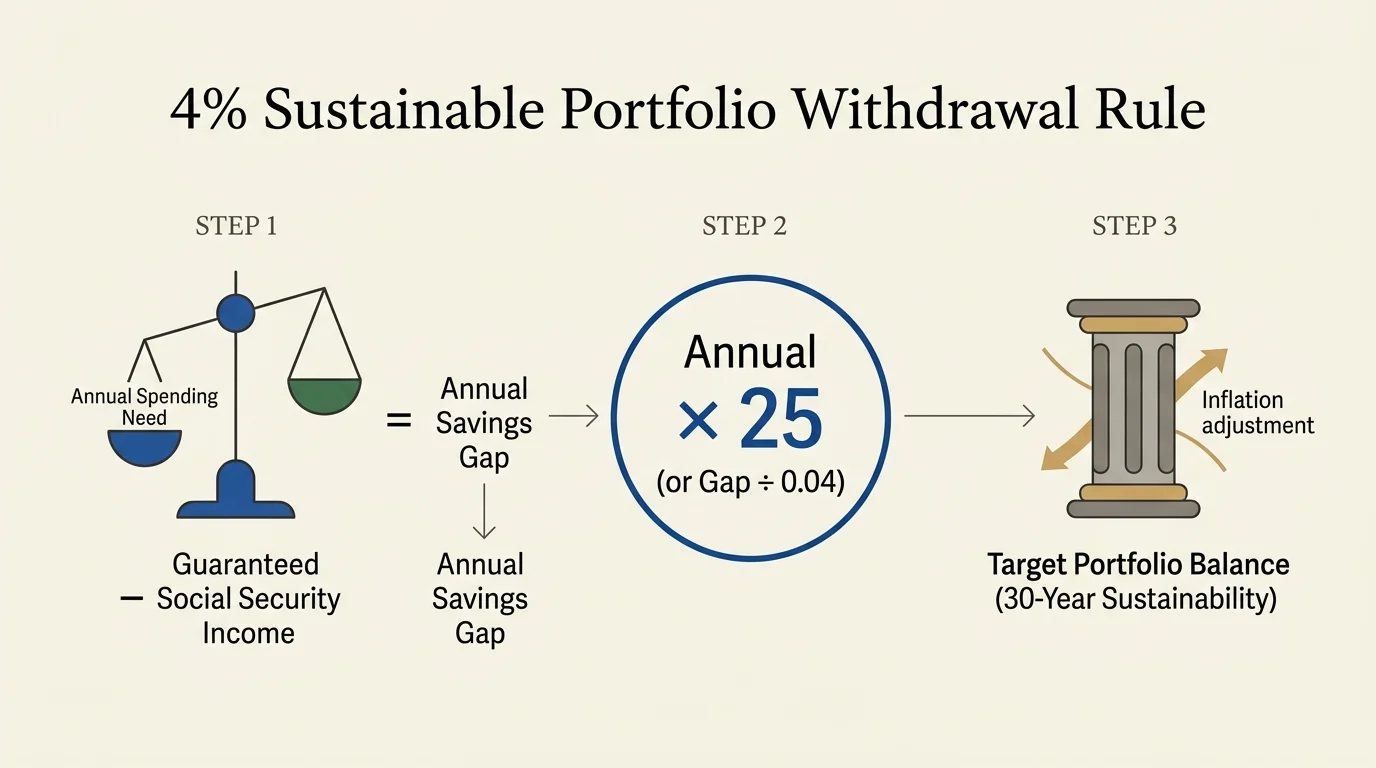
To identify the personal savings needed to retire comfortably, financial planners apply the time-tested 4% sustainable withdrawal rule. Originating from landmark portfolio longevity research, this guideline demonstrates that you can safely withdraw 4% of your balanced investment portfolio during your first year of retirement, adjust subsequent annual distributions for inflation, and maintain a low probability of exhausting your capital over a thirty-year retirement horizon.
Calculating your required nest egg involves a straightforward formula: subtract your annual Social Security income from your state’s comfortable spending requirement, then divide that remaining deficit by 0.04. For example, if living comfortably in your state requires $75,000 per year and your individual Social Security check provides $25,030 annually, your annual savings shortfall is $49,970. Dividing $49,970 by 0.04 reveals that you need approximately $1,249,250 in personal retirement savings to bridge the gap.
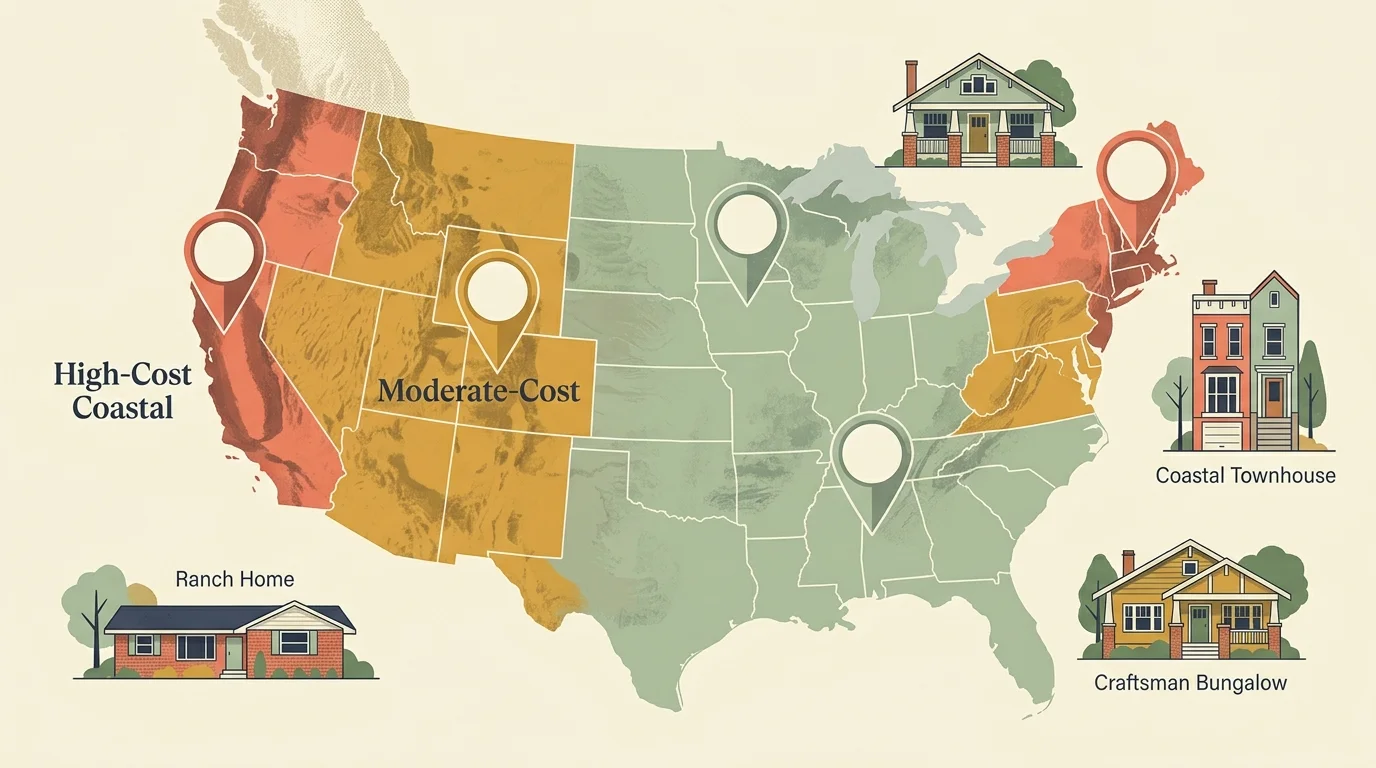
State-by-State Divergence: High, Moderate, and Low-Cost Regions
The High-Cost States: Coastal Premiums and Island Living
Retiring in high-cost regions demands substantial personal wealth to offset elevated consumer prices, steep utility rates, and expensive real estate. Hawaii ranks as the most expensive state in the nation, requiring between $110,000 and $130,000 annually for a comfortable retirement. A single retiree receiving the average Social Security benefit needs between $1.5 million and $2.2 million in dedicated savings to retire comfortably in Hawaii. Other high-cost locations—including Massachusetts, California, New York, and Alaska—require annual spending between $85,000 and $105,000, creating personal savings requirements ranging from $1.3 million to over $1.8 million for solo retirees.
The Moderate-Cost States: Balanced Budgets in the Heartland
A broad swath of the country offers balanced living costs where a comfortable lifestyle remains attainable with mid-tier savings portfolios. Across Midwestern, Mid-Atlantic, and Mountain West states—such as Ohio, Michigan, Wisconsin, Pennsylvania, and North Carolina—comfortable retirement expenditures range between $62,000 and $75,000 annually. In these jurisdictions, an individual relying on average Social Security benefits must maintain a personal nest egg between $925,000 and $1.25 million. Married couples sharing household expenses and collecting dual Social Security benefits can achieve the same comfortable lifestyle with savings between $580,000 and $900,000.
The Most Affordable States: Maximum Purchasing Power
Retirees seeking to maximize their purchasing power find exceptional value in the Southeast and southern Great Plains. States such as West Virginia, Mississippi, Oklahoma, Arkansas, and Alabama feature the lowest expenditure baselines in the country, with comfortable retirement budgets running between $50,000 and $62,000 per year. A single retiree in these states requires between $650,000 and $900,000 in personal savings to supplement Social Security. Dual-earner couples receiving combined Social Security benefits of roughly $38,496 annually can often live comfortably with less than $500,000 in personal retirement assets.
State Taxation of Social Security Benefits
State tax policy directly influences your take-home retirement income. Currently, 41 states and Washington, D.C., completely exempt Social Security retirement benefits from state income taxation. Only eight to nine states—including Colorado, Connecticut, Minnesota, Montana, New Mexico, Rhode Island, Utah, Vermont, and West Virginia—still levy state income tax on a portion of benefits. Even within these states, generous income exemptions and deductions protect the majority of low- and middle-income retirees from tax liability. Reviewing state tax codes alongside guidance from the Internal Revenue Service ensures you keep more of your hard-earned benefits.

Three Strategic Pillars for Building a Sustainable Retirement
Pillar 1: Proactive Income Planning and Claiming Optimization
Maximizing your guaranteed income begins with thoughtful Social Security timing. Delaying your claim beyond Full Retirement Age earns you delayed retirement credits of 8% per year up to age 70, creating a permanently higher, inflation-adjusted income stream. Certified Financial Planner™ professionals recommend pairing delayed claims with strategic Roth conversions during your early retirement years. This maneuver lowers future required minimum distributions (RMDs) and insulates your portfolio against sequence-of-returns risk during market downturns.
Pillar 2: Purposeful Lifestyle Design and Housing Decisions
Housing represents the single largest expenditure category for older Americans; managing it effectively transforms your financial security. Downsizing to an energy-efficient home, relocating to an area with lower property assessments, or eliminating mortgage debt drastically lowers your baseline living expenses. Leading gerontologists emphasize that lifestyle design extends beyond monetary savings; selecting accessible communities with robust public transit, walkable neighborhoods, and active social centers preserves physical mobility and protects against isolation as you age.
Pillar 3: Comprehensive Health and Longevity Safeguards
Healthcare inflation regularly outpaces standard consumer price growth, making medical budgeting essential for long-term comfort. Navigating enrollment through Medicare.gov requires choosing between traditional Medicare paired with a Medigap policy and Medicare Advantage plans. Incorporating comprehensive prescription, dental, and vision coverage shields you from out-of-pocket medical shocks. Educational resources from AARP suggest establishing dedicated health savings reserves or exploring hybrid long-term care insurance policies to protect your nest egg against custodial care costs later in life.

Managing Retirement Risks: Scams, Hidden Costs, and Benefit Cliffs
Safeguarding your retirement assets requires vigilance against sophisticated financial fraud and administrative traps. Impersonation scams targeting older adults continue to rise, with criminals posing as government officials from the Social Security Administration or Medicare to obtain banking credentials. Never share personal identification or financial details over unsolicited telephone calls, text messages, or emails; legitimate federal agencies communicate through official postal mail and secure online portals.
Retirees must also monitor benefit cliffs and regional cost surges that threaten budget stability. Modest increases in adjusted gross income can unintentionally trigger Medicare Income-Related Monthly Adjustment Amounts (IRMAA), boosting your monthly Part B and Part D premiums. Furthermore, rapidly escalating property taxes and homeowner insurance premiums in coastal and disaster-prone regions can quickly undermine a fixed budget. Building a dedicated cash reserve protects your primary portfolio from these sudden localized price shocks.
Frequently Asked Questions
Can I retire comfortably on Social Security alone in any state? Social Security was intended as an income foundation rather than a sole financial resource. In the nation’s lowest-cost states, comfortable living requires at least $50,000 annually, while the average individual Social Security benefit provides approximately $25,030. Even in affordable states like Mississippi or West Virginia, a solo retiree relying exclusively on average Social Security benefits faces a substantial annual deficit. Achieving comfort without personal savings typically requires living in a fully paid-off home with dual-earner maximum benefits or receiving supplemental pension income.
How does being married or having dual benefits change savings requirements? Married couples sharing a household benefit from significant economies of scale. Because fixed household costs like housing, utilities, and broadband do not double for two people, a couple requires only about 25% to 35% more total income than a single individual to maintain the same standard of living. When both spouses receive Social Security benefits—generating a combined average of roughly $38,496 annually—their joint savings gap shrinks dramatically, allowing them to retire comfortably with substantially smaller investment portfolios.
What happens if I work part-time while collecting Social Security? If you have already reached your Full Retirement Age (67 for those born in 1960 or later), you can earn unlimited income from wages or self-employment without any reduction in your Social Security check. If you claim benefits before your FRA, the Retirement Earnings Test applies. In 2026, the earnings ceiling is $24,480 annually; earnings above this limit result in $1 withheld for every $2 earned over the threshold. Withheld benefits are not lost; the Social Security Administration recalculates your monthly check upward once you attain FRA to credit those funds back over your lifetime.
Do states tax distributions from 401(k) plans and traditional IRAs? State taxation varies significantly across the country. Nine states impose no state income tax on any income, including retirement account withdrawals: Alaska, Florida, Nevada, New Hampshire, South Dakota, Tennessee, Texas, Washington, and Wyoming. Several other states, such as Pennsylvania and Mississippi, exclude qualified retirement distributions from state taxation. However, most remaining states treat 401(k) and traditional IRA withdrawals as ordinary taxable income, although many offer retirement income exclusions up to specific dollar thresholds.
Your 48-Hour Action Step: Take Control of Your Retirement Blueprint
Take one concrete step in the next 48 hours to secure your financial future: log into your personal my Social Security account at the official SSA portal and download your latest benefit estimate. Compare your projected monthly payout at ages 62, 67, and 70 against the comfort benchmark for your current state or target retirement destination. By identifying your exact savings gap today, you can adjust your savings targets, optimize your claiming timeline, and build a retirement lifestyle that provides lasting comfort and peace of mind.