
Every 40 seconds, an American suffers a stroke, making rapid emergency intervention the single most decisive factor between full recovery and permanent disability. When neurological symptoms strike, your body enters a high-stakes race where millions of brain cells perish every minute without oxygen. Understanding how to handle the critical emergency window known as the Golden Hour gives you and your family the power to save a life and protect your independence during retirement. By mastering three concrete emergency protocols—spotting subtle warning signs early, dialing emergency services immediately, and preparing medical records for first responders—you can dramatically reduce treatment delays, optimize healthcare outcomes, and safeguard your long-term health.

Understanding the Critical Window: What the Golden Hour Means for You
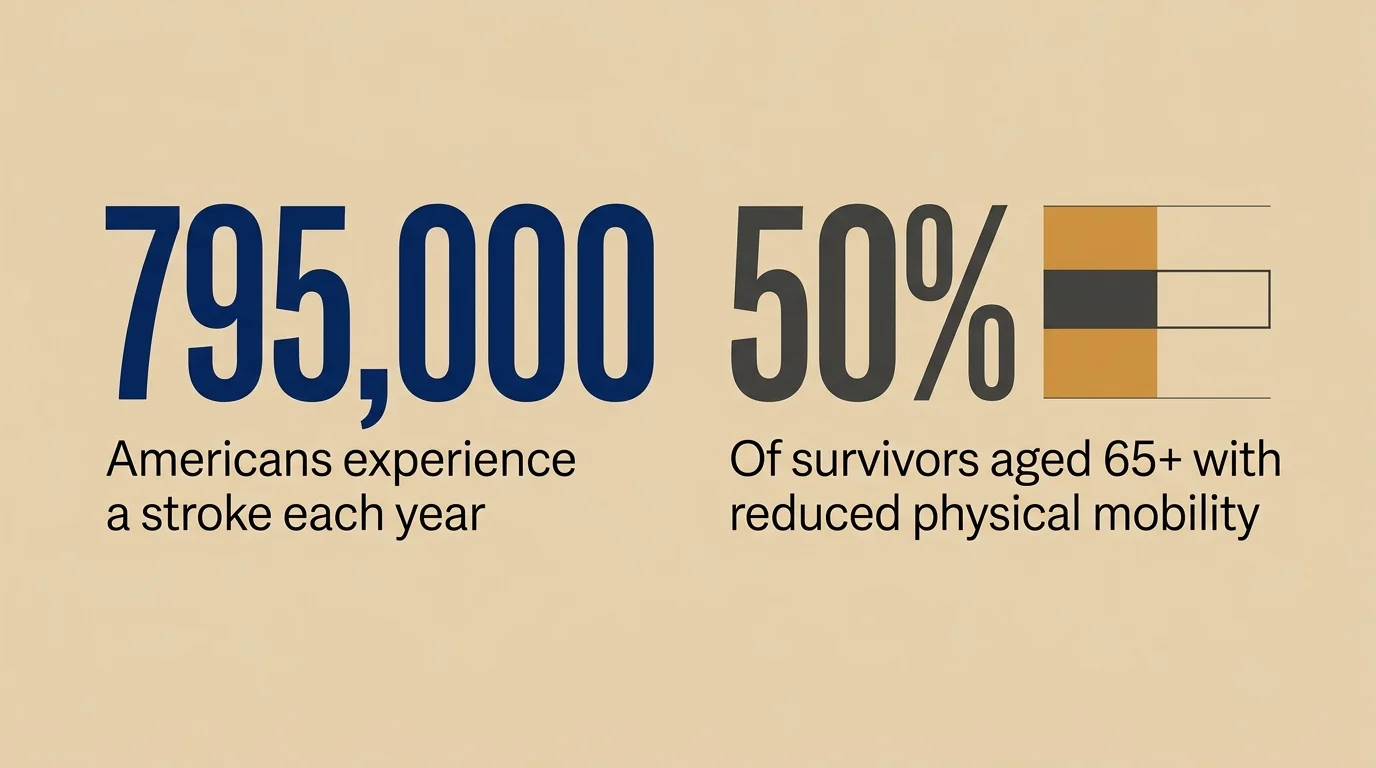
According to clinical data from the Centers for Disease Control and Prevention, over 795,000 people in the United States suffer a stroke each year, consisting of approximately 610,000 first-time events and 185,000 recurrent incidents. A stroke strikes an American every 40 seconds, while someone dies from stroke-related complications every 3 minutes and 14 seconds. For retirees and older adults, the stakes are exceptionally high; stroke remains a leading driver of long-term disability, reducing physical mobility in more than 50 percent of survivors aged 65 and older.
In emergency medicine, healthcare providers judge treatment success using a time-sensitive benchmark known as the Golden Hour. Guidelines established by the National Institute of Neurological Disorders and Stroke and the American Heart Association define the Golden Hour as achieving a target door-to-needle time of 60 minutes or less. This period measures the exact time from when you step into the hospital emergency department to the moment clinical staff administer intravenous thrombolytic therapy, such as alteplase or tenecteplase.
Thrombolytic medications dissolve blood clots blocking cerebral arteries, restoring blood flow before permanent cellular death occurs. However, physicians can safely administer intravenous clot-busting medications only within a strict window of 3 to 4.5 hours from the exact moment symptoms first appear. Medical experts refer to this baseline as your last known well time. Every minute of delay allows millions of neural connections to perish, making fast personal action prior to hospital arrival essential.
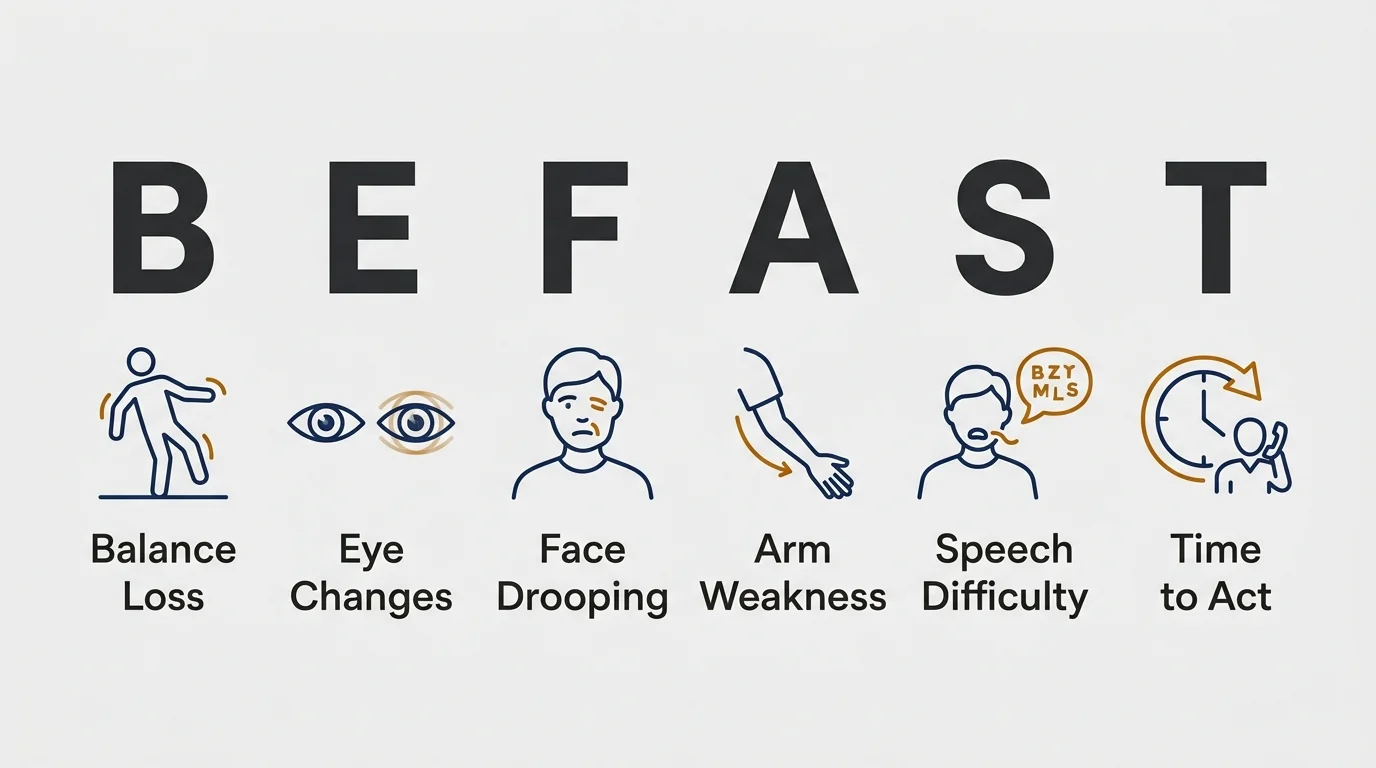
Action Step 1: Identify B.E. F.A.S.T. Symptoms and Record the Onset Time
Recognizing neurological changes requires familiarizing yourself with standard public health protocols. Updated recommendations from public health organizations highlight the expanded B.E. F.A.S.T. protocol for rapid symptom identification. The letter B stands for Balance loss; watch for sudden instability, dizziness, or loss of physical coordination. The letter E signifies Eye changes; check for sudden vision loss, double vision, or severe blurriness in one or both eyes.
The remaining letters address classic localized stroke indicators that demand immediate attention. The letter F stands for Facial drooping; ask the person to smile and note whether one side of their face droops or feels numb. The letter A represents Arm weakness; ask them to raise both arms to see if one arm drifts downward involuntarily. The letter S stands for Speech difficulty; listen for slurred phrasing, confusion, or difficulty producing words. Finally, T indicates Time to act immediately.
Alongside identifying physical symptoms, your immediate responsibility is recording the precise time symptoms began. Hospital medical staff rely heavily on this last known well time to decide whether you qualify for time-sensitive thrombolytic medications or endovascular mechanical thrombectomy. If you wake up experiencing symptoms, note the exact time you went to sleep. Write this timestamp on a piece of paper or save it in your mobile phone to brief paramedics instantly upon arrival.

Action Step 2: Call 911 Immediately and Avoid Dangerous Delays
When stroke symptoms appear, driving yourself or having a family member drive you to the hospital emergency room represents a dangerous mistake. Calling 911 connects you directly to Emergency Medical Services, turning the ambulance into an advance treatment facility. Paramedics begin vital monitoring, manage oxygen saturation, evaluate blood pressure, and establish intravenous access during transport, initiating critical stabilization well before reaching the hospital.
Ambulance transport significantly reduces door-to-needle delays by activating hospital emergency response protocols in advance. According to emergency protocol updates from the American Stroke Association, emergency personnel send a pre-notification alert directly to the acute stroke team at the destination facility, allowing specialists, radiology technicians, and CT scanning equipment to be ready prior to arrival. Consequently, patients transported by ambulance bypass standard triage lines and move directly to diagnostic neuroimaging, saving indispensable minutes during the therapeutic window.
While awaiting emergency responders, refrain from taking or administering any oral medications, food, or liquids. Many individuals incorrectly take aspirin during a suspected stroke, believing it will clear a blood clot. However, strokes fall into two primary categories: ischemic strokes caused by arterial blockages, and hemorrhagic strokes caused by ruptured blood vessels. Giving aspirin during a hemorrhagic stroke thins the blood and worsens internal intracranial bleeding. Furthermore, impaired swallowing reflexes elevate choking risks.

Action Step 3: Secure the Home Environment and Prepare Critical Health Records
While waiting for emergency medical responders to arrive, focus on preparing your physical surroundings for rapid access. Unlock the main entrance door, turn on outdoor entry lights if it is dark, and secure household pets in a closed room. Clearing hallway pathways and removing clutter near entryways allows emergency personnel to maneuver stretchers and medical equipment through your home without hazardous delays.
Next, position the affected individual safely to maintain a clear airway and minimize physical distress. Help the person lie comfortably on their side with their head slightly elevated, especially if they experience nausea or dizziness. Positioning them on their side prevents airway obstruction and guards against pulmonary aspiration if vomiting occurs, while keeping them calm until emergency medical technicians take over care.
Gather essential health documentation that medical teams need to make time-critical pharmacological decisions. Compile a clear list of active prescription drugs, paying special attention to blood thinners such as warfarin, apixaban, dabigatran, or rivaroxaban. Neurologists must verify anticoagulant usage before administering thrombolytic medications. Keep a written document containing known drug allergies, primary care physician details, and recent surgical history readily accessible near your home entry door.
Integrating Emergency Preparedness into Your Financial and Retirement Strategy
Building a comprehensive retirement plan requires balancing wealth management with health emergency protocols. Catastrophic health events such as strokes create immediate physical challenges along with long-term financial pressure for American seniors. Certified Financial Planner professionals point out that unexpected healthcare costs represent a significant threat to retirement portfolio sustainability. Preparing for medical emergencies safeguards both your bodily independence and your hard-earned financial nest egg.
Understanding how insurance coverage works during a health emergency helps prevent unexpected out-of-pocket expenses. Coverage guidance from Medicare shows that Medicare Part A covers inpatient hospital hospitalization, emergency admissions, and short-term post-acute care in skilled nursing facilities following a qualifying hospital stay. Meanwhile, Medicare Part B covers outpatient physician evaluations, diagnostic brain imaging, and necessary physical, occupational, and speech therapy services required during stroke recovery.
To shield your assets from high deductibles and coinsurance rates, evaluate supplemental insurance options carefully. Resources from the AARP Public Policy Institute emphasize that post-stroke recovery often involves specialized rehabilitation, durable home medical equipment, and home modifications. Reviewing your Medigap policy or Medicare Advantage maximum out-of-pocket limits ensures that sudden medical expenses do not force you to liquidate retirement assets prematurely or compromise your family’s financial stability.

Avoiding Common Pitfalls, Scams, and Rehabilitation Hurdles
Navigating acute recovery requires remaining vigilant against healthcare pitfalls and financial exploitation. Following a stroke, vulnerable patients and caregivers often encounter deceptive online marketing promoting unproven brain supplements, stem cell remedies, or rapid recovery cures. Federal regulatory authorities frequently warn consumers against unverified treatments that lack peer-reviewed scientific proof and drain personal finances without providing therapeutic benefit.
When organizing post-stroke care, families must also understand Medicare rules regarding long-term rehabilitation stays. Medicare covers skilled nursing facility care following a mandatory three-day inpatient hospital stay, providing full coverage for the first 20 days. However, from days 21 through 100, beneficiaries face substantial daily copayments, and all Medicare coverage stops after day 100 per benefit period. Planning for potential long-term care needs prevents unexpected financial strain during rehabilitation.
Frequently Asked Questions About Emergency Stroke Response
Should I take an aspirin if I suspect I am having a stroke?
No, you should never take aspirin or offer it to someone experiencing stroke symptoms until emergency doctors perform a brain scan. Strokes are either ischemic, caused by a clot, or hemorrhagic, caused by a ruptured blood vessel. Taking aspirin during a hemorrhagic stroke thins the blood and increases dangerous internal bleeding in the brain. Wait for medical professionals to evaluate the condition before taking any medication.
What should I do if my stroke symptoms vanish after a few minutes?
You must call 911 immediately even if your symptoms resolve completely. Temporary symptoms often indicate a Transient Ischemic Attack, commonly known as a mini-stroke. A TIA signals a temporary blockage in blood flow to the brain and serves as a major warning sign. According to medical research, approximately one in five people who experience a TIA suffer a full stroke within 90 days, making prompt emergency evaluation vital.
Why is calling an ambulance better than driving to the emergency room?
Calling 911 ensures that specialized treatment begins immediately in your home and inside the ambulance. Paramedics evaluate vital signs, administer oxygen, manage blood pressure, and establish intravenous access while in transit. Furthermore, paramedics send advance pre-notification alerts to the regional stroke center, enabling hospital staff to prepare CT scanners and acute stroke teams before you arrive, significantly shortening care delays.
How does Medicare assist with post-stroke physical and speech rehabilitation?
Medicare provides coverage across multiple recovery stages based on specific program rules. Medicare Part A covers inpatient rehabilitation hospital stays and skilled nursing facility stays after a qualifying inpatient hospital admission. Medicare Part B covers medically necessary outpatient physical, occupational, and speech therapy. Working closely with hospital discharge planners helps optimize your benefits and minimize personal out-of-pocket expenses during rehabilitation.
Taking Action: Your 48-Hour Emergency Preparedness Plan
Protecting your health during retirement requires translating medical facts into practical household habits. Take one concrete step within the next 48 hours to strengthen your emergency preparedness. Print out the B.E. F.A.S.T. warning signs and secure them on your refrigerator door or near your house phone so that family members and visitors can reference them instantly during a crisis.
Additionally, take 15 minutes today to write down a complete list of your active medications, dosages, health conditions, and emergency contacts. Keep a copy in your wallet and place another copy near your primary entrance door. Taking these practical, low-cost steps gives you peace of mind and equips emergency responders to act quickly when every minute counts.