Your monthly Social Security check serves as the bedrock of your financial security in retirement, but specific choices and legal offsets can permanently slash those payments by 15% to 65%. While many retirees assume their benefit calculation remains locked in once set, claiming too early, missing work years, or facing government garnishments creates lifelong reductions. Fortunately, understanding these exact triggers allows you to protect your income and maximize every dollar you earned. From early filing penalties to recent 2025 policy updates, here is what you must know to safeguard your monthly retirement cash flow.
1. Claiming Retirement Benefits Before Your Full Retirement Age
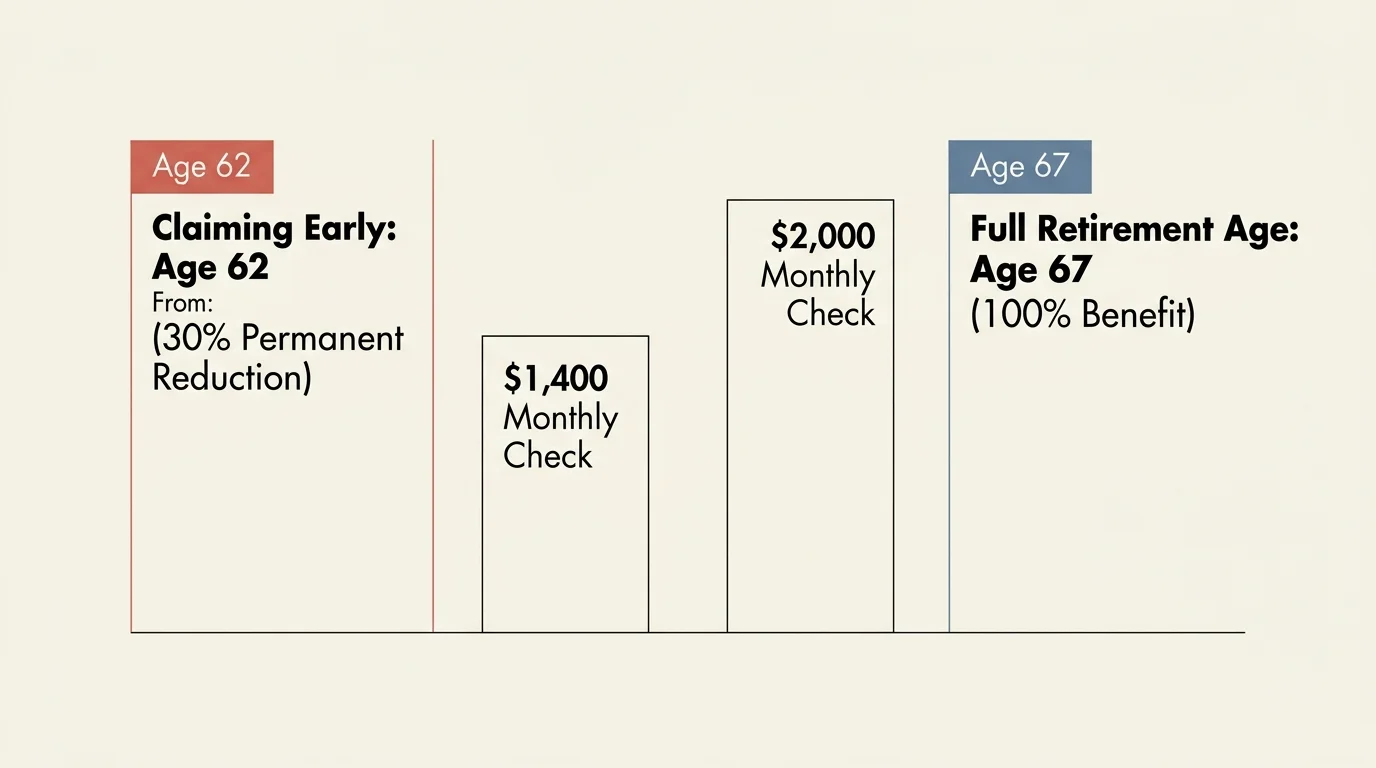
Filing for Social Security retirement benefits at age 62—the earliest eligible age—permanently cuts your monthly payout. For individuals born in 1960 or later, Full Retirement Age (FRA) is 67. Claiming five years early at age 62 triggers a full 30% permanent reduction in your Primary Insurance Amount (PIA). The formula applies a reduction rate of 5/9 of 1% for each of the first 36 months before FRA, plus 5/12 of 1% for each additional month. If your full monthly benefit at age 67 equals $2,000, claiming at age 62 permanently locks in a reduced check of just $1,400 per month for the rest of your life.
This early filing reduction never expires, even after you reach age 67. The Social Security Administration calculates this reduction to distribute equal lifetime benefits based on average life expectancies, but living past your break-even age means you forfeit substantial cumulative income. Choosing to claim early trades guaranteed monthly purchasing power in your later years for immediate liquidity today. If you possess alternative assets or plan to work longer, delaying your claim preserves your baseline inflation-adjusted income.
2. Taking Spousal Benefits Early at Age 62
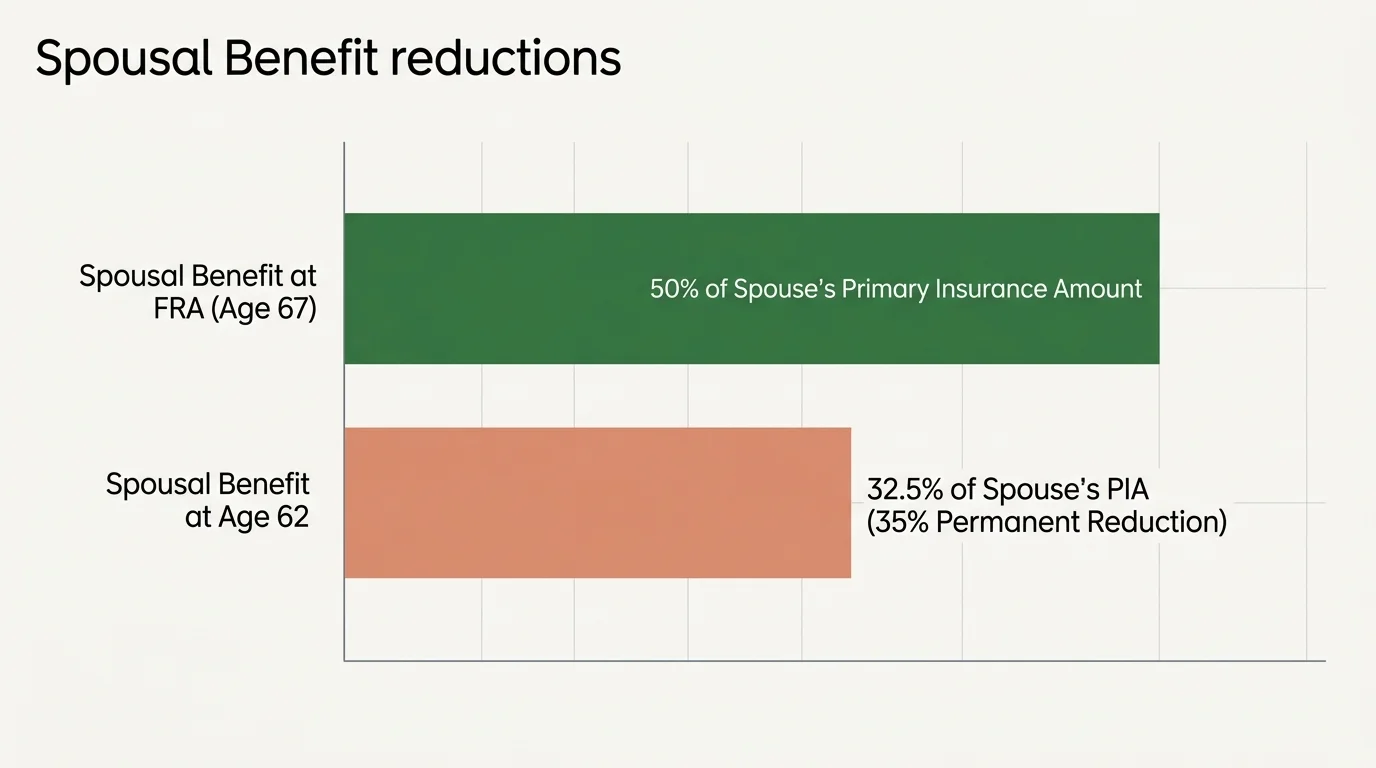
Spousal benefits allow you to claim up to 50% of your spouse’s Primary Insurance Amount if you file at your own Full Retirement Age. However, claiming spousal benefits at age 62 when your FRA is 67 results in a permanent 35% reduction in that spousal payout. Instead of receiving 50% of your partner’s baseline benefit, your check drops permanently to 32.5% of their PIA. This reduction applies even if your spouse earned a high lifetime income and is already collecting their own maximum payout.
Unlike personal retirement benefits, spousal benefits do not earn delayed retirement credits if you wait past your FRA. However, filing before FRA forever caps the benefit percentage you receive. Before submitting a spousal claim early, calculate the compounded impact on your household cash flow. Coordinating claim timing with your partner ensures your family captures maximum lifetime distributions without locking in avoidable discounts.

3. Claiming Survivor Benefits at the Minimum Eligible Age
Widows and widowers face a unique set of claiming rules that can permanently lower their survivor payments. You become eligible for survivor benefits starting at age 60, but filing at this minimum age results in a maximum permanent reduction of 28.5% compared to waiting until your full survivor retirement age. If your deceased spouse was entitled to a $2,500 monthly benefit, claiming as a 60-year-old survivor reduces your monthly check to approximately $1,787 permanently.
Survivor benefits function independently from your own worker benefit. You have the strategic option to claim a reduced survivor benefit early while allowing your personal retirement benefit to grow until age 70, or vice versa. Failing to evaluate this dual-track option often leads surviving spouses to claim prematurely, permanently sacrificing higher guaranteed income during their solo retirement years.
4. Accumulating Fewer Than 35 Years in the Formal Workforce
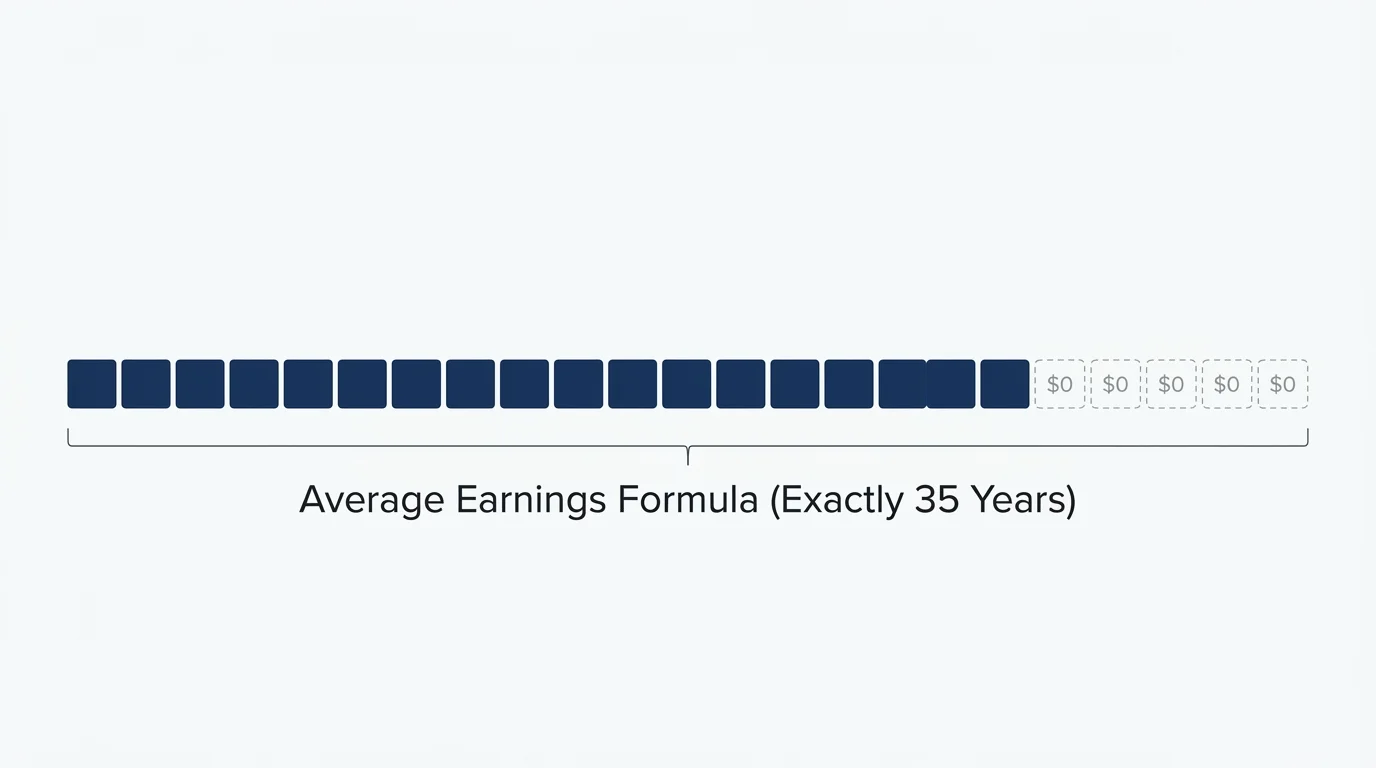
The core Social Security benefit formula relies on your top 35 years of earnings, adjusted for national wage inflation. If you worked fewer than 35 years in jobs that paid into Social Security, the system inputs $0 into the calculation for every missing year. Having five missing years means five zeros enter your 35-year average, which permanently drags down your Average Indexed Monthly Earnings (AIME) and lowers your baseline monthly check for life.
Data from the Bureau of Labor Statistics shows that career gaps from caregiving, higher education, or early retirement frequently leave workers short of the 35-year mark. Working even part-time to replace zero-earning years with positive income figures provides an immediate boost to your primary insurance amount. Before locking in your claim, review your complete earning history to verify whether adding one or two additional working years will permanently raise your monthly benefit base.
5. Forfeiting Delayed Retirement Credits by Claiming at FRA or Earlier
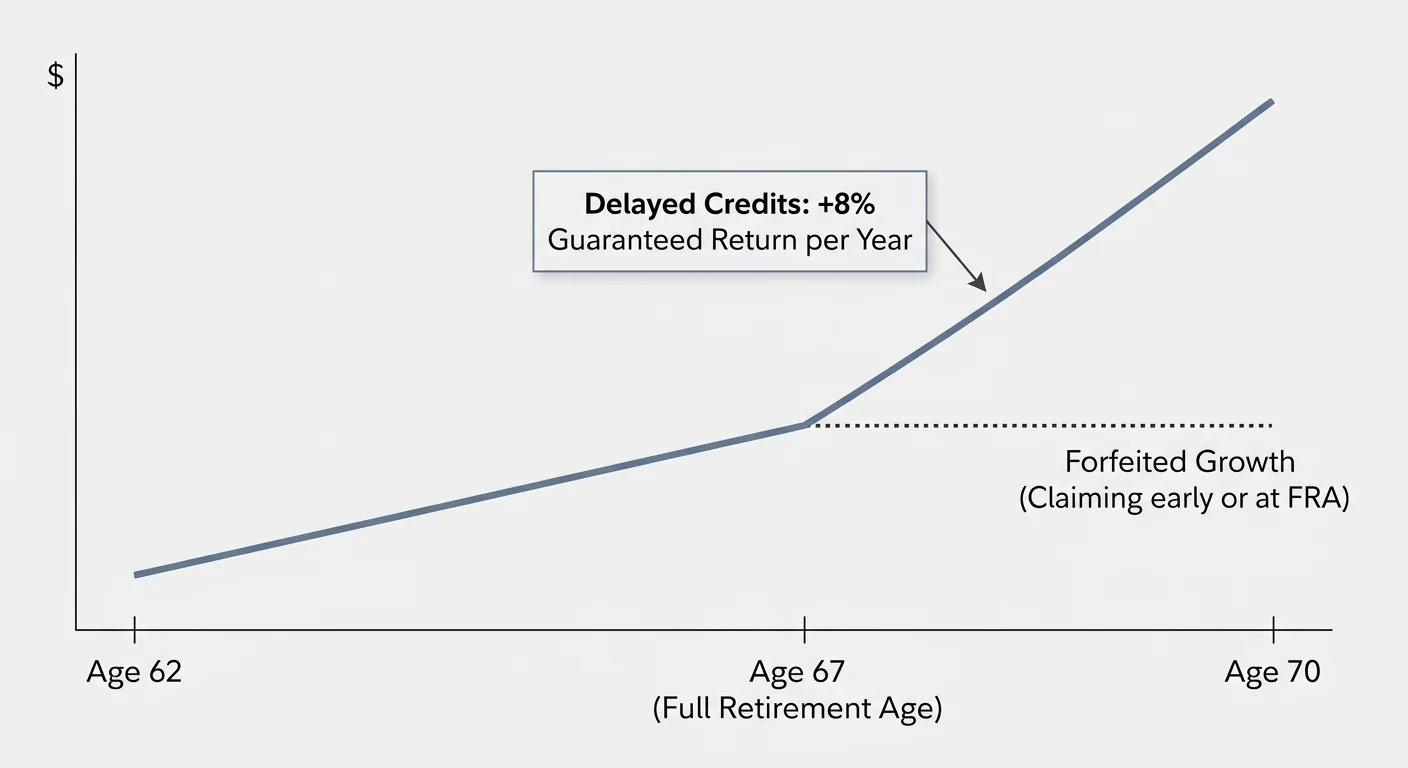
While claiming at Full Retirement Age provides 100% of your calculated benefit, failing to wait past FRA means forfeiting delayed retirement credits. For workers born in 1960 or later, Social Security rewards patience by increasing your monthly check by 8% for each full year you delay claiming beyond FRA, up to age 70. This creates a potential permanent boost of up to 24% above your baseline Primary Insurance Amount.
If your full retirement benefit at age 67 is $2,000, waiting until age 70 permanently raises your monthly payment to $2,480 before annual Cost-of-Living Adjustments (COLAs). Claiming at age 67 or earlier forfeits this entire 24% gain. Because delayed retirement credits also expand the baseline used for future COLA calculations, walking away from these credits results in lower annual dollar increases for the rest of your life.
6. Facing IRS Levies for Delinquent Federal Taxes
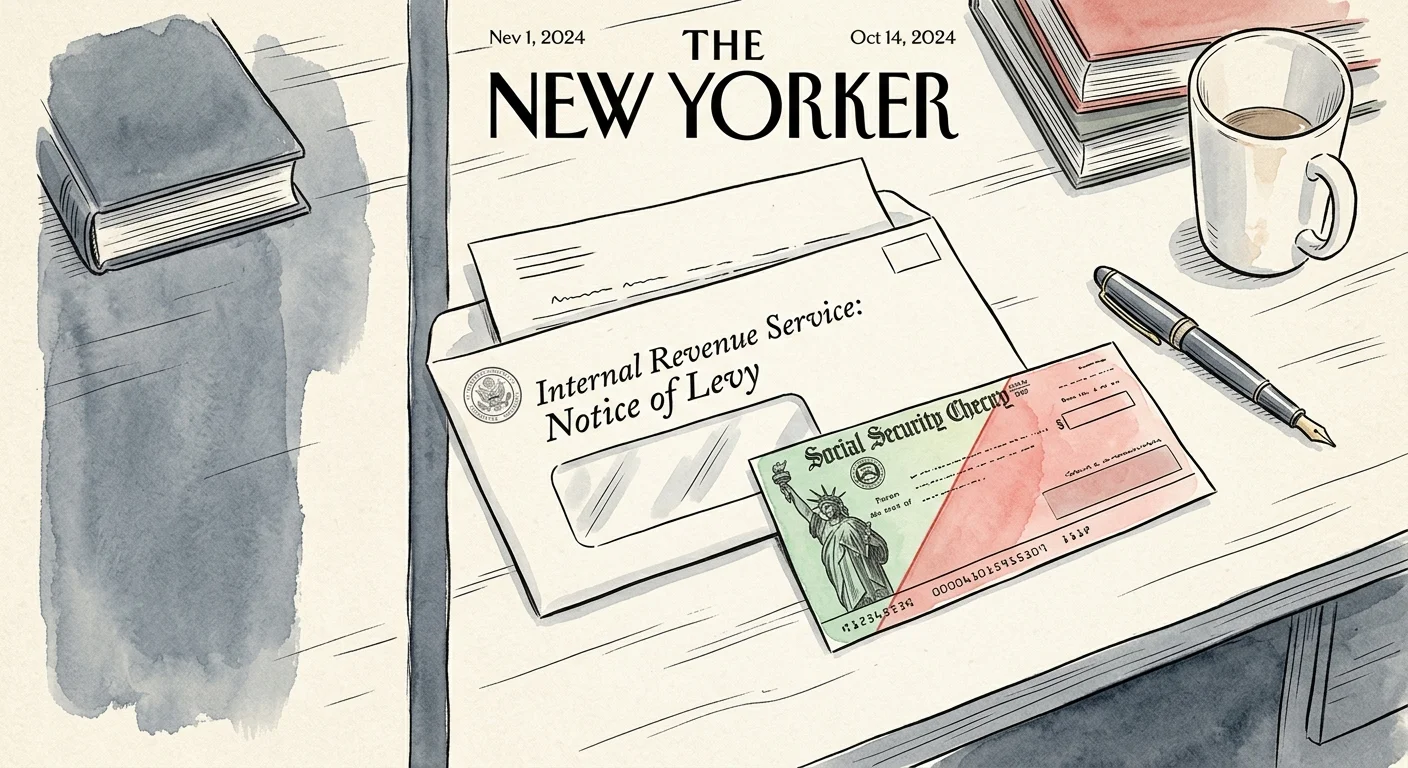
While commercial creditors face strict legal limits on garnishing Social Security checks, the federal government possesses broad collection authority. Under Section 1024 of the Taxpayer Relief Act of 1997, the Internal Revenue Service uses the Federal Payment Levy Program (FPLP) to intercept Social Security payments. The IRS can permanently levy up to 15% of your monthly benefit check until your outstanding tax debt, penalties, and interest are fully paid off.
Unlike standard debt collection methods, an FPLP tax levy applies automatically each month without requiring a specific court order for every payment cycle. This direct deduction reduces your net monthly benefit long before the money reaches your bank account. Settling unpaid tax balances through installment agreements or offer-in-compromise programs represents the only way to release an active administrative levy and restore your full benefit check.

7. Defaulting on Outstanding Federal Student Loans
Federal debt obligations extend beyond taxes into federal educational loans. Under the Debt Collection Improvement Act and the Treasury Offset Program (TOP), the U.S. Department of the Treasury can withhold up to 15% of your monthly Social Security benefits to recover defaulted federal student debt. This offset continues indefinitely until the defaulted debt is satisfied or resolved through federal relief programs.
Federal law protects only the first $9,000 of annual benefits (or $750 per month) from Treasury offsets, meaning any monthly check exceeding $750 remains vulnerable to the 15% deduction. With an increasing number of older adults carrying student debt for themselves or their dependents, entering federal loan rehabilitation or income-driven repayment plans is vital to stop mandatory offsets before they permanently degrade retirement cash flow.
8. Court-Ordered Garnishments for Child Support or Alimony
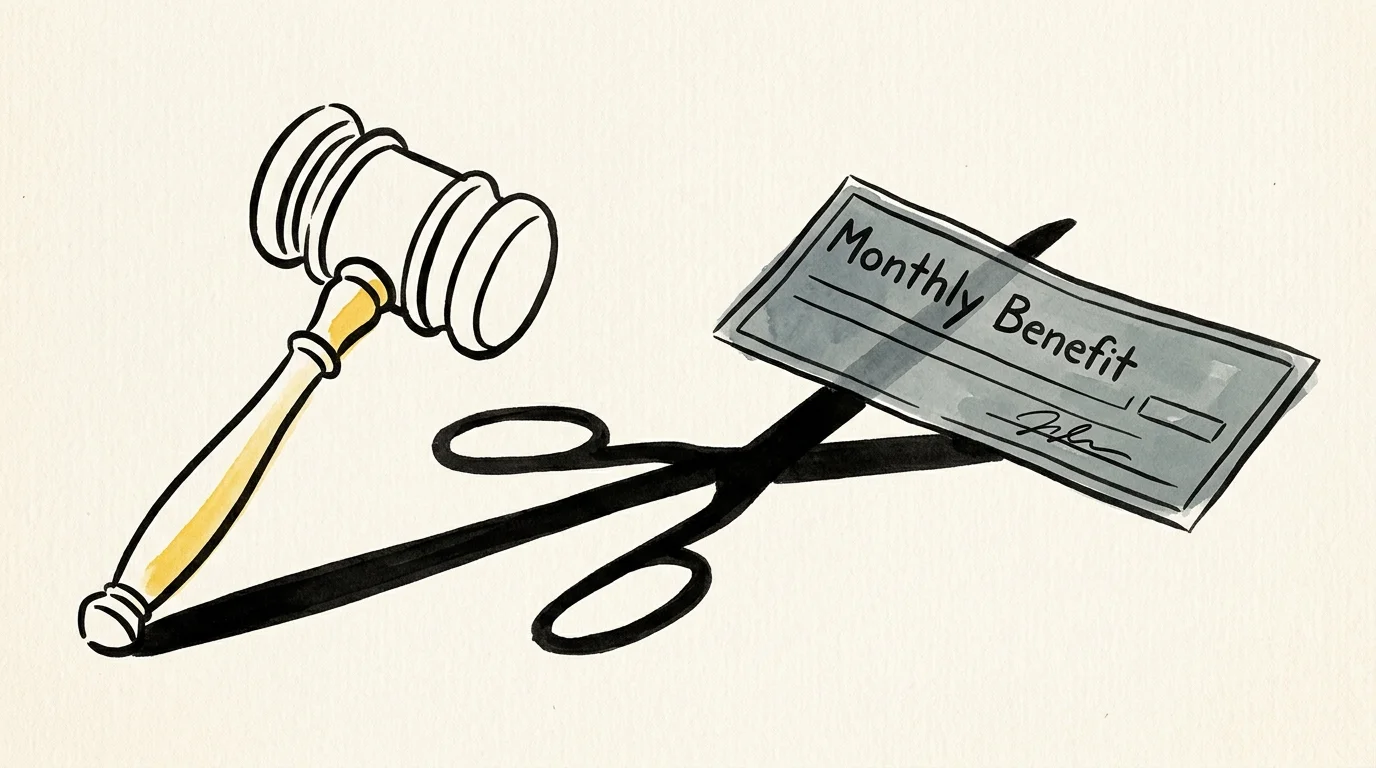
Social Security retirement benefits do not protect you from court-ordered family support obligations. Under Section 459 of the Social Security Act and enforcement rules defined by the Consumer Credit Protection Act (CCPA), your monthly check can be garnished directly for unpaid child support or spousal alimony. These court orders mandate deductions that slash your gross monthly benefit long before you receive it.
The withholding limits under federal law are substantial. Up to 50% of your monthly benefit can be garnished if you support another spouse or child, rising to 60% if you do not support another dependent. If your support payments fall behind by more than 12 weeks, the garnishment cap increases by an additional 5%, allowing courts to intercept up to 65% of your total Social Security check. These garnishments remain active until you fulfill the court order or clear all back balances.
9. Experiencing SSA Overpayment Recovery Withholdings
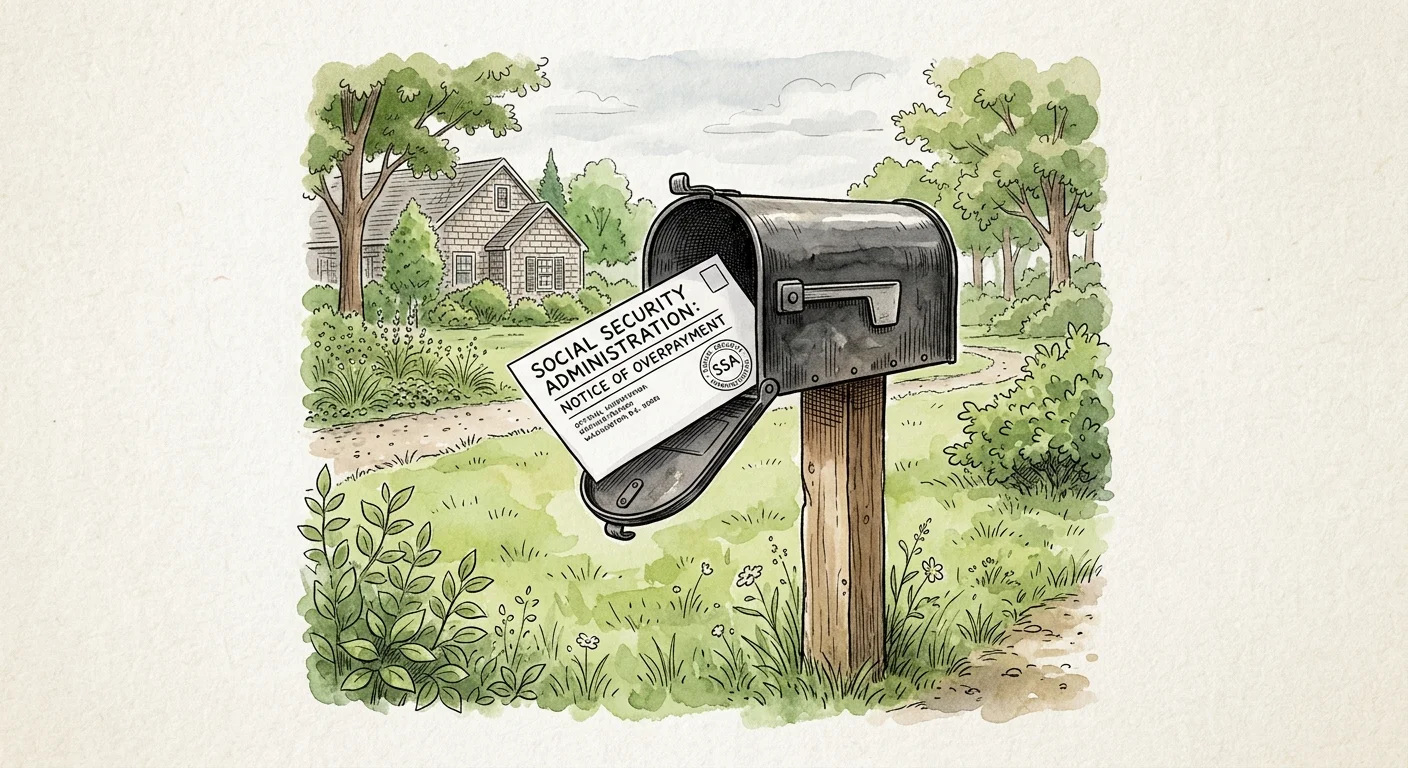
If the Social Security Administration determines that you received more benefits than you were legally entitled to—due to administrative mistakes, reported income updates, or status changes—the agency initiates mandatory debt recovery. Following recent policy changes effective March 27, 2025, the SSA reinstated a default 100% benefit withholding rate on new Title II non-SSI overpayments until the entire overpaid balance is fully recovered, ending a brief temporary 10% withholding cap established in 2024.
Under this strict 100% withholding policy, the agency stops your monthly check entirely until the full overpayment balance is cleared. However, beneficiaries maintain the legal right to request a reduced monthly withholding rate, negotiate a manageable repayment plan, or apply for a formal overpayment waiver if the error occurred through no fault of their own and repayment causes financial hardship. Proactively filing these appeals within strict timelines prevents total monthly benefit suspension.
8. holding
9. WEP
10. and
11. GPO,
12. signaling
13. a
14. major
15. Social
16. Security
17. update.
Total: 17 words.
Let
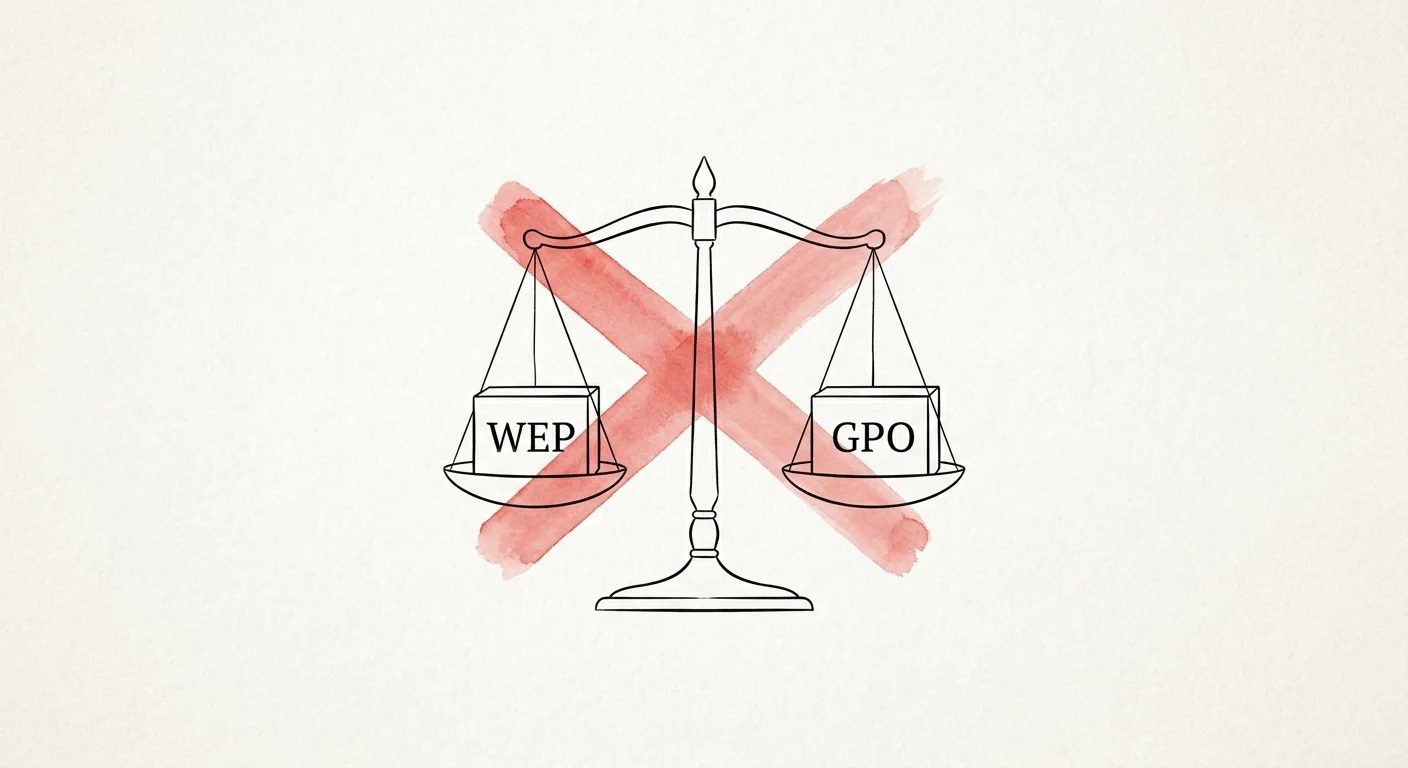
Critical Policy Update: The Repeal of WEP and GPO
For decades, public sector retirees suffered severe, permanent reductions to their Social Security benefits under two federal rules: the Windfall Elimination Provision (WEP) and the Government Pension Offset (GPO). These provisions significantly cut payments for state teachers, police officers, firefighters, and municipal workers who earned non-covered public pensions alongside Social Security benefits. WEP reduced individual retirement checks, while GPO eliminated up to two-thirds of spousal or survivor benefits.
That policy environment has fundamentally changed. On January 5, 2025, the Social Security Fairness Act (Public Law 118-273) was signed into law, officially repealing both the WEP and the GPO. Public servants no longer face arbitrary benefit reductions simply because they earned a civil service pension. If you previously lost benefits to WEP or GPO, these mechanisms no longer reduce your monthly Social Security check, eliminating one of the largest historic sources of permanent benefit cuts for public employees.

Understanding Direct Net Reductions: Medicare Premiums and IRMAA
Even if your gross Social Security benefit remains intact, mandatory premium deductions can significantly reduce your take-home cash amount. Standard Medicare Part B premiums are automatically deducted directly from your monthly Social Security check each month. When Medicare Part B rates rise, your net payout drops unless offset by an equivalent Cost-of-Living Adjustment.
Higher-earning retirees face additional net reductions through the Income-Related Monthly Adjustment Amount (IRMAA). IRMAA imposes monthly surcharges on Medicare Part B and Part D premiums based on your modified adjusted gross income from federal tax returns filed two years prior. As detailed on Medicare.gov, crossing specific income thresholds triggers progressive surcharges that come straight out of your Social Security distribution. Managing your taxable income through strategic withdrawal strategies prevents unexpected IRMAA spikes from trimming your net monthly income.

Strategic Safeguards to Protect Your Social Security Income
Protecting your retirement income requires proactive auditing and strategic planning long before you submit your formal benefit application. Start by inspecting your earning record every year on your personal online statement. Verifying that the government accurately recorded all past wages ensures your 35-year base calculation accurately reflects your actual earnings, eliminating zero-dollar or underreported income years.
If you face tax debts, student loan defaults, or overpayment notices, address these obligations directly with the issuing agency before filing for benefits. Setting up structured repayment agreements prevents administrative levies from taking effect. Consulting a Certified Financial Planner (CFP®) professional or reviewing resources from AARP helps you evaluate claiming age tradeoffs, assess household spousal strategies, and optimize your overall retirement tax bracket.
Frequently Asked Questions
Does working while receiving early benefits permanently reduce my check?
Working while receiving benefits before your Full Retirement Age triggers the Social Security Retirement Earnings Test, which temporarily withhold $1 for every $2 earned above annual threshold limits. However, this early withholding is not a permanent loss. Once you reach your FRA, the Social Security Administration recalculates your monthly check upward to credit you for the months benefits were withheld, permanently raising your benefit check moving forward.
Can I reverse my decision if I claimed benefits too early?
If you regret claiming early, you have one opportunity during the first 12 months of entitlement to request a formal withdrawal of application using Form SSA-521. To exercise this option, you must repay every dollar received in benefits, including spousal or family benefits paid on your record. If you are past the 12-month window, you can suspend your benefits upon reaching Full Retirement Age to earn 8% annual delayed retirement credits until age 70.
How do I stop a government offset or levy on my check?
Stopping a 15% federal tax levy or student loan offset requires resolving the underlying debt directly with the IRS or the U.S. Department of the Treasury. Establishing a formal installment agreement or entering federal loan rehabilitation stops administrative garnishments under the Treasury Offset Program. For SSA overpayments, submitting Form SSA-632 to request a financial hardship waiver halts immediate withholding while your case is reviewed.
Do public employees need to file a claim to eliminate old WEP or GPO reductions?
Following the passage of Public Law 118-273 on January 5, 2025, WEP and GPO are fully repealed. The Social Security Administration automatically applies these statutory updates to benefit calculations. Public sector workers subject to historical reductions do not need to resubmit original worker applications, though contacting the SSA directly can confirm that your current monthly entitlement accurately reflects the complete elimination of these legacy offsets.
Take Control of Your Social Security Check in the Next 48 Hours
Do not leave your hard-earned retirement income to chance. Take 15 minutes within the next 48 hours to log into your personal my Social Security online account. Review your official 35-year earnings record for accuracy, report any missing historical wage figures, and test different claiming age scenarios using the agency’s official calculator. Taking this simple step today ensures you avoid permanent filing traps, defend your net checks against preventable offsets, and secure every dollar of retirement income you deserve.