Opening your mail to find a Medicare Income-Related Monthly Adjustment Amount notice can trigger instant financial anxiety, especially if you discover you missed the filing deadline. Missing your appeal window automatically locks in higher Medicare Part B and Part D premiums for the entire calendar year, adding hundreds or even thousands of dollars in unexpected costs. You still hold options to reclaim your overpaid funds if you understand how Social Security evaluates late requests. You can challenge the higher surcharge by establishing good cause under federal guidelines, filing Form SSA-44 for qualifying life events, or preparing your tax strategy for the upcoming annual recalculation cycle.
Understanding IRMAA and the True Cost of a Delayed Notice
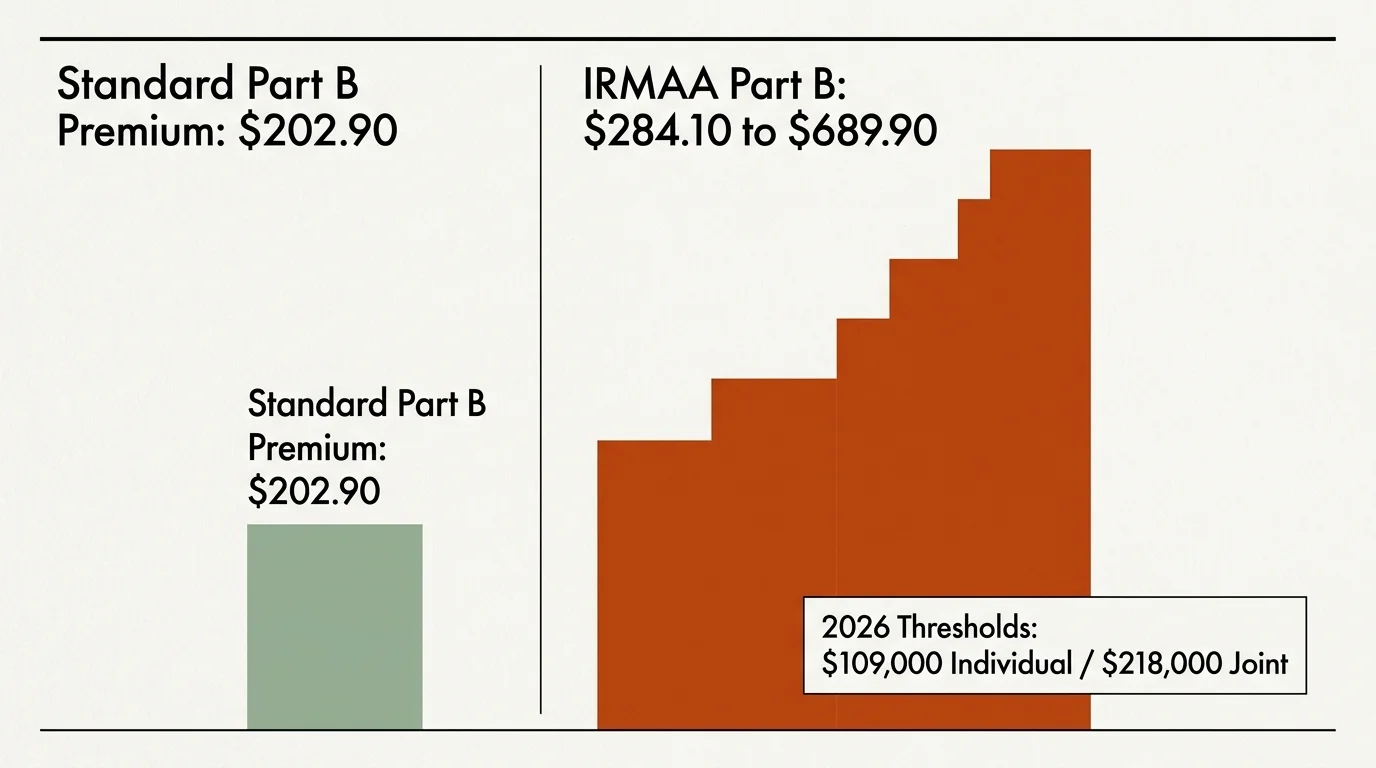
The Income-Related Monthly Adjustment Amount represents a surcharge tacked onto your standard Medicare premiums if your earnings exceed federal thresholds. The Social Security Administration calculates this surcharge using your Modified Adjusted Gross Income from two years prior. For the 2026 plan year, IRMAA surcharges trigger when your 2024 income exceeds $109,000 for individual tax filers or $218,000 for married couples filing jointly. While the standard Medicare Part B monthly premium sits at $202.90, IRMAA surcharges push total monthly Part B payments to between $284.10 and $689.90 depending on your exact income bracket. Medicare Part D prescription drug plans carry an additional monthly surcharge ranging from $14.50 to $91.00 above your plan base rate.
When you miss the window to challenge an incorrect assessment, the financial damage accumulates rapidly. A married couple placed in the highest bracket due to a temporary income spike—such as selling a home or converting a traditional IRA—pays over $1,000 in combined monthly surcharges. Over twelve months, failing to rectify an inaccurate surcharge drains nearly $12,000 from your retirement reserves. Because the Social Security Administration automatically deducts these surcharges from your monthly benefit payments, a missed deadline reduces your immediate cash flow, disrupting carefully structured retirement withdrawal strategies.
The Strict 60-Day Deadline and the 5-Day Mailing Rule
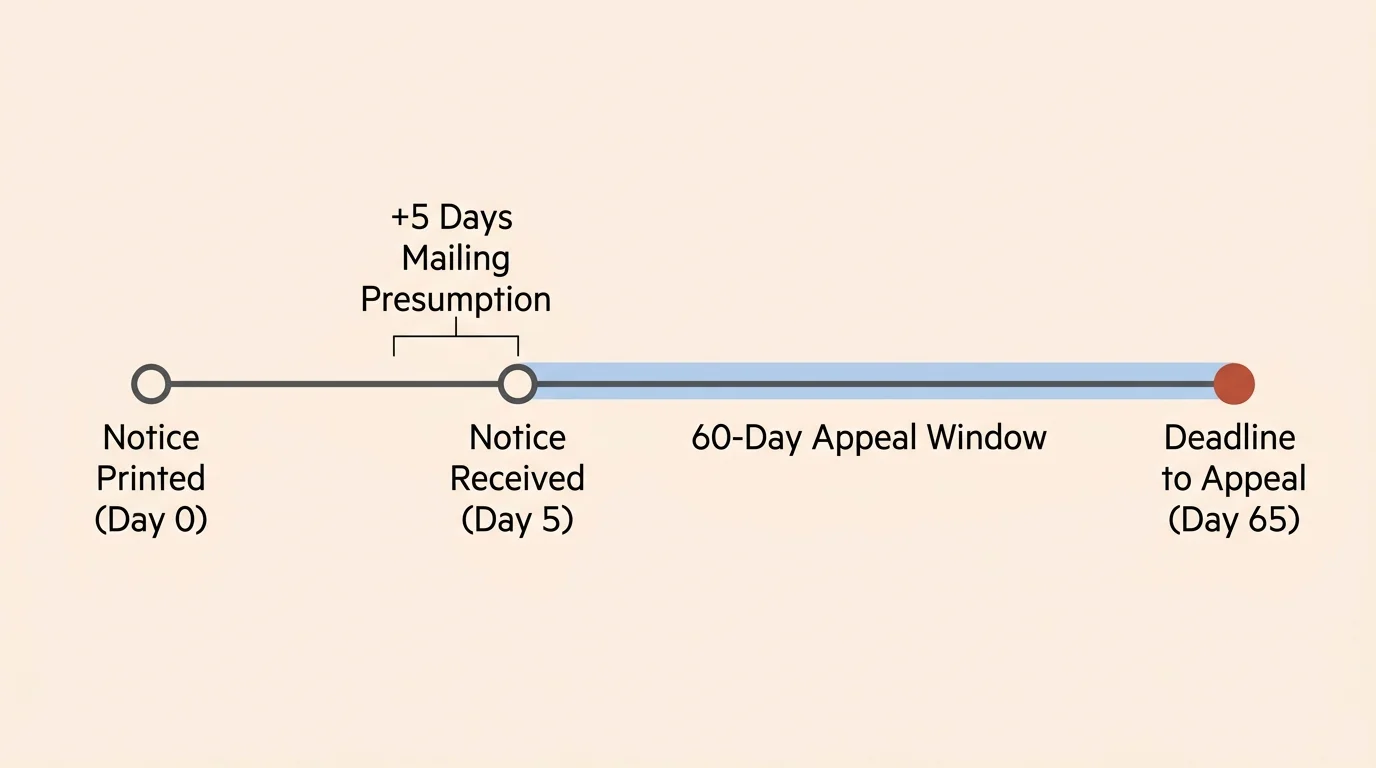
Federal policy establishes a firm timeframe for contesting an IRMAA determination. You have exactly 60 calendar days from the date you receive your Initial Determination notice to file a formal request for reconsideration. Under federal administrative guidelines, the Social Security Administration presumes you receive the written notice 5 calendar days after the date printed on the letter. This presumes an effective filing window of 65 calendar days from the printed notice date unless you present compelling evidence proving delayed postal delivery.
Missing this 60-day deadline carries severe procedural consequences. Under standard operating procedures, failing to file within the allowed window forfeits your automatic right to administrative review. The agency considers the determination final, locking the elevated premium into place for the full calendar year. Many beneficiaries miss this critical window because notices arrive during extended travel, major illness, or seasonal moves between residences. Recognizing how the agency calculates these 65 days provides the foundation for protecting your rights if life disruptions delay your mail.

How to Prove Good Cause Under Federal Regulations
A missed deadline does not entirely close the door on appealing your surcharge. Federal regulations codified under 20 CFR § 404.911 and Social Security POMS GN 03101.020 allow the agency to grant an extension if you establish Good Cause for missing the filing deadline. To qualify under the Good Cause standard, you must demonstrate that external circumstances beyond your direct control prevented you from filing your request for reconsideration on time.
The Social Security Administration recognizes several specific grounds for Good Cause. These include severe personal illness or emergency hospitalization that physically incapacitated you during the filing period; a death or serious illness in your immediate family; the unexpected destruction of critical financial records due to fire or natural disaster; non-receipt of the determination letter despite diligent mail monitoring; or documented cases where an agency representative provided misleading guidance. When submitting a late appeal, you must submit a written explanation detailing the exact reasons for your delay along with official supporting documentation, such as hospital admission records, death certificates, or postal tracking records.
If the Social Security Administration approves your Good Cause claim and grants your late appeal, the agency conducts a full review of your file. Should the underlying appeal succeed—whether by evaluating a reduction in income or correcting a tax reporting error—the agency applies the lower premium retroactively. Medicare adjusts your account and issues a direct refund for all excess IRMAA surcharges withheld from your past benefit checks since the beginning of that tax year.

Strategy Pillars: Managing Income, Health, and Lifestyle
Navigating a missed appeal window requires a clear strategy across your broader financial and personal lives. Implementing proactive safeguards helps cushion the budget impact while positioning you for success in future years.
Pillar 1: Strategic Income Planning and the Two-Year Reset
Because IRMAA relies on a strict two-year tax lookback window, your current year surcharge reflects income reported two years prior. If you miss the appeal deadline for 2026, remember that your 2027 surcharge will automatically reset based on your 2025 tax return. Certified Financial Planner professionals often advise clients facing an unappealable surcharge year to focus intensely on current tax efficiency to prevent recurring surcharges.
You can optimize your current income landscape by utilizing Qualified Charitable Distributions from traditional IRAs if you reached age 70½, which lowers your Adjusted Gross Income directly. Additionally, managing capital gains realization and pacing Roth IRA conversions across multiple tax years prevents single-year income spikes that trigger future IRMAA thresholds. You should also evaluate whether a qualifying Life-Changing Event—such as work stoppage, work reduction, or loss of income-producing property—occurred in a subsequent year, allowing you to file Form SSA-44 to lower future premiums.
Pillar 2: Healthcare Budgeting and Expense Protection
Absorbing an unexpected Medicare surcharge demands adjustments to your healthcare spending plan. Gerontologists and healthcare advisors warn against cutting back on essential prescription drugs or skipping preventative care to balance a temporary budget shortfall, as doing so leads to costly health emergencies later. Instead, conduct an annual review of your health coverage options through Medicare.gov to ensure you pay the lowest possible underlying plan premiums.
Review your prescription drug formulary to switch to lower-cost tier alternatives or generic medications. Utilize tax-advantaged health savings tools if available, and ensure you remain strictly in-network for all medical procedures. Protecting your physical health prevents out-of-pocket medical expenses from compounding the financial burden created by the temporary IRMAA surcharge.
Pillar 3: Lifestyle Safeguards and Scam Prevention
Financial distress caused by unexpected surcharges makes retirees prime targets for predatory scams. Fraudulent third-party organizations frequently target older adults with aggressive mailers or phone calls, offering to eliminate Medicare penalties or file appeals for expensive upfront processing fees. The Social Security Administration never charges fees to process appeals, reconsiderations, or Form SSA-44 submissions.
Protect your household by establishing strong administrative habits. Create a centralized physical folder for all Social Security and Medicare notices, noting the delivery date on every piece of mail. Set up online tracking through your personal account on official government portals, and utilize resources from trusted organizations like AARP to stay informed on Medicare policy updates and consumer fraud alerts.
Navigating Multi-Level Appeals Beyond Initial Denial
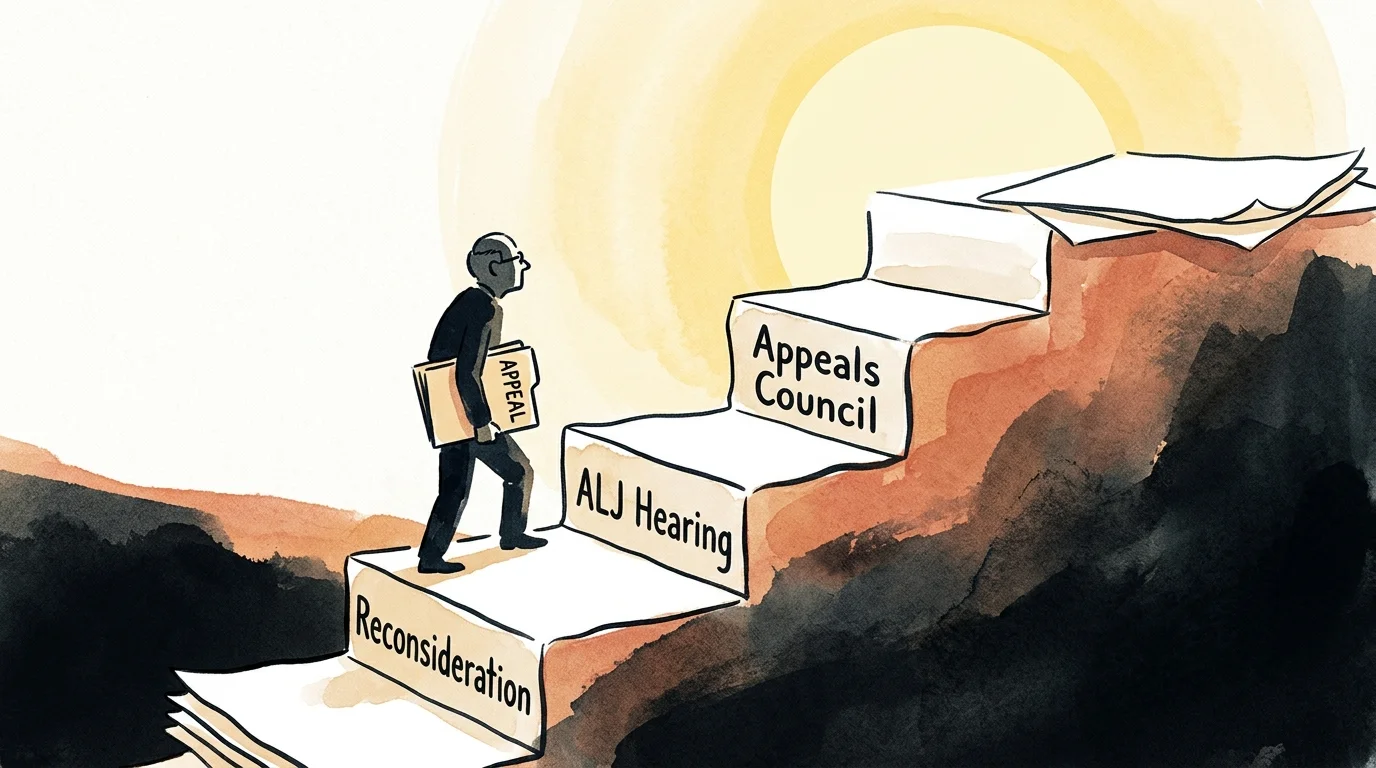
If Social Security denies your initial request for reconsideration or rejects your Good Cause explanation, you hold the right to advance through higher levels of the administrative appeal process. The second level involves requesting a hearing before an Administrative Law Judge at the Office of Medicare Hearings and Appeals. If the Administrative Law Judge issues an unfavorable ruling, you can escalate your case to the Medicare Appeals Council, and ultimately to a Federal District Court.
Maintaining strict compliance with timelines remains essential throughout every stage of escalation. Every single appeal level imposes its own rigid 60-day filing deadline, calculated from the date you receive the previous negative decision. Missing a deadline at any stage requires establishing Good Cause again for that specific delay. Documenting every phone call, retaining certified mail receipts, and keeping copies of all submitted forms ensures you preserve your legal standing as your appeal moves through the federal system.
Frequently Asked Questions
Can I appeal an IRMAA surcharge if my income dropped due to retirement, but I missed the 60-day window? You can still file an appeal, but you must submit a written statement establishing Good Cause for missing the initial 60-day window under federal regulations. Complete Form SSA-44, select your qualifying life-changing event such as work stoppage or reduction, attach proof of your lower income, and provide clear documentation explaining why severe circumstances prevented timely filing.
Will Medicare automatically refund my money if my late appeal succeeds? Yes, Medicare handles retroactive adjustments once your late appeal is accepted. Once the Social Security Administration approves your Good Cause request and issues a favorable determination, the agency recalculates your premiums retroactively. They issue a full refund for all overpaid Part B and Part D IRMAA surcharges previously withheld from your benefit checks during that tax year.
What should I do if I never received the original IRMAA notice in the mail? Non-receipt of an official determination letter serves as valid grounds for Good Cause under Social Security policy. As soon as you notice an unexpected IRMAA deduction on your Social Security statement, contact the agency immediately. File your appeal in writing, state under penalty of perjury that you never received the original notice, and request a Good Cause extension.
How does missing an IRMAA appeal deadline affect my spouse’s Medicare premiums? Because IRMAA evaluations use the Modified Adjusted Gross Income from your joint tax return, both spouses usually receive separate IRMAA determinations reflecting higher premiums. A missed deadline by one spouse does not automatically close the window for the other if their notice arrived on a different date. However, both spouses must file separate appeal requests and establish Good Cause individually to correct both accounts.
Take Control of Your Medicare Costs Today
Managing Medicare surcharges requires prompt action, but missing an initial deadline does not mean you must accept an unfair financial burden. Dedicate time in the next 48 hours to log into your online Social Security account, review your latest notice dates, and organize your supporting financial documents. By filing a clear Good Cause statement or optimizing your current tax strategy, you take decisive steps to safeguard your retirement income and protect your peace of mind.