
Rethinking where you keep your retirement funds can put thousands of dollars back into your pocket every year. If you feel tired of paying hidden account fees, earning negligible interest on your savings, or facing double-digit interest rates on loan products, switching to a credit union offers an immediate financial upgrade. As member-owned, non-profit cooperatives, credit unions return their profits directly to you through lower borrowing costs, reduced service charges, and elevated yields on certificates of deposit. You will enjoy higher financial return, greater personal attention, and robust deposit safety while insulating your fixed income from aggressive bank fee structures.

Current Banking Landscape: Why Retirees Are Making the Switch
The financial services market is shifting rapidly, and savvy retirees are taking notice. According to data from the National Credit Union Administration, total membership in federally insured credit unions reached 145.8 million members in the first quarter of 2026, marking an increase of 2.5 million member-owners year-over-year. This steady influx of depositors highlights a growing realization across the country: traditional commercial banks prioritizing shareholder profits often shortchange everyday consumers through skimpy deposit yields and bloated fee schedules.
Because credit unions operate under a non-profit tax exemption structure, they do not pay federal corporate income tax. Instead of funneling excess revenue to external Wall Street investors, these member-owned cooperatives must return earnings to their member-owners. They accomplish this by raising interest rates on savings products, discounting interest rates on loans, and waiving routine maintenance charges. For older adults living on fixed incomes, these structural advantages translate into tangible, long-term savings that bolster financial security throughout retirement.
8 Clear Signs a Credit Union Will Save You Money
1. You Want Higher Yields on Your Savings and Certificates of Deposit
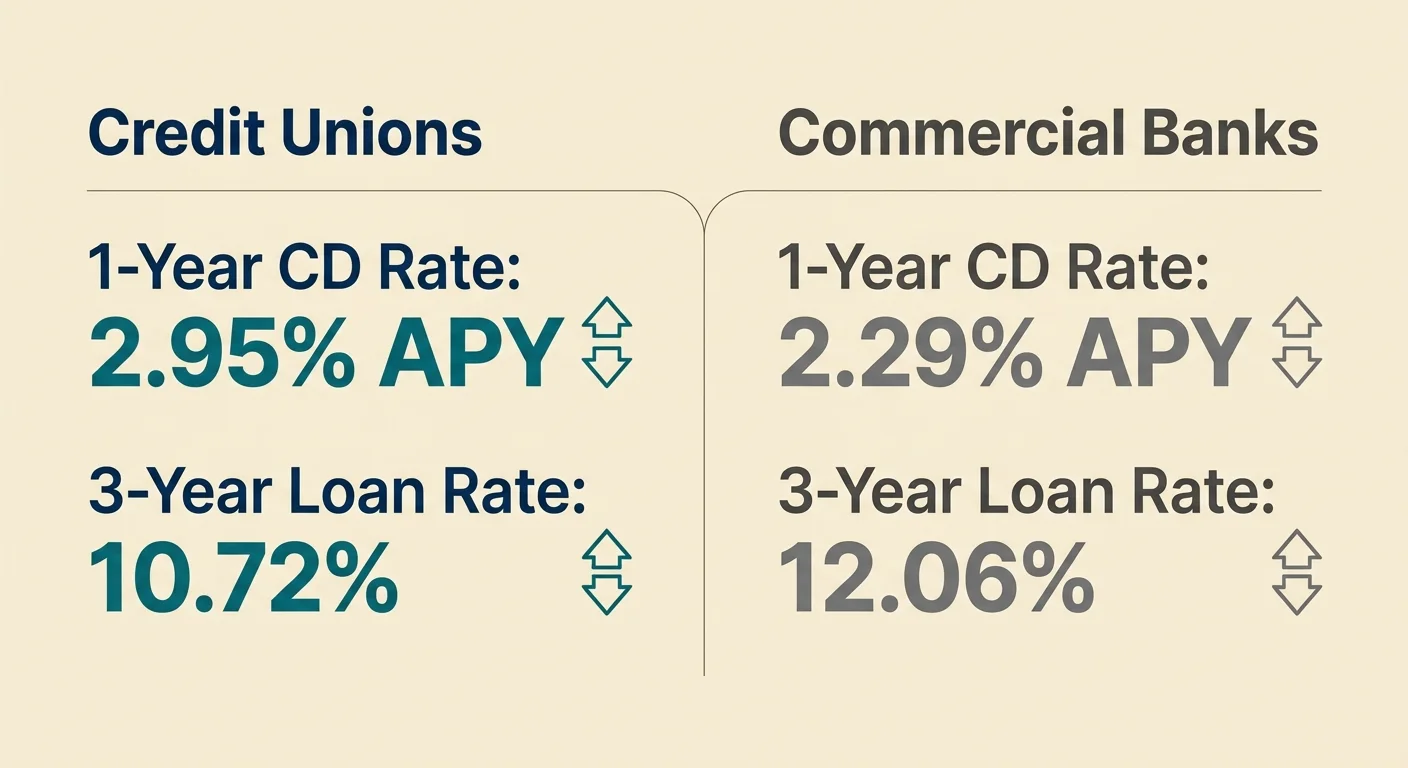
If you rely on fixed-income investments to supplement monthly cash flow, traditional bank payout rates often fall short. Credit unions consistently outpace commercial banks on short-term deposit vehicles. For instance, NCUA national data from late December 2025 revealed that the national average rate for a 1-year Certificate of Deposit at credit unions stood at 2.95% APY, compared to just 2.29% APY at traditional commercial banks. On a $100,000 principal balance, that interest rate gap delivers hundreds of extra dollars in guaranteed annual returns without taking on market risk.
2. Monthly Account Maintenance Fees Are Eating Your Fixed Income
Commercial banks routinely charge monthly checking charges ranging from $10 to $25 unless you maintain hefty minimum balances or establish strict direct deposit arrangements. Credit unions rarely impose these maintenance fees; most offer fee-free checking and high-yield savings options with zero minimum balance demands. Over a decade of retirement, eliminating a simple $15 monthly service charge keeps $1,800 in your balance—money far better allocated toward healthcare, family, or travel.
3. You Plan to Finance a Car, RV, or Personal Loan
Whether you plan to purchase a reliable vehicle, buy an RV for travel, or finance home modifications for aging in place, credit unions offer significant borrowing discounts. Regulator tracking from 2025 showed that the national average rate for a 3-year personal loan at credit unions was 10.72%, compared to 12.06% at commercial banks. Lower interest rates drop your monthly payment and preserve valuable room in your household budget.
4. You Want a Hard Cap on Your Credit Card Interest Rates
Carrying a revolving balance on a high-interest credit card can quickly derail a retirement plan. Commercial banks operate without a federal usury rate cap, allowing them to charge annual percentage rates exceeding 25% or 30% on variable cards. Conversely, federal credit union loan rates are capped by law. The NCUA extended the temporary 18% maximum interest rate ceiling through September 10, 2027, ensuring that federal credit union loan products remain protected against skyrocketing interest charges.
5. You Demand Dollar-for-Dollar Government Deposit Protection
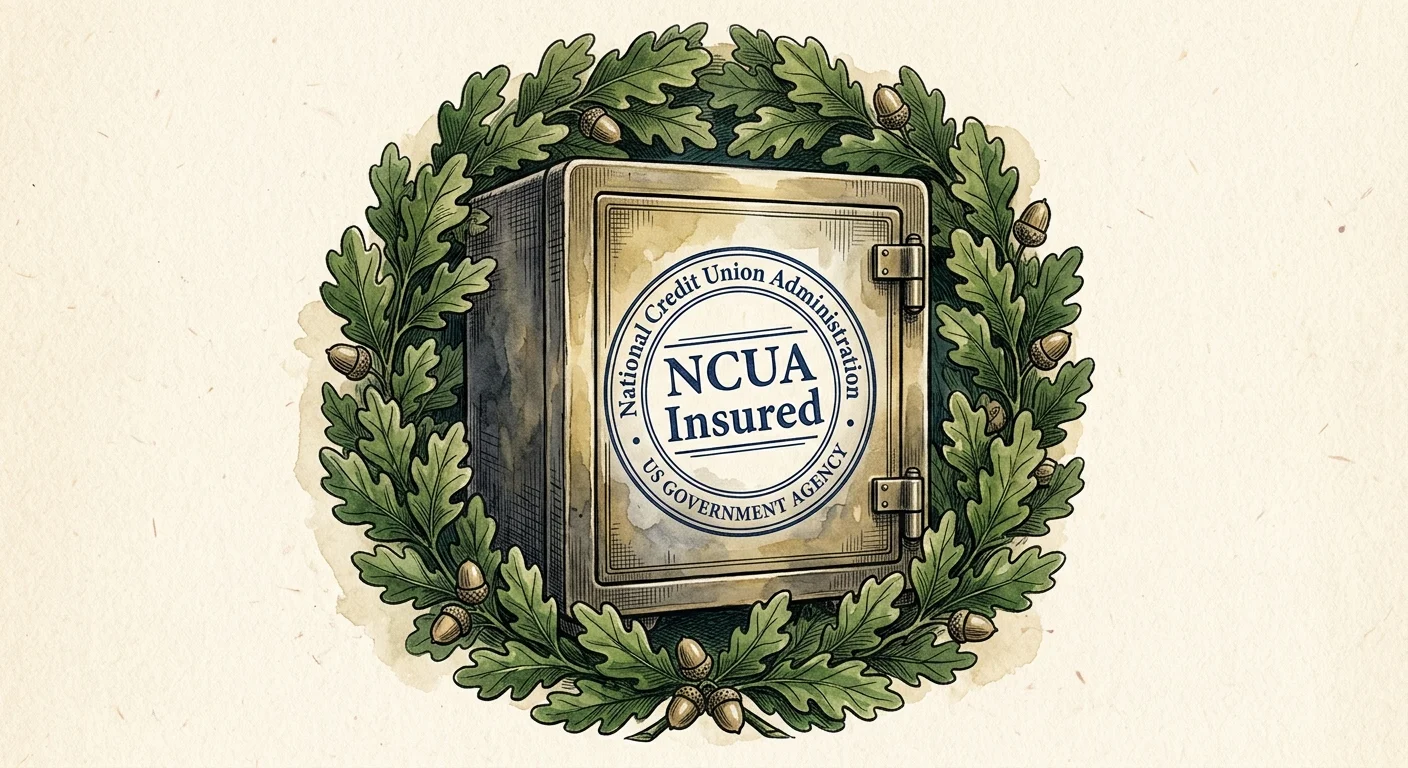
Some depositors hesitate to move away from commercial mega-banks because they assume smaller institutions lack government backing. In reality, credit unions offer identical protection. Deposits in federally insured credit unions are fully backed by the National Credit Union Share Insurance Fund, managed by the NCUA up to $250,000 per member, per account ownership category. This safety net provides the exact same coverage level as the FDIC protection found at commercial banks.
6. You Prefer Personalized Service Over Faceless Call Centers
Navigating automated phone trees and reaching distant call center reps can prove frustrating when resolving account matters. Credit unions treat you as an owner rather than an account number. Because branch employees focus on member service rather than aggressive sales quotas, you receive tailored financial guidance, patient assistance with complex transfers, and personalized underwriting when unexpected life events arise.
7. You Travel Frequently and Need Free Nationwide ATM Access
Retirees often worry that joining a local credit union will limit their cash access while traveling. Fortunately, most credit unions participate in nationwide cooperative networks, such as the CO-OP ATM network. This collaborative agreement gives you surcharge-free access to over 30,000 ATMs across the country—a footprint larger than almost any individual mega-bank network—allowing you to withdraw cash penalty-free wherever you go.
8. You Want Your Financial Dollars to Support Local Communities
Commercial mega-banks frequently deploy member deposits into global investment funds or corporate debt markets. Credit unions reinvest local capital locally. When you deposit funds with a community credit union, those dollars help neighbors buy homes, fund small businesses, and support civic projects. By aligning your money with a mission-driven cooperative, you foster local economic growth while protecting your personal portfolio.

Integrating Credit Unions into Your Broader Retirement Strategy
Maximizing credit union benefits requires looking beyond basic deposit accounts. You can integrate credit union advantages across three core pillars of retirement planning to build financial resilience.
Income Planning: Combine predictable yields from credit union certificates with guaranteed income sources. By establishing a CD ladder at elevated credit union dividend rates, you secure dependable liquidity while protecting principal from market downturns. Aligning maturing certificates with required minimum distributions from your traditional IRA or 401(k) helps optimize tax planning. For guidance on structuring retirement withdrawals, consult resources from the Internal Revenue Service.
Lifestyle Design: Trimming fixed banking overhead frees up capital for experiences that bring personal fulfillment. Eliminating account service charges and high interest expenses lets you redirect funds toward travel, hobbies, or spending time with grandchildren. Resources from AARP highlight how reducing monthly recurring costs creates lasting peace of mind during your non-working years.
Health and Wellness Security: Healthcare expenses represent major variable costs in retirement. Maintaining high-yield credit union savings accounts or dedicated emergency reserves ensures fast cash access when medical bills arise. Keeping emergency cash in secure, dividend-earning accounts prevents you from liquidating stock holdings during market dips to pay healthcare co-pays. Learn more about coordinating savings with federal benefits through the Social Security Administration.

Expert Voices: Perspectives from Financial Advisors and Retirees
Financial professionals frequently champion credit union benefits for clients living on fixed incomes. Certified Financial Planner Marcus Vance notes that clients who transfer cash reserves to credit unions routinely recover hundreds of dollars annually in eliminated fees. Vance emphasizes that for retirees relying primarily on Social Security and modest pensions, waiving $20 monthly service fees creates meaningful flexibility in discretionary spending.
Retirees also report greater satisfaction after making the transition. Elena and Arthur Brooks, who switched to a regional federal credit union three years ago, share that the change transformed their banking experience. Arthur explains that when funding home improvements, their credit union provided a loan rate nearly two percentage points lower than commercial bank offers, saving them thousands in interest while offering warm, personal service.
Risks and Safeguards to Consider Before Switching
While credit unions offer distinct advantages, you should approach the transition thoughtfully. Smaller institutions may operate fewer physical branch locations or feature simpler digital banking tools compared to national banking giants. Before transferring all assets, evaluate a credit union’s mobile deposit features, online bill pay system, and digital interface to ensure they fit your lifestyle.
Additionally, stay proactive against financial fraud. Scammers target older adults across all banking platforms through phone spoofing, phishing emails, and text scams. Review consumer protection guidelines through the Consumer Financial Protection Bureau to safeguard your personal identification numbers and sensitive account credentials.
Frequently Asked Questions
Is my money as safe in a credit union as it is in a traditional bank?
Yes. Federally insured credit unions receive deposit insurance through the National Credit Union Share Insurance Fund, administered by the NCUA. This fund protects your deposits up to $250,000 per member, per account ownership category, offering identical safety to FDIC insurance.
How do I qualify for credit union membership in retirement?
Qualifying is straightforward. Credit unions establish membership criteria based on location, organizational affiliations, or family ties. Many community credit unions allow you to join simply by living, working, or worshiping in a designated county, or by making a tiny one-time donation to an associated charitable group.
Will I lose access to mobile deposit and online banking services?
No. Virtually all credit unions offer robust online portals, mobile banking apps, electronic bill pay, and remote check deposit features. You will retain full digital convenience alongside superior member support.
Can I set up Social Security direct deposits with a credit union?
Yes. You can route Social Security benefit payments, pension distributions, and annuity payouts directly into your credit union checking or savings account using your routing and account numbers.
Take Your First Actionable Step in the Next 48 Hours
Upgrading your financial setup does not require an overwhelming overhaul. Commit to taking one practical step within the next 48 hours: locate three credit unions in your community and compare their current 1-year CD yields and account terms against your current bank statement. Discovering how much money you can save will give you the confidence to make a rewarding switch.