
Trading a high-stress, high-cost American lifestyle for the sun-drenched coastlines of the Mediterranean is no longer just a daydream—it is a financially strategic move. As inflation continues to squeeze domestic budgets, a growing wave of pre-retirees and retirees are actively relocating overseas to protect their purchasing power. International Living’s 2026 Global Retirement Index places Italy firmly in the top ten, ranking it sixth overall for its unmatched combination of accessible healthcare, deep cultural roots, and surprisingly affordable daily living. By leveraging favorable exchange rates and unique visa programs, you can design a rich, vibrant next chapter that stretches your retirement income further than you might have thought possible back home.
The 2026 Snapshot: Why Expat Living Is Surging
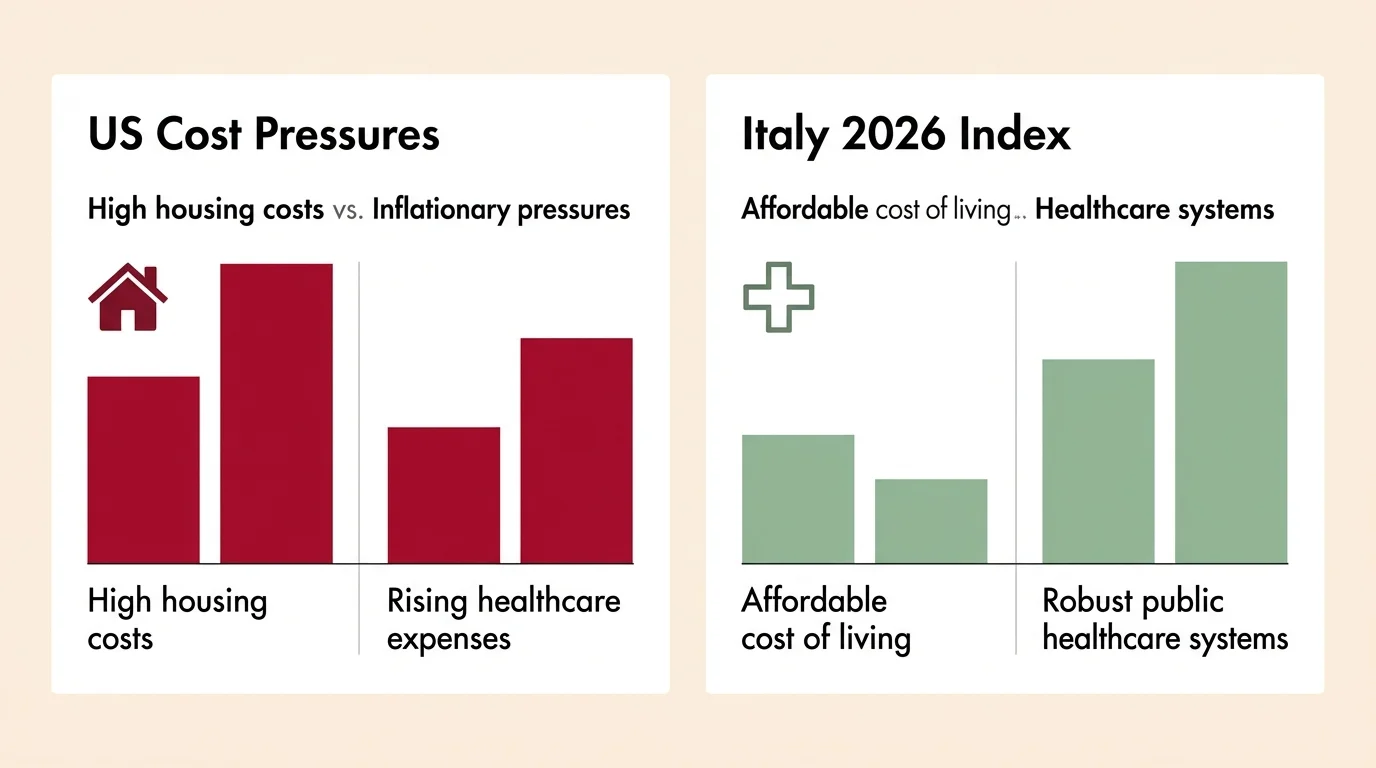
The current economic landscape for older adults in the United States often feels like an uphill battle. According to household expenditure data from the Bureau of Labor Statistics, housing and healthcare consistently consume the lion’s share of fixed budgets for Americans over sixty-five. While recent cost-of-living adjustments attempt to bridge the gap, localized inflation continues to erode purchasing power. Research and community livability initiatives championed by organizations like AARP emphasize the deep desire to age in place safely, yet financial pressures force many to look beyond domestic borders to maintain their standard of living.
The 2026 International Living Global Retirement Index, an annual benchmark for expat living, ranks Italy as the sixth best retirement destination in the world. The country outpaced traditional stalwarts by offering an exceptional blend of affordability, robust public services, and profound cultural richness. You no longer need vast wealth to enjoy a culturally stimulating retirement. By shifting your geographical focus, you immediately change the economic variables governing your life, swapping high domestic property taxes and staggering medical costs for a vibrant Mediterranean existence.
Pillar One: Income Planning and Budgeting in Italy
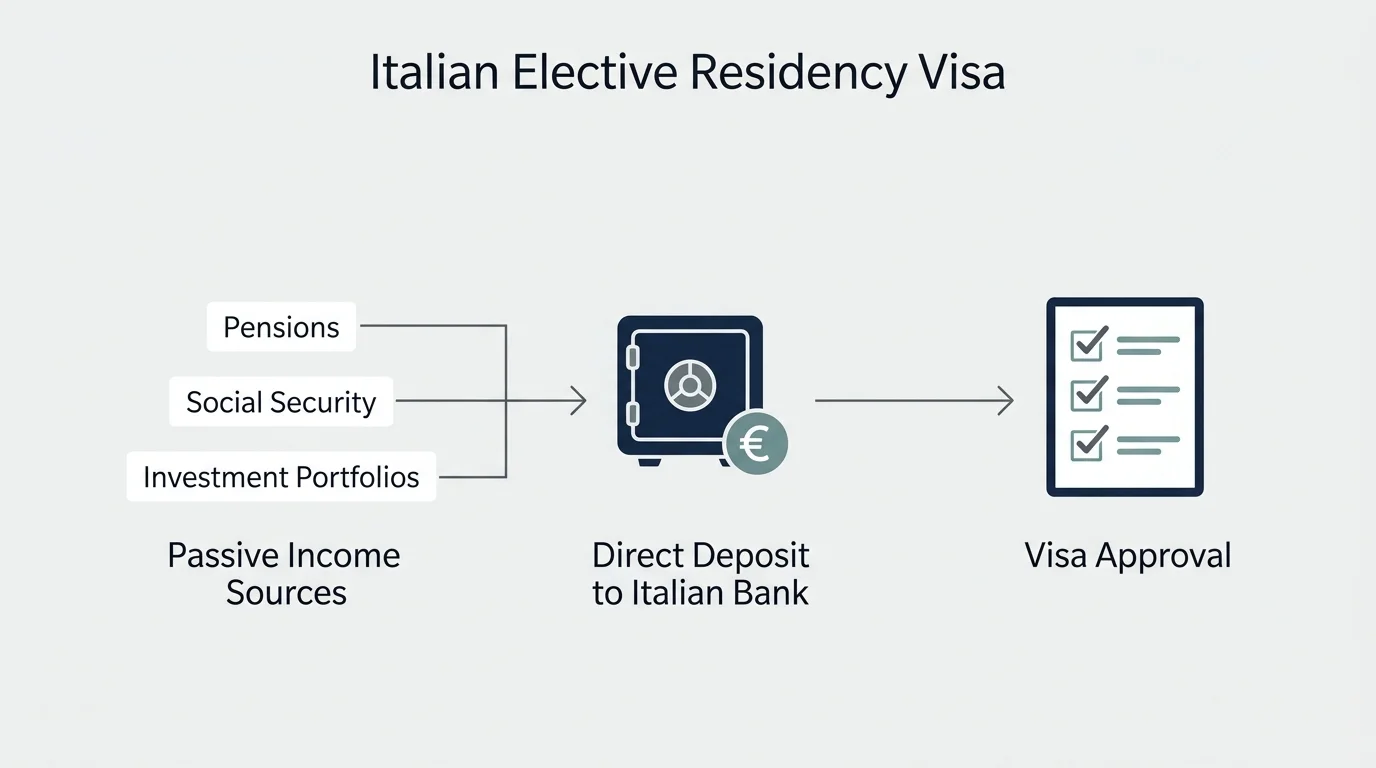
Executing a transatlantic move requires rigorous income planning. Retiring in Italy is largely facilitated by the Elective Residency Visa, a specialized immigration pathway for individuals who can support themselves without entering the local labor market. Securing this visa requires demonstrating a reliable stream of passive income. This includes pensions, annuities, rental income, and standard distributions from investment portfolios. Social Security benefits also qualify toward this threshold. Managing your monthly benefits is straightforward. The Social Security Administration provides clear guidance on receiving your payments outside the United States, allowing funds to be deposited directly into an international bank account or a U.S. account with favorable foreign exchange capabilities.
Beyond meeting visa requirements, you must carefully calculate your new daily budget. Regions like Puglia, Abruzzo, and Calabria offer remarkably low costs of living, allowing a couple to live comfortably on a fraction of what they might spend in an American suburb. Moving abroad, however, does not sever your financial obligations to the federal government. The United States taxes citizens on their worldwide income, regardless of physical residence. You must still file annual returns and report foreign bank accounts. Navigating the tax treaty between the U.S. and Italy is crucial to avoid double taxation on retirement distributions. For authoritative guidelines, you should review the documentation for taxpayers living abroad provided by the Internal Revenue Service. Proactive tax planning ensures the financial advantages of your relocation remain intact.

Pillar Two: Designing Your Mediterranean Lifestyle
When you move to Italy, you are not simply changing your address; you are entirely redesigning your daily rhythm. The Italian lifestyle is famously anchored in a profound appreciation for connection, leisure, and quality. Rather than spending hours navigating congested highways to run errands at massive big-box stores, your day might involve a short morning walk to a local market to purchase fresh produce, bread, and cheese from individual vendors. This shift from a car-centric culture to a highly walkable, community-oriented environment fosters organic social interaction and a slower, more deliberate pace of life.
Italy packs an astonishing variety of climates, landscapes, and architectural styles into its borders. You can choose the crisp, alpine air of the northern Dolomites, the rolling vineyards of Tuscany and Umbria, or the sun-baked, palm-lined coastlines of Sicily in the south. Each region boasts its own distinct culinary traditions, dialects, and social norms, meaning you can curate a retirement experience that perfectly matches your preferences. Integrating into these communities requires genuine effort, particularly when it comes to language. While major cities like Rome, Florence, and Milan have substantial English-speaking expat populations and resources for diverse cultural backgrounds, smaller provincial towns demand at least a conversational grasp of Italian. Embracing the language barrier as a cognitive exercise rather than an obstacle will vastly improve your experience. Joining local clubs, participating in seasonal festivals, and frequenting the same businesses are proven strategies for weaving yourself into the local social fabric and establishing a deep sense of belonging.

Pillar Three: Navigating Health and Wellness Abroad
One of the most profound anxieties for pre-retirees in the U.S. centers on healthcare costs and the prospect of a medical emergency wiping out decades of savings. Italy provides a compelling solution through its Servizio Sanitario Nazionale, a national health service consistently ranked among the best in the world by major global health organizations. As a legal resident on an Elective Residency Visa, you are permitted to buy into this public system by paying an annual fee calculated based on your income. Once enrolled, you receive a health card granting access to low-cost visits, heavily subsidized medications, and comprehensive hospital care. For many Americans, the annual cost to join the Italian public system is drastically lower than standard health insurance premiums back home. You can also supplement this public access with private international health insurance to bypass waiting times for non-emergency procedures.
The environment itself promotes physical well-being. Italy is home to Sardinia, one of the original Blue Zones where researchers have documented unusually high concentrations of vibrant centenarians. The Mediterranean diet—rich in extra virgin olive oil, fresh vegetables, legumes, and lean proteins—is inherently baked into the culture. Combine this nutrient-dense eating pattern with the incidental exercise gained from navigating historic, walkable towns, and you naturally adopt a lifestyle that supports cardiovascular health. Peer-reviewed aging research frequently highlights the strong correlation between moderate daily movement, deep social engagement, and delayed cognitive decline. By living in a society that naturally facilitates these behaviors, you are actively investing in your long-term vitality.

Expert Voices: Perspectives from the Ground
Financial planners and gerontologists view international relocation as a complex but rewarding strategy for the right candidate. Certified Financial Planner professionals frequently advise clients to maintain a diverse currency strategy to mitigate the impact of exchange rate fluctuations between the dollar and the euro. Keeping a portion of your emergency fund in a high-yield U.S. savings account while utilizing multi-currency platforms for daily expenses provides a buffer against sudden market shifts. These experts stress that moving overseas should never be an act of financial desperation; it must be a carefully calculated reallocation of resources designed to optimize your portfolio’s longevity.
From a physiological and psychological perspective, gerontologists celebrate the intense cognitive demands of an international move. Adjusting to a new culture forces your brain to build new neural pathways. Learning to navigate Italian bureaucracy, mastering the nuances of a foreign language, and adapting to different social cues serve as a powerful defense against cognitive decline. However, housing specialists strongly caution against romanticizing the move. They recommend renting a home in your chosen region for at least a full year before committing to a property purchase. This trial period allows you to experience the gritty reality of the community without the rose-tinted glasses of a brief holiday, ensuring the location aligns with your actual needs.

Risk and Safeguards: Protecting Your Move
While the prospect of retiring in Italy is deeply alluring, you must rigorously protect yourself against common pitfalls that catch many newcomers off guard. The Italian administrative system is notoriously slow, complex, and highly localized, meaning rules can vary wildly from one municipality to the next. Securing residency permits, opening a local bank account, and navigating municipal tax requirements demand extraordinary patience and the assistance of a bilingual legal professional. Attempting to force American standards of efficiency onto Italian civil servants will only result in mutual frustration. You must learn to advocate for yourself politely but persistently.
A far more severe risk involves your domestic safety nets back in the United States. Because standard policies do not provide coverage for medical care received outside the United States, you might be tempted to drop your domestic coverage entirely to save on monthly premiums while living in Europe. This is a massive financial hazard. If you ever return to the U.S. or require prolonged treatment back home due to a change in health status, you will face severe, permanent financial penalties for late re-enrollment. You can verify these strict enrollment rules directly through the official Medicare portal. Most advisors strongly recommend maintaining your domestic premium payments alongside your Italian healthcare contributions, treating the cost as an essential insurance policy for your ultimate flexibility and peace of mind.
Frequently Asked Questions
Does Medicare cover me if I move to Italy?
No. Standard Medicare policies do not cover medical services, hospital stays, or prescription drugs outside the United States. When you establish residency in Italy, you will rely on the Italian public healthcare system or private international health insurance. You should, however, seriously consider maintaining your Medicare Part B enrollment. Dropping it triggers permanent financial penalties if you ever return to the U.S. and attempt to re-enroll.
What is the Elective Residency Visa?
The Elective Residency Visa is the primary immigration route for retirees moving to Italy. It strictly prohibits you from working within the country. To qualify, you must provide documented proof of substantial, reliable passive income, such as pensions, Social Security, and investment dividends. You must also secure a long-term residential lease or purchase a home before applying at the Italian consulate.
How do I manage my U.S. taxes while living abroad?
The United States taxes citizens based on nationality, not geography. You must file an annual federal tax return regardless of where you live. You must also report foreign bank accounts exceeding specific thresholds. Fortunately, the U.S. and Italy have a comprehensive tax treaty to prevent double taxation, though you will likely need a cross-border accountant to prepare your filings.
Will my Social Security benefits stretch further in Italy?
In many regions of Italy, particularly the south and rural central provinces, the cost of living is significantly lower than in the United States. Your Social Security benefits can provide a comfortable lifestyle. Capital cities like Rome and Milan carry price tags comparable to major American metropolitan areas, so your purchasing power depends on the specific region you choose.
Your Next 48 Hours
Relocating across the globe is a monumental decision, but the planning process begins with small, manageable steps. Over the next forty-eight hours, take a hard look at your current budget. Identify your top three monthly expenses—likely housing, healthcare, and transportation. Next, research the equivalent costs for those same three categories in an affordable Italian region like Abruzzo, Calabria, or Umbria. Seeing the side-by-side comparison in black and white will instantly clarify whether an international move makes mathematical sense for your future. The life you have been saving for might just be waiting for you across the Atlantic; you simply need to take the first step toward claiming it.