
Keeping your mind sharp and your social calendar full does not require a hefty tuition bill when you retire in the right location. You can access free or heavily discounted college courses, turning top-tier university towns into the ultimate playgrounds for lifelong learning. Research consistently links continued education to delayed cognitive decline and expanded social networks, making campus life a cornerstone of modern retirement planning. State laws and university policies quietly subsidize these opportunities, allowing older adults to audit classes in subjects ranging from art history to quantum mechanics. Whether you want to master a new language or simply explore a lifelong passion, utilizing local campus benefits transforms your golden years into an era of intellectual growth.
A Snapshot of the Lifelong Learning Landscape
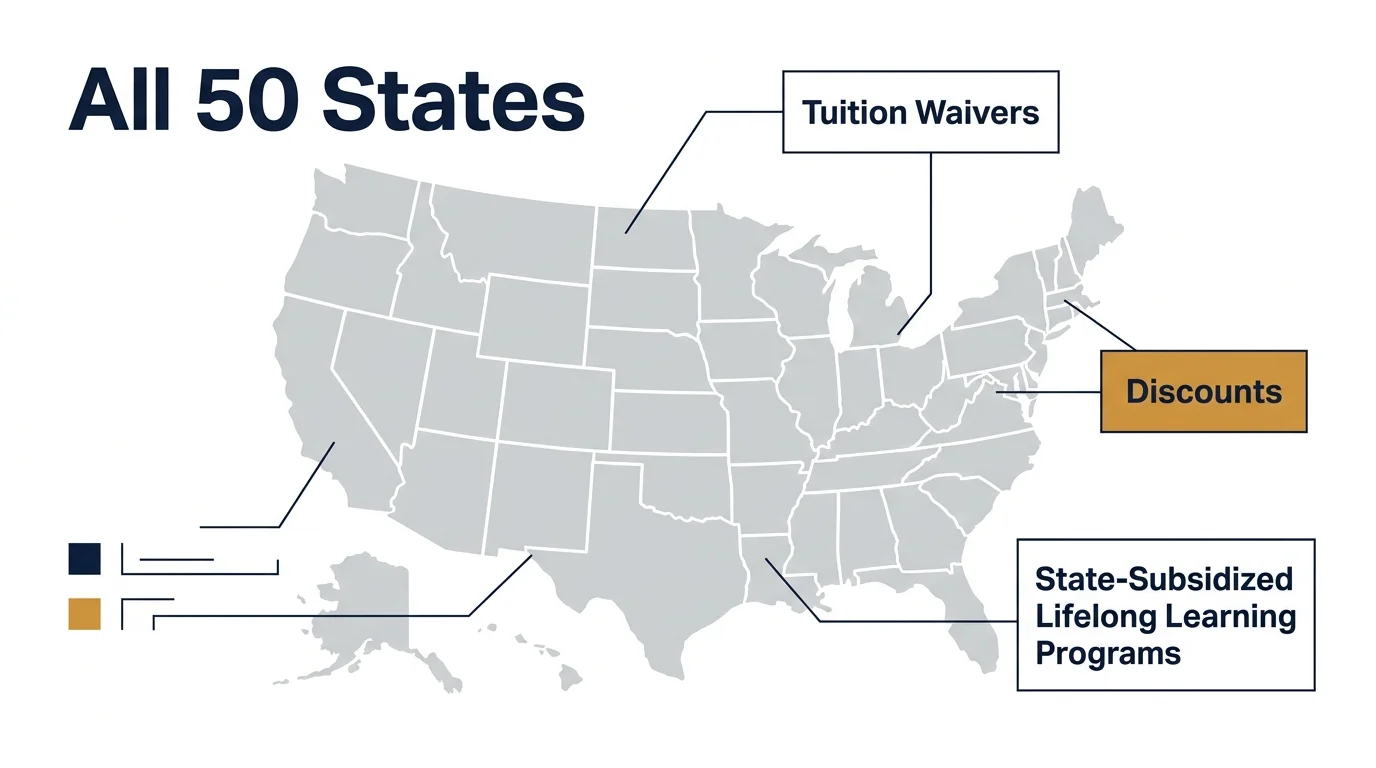
As demographic tides shift, the definition of retirement continues to evolve from a period of rest into an era of active engagement. The Bureau of Labor Statistics notes that older adults represent a rapidly expanding segment of the active population, driven by a desire for lasting purpose. Policymakers and educational institutions recognize this cultural shift, resulting in state legislation designed to integrate seniors into academic environments. Currently, all fifty states offer some form of tuition waiver, discount, or dedicated lifelong learning program for older adults at public colleges. These programs do more than fill empty seats in lecture halls; they create intergenerational hubs of knowledge transfer. You benefit directly from exposure to cutting-edge academic research, while younger students gain insights from your decades of practical experience. Understanding these policies allows you to effectively leverage the taxpayer-funded educational systems you supported throughout your working years. You can transform campus resources into your personal library, fitness center, and daily social club.

Strategy Pillar One: Lifestyle Design and Finding the Right Campus Community
Selecting the ideal university town requires balancing educational opportunities with everyday livability. Cities like Athens, Georgia, offer a premier example of state-supported lifelong learning in action. The University System of Georgia allows residents aged sixty-two and older to enroll in university classes entirely tuition-free on a space-available basis. This benefit transforms the historic streets of Athens into a vibrant haven for intellectually curious retirees. You can spend your mornings dissecting classical literature and your afternoons enjoying the city’s thriving arts scene. Similarly, towns like Ann Arbor, Michigan, and State College, Pennsylvania, provide deep integration between the university ecosystem and the local senior community.
When you evaluate a potential relocation, you must look beyond the academic course catalog. You should prioritize neighborhood walkability, reliable public transportation networks, and immediate access to top-tier university healthcare systems. A thriving campus town typically features extensive green spaces, accessible public libraries, and constant cultural programming. Embracing this unique lifestyle means you no longer have to seek out expensive entertainment. The university brings global culture directly to your doorstep, allowing you to construct a weekly schedule that rivals exclusive retirement resorts, all fueled by public infrastructure.

Strategy Pillar Two: Income Planning and Budgeting for Academic Life
Integrating university life into your overall retirement strategy requires firm income planning to protect your fixed monthly budget. While many states generously waive baseline tuition for older adults, attending college is rarely entirely free. You must budget for necessary auxiliary costs such as required technology fees, campus parking passes, textbooks, and specialized recreation center access. However, when you compare these marginal administrative fees to the costs of private tutors or commercial fitness club memberships, campus life emerges as a financial bargain. Financial planners frequently advise retired clients to utilize these educational benefits to significantly reduce their discretionary spending. Instead of paying premium prices for continuous outside entertainment, you leverage your local college’s heavily subsidized ecosystem.
You should also consider the complex housing market dynamics in prominent university towns. Real estate in these desirable areas often carries higher property taxes due to constant student and faculty housing demand. You can successfully offset these housing costs by downsizing to a smaller property located near reliable public transit lines that service the main campus. Furthermore, you must carefully monitor your specific tax situation. While auditing classes generally does not trigger complex tax events, you should verify your status regarding specific education credits by consulting resources provided by the Internal Revenue Service to ensure your academic enrollment does not unintentionally alter your standard deductions.
Strategy Pillar Three: Health and Wellness Benefits of the College Experience
Your physical and cognitive health remain the most critical assets in your long-term retirement portfolio, and regular intellectual stimulation serves as a powerful protective measure. Engaging deeply with complex new subjects forces your aging brain to build and maintain vital new neural pathways. This biological process, scientifically known as neuroplasticity, actively builds cognitive reserve over time. Extensive research supported by the National Institute on Aging consistently demonstrates that older adults who actively challenge their minds exhibit significantly lower rates of severe cognitive decline compared to those who rely entirely on passive entertainment.
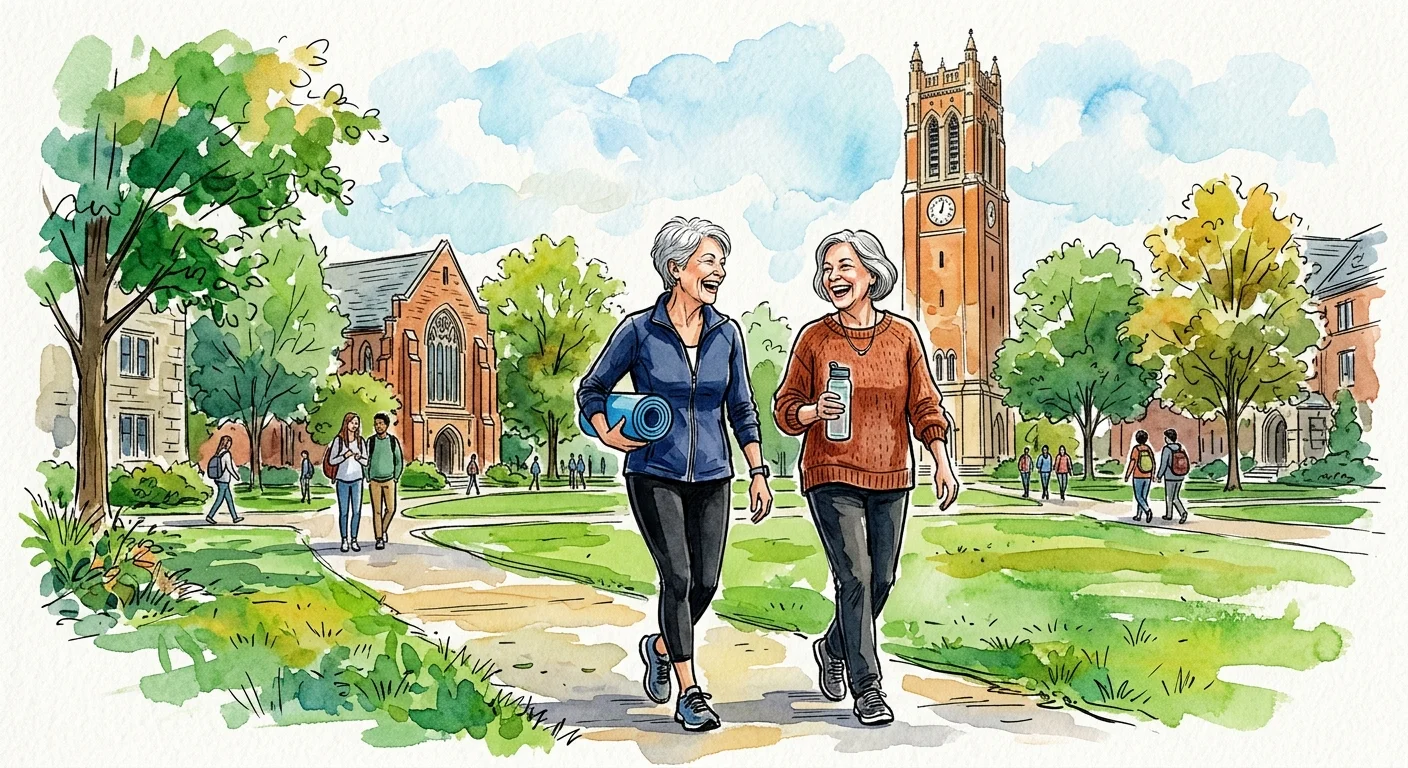
Beyond the profound structural benefits to your brain, immersive campus life fundamentally disrupts the growing national epidemic of senior isolation. Loneliness acts as a dangerous hazard in modern retirement, often accelerating physical deterioration. Attending rigorous seminars forces you out of your quiet house and into vibrant, highly structured social environments. You rapidly build meaningful connections with esteemed professors, fellow senior auditors, and ambitious young students. The university campus also grants you affordable access to expansive recreational facilities, climate-controlled indoor walking tracks, and specialized fitness programs specifically designed for older adults. You seamlessly weave physical activity into your daily academic routine, utilizing state-of-the-art wellness centers that far exceed the quality of typical municipal community gyms.
Expert Voices from the Fields of Finance and Gerontology
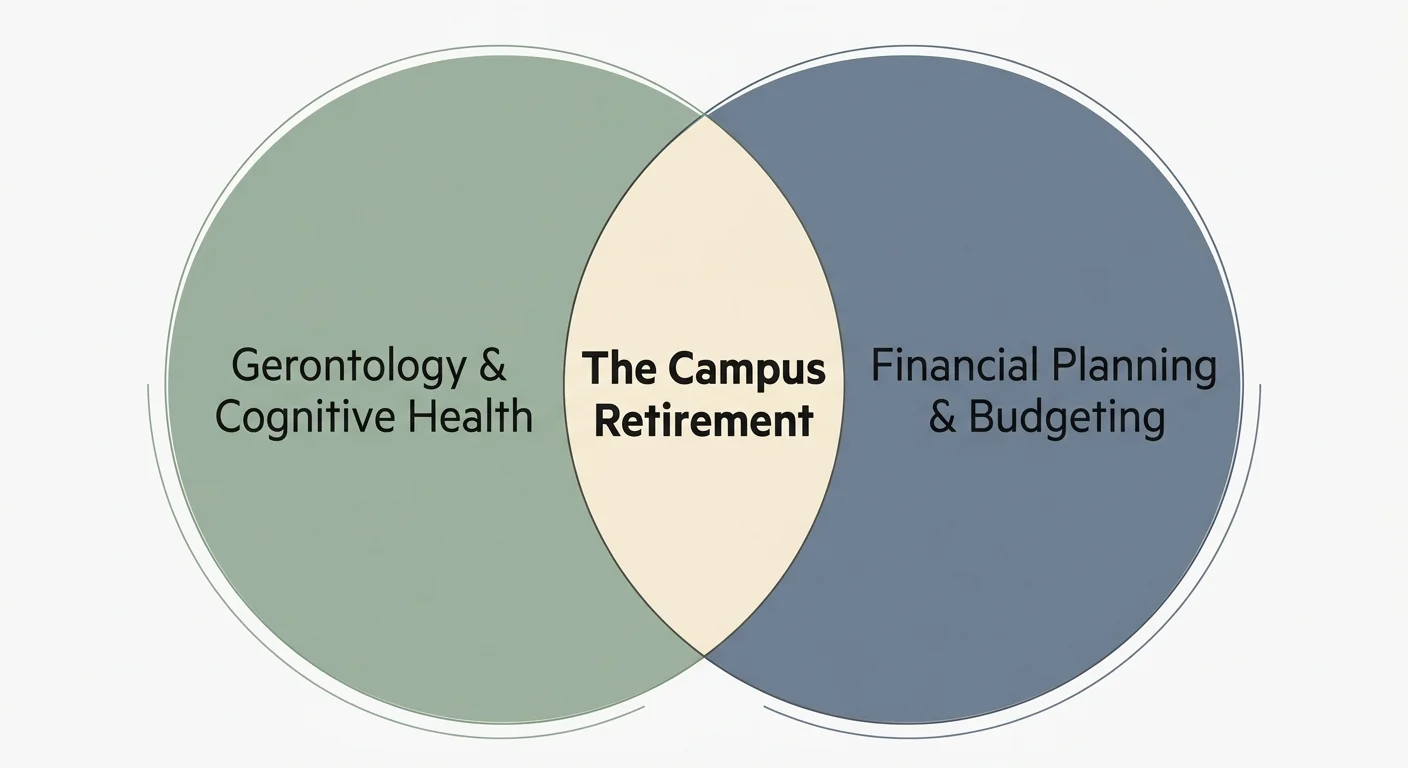
Financial advisors and professional gerontologists view campus-based retirement as one of the most effective strategies for aging well in today’s economy. Certified Financial Planner professionals emphasize that housing markets in established university towns tend to weather economic downturns much better than standard suburban developments. The permanent presence of a major educational facility creates a robust local economy, effectively stabilizing local property values and ensuring your home equity remains secure. From a financial perspective, viewing a prominent university as your primary recreation center dramatically lowers your required withdrawal rate from your vulnerable retirement accounts. You successfully replace expensive tropical cruises with practically free academic lectures, student theater performances, and affordable campus dining options.
Gerontologists focus heavily on the profound psychological momentum these academic environments consistently provide. Aging experts note that traditional, unstructured retirement often strips individuals of their daily routines, rapidly leading to a loss of personal purpose. Enrolling in regular classes immediately reinstates a healthy, predictable schedule. You have a tangible reason to wake up early, a detailed syllabus to follow, and engaging deadlines to meet. This low-stress accountability perfectly mirrors the most positive aspects of your working life without the associated corporate pressure. You successfully regain a thrilling sense of forward momentum.

Risks and Safeguards When Relocating for Education
Despite the overwhelming lifestyle benefits, integrating yourself into a bustling university town carries specific financial and medical risks that require careful navigation. If you plan to formally relocate across state lines to chase the perfect academic environment, you must heavily scrutinize your current healthcare coverage. Original Medicare works seamlessly nationwide, but if you utilize a private Medicare Advantage plan, moving to a new county might instantly remove you from your established medical provider network. You must visit Medicare.gov to thoroughly understand how changing your primary legal residence triggers a specific special enrollment period, allowing you to secure appropriate, in-network coverage in your new college town without facing dangerous gaps.
You also need to actively watch for predatory digital scams specifically targeting older adults seeking affordable educational opportunities. Modern fraudsters occasionally launch highly convincing fake senior scholarship portals designed to harvest your sensitive personal data and Social Security number. You must always navigate directly to the official educational domain of the specific institution rather than casually clicking through third-party search engine advertisements. Finally, guard yourself fiercely against the subtle lifestyle creep unique to affluent college towns. You must establish extremely strict boundaries on your daily discretionary spending to ensure your engaging campus excursions do not slowly erode your carefully planned monthly fixed-income budget.
Frequently Asked Questions About Senior Education Programs
Do I need previous college experience to enroll in these university programs?
You do not need a prior academic degree or any formal college experience to successfully participate in the vast majority of senior learning initiatives. Public universities explicitly design these inclusive programs to promote broad community enrichment, focusing entirely on your personal willingness to learn rather than your distant academic history. Admissions offices typically bypass standard requirements like standardized test scores or decades-old high school transcripts for senior auditors. You simply need to successfully demonstrate your current age, establish your legal state residency, and locate a desired class with open, available seats.
Will my audited university classes count toward a formal college degree?
When you officially audit a university class, you actively attend lectures and absorb the challenging material without receiving formal academic credit on a permanent transcript. You do not have to take stressful final examinations or submit lengthy term papers, but you also do not earn tangible credits toward a formal bachelor’s or master’s degree. If your specific retirement goal involves formally graduating and proudly hanging a hard-earned diploma on your wall, you must explicitly communicate this desire to the university registrar. Some progressive states allow older adults to take rigorous classes for actual academic credit at no cost, but this challenging path requires you to complete the standard admission process and fulfill all course grading requirements.
How do I find out if my local university offers these specific senior benefits?
Your most reliable, efficient path to discovering local educational programs involves directly contacting the main registrar’s office or the continuing education department of your nearest state university or community college. Because these specific tuition policies vary drastically at the state legislative level, overarching federal databases do not accurately capture every subtle nuance. Searching the specific university website using highly targeted terms like “senior citizen tuition waiver,” “lifelong learning institute,” or “guest auditor program” will typically direct you exactly to the correct application portal you need.
Are there strict age limits or legal residency requirements to qualify for tuition waivers?
Program eligibility heavily depends on your specific state legislation and the unique policies of the individual educational institution. Most state university systems firmly set the qualifying age between sixty and sixty-five years old. Additionally, because local state taxpayers fundamentally fund these massive public institutions, you almost always must legally prove continuous residency in that specific state for at least one full year prior to your initial enrollment. Private universities operate entirely independently of state laws and rarely offer universal free tuition, though many host specialized lifelong learning institutes. You must verify residency rules before moving across state borders to access these academic perks.
Take Action in the Next 48 Hours
Transforming your retirement from a quiet, passive retreat into a dynamic, engaging intellectual adventure rests entirely in your capable hands. You possess both the abundant free time and the rich, accumulated wisdom to engage with the complex world on a significantly deeper level than ever before. Take a dedicated moment right now to actively invest in your future self. Within the next forty-eight hours, firmly identify one public university or community college located within comfortable driving distance of your primary home. Call their main registrar’s office directly or search their official website for senior tuition waivers, and clearly write down the specific registration dates for the upcoming academic semester. You spent countless decades working incredibly hard to earn your absolute financial freedom; now you have the thrilling opportunity to spend that precious time expanding your mind and thriving on campus.