
Retiring as a veteran requires carefully balancing your hard-earned military pension with reliable access to comprehensive VA healthcare, and selecting the right location ensures your fixed income stretches much further. You can maximize your benefits by settling in communities that combine a low cost of living with proximity to top-tier medical centers. Recent legislative expansions make positioning yourself near high-quality veteran facilities more valuable than ever. While inflation pushes many retirees to compromise on their lifestyle, veterans possess unique advantages when choosing their forever home. By targeting specific states that offer military tax exemptions, robust base amenities, and thriving veteran communities, you protect your financial future while enjoying the comfortable, well-supported retirement you deserve.
Navigating the Current Retirement Landscape for Veterans
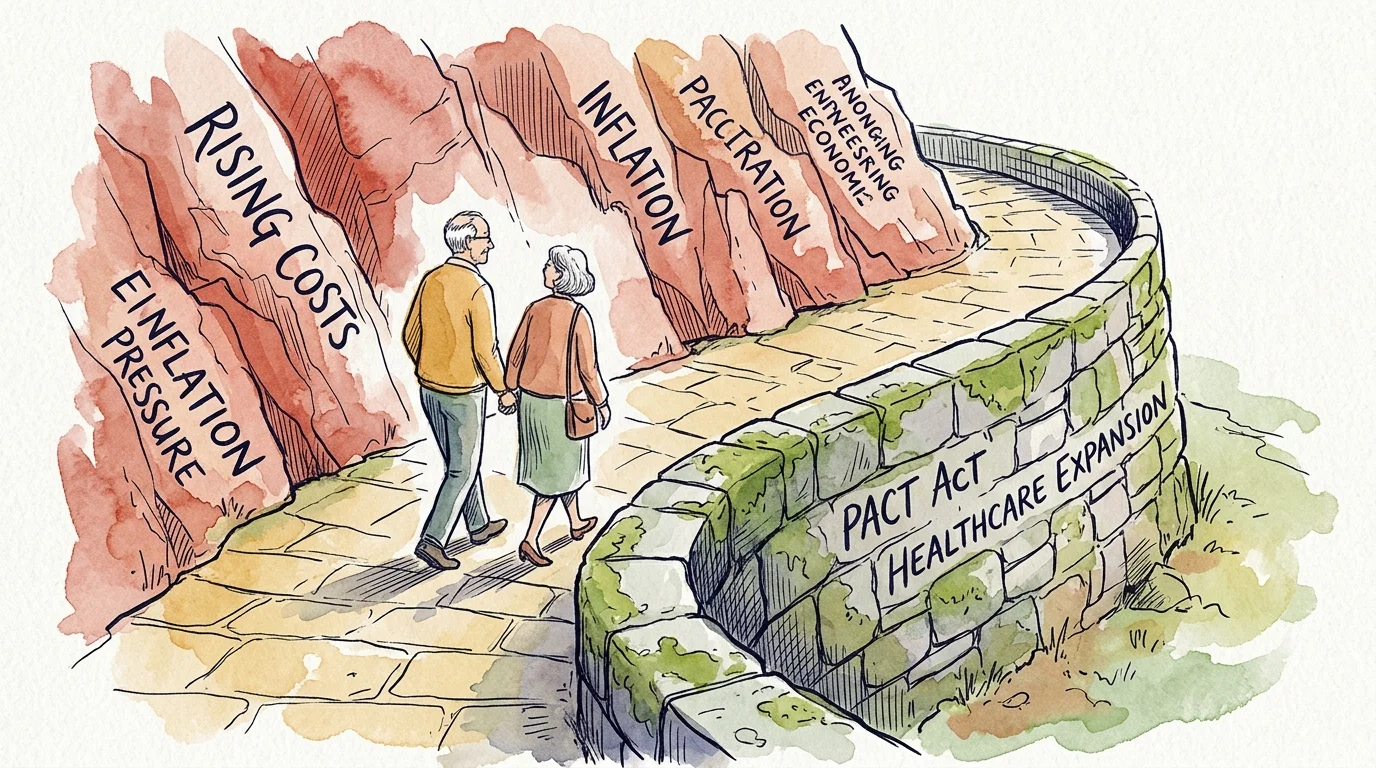
The economic environment for retirees shifts continuously, and military veterans face a unique set of challenges and opportunities. Rising housing costs and fluctuating interest rates place immense pressure on fixed incomes. Tracking Bureau of Labor Statistics data on consumer prices reveals that everyday expenses consume a larger portion of retirement pay than they did a decade ago. To combat this reality, you need a geographical strategy that shields your wealth.
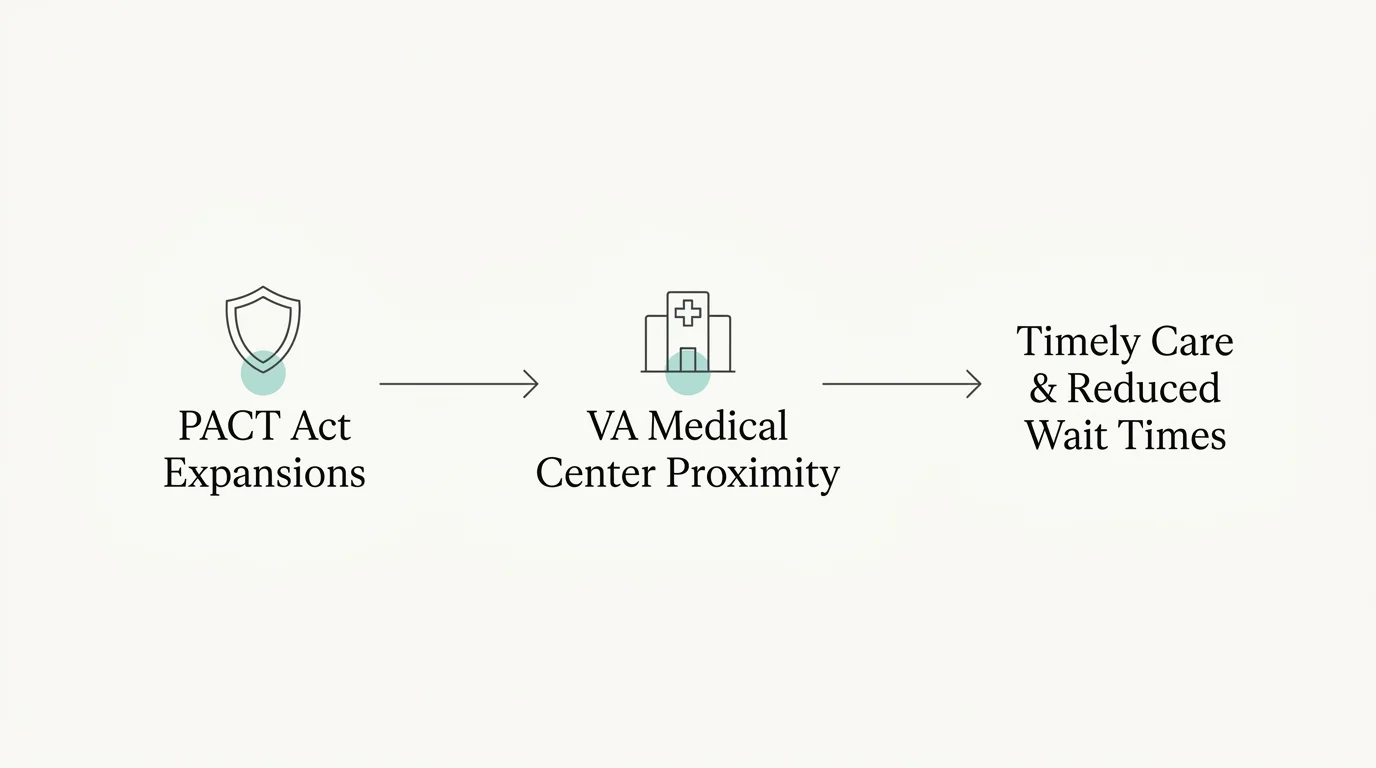
Simultaneously, the healthcare landscape for veterans is undergoing massive transformation. Following the passage of comprehensive toxic exposure legislation, millions of newly eligible veterans have entered the VA healthcare system. You can explore the recent expansions under the PACT Act to understand how these changes might impact your personal healthcare eligibility. While this expansion of benefits represents a monumental victory for the military community, it also means that wait times and facility capacities vary drastically from one city to another. Relocating to a town equipped with robust, well-staffed VA Medical Centers ensures you receive timely care without the stress of navigating an overburdened regional system.
Strategy Pillar: Income Planning and State Tax Benefits
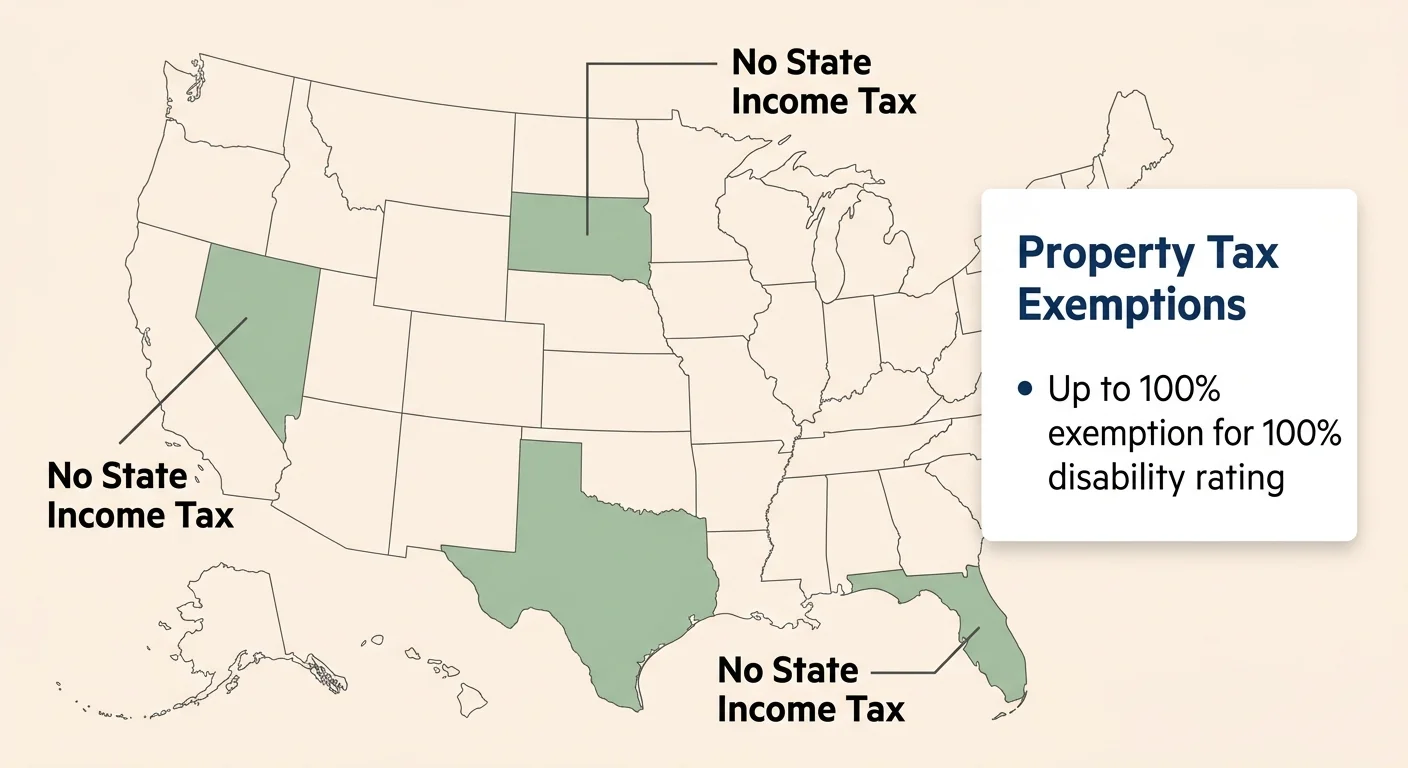
Protecting your monthly military pension stands as the most critical component of your retirement income plan. Your retirement location dictates exactly how much of your pension you get to keep. Currently, a significant number of states do not tax military retirement pay, allowing you to retain every dollar you earned through your service. States like Florida, Texas, Nevada, and South Dakota levy no state income tax at all, making them highly attractive to veterans looking to maximize their monthly cash flow.
Beyond state income taxes, local property tax exemptions offer a massive financial safeguard. Many states provide steep property tax discounts—or complete exemptions—for veterans with service-connected disabilities. For example, a veteran with a 100 percent permanent and total disability rating can often live entirely property-tax-free in states like Texas or Florida. Because tax codes change frequently, you must review the guidelines provided by the Internal Revenue Service alongside your chosen state’s department of revenue to accurately project your annual living expenses. Proper income planning transforms an average retirement budget into a deeply comfortable lifestyle.

Strategy Pillar: Lifestyle Design and Community Support
Retirement thrives on community, and military veterans benefit profoundly from living near installations that offer familiar support structures. Access to Morale, Welfare, and Recreation facilities, commissaries, and base exchanges dramatically reduces your grocery and entertainment costs. When evaluating potential retirement towns, consider how the local culture integrates its military population. Three specific locations currently stand out for their perfect blend of affordability, base access, and veteran appreciation.
San Antonio, Texas, widely known as Military City USA, offers an unparalleled retirement experience. Home to Joint Base San Antonio, the city provides endless base amenities and surrounds you with a massive community of fellow veterans. The lack of state income tax pairs beautifully with housing costs that sit below the national average. Furthermore, the presence of Brooke Army Medical Center guarantees access to some of the most advanced military medicine in the world.
Pensacola, Florida, delivers a coastal retirement dream without the exorbitant price tags typically associated with beachfront living. Often called the Cradle of Naval Aviation, Pensacola boasts a deep-rooted military culture centered around Naval Air Station Pensacola. Retirees here enjoy tax-free pension income, sunny weather, and immediate access to a dedicated naval hospital. The local economy caters heavily to retirees, offering numerous discounts and robust veteran service organizations.
Huntsville, Alabama, provides a slightly different, highly intellectual atmosphere anchored by the Redstone Arsenal. Known for its strong aerospace and defense industry presence, Huntsville is perfect for veterans seeking post-service employment or a quiet, deeply affordable southern lifestyle. Alabama does not tax military retirement pay, and Huntsville consistently ranks as one of the most affordable cities in the United States, offering sprawling suburban homes at a fraction of the cost you would find in coastal metropolitan areas.
Rapid City, South Dakota, offers a brilliant alternative if you prefer distinct seasons and stunning mountain landscapes over southern heat. Anchored by Ellsworth Air Force Base, Rapid City provides full base amenities, a thriving veteran community, and zero state income tax. The cost of living remains low, and the proximity to the Black Hills offers endless outdoor recreation for active retirees.
Strategy Pillar: Health, Wellness, and VA Healthcare Access
Your physical well-being dictates your quality of life in retirement, making geographic proximity to healthcare a non-negotiable priority. When researching veteran retirement towns, you must differentiate between comprehensive VA Medical Centers and smaller Community-Based Outpatient Clinics. While outpatient clinics handle routine care perfectly well, major medical centers provide specialty services, emergency care, and advanced surgical units.
Choosing a town with a fully equipped VA Medical Center safeguards you against the physical and financial tolls of traveling long distances for complex care. Additionally, you must consider the Community Care Network. Under recent VA legislation, if you live too far from a VA facility or face excessively long wait times, the VA will authorize you to see civilian providers in your local community. Moving to a town with a dense network of high-quality civilian specialists ensures that even if the VA system faces backlogs, your health never takes a back seat.

Expert Voices on Crafting a Meaningful Military Retirement
Financial security provides the foundation of retirement, but emotional and psychological preparation builds the house. Transitioning away from the structured environment of the military requires intentional lifestyle design. Relying on certified financial planning professionals can help you integrate your TRICARE benefits, military pension, and Social Security into a cohesive tax strategy.
Gerontologists and aging researchers consistently emphasize the importance of social integration for older adults. Veterans face a unique risk of social isolation when they separate from the tight-knit camaraderie of their units. By choosing to retire in towns with strong veteran populations and active service organizations, you naturally protect your mental health. Engaging with fellow veterans who share your background and values provides a critical sense of purpose and belonging, which research shows directly contributes to cognitive longevity and overall life satisfaction.

Risks and Safeguards to Protect Your Veteran Benefits
While maximizing your benefits remains crucial, you must aggressively protect those benefits from exploitation. Pension poaching scams represent a massive threat to the veteran community. Unscrupulous individuals and supposed advisory firms often target older veterans, offering to help them maximize their VA disability or Aid and Attendance claims in exchange for hefty, illegal fees. You should never pay for assistance with a VA claim; accredited Veteran Service Officers provide these services entirely free of charge.
Another critical risk involves the healthcare benefit cliff and the misunderstanding of how VA healthcare interacts with Medicare. Many veterans mistakenly believe that carrying VA healthcare means they do not need to enroll in Medicare Part B. Failing to enroll in Medicare Part B when you become eligible can result in severe permanent financial penalties. Furthermore, VA healthcare is subject to priority group funding limitations, meaning coverage could theoretically shift based on federal budgets. Maintaining both systems creates an impenetrable safety net for your health.
Frequently Asked Questions About Veteran Retirement Towns
Do I need to enroll in Medicare if I already have full VA healthcare coverage?
Yes, you absolutely should enroll in Medicare Part A and Part B when you turn 65, even if you receive all your care at a VA facility. VA healthcare is not technically an insurance policy; it is a healthcare delivery system based on priority groups and federal funding. If Congress ever reduces funding or alters eligibility, you could lose access to certain services. Additionally, if you experience a medical emergency and are taken to a non-VA civilian hospital, having Medicare prevents you from facing catastrophic out-of-pocket bills. Delaying your Part B enrollment will also trigger a permanent late enrollment penalty if you decide to sign up later.
How do property tax exemptions work for disabled veterans?
Property tax exemptions vary dramatically by state and sometimes even by individual county. Generally, you must provide your official VA disability rating letter to your local county tax assessor’s office. Many states offer a sliding scale, where a 10 percent rating grants a small deduction, while a 100 percent permanent and total rating eliminates your primary home’s property tax entirely. You must file this paperwork locally; it does not happen automatically when the VA issues your rating. Always consult your county’s specific deadlines to ensure you do not miss a year of valuable tax relief.
Can I use base amenities like the commissary if I served but did not retire from the military?
The rules governing base access expanded significantly in recent years. Today, veterans with a service-connected disability rating of zero percent or higher, Purple Heart recipients, former prisoners of war, and individuals approved for the comprehensive assistance for family caregivers program can access commissaries, military exchanges, and morale, welfare, and recreation retail facilities. You simply need a Veteran Health Identification Card that displays your eligibility status to gain entry to these money-saving installations.
What happens if I need specialized care that my local VA hospital cannot provide?
If your local VA medical center lacks the specific specialists you need, or if the wait time for an appointment exceeds acceptable federal standards, you are eligible for the VA Community Care Network. This program allows the VA to authorize and pay for you to see an approved civilian provider in your local area. Before making an appointment with a civilian doctor, you must receive prior authorization from the VA to ensure the service will be fully covered. You can learn more about navigating civilian care through trusted AARP resources for military families, which offer extensive guides on maximizing overlapping healthcare systems.
Your Next Steps
Selecting the ideal veteran retirement town requires balancing financial realities with your personal lifestyle preferences. You now possess the knowledge to evaluate communities based on tax advantages, healthcare access, and the presence of invaluable base amenities. Do not wait for retirement to arrive before you start organizing your geographic strategy. Over the next forty-eight hours, take one concrete step toward your goal—look up the military pension tax laws for your top three destination states, or log into the VA portal to download your current benefit summary letter. Taking control of these details today guarantees a smoother, wealthier, and more fulfilling transition into your post-service life.