
Smart purchase timing can save you thousands of dollars each year on major home and lifestyle essentials. When you live on a fixed income, coordinating your spending around retail markdown cycles protects your hard-earned nest egg.
Retailers follow predictable inventory clearance patterns throughout the year to make room for newer merchandise. You can capitalize on these seasonal shifts to acquire premium appliances, comfortable furniture, and reliable transportation for substantially less.
This comprehensive guide reveals the exact months to schedule your major purchases so you keep more money in your pocket.

Aligning Major Purchases With Your Fixed Income
Modern retirement requires intentional cash flow management, especially as inflation alters everyday household living costs.
According to spending surveys from the Bureau of Labor Statistics, housing and home maintenance represent the largest expenditure category for older Americans.
When a major appliance breaks down unexpectedly, purchasing an immediate replacement at full retail price strains your monthly budget.
Emergency purchases often force retirees to pull extra money from taxable retirement accounts, potentially triggering higher income tax brackets.
Proactive purchase timing transforms these disruptive financial emergencies into planned, deeply discounted home improvements.
Coordinating your purchases with predictable seasonal markdowns shields your long-term savings from unnecessary portfolio withdrawals.
Establishing an intentional shopping timeline lets you preserve liquidity while maintaining high standards of comfort and safety at home.
This strategic discipline grants you greater freedom to enjoy your retirement years without lingering financial anxiety.
The Major Appliance Calendar: Refrigerators, Washers, and Ranges
Appliance manufacturers follow rigid annual release schedules that dictate when retail showrooms slash prices nationwide.
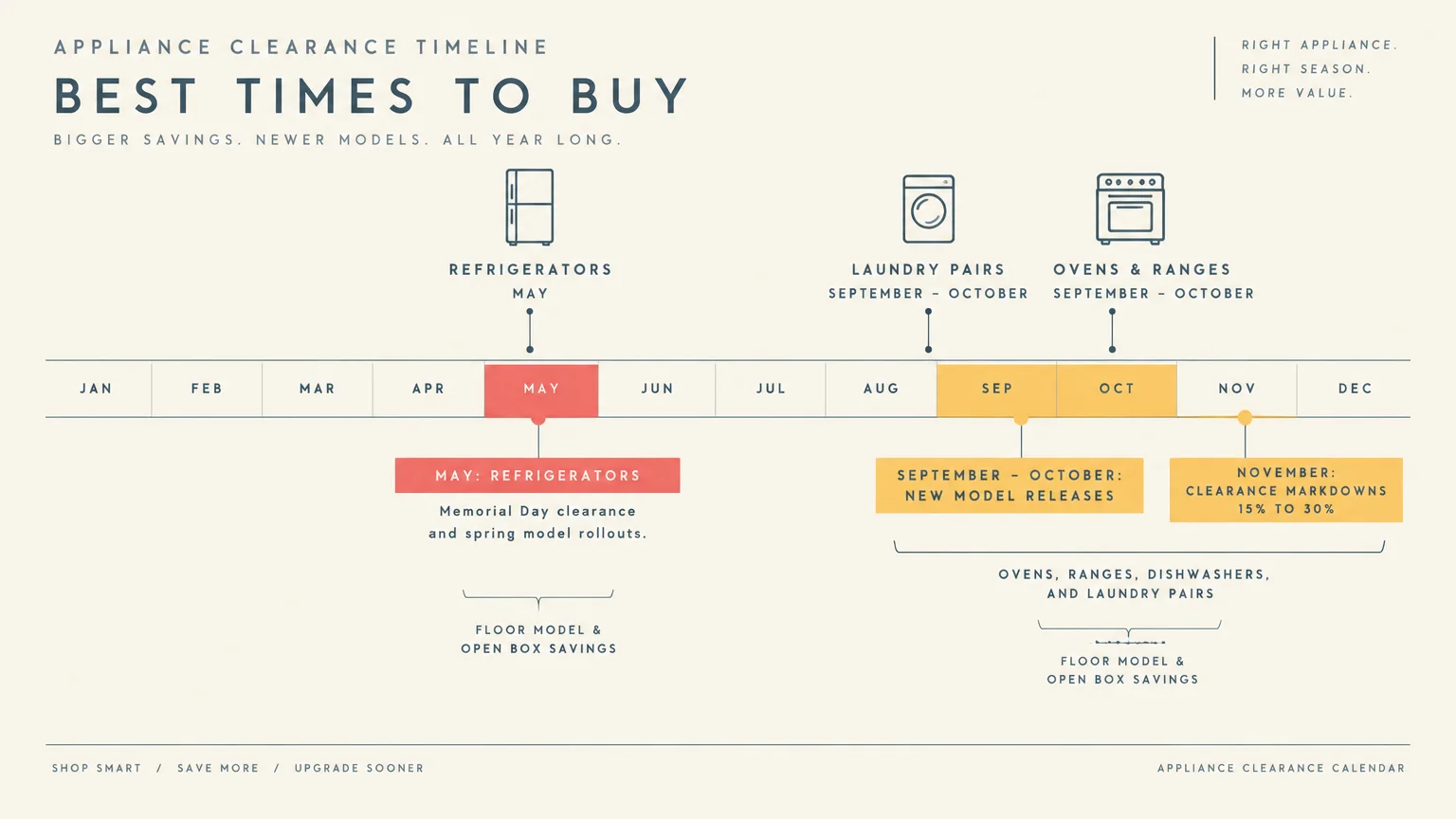
For ovens, ranges, dishwashers, and laundry pairs, manufacturers unveil new models each September and October.
Retailers clear out existing floor models and warehouse stock by offering discounts between 15% and 30% through November.
You can secure substantial savings on durable washers and induction ranges by shopping during this autumn window.
Refrigerators, however, represent a major exception to the traditional autumn clearance cycle.
Refrigeration brands introduce their brand-new models during late spring rather than the fall.
Consequently, May serves as the single best month to purchase a new refrigerator at a steep markdown.
Retailers combine seasonal refrigeration clearances with Memorial Day promotions, creating optimal buying opportunities for your kitchen.
Shopping during these designated clearance months also gives you extra leverage to negotiate free local delivery and haul-away services.
Ask retail managers for floor models or cosmetically blemished units to unlock additional markdowns on top of clearance pricing.
Maximizing Federal Energy Tax Credits and Electrification Rebates
Smart timing allows you to pair seasonal retail markdowns with generous federal clean-energy incentives.
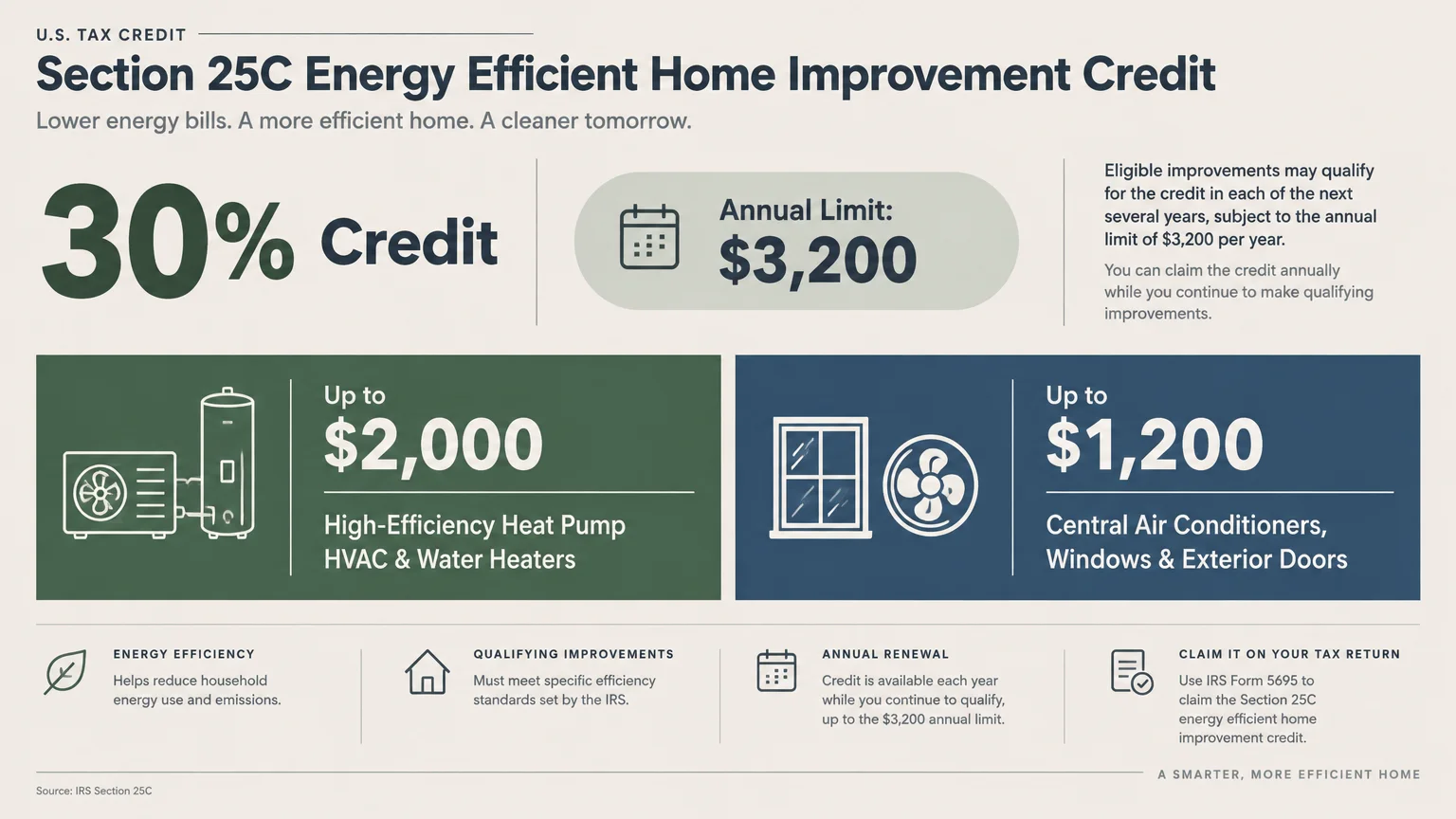
Under Section 25C of the federal tax code, the Internal Revenue Service provides the Energy Efficient Home Improvement Credit.
This provision lets homeowners claim 30% of qualified upgrade costs up to an annual limit of $3,200.
You can claim up to $2,000 for high-efficiency heat pump HVAC systems and heat pump water heaters.
The credit also provides up to $1,200 annually for efficient central air conditioners, replacement windows, and exterior doors.
Low-to-moderate-income retirees can access even larger financial relief through state-administered electrification programs.
The Home Electrification and Appliance Rebates program, supported by the U.S. Department of Energy, targets households earning under 150% of the Area Median Income.
Qualifying retirees can secure point-of-sale rebates covering up to $8,000 for whole-home heat pump installations.
The program also awards up to $1,750 for heat pump water heaters and $840 for electric or induction cooktops.
Because these rebates cap at $14,000 per household, combining them with seasonal retail sales drastically slashes your total out-of-pocket costs.
Consult with participating local contractors to verify that your selected equipment models qualify for both state and federal rebates.

Indoor and Outdoor Furniture: Navigating Showroom Restocking Cycles
The furniture industry operates on a biannual cycle that directly impacts showroom pricing and floor-model availability.
Designers and manufacturers introduce brand-new indoor collections twice each year, specifically in February and August.
To prepare showroom floors for incoming designs, retailers liquidate previous inventory during January, February, July, and August.
During these restocking months, you will routinely find showroom discounts ranging from 10% to 60% off original retail tags.
These months provide the best timing to purchase supportive sofas, ergonomic armchairs, and durable bedroom sets for your home.
Outdoor patio furniture follows a completely different schedule tied directly to warm-weather consumer habits.
Retailers begin marking down patio sets, umbrellas, and barbecue grills immediately following the Fourth of July.
These patio clearances reach their highest discounts between Labor Day weekend and late September.
Retail managers aggressively discount remaining outdoor stock during September to clear valuable floor space for autumn and winter goods.
Shopping in late September lets you furnish your deck or patio at exceptional savings ahead of the pleasant autumn months.
Inspect floor models thoroughly for structural integrity before purchasing, ensuring cushions and reclining mechanisms function smoothly.

Timing Consumer Electronics and Vehicle Purchases
High-ticket electronics follow predictable seasonal discounting patterns that peak around major entertainment and holiday milestones.
Television manufacturers deliver their deepest discounts during late November across Black Friday and Cyber Week sales.
A second major buying window opens during the two to three weeks leading up to the annual Super Bowl.
Retailers discount large-screen displays throughout January and early February to clear inventory ahead of spring product rollouts.
If your retirement plans include replacing an aging vehicle, time your purchase during the fourth quarter of the calendar year.
Auto dealerships offer substantial manufacturer rebates and dealership markdowns between October and late December.
Sales teams face intense pressure to hit annual sales targets and earn substantial factory volume bonuses before year-end.
Dealerships also want to sell remaining outgoing model-year vehicles to avoid paying year-end inventory taxes on January first.
Shopping during the final two weeks of December provides unmatched bargaining leverage for price reductions and favorable financing.
Target weekday mornings late in the month when showroom foot traffic remains quiet and sales representatives can focus on negotiation.

Everyday Senior Discounts and Retail Programs
In addition to major seasonal clearances, regular senior discount days offer dependable recurring savings on household goods.
Department store Kohl’s offers a dedicated 15% in-store discount every Wednesday for customers aged 60 and older.
Ross Dress for Less operates its Every Tuesday Club, granting a 10% in-store discount to shoppers aged 55 and up.
Craft and home accent retailer Michaels provides a 10% daily discount for seniors who register through their digital loyalty program.
You can also utilize member savings through organizations like AARP to secure discounts on travel and home services.
Stacking these weekly senior discounts with in-store promotional coupons creates substantial compounding savings for your ongoing budget.
Always ask local retailers whether they provide unadvertised age-based discounts before completing any in-store checkout transaction.

Strategic Purchasing Pillars for a Thriving Retirement
Managing big purchases effectively requires looking beyond immediate sales tags to protect your overall retirement lifestyle.
Pillar One: Income Planning and Capital Preservation
Financial planners caution that ill-timed large expenditures can force untimely withdrawals during broad financial market downturns.
Liquidating portfolio assets during down markets locks in losses and accelerates the risk of premature portfolio depletion.
To safeguard your investments, establish a dedicated sinking fund within a high-yield savings account for major replacements.
Funding this cash reserve incrementally ensures you can pay cash during optimal seasonal discount windows without disrupting retirement income.
Certified financial planners recommend maintaining three to six months of expected large-ticket repair reserves in liquid accounts.
Pillar Two: Lifestyle Design and Aging in Place
Strategic shopping allows you to select products that actively support your physical comfort and long-term independence at home.
Gerontologists emphasize that properly designed living spaces reduce fall risks and help older adults remain safely in their homes.
Target your seasonal furniture shopping toward supportive ergonomic armchairs, power-lift recliners, and firm, supportive mattresses.
Choosing items with easy-to-operate controls and accessible dimensions enhances your daily living comfort for years to come.
Prioritizing durable materials reduces future maintenance demands, leaving you with fewer home management chores as you age.
Pillar Three: Health, Wellness, and Home Safety
Modernizing core home infrastructure directly protects your physical health and daily wellness throughout your retirement years.
Upgrading to modern HVAC systems maintains stable indoor air quality, which directly benefits respiratory health and cardiovascular comfort.
Schedule major HVAC installations during spring or autumn shoulder seasons when heating and cooling contractors offer discounted labor rates.
Off-peak contractor scheduling ensures thorough, attentive installation quality while saving you money on necessary home mechanical upgrades.
Reliable heating and cooling systems also prevent dangerous indoor temperature extremes during severe summer and winter weather events.

Safeguards: Protecting Yourself From Retail Pitfalls
While seasonal clearance sales deliver genuine bargains, deceptive merchandising tactics can easily derail your frugal retirement spending plan.
The Federal Trade Commission warns buyers against artificial original prices designed to make discounts look inflated.
Retailers sometimes raise list prices weeks before a promotional holiday event to make standard markdowns seem extraordinarily deep.
You should monitor prices across multiple competing retailers for several weeks prior to making any significant financial commitment.
Be skeptical of pushy showroom sales tactics encouraging costly extended warranties on newly purchased appliances and electronics.
Most modern appliances already include comprehensive manufacturer warranties, and premium credit cards frequently offer complimentary warranty extensions.
Always examine hidden costs like freight delivery charges, uncrating fees, professional installation, and old appliance removal fees.
Clarify these extra ancillary expenses upfront so unexpected delivery charges do not eliminate your hard-won clearance savings.
Review the retailer return policy carefully, noting whether returning an unsatisfactory item incurs a 15% or 20% restocking fee.
Guard your personal financial data diligently by avoiding unfamiliar online storefronts that advertise unrealistically cheap prices during major holidays.
Frequently Asked Questions
How far in advance should I start tracking prices on a major purchase?
Begin tracking prices two to three months before your target seasonal clearance window opens.
This tracking window allows you to identify baseline pricing trends and spot artificial markdowns quickly.
Online browser extensions and price-history trackers can automatically notify you when target items hit historical lows.
Are holiday weekend sales genuinely better than seasonal inventory clearances?
Holiday sales offer respectable discounts, but seasonal inventory clearances consistently provide much deeper price reductions.
Retailers mark down discontinued models more aggressively when clearing valuable showroom floor space for incoming inventory.
Combining holiday promotional financing with clearance markdowns, however, can provide optimal value if you pay off the balance promptly.
Can I combine federal clean-energy tax credits with seasonal retail sales?
Yes, you can pair federal tax credits and state electrification rebates directly with store clearance prices.
Stacking these government incentives on top of seasonal retailer sales often reduces your final cost by half.
Keep detailed purchase receipts and contractor invoices in your tax files to substantiate your claims during filing season.
What should I do if a critical appliance breaks outside its clearance window?
Ask local appliance showrooms for floor models, customer returns, or scratch-and-dent units that carry immediate markdowns.
You can also hire a trusted technician for a minor repair to bridge the gap until the next seasonal sale.
Many regional independent appliance dealers maintain dedicated clearance outlets with substantial year-round inventory markdowns.
Take Action in the Next 48 Hours
Take control of your household budget today by conducting a thorough audit of your home equipment and furnishings.
Within the next 48 hours, list any major appliances, furniture pieces, or vehicles that you must replace over the next two years.
Match each needed item with its optimal clearance month as outlined throughout this seasonal shopping guide.
Open a dedicated high-yield savings account to begin accumulating cash for these planned seasonal purchases gradually.
Taking this simple planning step today shields your retirement wealth from retail markups and sudden financial stress tomorrow.
Timing your major purchases with patience and precision lets you live comfortably while keeping your retirement nest egg safe and secure.