A $40,000 annual retirement budget unlocks an abundant, upscale lifestyle when you move beyond expensive domestic housing markets. Drawing roughly $3,333 each month transforms you from a budget-conscious retiree into an affluent resident in select international destinations.
You can comfortably fund private healthcare, modern housing, weekly dining, and domestic housekeeping without exhausting your nest egg. Strategic geographic arbitrage bridges the gap between fixed-income realities and your long-term lifestyle aspirations.
By choosing locations with favorable living costs and accessible residency visas, your retirement years will feel undeniably luxurious.
The Economics of Modern Geographic Arbitrage
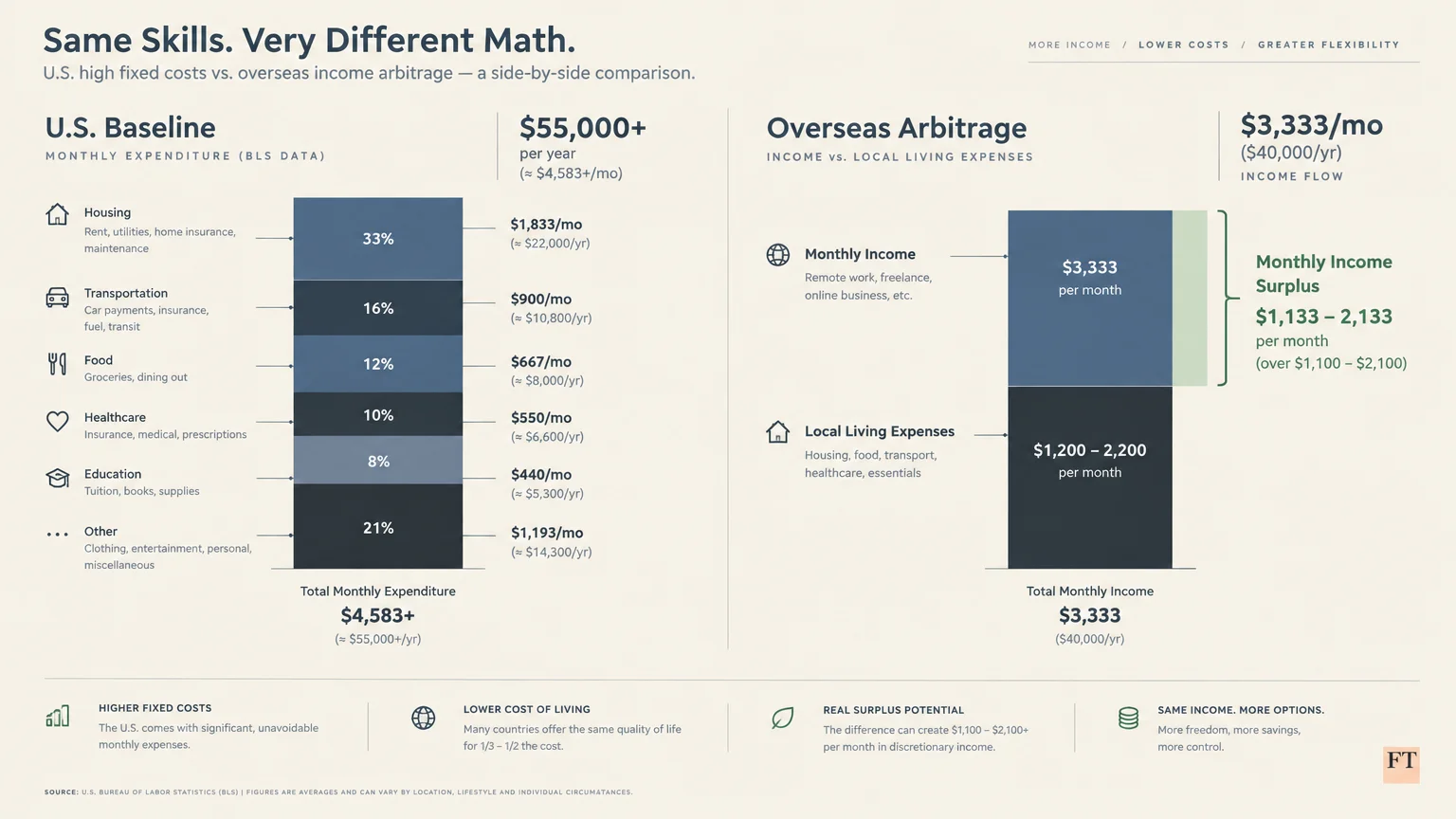
According to the Bureau of Labor Statistics, average annual expenditures for older American households consistently exceed $55,000. That figure forces many retirees to make painful compromises on recreation and wellness.
When you relocate overseas, your purchasing power multiplies. In destinations where local living costs range between $1,200 and $2,200 monthly, an income of $3,333 per month provides an extraordinary surplus.
The Social Security Administration reports that the typical retired worker receives around $1,900 per month. A couple pooling two modest checks easily hits or exceeds the $40,000 benchmark.
This income surplus unlocks daily conveniences that would cost a fortune in major American cities. You can afford weekly personal services, farm-to-table dining, and high-tier medical consultations while watching your savings account grow.


Three Strategic Pillars for Retiring Well on $40,000
1. Proactive Income Planning
Currency exchange fluctuations can suddenly disrupt an otherwise balanced budget. You can mitigate this volatility by choosing dollarized economies, which eliminate expensive transfer conversion penalties.
You must also consult guidelines from the Internal Revenue Service regarding foreign income reporting and tax treaties. Understanding tax classifications protects your nest egg from unexpected double-taxation surprises.
2. Intentional Lifestyle Design
True wealth in retirement stems from time freedom and vibrant social connection rather than sprawling square footage. Prioritize walkable towns that offer rich community activities, cultural centers, and robust public transit systems.
Hiring domestic help for cooking and cleaning costs a fraction of domestic rates in these destinations. Delegating routine household chores preserves your physical energy for active hobbies, fitness, and exploration.
3. Health and Preventive Wellness
Healthcare inflation represents the greatest long-term threat to any fixed retirement budget. Many countries offer world-class, internationally accredited hospitals with out-of-pocket prices up to 80% below American rates.
Remember that standard coverage through Medicare does not cover medical treatment outside the United States. You must budget for comprehensive international private insurance or local public health programs.

8 Destinations Where $40K Buys a Million-Dollar Lifestyle
1. Cuenca, Ecuador
Cuenca combines stunning UNESCO-listed colonial architecture with spring-like mountain weather throughout the entire year. The city uses the U.S. dollar, which protects your monthly income from foreign exchange swings.
Ecuador’s retirement visa requires proof of a lifetime monthly pension equal to three times the Unified Basic Salary. That sets the monthly income bar at $1,446, well below your $3,333 budget.
A retired couple can live comfortably here for $1,400 to $1,800 monthly, including housing and groceries. Under the Ley del Anciano, seniors enjoy 50% discounts on public transit, utilities, and cultural events.
2. Boquete, Panama
Boquete sits in Panama’s lush western highlands, offering cool breezes, dramatic mountain scenery, and an established expat community. Panama also uses the U.S. dollar as legal tender, making financial transactions seamless.
The country’s famous Pensionado Visa requires a guaranteed lifetime pension of only $1,000 per month. Couples can maintain an upscale lifestyle in Boquete for approximately $1,800 to $2,500 monthly.
Panama’s Law 6 grants extraordinary legal discounts to visa holders. You will receive 25% off restaurant meals, 30% off public transportation, and up to 20% off medical consultations and prescription medications.
3. Chiang Mai, Thailand
Chiang Mai offers a serene mountain backdrop, historic Buddhist temples, and some of the finest cuisine in Asia. Modern infrastructure and world-class private hospitals make it an exceptional haven for retirees.
To obtain a Thai retirement visa at age 50, you must demonstrate monthly pension income of 65,000 Thai Baht. That equates to roughly $1,800 to $1,950 per month, leaving substantial disposable income.
A modern, fully serviced condominium rents for just $350 to $700 per month in prime neighborhoods. Total monthly living costs range from $1,200 to $1,800, allowing regular spa visits and fine dining.
4. Atenas and Grecia, Costa Rica
Costa Rica’s Central Valley towns of Atenas and Grecia offer an agreeable climate known as eternal spring. These communities provide rolling agricultural hills, clean mountain air, and easy access to top hospitals in San José.
The Pensionado residency permit demands a lifetime guaranteed pension of just $1,000 monthly. Couples can live exceptionally well across the Central Valley for between $1,800 and $2,500 each month.
Approved residents must join the Costa Rican Social Security System, known as the CAJA. A sliding-scale contribution of 9% to 11% of reported income provides universal access to public clinics and hospitals.
5. Pereira and Medellín, Colombia
Colombia’s Coffee Axis offers temperate weather, dramatic green landscapes, and modern urban centers like Pereira. Nearby Medellín provides cosmopolitan living, sophisticated culinary options, and high-ranked medical institutions.
Colombia’s Migrante M pension visa requires a verified monthly income equal to three times the national minimum wage. That threshold equals roughly $1,200 to $1,400 monthly, depending on prevailing currency exchange rates.
A retired couple can rent a luxury high-rise apartment and dine out frequently for $1,400 to $2,000 monthly. You can afford daily domestic cleaning and fitness trainers while spending far less than your income.
6. Dumaguete, Philippines
Dumaguete is a coastal university city renowned for its gentle pace of life, friendly residents, and seaside promenades. English is spoken everywhere, ensuring effortless communication in medical facilities and daily shopping.
The Philippine Retirement Authority administers the Special Resident Retiree’s Visa for individuals aged 50 and older. Retirees with an $800 monthly pension need only make a refundable qualifying bank deposit of $15,000.
Expat couples enjoy comfortable living with private household staff for between $1,200 and $1,600 monthly. Your remaining cash flow easily funds diving trips, island travel, and comprehensive private medical care.
7. Kuching, Sarawak, Malaysia
Kuching combines pristine rainforest surroundings with clean, safe streets and sophisticated British colonial heritage. The autonomous state of Sarawak administers the welcoming S-MM2H visa, which avoids the steep financial hurdles of federal programs.
Applicants aged 30 and older must demonstrate offshore monthly income of RM 10,000, roughly $2,300, for singles. Alternatively, you can satisfy the requirement by placing a fixed deposit of RM 150,000 in Sarawak.
Couples live luxuriously for $1,400 to $2,000 monthly, enjoying world-class dining and spotless private medical facilities. English is widely spoken throughout the state, minimizing everyday administrative stress.
8. Castelo Branco, Portugal
While coastal hot spots like Lisbon and Porto have become costly, central Portuguese hubs like Castelo Branco remain remarkably affordable. This historic town features cobblestone streets, castles, and a relaxed, welcoming pace of life.
Portugal’s D7 visa requires passive income matching the minimum wage, which rose to €870 per month in 2025. Adding a spouse brings the requirement to roughly €1,305 monthly, well below your earnings.
Portugal ended its 10% flat-tax Non-Habitual Resident regime for standard retirees on January 1, 2024. However, inland living costs of €1,800 to €2,400 monthly leave ample funds to manage progressive national income taxes.

Important Caveat: Why Mexico No Longer Fits the $40K Budget
Mexico has long served as the primary destination for cost-conscious North American retirees. However, steep annual increases in the Mexican minimum wage have drastically altered solvency standards for residency.
Most consulates now require a monthly income between $3,800 and $4,300 for a Temporary Resident Visa. Consequently, a retiree relying strictly on a $40,000 annual income will no longer qualify on income alone.
You can still qualify if you maintain substantial liquid investment balances exceeding $70,000 over a full year. Without those savings, you must look to the more accessible alternatives outlined above.

Expert Voices on International Retirement Planning
Financial planners emphasize that geographic arbitrage works best when you approach it with clear financial discipline. Currency swings and shifting foreign tax policies can quickly affect your purchasing power.
Dr. Elena Morales, a gerontologist specializing in healthy aging, highlights the cognitive advantages of international relocation. Adapting to a fresh cultural environment stimulates neuroplasticity and fosters social engagement among older adults.
Certified Financial Planner Marcus Vance advises keeping an emergency reserve in a domestic bank account. Maintaining six months of expenses in liquid funds prevents costly panic when unexpected travel needs arise.
Veteran expats frequently observe that social integration matters far more than low prices. Learning local conversational customs and volunteering builds a supportive community that money alone cannot buy.

Essential Safeguards: Avoiding Common Expat Pitfalls
Relocating abroad requires careful preparation to protect both your health and your financial security. You must anticipate bureaucratic hurdles, medical transitions, and potential international consumer scams.
International real estate scams frequently target newly arrived foreign retirees. Never buy property immediately upon arrival; rent for at least twelve months to understand neighborhood dynamics and seasonal shifts.
Benefit cliffs represent another hidden financial risk for unsuspecting retirees. Crossing specific local income thresholds can suddenly subject your worldwide income to foreign wealth or progressive taxes.
Healthcare transitions require equal vigilance from prospective expats. The AARP recommends securing global health insurance with medical evacuation coverage before departing American soil.
Establish relationships with bilingual legal and tax professionals in your host country. Professional guidance ensures full compliance with evolving immigration codes and prevents costly administrative penalties.
Frequently Asked Questions
Can I still collect my full Social Security benefits while living abroad?
Yes, American citizens can receive Social Security payments in most countries worldwide through direct international bank deposits. You should review federal restrictions regarding specific sanction zones before planning your overseas move.
How do I handle routine banking and currency conversion?
Maintain a primary U.S. bank account that refunds international ATM surcharges and foreign transaction fees. Use specialized transfer platforms to convert funds at mid-market rates rather than high-fee commercial banks.
Will I lose my Medicare coverage if I establish foreign residency?
You will not lose your Medicare eligibility, but standard Medicare will not pay for overseas treatment. Many retirees maintain Medicare Part A while pausing or keeping Part B for return visits.
Is it possible to retire abroad if I have mobility limitations?
Many international cities feature cobblestones and narrow sidewalks that challenge wheelchair users. However, hiring dedicated personal caregivers costs a fraction of domestic care, offering superior one-on-one personal assistance.
Your Next Steps: The 48-Hour Challenge
You do not need millions in the bank to enjoy an extraordinary, fulfilling retirement. A modest $40,000 annual budget provides genuine luxury when you choose the right global destination.
Take your first concrete step within the next 48 hours. Review your most recent retirement income statements and compare your monthly cash flow against the entry requirements of your favorite destination.
Explore local housing rentals online, connect with expat groups, and begin mapping out your journey toward an affordable, elevated lifestyle.