
You spent decades saving diligently for the future, but shifting from asset accumulation to decumulation often sparks intense financial anxiety. Overcoming this hesitation unlocks the vibrant, secure retirement lifestyle you actually earned.
Data from the Employee Benefit Research Institute reveals that most retirees preserve the vast majority of their wealth well into their eighties. This wealth preservation often happens at the expense of lifelong health and personal joy.
Recognizing the boundary between prudent frugality and irrational fear empowers you to use your hard-earned assets purposefully. Let us explore the unmistakable warning signs that financial dread is secretly steering your retirement years.
The Shifting Economic Landscape of Modern Retirement
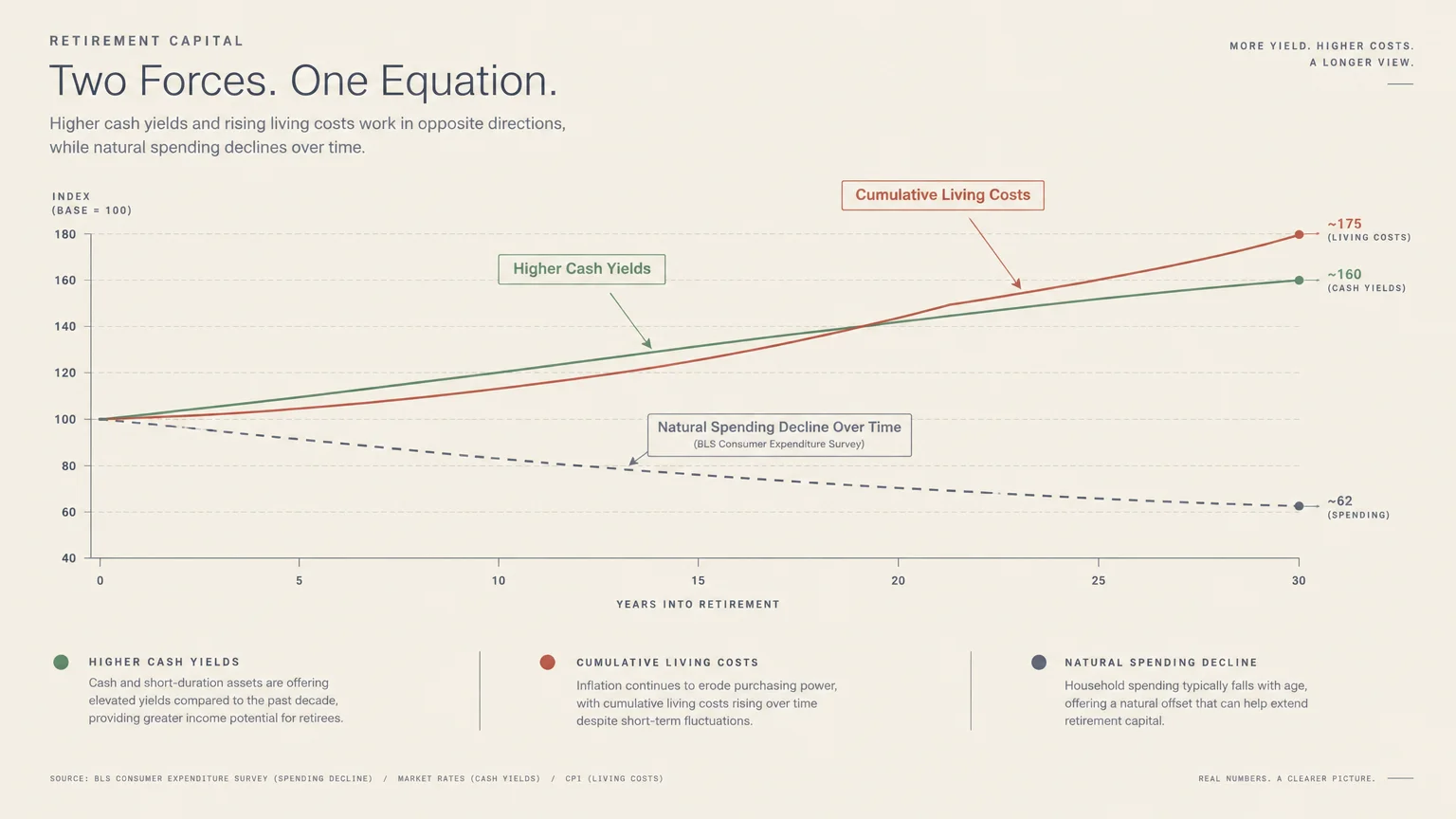
Today’s economic environment creates mixed signals for retirees navigating portfolio withdrawals. Elevated interest rates now offer healthy yields on cash reserves; simultaneously, persistent cumulative inflation pressures everyday household budgets.
According to the Bureau of Labor Statistics Consumer Expenditure Survey, retiree spending naturally declines as individuals age. Yet many seniors live far below their means because they fear unpredictable healthcare expenses or catastrophic market drawdowns.
Financial markets always fluctuate, but planning models frequently overestimate how much capital retirees actually burn. Knowing your numbers frees you from the paralyzing dread of running out of money prematurely.

1. Your Portfolio Continues Growing Faster Than You Spend
A rising investment balance several years into retirement provides undeniable mathematical proof of financial stability. If your net worth keeps climbing despite no longer earning a paycheck, your withdrawal rate remains overly conservative.
Many retirees follow rigid historical rules without adjusting for real-world portfolio growth. When your annual investment returns consistently outpace your total withdrawals and living expenses, you are leaving substantial life experiences on the table.
Financial planner Michael Kitces notes that traditional withdrawal frameworks frequently leave retirees with substantial windfalls late in life. You should systematically adjust your spending upward to capture the benefits of strong market cycles.
Review your withdrawal percentage alongside a certified financial planner to evaluate your true capacity for spending. Increasing your annual budget by ten percent often carries zero threat to your long-term solvency.

2. You Postpone Vital Health and Home Maintenance
Neglecting home repairs or personal medical appointments represents one of the most hazardous symptoms of spending paralysis. Skimping on wellness visits or ignoring a leaky roof transforms manageable expenses into catastrophic emergencies.
You might decline dental procedures, hearing aids, or physical therapy because Medicare does not cover every expense. Reviewing updated Medicare coverage options can clarify your out-of-pocket limits and alleviate these fears.
Maintaining your physical environment directly protects your functional longevity. Allocating money toward home accessibility modifications prevents costly falls and keeps you independent far longer.
Delaying dental crowns or joint replacements compromises your immediate mobility and drives up long-term medical bills. Spending money promptly on your physical well-being always represents the most sensible financial decision.

3. Frugality Replaces Fun and Strains Social Connections
Declining dinner invitations or avoiding family gatherings to dodge modest expenses signals problematic financial anxiety. When frugality isolates you from friends and relatives, money ceases to be a helpful tool.
Social isolation carries severe health risks that rival physical ailments in older adults. Comprehensive studies from AARP research on aging and retirement show that robust social networks directly correlate with increased longevity.
Spending money on shared meals, community activities, and family visits delivers exceptional psychological returns. View these modest social outlays as essential investments in your ongoing mental and emotional health.
Budgeting specifically for social outings eliminates the hesitation you feel when invitations arise. When you view connection as a necessary wellness expense, saying yes to dinner becomes effortless.

4. You Experience Overwhelming Guilt Over Discretionary Purchases
Purchasing a new coat, booking a weekend trip, or treating a friend to lunch should evoke genuine satisfaction. If casual discretionary spending triggers remorse or sleepless nights, scarcity thinking dominates your financial perspective.
Decades of automatic payroll deductions train your brain to prioritize saving above all else. Transitioning into the decumulation phase requires deliberate psychological reframing so you can spend without irrational shame.
Establishing a dedicated guilt-free spending fund can eliminate this internal tension. Transferring an agreed-upon monthly sum into a separate account gives you explicit permission to spend without questioning your security.
Start small by allowing yourself one tiny indulgence every week without checking your bank balance afterward. Over time, these low-stakes purchases retrain your nervous system to accept spending without distress.

5. You Obsessively Check Financial Markets Daily
Monitoring account balances multiple times every day indicates an unhealthy attachment to short-term volatility. Daily market gyrations rarely alter a well-constructed thirty-year retirement income plan.
Stanford gerontologist Dr. Laura Carstensen highlights that perceived financial stress often diminishes emotional well-being more than actual wealth deficits. Fixating on daily ticker movements fuels continuous panic and blinds you to the present.
You can break this compulsive cycle by scheduling quarterly rather than daily financial reviews. Limiting your portfolio check-ins lowers stress hormones and helps you refocus your attention on meaningful daily pursuits.
Market volatility is entirely normal and factored into any resilient financial plan. Stepping away from portfolio trackers allows you to reclaim hours of emotional peace every week.

6. You Live Exclusively on Guaranteed Income While Hoarding Savings
Relying solely on Social Security or fixed pensions while leaving liquid retirement accounts untouched suggests deep financial hesitation. Preserving your investment capital like a museum artifact prevents you from realizing the lifestyle you spent decades funding.
Official guidance from the Social Security Administration provides a durable baseline for non-negotiable living expenses. However, personal savings exist specifically to fund convenience, comfort, and exploration beyond bare survival.
Drawdowns do not represent fiscal failure; they fulfill the explicit purpose of your multi-decade accumulation plan. Formulate a structured distribution strategy that gently taps those dormant investments every single month.
Remember that unspent retirement savings do not reward you with extra life points after you pass away. Activating recurring transfers from savings to checking bridges the mental gap between saving and living.
7. You Worry Excessively About Leaving an Oversized Inheritance
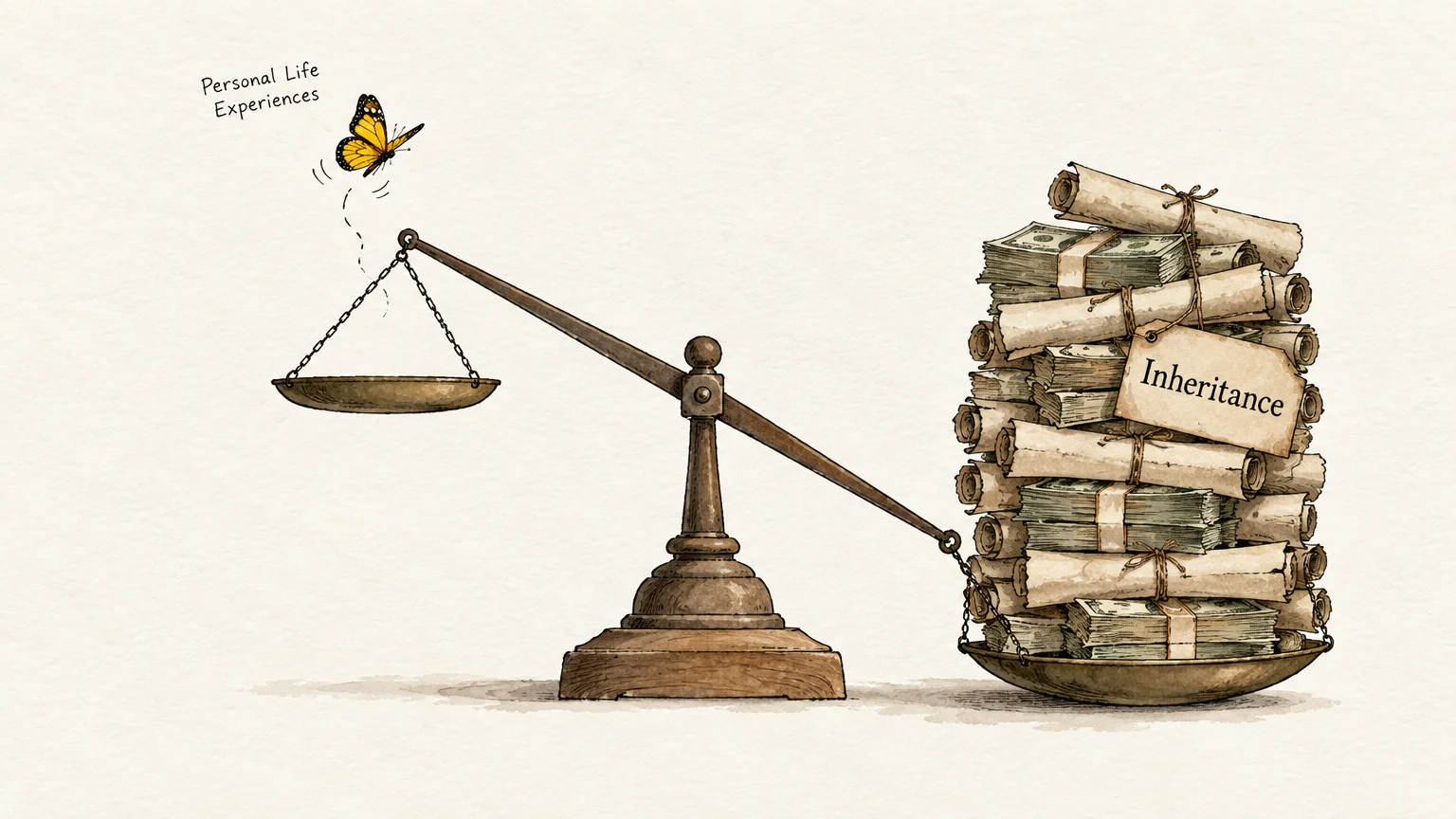
Providing for children or favorite charities represents a noble aspiration, but sacrificing your basic dignity or comfort creates unintended imbalances. Your adult heirs usually establish their own economic trajectories and rarely expect your total self-denial.
Many seniors mistakenly leave behind vast sums simply because they feared exhausting their accounts. Gifting smaller financial assets while you are still alive allows you to witness the positive impact firsthand.
Consider funding a grandchild’s education, helping with a down payment, or organizing a multigenerational family vacation. These shared living memories provide far greater reciprocal value than a sterile posthumous bequest.
Communicate openly with your family about your intention to enjoy your retirement assets while maintaining reasonable support. Honest conversations frequently reveal that children desire your happiness and health far more than an eventual inheritance.

8. You Delay Meaningful Bucket-List Experiences for an Indefinite Future
Postponing long-held travel dreams until you feel completely safe financially frequently backfires due to unpredictable health changes. Your physical mobility and vitality are finite resources that inevitably decline over time.
Gerontological research repeatedly categorizes retirement into distinct go-go, slow-go, and no-go phases. Spending money during your most energetic years yields far more enjoyment than hoarding it for advanced age.
If you keep pushing back dream vacations or creative pursuits, challenge yourself to book the travel reservations today. Spending during your healthiest years guarantees you actually extract value from your lifetime savings.
Create a physical timeline that matches specific travel destinations with your current physical capabilities. Prioritize active, demanding trips now, leaving quiet, domestic destinations for later decades.
Core Strategy Pillars to Unlock Healthy Spending
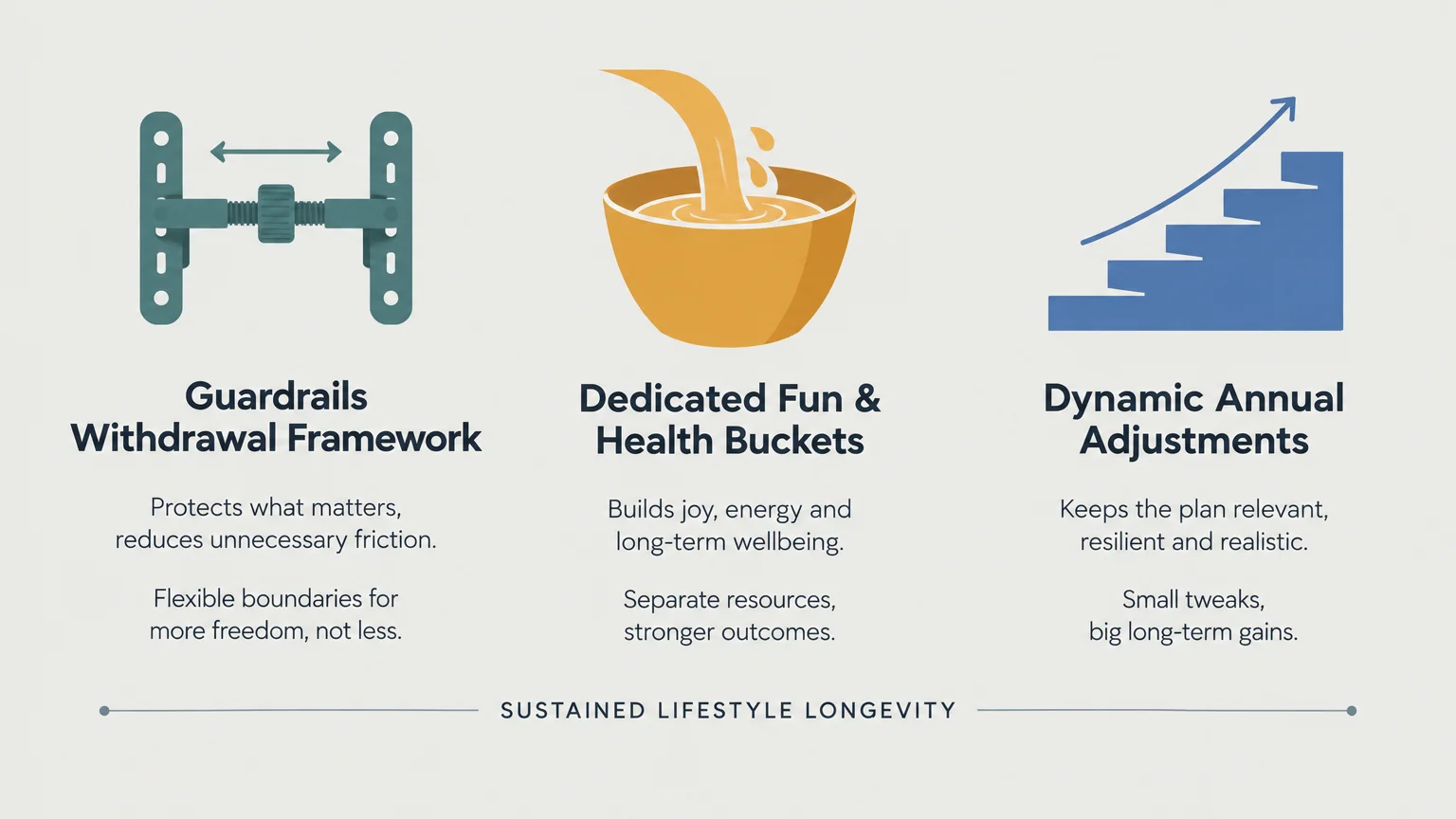
Overcoming spending hesitation requires intentional frameworks across your financial, physical, and personal life. Implementing structured guardrails replaces emotional guesswork with mathematical clarity.
Pillar 1: Dynamic Income Planning
Dynamic withdrawal frameworks permit higher spending during favorable market climates while instituting modest guardrails during downturns. This structured flexibility prevents reckless depletion while maximizing early-retirement enjoyment.
Additionally, review the latest Internal Revenue Service distribution guidelines to coordinate mandatory withdrawals with tax efficiency. Structuring reliable monthly transfers from your investment accounts mimics a traditional paycheck, which reduces spending friction.
Implementing spending guardrails protects you against psychological burnout during bear markets. You retain total control while freeing yourself from arbitrary, self-imposed austerity.
Pillar 2: Intentional Lifestyle Design
Aligning your financial resources with personal values transforms spending from a stressful chore into a joyful pursuit. Identify the activities, hobbies, and relationships that bring you deep satisfaction, then fund them unapologetically.
Frugality should serve your happiness rather than restrict your daily autonomy. When an expense enriches your relationships, broadens your perspectives, or preserves your physical vitality, spend the money without regret.
Audit your monthly expenses to ensure your dollars reflect what you actually value. Eliminating subscriptions you ignore while funding hobbies you love creates immediate emotional clarity.
Pillar 3: Proactive Health and Wellness Investments
Viewing healthcare spending purely as a dreaded loss ignores the compounding benefits of preventative wellness. Investing money in high-quality nutrition, fitness trainers, ergonomic furniture, and elective wellness treatments protects your physical capacity.
Preventative wellness spending acts as effective capital preservation by staving off debilitating chronic conditions. Treat your physical body as your most valuable financial asset, because poor health eliminates your capacity to enjoy accumulated wealth.
Joining a community fitness center or working with a physical therapist yields tremendous physical dividends. Proactive wellness preserves your independence and keeps healthcare costs manageable.

Financial Safeguards and Risks to Monitor
While liberating yourself from irrational fear is essential, maintaining clear financial safeguards keeps your spending grounded in reality. Watch out for costly policy thresholds that can trigger unexpected financial penalties.
Accelerating your withdrawals without proper tax planning can trigger Medicare Income-Related Monthly Adjustment Amount surcharges. Consult a qualified tax advisor to optimize distributions across taxable, tax-deferred, and Roth accounts.
Furthermore, older adults must remain vigilant against sophisticated financial scams targeting retirees. Establish dual-authorization protocols on primary investment accounts to shield your nest egg from predatory fraud.
Establishing trusted contacts with your financial custodians adds an extra layer of defense against fraud. This safeguard protects your accumulated wealth without restricting your daily spending freedom.
Frequently Asked Questions About Retirement Underspending
How much can I safely spend each year without outliving my assets?
The historical four percent guideline provides a reliable baseline, but dynamic spending models often allow initial withdrawal rates between 4.5 and 5 percent. Working with a fee-only fiduciary advisor helps customize a rate that reflects your specific asset allocation.
Adjusting your spending slightly during down markets ensures your portfolio remains resilient across dynamic market environments.
Why do so many retirees struggle emotionally with spending their money?
Decades of disciplined wealth accumulation condition your brain to view balance reductions as existential threats. Shifting into spending mode requires unlearning deeply ingrained habits and confronting emotional fears regarding aging and independence.
Acknowledging this natural psychological tension allows you to grant yourself permission to enjoy your capital gradually.
Does underspending in early retirement create tax problems later?
Yes; leaving tax-deferred accounts untouched forces massive required minimum distributions starting in your early-to-mid seventies. These substantial distributions can push you into higher tax brackets and increase taxation on your Social Security benefits.
Strategic Roth conversions and steady distributions during early retirement create long-term tax efficiency while lowering overall lifetime liability.
How can I distinguish between wise frugality and fear-based deprivation?
Wise frugality consciously eliminates waste so you can allocate funds toward things that genuinely matter to you. In contrast, fear-based deprivation sacrifices physical health, safety, and personal relationships out of irrational panic.
If saving money causes chronic anxiety rather than peace of mind, your financial caution has become counterproductive.
Take Action Within the Next 48 Hours
Overcoming spending hesitation does not require an immediate, radical overhaul of your daily financial habits. Meaningful transformation begins with small, deliberate choices that reaffirm your command over your money.
Within the next 48 hours, choose one modest expense you have repeatedly postponed out of fear and complete it without guilt. Book that long-overdue dental checkup, replace those worn walking shoes, or invite an old friend to lunch.
You earned every dollar through decades of disciplined hard work; now allow your wealth to serve your life.