1. Prepaid Funeral and Burial Contracts
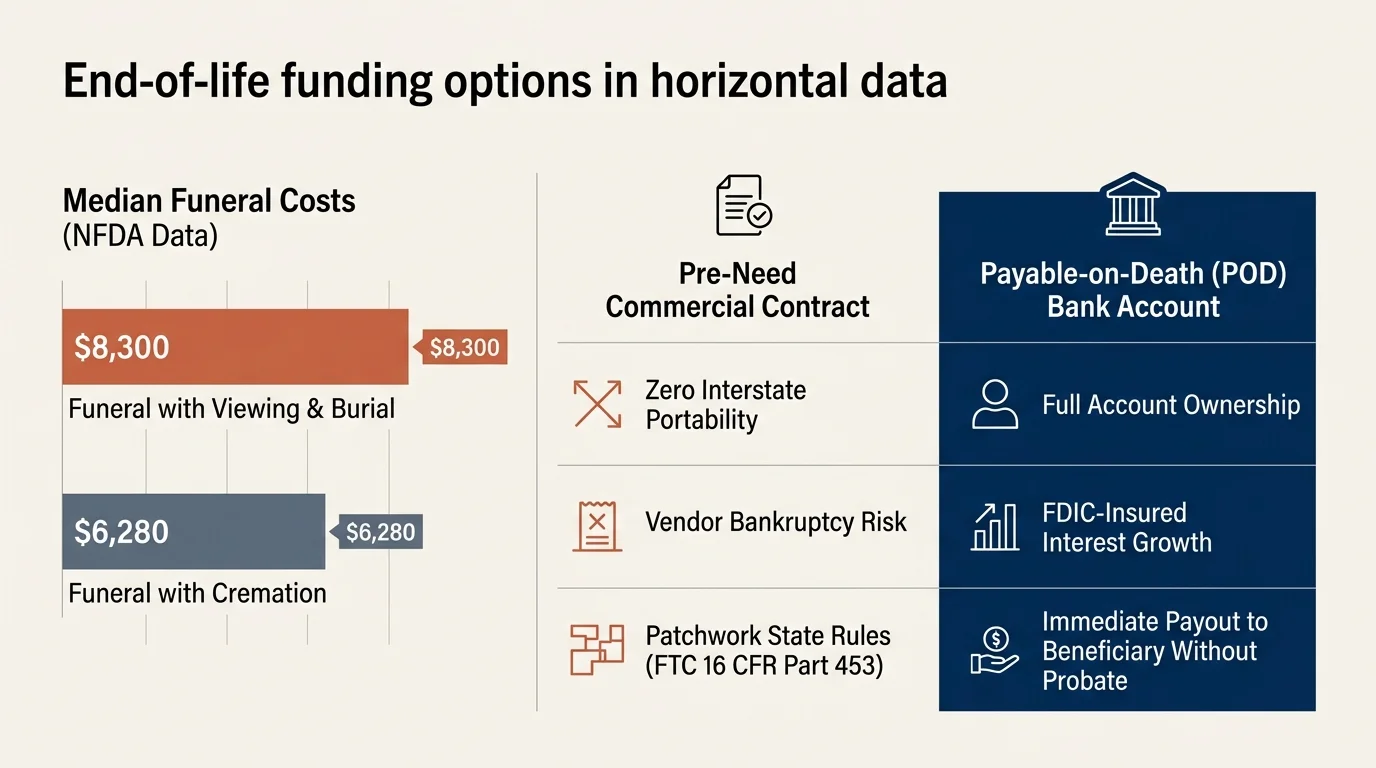
Planning for end-of-life arrangements represents an emotional milestone for many retirees who wish to relieve their surviving family members of administrative burdens. According to data from the National Funeral Directors Association, the median cost of a funeral with a viewing and burial reaches $8,300, while a funeral with cremation stands at $6,280. Because cemetery plots, vaults, and monument fees frequently add thousands more to the final tally, funeral providers aggressively market pre-need contracts that promise to freeze these prices today.
Despite the reassuring marketing, prepaying a specific funeral home carries enormous structural risks. Under the Federal Trade Commission consumer protection rules known as the FTC Funeral Rule (16 CFR Part 453), providers must hand you an itemized General Price List and cannot force you to buy bundled packages. However, federal law does not regulate the handling or transferability of pre-need escrow funds. Individual states enforce a patchwork of conflicting regulations; if you move closer to family, downsize to a different state, or if the funeral home declares bankruptcy, you may forfeit thousands of dollars.
Instead of tying your capital to a single commercial business, financial advisers recommend establishing a dedicated Payable-on-Death bank account. You retain complete ownership and control of your money throughout your lifetime, allowing you to earn interest safely in an FDIC-insured institution. Upon your death, the designated beneficiary receives the remaining balance immediately without probate delays, granting your loved ones the flexibility to choose whichever funeral provider best serves their needs at that time.