
Looking back from your eighties reveals financial and lifestyle truths that remain hidden during your working years. You can bypass the most painful missteps of older generations by acting on their hard-earned wisdom today.
Shifting economic policies and rising longevity now amplify the financial consequences of early retirement decisions. Many octogenarians discover that minor planning gaps in their sixties evolved into major hurdles later in life.
Examining these candid reflections gives you a practical roadmap to protect your assets, preserve your health, and secure lasting peace of mind.

The Evolving Reality of American Longevity
Retirement today looks drastically different than it did for previous generations. You face longer lifespans alongside unpredictable market swings, persistent inflation, and shifting interest rates.
Recent data underscores this growing economic vulnerability. In nationwide polling, fifty-eight percent of retirees admitted they worry their personal savings will not sustain them for the rest of their lives.
Understanding these challenges allows you to adapt before small oversights turn into permanent deficits. Listening to seniors in their eighties reveals the exact missteps that derail lifelong comfort and financial independence.

1. Claiming Social Security Benefits Far Too Early
One of the loudest regrets voiced by eighty-somethings involves claiming Social Security benefits at age sixty-two. Rushing to file early permanently slashes your monthly benefit check by up to thirty percent.
According to the Social Security Administration, delaying past full retirement age yields an eight percent annual delayed retirement credit until age seventy.
A recipient claiming at age seventy receives roughly seventy-six to seventy-seven percent more each month than someone claiming at sixty-two. That guaranteed monthly disparity becomes critical as inflation erodes purchasing power over decades.
The Schroders U.S. Retirement Survey revealed that forty-four percent of pre-retirees plan to claim early despite knowing they forfeit lifetime income. In your eighties, that lost guaranteed income is nearly impossible to replace.

2. Underestimating Out-of-Pocket Healthcare Costs
Many pre-retirees mistakenly assume Medicare covers all medical needs. Octogenarians frequently describe how unexpected out-of-pocket medical bills completely disrupted their fixed budgets.
According to Fidelity estimates, an average sixty-five-year-old couple retiring today needs between $165,000 and $185,500 in after-tax savings for medical expenses. That calculation completely excludes expensive long-term nursing care.
Retirees allocate roughly sixteen percent of their monthly income to healthcare expenses. Furthermore, fifty-eight percent of seniors falsely assumed Medicare would cover routine dental, vision, and hearing treatments.
Reviewing coverage details on Medicare.gov helps you evaluate Supplemental coverage and Part D drug plans. Proactive healthcare budgeting prevents routine medical treatments from draining your core retirement assets.
3. Failing to Plan for Custodial Long-Term Care
Perhaps no expense shocks older adults more than the cost of long-term assistance. Seniors in their eighties routinely express deep regret for neglecting custodial care planning during their fifties and sixties.
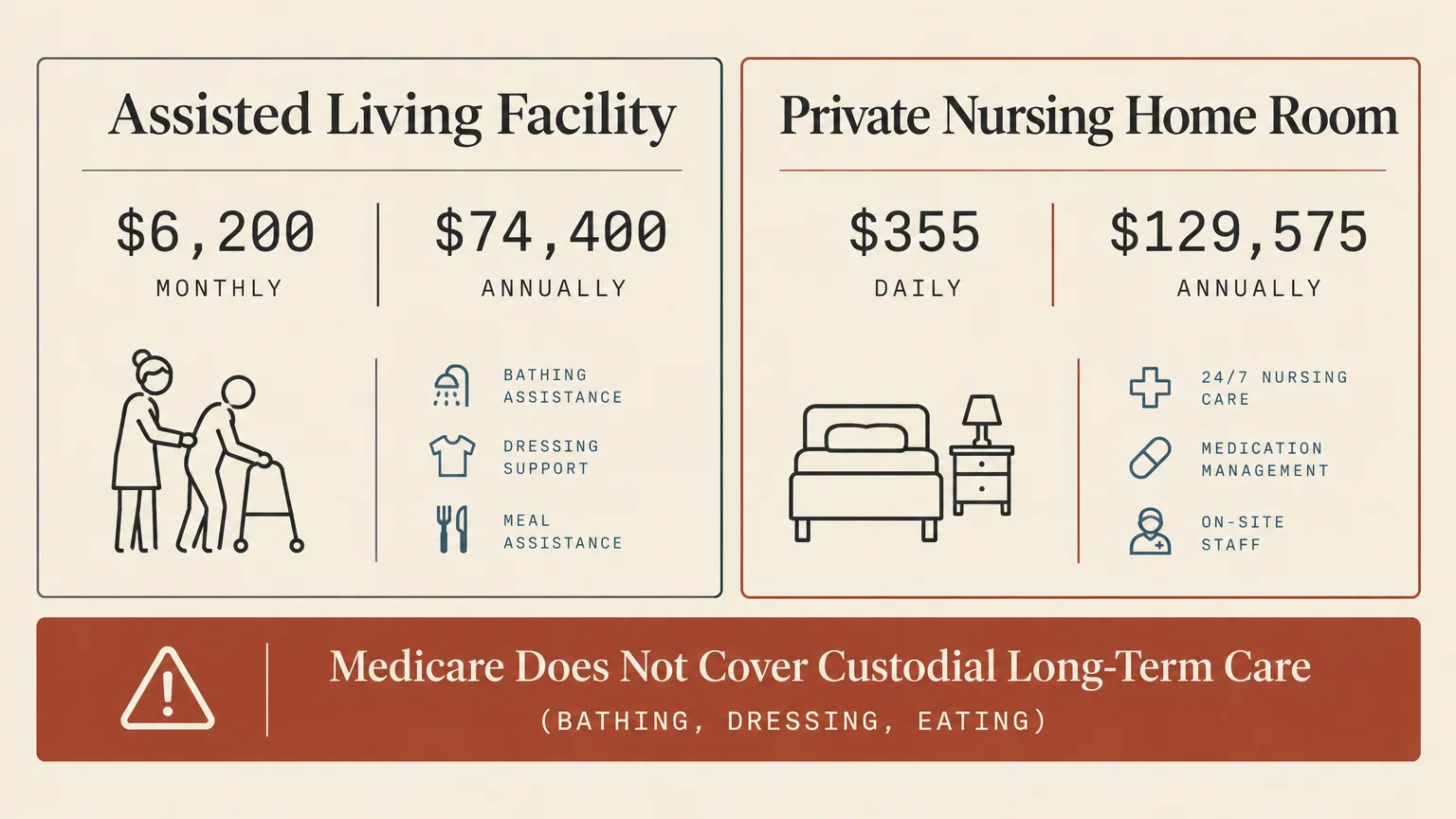
Original Medicare does not cover custodial care, which provides assistance with daily activities like bathing, dressing, and eating. Relying on government health programs for non-skilled support is a disastrous financial mistake.
According to CareScout data, the national median cost of assisted living facilities stands at $6,200 monthly, or $74,400 annually. A private nursing home room averages $355 daily; that equals $129,575 each year.
Hiring an in-home health aide costs approximately $80,080 annually for forty-four hours of weekly care. Without dedicated insurance or targeted savings, these catastrophic costs quickly erase family nest eggs.

4. Postponing Travel and Major Bucket-List Experiences
Gerontologists divide retirement into three phases: Go-Go, Slow-Go, and No-Go years. Octogenarians overwhelmingly regret postponing dream vacations and vigorous hobbies during their mobile sixties.
Many retirees spend their initial retirement years obsessing over market balances, waiting for a perfect moment that never comes. Physical stamina rarely improves with age, making delayed travel plans difficult to execute.
Data from the Centers for Disease Control and Prevention indicates that over eighty-five percent of older adults manage at least one chronic condition. Over sixty percent manage two or more.
Joint stiffness, reduced energy, and sudden mobility restrictions often complicate international travel in your eighties. You should front-load demanding trips early in retirement while your vitality remains robust.

5. Waiting Too Long to Downsize the Family Home
Staying in a beloved home seems comforting, yet octogenarians frequently describe late-life home maintenance as exhausting. Rising property taxes, high utility bills, and insurance premiums severely strain fixed incomes.
Research from the Joint Center for Housing Studies at Harvard University shows housing remains the largest expense for adults aged eighty and older. Roughly thirty percent of these seniors are severely cost-burdened.
Multilevel homes with steep stairs and narrow hallways create severe fall hazards as balance declines. Postponing relocation until an unexpected injury forces your family to make frantic, stressful moving decisions.
Downsizing proactively during your sixties allows you to choose an accessible home on your own timeline. It also liberates dormant home equity to reinforce your financial liquidity.

6. Neglecting Comprehensive Estate and Incapacity Directives
Procrastinating on estate planning is another widespread misstep seniors in their eighties openly regret. Failing to organize legal directives creates unnecessary turmoil and confusion during sudden health crises.
Studies by Caring.com show that between fifty-six and sixty percent of U.S. adults lack a valid will. Even fewer individuals possess updated healthcare directives or durable financial powers of attorney.
Without assigned legal representatives, cognitive decline forces families into expensive court guardianship proceedings to handle routine financial affairs. This administrative burden creates immense emotional friction among adult children.
Consulting an attorney to draft a healthcare proxy and durable power of attorney preserves your autonomy. Reviewing beneficiary designations ensures your assets transfer directly to loved ones without probate delays.

7. Allowing Community and Social Relationships to Fade
Decades in the workforce provide an effortless daily social environment. Many octogenarians regret failing to cultivate diverse community friendships outside their former workplace before retiring.
The U.S. Surgeon General warns that social disconnection is a severe epidemic, with one in four older adults experiencing isolation. Chronic loneliness dramatically accelerates mental and physical decline.
Research confirms that social isolation increases dementia risk by fifty percent, heart disease by twenty-nine percent, and stroke by thirty-two percent. Relying solely on a spouse for emotional support strains relationships.
Educational guides from the National Institute on Aging show that social engagement maintains cognitive function. Joining clubs, volunteering, and building multi-generational ties protects your psychological health.
Strategic Pillars to Prevent Late-Life Regret
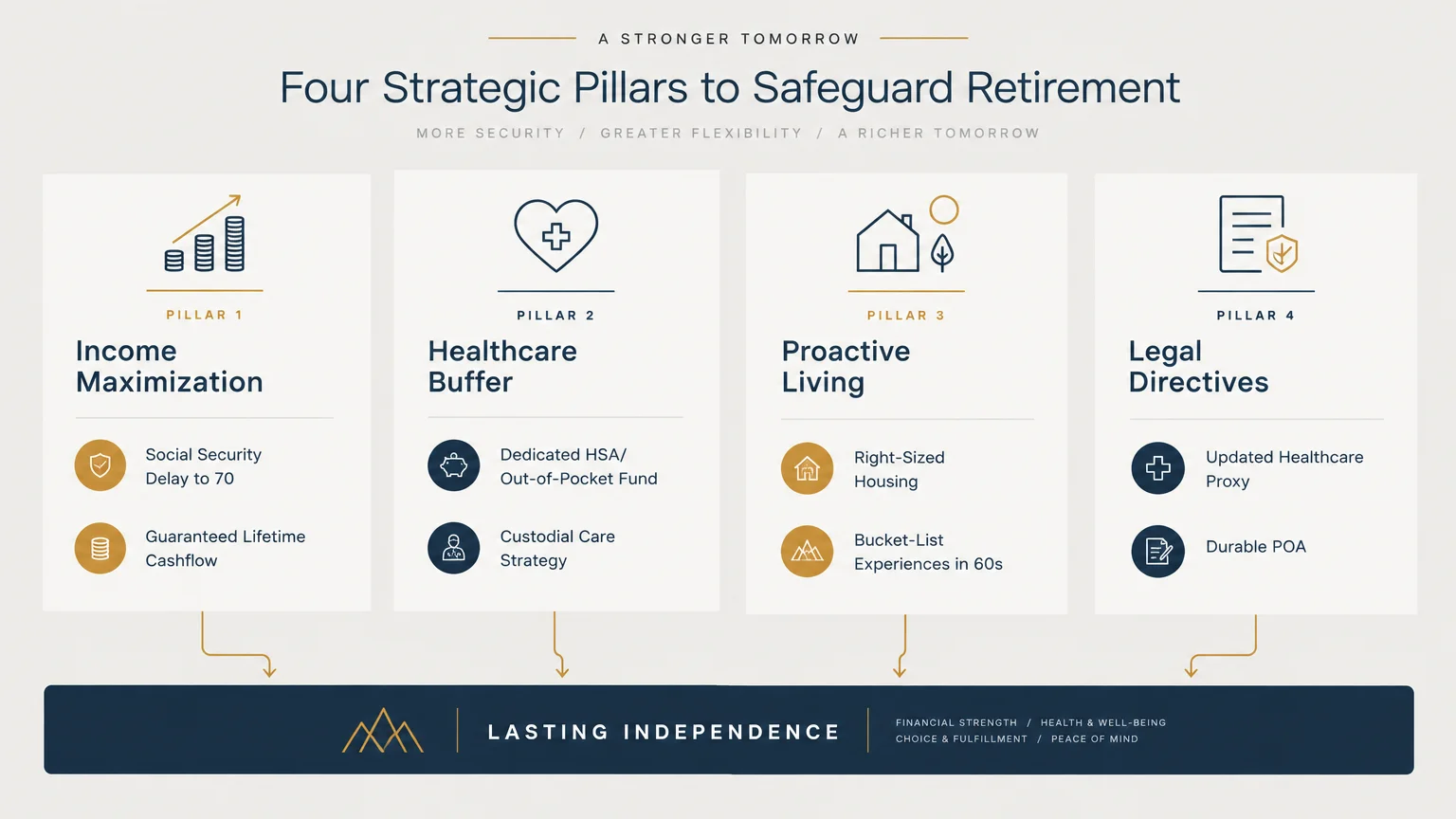
Preventing these common regrets requires proactive planning across three vital retirement pillars. Aligning your income, lifestyle, and health safeguards your future independence.
Pillar 1: Income Planning and Longevity Protection
Establish a guaranteed income floor that comfortably covers baseline living expenses throughout retirement. Coordinating Social Security optimization with pensions or fixed annuities shields your household from market volatility.
Maintain a cash reserve covering one to two years of expenses to avoid selling stocks during downturns. Working with a financial planner ensures tax-efficient withdrawals across taxable and tax-deferred accounts.
Pillar 2: Purposeful Lifestyle Design and Connection
Retire toward engaging activities rather than simply escaping professional responsibilities. Establish a daily routine incorporating physical exercise, creative outlets, and social interaction.
Deepen civic connections through volunteer programs, neighborhood associations, or continuing education courses. Connecting with people across different generations provides fresh perspectives and lasting companionship.
Pillar 3: Proactive Healthcare and Mobility Defense
Treat physical fitness as your primary health insurance policy. Regular resistance training, balance routines, and daily walking preserve physical mobility and prevent debilitating falls.
Schedule routine medical screenings, dental cleanings, and hearing assessments without delay. Addressing sensory impairment like hearing loss protects cognitive function and prevents social withdrawal.

Expert Voices: Safeguards Against Common Pitfalls
Certified Financial Planners emphasize that protecting your retirement requires guarding against external hazards. Financial scams, tax surprises, and hidden fees frequently target older retirees.
Financial fraud targeting seniors extracts billions from retirement nest eggs each year. Never provide personal account information or send funds in response to urgent, unsolicited calls or emails.
Watch out for the Income-Related Monthly Adjustment Amount on Medicare premiums. Large retirement account withdrawals can accidentally push you into higher income tiers, driving up your healthcare costs.
Designating a trusted emergency contact on investment accounts adds a vital layer of protection. This safeguard allows financial institutions to investigate suspicious transactions without compromising your account control.
Frequently Asked Questions
Can I reverse Social Security if I claimed too early?
Yes, you can withdraw your application within twelve months of filing using Form SSA-521. You must repay all received benefits to reset your lifetime delayed earnings credits.
If twelve months have passed, you can voluntarily suspend your benefit once you reach full retirement age. Your benefit will then earn delayed retirement credits until age seventy.
How can I pay for long-term care without traditional insurance?
You can purchase hybrid life insurance policies that provide tax-free long-term care benefits if needed. If you remain healthy, the policy pays a death benefit to your beneficiaries.
Other options include establishing a dedicated health investment fund or utilizing a home equity conversion mortgage. A fee-only financial planner can help model these funding scenarios.
When is the best time to downsize my home?
Most retirement specialists recommend downsizing between ages sixty-two and seventy. Moving while you maintain strong physical stamina makes sorting, packing, and adapting to a new space manageable.
Relocating early also lets you build ties in a new neighborhood before health challenges arise. Delaying until your eighties often turns downsizing into an emergency driven by illness.
How can I build a social network after leaving work?
Join local special-interest groups such as gardening clubs, hobby associations, or community sports leagues. Engaging in structured activities provides an easy setting to form authentic friendships.
Volunteering with regional charities also connects you with compassionate, purpose-driven peers. Establishing consistent weekly routines in community spaces naturally sparks friendly conversations.
Take Action on Your Retirement Blueprint Today
The regrets voiced by octogenarians are not inevitable outcomes for your own retirement journey. Their honest feedback gives you the exact knowledge needed to make wiser choices today.
Select one proactive task to complete within the next forty-eight hours to protect your future. Whether you update your estate directives or calculate your healthcare budget, take immediate action.
Empowering yourself with intentional financial and personal decisions transforms how your retirement unfolds. Start making these vital adjustments today to enjoy a confident, fulfilling future without regret.