Finding the right Arizona retirement town gives you sunny days, manageable living expenses, and reliable healthcare access. Your ideal desert destination balances daily outdoor recreation with dependable long-term financial security.
Whether you prefer high-elevation pines or warm desert valleys, Arizona features vibrant communities built for active adults. Rising housing costs nationwide make choosing an affordable, supportive community more critical than ever.
Explore our curated guide to the state’s most livable communities to align your retirement lifestyle with your long-term wealth goals.
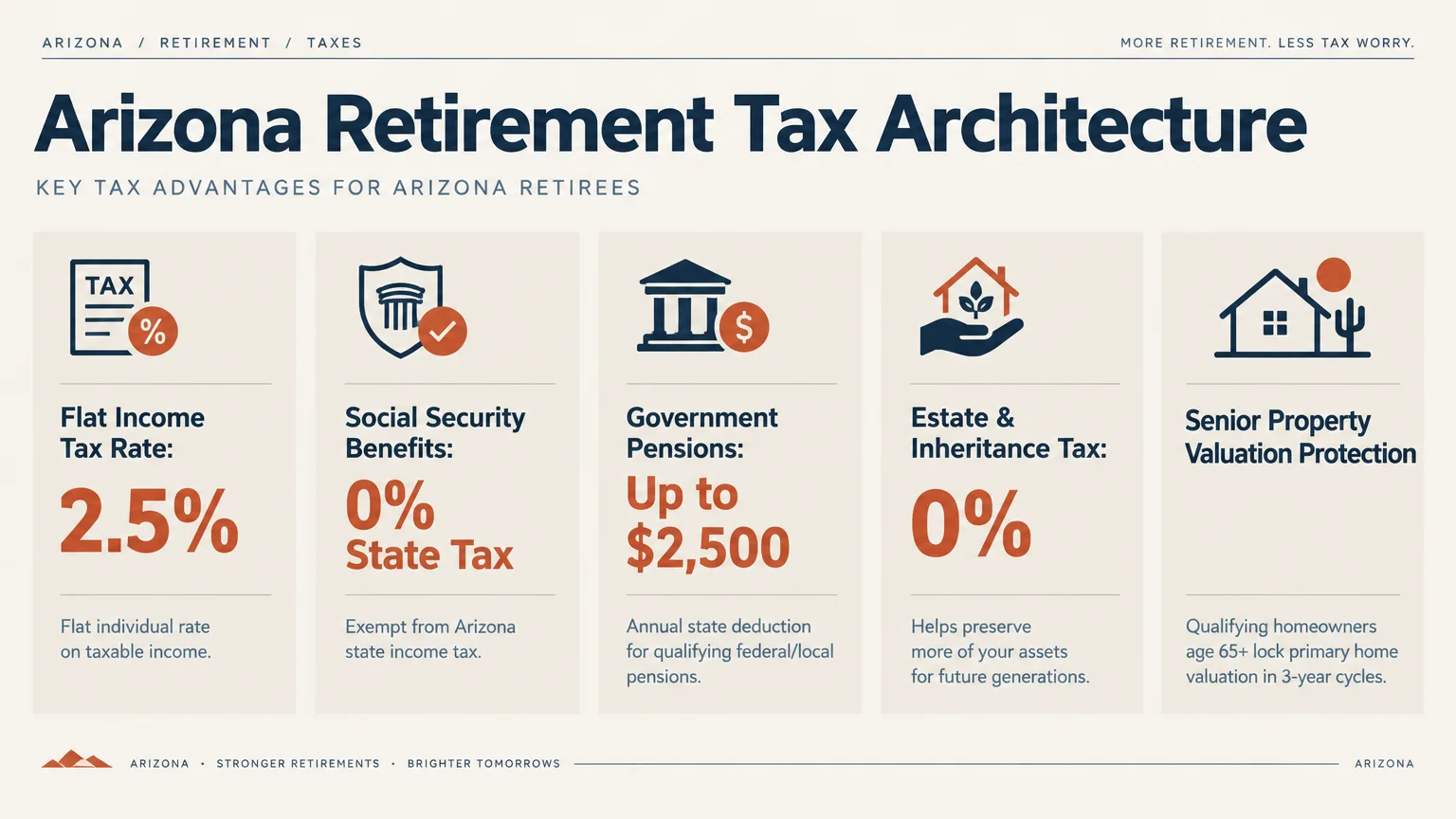
Arizona Retirement Snapshot: Tax Perks and Financial Realities
Arizona offers welcome financial relief for retirees stretching a fixed income. The state maintains a flat individual income tax rate of 2.5%, simplifying your annual tax planning.
You will keep more money because Arizona does not tax retirement benefits from the Social Security Administration. U.S. military pensions also remain completely exempt from state income tax.
Arizona allows an annual deduction up to $2,500 for qualifying federal, state, and local government pensions. Traditional 401(k) and IRA withdrawals incur the flat 2.5% rate.
Arizona levies neither an estate tax nor an inheritance tax; your wealth passes directly to your heirs.
Homeowners aged 65 and older can utilize the Senior Property Valuation Protection program. This initiative freezes the taxable valuation of your primary residence in renewable three-year increments if you qualify.
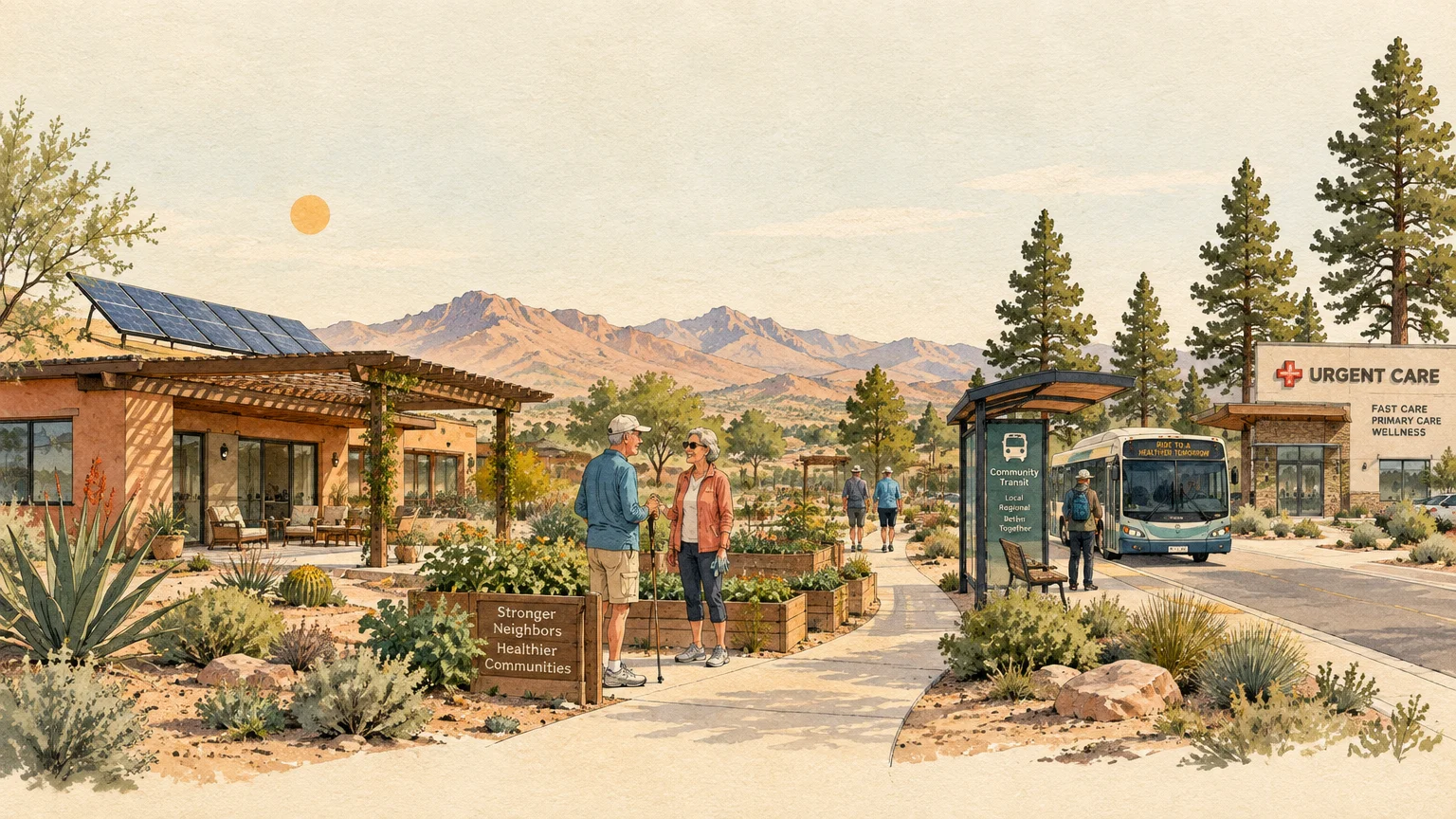
Strategy Pillars for a Balanced Arizona Retirement
Income Planning and Budget Resilience
Managing retirement cash flow requires balancing predictable spending against localized housing costs. Real estate values vary significantly across regions, making careful market research vital for your savings.
According to expenditure data from the Bureau of Labor Statistics, housing and utilities represent the largest expense category for aging households.
You must budget for summer electric bills when desert cooling systems run continuously. Solar panels and energy-efficient construction help moderate these seasonal utility spikes.
Lifestyle Design and Social Connection
Relocating successfully involves far more than warm sunshine and mountain views. You thrive when you cultivate genuine social connections, pursue creative hobbies, and access lifelong learning opportunities.
Research highlighted by AARP shows that active community involvement protects cognitive health and combats chronic isolation in older adults.
Choose a town with recreation centers, volunteer programs, and walking clubs that suit your physical capabilities.
Healthcare Access and Mobility Infrastructure
Maintaining long-term independence requires proximity to primary care physicians and comprehensive hospital networks. Access to specialized geriatric care becomes increasingly critical as your health needs evolve.
Look for towns providing walkable neighborhoods, dependable transit services, and nearby urgent care facilities. Review local participating providers on the official Medicare directory before buying a home.
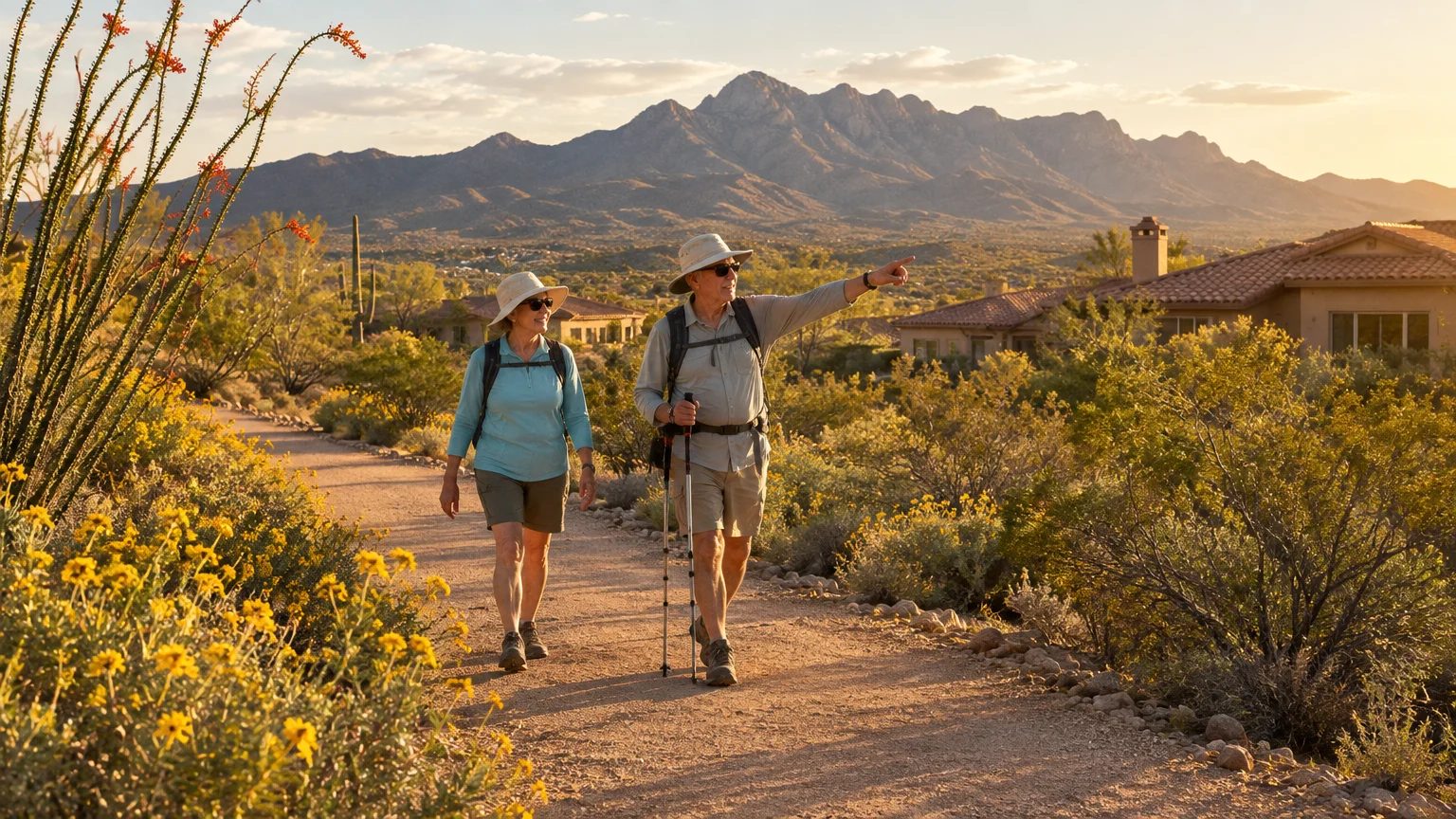
10 Most Livable Arizona Retirement Towns
1. Green Valley: Dedicated Active-Adult Enclave
Located roughly 25 miles south of Tucson, Green Valley serves as an unincorporated active-adult enclave. Seniors aged 65 and older represent approximately 80% of the population, creating a supportive peer network.
The community features a median age near 74 years alongside robust amenities. Median home sale prices hover between $290,000 and $300,000, ranking it among the state’s most affordable retirement destinations.
Green Valley Recreation operates more than a dozen private recreation centers complete with heated pools, fitness centers, and artisan studios. You can enjoy an active calendar while admiring the Santa Rita Mountains.
2. Sierra Vista: High-Desert Comfort on a Modest Budget
Sierra Vista sits in Cochise County at an elevation of 4,600 feet. This elevated geography delivers pleasant high-desert temperatures, shielding you from extreme lower-desert summer heat waves.
Typical median home values range between $300,000 and $315,000, appealing to retirees seeking maximum financial value. The area provides sweeping mountain views and lower traffic density than major metropolitan suburbs.
Birdwatchers treasure the nearby Ramsey Canyon Preserve, while hikers explore shady trails in the Huachuca Mountains. Canyon Vista Medical Center anchors local healthcare with modern diagnostic and inpatient services.
3. Cottonwood: Verde Valley Charm and Wine Country Living
Situated in the Verde Valley, Cottonwood functions as a lower-cost alternative to neighboring Sedona. You gain access to spectacular red rock scenery without paying luxury housing prices.
Median sold home prices range between $355,000 and $395,000. Historic Old Town Cottonwood features bustling tasting rooms, artisanal cafes, and vibrant art galleries along a walkable main street.
Verde Valley Medical Center delivers comprehensive cardiovascular and surgical care right in town. Outdoor enthusiasts can paddle the Verde River or walk the trails of Dead Horse Ranch State Park.
4. Oro Valley: Safety and Foothill Elegance
Oro Valley rests directly north of Tucson at the base of the Santa Catalina Mountains. The town frequently earns national recognition as one of the safest retirement destinations in the United States.
With a violent crime rate of approximately 0.57 per 1,000 residents, the community offers exceptional security. Median single-family home values average around $525,000 to $550,000, reflecting premium local amenities.
Retirees enjoy manicured golf courses, miles of paved multi-use paths, and an energetic community center. Leading hospitals in north Tucson provide immediate access to specialized health services.
5. Prescott: Four-Season Charm in the Pines
Prescott sits at an elevation of roughly 5,300 to 5,400 feet, providing a true four-season climate. You will enjoy sunny, temperate summers followed by mild winters with moderate snowfall.
Median home sale prices range between $610,000 and $632,000. The town square centers around historic Courthouse Plaza, which hosts outdoor art festivals, farmers markets, and summer concerts under shady elms.
Surrounding Prescott National Forest offers granite boulders, clear lakes, and pine woods for hiking and fishing. Dignity Health Yavapai Regional Medical Center provides comprehensive inpatient and outpatient services.
6. Lake Havasu City: Waterfront Fun and Low Property Taxes
Lake Havasu City sits along the eastern shore of the Colorado River, attracting retirees who love water recreation. Boating, paddle boarding, and shoreline fishing define daily life in this sunny desert community.
Typical median home prices hover around $455,000 to $500,000. Mohave County features an effective property tax rate of roughly 0.49%, ranking among the lowest in the state.
Walk across the historic London Bridge or socialize in clubs tailored to retirees and winter visitors. Havasu Regional Medical Center delivers quality emergency and specialized medical care close to residential areas.
7. Sedona: Red Rock Splendor and Holistic Living
Sedona attracts retirees seeking inspiring natural landscapes, fine arts, and holistic wellness. Towering red sandstone formations create a dramatic backdrop for everyday living.
Severe geographical development constraints and intense luxury demand push median home prices between $950,000 and $1.1 million. This pricing sits at more than double the Arizona statewide median.
If your budget accommodates premium real estate, you will enjoy world-class dining, tranquil wellness spas, and over 400 miles of scenic trails. Sedona delivers a visually captivating retirement setting.
8. Peoria: Master-Planned Convenience and Active Recreation
Located in the northwest Phoenix metropolitan area, Peoria blends suburban convenience with established active-adult communities. It appeals to retirees who desire modern municipal amenities alongside desert recreation.
Neighborhoods like Westbrook Village offer private golf courses, community pools, and dozens of hobby clubs. Median home values range from $430,000 to $460,000, presenting dependable value in the Phoenix area.
Lake Pleasant Regional Park sits just north of town, providing premier boating, fishing, and watersports opportunities. Top-tier medical networks throughout the northwest valley ensure specialist care is always nearby.
9. Sahuarita: Quiet Sonoran Beauty with Modern Communities
Sahuarita lies south of Tucson in the Santa Cruz Valley, just minutes from Green Valley. It features newer master-planned developments that provide modern home designs and manicured parklands.
Median home values range between $340,000 and $370,000, offering newer single-story properties at accessible prices. You can enjoy neighborhood trail systems, recreational lakes, and quiet streets framed by desert peaks.
The town offers a relaxed residential atmosphere while maintaining fast highway access to Tucson’s hospitals, cultural venues, and airport. It serves retirees who prefer contemporary master-planned neighborhoods.
10. Flagstaff: Crisp Alpine Living and Academic Vitality
Flagstaff rests at an elevation of 7,000 feet near the base of the San Francisco Peaks. Retirees who prefer crisp mountain air over desert heat gravitate to this energetic alpine city.
Median home prices average between $650,000 and $690,000, reflecting strong regional demand and limited private land. You will experience true four-season weather, including cool summer breezes and snowy winter landscapes.
Northern Arizona University offers public lectures, performing arts, and continuing education courses for older adults. Flagstaff Medical Center provides high-level trauma care, advanced heart operations, and regional healthcare leadership.
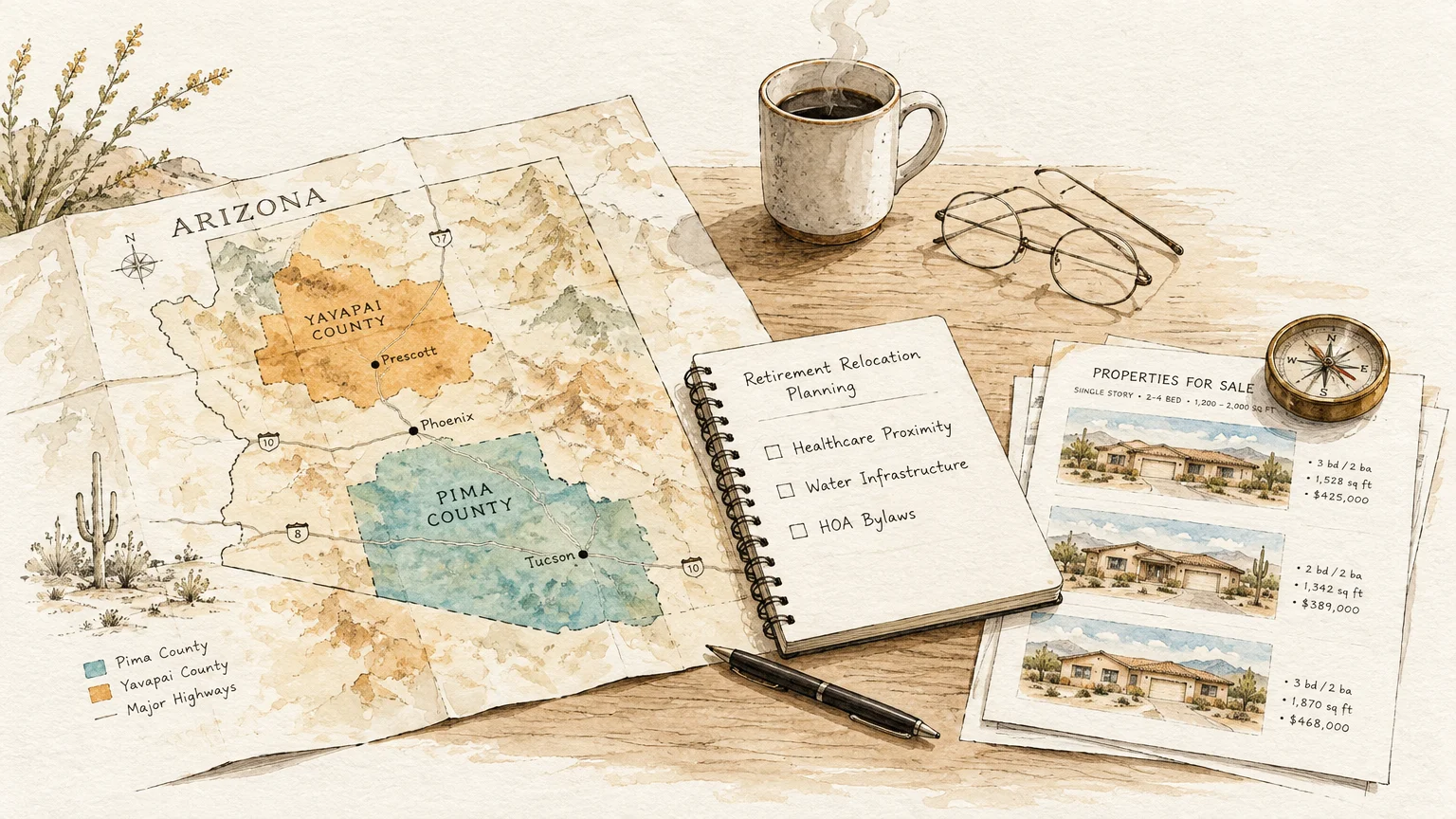
Expert Perspectives on Making the Move
Certified financial planners recommend modeling multi-year cash flow projections before establishing your permanent Arizona residency. State guidelines from the Arizona Department of Revenue keep income taxes low, but localized expenses require careful scrutiny.
“Many retirees focus exclusively on property purchase prices,” notes Douglas Jensen, a CFP® professional in Scottsdale. “You must also evaluate association assessments, supplemental insurance premiums, and seasonal cooling bills to determine your true monthly carrying cost.”
Gerontologists emphasize that physical adaptability determines your ability to age in place comfortably. Single-story floor plans with wide interior doorways and zero-step entries protect your safety as physical mobility changes over time.
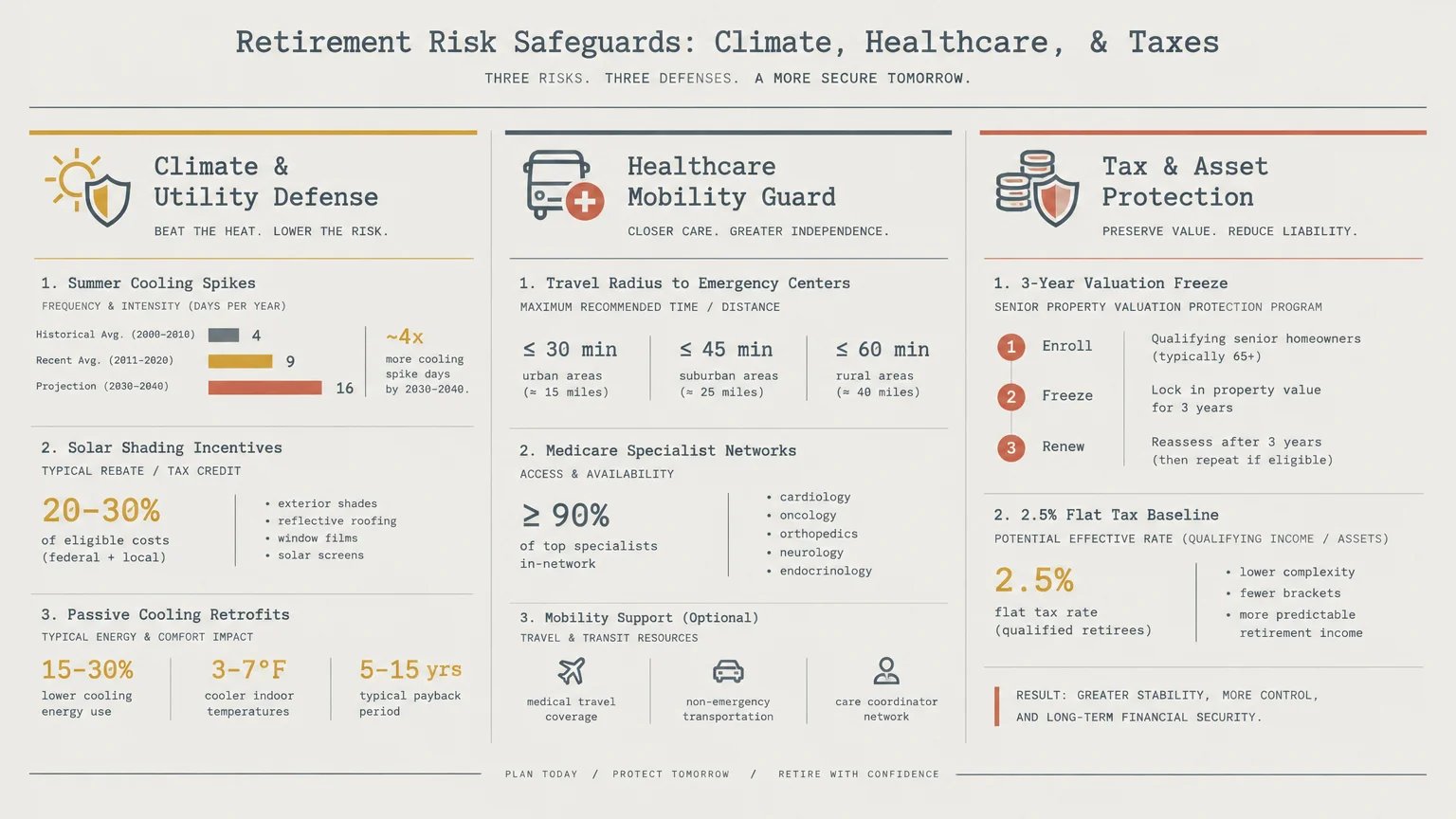
Safeguards: Managing Healthcare, Extreme Climate, and Financial Traps
Summer heat in lower desert communities demands thoughtful preparation. High daytime temperatures elevate the risk of heat exhaustion and dehydration, especially for older adults taking prescription blood pressure medications.
Schedule outdoor exercise during early morning hours between May and September; keep cooling systems professionally serviced. Always carry ample water and sun protection when running basic errands.
Benefit cliffs can affect your household finances if you receive income-limited assistance. Large, unplanned retirement account distributions might push your adjusted gross income over statutory limits for the Senior Property Valuation Protection program.
Remain vigilant against contractor scams and deceptive rooftop solar sales pitches targeting newly arrived seniors. Verify contractor credentials through state licensing boards and secure multiple independent bids before signing home improvement contracts.
Frequently Asked Questions About Arizona Retirement
Does Arizona tax out-of-state public pensions?
Arizona taxes public pensions from other states under its flat 2.5% income tax rate. Eligible retirees may deduct up to $2,500 of qualifying government pension income annually on their state tax return.
How does the Senior Property Valuation Protection program work?
The program locks the taxable valuation of your primary residence for renewable three-year periods. You must be at least 65 years old, meet specific residency guidelines, and satisfy state household income limits.
Which Arizona retirement towns offer the coolest summer weather?
Towns situated at higher elevations provide significant relief from summer desert heat. Flagstaff sits at 7,000 feet, while Prescott and Sierra Vista rest above 4,500 feet, delivering substantially cooler temperatures year-round.
Are healthcare specialists accessible outside Phoenix and Tucson?
Most mid-sized towns maintain capable community hospitals equipped for routine medical needs and general surgeries. However, treating rare conditions or accessing specialized surgical interventions often requires traveling to regional medical centers in Phoenix or Tucson.
Take Your Next Step in the Next 48 Hours
Building a confident retirement plan starts with small, deliberate actions rather than overwhelming overhauls. Dedicate thirty minutes over the next 48 hours to compare your monthly budget against housing costs in two towns featured here.
Reviewing your projected utility, tax, and housing expenses today turns your dream of comfortable desert living into an achievable financial reality.