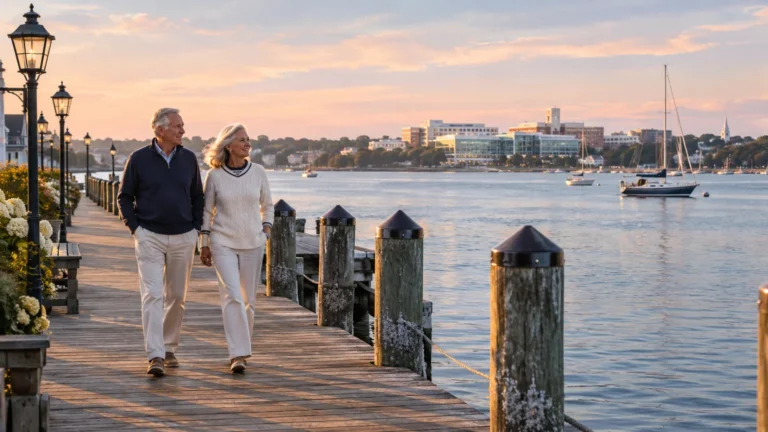
Trading an expensive metropolis or an isolated rural town for a mid-sized city unlocks financial breathing room and richer daily routines. You gain top-tier healthcare and culture without enduring crushing traffic or exorbitant housing costs.
Smart retirees actively trade extreme population density for balanced communities where fixed retirement income stretches further. Selecting a city with 100,000 to 500,000 residents preserves your investment portfolio while expanding your lifestyle options.
Discover why mid-sized urban hubs represent the ideal sweet spot for modern American retirement; you can protect your wealth while revitalizing your daily life.
The Demographic Shift Toward Balanced Living
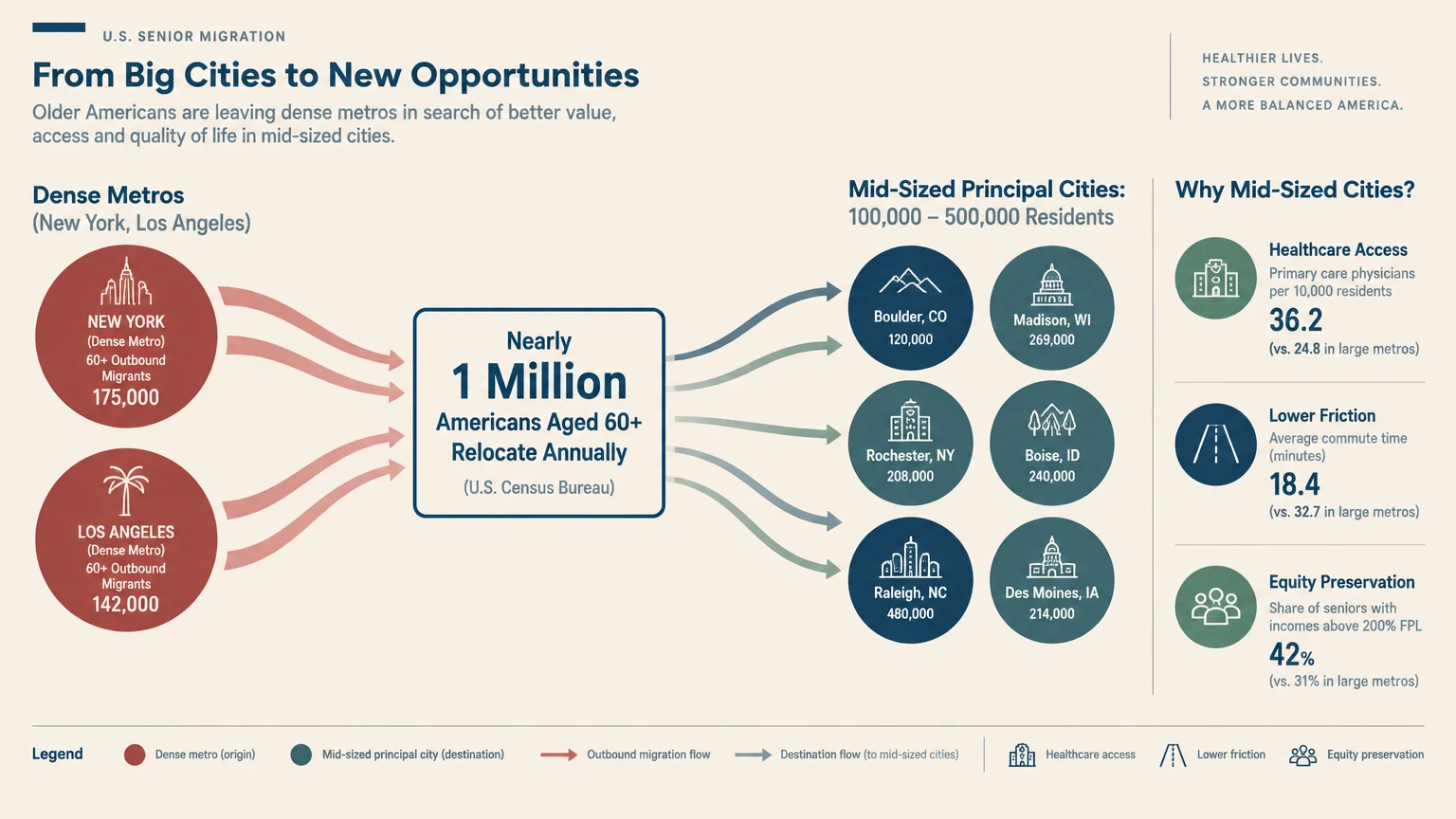
According to U.S. Census Bureau migration data, nearly one million Americans aged 60 and older relocate across state lines every year.
Expensive gateway cities lose thousands of older residents annually. Dense metros like New York and Los Angeles experience massive net outflows of retirees seeking manageable living expenses.
Demographers generally classify mid-sized principal cities as communities containing 100,000 to 500,000 residents. This population tier provides sophisticated municipal infrastructure alongside welcoming neighborhood charm.
Moving to a medium city creates an ideal balance between rural isolation and mega-city exhaustion. You preserve capital, maintain mobility, and enjoy community engagement without overwhelming logistical friction.
National evaluations, including annual retirement destination studies, consistently rank mid-sized metro areas at the top for livability, value, and healthcare access.

10 Reasons Retirees Love Mid-Sized Cities
1. Significant Housing Value and Equity Relief
Selling a high-value property in a major coastal market allows you to purchase a comfortable mid-sized home with cash. You eliminate mortgage debt while banking substantial residual equity.
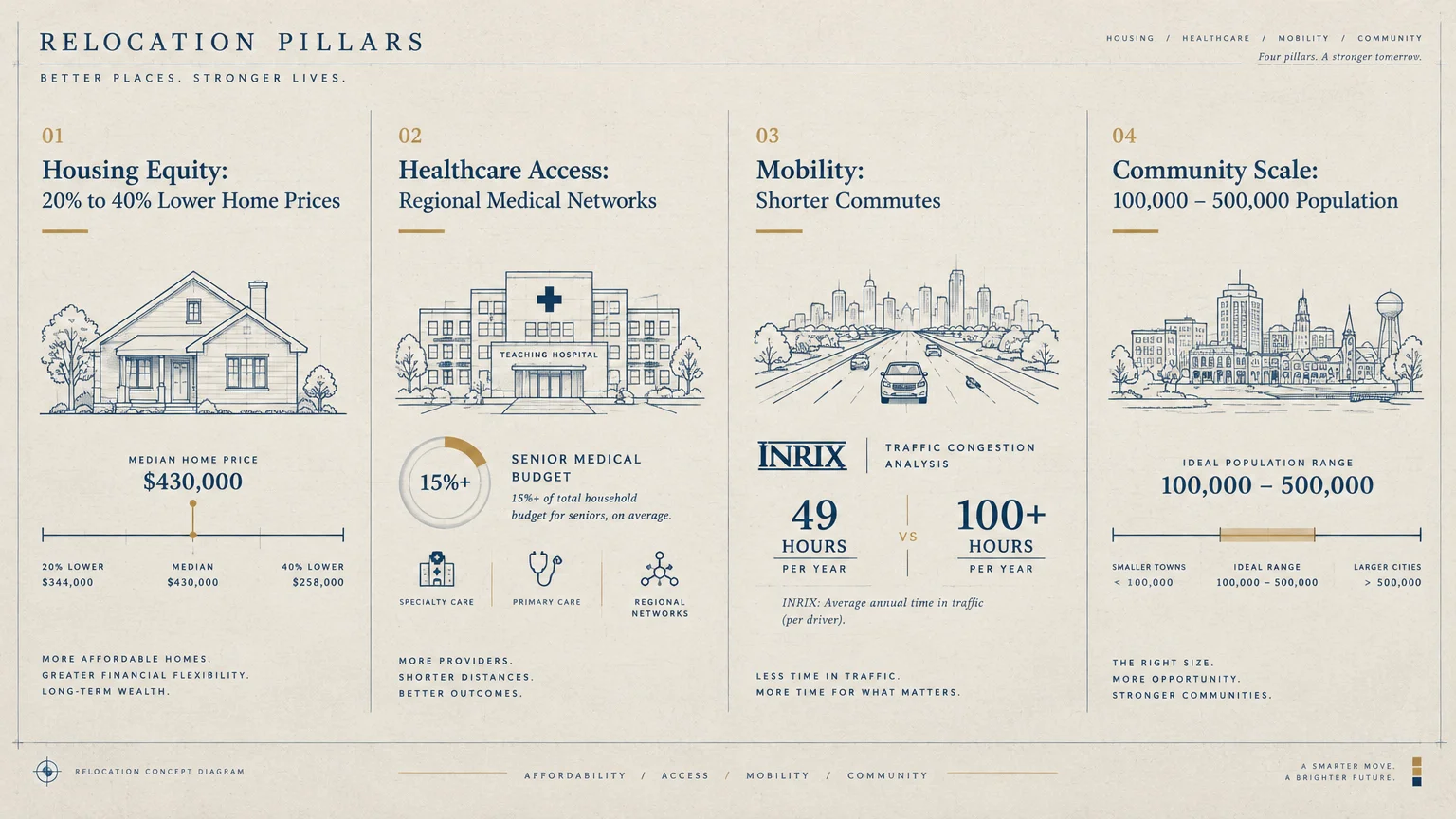
Recent data from the National Association of Realtors shows the national median home price sits near $430,000. In competitive mid-sized markets, quality homes frequently sell for 20% to 40% less.
According to Bureau of Labor Statistics consumer research, housing consumes roughly 35% of total annual spending for retirees. Slashing your residential overhead safeguards your portfolio longevity.
2. Comprehensive and Accessible Healthcare Systems
Mid-sized cities anchor regional medical networks, university teaching hospitals, and comprehensive Veterans Affairs facilities. You avoid the dangerous physician shortages and hospital closures common in rural towns.
Medical expenses consume over 15% of total household budgets for seniors aged 75 and older. Living close to regional medical centers ensures prompt specialty care without exhausting travel.
In medium cities, arriving at a specialist clinic rarely involves navigating multilevel parking garages or massive highway interchanges. You receive attentive, coordinated care in accessible medical offices.
3. Shorter Driving Times and Minimal Traffic Stress
Relentless traffic congestion drains physical stamina and complicates simple daily tasks. INRIX traffic reports show major city drivers lose more than 100 hours each year stuck in roadway gridlock.
Mid-sized metros experience far shorter delays, matching or outperforming the national average of 49 hours. Running errands, attending appointments, or visiting family requires manageable, predictable drive times.
Lower congestion also lowers auto insurance premiums and prolongs the lifespan of your vehicle. You drive with far less anxiety and enjoy greater personal freedom.
4. Vibrant Cultural Experiences Without Crowds
Medium-sized cities support thriving theater districts, regional symphony orchestras, art museums, and historic preservation societies. You enjoy top-tier cultural events without paying inflated ticket prices.
Attending a local film festival or art opening never involves battling dense tourist crowds. You secure reservations easily and stroll leisurely through neighborhood cultural events.
Many mid-sized cities also host colleges or universities that sponsor public lecture series, lifelong learning classes, and athletic competitions.
5. Genuine Neighborhood Connections and Social Ease
Large metropolises often promote social anonymity, which can leave retirees feeling invisible. Mid-sized communities cultivate organic social networks where neighbors converse and look out for one another.
Integrating into a new community happens swiftly through local civic organizations, book clubs, and recreational sports leagues. Developing supportive friendships protects against the emotional risks of senior loneliness.
In a medium city, business owners recognize their regulars and municipal leaders remain accessible. You feel like a valued contributor rather than a face in the crowd.
6. Manageable Everyday Living Costs
Beyond attractive real estate prices, mid-sized cities feature lower everyday service expenses. Groceries, home repairs, dining out, and personal wellness services cost noticeably less than in tier-one metros.
Local entrepreneurs face lower commercial rent and pass these operational savings on to consumers. Your monthly fixed income stretches much further every single billing cycle.
You can dine at upscale bistros or hire skilled landscapers without straining your retirement allocation. Lower baseline expenses reduce stress during volatile financial market cycles.
7. Walkable Historic Districts and High Accessibility
Many mid-sized cities feature compact, historic downtown cores designed well before automobile dominance. You can stroll safely to coffee houses, pharmacies, and public libraries along flat sidewalks.
Municipalities frequently update downtown infrastructure with modern curb ramps, tactile paving, and audio-assisted pedestrian crossings. These investments ensure you maintain walking independence as your physical mobility changes.
You also benefit from accessible public transit options, including efficient micro-transit shuttles and direct bus lines connecting residential neighborhoods to commercial districts.
8. Engaging Volunteer Opportunities and Civic Roles
Mid-sized communities rely heavily on civic participation and experienced volunteer leadership. Local non-profit boards, historic trusts, and youth mentorship programs eagerly welcome your career experience.
Staying civically active enhances cognitive health and provides a clear sense of purpose throughout retirement. You can direct your professional wisdom toward tangible community improvements.
You will find leadership roles open and welcoming, whereas major metropolitan boards often feel bureaucratic and exclusive. Your volunteer work creates visible, meaningful impact locally.
9. Immediate Access to Outdoor Recreation
Scenic state parks, freshwater lakes, and well-maintained trail networks sit just minutes from downtown mid-sized hubs. You escape into tranquil natural settings without undertaking multi-hour drives.
Municipal park systems often include dedicated pickleball facilities, walking trails, public golf links, and community gardening plots. Staying physically fit becomes an enjoyable component of your weekly schedule.
Spending regular time outdoors lowers cortisol levels and supports cardiovascular health. Mid-sized cities make natural recreation a natural part of daily life.
10. Responsive Municipal Governance and Public Services
Mid-sized city administrations remain transparent and responsive to resident concerns. Resolving local zoning questions, obtaining building permits, or requesting road maintenance happens with minimal bureaucratic friction.
Police, fire, and emergency medical services operate with rapid response times and close community integration. You enjoy reliable emergency infrastructure that protects your property and well-being.
Attending a city council meeting or voicing concerns to elected officials is practical and straightforward. Your voice directly shapes municipal decisions and neighborhood investments.
Strategic Relocation Pillars for Modern Retirees
Income Planning and Asset Preservation
Moving to a mid-sized market allows you to rebalance your overall retirement portfolio. Shifting equity from an expensive home sale into short-term cash reserves or municipal bonds strengthens financial security.
Analyze total tax obligations, including local sales taxes, county property levies, and state income taxes on retirement pensions. Review state revenue structures alongside federal tax guidelines to avoid costly surprises.
Work with a fiduciary financial advisor to model how lower monthly carrying costs influence your portfolio withdrawal rates over a thirty-year horizon.
Lifestyle Design and Social Transition
Before purchasing a home, rent a property for several months to experience local seasonal shifts and neighborhood dynamics. Shop at local grocery stores and explore neighborhood services during off-peak hours.
Evaluate potential destinations using the AARP livability index to assess transit scores, housing variety, and civic engagement indicators.
Identify civic clubs, hobby groups, and community volunteer organizations before finalizing your move. Establishing social connections quickly smooths your psychological adjustment to a new city.
Health, Mobility, and Long-Term Care Planning
Establish relationships with local primary care doctors and relevant specialists before you officially unpack your household. Transfer your complete medical records well ahead of your arrival.
Check your regional Medicare coverage options using official Medicare plan comparison tools. Verify that prominent regional hospital networks accept your preferred supplemental or Medicare Advantage policies.
Choose a single-story home or an elevator-accessible condominium located near essential services. Prioritizing physical accessibility today prevents disruptive relocations should mobility challenges emerge later.

Expert Perspectives on Location and Longevity
Certified Financial Planner Marcus Vance emphasizes that moving to a medium city transforms retirement solvency. He explains that reducing property tax burdens and utility expenses immediately slows portfolio depletion.
Gerontologist Dr. Elena Morales studies municipal design and senior cognitive health. She notes that mid-sized cities offer ideal social stimulation while avoiding the sensory overload and stress of megacities.
Retiree Patricia Collins relocated from Chicago to a mid-sized Midwestern city three years ago. She reports that her living costs dropped 30%, while her community connections and physical activity expanded dramatically.
Collins notes that she spends less time coordinating transportation and more time volunteering at the local conservatory. Her experience reflects the balanced lifestyle that medium cities consistently deliver.

Risks, Safeguards, and Relocation Pitfalls
Managing Property Tax Traps and Benefit Cliffs
Rapidly growing mid-sized cities sometimes increase property tax assessments to fund municipal expansion. Investigate whether your target county offers property tax freezes or homestead exemptions for senior homeowners.
Large capital gains from selling your previous residence can temporarily inflate your adjusted gross income. Check Social Security Administration guidelines to avoid sudden Medicare premium surcharges triggered by income spikes.
Safeguarding Against Moving Fraud and Transit Gaps
Interstate relocations frequently attract disreputable moving brokers who demand fraudulent fees after loading your possessions. Always verify mover credentials and insurance through federal transportation databases before signing contracts.
Confirm that your neighborhood offers municipal transit or volunteer ride services for non-driving seniors. Ensuring transportation alternatives guarantees your long-term independence if driving becomes impractical.
Frequently Asked Questions
What population size defines a mid-sized city?
Federal agencies and urban planners generally define mid-sized cities as having 100,000 to 500,000 residents. This size provides comprehensive municipal amenities alongside accessible, navigable neighborhoods.
Are healthcare options in mid-sized cities comparable to major metros?
Most mid-sized cities anchor regional healthcare networks, Level I or II trauma centers, and specialized clinics. You receive advanced care from qualified specialists without the parking hassles of dense urban centers.
Will relocating to a mid-sized city always lower my expenses?
Housing and everyday services are typically more affordable, but state income taxes and insurance rates vary. You must analyze your total tax picture to calculate precise net savings.
How should I test a prospective city before buying a home?
Rent a furnished home for three to six months during the least pleasant weather season. This trial stay exposes real traffic patterns, seasonal climate demands, and authentic neighborhood atmosphere.
Take Action in the Next 48 Hours
Designing an affordable, fulfilling retirement starts with decisive personal research. You do not need to make an immediate relocation decision to begin exploring exciting new possibilities.
Spend thirty minutes today listing your top three lifestyle priorities, whether that means nearby healthcare, cultural activities, or flat, walkable streets.
Identify two mid-sized cities that meet those standards and compare their median home values to your current residence. Taking that single step opens the door to a balanced, financially secure future.