
You can secure sunshine, coastal breezes, and vibrant active communities without draining your life savings. Soaring home prices and surging insurance rates have priced thousands of retirees out of the Sunshine State.
Fortunately, several Southern and Sunbelt destinations deliver identical lifestyle perks at roughly half the cost. You do not have to sacrifice warm weather or recreation to protect your nest egg.
Discovering the right alternative allows you to stretch your fixed income while elevating your standard of living. Here is where you can retire in comfort without Florida prices.
The Hidden Price Tag of the Sunshine State
Florida long served as the default destination for American retirees seeking warmth, golf, and financial ease. That traditional retirement dream now carries an unprecedented financial burden for new arrivals.
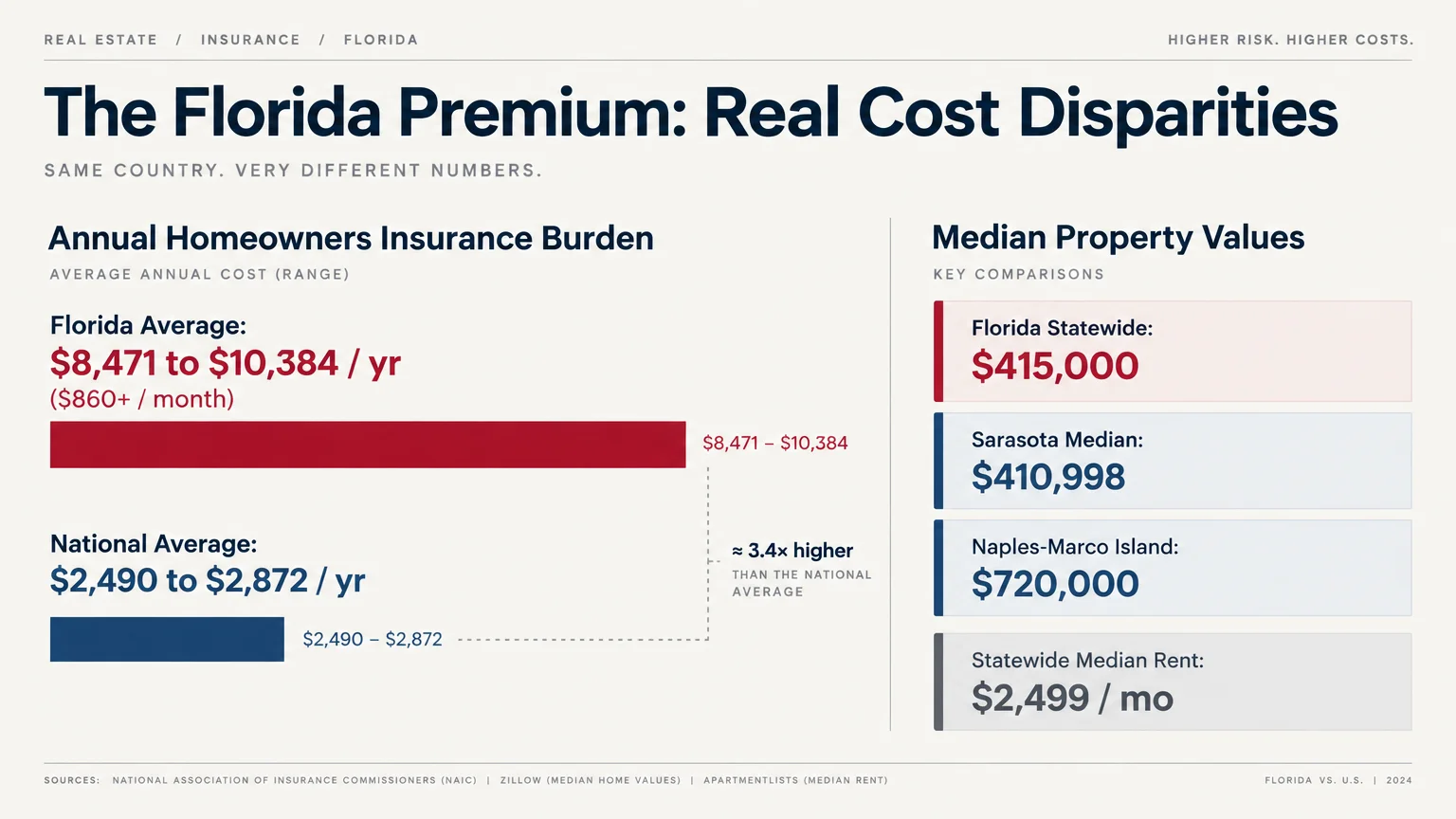
According to Florida Realtors, the statewide median single-family home sale price sits at $415,000. The Zillow Home Value Index across all property types in Florida has climbed to $375,361.
Renting offers little relief from high prices. The statewide median monthly rent in Florida currently sits at $2,499.
Popular retirement markets demand even steeper premiums from incoming seniors. Sarasota features a median home value of $410,998 and a median list price of $455,000.
Affluent enclaves push budgets even further. In the Naples-Marco Island region, the median home price stands at an astounding $720,000.
Beyond purchase prices, property insurance creates an acute crisis for fixed-income households. Florida has the highest average homeowners insurance premiums in the entire United States.
Statewide averages range from $8,471 per year for $300,000 in dwelling coverage to $10,384 annually for $250,000 in coverage. These figures dwarf the national average homeowners insurance cost of $2,490 to $2,872 per year.
Paying more than $860 per month just for property insurance erodes retirement cash flow quickly. Prudent savers now look beyond Florida borders to find genuine affordability.

Strategic Pillars for a High-Value Relocation
Relocating your household requires more than comparing real estate listing prices. You must evaluate the full financial and physical ecosystem of your target city.
Pillar 1: Income and Tax Structuring
State income tax rates represent only one element of your broader retirement tax liability. You must also evaluate how states treat distributions from individual retirement accounts and pensions.
Guidance from the Internal Revenue Service can help you calculate the federal tax obligations on your retirement withdrawals before factoring in state-level exemptions. Understanding these combined brackets prevents expensive tax season surprises.
Sales taxes and municipal levies can quietly erode your purchasing power over time. Researching total local tax burdens gives you an accurate picture of your ongoing cash needs.
Comparing your monthly benefit estimates through the Social Security Administration allows you to align your fixed income with local living costs. Knowing your baseline income clarifies how far your monthly checks will stretch.
Pillar 2: Lifestyle Design and Community Integration
Sunlight and warm weather mean very little if you lack social outlets or recreational infrastructure. Look for cities with robust parks, active community centers, and accessible public waterfronts.
Consider whether a destination supports your passions, such as tennis, boating, gardening, or continuing education. Staying engaged in meaningful hobbies preserves cognitive agility and emotional health throughout aging.
Walkable town squares and active adult neighborhoods reduce isolation as personal driving habits change. A supportive local network forms the foundation of a successful long-term move.
Pillar 3: Healthcare Access and Mobility Planning
Proximity to quality regional hospital systems becomes paramount as healthcare needs evolve. You must ensure your destination features top-tier medical specialists and comprehensive emergency care.
Research published in peer-reviewed aging journals emphasizes that physical mobility directly correlates with independent longevity. Choosing single-level housing in neighborhoods with smooth walking paths preserves your mobility.
Reviewing provider networks on Medicare.gov helps you verify that local physicians accept your preferred coverage before you relocate. Preserving uninterrupted care protects both your health and your wallet.

10 Affordable Cities Delivering the Florida Lifestyle
These ten destinations offer warm climates, rich recreational scenes, and welcoming communities. Most importantly, each city features median home prices roughly half that of Florida markets.
1. Augusta, Georgia
Augusta offers golf culture that rivals any community in Florida. Situated along the scenic Savannah River, this historic city delivers warm weather, lush greens, and an active outdoor environment.
Housing costs here remain remarkably accessible for retirees on fixed budgets. The typical home value in Augusta sits at $187,663, with a median list price of $199,900.
That price point represents a discount of more than 50% compared to Florida’s statewide single-family median price. Your housing dollar stretches twice as far along Georgia’s eastern border.
Tax regulations in Georgia provide exceptional protection for retirement assets. Georgia does not tax Social Security benefits, keeping more cash in your monthly budget.
Residents aged 65 and older qualify for a retirement income exclusion of up to $65,000 per person. Married couples filing jointly can exclude up to $130,000 of retirement income from state taxation.
Augusta also serves as a premier regional healthcare hub. The presence of major medical complexes ensures prompt access to specialized physicians and advanced medical technology.
2. Mobile, Alabama
Mobile delivers coastal living, rich architectural beauty, and mild winters on the historic shores of Mobile Bay. You can enjoy fresh seafood, boating, and coastal breezes without Florida’s crushing expenses.
Real estate in Mobile remains exceptionally affordable for coastal living. The typical home value is just $196,696, less than half the cost of Florida’s prime coastal hubs.
Alabama establishes one of the nation’s most retiree-friendly tax frameworks. The state completely exempts Social Security benefits and traditional defined-benefit pensions from income taxation.
Retirees aged 65 and older can claim a $6,000 exemption on distributions from 401(k) plans and individual retirement accounts. Married couples can shield up to $12,000 of these retirement withdrawals.
Property taxes in Alabama provide unmatched ongoing relief. Homeowners aged 65 and older are completely exempt from state property taxes.
Alabama boasts the second-lowest average effective property tax rate in the nation at just 0.37%. Lower property tax liabilities protect your fixed budget against long-term inflation.
3. Gulfport, Mississippi
Gulfport provides direct access to white sand beaches along the sparkling Gulf of Mexico. This vibrant coastal town delivers a relaxed seaside rhythm, fishing charters, and lively waterfront dining.
Purchasing coastal property in Gulfport costs a fraction of Florida beach real estate. The typical home value is $206,122, while Redfin reports a median sale price of $208,000.
Mississippi offers an aggressive tax shelter for your retirement savings. The state exempts all qualifying retirement income from individual state income taxes.
You pay zero state income tax on Social Security benefits, pension payouts, 401(k) withdrawals, or IRA distributions. Any non-retirement income above $10,000 is taxed at a modest, flat 4% rate.
The city features continuous boardwalks and flat coastal terrain that encourage daily walking. Active seniors enjoy mild winters that make year-round outdoor recreation practical and pleasant.
Gulfport’s combination of oceanfront living and full retirement income tax exemptions makes it an extraordinary bargain. You receive the Gulf Coast lifestyle while keeping your savings intact.
4. Lake Charles, Louisiana
Lake Charles delivers freshwater lakes, coastal bayous, and renowned culinary traditions under warm southern skies. Retirees enjoy lakefront parks, golf resorts, and community festivals throughout the calendar year.
Housing prices in Lake Charles offer deep value for incoming retirees. The typical home value sits at $206,813, with a median listing price of $249,500.
Louisiana shields core retirement income from state tax collections. The state does not levy taxes on Social Security benefits or military retirement pay.
State tax authorities provide partial exclusions on both private and public pension withdrawals. These exemptions allow you to retain more capital for travel and leisure pursuits.
Mild winters allow gardeners and boating enthusiasts to stay active throughout December and January. The flat topography supports accessible single-story living for older adults with mobility limitations.
Lake Charles delivers a vibrant cultural tapestry and abundant waterways. You can spend your retirement on the water without paying coastal Florida premiums.
5. Corpus Christi, Texas
Corpus Christi delivers miles of sandy beaches along the warm waters of the Texas Gulf Coast. Wind sports, deep-sea fishing, and coastal birding thrive along this sunny barrier island hub.
Coastal property remains within reach for mainstream retirees here. The typical home value in Corpus Christi stands at $222,115, providing direct beach access at an accessible price point.
Texas matches Florida’s headline tax benefit perfectly. Like Florida, Texas imposes no state individual income tax on its residents.
Your Social Security payments, pensions, 401(k) distributions, and IRAs remain completely untaxed at the state level. You preserve the tax benefits of Florida without absorbing Florida’s elevated housing costs.
The city maintains extensive bayfront pathways and urban marinas for easy pedestrian recreation. Comprehensive regional medical centers serve the coastal bend, securing your long-term healthcare access.
If you want coastal living, ocean breezes, and zero state income taxes, Corpus Christi fits the bill. It delivers the Florida beach lifestyle for roughly half the cost.
6. Florence, South Carolina
Florence combines warm Carolinas weather with quick access to the Atlantic Ocean. Situated a short drive from coastal beaches, this inland city offers serene southern living without hurricane insurance spikes.
Acquiring a home in Florence requires a modest financial commitment. The typical home value sits at $224,906, leaving substantial capital in your investment portfolio.
South Carolina treats retirement income generously under state tax codes. The state never taxes Social Security benefits, reducing tax friction on your monthly checks.
Retirees aged 65 and older can deduct up to $10,000 of retirement income from their state returns. You can also claim an additional $15,000 senior deduction against any taxable income source.
Florence features a historic downtown, expansive public parks, and a thriving regional arts community. The local healthcare system offers specialized cardiac, oncological, and surgical care close to home.
Retiring to Florence allows you to enjoy warm coastal proximity without coastal insurance costs. It represents a sensible compromise between ocean access and budget preservation.
7. McAllen, Texas
McAllen sits in the subtropical Rio Grande Valley near the southernmost tip of Texas. The city boasts bright sunshine, palm trees, and citrus groves, creating an authentic tropical environment.
Real estate values in McAllen are among the lowest in the American Sunbelt. The typical home value is $226,801, while PropertyIQ reports a median sale price of just $189,000.
Because McAllen is located in Texas, you pay zero state individual income tax. Your retirement accounts, pensions, and Social Security checks enter your household completely untaxed.
Winter temperatures remain remarkably warm and dry, making it a favorite retreat for active outdoor enthusiasts. You can play tennis, cycle, and garden through January without feeling winter chills.
The city offers comprehensive medical facilities that cater specifically to an active senior demographic. The low cost of consumer services helps your fixed monthly income go further.
McAllen delivers true subtropical living, vibrant community centers, and substantial financial headroom. It provides an ideal alternative for those seeking eternal summer on a budget.
8. Columbia, South Carolina
Columbia offers hot summers, gentle winters, and premier freshwater recreation. Located adjacent to massive Lake Murray, the region offers 500 miles of shoreline for boating and lakeside dining.
Housing in South Carolina’s capital city remains exceptionally attractive. The typical home value sits at $227,148, with a median listing price of $250,000.
South Carolina exempts Social Security benefits from income tax collections. Residents aged 65 and older also benefit from a $10,000 retirement exclusion and a $15,000 general senior income deduction.
The presence of the state university fuels rich cultural programming, lifelong learning programs, and collegiate sporting events. Retirees can audit classes, attend musical performances, and engage in campus activities.
Columbia boasts excellent regional hospital networks and specialized rehabilitation centers. The combination of lake recreation and urban amenities creates a well-rounded retirement environment.
Choosing Columbia gives you water access, warm weather, and intellectual stimulation. You gain the active Florida lake lifestyle without taking on an expensive mortgage.
9. Hot Springs, Arkansas
Hot Springs nestles in the scenic Ouachita Mountains, offering natural thermal waters, pristine mountain lakes, and dense pine forests. The city provides historic spa architecture and an active arts district.
Home values in Hot Springs remain affordable for everyday retirees. The typical home value is $242,674, while Redfin reports a median sale price of $238,386.
Daily living costs in this resort town stay remarkably low. The overall cost of living in Hot Springs measures approximately 7% below the national average.
Arkansas does not impose state taxes on your Social Security benefits or military retirement pay. The state also provides partial income tax exemptions on private and public retirement plan distributions.
The surrounding national park features accessible walking promenades and thermal bathhouses for gentle physical therapy. Several clean mountain lakes offer world-class bass fishing, kayaking, and pontoon boating.
Hot Springs delivers natural beauty, wellness traditions, and gentle weather throughout the year. It serves as a peaceful alternative to congested Florida resort corridors.
10. Green Valley, Arizona
Green Valley provides dry desert sunshine, dramatic mountain backdrops, and dedicated active-adult living south of Tucson. If you value low humidity, warm days, and organized senior recreation, this community shines.
The median single-family home price in Green Valley sits at $282,000 according to industry data. Retirees seeking compact layouts can find one-bedroom condominiums selling for around $140,000.
Green Valley encompasses 130 mostly age-restricted developments linked by shared recreation facilities. A single membership grants you access to dozens of swimming pools, fitness centers, and hobby studios.
Arizona exempts Social Security benefits from state income taxation. The dry desert air provides natural relief for seniors managing arthritis or chronic respiratory conditions.
A golf-cart-friendly road network allows residents to navigate to shopping, dining, and medical appointments with ease. The community design fosters deep social connections and active daily engagement.
Green Valley matches the active-adult country club lifestyle pioneered in central Florida. It delivers the same recreation and sunshine at a substantially lower acquisition cost.

Expert Perspectives on Relocation Decisions
Certified Financial Planner™ professionals emphasize that moving in retirement requires looking beyond the sticker price of a home. Relocation alters your recurring overhead for decades to come.
Independent advisors note that sky-high property insurance in coastal Florida often offsets the absence of a state income tax. In many cases, paying a modest income tax in a low-insurance state yields greater net annual savings.
Gerontologists emphasize that your social network matters as much as your investment portfolio. Relocating to a community with active recreation centers helps you form new friendships quickly, protecting your mental well-being.
Data from the AARP highlights that remaining socially active and physically engaged lowers healthcare costs throughout later life. Choosing an affordable location frees up the financial resources needed to maintain an active lifestyle.
Financial Pitfalls and Relocation Safeguards
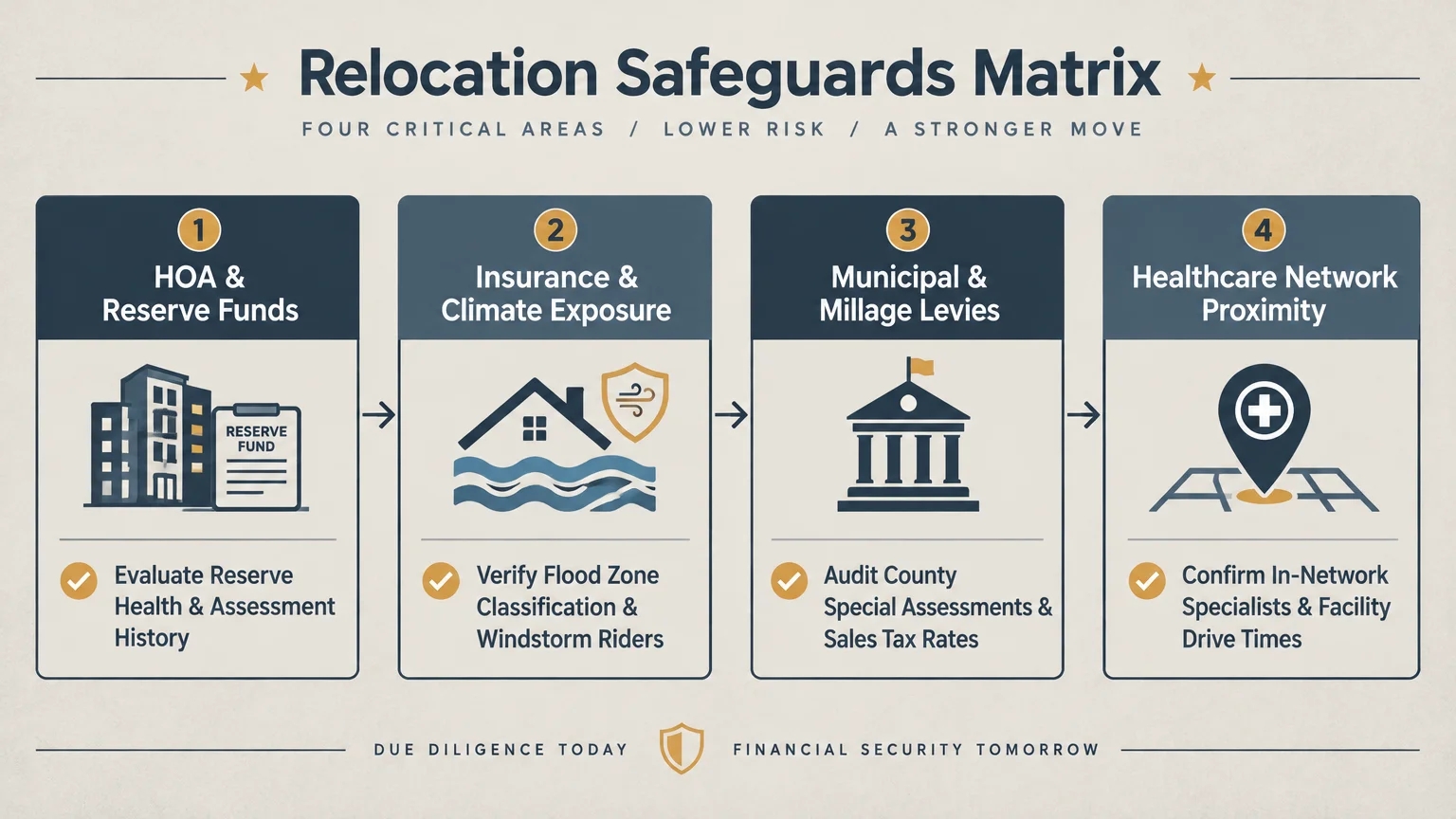
While relocating saves money, you must watch for financial pitfalls that can erode your anticipated savings. Understanding these subtle traps keeps your retirement plan secure.
Property tax reassessments can surprise new homeowners when purchasing out of state. Assessed values often reset to the purchase price, resulting in a higher tax bill than the previous owner paid.
Carefully examine the flood zones and local elevation of prospective properties before making an offer. Buying in a flood-prone area can introduce expensive insurance requirements that cancel out your housing savings.
Healthcare networks require thorough vetting before you complete a cross-country move. Verify that local primary care physicians and specialists accept your Medicare Advantage plan or original Medicare supplement.
According to consumer research from the Bureau of Labor Statistics, housing and healthcare remain the two largest expenses for older Americans. Protecting yourself against unexpected hikes in these two categories preserves your peace of mind.
Watch out for moving company scams and unlicensed contractors during your transition. Always verify interstate moving companies with federal transport registries and request binding estimates in writing.
Frequently Asked Questions About Leaving Florida Behind
Does moving to a state with an income tax always cost more than Florida?
No, total living costs often drop significantly even when moving to a state with an income tax. Florida’s exorbitant homeowners insurance premiums and elevated housing costs frequently exceed the modest state taxes assessed elsewhere.
Most alternative states offer generous exemptions on Social Security benefits and retirement withdrawals. These specific senior exemptions shield the vast majority of your fixed income from state collections.
How do healthcare costs in these alternative cities compare to Florida?
Healthcare costs in these ten cities generally align with or fall below national averages. Florida’s high density of retirees often creates long wait times for specialized medical appointments.
Regional hubs like Augusta, Georgia, and Columbia, South Carolina, house major research hospitals and university medical centers. You receive top-tier care without navigating the strained clinical capacity found in crowded retirement epicenters.
Will property taxes in Texas negate the savings from cheaper housing?
Texas does have higher effective property tax rates than Florida, but lower home prices balance the math. Buying a home in McAllen or Corpus Christi for roughly $225,000 creates a much lower assessment base than a $415,000 Florida home.
Furthermore, Texas provides property tax homestead exemptions and value freezes for homeowners aged 65 and older. These statutory protections prevent runaway property tax hikes as you age in place.
How can you test a new retirement community before buying a home?
You should arrange an extended stay of four to six weeks in your target destination before making a permanent move. Renting an apartment or extended-stay home allows you to experience daily traffic, medical services, and local community life.
Visit during the hottest months of the summer to evaluate your comfort with the local climate. Testing the community across multiple seasons ensures you make an informed decision before committing your capital.
Your 48-Hour Action Plan
Transitioning to an affordable retirement destination begins with small, deliberate actions. You can initiate your journey toward financial freedom over the next two days.
In the next 48 hours, choose three cities from this list that match your lifestyle preferences. Compare their real estate prices directly against your current home equity to determine your potential debt-free surplus.
Next, contact your financial advisor or tax preparer to model your retirement income under the tax laws of those target states. Taking this single analytical step will give you the confidence to claim the retirement lifestyle you deserve.