Imagine stepping onto your porch with warm coffee as pelicans glide past quiet marshes and neighbors wave from the sidewalk. Retiring near the water no longer demands crowded tourist strips or runaway insurance bills.
Across the country, smart retirees are trading congested legacy hotspots for smaller coastal retirement cities with gentler prices and authentic community ties. You can protect your nest egg while gaining daily movement and calmer routines.
These ten underrated beach towns blend shoreline beauty, practical healthcare access, and friendly state tax rules. Use this guide to compare real 2026 costs and plan your next chapter by the sea.
Why Older Adults Are Rethinking Traditional Coastal Hot Spots
For decades, retiring to the shore meant following the same highway south toward crowded beachfront condominiums. Today, rising property costs and storm premiums are reshaping where older Americans unpack their boxes.
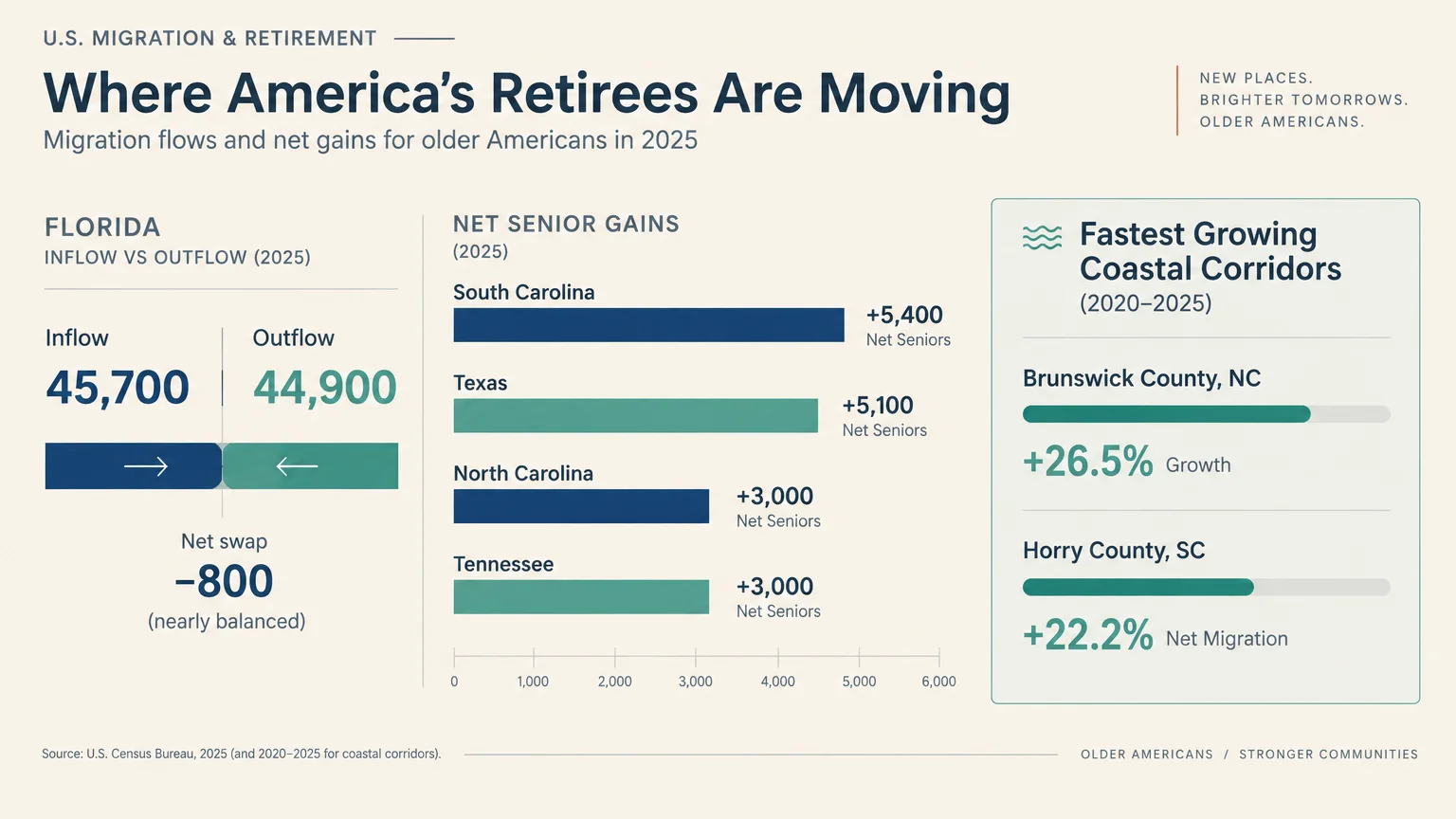
According to HireAHelper and Realtor.com migration data cited by AARP and Newsweek in 2026, nearly as many Americans aged 65 and older left Florida in 2025—about 44,900—as moved there, roughly 45,700. That near-even swap left Florida with minimal net retiree growth while 16 other states posted larger gains.
South Carolina led the nation with more than 5,400 net retirement-age newcomers in 2025, followed by Texas with over 5,100. North Carolina and Tennessee each added more than 3,000 net seniors, while Mississippi attracted over 1,200.
The U.S. Census Bureau’s Vintage 2025 migration analysis confirms that warm weather and retirement enclaves continue driving domestic moves. Yet buyers are looking beyond headline resort markets toward quieter harbors and smaller bays.
A September 2026 RealtyHomes analysis of Census estimates and FEMA’s National Risk Index underscores how fast smaller coastal corridors are expanding. Brunswick County in coastal North Carolina ranked first nationwide among large high-hazard counties, surging 26.5 percent in population from 2020 to 2025.
Nearby Horry County in South Carolina posted 22.2 percent net domestic migration over the same stretch, while Charlotte County in Florida saw 20.8 percent. Before you commit to any booming shoreline, you need to balance scenic appeal against crowds and carrying costs.
Meaning, Mindset, and the Science of Blue Space
Moving near the water does far more than upgrade your afternoon view. Intentional coastal living gives your days natural structure, fresh air, and effortless excuses to connect with neighbors.
Research summarized by County Health Rankings & Roadmaps in February 2026 shows that regular access to blue space—oceans, bays, and natural waterways—reduces stress and anxiety. Those environments also encourage steady physical activity and strengthen overall quality of life for older adults.
You do not need to jog along soft sand to capture those rewards. Flat harbor boardwalks, shaded fishing piers, and paved seawall paths deliver the same calming horizon views for walkers, cane users, and mobility scooters.
Purpose matters just as much as scenery once your career schedule ends. Without morning meetings or work deadlines, unplanned weeks can drift into isolation if you rely only on beaches to fill your calendar.
Build your routine around three weekly anchors before you sign a lease or closing contract. Pair one morning movement habit, one recurring volunteer shift, and one creative or learning group to turn a vacation town into home.
Staying active also keeps your independence resilient as years pass. You can browse tailored balance, strength, and endurance routines through the National Institute on Aging exercise guide before planning daily shoreline walks.

10 Underrated Coastal Cities Gaining Popularity in 2026
Each of these ten beach towns for retirees pairs distinctive shoreline character with clear 2026 pricing benchmarks. Compare home values, insurance norms, state tax rules, and terrain so you can shortlist the communities that match your body and budget.
1. Brunswick, Georgia
Serving as the mainland gateway to Georgia’s Golden Isles, Brunswick offers historic brick streets, moss-draped squares, and quick causeway access to barrier beaches. You enjoy island scenery without paying island resort prices.
Median home sale prices hovered around $298,000 in September 2026, per Redfin data cited by FinanceBuzz. Average homeowners insurance in Georgia runs about $2,496 per year for $300,000 in dwelling coverage, according to November 2026 Insurify figures.
Georgia exempts Social Security benefits from state income tax and offers generous retirement-income exclusions starting at age 62. Flat downtown blocks and a regional hospital make everyday errands straightforward for drivers and walkers alike.
2. Coos Bay, Oregon
If cool summer breezes appeal more than humid afternoons, look toward Oregon’s largest coastal city. Coos Bay pairs a working deepwater port with dramatic headlands, state parks, and thriving botanical gardens.
Redfin data for the three months ending October 2026 shows a median home sale price of $315,000, up just 0.4 percent year over year with homes averaging 34 days on market. Oregon homeowners insurance averages $1,332 annually for $300,000 in coverage, per Insurify.
Oregon exempts Social Security benefits from state income tax, helping fixed monthly checks stretch further. Paved boardwalks along the bayfront and community theater productions keep retirees engaged even during misty winter months.
3. Ocean Shores, Washington
Set on a flat, six-mile peninsula between Grays Harbor and the Pacific Ocean, Ocean Shores trades steep coastal cliffs for easy terrain. Wild deer wander quiet residential lanes while beachgoers drive or stroll along firm tidal sand.
Average home prices stood at $349,000 in October 2026, up 1.2 percent year over year, while ZIP code 98569 posted a three-month median sale price of $347,000, down 6.9 percent, per Redfin. Washington levies no state income tax on pensions or portfolio withdrawals.
Homeowners coverage in Washington averages just $1,392 per year for $300,000 in protection, according to Insurify. Level paved streets suit recumbent trikes and low-impact walking clubs, though you should factor in drives to larger regional medical centers.
4. Georgetown, South Carolina
Tucked along Winyah Bay between Charleston and Myrtle Beach, Georgetown delivers antebellum architecture, shrimp boats, and peaceful marsh vistas without theme-park traffic. Its walkable Harborwalk invites unhurried evening strolls beside independent cafés and maritime museums.
Redfin reports a median home sale price of $364,826 over the three months ending September 2026, with listings averaging 64 days on market. South Carolina exempts Social Security benefits and averages $2,736 per year for $300,000 in homeowners insurance, per Insurify.
Because South Carolina led the nation in net retiree inflows during 2025, newcomers find established social clubs and civic guilds eager for volunteers. Nearby Pawleys Island beaches sit minutes away when grandkids come to visit.
5. Rockport, Texas
Perched on the Aransas Peninsula north of Corpus Christi, Rockport attracts painters, anglers, and winter birders drawn to migrating whooping cranes. Calm bay waters make kayaking and pier fishing approachable well into your seventies and eighties.
Median home sale prices reached roughly $371,000 in September 2026, according to Redfin data cited by FinanceBuzz. Texas charges zero state income tax, though coastal windstorm and homeowners premiums demand careful scrutiny before you make an offer.
Insurify puts the Texas average for $300,000 in dwelling coverage at $4,452 annually, and coastal counties often run higher. For budget comparison, nearby Corpus Christi averages $3,015 in monthly retirement expenses per 2026 GOBankingRates estimates, yet carries the highest major-city insurance average nationwide at $5,842 per ValuePenguin.
6. Rockland, Maine
Long known as the lobster capital of Maine, Rockland has evolved into a year-round haven for museum lovers, wooden-boat enthusiasts, and independent bookshop regulars. A mile-long granite breakwater leads straight toward a historic harbor lighthouse.
Redfin lists October 2026 average home prices at $390,000, up 3.3 percent year over year, while ZIP code 04841 recorded a $397,000 three-month median in September 2026. Maine averages only $1,224 annually for $300,000 in homeowners coverage, per Insurify.
Maine also exempts Social Security benefits from state income tax. Winters bring brisk coastal winds and snow, so single-level condos near Main Street offer smart convenience if you prefer skipping driveway shoveling.
7. Bay St. Louis, Mississippi
Sitting less than an hour east of New Orleans, Bay St. Louis blends Gulf breezes with a colorful Old Town arts district. Second Saturday art walks, front-porch music, and calm shallow waters foster instant warmth among neighbors.
Median home sale prices stood near $420,000 in September 2026, per Redfin data cited by FinanceBuzz. Mississippi exempts Social Security as well as qualified retirement income, making it remarkably gentle on IRA and pension distributions.
Homeowners insurance across Mississippi averages $3,264 per year for $300,000 in coverage, according to Insurify. Verify lot elevation carefully near the bayfront so flood insurance costs align cleanly with your monthly cash flow.
8. Port St. Joe, Florida
Along Florida’s unhurried Forgotten Coast, Port St. Joe skips high-rise towers in favor of bayfront trails, scallop beds, and friendly local diners. St. Joseph Bay stays remarkably calm, welcoming paddleboarders and gentle morning swimmers.
Redfin figures cited by FinanceBuzz show a median home sale price of roughly $470,000 in September 2026, with homes frequently sitting past three months and selling below asking. That slower pace gives buyers room to negotiate inspections and storm upgrades.
Florida collects no state income tax, yet property coverage requires serious budgeting. Statewide property insurance averaged $8,471 in 2026, up 6.8 percent from 2025 per Newsweek, while Insurify pegs $300,000 dwelling coverage at $6,324 annually.
9. Gulf Shores, Alabama
Beyond its sugar-white beaches, Gulf Shores invests heavily in year-round resident life, including paved backcountry trails winding through coastal pine forests. Flat multi-use paths accommodate walkers, cyclists, and adaptive trikes safely away from car traffic.
Median home sale prices reached about $493,000 in September 2026, per Redfin data cited by FinanceBuzz. Alabama exempts Social Security, defined-benefit pensions, and up to $6,000 of IRA or 401(k) income once you reach age 65.
Insurify reports an Alabama homeowners insurance average of $3,408 per year for $300,000 in coverage. Proximity to Baldwin County medical clinics and active-adult recreation centers supports long-term convenience as your mobility needs shift.
10. Pensacola, Florida
For retirees wanting major hospital systems, historic brick neighborhoods, and military aviation heritage alongside emerald waters, Pensacola stands out among coastal retirement cities. Roughly 21 percent of local residents are retired, creating built-in peer networks.
According to 2026 GOBankingRates estimates cited by Cheapism, total retirement living expenses in Pensacola average roughly $3,226 per month. Zero state income tax helps balance coastal insurance rates, especially if you choose elevated inland neighborhoods ten minutes from the beach.
Free summer concerts, minor-league baseball games overlooking the bay, and community college lifelong-learning courses keep entertainment costs remarkably low. You can enjoy saltwater horizons every week without paying luxury island HOA dues.
Your Coastal Experience Playbook: Purpose, Travel, and Creativity
Once you narrow your favorite beach towns, focus on how you will spend Tuesday mornings and rainy Thursdays. A fulfilling coastal retirement depends on active engagement rather than passive sightseeing.
Volunteer Roles That Anchor Your Week
Shoreline communities rely heavily on older volunteers to keep museums, libraries, and conservation programs thriving. You might monitor sea turtle nests at dawn, greet visitors at a maritime museum, or tutor local elementary readers.
Most civic roles cost nothing beyond fuel and a sun hat while introducing you to long-term residents outside tourist circles. You can search local placements matched to your stamina and schedule through AmeriCorps Seniors volunteer programs.
If mobility limits standing for long shifts, ask about archival indexing, donor outreach, or harbor welcome-desk roles with comfortable seating. Contributing two mornings weekly builds reliable friendships fast.
Lifelong Learning and Creative Pursuits
Coastal light and maritime history inspire creative hobbies you may have postponed during working years. Local art leagues across Rockport, Rockland, and Bay St. Louis run affordable watercolor, pottery, and photography workshops year-round.
Many nearby community colleges let residents aged 60 or 65 audit courses in marine biology, regional history, or creative writing for minimal registration fees. Learning alongside neighbors keeps your mind sharp while filling off-season calendars.
Educational group trips also offer an easy way to sample coastal regions before committing to a move. Explore guided learning itineraries tailored to older adults through Road Scholar coastal programs to test climate, terrain, and pace.
Smart Scouting Trips for Every Budget
Never buy coastal real estate after one sunny weekend when ocean breezes mask everyday realities. Instead, book a four-to-six-week rental during shoulder or off-peak months such as October, November, or February.
Track actual grocery totals, pharmacy drive times, bridge traffic, and noise levels after local restaurants close early on weeknights. Visit local senior centers and attend a city council meeting to see how well infrastructure is maintained.
If you travel on a tighter budget, split a two-bedroom cottage with close friends or choose inland neighborhoods five miles from the surf. You capture the same community amenities at a fraction of waterfront lodging rates.
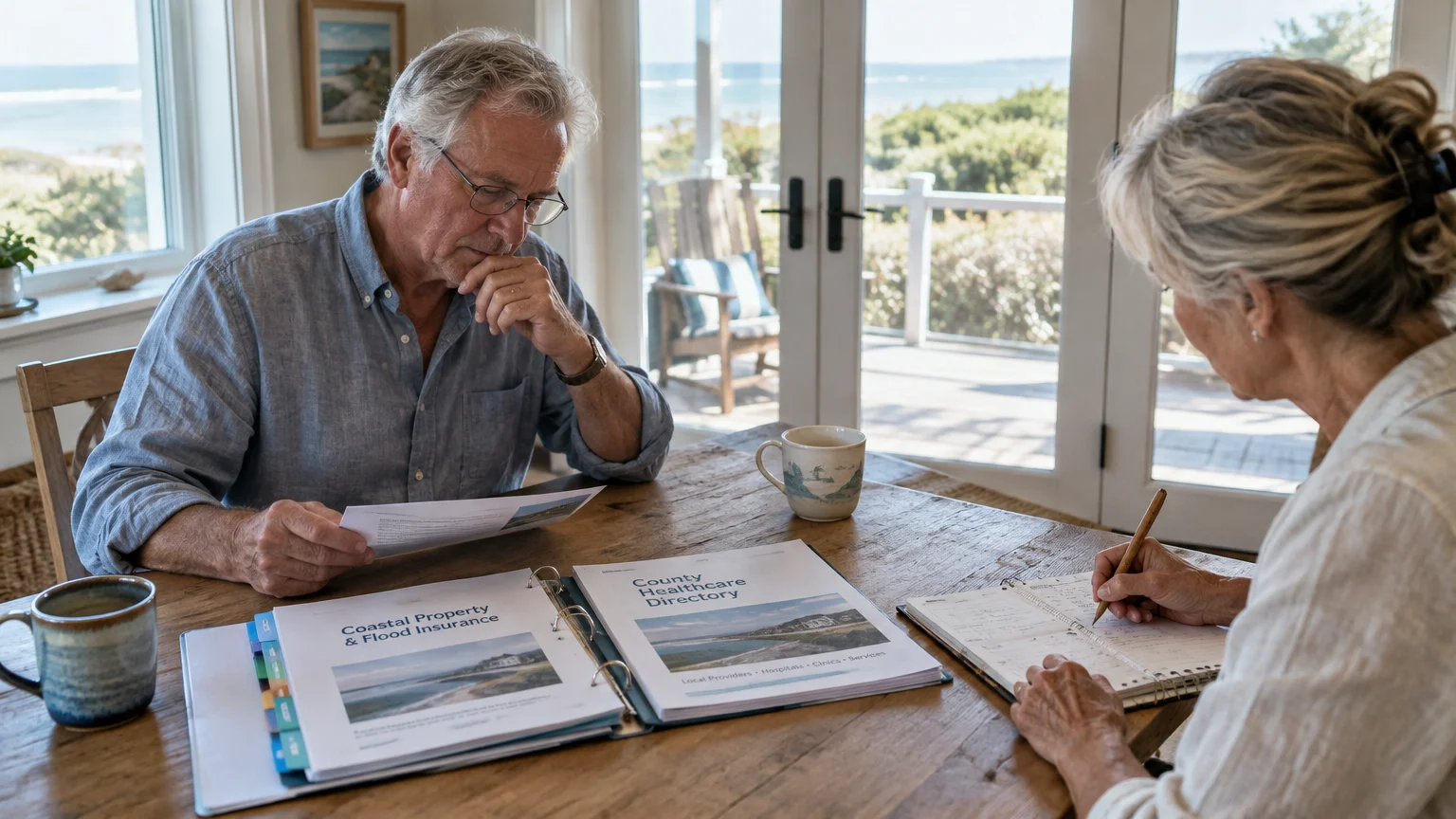
Building Your Financial, Insurance, and Health Safety Net
Saltwater beauty carries real financial and environmental trade-offs that deserve clear-eyed planning. Locking down insurance math, tax rules, and storm contingencies protects your peace of mind.
Decoding Homeowners and Flood Insurance
According to May 2026 NerdWallet and Quadrant Information Services data, standard U.S. homeowners insurance averages $2,490 per year—about $208 monthly—for $400,000 in dwelling coverage after jumping 24 percent from 2021 to 2024. Insurify places the November 2026 national average at $231 monthly for $300,000 in coverage.
Coastal rates vary dramatically by state, ranging from $1,224 in Maine and $1,332 in Oregon to $6,324 in Florida for $300,000 in dwelling coverage. Always request binding insurance quotes during your inspection window rather than relying on seller estimates.
Remember that standard homeowners policies exclude flood damage completely. FEMA notes that homes inside high-risk Zones A or V carrying government-backed mortgages must hold separate flood insurance, yet over 40 percent of National Flood Insurance Program claims arrive from moderate-to-low-risk Zones B, C, or X.
NerdWallet reports an average 2026 NFIP premium of $976 per year nationwide, while LendingTree data shows coastal Zone V policies averaging $1,718 annually—about $958 more than low-risk Zone X. Under FEMA’s Risk Rating 2.0, rates reflect property-specific distance to water, first-floor elevation, foundation style, and replacement cost.
Medicare, Social Security, and Coastal Taxes in 2026 and 2027
Knowing how federal benefits adjust helps you gauge rising coastal living expenses. Following a 2.8 percent Social Security bump in 2026, the Social Security Administration announced a 3.6 percent cost-of-living adjustment for 2027, raising average retired-worker checks roughly $75 monthly from $2,095 to $2,170.
Factor Medicare premiums directly into your monthly coastal budget. Official 2026 CMS figures set the standard Part B premium at $202.90 monthly with a $283 deductible, while Part A carries a $1,736 inpatient hospital deductible and Part D caps out-of-pocket drug costs at $2,100.
For 2027, CMS finalized a $2,400 Part D out-of-pocket cap with a $41.33 base premium, while the 2026 Medicare Trustees Report projects Part B rising to $209.50 monthly. High earners also face IRMAA surcharges above $109,000 single or $218,000 joint modified adjusted gross income.
Before finalizing a move, confirm that your preferred coastal town hosts primary-care doctors and specialists accepting your plan. Compare local hospital networks and Part D drug coverage directly through Medicare’s official plan finder.
Federal and state tax rules offer bright spots for coastal retirees in 2026. Under the 2025 One Big Beautiful Bill Act, taxpayers aged 65 and older receive a $6,000 federal deduction—$12,000 for qualifying couples—through 2028, phasing out above $75,000 single or $150,000 joint income.
IRS guidance cited by Bogart Wealth estimates that this temporary deduction lowers the share of seniors owing federal tax on Social Security to roughly 12 percent. At the state level, IRS Publication 915 confirms that 42 states plus Washington, D.C., leave Social Security benefits untaxed in 2026.
Stamina, Climate Resilience, and Emergency Readiness
Long-term coastal enjoyment requires respecting water and weather patterns. Both County Health Rankings & Roadmaps and the 2025 Lancet Countdown Report caution that sea level rise, coastal erosion, stronger storms, and extreme high tides threaten low-lying shoreline infrastructure.
Check elevation maps and local drainage history before signing any contract, avoiding streets that flood during routine king tides. Verify how your neighborhood handles power outages, especially if you rely on refrigerated medications, oxygen concentrators, or mobility lifts.
Keep a packed go-bag with seven days of prescriptions, waterproof document copies, and backup phone chargers ready before storm season opens. Review hurricane checklists and evacuation planning tools at Ready.gov resources for older adults so every household member knows the exit route.
Frequently Asked Questions About Coastal Retirement
How can I enjoy solo coastal travel safely while scouting towns?
Choose walkable historic districts or staffed boutique inns near cafés and libraries so you naturally cross paths with locals every day. Share your lodging details with family, join daytime walking tours or museum shifts, and skip late-night drives along unfamiliar barrier roads.
How do I balance caregiving duties with a move to the coast?
Prioritize coastal retirement cities within two hours of reliable regional airports, such as Pensacola, Brunswick, or Georgetown, so family flights remain straightforward. Research local respite care and home-health agencies early, and pick low-maintenance housing that leaves your energy free for loved ones.
What aging-in-place upgrades matter most in a coastal home?
Favor single-story layouts elevated safely above flood lines with zero-step garage or ramp entries. Inside, install curbless showers, grab bars, and lever door handles; outside, choose corrosion-resistant marine hardware, non-slip composite decking, and impact-rated storm shutters that require zero heavy lifting.
How do I budget for experiences without overspending on housing?
Cap total housing—including mortgage or rent, property taxes, HOA dues, homeowners coverage, and flood insurance—well below your guaranteed monthly income. Keeping fixed shelter lean leaves generous room for art classes, shoulder-season travel, and dinners with new coastal friends.
Put Your First Coastal Experience on the Calendar
Dreaming about ocean mornings feels inspiring, yet real clarity begins the moment you pick a date. Open your calendar today and circle one concrete step within the next sixty days.
Reserve a quiet off-season week in Brunswick, Coos Bay, or Georgetown, request a sample coastal insurance quote, or enroll in a shoreline learning trip. One intentional step turns underrated beach cities from distant wish-list names into the backdrop of your best years.