
You can retire comfortably in Europe on an ordinary monthly budget of $1,500. Historic cobblestone streets, fresh regional markets, and rich cultural traditions remain entirely accessible for American seniors living on fixed incomes.
Escalating domestic living costs continue to strain household finances across the United States. Fortunately, favorable currency dynamics and sensible residency frameworks allow your dollars to stretch significantly further abroad.
You do not need millions in private wealth to build a secure overseas retirement. These eleven welcoming European cities allow your monthly retirement check to fund a relaxed, dignified, and adventurous life abroad.
The New Economics of European Retirement
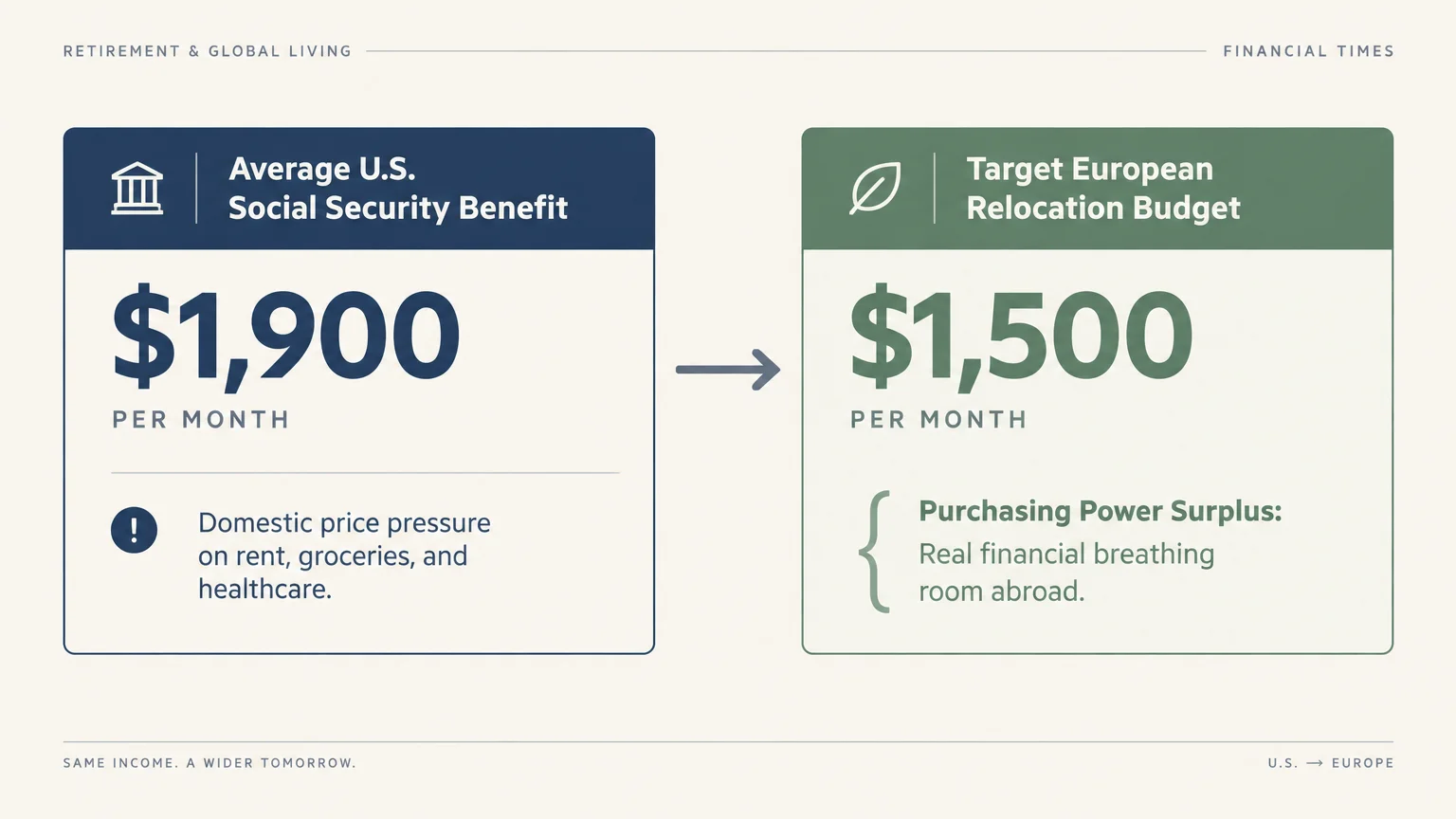
According to the Social Security Administration, the average monthly retirement benefit currently hovers near $1,900. Domestic price increases on rent, groceries, and services frequently strain that fixed amount.
Relocating abroad transforms your household balance sheet by shifting your income into economies with substantially lower baseline expenses. Everyday living costs drop without requiring you to abandon quality infrastructure or comfortable housing.
In thoughtfully selected European municipalities, a modest $1,500 monthly budget provides a high standard of living. You gain genuine financial breathing room along with access to walkable neighborhoods and vibrant local communities.
Navigating Legal Realities and Visa Thresholds
Before falling in love with a foreign destination, you must evaluate statutory visa regulations. Many popular European nations enforce financial hurdles that immediately disqualify retirees living on modest incomes.
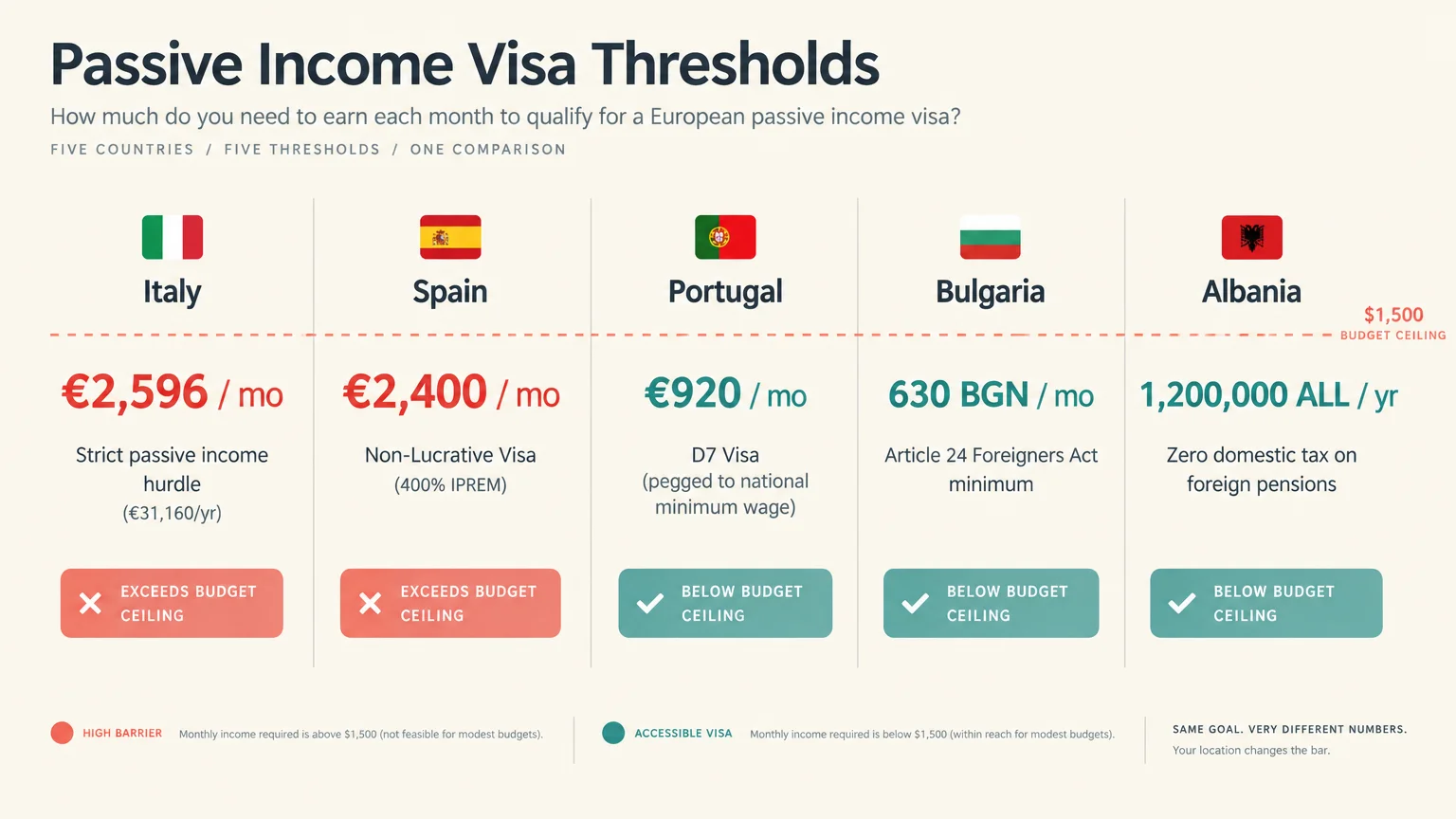
Spain mandates that Non-Lucrative Visa applicants prove recurring passive income equal to 400% of the IPREM. With the monthly threshold at €600, applicants require €2,400 monthly, disqualifying a $1,500 budget.
Italian consulates strictly require an individual passive income of approximately €31,160 annually, or €2,596 per month. That strict baseline rules out Italy for retirees operating on a $1,500 budget.
Fortunately, other European nations offer accessible pathways for international pensioners. Portugal pegs its D7 retirement visa to the national minimum wage, which reaches €920 monthly in 2026.
A $1,500 monthly benefit easily clears Portugal’s income threshold. However, Portugal ended its original tax-free Non-Habitual Resident regime in 2023, making foreign pensions subject to progressive domestic tax rates.
Bulgaria provides the most affordable legal threshold within the European Union under Article 24 of its Foreigners Act. Any non-EU retiree receiving a recognized government pension qualifies for a Type D visa.
You only need to show a monthly pension matching Bulgaria’s statutory minimum of roughly 630 BGN. A modest bank deposit covering six to twelve months of expenses satisfies consular officials.
Albania grants United States citizens one full year of residency without an entry visa under a bilateral treaty. For permanent stays, Law No. 79/2021 requires proof of an annual pension of 1,200,000 ALL.
Furthermore, Albania imposes zero domestic income tax on foreign pension distributions. Montenegro similarly offers residence permits to retirees purchasing residential property with no minimum statutory value.
Remember that Bulgaria and Romania joined the Schengen Area for air and maritime transit in March 2024. Time spent inside their borders now counts against your rolling ninety-day tourist allowance.

Three Strategic Pillars for Your Overseas Relocation
1. Income and Currency Planning
Currency exchange swings directly influence how far your dollars stretch at local bakeries and markets. Certified Financial Planner™ professionals recommend maintaining a six-month cash emergency fund inside a liquid high-yield account.
This liquid buffer protects you against sudden exchange rate fluctuations between the dollar and local currencies. You avoid liquidating long-term investments when exchange rates dip unfavorably.
The Internal Revenue Service mandates that American citizens file annual tax declarations on worldwide income. Reviewing bilateral double-taxation treaties ensures that you claim appropriate foreign tax credits without overpaying.
2. Lifestyle and Accessibility Design
Successful overseas retirement hinges on selecting towns that support independent mobility and healthy aging. Academic research from leading gerontologists reveals that pedestrian-oriented towns preserve physical vigor and promote cognitive vitality.
Opting for communities with robust bus and rail infrastructure frees you from vehicle maintenance expenses. You can complete your daily grocery shopping, banking, and social engagements entirely on foot.
3. Healthcare and Insurance Safeguards
Many migrating seniors mistakenly assume their domestic healthcare benefits accompany them across the Atlantic. According to Medicare.gov, Medicare provides zero coverage for healthcare services received outside the United States.
European residence visas require valid private international health insurance policies containing medical evacuation coverage. Budget between $120 and $250 each month for high-quality private coverage designed specifically for seniors.

11 Affordable European Cities for Retirees
These eleven enchanting cities offer remarkable cultural depth, peaceful living, and full legal feasibility on a realistic $1,500 monthly budget.
1. Coimbra, Portugal
Coimbra blends rich academic heritage with laid-back central Portuguese charm along the scenic Mondego River. Its historic university and winding cobblestone streets create an inspiring cultural setting for older adults.
Long-term one-bedroom rentals outside the historic core average €450 to €600 per month. With total monthly costs between $1,250 and $1,450, you can comfortably access excellent regional hospitals and public transit.
2. Castelo Branco, Portugal
Nestled near Portugal’s eastern border, Castelo Branco offers peaceful public gardens, baroque architecture, and dependable sunshine. Its tranquil neighborhoods provide an unhurried lifestyle far removed from crowded tourist corridors.
Modest one-bedroom apartments rent for €400 to €500 monthly. Total monthly expenses rarely exceed $1,200, leaving plenty of room for fresh local produce and leisure.
3. Veliko Tarnovo, Bulgaria
Veliko Tarnovo captivates residents with dramatic medieval hillsides rising above the curving Yantra River. Its restored artisan workshops and thriving expatriate network make welcoming friends simple and natural.
Long-term rentals cost between 500 and 750 BGN, or roughly $275 to $415 monthly. All-inclusive monthly spending totals $850 to $1,100, providing the most affordable retirement living in the European Union.
4. Plovdiv, Bulgaria
Plovdiv pairs ancient Roman amphitheatres with a vibrant contemporary arts district known as Kapana. Bulgaria’s cultural capital provides year-round opera, art exhibitions, and sprawling pedestrian avenues.
Furnished one-bedroom apartments outside the historical center rent for $320 to $450 per month. A single retiree lives abundantly on $1,050 to $1,250 monthly while dining out regularly.
5. Burgas, Bulgaria
Burgas sits on Bulgaria’s Black Sea coast, offering clean coastal breezes and expansive shoreline parks. The city provides a functioning year-round economy without the inflated pricing of seasonal holiday resorts.
One-bedroom apartments rent for $300 to $420 monthly on annual contracts. Total living expenses range from $950 to $1,200, allowing seniors to enjoy paved seaside walking trails and fresh seafood.
6. Sarandë, Albania
Sarandë overlooks turquoise Ionian waters across from the Greek island of Corfu along the Albanian Riviera. Its mild Mediterranean climate provides comfortable winters and sunny coastal living.
Twelve-month leases on modern one-bedroom apartments average $300 to $450 monthly. Total living costs range from $950 to $1,200, provided you secure an annual contract to avoid summer rate spikes.
7. Vlorë, Albania
Vlorë marks the scenic meeting point of the Adriatic and Ionian seas with palm-lined coastal promenades. Recent infrastructure investments have added modern pedestrian plazas and accessible public healthcare clinics.
Modern one-bedroom rentals in pleasant residential districts cost $320 to $450 monthly. Total monthly outlays average $1,000 to $1,250, supported by Albania’s generous one-year visa-free stay for American citizens.
8. Shkodër, Albania
Shkodër serves as northern Albania’s cultural hub, nestled near the Albanian Alps and scenic Lake Shkodër. Famous for stone architecture and bicycle-friendly streets, the city encourages active outdoor living.
One-bedroom apartments rent for $250 to $380 monthly on long-term leases. Comprehensive living expenses range between $900 and $1,150, leaving substantial savings in your monthly budget.
9. Brașov, Romania
Framed by the Carpathian Mountains, Brașov charms residents with Gothic architecture, pristine forests, and efficient public transit. Clean mountain air and safe streets make everyday strolls delightful.
Renting a comfortable one-bedroom apartment outside central squares costs $400 to $550 monthly. Overall monthly expenses total $1,150 to $1,300, covering quality groceries, utilities, and regional train travel.
10. Sibiu, Romania
Sibiu stands out as a historic cultural center in Transylvania, renowned for pastel baroque buildings and lively pedestrian plazas. The city hosts classical concerts, film festivals, and open-air food markets throughout the year.
Long-term one-bedroom rentals average $380 to $520 monthly. Total spending ranges between $1,100 and $1,300, supported by modern regional medical facilities and an international airport.
11. Bar, Montenegro
Bar combines Adriatic coastal waters, ancient olive groves, and dramatic mountain peaks along Montenegro’s southern coastline. As a commercial port, it maintains stable year-round services and dependable local transport.
One-bedroom apartments rent for €400 to €550 monthly, keeping total expenses between $1,100 and $1,350. Purchasing residential property here grants temporary residence without statutory minimum investment thresholds.

Expert Perspectives and Crucial Risk Checks
Transitioning your entire life overseas requires practical risk management alongside financial budgeting. Research published by AARP underscores that social isolation represents a major health hazard for older adults.
Retirees who build social networks and study local languages adapt far more successfully than those remaining isolated. Joining expatriate book clubs and community volunteering groups speeds up your social integration.
Protect your capital by guarding against international rental scams. Never transfer deposits or sign binding lease agreements before personally inspecting the apartment alongside an independent bilingual lawyer.
Additionally, verify whether your target country taxes foreign pension earnings under local progressive brackets. Portugal now taxes pension income under regular rates, whereas Albania exempts foreign retirement pensions entirely.
Frequently Asked Questions
Can I use U.S. Medicare to cover my doctor visits in Europe?
No, traditional U.S. Medicare Parts A and B provide zero coverage for medical treatment received abroad. You must carry private international medical insurance to fulfill residency visa mandates and cover emergencies.
How does the 90-day Schengen rule affect American retirees?
American tourists can only remain inside the Schengen Zone for ninety days within any 180-day window. Long-term retirement requires obtaining a national residence visa rather than attempting consecutive tourist stays.
Will the United States tax my Social Security if I live abroad?
The United States taxes its citizens on worldwide income regardless of where they establish legal residency. However, foreign tax credits and bilateral tax treaties generally prevent double taxation on your benefits.
Can I legally retire in Spain or Italy on $1,500 a month?
Under standard visa rules, you cannot legally retire in Spain or Italy on a $1,500 monthly income. Spain requires roughly €2,400 monthly, while Italy demands over €2,596 per month in verified passive earnings.
Take Your First Step in the Next 48 Hours
Turning an overseas retirement dream into reality requires tangible momentum. Check your passport’s expiration date on the U.S. Department of State website to confirm it remains valid for at least twelve months.
Next, select two destinations from this guide and review active long-term rental listings on local property websites. Taking one concrete action today moves you closer to the rewarding, affordable European retirement you deserve.