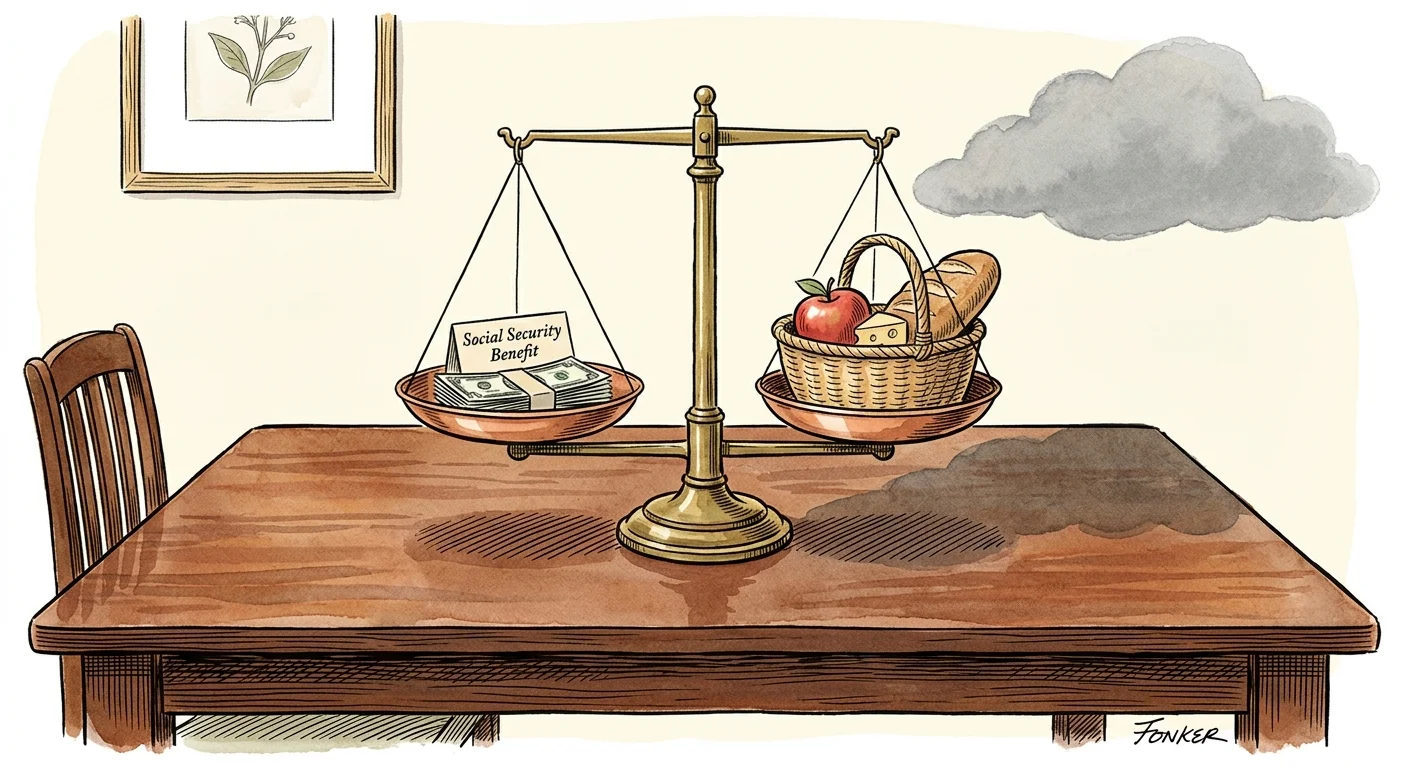
Risks, Benefit Cliffs, and Financial Safeguards to Watch
As you seek ways to offset food inflation, remain vigilant against common financial traps and structural hurdles that affect older Americans. One critical risk is the benefit cliff, where a small increase in income—such as the annual 2.8% Social Security COLA—slightly pushes your total gross income above threshold limits for assistance programs like SNAP or Medicare Savings Programs. Review state-specific asset and income limits annually to prevent unexpected drops in benefit support.
Additionally, be on high alert for fraudulent schemes targeting fixed-income seniors. Scammers frequently place fraudulent advertisements online or send phone texts promising free grocery gift cards, massive inflation relief checks, or fake Medicare grocery allowances. Never share your Social Security number, banking details, or Medicare identification with unverified callers. Always access official benefit channels directly through government websites like the Social Security Administration or trusted non-profit assistance portals.
Finally, avoid sacrificing essential prescription medications to pay for food. If rising grocery costs force you to choose between filling prescriptions and stocking your refrigerator, consult your pharmacist or physician about lower-cost generic alternatives, patient assistance programs, or low-income subsidies available through Medicare Part D Extra Help.






Where is the list of 6?
They lied Jerrold
They lied Jerrold.