The Financial Reality of Grocery Inflation on Fixed Incomes
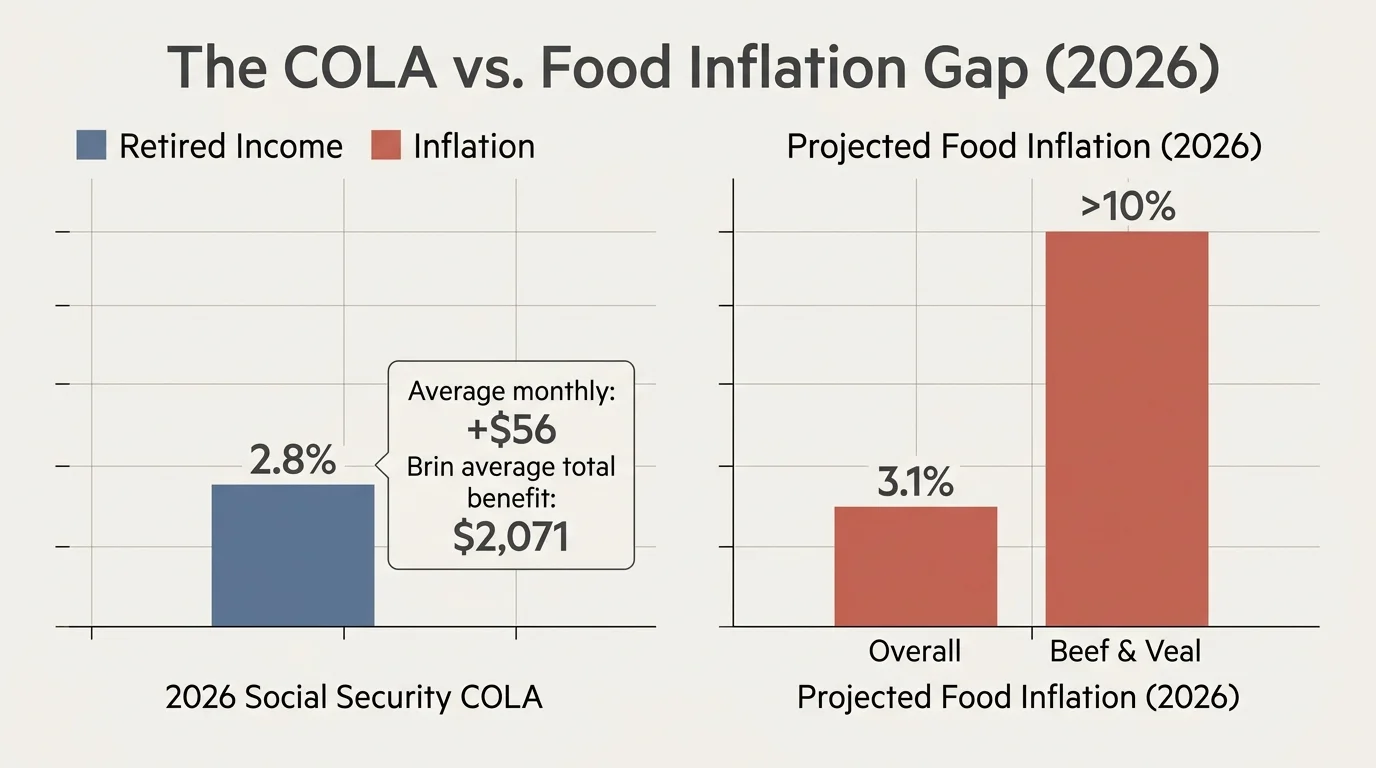
When living on a fixed income, even modest price spikes at the supermarket create significant financial friction. The 2.8% cost-of-living adjustment for 2026 provides an average boost of about $56 per month, bringing the typical retired worker benefit to approximately $2,071 per month. While any increase helps, specific commodity categories far outpace this general adjustment. The USDA Economic Research Service projects overall food prices to climb 3.1% across 2026, meaning your dollar buys noticeably less food than it did last year.
This inflation disparity stems from how official benefit adjustments work. Cost-of-living increases rely on broad consumer price indexes measuring a wide basket of goods, but retired households spend a higher proportion of their income on everyday staples like fresh food and healthcare. The Bureau of Labor Statistics reported that the Food at Home index rose between 2.7% and 3.0% year-over-year in mid-2026. When key items surge by double digits, your total register cost expands rapidly, forcing you to draw money away from other retirement priorities.





Where is the list of 6?
They lied Jerrold
They lied Jerrold.