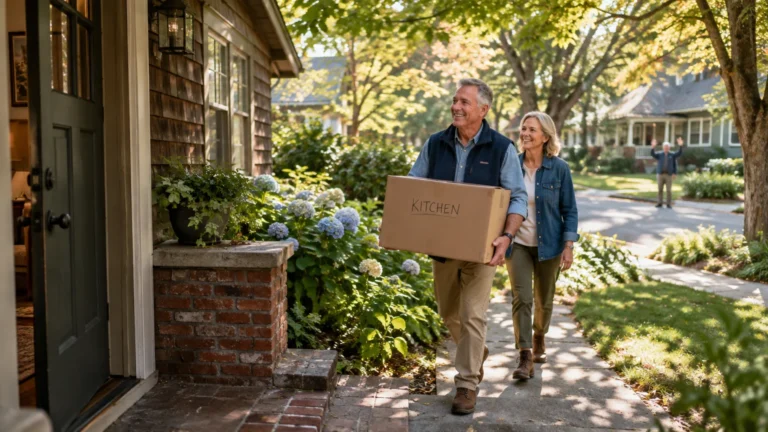
As of August 2026, the average retired worker collects $2,087.52 per month from Social Security. You can build a vibrant, secure retirement on that exact paycheck without a massive savings account—if you pick the right zip code.
While coastal cities price out fixed-income seniors, dozens of heartland towns and sunbelt communities offer one-bedroom apartments under $750 a month. Moving to one of these affordable pockets lets your $2,000 monthly budget comfortably cover housing, healthcare, and daily leisure.
Below, you will see how 2026 tax laws and Medicare costs affect your wallet, followed by ten charming American towns where your dollars stretch furthest.
The 2026 Financial Snapshot: What $2,000 a Month Actually Buys
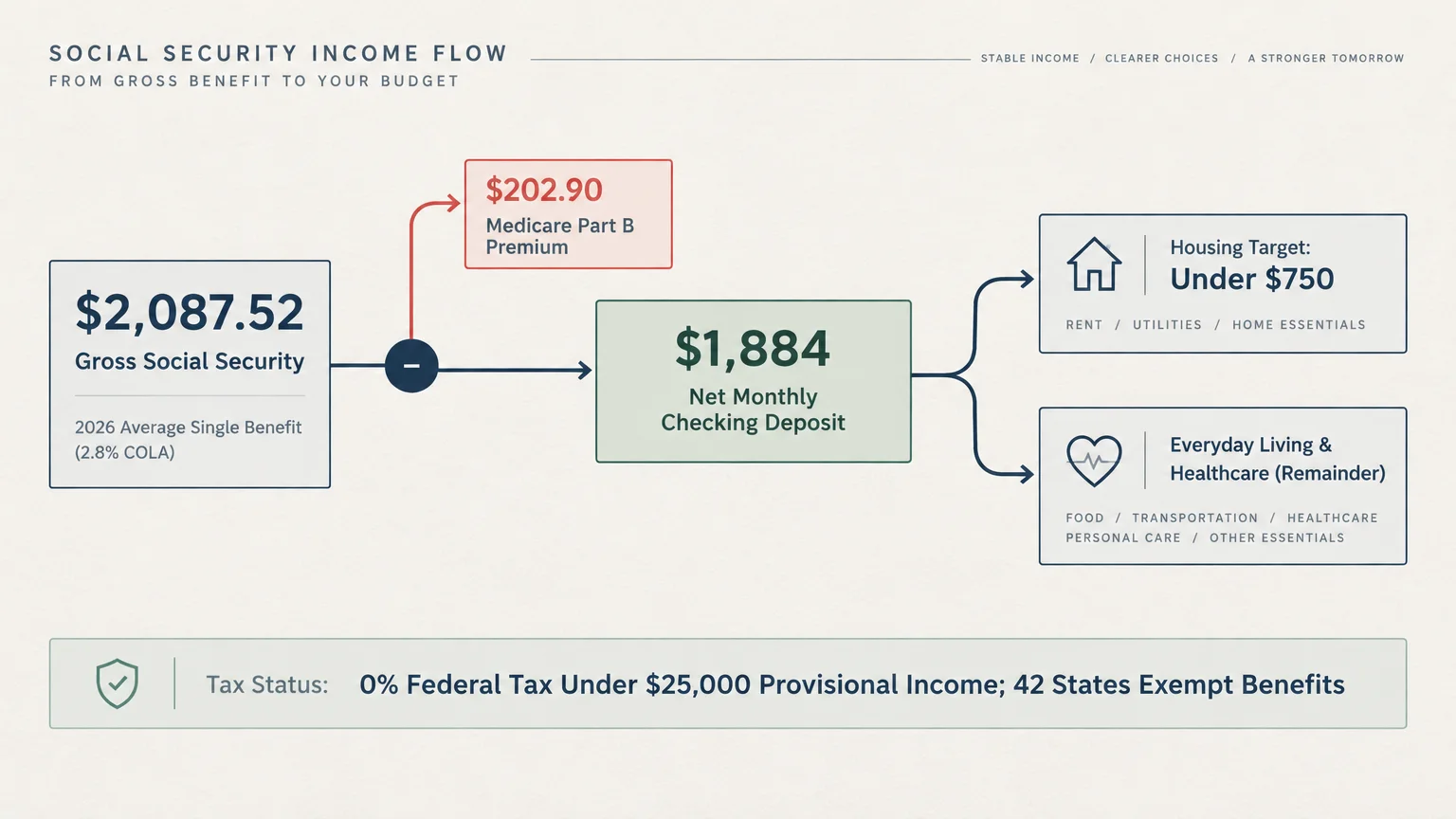
Thanks to a 2.8% cost-of-living adjustment in 2026, the typical single retiree’s check rose from $2,071 in January to $2,087.52 by August, according to Social Security Administration benefit data. Married couples where both spouses receive benefits now average $3,208 per month.
However, your gross benefit is not what lands in your checking account. The standard Medicare Part B premium sits at $202.90 per month in 2026, which leaves an average single retiree netting roughly $1,884 before other expenses.
Fortunately, federal tax rules heavily favor a $2,000 monthly budget. Under Internal Revenue Service tax thresholds, your Social Security benefits are 0% taxable if your provisional income stays below $25,000 as a single filer or $32,000 for married couples filing jointly.
State tax laws offer even more relief this year. West Virginia completely phased out its state tax on Social Security in 2026, meaning 42 states and Washington, D.C. now leave your monthly benefits untouched.
Even in the eight states that still tax benefits—Colorado, Connecticut, Minnesota, Montana, New Mexico, Rhode Island, Utah, and Vermont—income exemptions shield a $24,000 annual income. Your primary challenge is not income taxes; it is securing safe housing under $750 a month.
10 Charming U.S. Places to Retire on $2,000 a Month
1. Fort Smith, Arkansas
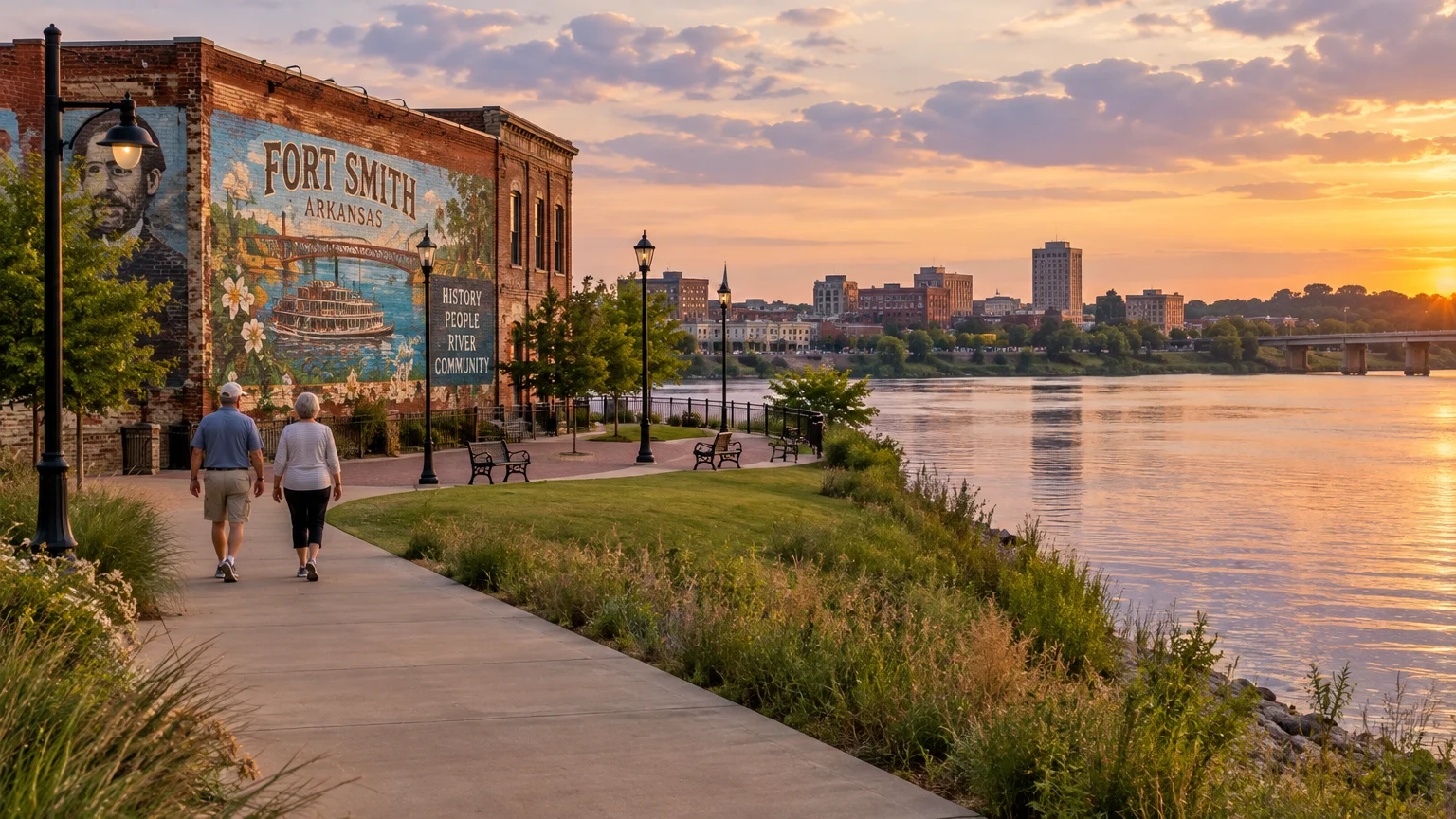
Sitting along the Arkansas River border with Oklahoma, Fort Smith blends Old West heritage with rock-bottom housing costs. As of September 2026, the average one-bedroom apartment rents for just $688 a month, and roughly a third of local units lease for under $700.
Paying $688 for rent leaves you over $1,300 each month to cover utilities, groceries, and out-of-pocket medical bills. Furthermore, Arkansas does not tax Social Security benefits, keeping more money in your pocket.
You can spend mild afternoons strolling the flat, wheelchair-accessible riverfront trails at the Fort Smith National Historic Site or admiring world-class public murals downtown. Mercy Hospital Fort Smith and Baptist Health provide comprehensive specialty care right in town.
2. Youngstown, Ohio
Located midway between Cleveland and Pittsburgh, Youngstown has transformed from a steel hub into an affordable haven of green space and culture. One-bedroom apartments here average $715 per month—roughly 57% below the national apartment average.
Your recreation budget stretches effortlessly here thanks to Mill Creek MetroParks, which spans 4,400 acres of gardens, lakes, and paved walking paths suitable for all mobility levels. You can also tour the acclaimed Butler Institute of American Art completely free of charge.
Ohio does not tax Social Security benefits, and local property taxes remain low if you decide to buy a modest bungalow. When you need specialized geriatric care, Mercy Health St. Elizabeth Youngstown Hospital anchors the city core.
3. Cedar Rapids, Iowa
If you want Midwestern warmth paired with strong senior demographics, look at Cedar Rapids, where 16.2% of residents are aged 65 and older. The overall cost of living sits 11% below the national average, with comfortable one-bedroom rentals readily available around $740 a month.
Iowa recently overhauled its tax code to exempt all retirement income—including 401(k) withdrawals, pensions, and Social Security—for residents aged 55 and older. That means you can supplement your monthly check with small IRA withdrawals without triggering a state tax bill.
You can explore the walkable, culturally rich Czech Village and New Bohemia districts, which host year-round farmers markets and community theater. UnityPoint Health and Mercy Medical Center deliver nationally recognized cardiac and orthopedic care minutes from residential neighborhoods.
4. El Paso, Texas
For retirees who crave year-round sunshine and rich bilingual culture, El Paso delivers an overall cost of living 11% below the national average. One-bedroom apartments frequently rent between $725 and $780 per month, and Texas levies zero state income tax.
El Paso consistently ranks among the safest large metro areas in the United States, fostering strong neighborhood watch traditions and multi-generational community ties. Over 300 days of annual sunshine and low humidity also bring natural relief if you manage arthritis or joint stiffness.
The city operates the Sun Metro LIFT paratransit service and offers discounted senior fares, making it easy to navigate without an expensive car payment. Meanwhile, the Hospitals of Providence network ensures you have robust healthcare access close to home.
5. Wheeling, West Virginia
Nestled in the northern panhandle along the Ohio River, Wheeling shines brighter than ever in 2026 following West Virginia’s complete repeal of state taxes on Social Security. You can rent a one-bedroom apartment near historic Victorian neighborhoods for roughly $690 a month.
Nature lovers flock to Oglebay Park, a 2,000-acre municipal resort offering senior walking clubs, glass-making museums, and seasonal festivals. The Heritage Port riverfront also hosts free summer concerts where you can mingle with neighbors without spending a dime.
WVU Medicine Wheeling Hospital handles your daily medical needs inside city limits. If you ever require complex clinical trials, world-renowned Pittsburgh medical centers sit less than an hour away via Interstate 70.
6. Wichita Falls, Texas
Located two hours northwest of the Dallas-Fort Worth metroplex, Wichita Falls offers big-sky Texas living without big-city housing inflation. You can easily secure a clean, single-story one-bedroom apartment here for $700 to $750 a month while enjoying Texas’s income-tax-free status.
The city invests heavily in active aging through its Senior Zone center, which provides low-cost fitness classes, hot lunches, and social games. Flat terrain and wide sidewalks around Lucy Park make outdoor exercise safe whether you walk briskly or use a mobility aid.
United Regional Health Care System serves as the primary medical hub for the surrounding nine-county region. Low winter heating bills and modest grocery prices help keep your monthly utility and food expenses predictable.
7. South Bend, Indiana
Retiring near a major university keeps your mind sharp, and South Bend delivers college-town energy at a remarkably low price point. One-bedroom apartments outside the immediate campus perimeter average $750 a month, and overall living costs sit well below national norms.
Home to the University of Notre Dame, the city invites seniors to attend public lectures, art exhibitions, and discounted concerts throughout the year. The East Race Waterway and riverwalk offer flat, scenic loops where local retirees gather for morning walks.
Indiana exempts Social Security benefits from state income tax, and the South Bend Transpo bus system offers half-price fares for riders aged 65 and older. Beacon Health System and Saint Joseph Health System provide comprehensive hospital care across the metro area.
8. Springfield, Illinois
Many pre-retirees overlook Illinois due to its reputation for high property taxes, yet renters in the state capital enjoy an incredible tax loophole. Illinois does not tax Social Security, pension income, or 401(k) and IRA distributions at the state level.
By renting a one-bedroom apartment in Springfield for the local average of $730 a month, you bypass steep property taxes while paying zero state income tax. That combination leaves over $1,150 from a typical net Social Security check for your remaining living costs.
History buffs can volunteer at or tour Abraham Lincoln presidential sites for free, while Washington Park provides peaceful botanical gardens and paved paths. Furthermore, Springfield Memorial Hospital and HSHS St. John’s Hospital anchor a massive regional medical district right downtown.
9. Tallahassee, Florida
While coastal Florida cities suffer from surging HOA dues and property insurance crises, Tallahassee offers an inland refuge where a $2,000 budget still works. Because two major universities drive a massive rental supply, quiet one-bedroom apartments away from student zones rent around $800 a month.
Florida charges no state income tax, and the state capital surrounds you with moss-draped canopy roads and free state parks like Maclay Gardens. The Tallahassee Senior Center is one of the most active in the Southeast, hosting over 150 lifelong learning and health programs.
Tallahassee Memorial HealthCare and HCA Florida Capital Hospital provide top-tier geriatric care without the winter snowbird traffic jams found in South Florida. Diverse neighborhoods and churches make it effortless for newcomers of all backgrounds to build a supportive social circle.
10. Bennettsville, South Carolina
If your ideal retirement features wrap-around porches, sweet tea, and small-town friendliness, Bennettsville in the Pee Dee region of South Carolina fits the bill. Housing costs here are among the lowest in the Carolinas, with one-bedroom rentals and cottages routinely leasing between $625 and $675 a month.
South Carolina does not tax Social Security benefits and provides generous homestead exemptions if you decide to purchase an inexpensive starter home. The mild climate keeps winter heating bills minimal, though you will want to budget an extra $40 a month for summer air conditioning.
You can spend quiet mornings birdwatching or fishing along the flat, sandy perimeter trail at Lake Paul Wallace. While rural clinics handle routine primary care in town, McLeod Regional Medical Center in nearby Florence is a short drive down the highway.
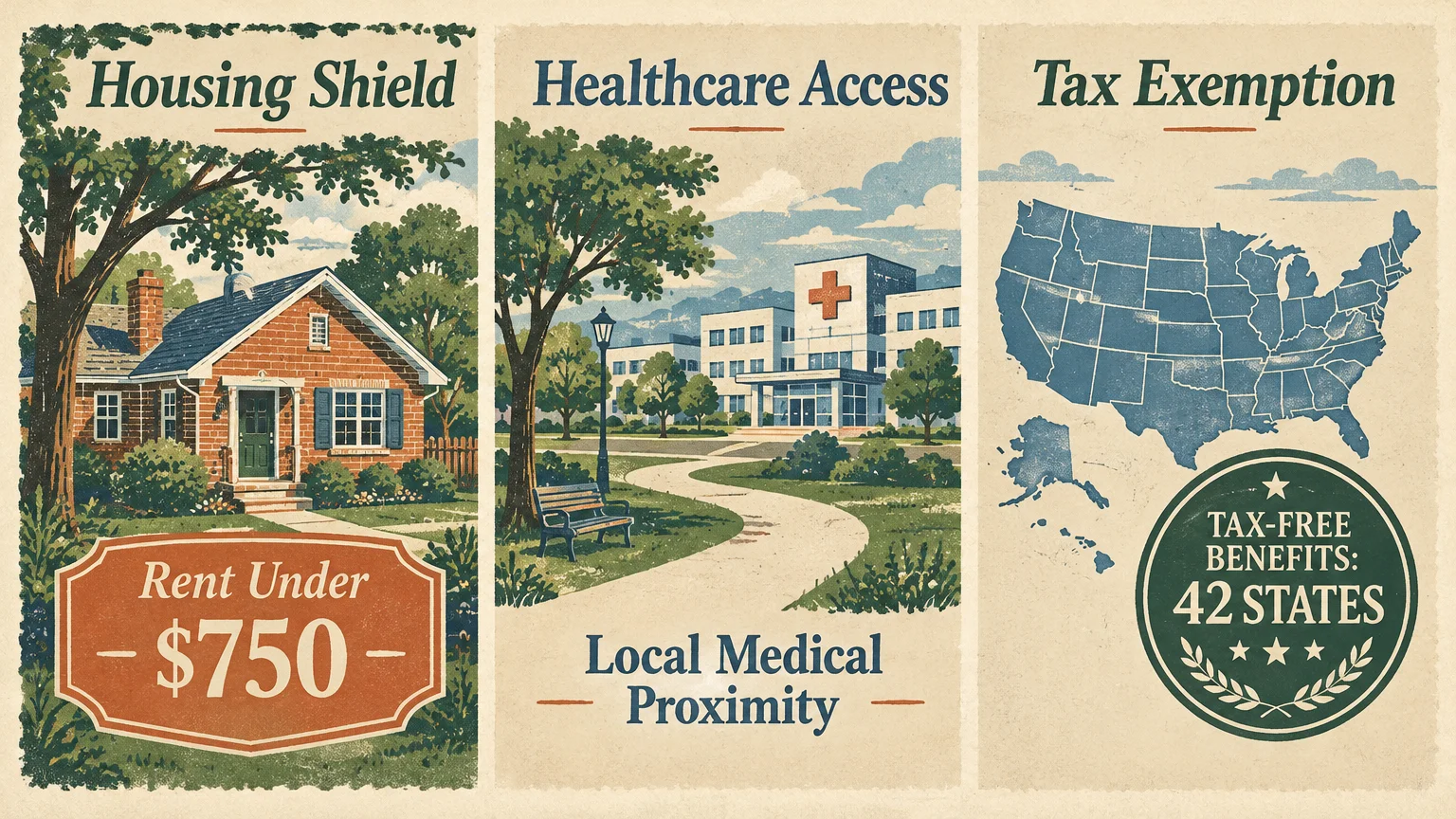
Three Strategy Pillars for Thriving on $2,000 a Month
Pillar 1: Income Planning and the 38% Housing Rule
When your gross Social Security check is $2,087 and Medicare Part B deducts $202.90, your net monthly cash flow is $1,884. To live comfortably without credit card debt, cap your base rent or mortgage payment at 38% of your net income—roughly $715 per month.
Allocating $715 to rent, $180 to utilities and internet, and $350 to groceries leaves you $639 each month for healthcare, local transit, and entertainment. If you hold a small traditional IRA, withdraw only what keeps your provisional income under $25,000 so your benefits stay 100% tax-free.
Pillar 2: Lifestyle Design and Low-Cost Connection
Trading a two-car suburban lifestyle for a walkable town or a reliable municipal bus route can instantly save you $450 a month in auto insurance, fuel, and repairs. Prioritize apartments within a half-mile of a grocery store, pharmacy, and public transit stop.
Build your social calendar around free community infrastructure rather than expensive country clubs. Public libraries, university lecture series, faith communities, and municipal senior centers offer rich camaraderie that protects against isolation without straining your bank account.
Pillar 3: Proactive Health and Medicare Management
Unexpected medical bills can derail a tight budget if you do not plan around official Medicare cost guidelines. In 2026, you face an annual $283 Medicare Part B deductible for outpatient care and a $1,736 Part A deductible per hospital benefit period.
Fortunately, the 2026 Medicare Part D overhaul caps your annual out-of-pocket spending on covered prescription drugs at $2,100, and the dreaded coverage gap is gone. You can also enroll in the Medicare Prescription Payment Plan to spread medication costs into predictable monthly installments.

Insights from Aging and Financial Experts
Certified Financial Planners who specialize in modest-income retirement emphasize that controlling fixed overhead matters far more than chasing risky investment returns. Locking in a low-cost rental or an energy-efficient single-bedroom apartment shields your budget from utility spikes and surprise roof repairs.
Gerontologists likewise point out that your physical environment dictates how long you can live independently on a fixed income. Choosing a flat, navigable neighborhood with accessible curb cuts and nearby paratransit allows you to age in place safely without paying for private aides.
Retirees who have successfully made this transition often recommend testing a town for one month during its harshest weather season before signing a lease. Renting a furnished room in January in Ohio or August in Texas reveals whether the climate truly suits your health.
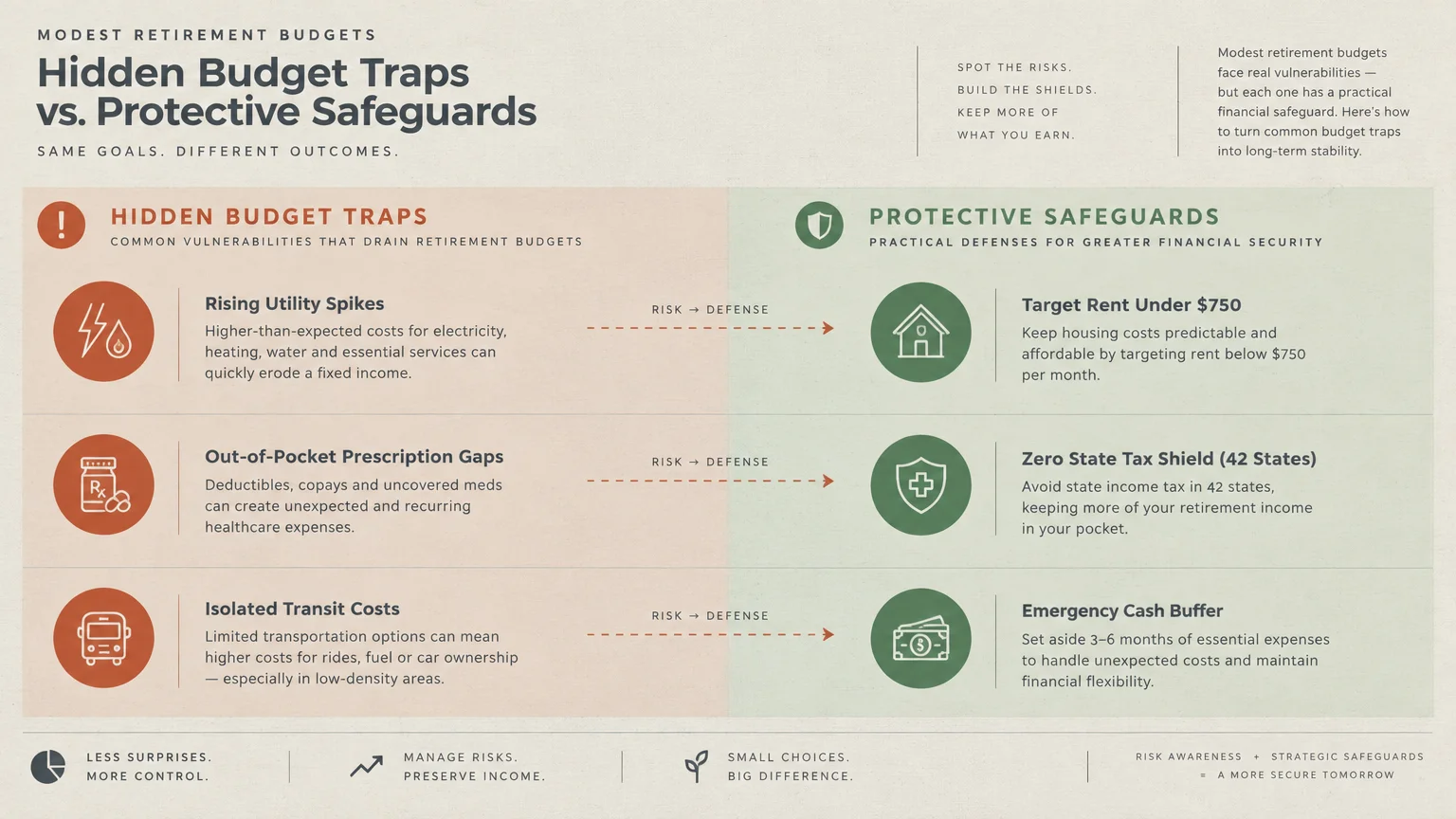
Risks and Safeguards: Avoiding Budget Traps
Watch out for the “benefit cliff” tied to Medicare Savings Programs like the Qualified Medicare Beneficiary (QMB) program. If your monthly income sits near federal poverty guidelines, the state may pay your $202.90 Part B premium—but withdrawing just $500 too much from an IRA could disqualify you.
Before taking on part-time work or pulling funds from a retirement account, run your numbers through the National Council on Aging benefits screening tool. This free portal shows whether your income qualifies you for property tax rebates, SNAP grocery assistance, or LIHEAP utility subsidies.
Finally, protect your moving fund when searching for cheap rentals online. Never wire a security deposit or mail prepaid gift cards for an apartment you have only seen in photos, and review AARP fraud prevention resources to spot fake landlord listings.
Frequently Asked Questions
Do I owe federal income tax if I live strictly on $2,000 a month from Social Security?
No, you will owe zero federal income tax if Social Security is your sole income source at $2,000 a month ($24,000 a year). The IRS only taxes benefits when your provisional income exceeds $25,000 for single filers or $32,000 for married couples filing jointly.
How can I reduce the $202.90 monthly Medicare Part B premium?
You can apply for a state-run Medicare Savings Program through your local Medicaid office, which covers the $202.90 premium for qualifying low-income seniors. Alternatively, some zero-premium Medicare Advantage plans offer a “Part B giveback” benefit that rebates part of your monthly premium, though you must stay within their doctor network.
Is it smarter to rent or buy a home when retiring on $2,000 a month?
Unless you can buy a well-maintained home outright with cash and still keep $15,000 in an emergency repair fund, renting is often safer on $2,000 a month. Renting caps your monthly housing expense and protects you from sudden $8,000 furnace replacements or rising homeowners insurance premiums.
Which states still tax Social Security benefits in 2026?
Following West Virginia’s full repeal in 2026, only eight states still tax Social Security in some form: Colorado, Connecticut, Minnesota, Montana, New Mexico, Rhode Island, Utah, and Vermont. All other 42 states and Washington, D.C. exempt Social Security benefits from state income tax.
Your 48-Hour Action Plan
You do not need a million-dollar portfolio to enjoy a safe, dignified, and engaging retirement. Take thirty minutes over the next 48 hours to look at your most recent Social Security statement and subtract your exact housing and utility costs from your net check.
If your current housing swallows more than half of your monthly income, pick two towns from this list and browse their local senior center calendars and apartment listings today. One thoughtful relocation decision can turn financial stress into breathing room for the next twenty years.