You can retire comfortably in the Sunshine State without an enormous nest egg. A balanced household income of $50,000 a year unlocks a peaceful lifestyle across several scenic Florida communities.
Glitzy coastal metros often price out everyday retirees, yet charming inland locations still offer exceptional value. You do not need a multi-million-dollar portfolio to enjoy warm winters and active social calendars.
This guide highlights ten verified Florida towns where your fixed income stretches furthest. Learn how strategic location choices protect your savings while delivering the Florida dream.
Navigating the Florida Retirement Landscape Today
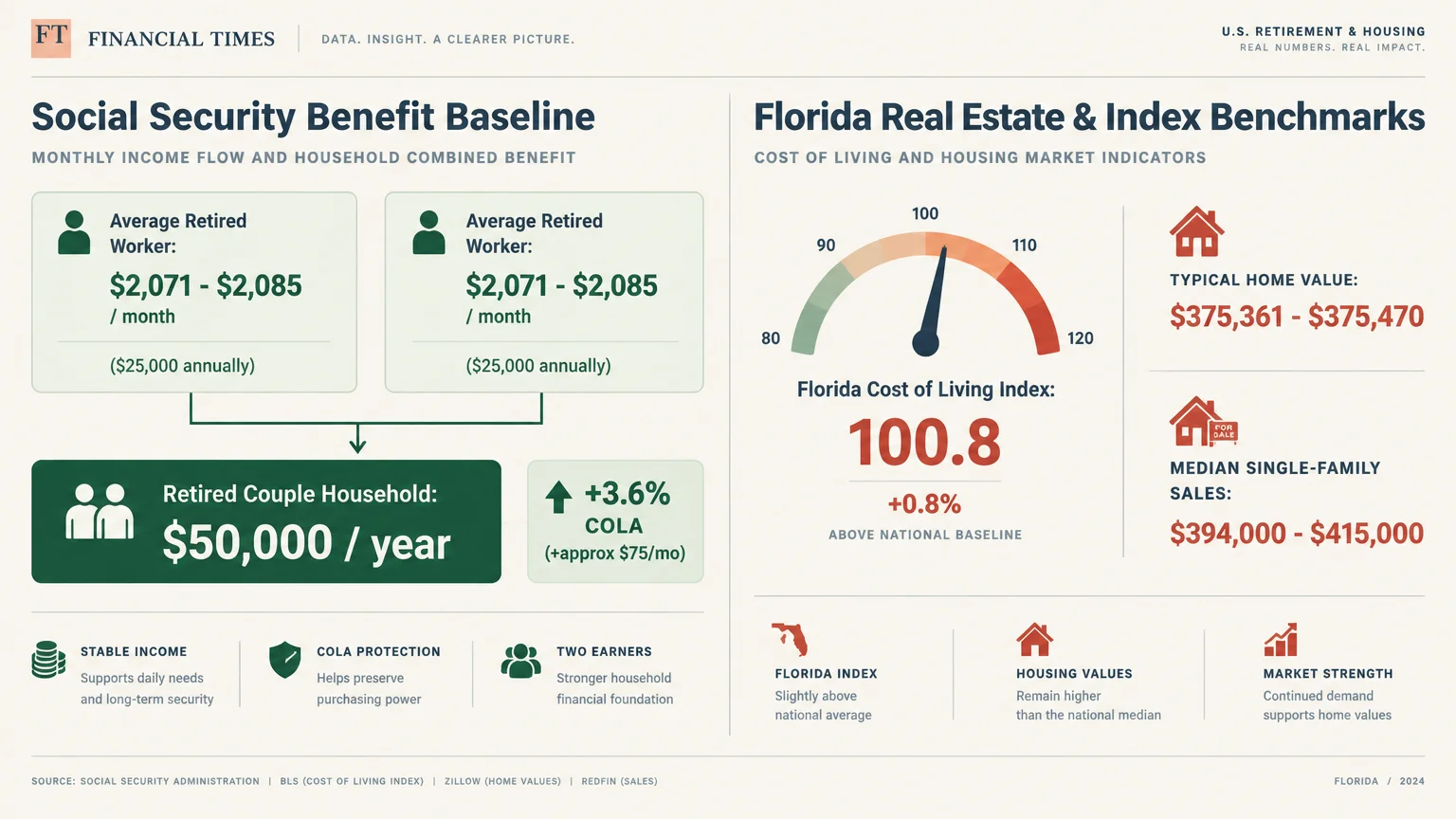
The typical American retirement budget centers on dependable federal entitlements. Following a 2.8% cost-of-living adjustment, the average retired worker collects between $2,071 and $2,085 each month through the Social Security Administration.
That monthly payout translates to roughly $25,000 annually per individual worker. When a retired couple pools two average benefit checks together, their combined baseline reaches approximately $50,000 per year before taxes.
Your financial margin will widen soon as well. In October 2026, officials announced a 3.6% COLA increase taking effect in January 2027, adding roughly $75 per month to average worker benefits.
At the same time, living costs require careful regional navigation. Florida carries an overall Cost of Living Index of 100.8, placing statewide expenses just 0.8% above the national baseline.
Real estate metrics reveal the true divide across the peninsula. Statewide typical home values range between $375,361 and $375,470, while median single-family sales prices fall between $394,000 and $415,000.
Coastal property markets push those figures into unaffordable territory for many savers. However, looking beyond crowded ocean shorelines reveals dozens of peaceful, high-amenity towns where your retirement capital thrives.
Strategic Tax Advantages That Protect a $50,000 Budget
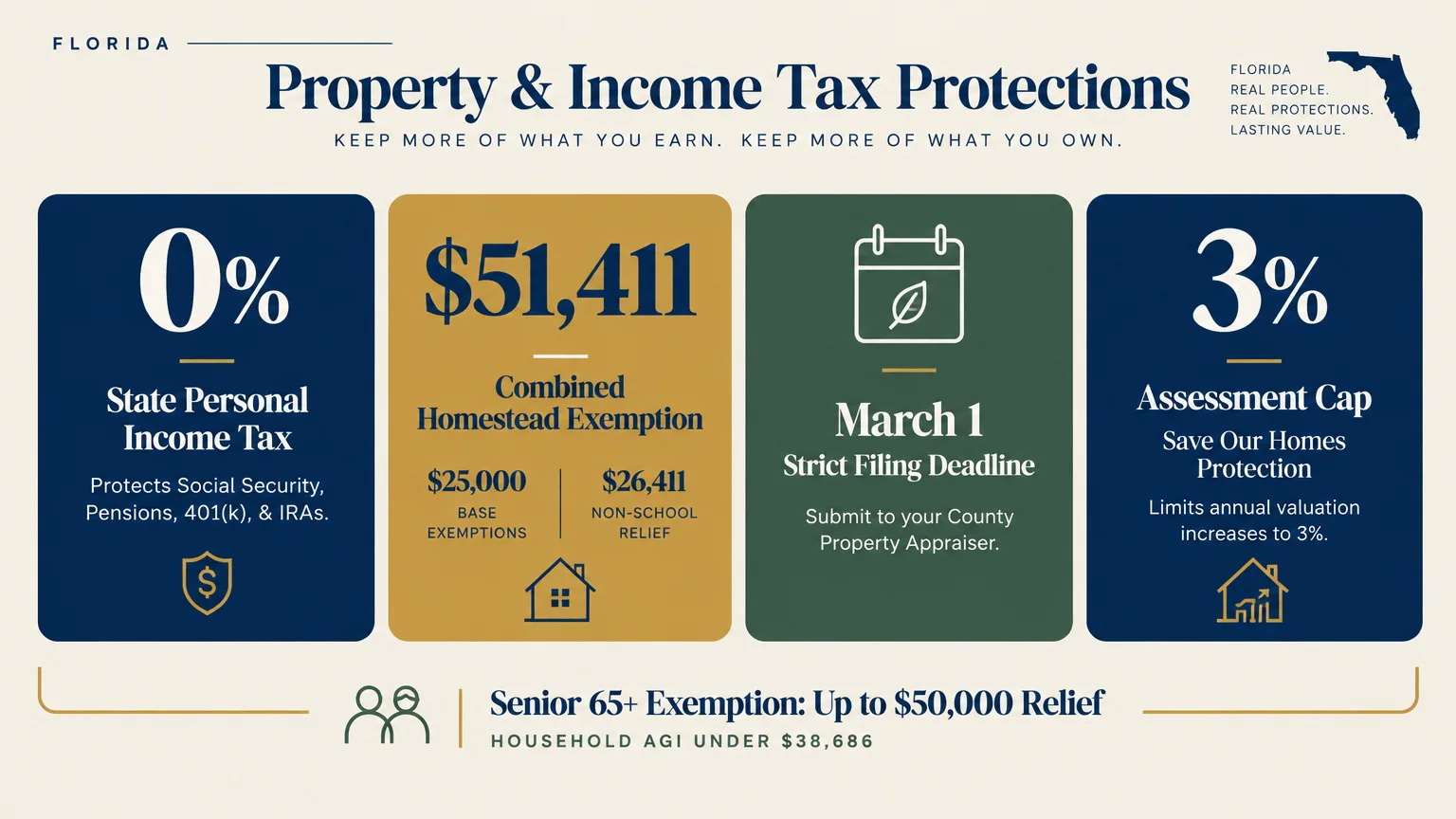
Florida treats retirement wealth with exceptional generosity. The state levies a 0% personal income tax, shielding your Social Security payouts, private pensions, 401(k) distributions, and traditional IRA withdrawals from state-level deductions.
Every dollar of your annual $50,000 income remains under your control for essential bills and personal hobbies. This policy preserves hundreds of dollars each month compared to high-tax states.
Local property tax regulations provide equally vital financial relief. Following voter approval of Amendment 5, the combined Florida Homestead Exemption stands at $51,411.
The initial $25,000 applies across all taxing jurisdictions, including local school board levies. An inflation-adjusted $26,411 exempts assessed home values between $50,000 and $75,000 from non-school property taxes.
You must submit your residency paperwork to the county property appraiser by the strict annual filing deadline of March 1. The Florida Department of Revenue oversees these standardized exemption procedures statewide.
Once your primary residence secures homestead classification, the Save Our Homes assessment cap protects your future budget. Annual increases to your assessed home valuation cannot exceed 3% or the Consumer Price Index rate, whichever remains lower.
Low-income seniors gain access to even deeper property tax reductions. Participating counties and municipalities offer an additional 65+ senior homestead exemption providing up to $50,000 in assessment relief.
To qualify for this senior exemption, your household adjusted gross income cannot surpass $38,686 under Internal Revenue Service reporting standards. Because Social Security benefits often avoid full federal AGI inclusion, a $50,000 cash flow household frequently qualifies.
Looking ahead, Florida voters will decide Amendment 3 on November 3, 2026. A 60% approval vote will increase the non-school homestead exemption to $150,000 in 2027 and $250,000 in 2028.
This proposed expansion requires establishing permanent Florida residency by December 31, 2026. Homeowners relocating during 2027 or later will face a mandatory five-year waiting period to claim that enhanced tier.
Three Pillars for Thriving on $4,166 a Month
Pillar 1: Income and Expense Architecture
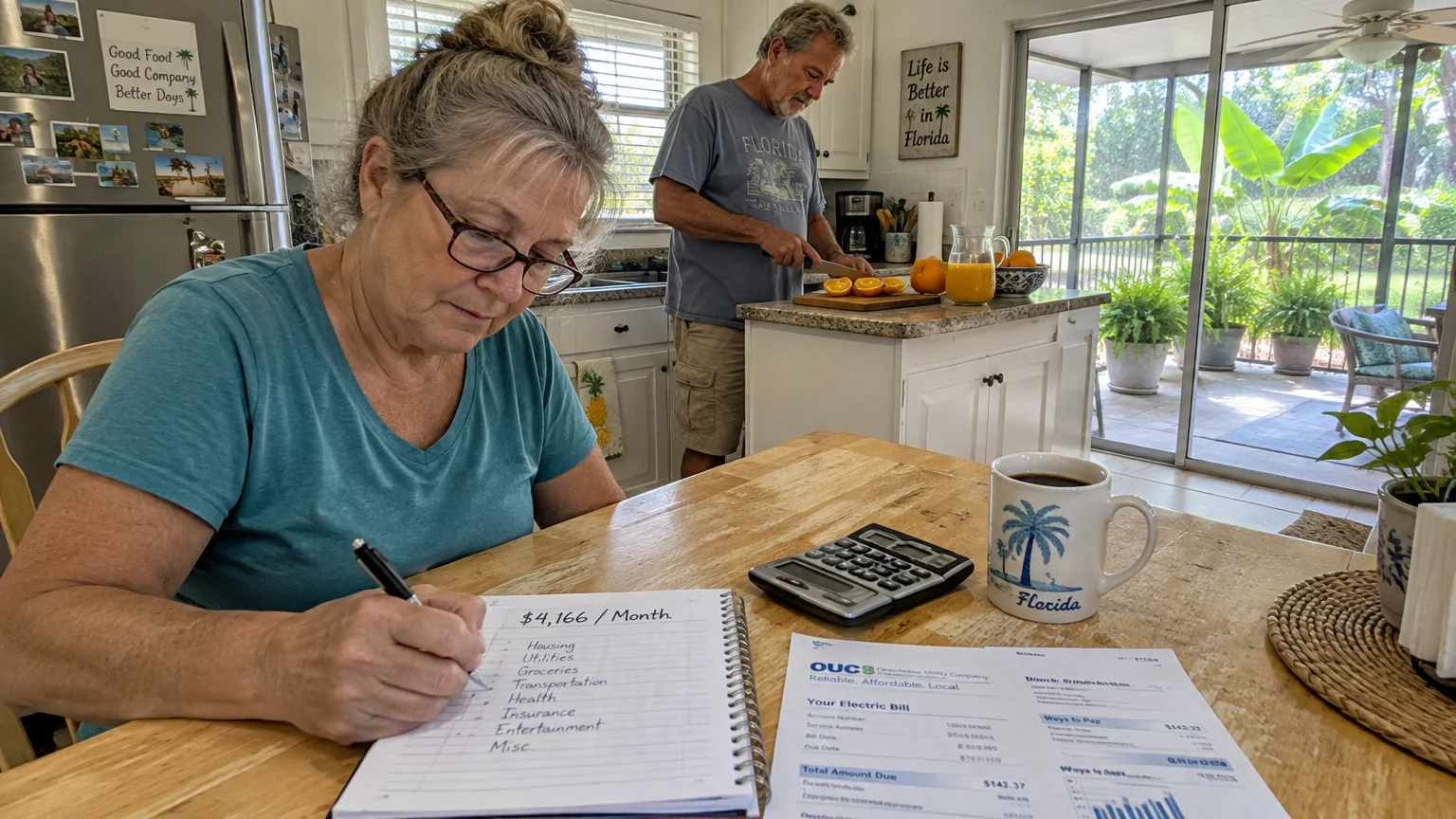
Managing a $50,000 annual budget requires allocating a monthly gross cash flow of $4,166 with clear discipline. Your primary fixed health expense begins with mandatory Medicare enrollment.
The standard monthly Medicare Part B premium sits at $202.90 per individual according to federal guidelines from Medicare. For a married couple, this necessary coverage claims $405.80 of your gross monthly allocation.
Housing expenses require intentional containment to preserve room for discretionary enjoyment. Keeping combined mortgage payments, property taxes, and homeowners insurance beneath $1,400 monthly ensures you maintain ample breathing room for unexpected repairs.
Smart budgeting allocates $600 for groceries, $350 for utilities and high-speed internet, and $450 for transportation and vehicle maintenance. The remaining funds support dining out, recreation, emergency savings, and travel.
Pillar 2: Health, Mobility, and Longevity
Sustaining vibrant health forms the cornerstone of a satisfying retirement experience. Accessible walking paths, public parks, and pleasant neighborhood streets encourage daily mobility without requiring costly gym memberships.
Living within thirty minutes of a full-service regional hospital safeguards your long-term independence. Many affordable inland Florida towns border university medical campuses or comprehensive county health systems that accept Medicare.
Gerontological research demonstrates that moderate daily exercise and outdoor sunshine promote emotional resilience and cognitive health. Florida inland communities feature interconnected nature trails, municipal swimming facilities, and freshwater recreation areas that make active living effortless.
Pillar 3: Community and Purposeful Living
A rich retirement depends far more on genuine community relationships than lavish spending accounts. Relocating to a friendly smaller town allows you to establish meaningful social roots quickly through volunteer opportunities and civic clubs.
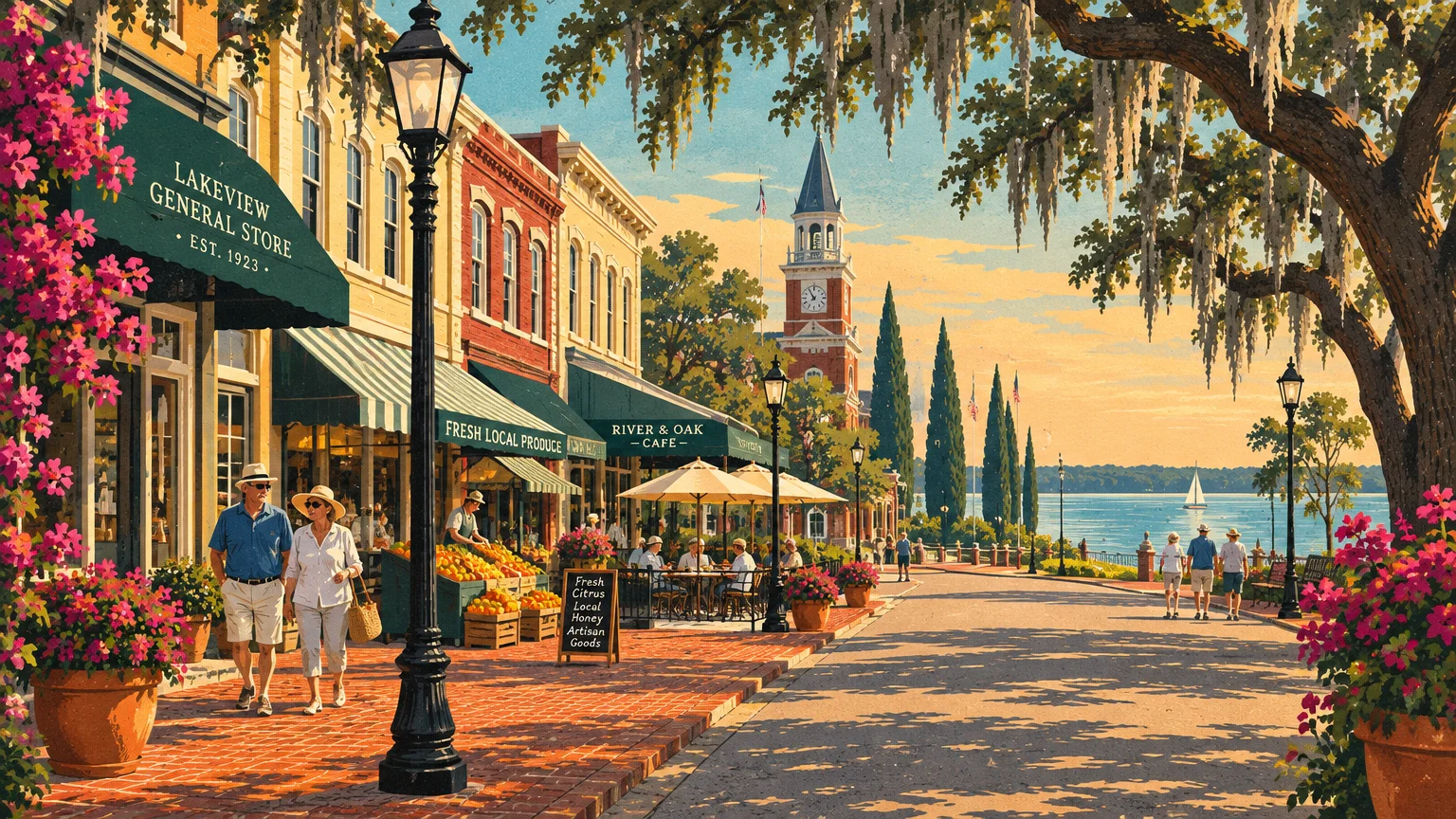
Public libraries, regional arts councils, and community colleges frequently offer free lectures and enrichment workshops for local seniors. Choosing a town with an active historic downtown gives you walkable access to farmers markets, outdoor concerts, and community festivals.
10 Verified Florida Towns for a $50,000 Retirement
1. Palatka (Putnam County)
Palatka offers an authentic slice of Old Florida history along the banks of the St. Johns River. Typical home prices range between $185,000 and $211,000, making it one of the most accessible housing markets in the state.
Outdoor enthusiasts spend their days boating, freshwater fishing, and strolling the trails of Ravine Gardens State Park. The historic downtown riverfront hosts community art walks and seasonal festivals that keep entertainment costs low.
Putnam Community Medical Center provides regional acute care and specialized surgical services directly within municipal borders. You remain just an hour from Saint Augustine and Jacksonville for expanded specialist consultations.
Low local property taxes combine with modest utility rates to leave significant room in a $4,166 monthly budget. Palatka proves that tranquil riverfront living remains well within reach for prudent planners.
2. Lake City (Columbia County)
Positioned at the strategic crossroads of Interstate 75 and Interstate 10, Lake City provides small-town serenity alongside unmatched travel connectivity. Verified median home prices hover around $200,000.
Natural beauty surrounds this North Florida community, from the crystal-clear waters of Ichetucknee Springs to the vast hiking trails of Osceola National Forest. You can swim, kayak, and picnic year-round without stretching your entertainment budget.
Lake City stands out for its exceptional healthcare accessibility for military veterans and civilians alike. The Lake City VA Medical Center and Lake City Medical Center deliver comprehensive care within minutes of residential neighborhoods.
A quiet afternoon at Lake Isabella Park or an evening at the downtown community theater provides rich cultural engagement. Lake City offers the ideal balance of affordable housing, medical peace of mind, and lush natural surroundings.
3. Avon Park (Highlands County)
Known affectionately as the City of Charm, Avon Park sits in the heart of Florida citrus country. Typical home prices remain comfortably under $211,000, providing incredible purchasing power for incoming retirees.
The town center features a charming, mile-long landscaped mall flanked by local diners, antique stores, and community banks. Lake Verona and Donaldson Park offer scenic picnic pavilions, walking paths, and quiet fishing piers.
Residents take classes and attend live theatrical performances at the Alan Jay Wildstein Center for the Performing Arts at South Florida State College. Highlands Regional Medical Center in adjacent Sebring provides specialized cardiac and orthopedic care just ten miles south.
With minimal through-traffic and deeply rooted neighborhood traditions, Avon Park welcomes newcomers warmly. The low cost of municipal services makes managing a fixed income remarkably straightforward.
4. Holly Hill (Volusia County)
Holly Hill provides an exceptional coastal-adjacent alternative tucked directly along the western shore of the Halifax River. Verified home values remain under $211,000, presenting a rare waterfront bargain near Daytona Beach.
You can walk along the riverfront esplanade, watch manatees glide past public piers, and launch your boat into the Intracoastal Waterway. Atlantic Ocean beaches are located just two miles east across the bridge.
Because Holly Hill sits slightly inland from barrier island wind exposure, homeowners insurance rates remain significantly lower than direct oceanfront properties. You capture the breezy maritime lifestyle without paying exorbitant insurance premiums.
Comprehensive medical care is readily accessible at Halifax Health Medical Center, a premier trauma and specialty center nearby. Holly Hill offers coastal culture on a sensible inland budget.
5. Wauchula (Hardee County)
Wauchula delivers the quintessential rural Florida experience, surrounded by rolling cattle pastures and historic citrus groves. Typical home values center near $220,000, ensuring modest property tax and mortgage obligations.
The town borders the Peace River, world-famous among fossil hunters, canoeists, and nature photographers. Downtown Wauchula features brick-paved streets, locally owned bakeries, and historic storefronts that preserve classic Southern hospitality.
AdventHealth Wauchula delivers modern emergency care, diagnostic imaging, and outpatient physical therapy within a modern community hospital facility. Major specialized medical centers in Tampa and Sarasota are accessible within an eighty-minute drive.
Community events like the Hardee County Fair and monthly street festivals foster meaningful relationships among neighbors. Wauchula is an exceptional refuge for retirees seeking peace, simplicity, and low overhead.
6. Sebring (Highlands County)
Sebring combines historic character with an abundance of freshwater recreation. Typical single-family home prices average approximately $235,000, leaving substantial room for discretionary spending.
The historic downtown district forms a circular street grid around a lush central park filled with boutique shops and cafes. Lake Jackson spans thousands of acres, offering scenic public beaches, boat ramps, and waterfront dining.
Outdoor recreation flourishes nearby at Highlands Hammock State Park, home to elevated boardwalks winding through ancient cypress swamps. AdventHealth Sebring provides award-winning cardiovascular, surgical, and emergency healthcare right in town.
Local golf courses offer competitive seasonal rates, and the town provides an active municipal senior center. Sebring delivers an energetic, lakeside lifestyle that easily fits within a $50,000 annual budget.
7. Inverness (Citrus County)
Inverness blends picturesque lakeside living with an extraordinary network of outdoor recreational amenities. Verified typical home prices average around $240,000, offering exceptional value on the Nature Coast.
The renowned 46-mile Withlacoochee State Trail runs directly through downtown Inverness, giving walkers and bicyclists a paved corridor through lush hardwood forests. The town also wraps around the Tsala Apopka Chain of Lakes, offering endless boating and kayaking.
The restored 1912 historic courthouse anchors an active downtown square that regularly hosts outdoor film nights and farmers markets. HCA Florida Citrus Hospital provides full-service inpatient care, emergency medicine, and heart surgery downtown.
Inverness maintains a quiet, relaxed rhythm of life with minimal commercial congestion. Retirees enjoy high community safety, walkable streets, and predictable monthly expenses.
8. Ocala (Marion County)
Ocala is widely celebrated as the Horse Capital of the World, characterized by rolling green pastures, grand oak trees, and white paddock fences. Typical residential home values hover around $270,000.
Natural wonders abound, led by Silver Springs State Park, where historic glass-bottom boats have showcased crystal-clear freshwater springs for over a century. The Ocala National Forest provides hundreds of miles of hiking, camping, and off-road exploration.
Ocala offers one of the most comprehensive healthcare hubs in Central Florida. Both HCA Florida Ocala Hospital and AdventHealth Ocala feature advanced cardiac institutes, robotic surgery centers, and stroke treatment units.
The historic downtown square features fine dining, independent coffee roasters, and open-air musical performances throughout the year. Ocala provides the cultural advantages of a growing regional city at an accessible cost.
9. Crystal River and Homosassa (Citrus County)
Located on Florida’s scenic Nature Coast, Crystal River and neighboring Homosassa offer world-class marine recreation. Typical home prices average around $275,000 across these waterfront communities.
Kings Bay and the Homosassa River remain seventy-two degrees year-round, serving as winter sanctuaries for hundreds of migrating West Indian manatees. Coastal access allows residents to enjoy world-class shallow-water fishing, scalloping, and kayaking every weekend.
Downtown Crystal River features a charming heritage shopping district with independent seafood markets and outdoor waterfront cafes. Full-service medical clinics, specialized physicians, and Citrus Memorial health centers ensure prompt medical care.
The maritime community spirit promotes outdoor physical activity and strong social connections. Crystal River offers an enviable outdoor lifestyle without coastal pricing pressures.
10. Gainesville and Lakeland (Alachua and Polk Counties)
For retirees seeking academic culture or proximity to major metropolitan centers, Gainesville and Lakeland present compelling options. Typical home prices in these vibrant regional hubs range between $300,000 and $310,000.
Gainesville delivers world-renowned medical care through UF Health Shands Hospital and the Malcom Randall VA Medical Center. Retirees attend university lectures, fine art exhibits at the Harn Museum, and collegiate sports year-round.
Lakeland charms residents with thirty-eight named lakes, historic Frank Lloyd Wright architecture, and the comprehensive Lakeland Regional Health medical system. Its location halfway between Tampa and Orlando gives you rapid access to international airports and cultural attractions.
While home prices in these larger hubs approach the $300,000 threshold, inland insurance rates and abundant amenities keep ongoing operating budgets affordable. Both cities allow retirees on $50,000 to enjoy metropolitan-grade resources.
Financial Safeguards and Risk Management
Protecting your retirement budget requires understanding the wide disparity in Florida homeowners insurance. While coastal homeowners face staggering annual premiums between $7,136 and $10,384, inland residents pay significantly less.
Inland Florida towns enjoy average annual insurance costs between $2,400 and $4,800, which equals roughly $200 to $400 per month. Always confirm that a prospective home sits outside designated flood zones before submitting a purchase offer.
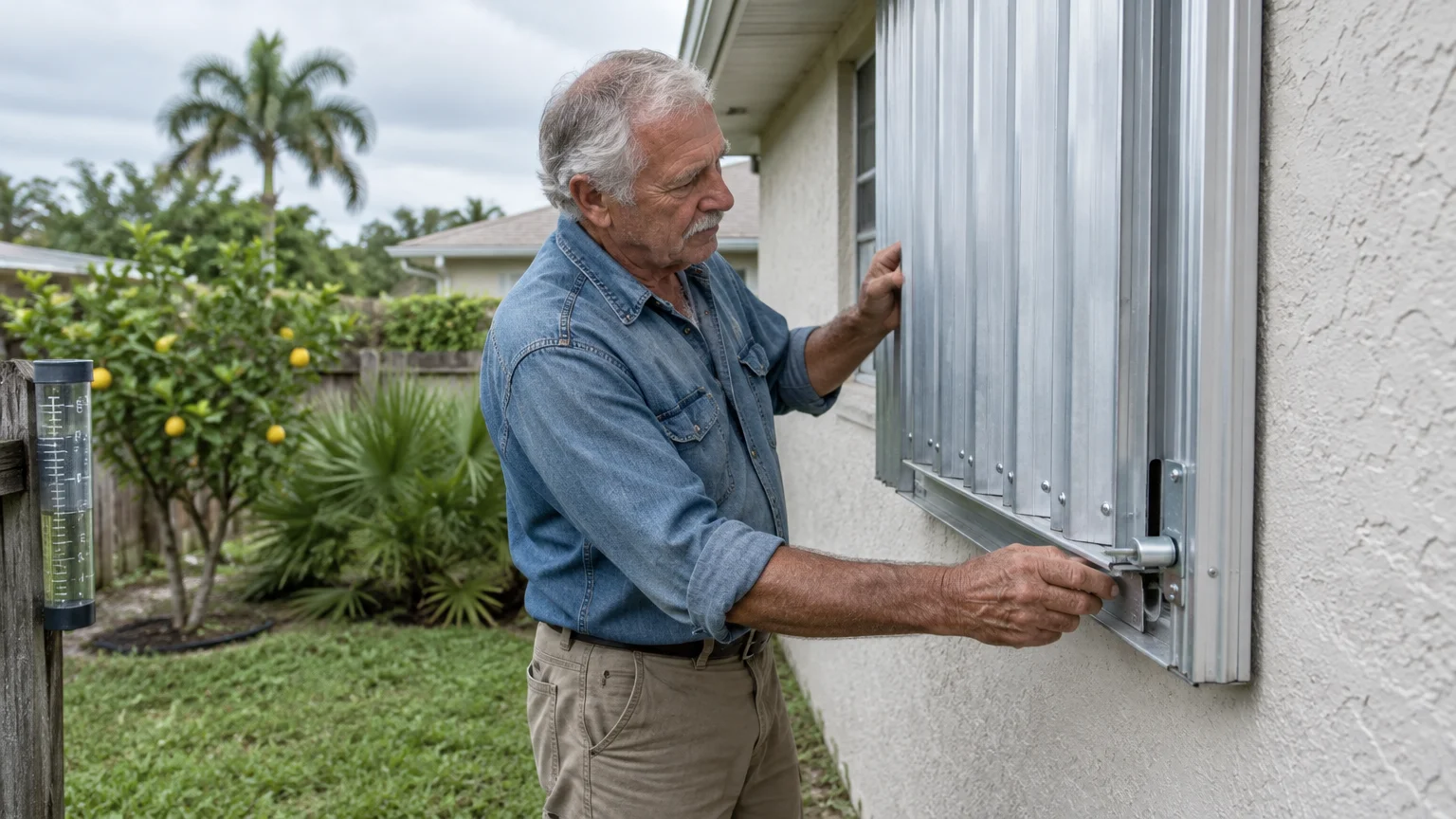
Verify roof age and seek wind mitigation inspection credits during your home inspection window. Installing hurricane clips, reinforced garage doors, and protective shutters can save you hundreds of dollars on property insurance each year.
Retirees must also protect their savings against aggressive financial scams and digital fraud. Expert educational guidance from AARP warns older adults against unverified home repair contractors and electronic wire requests.
Never sign home improvement contracts or transfer money without consulting trusted family members or verified legal advisors. Setting up multi-factor authentication on financial accounts prevents unauthorized withdrawals.
Be cautious when considering condominium developments and deed-restricted subdivisions. Recent structural safety laws require Florida condominium associations to build substantial financial reserves, frequently causing large special assessments in older buildings.
Always review an association’s reserve study, engineering reports, and past meeting minutes before buying. Avoiding surprise association fee hikes protects your monthly budget from unexpected disruption.
Frequently Asked Questions About Retiring in Florida on $50K
Can a single retiree live comfortably in Florida on $50,000 a year?
A single retiree can enjoy an excellent quality of life in inland Florida on a $50,000 annual income. Because housing costs and property taxes in towns like Palatka, Lake City, and Avon Park remain low, single individuals enjoy substantial discretionary income.
A single retiree pays only one Medicare Part B premium of $202.90 per month, leaving more room for leisure and emergency savings. Careful housing selection keeps fixed monthly overhead well below $2,500.
Why are property insurance rates so much lower in inland Florida towns?
Inland towns experience significantly less storm surge and lower wind speeds than oceanfront barrier islands. Because hurricanes lose energy as they travel across land, inland structural damage occurs far less frequently.
Insurance carriers reflect this reduced risk by charging inland homeowners between $2,400 and $4,800 annually, compared to coastal rates exceeding $10,000. These savings protect your monthly budget from volatile coastal insurance spikes.
How does the senior homestead exemption work with Social Security income?
Participating Florida municipalities offer an additional senior homestead exemption up to $50,000 for residents aged 65 and older. To qualify, your household adjusted gross income cannot exceed $38,686.
Because federal tax rules frequently exclude substantial portions of Social Security payouts from adjusted gross income, many households with $50,000 in gross cash flow still qualify. Contact your county property appraiser to verify local calculations.
Will I compromise healthcare quality by retiring in a smaller Florida town?
Retiring to an inland town does not mean sacrificing top-tier medical treatment. Towns like Ocala, Inverness, and Sebring feature sophisticated regional hospitals equipped with cardiac, oncological, and surgical facilities.
Furthermore, communities like Lake City and Gainesville provide world-class medical care through major VA medical centers and university research hospitals. Quality specialist care remains readily accessible throughout inland Florida.
Take Action for Your Florida Retirement in the Next 48 Hours
A rewarding Florida retirement on a $50,000 budget is entirely possible with practical planning. You can take immediate, measurable steps right now to turn this goal into reality.
Within the next 48 hours, log into your personal Social Security account to verify your future monthly retirement benefit estimates. Calculate your projected household baseline income against the monthly budget targets outlined in this guide.
Next, explore real estate listings in two of the inland communities that align best with your recreational interests. Check local property tax records and flood zone maps to evaluate real monthly carrying costs.
Finally, gather your property documentation to prepare for Florida residency and homestead filings if you plan to move soon. Taking deliberate steps today ensures you secure your place in the Florida sun on your own financial terms.