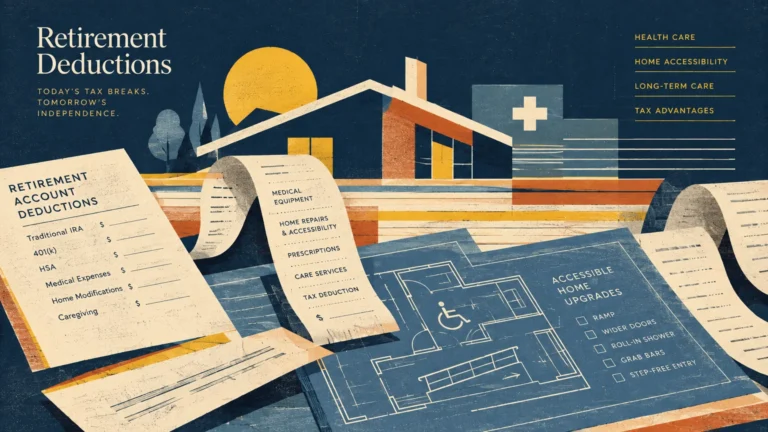
Working past age 75 allows you to collect your full Social Security benefit without any earnings penalties. You can earn an unlimited paycheck while receiving every single dollar of your monthly retirement check.
Staying employed can even boost your monthly check if your current earnings outpace lower-wage years from your past. However, you must manage federal income taxes and Medicare premiums carefully to protect your wealth.
Understanding these specific rules helps you make confident career choices while keeping your hard-earned benefits intact.
The Rapid Growth of the 75-Plus Workforce
Today, more Americans work well into their late seventies and eighties than in previous generations.
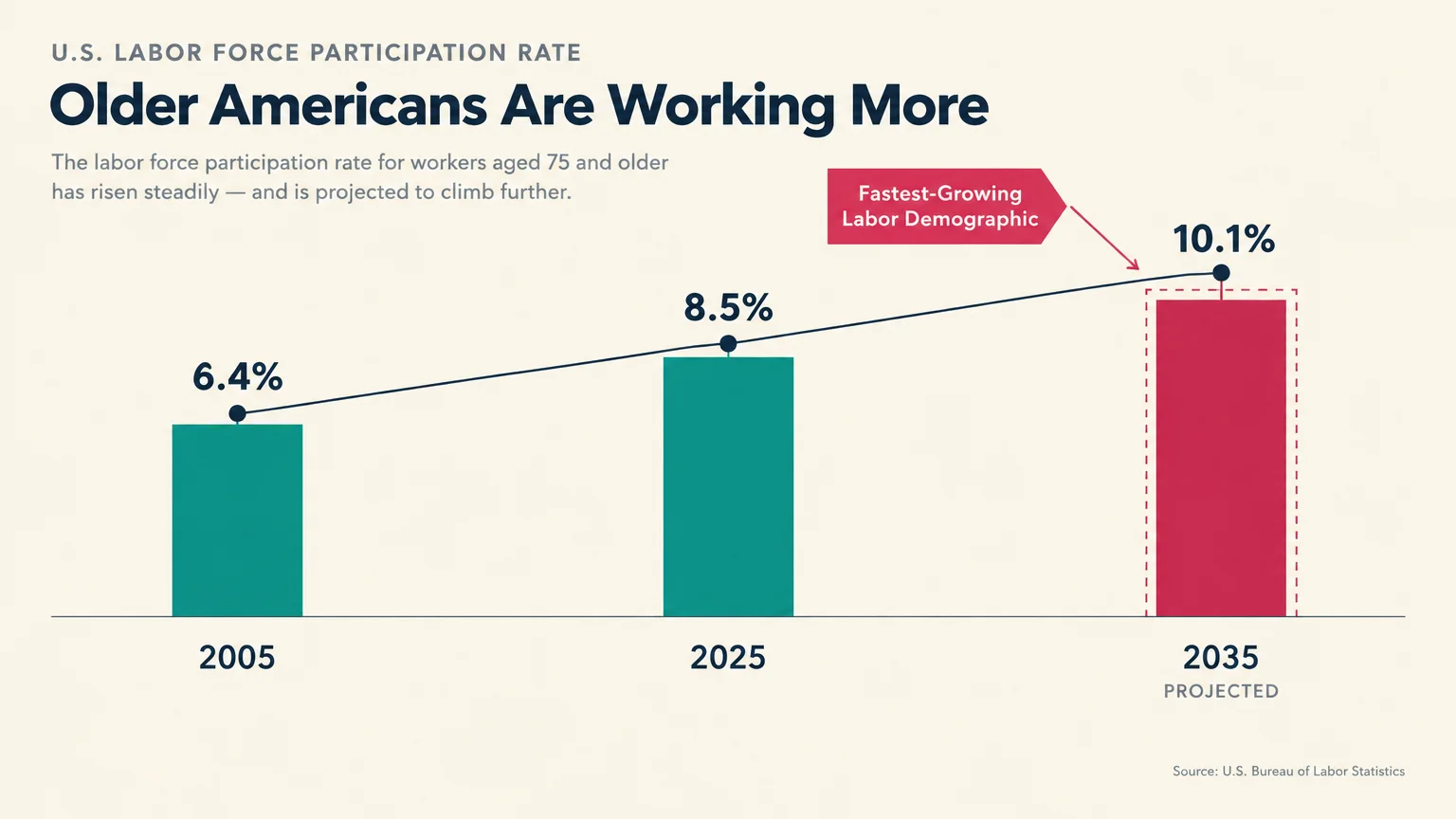
Data from the U.S. Bureau of Labor Statistics reveals that the labor force participation rate for workers aged 75 and older grew from 6.4 percent in 2005 to roughly 8.5 percent in 2025.
Labor economists project that this rate will reach 10.1 percent by 2035; this makes older seniors the fastest-growing demographic in the American labor market.
Many older adults remain employed because they enjoy intellectual stimulation and meaningful daily collaboration with colleagues.
Other seniors continue working to reinforce their nest eggs, offset persistent inflation, or provide financial support to extended family members.
Regardless of your motivation, working past 75 activates specific statutory rules that govern your earned income and Social Security payments.
How Social Security Treats Your Paycheck After Age 75
You might worry that collecting a paycheck will trigger clawbacks or shrink your monthly benefit check.
Fortunately, federal regulations change substantially once you pass your initial retirement milestones, eliminating common financial traps.
The Retirement Earnings Test Completely Disappears
The Social Security Retirement Earnings Test withholds benefit dollars from younger retirees who earn income above annual statutory caps.
However, this earnings restriction applies strictly between age 62 and your official Full Retirement Age.
For workers reaching retirement today, Full Retirement Age lands between 66 and 67 years old.
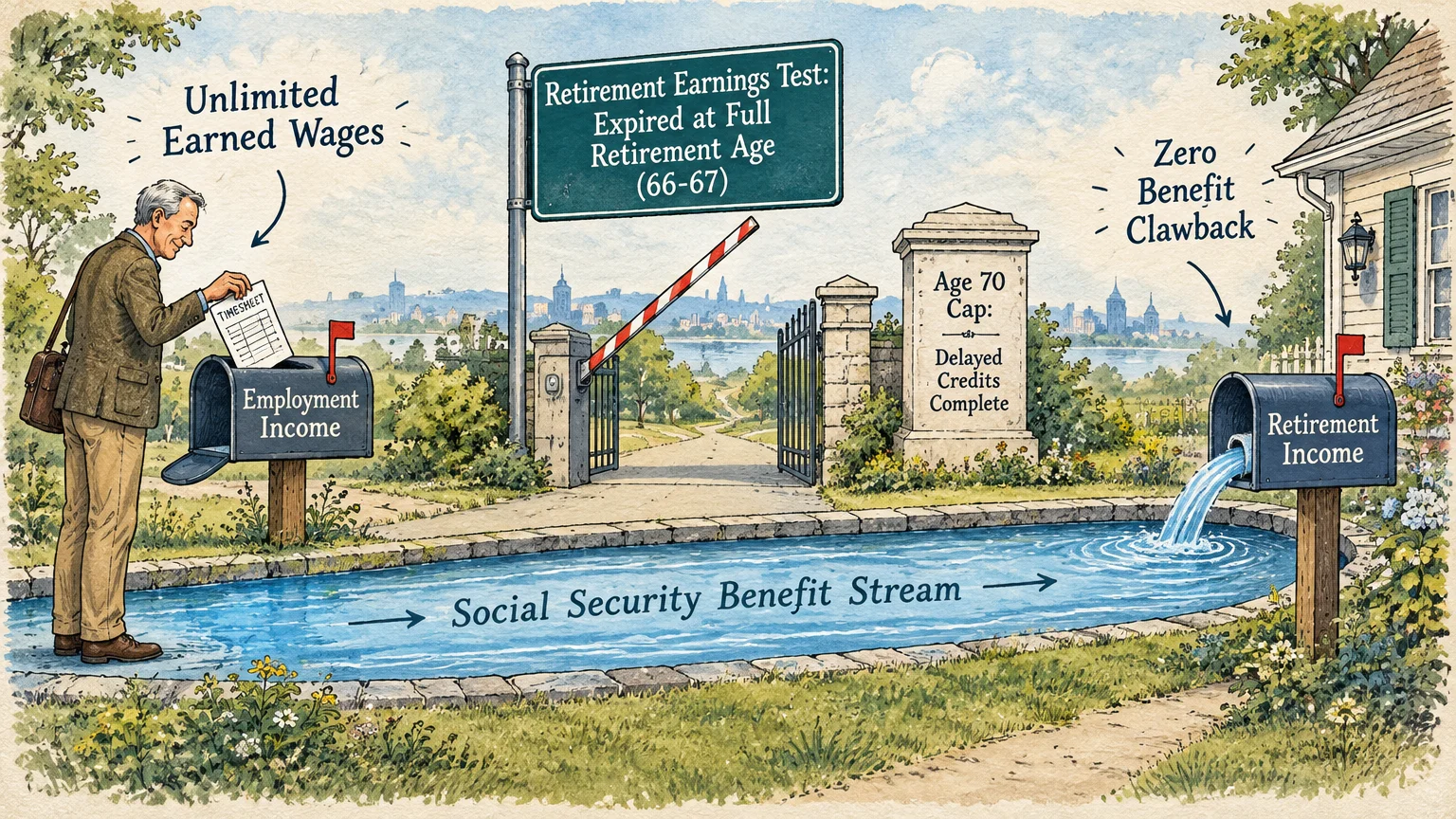
Once you reach your Full Retirement Age, the earnings test ceases to exist for the rest of your life.
At age 75, you can earn unlimited employment wages or freelance profits without losing any Social Security income.
Whether you earn $10,000 or $300,000 annually, the government will never withhold your monthly check due to your work schedule.
Delayed Retirement Credits Stop at Age 70
Some seniors assume that delaying their benefit claim past age 75 will continue making their monthly payout larger.
While postponing your claim past Full Retirement Age earns you an extra 8 percent per year, those credits stop at age 70.
Waiting past age 70 adds zero financial value to your future monthly check.
If you have reached age 75 and have not yet claimed your benefit, you are forfeiting monthly income that you cannot fully recover.
Federal law limits retroactive benefit distributions to a strict maximum of six months of back payments.
If you have not claimed yet, contact the government immediately to avoid losing additional earned checks.
Automatic Benefit Recalculations and Your Top 35 Years
Your ongoing employment can actually increase your monthly retirement checks through an annual benefit recalculation.
The Social Security Administration calculates your primary benefit using your highest 35 years of wage-indexed earnings.
If your earnings at age 75 outpace what you earned in one of your lowest 35 career years, the agency updates your record.
This statutory rule provides a tremendous advantage if your early adulthood included zero-earning years, career transitions, or unpaid caregiving.
You do not need to file complex paperwork or visit an agency office to initiate this recalculation.
The government audits your tax filings each autumn and applies any resulting benefit increase in January of the following calendar year.
Payroll Taxes and Federal Income Tax Realities
While your monthly benefits escape the earnings test, your wages remain fully subject to federal payroll withholdings.
Understanding these required payroll deductions helps you budget accurately and evaluate job compensation offers effectively.
Mandatory FICA and Self-Employment Taxes
Many older workers mistakenly believe that citizens age out of payroll taxes once they reach their mid-seventies.
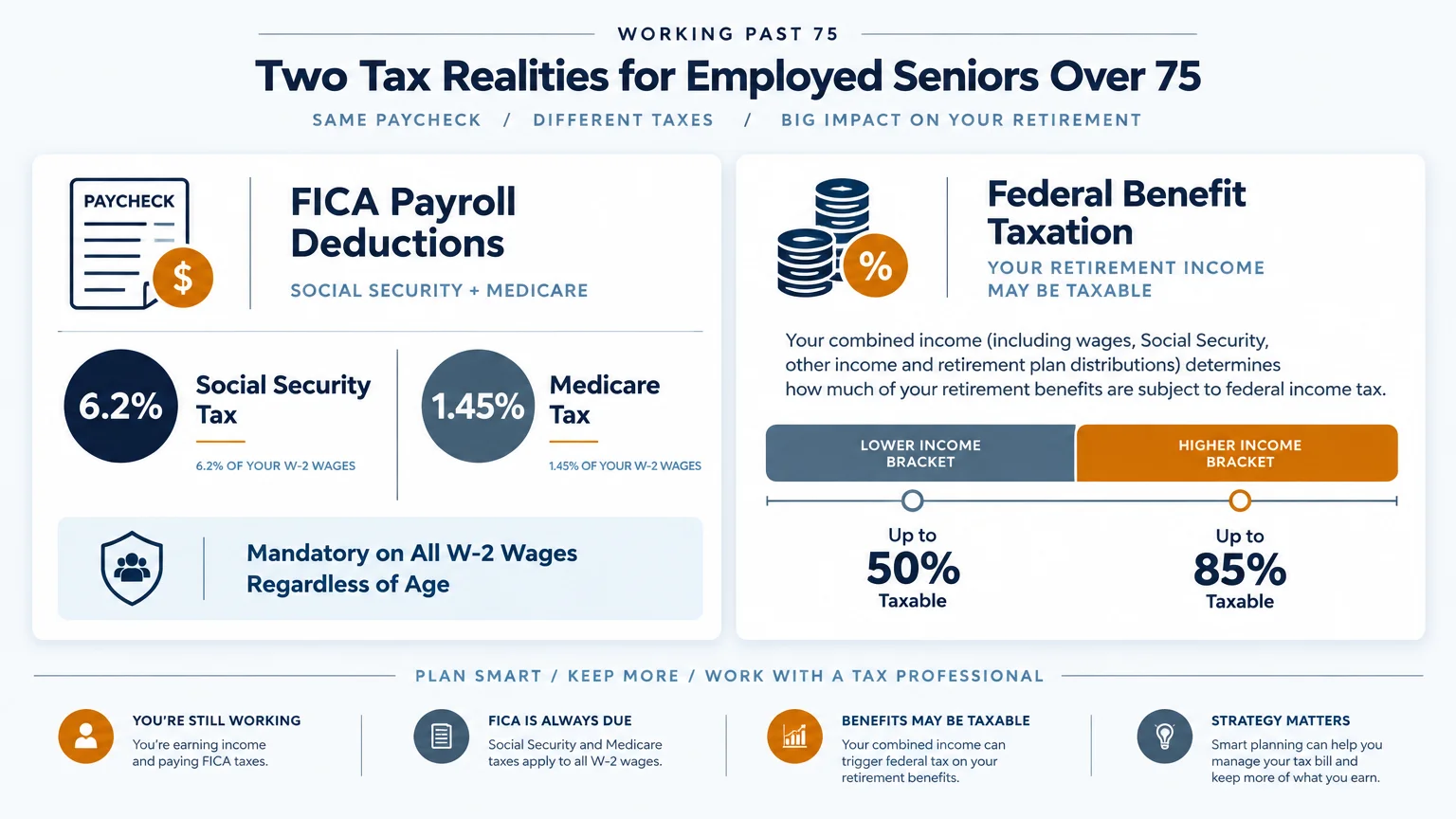
Federal law contains no age exemption for mandatory payroll deductions, requiring all active employees to pay into the system.
As a traditional employee, you pay a 6.2 percent Social Security tax up to the annual statutory wage threshold.
This wage ceiling is set at $168,600 in 2024, expands to $176,100 in 2025, and climbs to $184,500 in 2026.
You also pay a 1.45 percent Medicare tax on all earned wages without any annual dollar limit.
High earners pay an additional 0.9 percent Medicare surtax on compensation above $200,000 for single filers or $250,000 for married couples.
If you work as an independent contractor, you must pay the full 15.3 percent self-employment tax on net business earnings.
Federal Taxes on Your Social Security Benefits
Earning wages past age 75 can cause a substantial portion of your monthly Social Security check to face federal income taxation.
The Internal Revenue Service evaluates your liability using a metric known as provisional income.
Your provisional income equals your adjusted gross income, plus any tax-exempt interest, plus 50 percent of your annual Social Security benefits.
If you file as a single taxpayer with provisional income between $25,000 and $32,000, up to 50 percent of your benefits become taxable.
Single filers with provisional income exceeding $32,000 must pay regular income tax on up to 85 percent of their benefits.
For married couples filing jointly, provisional income between $32,000 and $44,000 exposes up to 50 percent of benefits to federal taxation.
Married couples earning above $44,000 face taxation on up to 85 percent of their total Social Security payments.
Because Congress never indexed these thresholds to inflation, earning a modest wage often moves working seniors into taxable brackets.
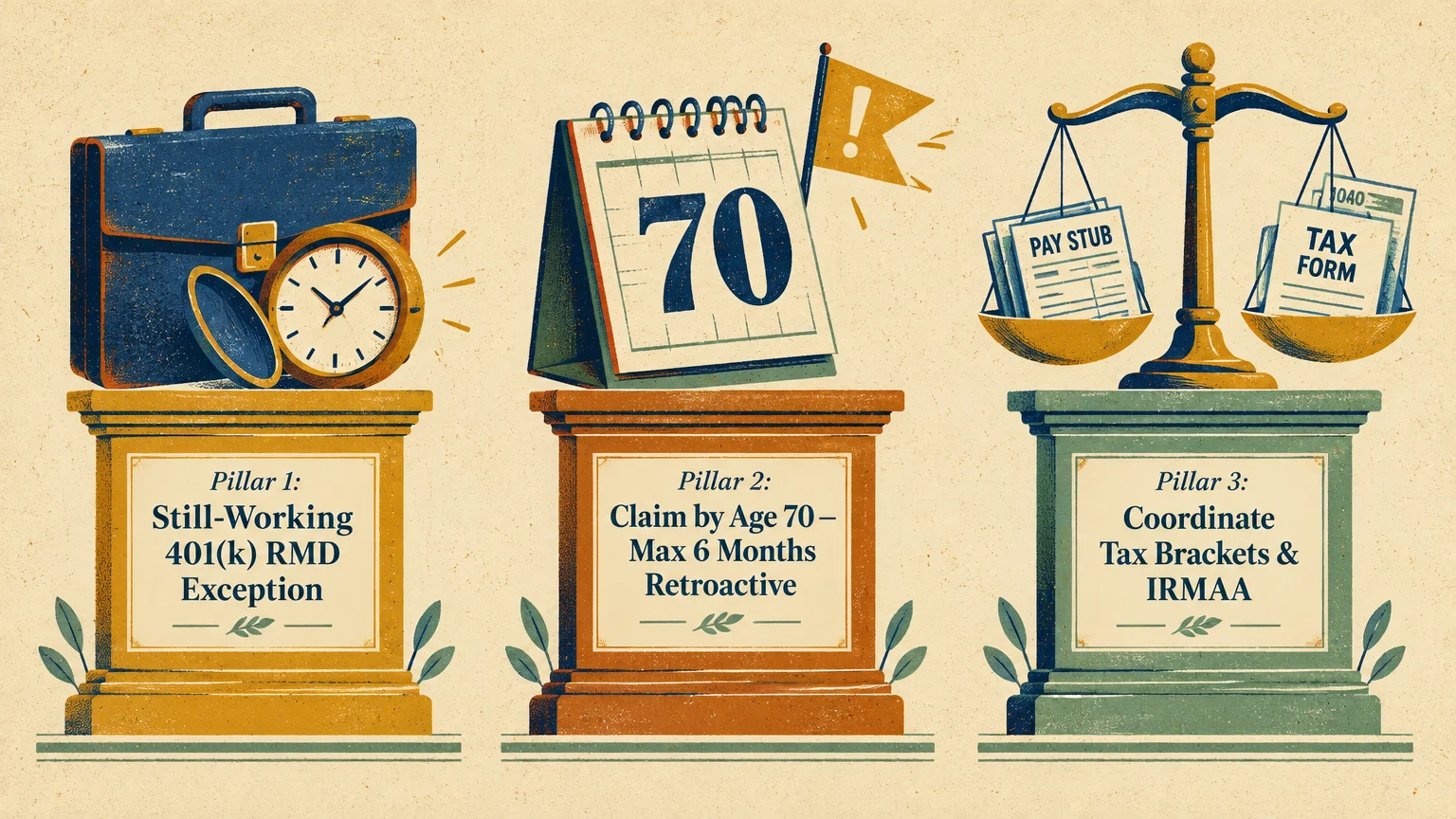
Three Strategic Pillars for Working Beyond 75
Balancing a career in your late seventies requires purposeful coordination between your financial portfolio, daily lifestyle, and physical vitality.
Focusing on three core pillars allows you to maximize your workplace satisfaction while protecting your hard-earned benefits.
Pillar 1: Proactive Income and Tax Planning
Coordinating your paychecks with required retirement withdrawals prevents unexpected tax surges at the end of the year.
Certified financial planner Marcus Vance advises clients past 75 to explore qualified charitable distributions from traditional individual retirement accounts.
Directing your mandatory account distributions directly to qualified charities satisfies IRS withdrawal mandates without swelling your adjusted gross income.
You should also verify whether your employer sponsors a workplace retirement savings plan that accepts contributions from active older workers.
Contributing pre-tax salary to an active employer plan lowers your adjusted gross income and helps preserve your benefit payouts.
Pillar 2: Lifestyle Design and Workplace Flexibility
Designing a flexible work routine helps you maintain career satisfaction without compromising your daily independence or physical well-being.
Gerontologist Dr. Elena Ramirez notes that flexible schedules support cognitive vitality while preventing fatigue among older professionals.
You can discuss converting traditional full-time obligations into part-time consulting contracts or seasonal project assignments with your employer.
Negotiating remote work options eliminates taxing physical commutes and lets you customize your desk setup for ergonomic comfort.
Establishing clear professional boundaries protects your time for family commitments, physical activity, and community hobbies.
Pillar 3: Protecting Your Health and Medicare Coverage
Protecting your health requires navigating the intersection between employer-provided group health insurance and your personal Medicare benefits.
Check guidelines from Medicare to verify whether your workplace policy serves as your primary or secondary insurance.
If your company employs fewer than 20 workers, Medicare acts as primary payer, making Part B enrollment essential to prevent coverage gaps.
Prioritize regular hearing and vision screenings to ensure you can perform your workplace responsibilities safely and comfortably.
Incorporate scheduled walking breaks and gentle stretching into your daily workday to sustain joint mobility and cardiovascular health.

Crucial Pitfalls to Avoid While Working Past 75
Staying employed past 75 offers substantial advantages, but certain administrative pitfalls can undermine your financial progress.
Addressing these vulnerabilities proactively safeguards your assets and preserves your peace of mind.
The Medicare IRMAA Surcharge Trap
High wage income can inadvertently trigger the Income-Related Monthly Adjustment Amount on your Medicare Part B and Part D premiums.
The government evaluates your tax return from two years prior to determine whether you owe these substantial insurance surcharges.
A sudden wage increase or annual bonus can push your taxable income just past a statutory threshold, raising your healthcare costs.
Consult your tax professional annually to project how your wage income might influence your future Medicare premium bills.
Predatory Scams Targeting Working Seniors
Older professionals often face sophisticated deceptive schemes that target their accumulated assets and professional visibility.
Consumer specialists at the AARP Fraud Watch Network report that impostor schemes frequently target working seniors through fake consulting offers.
Never provide sensitive personal information, banking credentials, or your Social Security number to unverified prospective business clients.
Establish direct deposit alerts on all banking accounts and check your credit reports regularly to catch suspicious transactions quickly.
Frequently Asked Questions About Working Past 75
Do I still pay Social Security taxes if I work at 75?
Yes, you must pay mandatory FICA taxes on all employment income regardless of your current age.
Federal law mandates that every wage earner and self-employed individual contributes to Social Security and Medicare funds.
Will my wages reduce my monthly Social Security check?
No, your employment earnings will never cause a reduction in your monthly Social Security benefit check.
The Social Security earnings test applies only before Full Retirement Age, leaving workers over 75 free from benefit penalties.
Can working at age 75 increase my monthly benefit?
Yes, your monthly check can increase if your current earnings replace a lower-earning year from your past work history.
The agency automatically recalculates your primary insurance amount every year and issues any payment increases each January.
What happens if I have not claimed Social Security by age 75?
You forfeit valuable retirement income because delayed retirement credits stop accruing once you reach age 70.
You must apply immediately; the Social Security Administration limits retroactive lump-sum disbursements to a maximum of six months.
Your 48-Hour Action Plan
Remaining in the workforce past age 75 demonstrates purpose, resilience, and personal autonomy.
Take one concrete action within the next 48 hours to ensure your employment strategy aligns with your retirement goals.
Create or log in to your personal Social Security account online to verify your official 35-year historical earnings record.
Examine your recent pay statements to verify correct tax withholdings, and schedule a consultation with your accountant regarding provisional income.
Taking these decisive steps ensures that your continuing career enriches your lifestyle while protecting every benefit you have earned.