
Your mailbox delivers far more than routine updates; it brings binding legal choices regarding your retirement security. Misunderstanding a single pension document can permanently slash your lifetime income or eliminate essential spousal survivor benefits.
Millions of older Americans rely on defined benefit pensions to anchor household cash flow. Yet complex administrative language often conceals vital deadlines and subtle benefit reductions.
Taking ten minutes to examine these crucial mailings protects your long-term financial peace of mind. Here are eight pension notices that deserve a careful second read.
Navigating the Modern Pension Landscape
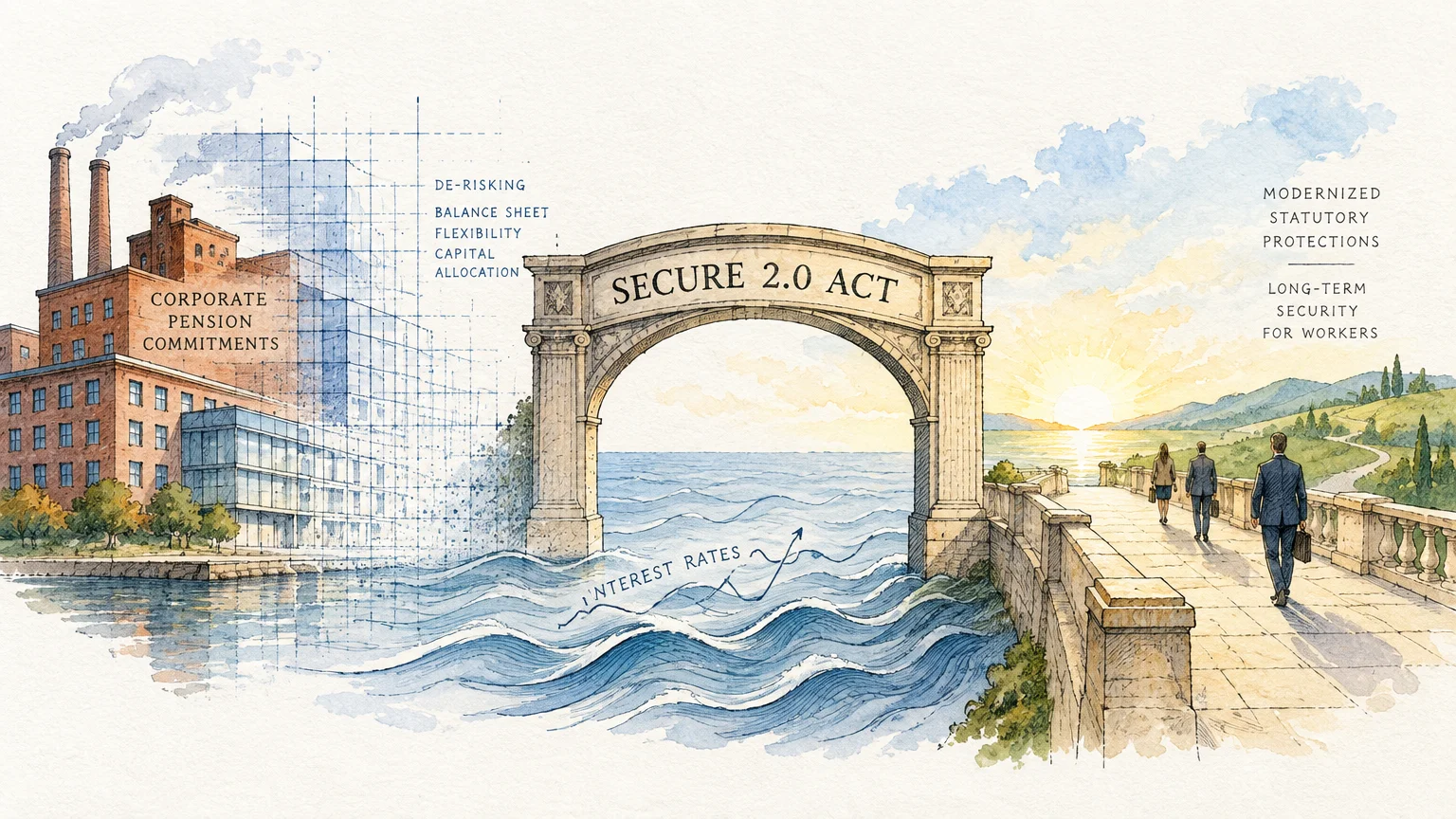
Corporate pension structures have evolved dramatically over recent decades. While employers once managed plans indefinitely, modern companies frequently seek ways to reduce balance-sheet obligations.
Congress enacted the SECURE 2.0 Act to modernize retirement rules and safeguard participants during corporate transitions. This legislation established tighter disclosure mandates and strong protections for pensioners nationwide.
Shifting market interest rates also affect how sponsors calculate cash payments and value ongoing commitments. Staying informed ensures administrative adjustments never derail your retirement plans.
Eight Critical Pension Letters You Must Review
1. The Annual Funding Notice (AFN)
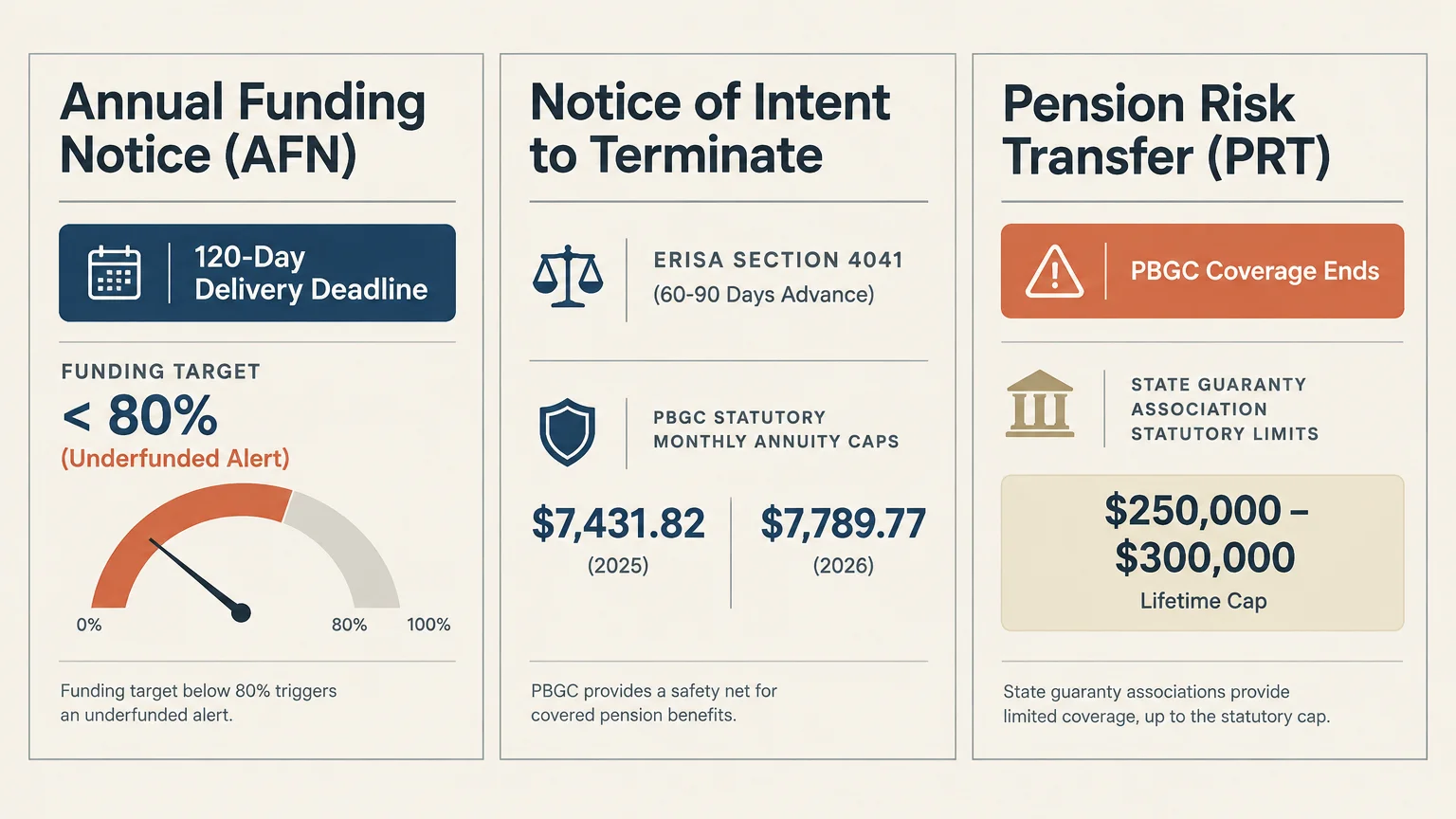
Every year, your plan administrator must send an Annual Funding Notice. The Employee Benefits Security Administration requires plans to deliver this document within 120 days after the plan year ends.
Small plans with 100 or fewer participants face a 45-day mailing deadline. Regardless of size, this letter provides an essential health check of your plan.
Examine the funding target attainment percentage for the current year and the two preceding years. A percentage consistently below 80 percent signals underfunding that warrants ongoing attention.
This notice also reports total active workers and retirees drawing benefits. A shrinking base of active contributors can strain an underfunded plan over time.
2. Notice of Intent to Terminate
When an employer decides to terminate a defined benefit pension, federal law mandates advance notice. Under ERISA Section 4041, sponsors must issue this notice 60 to 90 days before termination.
In a standard termination, the employer possesses sufficient assets to pay all accrued benefits. If the employer experiences insolvency, the federal government steps in to protect pensioners.
The Pension Benefit Guaranty Corporation assumes trusteeship of distressed plans and pays benefits up to statutory limits. Your monthly checks could drop if your benefit exceeds legal maximum caps.
For a 65-year-old taking a straight-life annuity, the PBGC monthly guarantee cap is $7,431.82 in 2025. That threshold increases to $7,789.77 in 2026, up from $7,107.95 in 2024.
3. Pension Risk Transfer (PRT) Disclosure
Companies frequently offload pension liabilities by purchasing a group annuity contract from a commercial insurance carrier. Receiving a pension risk transfer notice means your direct relationship with the employer ends.
This administrative transfer completely eliminates your PBGC federal guarantee coverage. Instead, your ongoing monthly income depends entirely on the financial stability of the private life insurer.
State life and health insurance guaranty associations serve as the remaining safety net. However, state statutory limits commonly cap lifetime annuity protections between $250,000 and $300,000 in present value.
High-benefit pensioners risk unhedged losses if the insurer fails and benefits exceed state limits. Check the independent credit ratings of the selected insurer as soon as you receive notice.
4. Lump-Sum Buyout Offer Notice
Employers often offer one-time lump sums to eliminate lifetime monthly payment obligations. Under Section 342 of the SECURE 2.0 Act, administrators must provide disclosures at least 90 days before election windows open.
This notice must explain the interest rates and mortality tables used to calculate your cash buyout. It must also contrast the financial value of the lump sum against lifetime annuity payments.
Accepting a buyout transfers all investment risks, inflation hazards, and longevity uncertainty directly to you. You also forfeit government guarantee protections once you accept the cash distribution.
Consult a trusted financial planner to determine whether your health and budget justify giving up guaranteed checks. Never rush an irreversible decision under administrative pressure.
5. Notice of Plan Freeze or Benefit Reduction (Section 204(h))
When an employer freezes future benefit accruals, they must issue an ERISA Section 204(h) notice. Administrators must deliver this written notice at least 45 days before the amendment takes effect.
Plans with fewer than 100 participants must provide notice at least 15 days in advance. This document clarifies whether the freeze is soft or hard.
A soft freeze allows current participants to continue accruing benefits while excluding new hires. A hard freeze completely halts future accruals, locking your earned benefit at its current level.
While a freeze cannot reduce benefits you have already earned, it alters your future income trajectory. You will need to adjust your personal savings rate to offset the shortfall.
6. Mandatory Cash-Out Notice
When you leave an employer with a small pension balance, the sponsor may initiate an involuntary distribution. Section 304 of the SECURE 2.0 Act raised this automatic cash-out threshold from $5,000 to $7,000.
For balances between $1,000 and $7,000, sponsors cannot simply mail a taxable check without your consent. Federal rules require them to roll the funds into a default Safe Harbor IRA.
Default accounts often sit in low-yield cash equivalents that get eroded by administrative fees over time. Take control of the notice by directing the rollover into your chosen retirement account.
Taking proactive action prevents unexpected tax liabilities and early distribution penalties. Always request written confirmation once the rollover transfer completes.
7. Qualified Joint and Survivor Annuity (QJSA) Explanation
As your pension start date nears, the plan administrator will provide a formal QJSA explanation. Section 417 of the Internal Revenue Service code requires delivery between 30 and 180 days beforehand.
This letter outlines the exact monthly reduction required to provide continued income for a surviving spouse. Federal law establishes a joint and survivor annuity as the default payout for married participants.
Waiving spousal survivor benefits for a higher single-life payout strictly requires notarized written spousal consent. Plan administrators must reject any waiver that lacks valid spousal signatures and notary stamps.
Evaluate survivor choices alongside your spouse’s expected healthcare needs and other household assets. Sacrificing survivor coverage can create severe financial vulnerability for a surviving partner.
8. Pension Overpayment Recoupment Notice
Administrative calculation errors sometimes lead plans to pay retirees more than their actual entitlement. Historically, plan fiduciaries could demand immediate repayment of years of cumulative overpayments.
Section 301 of the SECURE 2.0 Act established crucial guardrails to protect pensioners from aggressive recoupment. Fiduciaries generally cannot seek repayment if more than three years have passed since the initial error.
Administrators cannot charge interest or additional fees on inadvertent overpayments. Recoupment cannot exceed 10 percent of the total overpayment amount in any single calendar year.
Additionally, plans cannot reduce ongoing monthly benefit payments by more than 10 percent. Verify that any recoupment letter strictly respects these statutory limits before agreeing to repayments.

Strategy Pillars: Protecting Your Income, Lifestyle, and Health
Income Planning Integration
Your pension choices directly interact with your other retirement income streams. Benefit adjustments alter how much you must withdraw from personal savings and retirement accounts.
The Social Security Administration includes pension income when calculating the taxation of your Social Security benefits. Large lump sums can push you into higher tax brackets and trigger higher Medicare premiums.
The SECURE 2.0 Act sets the required minimum distribution age at 73, rising to 75 in 2033. Missing an RMD triggers a 25 percent penalty, reduced to 10 percent with timely correction.
Lifestyle Design and Longevity Budgeting
Fixed defined benefit payments rarely include cost-of-living adjustments, meaning inflation gradually erodes your purchasing power. A monthly payment that easily covers expenses today may feel tight fifteen years later.
When reviewing pension options, build household budgets that account for changing mobility levels and family support obligations. Proactive planning helps you manage home accessibility needs and potential caregiving expenses on a fixed income.
Discussing pension notices with family members establishes shared clarity around long-term household resources. Transparent communication prevents misunderstandings and aligns expectations across generations.
Health, Wellness, and Cognitive Safeguards
Reviewing complex financial notices can trigger significant cognitive fatigue and emotional stress. Chronic anxiety over money issues harms physical health and impairs sound financial decision-making.
Gerontologists recommend reviewing technical mailings during calm morning hours when focus is sharpest. Breaking dense documents into smaller reading sessions prevents feeling overwhelmed by technical details.
Consider asking a trusted family member or certified financial advocate to review documents with you. Having a reliable second perspective helps you spot critical details and prevents impulsive choices.

Expert Voices and Risk Mitigation
Financial advisors warn retirees about aggressive marketing campaigns timed to pension buyout announcements. Predatory brokers often pressure workers to take lump sums so they can sell high-commission financial products.
The consumer protection team at AARP warns retirees to beware of fraudulent mailings impersonating pension administrators. Scammers often use convincing official logos to harvest banking details and Social Security numbers.
If a notice requests immediate funds or asks for confidential data by phone, stop and verify. Contact your plan sponsor directly using contact information from past verified statements.
Always keep detailed written records of every conversation with plan representatives. Documenting dates, representative names, and specific instructions protects your interests if disputes arise later.
Frequently Asked Questions
What Should You Do If an Annual Funding Notice Shows Underfunding Below 80 Percent?
Do not panic, because low funding does not mean your checks will stop immediately. Review the sponsor’s funding recovery notes and monitor the percentage over subsequent years.
Compare your monthly benefit against PBGC guarantee limits to see if your payout exceeds statutory protection caps. If your benefits exceed PBGC caps, consider strengthening personal emergency reserves.
Can Your Employer Force You to Take a Lump Sum?
Sponsors cannot force a lump sum unless your total vested benefit is $7,000 or less. For balances above that statutory threshold, accepting a lump sum remains entirely voluntary.
If you prefer guaranteed lifetime payments, you can simply decline the cash-out offer. Your rights to monthly pension checks remain fully protected under the plan.
How Does a Pension Risk Transfer Affect Your Tax Status?
A pension risk transfer does not change how your regular monthly benefits are taxed. Your monthly annuity checks remain ordinary taxable income just as they were under your employer.
The change is purely administrative, substituting a commercial life insurance company for your former employer. You will receive an annual Form 1099-R from the insurance carrier rather than the pension trust.
What Should You Do If You Receive an Overpayment Notice?
Request a complete written audit explaining exactly how the administrator calculated the alleged overpayment. Do not agree to immediate repayments until you review the historical calculation details.
Check whether more than three years have passed since the initial overpayment occurred. The SECURE 2.0 Act generally shields retirees from clawbacks after that three-year statutory window closes.
Your 48-Hour Pension Action Plan
Safeguarding your retirement income requires proactive organization rather than passive trust. You spent decades earning your pension benefits, and they deserve careful oversight.
Over the next 48 hours, locate your latest pension statements and organize them in a dedicated folder. Verify your current mailing address and primary beneficiary designations with your plan administrator.
Schedule time with your spouse or a trusted advisor to review your survivor benefit selections. Taking control of your retirement paperwork today ensures lasting financial security and peace of mind.