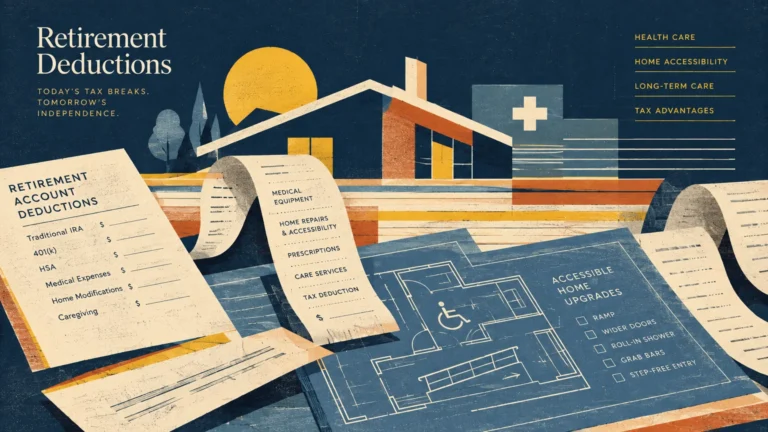
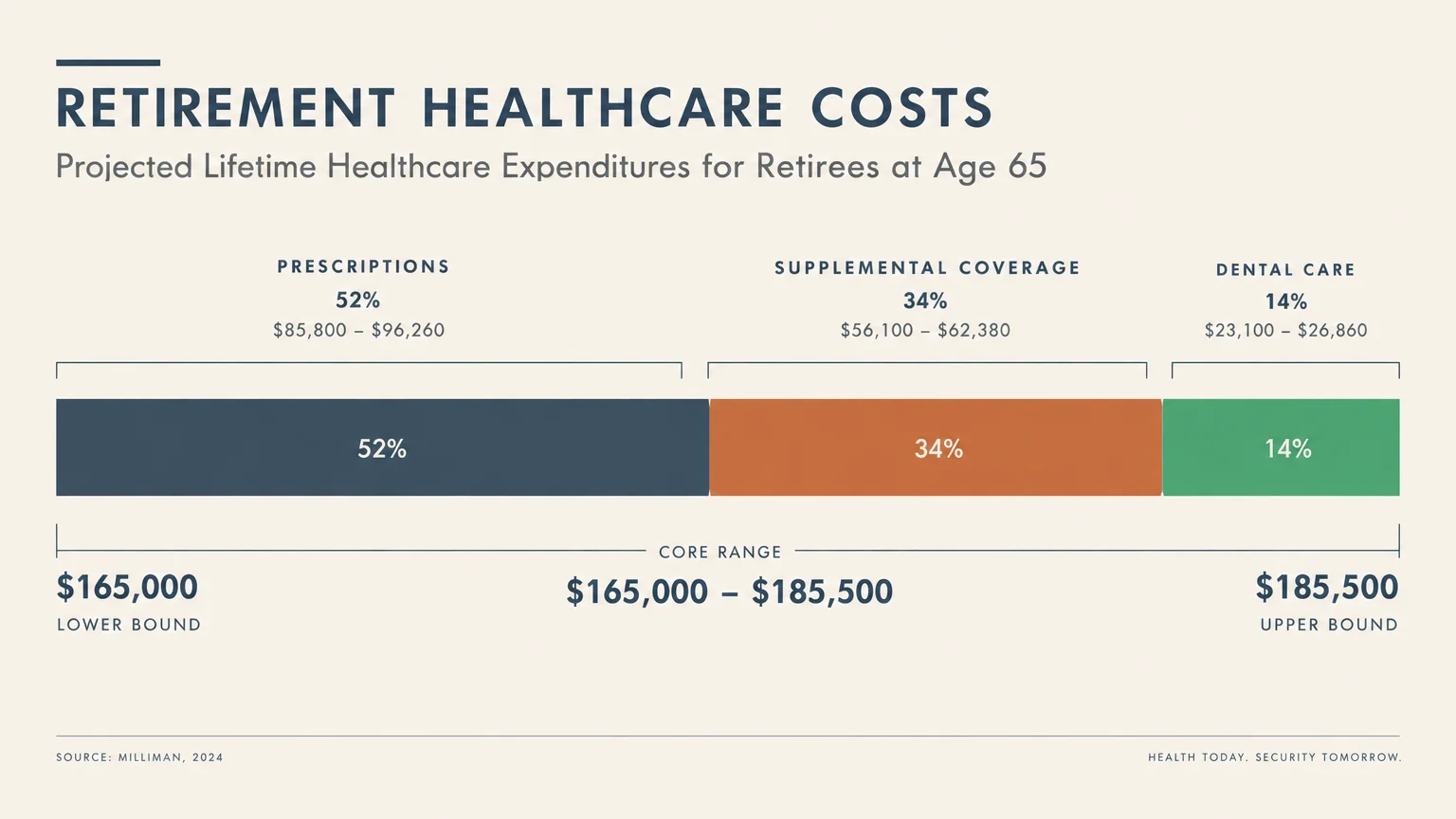
Managing your healthcare paperwork can save you thousands of dollars in taxes and prevent costly billing disputes. Recent Fidelity estimates show that a 65-year-old retiree will spend between $165,000 and $185,500 on healthcare throughout retirement.
Tracking every medical expense protects your hard-earned nest egg from unnecessary drain. Yet many older adults leave valuable tax savings behind because simple recordkeeping errors derail their deductions.
You can take complete control of your medical receipts by correcting a few common tracking oversights. Avoiding these missteps will streamline your annual filing and protect your financial well-being.
Understanding the Realities of Healthcare Spending in Retirement
Healthcare represents one of the largest and most unpredictable spending categories in your retirement budget. Between supplemental coverage, dental care, and prescriptions, medical outlays accumulate rapidly throughout the year.
Inflation and shifting healthcare policies continue to transform how retirees handle their medical expenses. Staying organized ensures you do not surrender money that rightfully belongs in your retirement portfolio.
Mistake 1: Misunderstanding the 7.5% Adjusted Gross Income Floor
Many retirees gather every single medical receipt expecting a dollar-for-dollar reduction on their tax returns. However, the internal revenue code enforces strict guidelines on healthcare deductions.
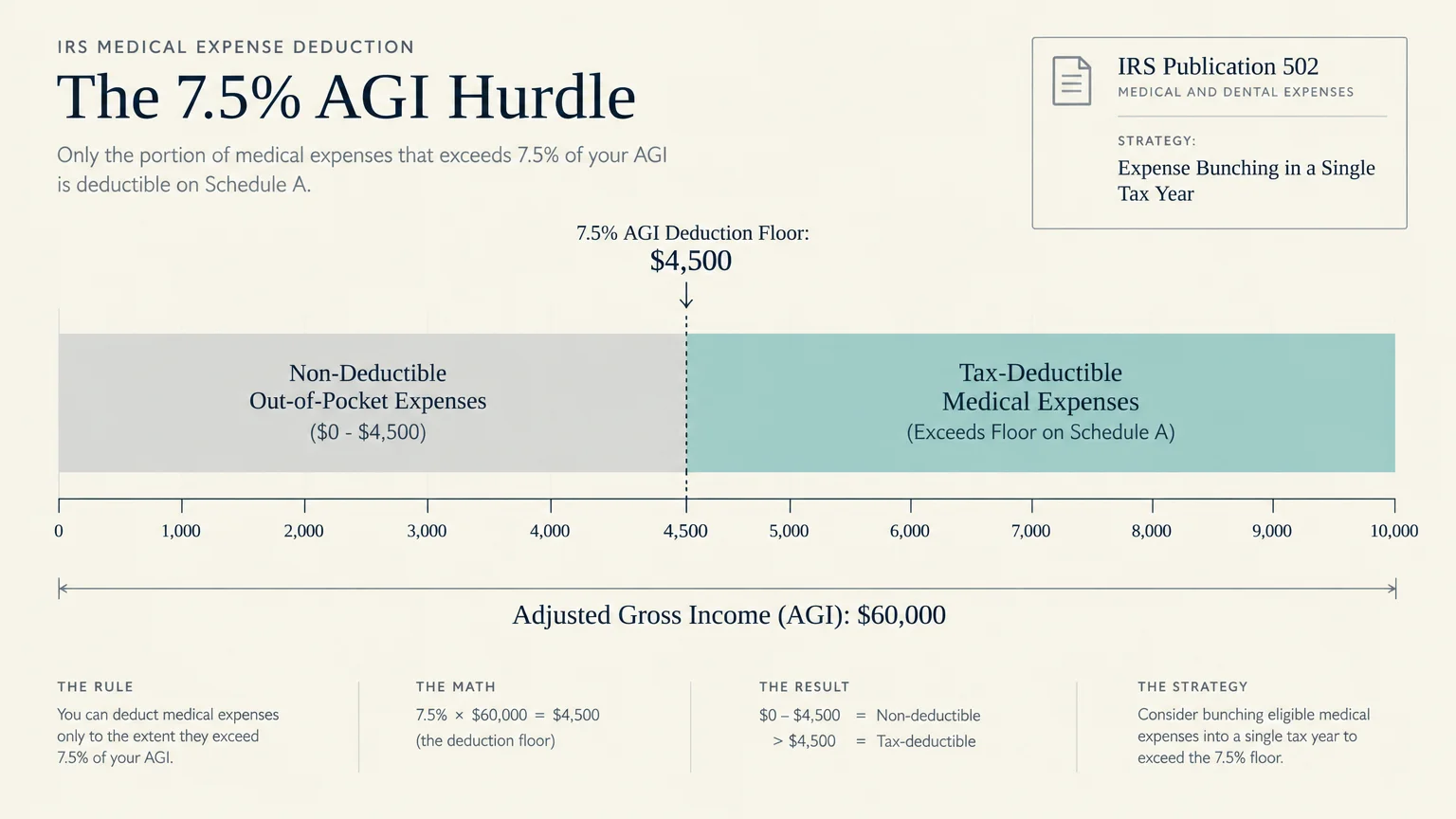
According to IRS Publication 502, you can only deduct unreimbursed medical expenses that exceed 7.5% of your Adjusted Gross Income (AGI). You must also itemize deductions on Schedule A instead of taking the standard deduction.
If your AGI is $60,000, your deduction threshold is $4,500. Only the qualified spending that surpasses that baseline provides any tax relief.
Certified Financial Planner professionals recommend a strategy known as medical expense bunching. You schedule elective surgeries, dental work, and new medical devices within a single calendar year to easily clear that 7.5% hurdle.
Mistake 2: Forgetting Medicare Premiums Deducted from Social Security
Do you review the automatic deductions on your monthly retirement statements? Tens of thousands of retirees overlook their largest recurring qualified medical expense every tax season.
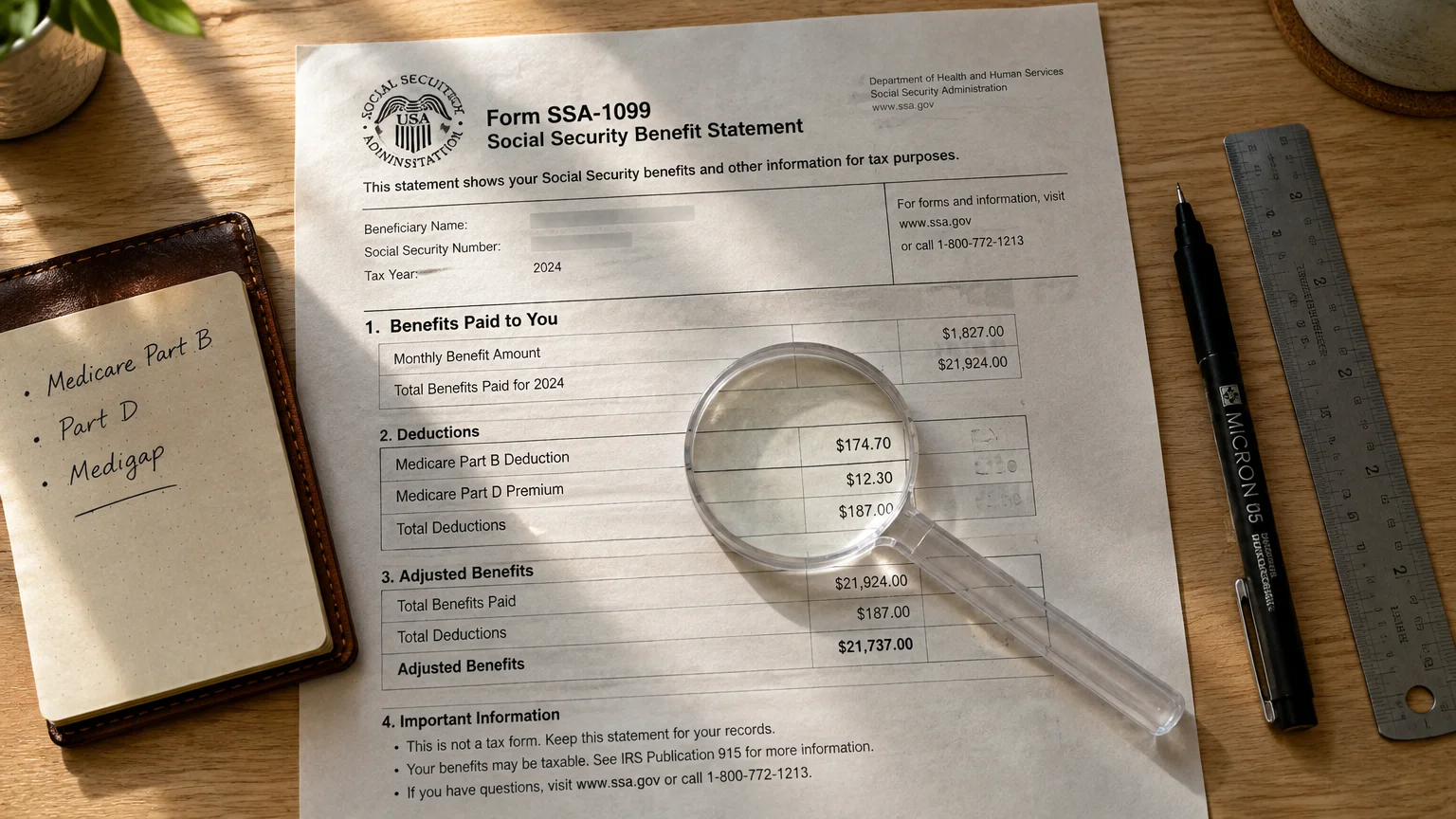
Premiums for Medicare Part B, Part D, and Medicare Advantage count as deductible medical expenses under federal tax rules. Medigap supplemental insurance premiums also qualify toward your annual healthcare total.
Because the government withholds Part B premiums directly from your Social Security checks, you never receive a physical paper receipt. Review your annual Form SSA-1099 from the Social Security Administration guidelines to find the total sum paid.
Adding these premium payments to your receipt ledger often pushes your total spending past the itemization threshold. Failing to log them leaves significant money on the table.
Mistake 3: Double-Dipping with Health Savings Accounts
Tax-advantaged savings accounts provide remarkable financial relief, but they require strict accounting discipline. Many retirees inadvertently violate federal tax law by mixing deduction methods.
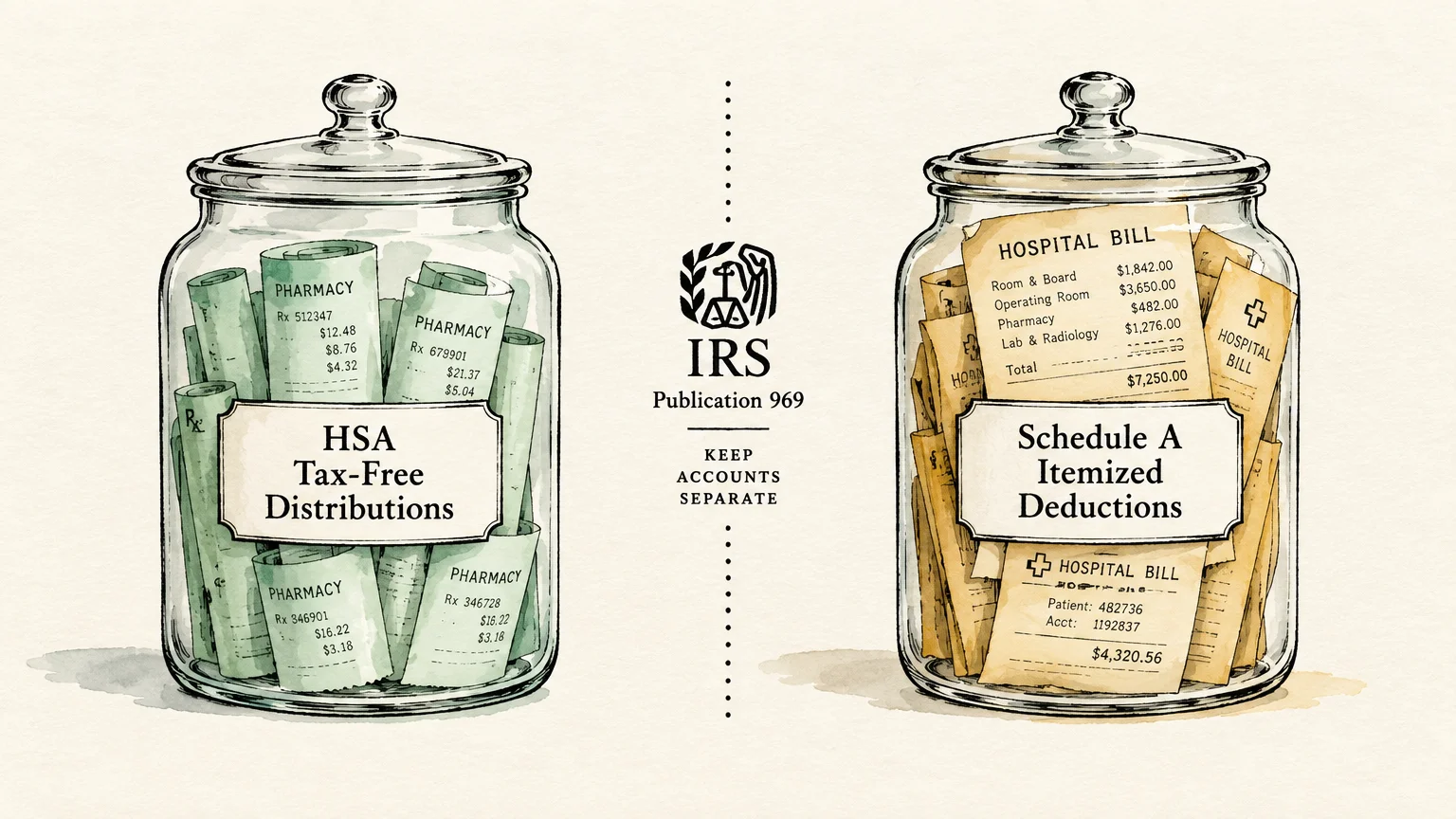
As outlined in IRS Publication 969, you cannot claim an itemized tax deduction for expenses paid with tax-free funds from a Health Savings Account (HSA). The IRS views this practice as double-dipping.
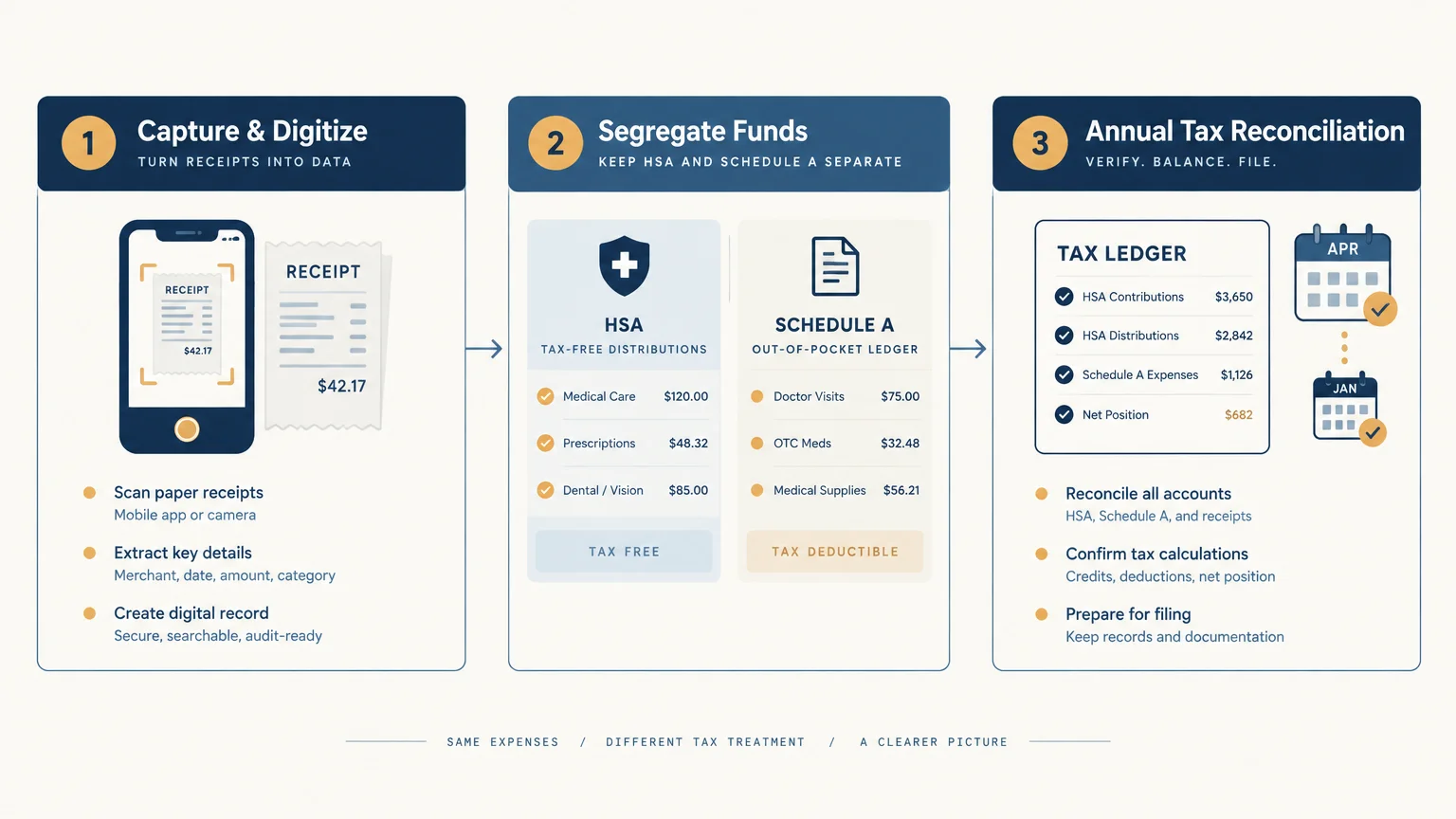
You must separate your paid receipts into two distinct categories: reimbursed expenses and out-of-pocket costs. Keep receipts for all HSA distributions to prove that your withdrawals funded qualified medical care.
If the tax agency audits your return, you must supply documentation showing that each reimbursed expense was legitimate. Maintaining clean folders prevents harsh penalties and unexpected tax bills.

Mistake 4: Overlooking Standard Medical Mileage and Travel Logistics
Medical spending extends well beyond doctor appointments and prescription copayments. The travel required to receive routine care also generates deductible healthcare expenses.
The standard IRS medical mileage rate allows you to claim 21 cents per mile driven for medical purposes. You can also tally parking fees, highway tolls, and public transit fares associated with medical appointments.
Many older adults fail to keep an accurate travel log in their vehicles. Others mistakenly calculate their trips using the higher business mileage rate, triggering red flags on their tax filings.
Keep a dedicated travel notebook in your car or use a mobile tracking application. Record the date, the destination clinic, the medical purpose, and the exact mileage for every trip.

Mistake 5: Storing Thermal Paper Receipts That Fade to Blank
Pharmacies and clinics routinely print transaction receipts on thermal paper. Unfortunately, heat-sensitive paper degrades rapidly when exposed to light, heat, or regular air circulation.
A folder filled with blank slips of paper will not defend your deductions during an audit. The IRS mandates that taxpayers keep supporting tax records for at least three years from your filing date.
You should immediately scan or photograph physical medical receipts when you arrive home. Save digital backups to a secure, password-protected cloud drive with clear file names.
If you prefer paper records, run the thermal receipt through a standard copy machine onto permanent paper. Staple the original to the photocopy to preserve proof of payment.
Mistake 6: Misunderstanding the Medicare Part D Prescription Drug Cap
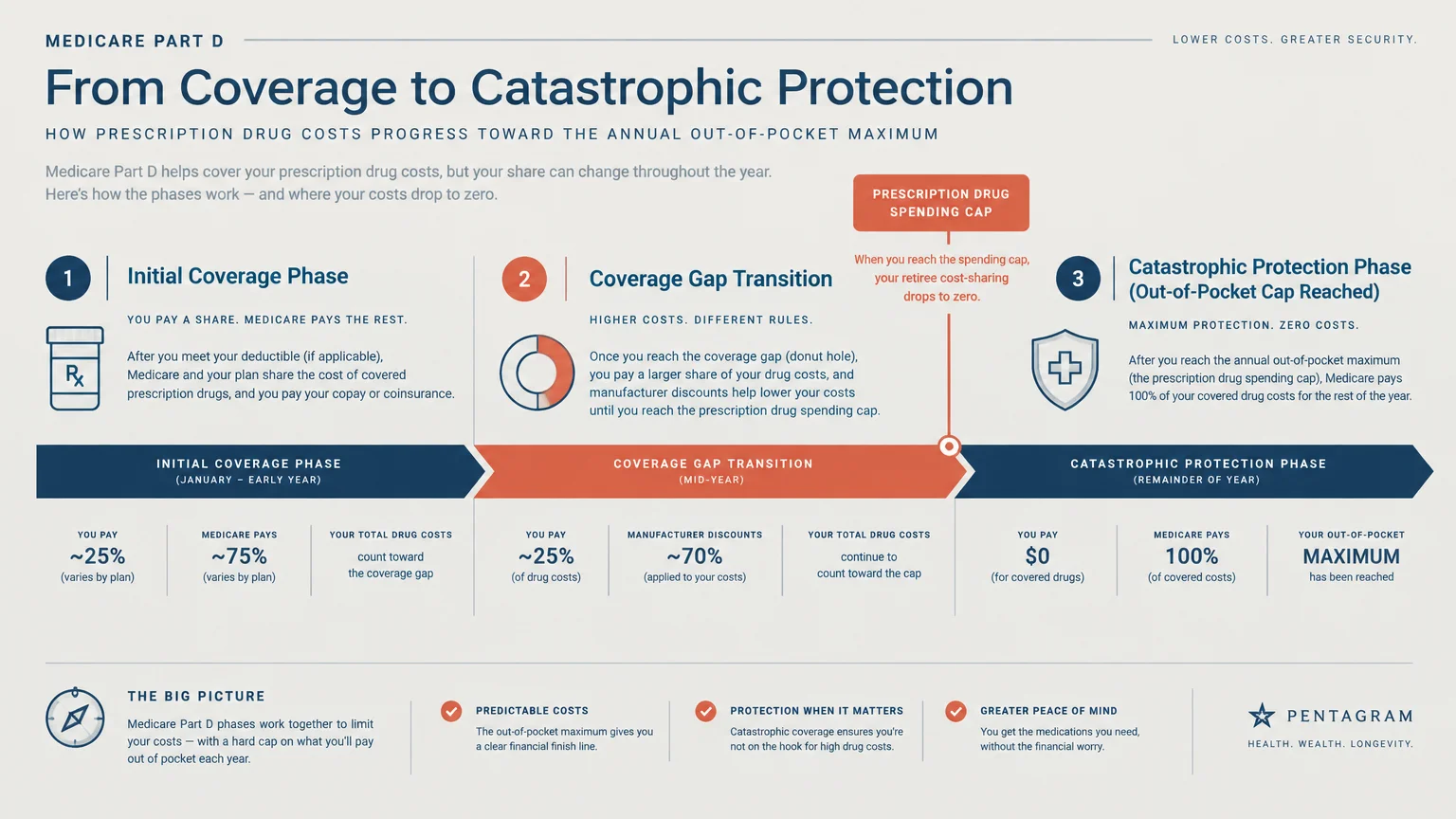
The Inflation Reduction Act established a landmark $2,000 annual out-of-pocket spending cap on prescription drugs covered under Medicare Part D. This ceiling brings substantial financial relief to individuals managing chronic conditions.
However, this legislative update creates confusion for retirees tracking their pharmacy receipts. Some retirees continue logging prescription copays long after hitting the annual ceiling.
Consult official Medicare.gov resources to track your progress toward the $2,000 threshold throughout the calendar year. Once you reach the maximum out-of-pocket limit, your plan pays 100% of covered drug costs.
Remember that medications not covered by your Part D formulary do not count toward this cap. You must track those non-formulary out-of-pocket costs separately for tax deduction purposes.
Mistake 7: Paying Bills Before Matching Them to Explanations of Benefits
Medical billing errors occur with startling frequency across the American healthcare system. Research reveals that a sizable percentage of hospital bills contain billing inaccuracies or duplicated line items.
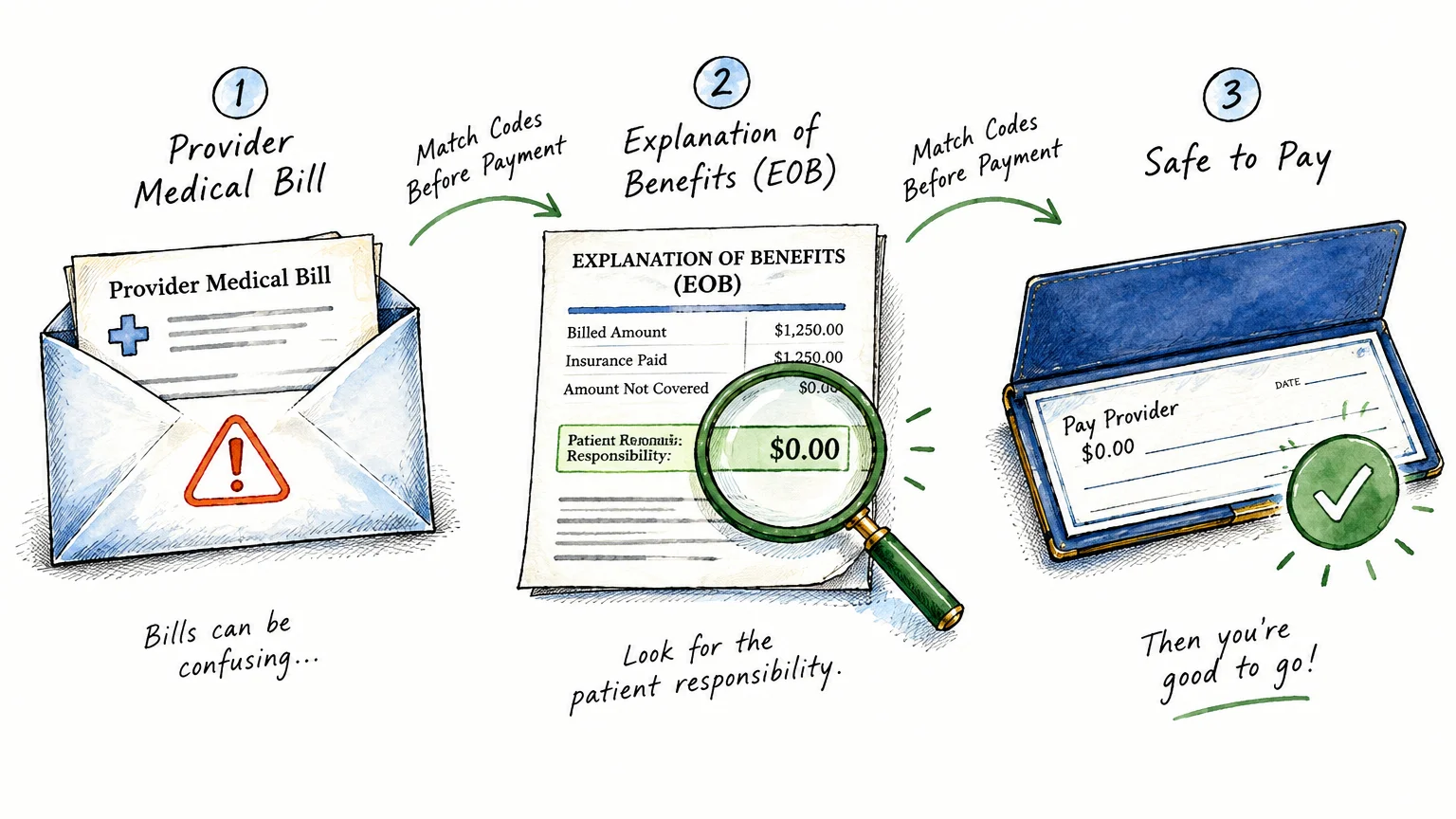
Never pay a healthcare invoice the moment it arrives in your mailbox. Always wait for your Explanation of Benefits (EOB) from Medicare or your supplemental insurer first.
Compare the billing codes, date of service, and patient responsibility amount shown on the EOB against the provider invoice. Doctors frequently bill patients before insurance claims process fully.
Gerontologists note that premature payments create confusing refund claims and financial strain for retirees living on fixed incomes. Only write a check after your insurer confirms the final balance.

Mistake 8: Neglecting Legitimate Ancillary Out-of-Pocket Costs
Retirees often focus entirely on doctor visits and hospital stays while ignoring everyday health supplies. Consequently, they lose out on dozens of legitimate deduction opportunities throughout the year.
The IRS permits deductions for vision care, including eye exams, prescription eyeglasses, and contact lenses. You can also include dental cleanings, dentures, crowns, and hearing aid batteries.
Home improvements designed to accommodate mobility restrictions qualify as medical deductions when prescribed by a physician. Deductible modifications include wheelchair ramps, widened doorways, grab bars, and stairlifts.
A portion of qualified long-term care insurance premiums also counts toward your medical total, with higher limits allowed for older age brackets. Retain comprehensive documentation and medical recommendation letters for all adaptive renovations.
Core Strategy Pillars for Organizing Healthcare Records
Developing a dependable system for tracking receipts requires a balanced approach to your daily routine. By aligning your money, lifestyle, and healthcare priorities, you can eliminate tax-season stress entirely.
Income Planning and Bunching Tactics
Evaluate your annual income projections early in the fourth quarter of each year. If your healthcare spending already approaches the 7.5% AGI threshold, schedule upcoming dental procedures or surgeries before December 31.
Conversely, if you fall well short of the threshold, consider pushing elective treatments into the next calendar year. This intentional timing maximizes your chance of claiming an itemized deduction.
Lifestyle Design and Accessibility
Design a filing workflow that respects your physical comfort and daily habits. Complex organizational systems collapse quickly if they require cumbersome maintenance.
Set up an accessible accordion folder on your desk labeled by month or healthcare provider. Drop receipts into the corresponding pocket immediately rather than letting paper clutter accumulate on tables.
If you experience joint pain or limited dexterity, rely on voice-activated smartphone applications to log appointments. Many mobile cameras can instantly scan receipts and upload them directly to cloud storage.
Health, Wellness, and Proactive Communication
Coordinate closely with your primary care team regarding upcoming treatment plans and preventive screenings. Transparent conversations about medical costs help you anticipate expenses well in advance.
Request itemized statements from healthcare facilities prior to major procedures whenever possible. Transparent pricing allows you to prepare your tracking documents and verify billing codes quickly.

Guarding Against Healthcare Scams and Identity Pitfalls
Organizing medical paperwork also serves as your first line of defense against financial exploitation. Criminals frequently target older adults through deceptive billing schemes and Medicare scams.
According to AARP healthcare studies, medical identity theft places immense financial and emotional burdens on older Americans. Fraudulent charges on medical statements often signal unauthorized use of your insurance credentials.
Never share your Medicare card number or Social Security number over the phone with unsolicited callers. Legitimate healthcare providers and government agencies will never demand immediate payment through wire transfers or gift cards.
Scrutinize your quarterly Medicare statements for medical equipment or diagnostic services you never received. Report suspicious charges immediately to protect both your benefits and your credit score.
Frequently Asked Questions
How long do I need to keep medical receipts for my taxes?
The IRS requires you to keep supporting records for at least three years from the date you file your return. If you file a claim for a loss or underreport income, maintain records for up to seven years.
Can I deduct over-the-counter vitamins and dietary supplements?
Generally, you cannot deduct dietary supplements, general wellness vitamins, or over-the-counter toiletries. The IRS only allows deductions for supplements if a licensed physician prescribes them to treat a specific, diagnosed medical condition.
Does travel to an out-of-state specialist qualify for deductions?
Yes, travel costs necessary for essential medical care qualify under federal tax guidelines. You can deduct transportation expenses, parking, tolls, and up to $50 per night per person for lodging near medical facilities.
What should I do if an old paper receipt has completely faded?
Contact your healthcare clinic or pharmacy to request an itemized billing history for the past year. Most medical portals maintain comprehensive digital payment ledgers that satisfy IRS documentation standards during an audit.
Take Control of Your Medical Records in the Next 48 Hours
Transforming your medical recordkeeping does not require an overwhelming weekend overhaul. Take one decisive action over the next 48 hours to protect your retirement savings.
Designate a single, secure folder on your desk or computer desktop for this year’s medical paperwork. Gather your latest pharmacy receipts, doctor invoices, and Medicare statements into that dedicated location.
Establishing this simple habit today ensures you capture every rightful tax deduction and safeguard your retirement finances for the years ahead.