
You can retire comfortably on a monthly budget of $1,500 without sacrificing personal security or peace of mind. Choosing an affordable location stretches your fixed income and gives you essential breathing room for savings.
Rising living costs often squeeze older adults who rely primarily on Social Security checks. Relocating to a budget-friendly community protects your cash flow against unexpected medical emergencies and volatile everyday grocery bills.
Explore five welcoming American cities where your monthly benefits cover housing, food, and utilities while leaving financial margin to spare each month.
The Reality Check: Navigating Retirement on a Fixed Budget
Living on a lean fixed budget requires careful attention to national economic realities. Many older Americans discover that ordinary living costs outpace their modest annual income adjustments.
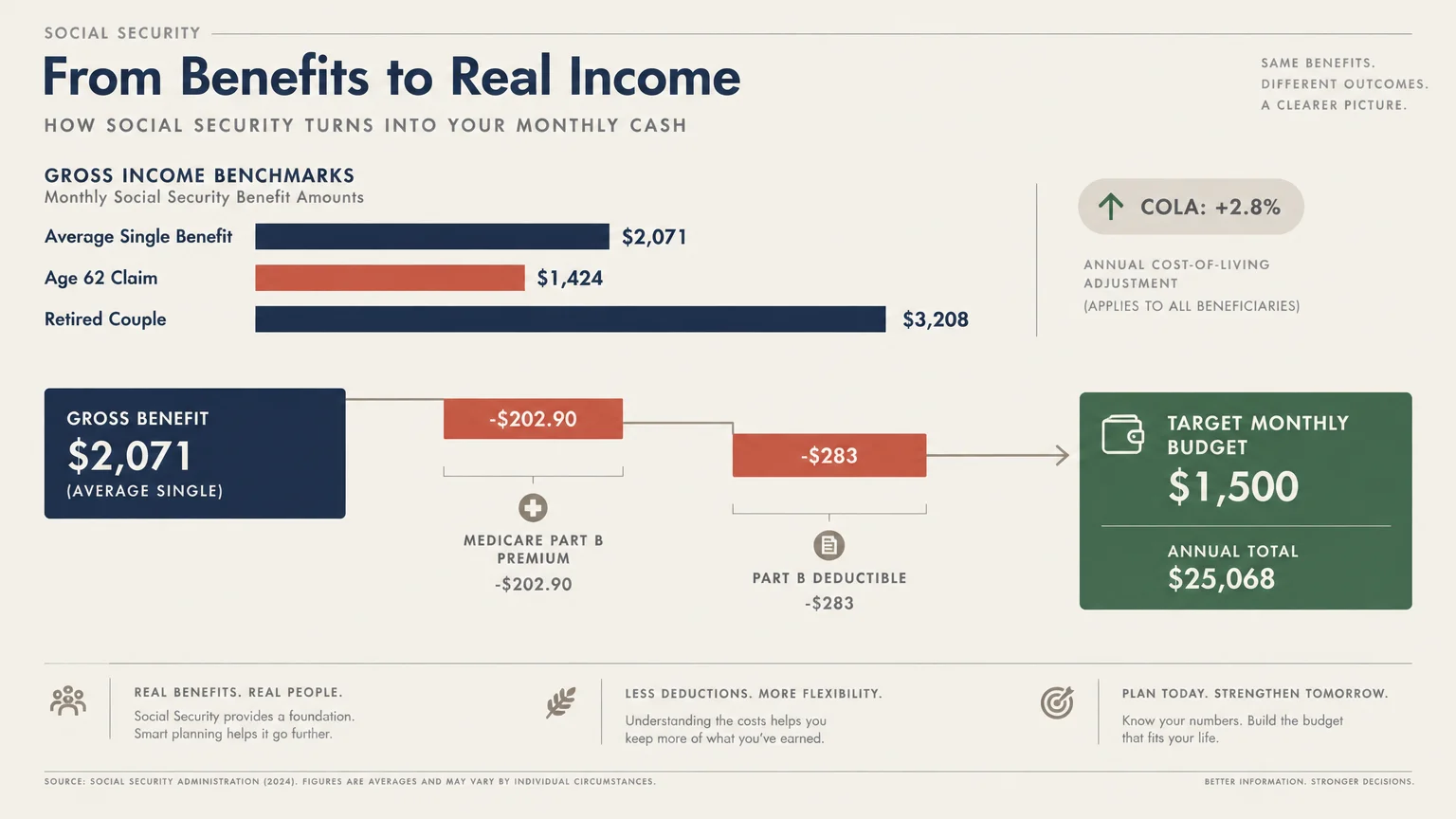
The Social Security Administration implemented a 2.8% cost-of-living adjustment to help maintain purchasing power. Even with this increase, inflation still erodes household savings across the country.
The average single retiree receives an estimated monthly check of $2,071, which drifts toward $2,089 later in the year. That total represents roughly $25,068 annually for independent living expenses.
Claiming benefits early at age 62 leaves individuals with a smaller average payment of just $1,424 per month. For retired couples where both partners receive benefits, the average monthly payment reaches approximately $3,208.
Healthcare expenses take an immediate bite out of these funds before they reach your checking account. Standard monthly Medicare Part B guidelines mandate a premium deduction of $202.90.
You also face an annual Part B deductible of $283 before outpatient coverage begins paying benefits. These mandatory medical deductions reduce the cash available for housing, groceries, and local transportation.
Stretching a $1,500 monthly budget requires deliberate geographical choices. Relocating to an area with low baseline housing costs keeps your fixed overhead manageable.
Conducting Your Baseline Cash-Flow Assessment
Separating Fixed and Variable Living Costs
Begin your financial planning by tracking your recurring obligations on paper. You must understand where every dollar goes before making any significant relocation decisions.
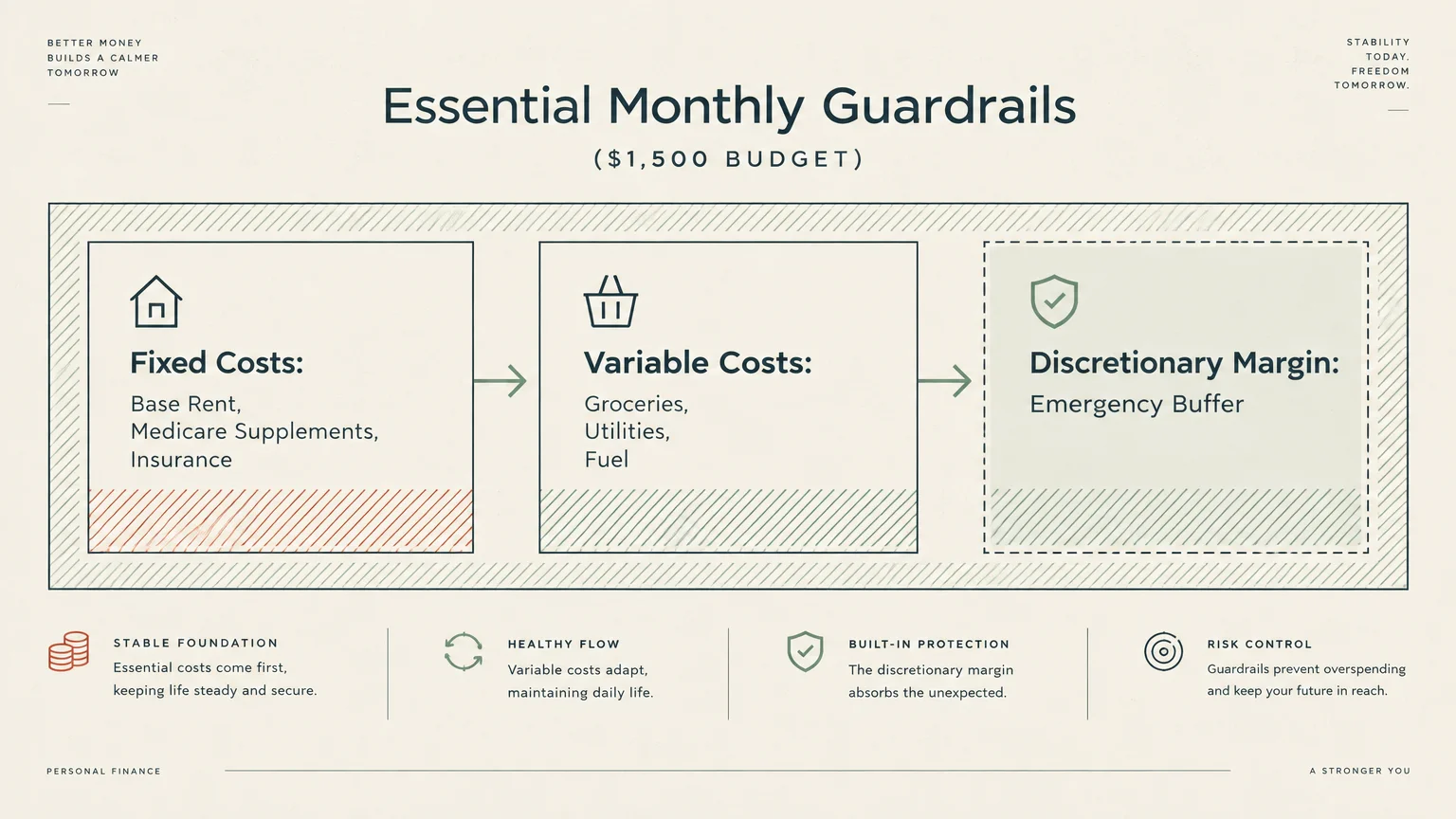
Fixed expenses represent non-negotiable costs that remain stable from month to month. These line items include Medicare supplements, base rent, insurance premiums, and existing debt obligations.
Variable expenses fluctuate depending on daily lifestyle choices and seasonal changes. Grocery purchases, utility bills, automobile fuel, and personal grooming fall directly into this category.
Review your bank statements from the previous three months to capture an accurate baseline. Identifying subtle spending leaks helps you eliminate unused services and reduce discretionary waste.
Subtracting your fixed and variable obligations from your monthly income reveals your true discretionary margin. Maintaining a positive margin prevents you from relying on high-interest credit cards for emergency expenses.
Evaluating Benefit Streams and Net Income
Calculate your actual net take-home pay rather than relying on gross benefit estimates. You must account for automatic insurance withholdings and potential state tax obligations.
Some retirees supplement their primary Social Security checks with small pensions or retirement account distributions. Ensure that you record only guaranteed monthly figures when establishing your baseline survival budget.
Treat sporadic windfalls or irregular gifts as savings bonuses rather than reliable monthly cash flow. Basing your housing choices on dependable income protects you from financial shortfalls.
Managing Existing Debt Obligations
Carrying consumer credit card debt severely limits your lifestyle options on a fixed income. High interest rates consume funds that should support your nutrition and healthcare needs.
Consider consulting nonprofit credit counseling agencies to consolidate unsecured debts into manageable repayment plans. Certified counselors help negotiate lower interest charges without putting your retirement assets at risk.
Focus on eliminating small consumer balances before you relocate to a new city. Lowering your non-negotiable monthly debt payments immediately expands your regular living margin.

Everyday Optimization Moves to Maximize Your Margin
Lowering Your Monthly Housing Burden
Housing represents the single largest expenditure in any standard retirement budget. Slashing your shelter costs produces immediate and transformative relief for your monthly cash flow.
Consider downsizing from a larger single-family home to a low-maintenance one-bedroom apartment. Smaller spaces require less furniture, demand lower utility output, and eliminate costly lawn maintenance.
Shared housing arrangements also offer compelling financial advantages for budget-conscious seniors. Renting a two-bedroom apartment with a compatible peer cuts individual rent and utility burdens in half.
Look into age-restricted independent living communities that offer subsidized or income-capped apartment rentals. These facilities frequently package water, trash collection, and basic maintenance into one affordable monthly check.
Reducing Home Utility and Energy Expenses
Heating and cooling costs can quickly derail an otherwise balanced monthly budget. Taking proactive steps to weatherize your living quarters lowers energy consumption throughout the year.
Apply for assistance through federal initiatives like the utility assistance through LIHEAP program. This resource assists qualifying low-income households with winter heating and summer cooling costs.
Install inexpensive draft stoppers beneath exterior doors and apply window film during extreme seasons. Adjusting your thermostat by two degrees yields noticeable savings on your regular power statements.
Contact your local power utility to request balanced billing programs. Levelized payment plans average seasonal peaks and valleys into one predictable monthly invoice.
Trimming Grocery Bills Without Sacrificing Nutrition
Eating well on a tight budget requires thoughtful planning and selective shopping habits. You do not need to compromise personal health to keep food bills under control.
Review the thrifty meal plans provided by USDA cost data reports for economical culinary guidance. Emphasize versatile, nutrient-dense staples like legumes, brown rice, whole oats, and frozen seasonal vegetables.
Plan weekly menus around store sale flyers and purchase private-label store brands rather than national names. Store brands generally offer identical nutritional quality at substantial discounts.
Join community-supported agriculture programs or shop at neighborhood farmers markets late in the day. Many local produce vendors offer deep discounts on remaining inventory before closing down.
Optimizing Prescription Medications and Healthcare
Prescription medication copays can place an enormous strain on retirees managing chronic health conditions. Managing these medical expenses protects your monthly discretionary margin.
Ask your primary physician whether generic bioequivalent drugs can replace expensive brand-name medications. Generic formulations deliver identical therapeutic benefits at a tiny fraction of the retail cost.
Inquire about ninety-day mail-order options through your existing Medicare Part D drug plan. Ordering three-month supplies through designated network pharmacies frequently lowers your out-of-pocket copayments.
Screen your eligibility for state pharmaceutical assistance programs or manufacturer patient-assistance foundations. These charitable initiatives provide free or deeply discounted medications to qualifying older adults.
Minimizing Transportation and Vehicle Overhead
Automobile ownership involves significant ongoing overhead, including registration, maintenance, fuel, and comprehensive insurance. These combined vehicle costs can easily exceed several hundred dollars each month.
Choosing an apartment near accessible municipal transit routes allows you to reduce vehicular mileage significantly. Many regional transit agencies grant free or heavily discounted fares to passengers aged sixty-five and older.
If you maintain a vehicle, call your insurance carrier to request low-mileage discounts. Informing your agent that you drive fewer miles in retirement often reduces your regular premium.
Consider relying on community volunteer driver programs for transportation to routine medical appointments. Senior advocacy centers frequently coordinate reliable, low-cost transit services for local healthcare visits.
Cultivating Low-Cost Recreation and Social Connections
Retirement should provide abundant opportunities for relaxation, personal exploration, and community engagement. You do not need an extravagant entertainment budget to enjoy an enriching social life.
Your local public library offers a wealth of free resources beyond physical paper books. Modern libraries provide access to free audiobooks, streaming media platforms, museum passes, and computer workshops.
Municipal parks and regional conservation districts offer paved walking paths, birdwatching clubs, and outdoor exercise installations. Spending regular time outdoors promotes cardiovascular health and mental vitality without costing anything.
Connect with local community centers to discover free senior fitness classes, card groups, and art workshops. Staying socially active prevents isolation and promotes sustained happiness throughout your retirement years.
5 Affordable Cities Where $1,500 Covers Retirement With Room to Spare
Stretching a $1,500 budget requires choosing locations with affordable housing, low everyday costs, and retiree-friendly tax policies. Sharing living costs or selecting modest one-bedroom housing keeps shelter expenses under half your income.
The following five cities offer outstanding financial environments where disciplined retirees can live securely and maintain a healthy cash reserve.
1. Wichita, Kansas
Wichita delivers an exceptional blend of cultural charm, reliable infrastructure, and deeply discounted everyday living expenses. The overall cost-of-living index sits comfortably under 90, remaining over 10% below national averages.
Housing remains remarkably accessible for renters across diverse, tranquil neighborhoods. Two-bedroom apartments averaging roughly 950 square feet rent for just over $1,000 per month.
A retiree sharing a two-bedroom apartment spends roughly $500 monthly on base rent. That low baseline cost leaves approximately $1,000 for groceries, utilities, and discretionary savings.
Kansas implemented aggressive tax reforms that directly benefit older adults on fixed incomes. The state completely eliminated its state income tax on Social Security benefits across all income brackets.
Kansas also reduced its statewide grocery sales tax to 0%, providing permanent relief at supermarket checkouts. Eliminating grocery taxes puts money back into your wallet every week.
Wichita features quality healthcare networks anchored by large regional medical centers and comprehensive geriatric clinics. The city also operates an accessible bus transit network with reduced fares for older adults.
You can spend leisure hours wandering through botanic gardens, touring art museums, or strolling along the Arkansas River path. Wichita proves that an affordable midwestern city can deliver a vibrant retirement lifestyle.
2. Amarillo, Texas
Amarillo rests in the high plains of the Texas Panhandle, offering abundant sunshine and traditional western hospitality. The regional cost of living sits well below national figures, keeping service costs modest.
The local rental housing market provides exceptional value for budget-conscious seniors. Spacious two-bedroom apartments of approximately 950 square feet average just over $1,000 per month.
Choosing a modest one-bedroom unit or sharing a two-bedroom layout keeps your shelter costs near $500 to $700. This low overhead allows you to navigate the remainder of the month with room to spare.
Texas levies no personal state income tax on its residents. Your Social Security checks, pension distributions, and investment withdrawals remain entirely free from state-level income taxation.
Amarillo serves as the primary medical hub for the broad Texas Panhandle region. Retirees enjoy access to modern hospital complexes, specialized cancer treatment centers, and dedicated cardiology facilities.
Recreational opportunities abound, from exploring the historic Route 66 district to visiting the nearby Palo Duro Canyon. The city fosters a close-knit community spirit with active neighborhood centers and civic clubs.
Low consumer prices, untaxed benefits, and steady housing make Amarillo an outstanding destination for lean retirement budgeting. Your dollars stretch further while you enjoy open skies and friendly neighbors.
3. Fort Wayne, Indiana
Fort Wayne sits in northeastern Indiana, combining historic neighborhood appeal with modern civic revitalization. The community carries a remarkably favorable cost-of-living index of 87.3, placing it 12.7% below national standards.
Housing affordability represents one of Fort Wayne’s greatest competitive advantages for retirees. Quality rental housing remains broadly accessible at rates that respect a strict $1,500 monthly limit.
Couples or individuals sharing living expenses can easily keep individual housing outlays below $600 per month. This baseline creates substantial room for food, health insurance, and emergency reserve contributions.
Indiana does not tax Social Security retirement benefits, protecting your baseline income from state reductions. This favorable tax policy ensures that your entire monthly federal benefit remains available for daily expenses.
Fort Wayne provides exceptional healthcare security through two prominent regional medical networks. Comprehensive hospital campuses and specialized outpatient clinics offer advanced care throughout the greater metropolitan area.
The city maintains an extensive system of riverfront parks, botanical conservatories, and paved community walking trails. The Allen County Public Library offers world-renowned resources, free computer access, and active community workshops.
Fort Wayne combines affordable Midwestern living, untaxed retirement benefits, and top-tier community amenities. It stands as an ideal choice for seniors pursuing economic stability and active engagement.
4. Fayetteville, Arkansas
Fayetteville lies tucked into the picturesque Ozark Mountains, offering gorgeous natural scenery alongside a lively cultural atmosphere. Living costs sit reliably below national averages, providing welcome relief for fixed-income households.
The local rental market features two-bedroom apartments that average approximately $1,100 per month. Modest one-bedroom apartments and senior-designated housing communities frequently lease for significantly lower figures.
Sharing a rental unit with a partner or trusted friend keeps housing obligations around $550 per person. That leaves almost $950 of your $1,500 budget for food, healthcare, and discretionary pursuits.
Arkansas exempts Social Security benefits from state income taxation, allowing retirees to keep their full federal entitlements. This clear tax exemption helps stretch your monthly dollars throughout the entire year.
Fayetteville provides excellent medical resources, including regional medical facilities and a dedicated Veterans Affairs medical center. Having comprehensive healthcare services nearby minimizes travel burdens for necessary medical visits.
The community is famous for its extensive network of paved multi-use trails connecting parks, lakes, and shopping districts. The local university presence enriches the community with free lectures, concerts, and accessible public arts programming.
Retirees who value scenic outdoor beauty, active cultural events, and low everyday overhead will flourish in Fayetteville. The city proves you can enjoy mountain beauty without paying resort-town prices.
5. Tulsa, Oklahoma
Tulsa pairs rich architectural heritage and big-city cultural amenities with remarkably manageable living expenses. The city features accessible housing options, highlighted by an attractive median home price of approximately $204,800.
Rental housing remains abundant, with numerous quiet apartment complexes catering specifically to mature residents. Budget-conscious seniors can secure clean, comfortable apartments well within the boundaries of a $1,500 income.
Splitting rent on a multi-bedroom unit leaves hundreds of dollars available each month for personal savings. Managing your base shelter costs effectively transforms your retirement experience from stressful to comfortable.
Oklahoma does not tax Social Security retirement distributions, preserving your monthly financial foundation. This protective tax framework shields your limited income from unexpected state tax assessments.
Tulsa hosts advanced hospital systems, specialized heart institutes, and widespread geriatric care centers throughout the area. Accessible medical services ensure you receive prompt treatment without traveling long distances.
The city features Gathering Place, an extraordinary riverfront park offering expansive walking trails, gardens, and community programming. Beautiful public spaces allow you to enjoy daily recreation without spending discretionary funds.
Tulsa offers an enticing combination of historic art deco architecture, low utility overhead, and robust community programming. It represents an exceptional environment for maintaining financial independence on a modest budget.
Establishing Essential Budget Guardrails
Building a Dedicated Emergency Cushion
Unexpected expenses inevitably arise, whether in the form of automotive maintenance, dental treatments, or appliance replacements. Without a dedicated emergency cushion, these sudden bills can quickly destroy a balanced $1,500 budget.
Strive to accumulate a starter emergency reserve of at least one thousand dollars as quickly as possible. Setting aside small amounts each week gradually establishes this financial protective barrier.
Deposit these reserve funds into a separate high-yield savings account linked to an insured financial institution. Keeping emergency money separate from your daily checking account prevents you from spending it on routine purchases.
Replenish your reserve immediately whenever you draw funds to cover an unavoidable emergency. Maintaining this cash buffer preserves your peace of mind and keeps you out of high-interest debt.
Protecting Your Fixed Income Against Financial Fraud
Older adults frequently face aggressive attempts by criminal fraudsters using telephone calls, deceptive emails, and text messages. Protecting your fixed monthly income requires constant vigilance against these sophisticated scams.
Legitimate administrative agencies like Social Security or Medicare will never call demanding immediate payments via gift cards or wire transfers. Hang up the telephone immediately if an unknown caller threatens legal action or benefit suspension.
Never share your bank account details, Social Security number, or Medicare identification with unsolicited callers. Verify incoming inquiries by calling official customer service numbers found on your physical insurance cards.
You can safely identify legitimate assistance programs by researching the BenefitsCheckUp directory created by the National Council on Aging. This trusted platform connects seniors with authentic public benefits without compromising personal privacy.
Setting Up Automated Account Alerts
Modern banking technology provides powerful free security tools to protect your retirement funds. Activating automated alerts helps you catch unauthorized transactions and administrative errors immediately.
Configure text or email notifications for every transaction that clears your primary checking and credit card accounts. Instant notifications alert you to suspicious activity the moment it occurs.
Establish low-balance warnings that notify you whenever your primary account dips below a designated dollar amount. This automated warning gives you time to adjust spending before incurring overdraft fees.
Place a credit freeze on your files with the three major national credit reporting agencies. Freezing your credit prevents identity thieves from opening fraudulent accounts in your name.
Frequently Asked Questions About Retiring on a Modest Income
How can you support adult children without derailing your fixed budget?
You must prioritize your personal financial stability because you cannot take out loans to finance your retirement years. Sacrificing your essential savings to assist grown children risks your long-term independence.
Offer valuable non-monetary assistance instead of writing checks from your limited monthly funds. Providing childcare, cooking nutritious meals, or assisting with household tasks delivers tremendous practical value.
Communicate openly with your adult children about your strict monthly spending boundaries. Setting clear expectations early prevents awkward misunderstandings and protects your retirement security.
Can you afford recreational travel while living on $1,500 each month?
Recreational travel remains possible on a modest budget if you plan regional journeys during off-peak seasons. Visiting nearby state parks, historic monuments, and scenic conservation areas requires very little capital.
Take advantage of mid-week lodging discounts and utilize senior transportation passes to minimize your transit expenses. Traveling outside peak holiday windows significantly lowers overnight accommodation costs.
Prepare meals in accommodations equipped with kitchenettes rather than dining out at expensive tourist restaurants. Thoughtful trip planning lets you explore new destinations without breaking your budget.
What hidden relocation expenses should you prepare for before moving?
Relocating to a new city involves upfront transition costs that fall outside your standard monthly budget. Moving truck rentals, utility connection deposits, and security deposits require advance financial preparation.
Research municipal vehicle registration fees and driver licensing costs in your prospective destination state. Some jurisdictions assess one-time property taxes or transfer fees on newly registered automobiles.
Establish a dedicated relocation fund several months before executing your intended move. Saving small amounts in advance ensures you settle into your new home without borrowing money.
How should you adjust your spending when inflation raises living costs?
Review your household spending plan every autumn following the official Social Security cost-of-living announcement. Evaluate which expense categories experienced price increases over the previous twelve months.
Direct any net dollar increase from your annual adjustment straight into your emergency savings or utility reserve. Avoid expanding your discretionary lifestyle spending until you confirm your baseline essentials are fully covered.
Audit your recurring subscriptions, mobile telephone plans, and grocery habits every six months. Eliminating underutilized services ensures your money continues supporting what matters most.
Your Action Plan: Implementing Sustainable Financial Changes
Achieving financial security on a $1,500 monthly budget requires deliberate planning, strategic location choices, and decisive daily discipline. You have the power to create a peaceful, comfortable retirement by aligning your expenses with your income.
Begin by conducting an honest thirty-day review of every single dollar that moves through your accounts. Documenting your actual spending patterns reveals immediate opportunities for positive adjustment.
Choose one actionable optimization move to execute this week, such as auditing your subscriptions or researching utility assistance. Taking consistent steps forward builds lasting momentum and ensures your hard-earned retirement remains secure and enjoyable.