You can protect your retirement budget from skyrocketing rents by spotting high-cost migration traps before signing a lease. Finding the right balance between lifestyle amenities and affordable housing keeps your hard-earned savings intact.
Across the nation, moving to a sunny enclave no longer guarantees an affordable lifestyle. Many beloved coastal and Sunbelt destinations have turned into financial pressure cookers for fixed-income households.
Reviewing recent pricing shifts allows you to adjust your spending strategy and choose locations that support your long-term security. Understanding the numbers empowers you to make informed housing decisions today.
The New Economic Reality for Senior Renters
Renting once offered retirees unmatched freedom from property taxes, roof repairs, and home maintenance. Today, volatile leasing markets present new financial hazards for households on fixed incomes.
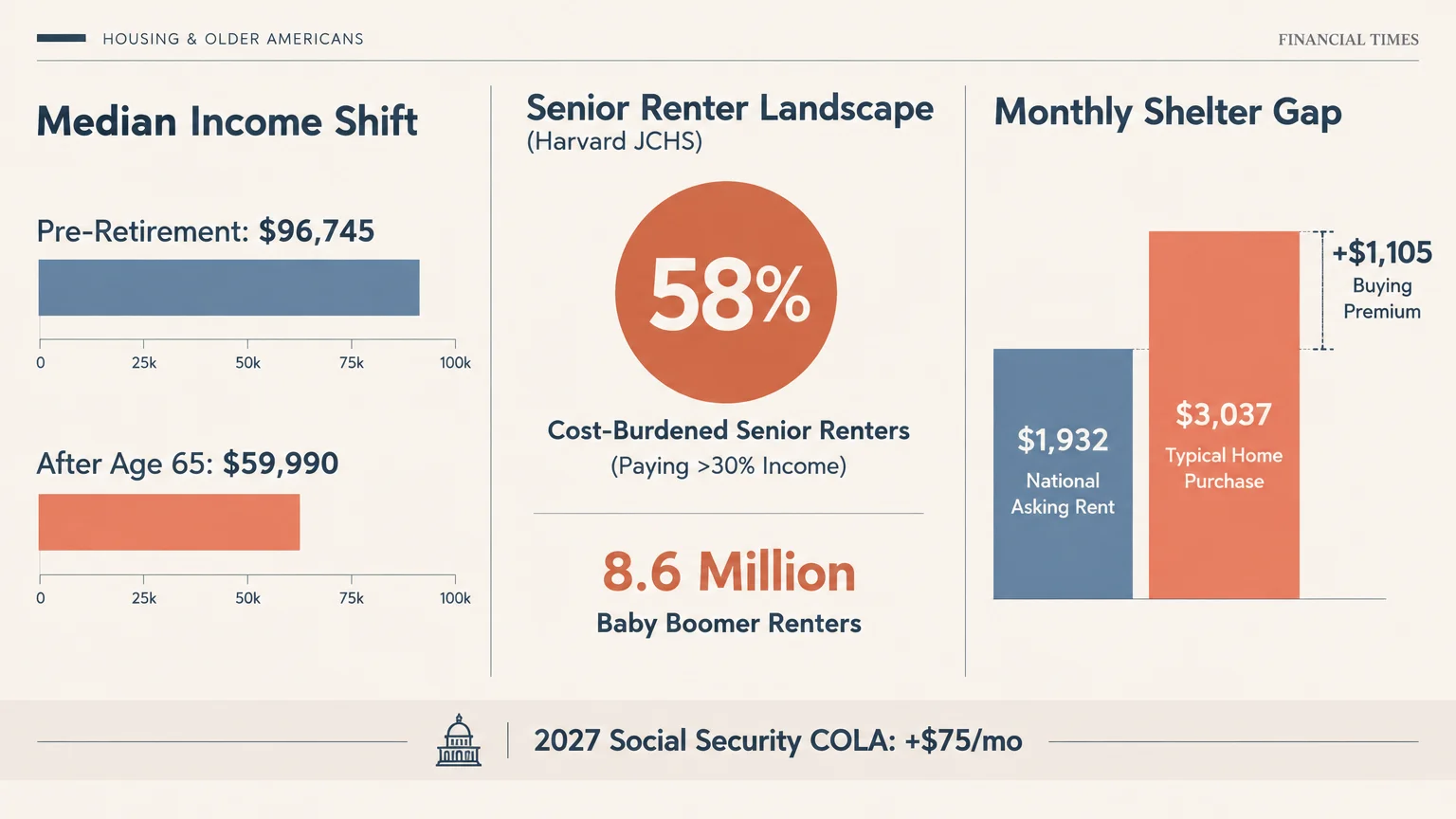
According to research from the Harvard Joint Center for Housing Studies, Baby Boomers account for 8.6 million renter households across the United States. That figure represents nearly 20 percent of the entire national renter population.
The same report reveals that 5.8 million older adults live in cost-burdened rental arrangements, spending more than 30 percent of their income on shelter. In fact, 58 percent of all older renter households pay more than sustainable housing thresholds recommend.
Meanwhile, income growth rarely matches the pace of rental increases once you stop working full-time. A SmartAsset study shows median household income drops from $96,745 during pre-retirement years to $59,990 after age 65.
Cost-of-living adjustments help, but they cannot absorb rapid local rent spikes alone. The Social Security Administration established a 3.6 percent adjustment for 2027, raising the average monthly worker benefit from $2,095 to $2,170.
That modest $75 monthly boost provides welcomed relief; however, typical rent increases in premier retirement corridors easily eclipse that margin. You must track regional trends closely to safeguard your retirement reserves.
Even so, renting continues to cost significantly less each month than purchasing an equivalent home. High mortgage interest rates keep the typical monthly new home purchase payment near $3,037, roughly $1,105 higher than renting.
National asking rent averages $1,932 per month, requiring an annual income of $78,488 for comfortable tenancy. In contrast, homeownership requires nearly $100,000 in income, keeping many retirees firmly in the rental pool.
10 Cities Where Retirement Rents Have Soared
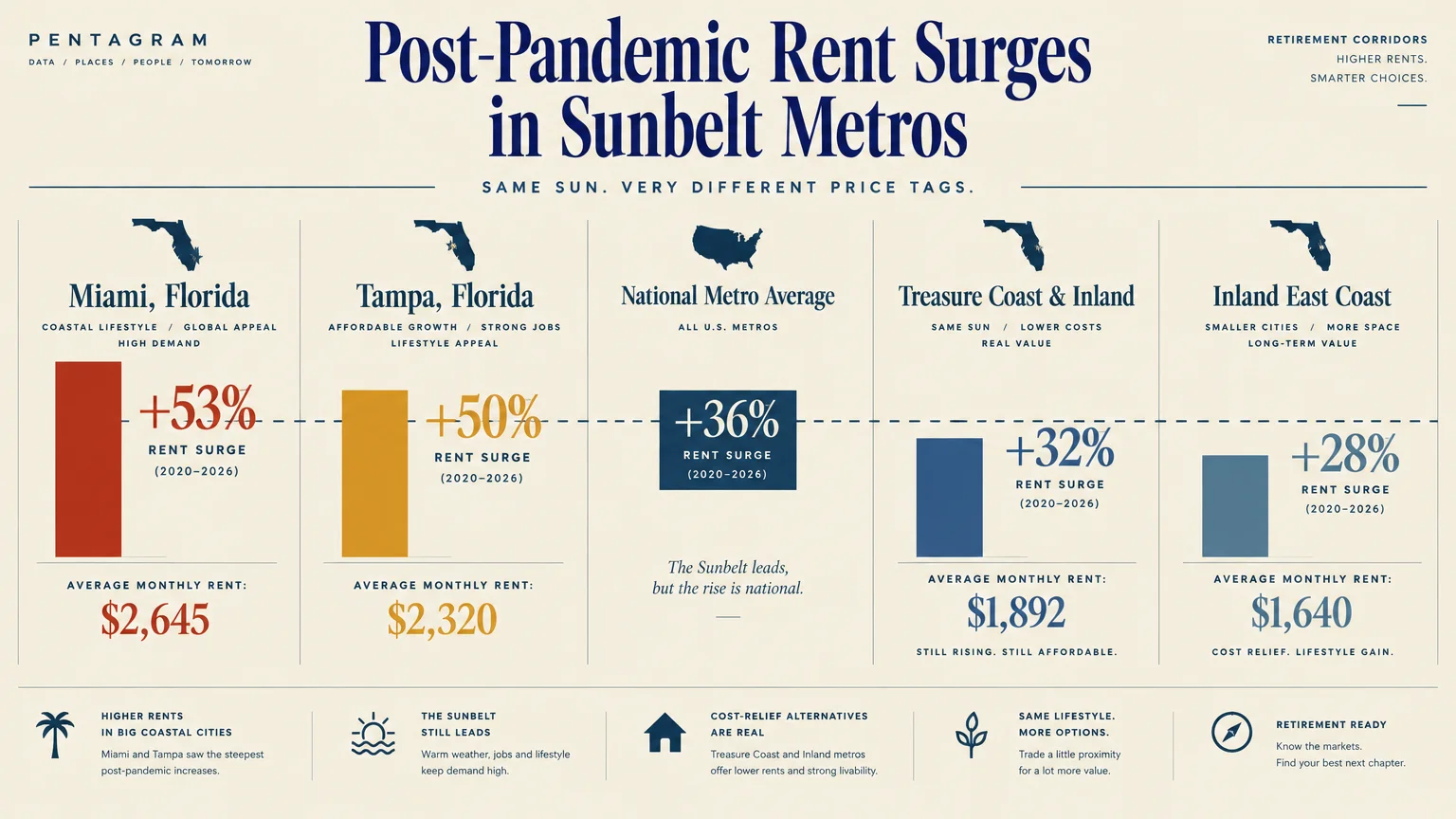
Cumulative rent surges across major metropolitan destinations reached 36 percent over recent years. Several traditional retirement havens experienced pricing escalations far above that national benchmark.
1. Miami, Florida
Miami ranks as the most dramatic post-pandemic rent surge in the entire country. Between 2020 and 2026, residential rents across the metro skyrocketed by 53 percent.
The average monthly rent in Miami now commands $2,645 across all unit sizes. An influx of affluent remote workers and international capital altered the local pricing baseline permanently.
Retirees drawn to South Florida for tropical weather and cultural vitality face unprecedented housing expenses. Modest apartment communities that once served fixed-income seniors have converted into upscale properties with premium pricing.
If you plan to live in South Florida, look beyond urban Miami. Communities located inland or farther north along the Treasure Coast offer substantial relief while preserving access to regional healthcare.
2. Tampa, Florida
Tampa secured the second-highest cumulative rent surge among major American metropolitan areas. Local rents surged 50 percent between 2020 and 2026, reaching an average of $1,986 per month.
A recent building boom added fresh apartment inventory, moderating annual growth to a modest 1.4 percent decline. Even with that welcome plateau, rental costs remain anchored near historical highs.
Retirees who moved to Tampa seeking affordable Gulf Coast living find their monthly margins stretched thin. Increased utility rates and municipal service fees place extra strain on household budgets.
You can stretch your dollars by exploring residential enclaves east of the city center. Exploring mature suburban pockets away from the waterfront yields lower base rents and less competitive leasing terms.
3. Naples, Florida
Naples represents the high-end ceiling of Gulf Coast retirement communities. Across all property types, the average monthly rent reached $6,000, surging by $500 over the past twelve months alone.
Intense competition for single-family rentals and luxury condominiums drives this extraordinary price point. Wealthy seasonal residents and high-net-worth retirees dominate the local leasing market, pricing out moderate earners.
These escalated figures create substantial hurdles for retirees relying primarily on standard investment distributions and Social Security. Even modest apartments outside prime shopping districts demand top-tier rents.
If southwest Florida appeals to you, consider neighboring Lee County towns as viable alternatives. Municipalities like Fort Myers and Cape Coral deliver similar subtropical weather at lower price thresholds.
4. Scottsdale, Arizona
Scottsdale remains a premier retirement hub known for championship golf, desert scenery, and world-class medical facilities. However, average monthly rent across all property types climbed to $3,500.
Local leases expanded by $217 year-over-year, alongside a rapid $200 jump in month-over-month pricing. This steady acceleration demonstrates ongoing demand from incoming domestic retirees.
The wider Phoenix metropolitan area recorded a 36 percent cumulative increase since 2020, reaching an average of $1,718 per month. Scottsdale consistently outpaces its regional neighbors by more than double that baseline.
You can maintain access to the area’s specialized healthcare by looking toward adjacent East Valley communities. Cities such as Mesa or Chandler provide more affordable rental options with identical sunny weather.
5. Charleston, South Carolina
Charleston charms retirees with historic architecture, coastal barrier islands, and renowned Lowcountry dining. Yet housing costs have escalated rapidly, with average monthly rents hitting $2,920.
Prices rose by $120 year-over-year as steady corporate relocation and retiree migration converged on the coastal peninsula. Strict historic zoning limits new residential construction, keeping housing inventory tight.
Senior renters must spend significantly more of their monthly cash flow to secure barrier-free rental housing near the urban core. Rising property taxes also prompt independent landlords to raise annual renewal rates.
Consider looking northwest toward Summerville or Goose Creek to reduce your monthly outlay. These growing communities provide easy highway access to Charleston’s medical hubs while lowering baseline rental expenses.
6. San Diego, California
San Diego provides an ideal climate, accessible beaches, and exceptional healthcare institutions. However, average rents climbed 41 percent between 2020 and 2026, settling at $2,871 per month.
Geographic borders and rigorous zoning regulations constrain new housing development across coastal Southern California. Consequently, competition for ground-floor rentals and senior-friendly apartments remains fierce.
Older adults living on fixed incomes encounter substantial difficulties absorbing these steep costs. Essential expenses like energy utilities and retail goods also track well above national norms.
If you desire Southern California living, evaluate inland communities or specialized senior living cooperatives. Exploring peripheral neighborhoods allows you to secure stable leases without sacrificing regional cultural resources.
7. Sarasota, Florida
Sarasota established itself as a cultural capital on Florida’s Gulf Coast, attracting performing arts patrons and beachgoers alike. Average rents currently hover at $2,500 per month across all residential property types.
While annual rent growth leveled out at flat year-over-year pricing, that stability followed an aggressive 30 percent surge earlier in the decade. The resulting plateau locks housing costs at historically high thresholds.
Retirees seeking walkability near downtown or the barrier keys face tight inventory and high deposits. Landlords routinely impose strict income qualification multiples, requiring proof of high assets before lease approval.
You can locate more attainable housing by looking south toward Venice or North Port. These emerging retirement destinations preserve coastal access while offering friendlier terms for fixed-income budgets.
8. Virginia Beach, Virginia
Virginia Beach emerged as one of the fastest-growing mid-sized rental markets along the Atlantic coastline. Overall residential rent climbed to $2,400 per month, rising by $150 over the previous year.
Apartment leases in the city jumped 8.6 percent year-over-year, signaling intense local demand from military personnel, young families, and incoming retirees. The oceanfront district commands substantial seasonal premiums.
Retirees benefit from mild seasonal shifts and comprehensive regional healthcare, but escalating housing costs threaten financial stability. Older apartment complexes frequently undergo private renovations, prompting sudden rate spikes at lease renewal.
Evaluate neighboring Hampton Roads communities like Chesapeake or Suffolk to balance your monthly expenditures. These neighboring cities offer quieter residential neighborhoods with lower average monthly rents.
9. Boise, Idaho
Boise experienced a dramatic housing resurgence, driven by scenic mountain landscapes and outdoor recreational access. Apartment List ranks Boise third nationally for year-over-year apartment rent growth, surging 11 percent.
Overall rents across all residential properties reached $2,150 per month, representing a sharp $297 increase over the past year. Influx from higher-cost West Coast states reignited aggressive rental competition.
Retirees who selected Boise for its traditional affordability now encounter elevated living costs. Senior-friendly single-level patio homes and modern garden apartments command premium rental rates throughout Ada County.
You can discover lower price points by expanding your rental search into Canyon County. Towns like Nampa and Caldwell feature newer rental developments designed with accessible floor plans at lower prices.
10. Orlando, Florida
Orlando has expanded far beyond its theme-park identity, transforming into a massive retirement and healthcare corridor. Residential rents climbed 37 percent between 2020 and 2026, reaching an average of $1,917 per month.
Major corporate expansions and ongoing population growth continue to squeeze the local rental supply. The city’s Lake Nona medical hub attracts thousands of new residents, elevating rental demand across surrounding suburbs.
Retirees must compete against younger workers for well-maintained, accessible apartments near transit and grocery centers. Landlords frequently pass rising commercial insurance premiums directly to residential tenants through higher renewal rates.
Look toward surrounding Lake County or Volusia County communities to keep your overhead under control. Communities like Clermont or Deland offer appealing downtowns and lower rental baselines within easy driving distance.

Strategic Pillars to Safeguard Your Housing Budget
Preserving your financial independence requires a proactive defensive strategy when rents climb unexpectedly. Implementing disciplined budgeting and housing adjustments prevents high costs from eroding your nest egg.
Pillar 1: Proactive Income Planning
You must maintain a dedicated housing cash reserve separate from your general emergency savings. Keeping twelve months of projected rent in a high-yield account prevents market downturns from interrupting your housing payments.
Coordinate withdrawals from retirement accounts with your lease renewal cycles. Structuring predictable distributions from your traditional IRA or 401(k) helps you meet strict landlord income verification rules without triggering unnecessary tax penalties.
Monitor your annual Social Security adjustments and rebalance spending categories whenever housing costs shift. When your benefit payment increases, allocate those additional funds directly toward your rent reserve fund.
Pillar 2: Lifestyle and Location Design
Flexibility remains your greatest asset as a tenant in a changing economic landscape. Expanding your housing search just ten to fifteen miles outside major downtown districts can save hundreds of dollars each month.
Negotiate extended lease agreements to lock in predictable housing costs over multiple years. Many individual property owners prefer signing two-year leases with responsible older tenants over chasing risky turnover on the open market.
Explore cooperative housing models, accessory dwelling units, or shared home arrangements with trusted peers. Splitting baseline shelter expenses allows you to preserve your lifestyle while dramatically reducing monthly housing outlays.
Pillar 3: Health and Accessibility Integration
Never sacrifice personal safety or mobility access merely to secure a cheaper monthly lease. Selecting an apartment with single-story access, zero-step entries, and wide doorways prevents costly emergency moves later.
Examine neighborhood transit options and walkable infrastructure before signing any rental agreement. Living near grocery markets, pharmacies, and physical therapy clinics reduces transportation expenses and preserves your everyday autonomy.
Connect with local community resources through the Administration for Community Living to identify supportive neighborhood services. Choosing a rental close to aging-in-place resources ensures you maintain access to vital wellness support.
Expert Perspectives: Building Sustainable Tenancy
Financial planners urge retirees to reassess traditional budgeting rules when evaluating rental properties today. The classic guideline allocating 30 percent of gross income toward rent requires careful modification on fixed revenues.
Certified Financial Planner professionals recommend capping housing expenses at 25 percent of reliable retirement income whenever possible. Maintaining that lower ceiling leaves room for unexpected healthcare co-pays and prescription expenses.
Gerontologists emphasize that stable housing directly influences physical health, cognitive vigor, and emotional well-being. Experiencing frequent forced relocations due to unexpected rent hikes creates acute stress and fractures essential social support networks.
Selecting an affordable, secure rental provides psychological peace that far outweighs prestige addresses. Prioritizing fiscal security enables you to enjoy your retirement years without ongoing housing anxiety.
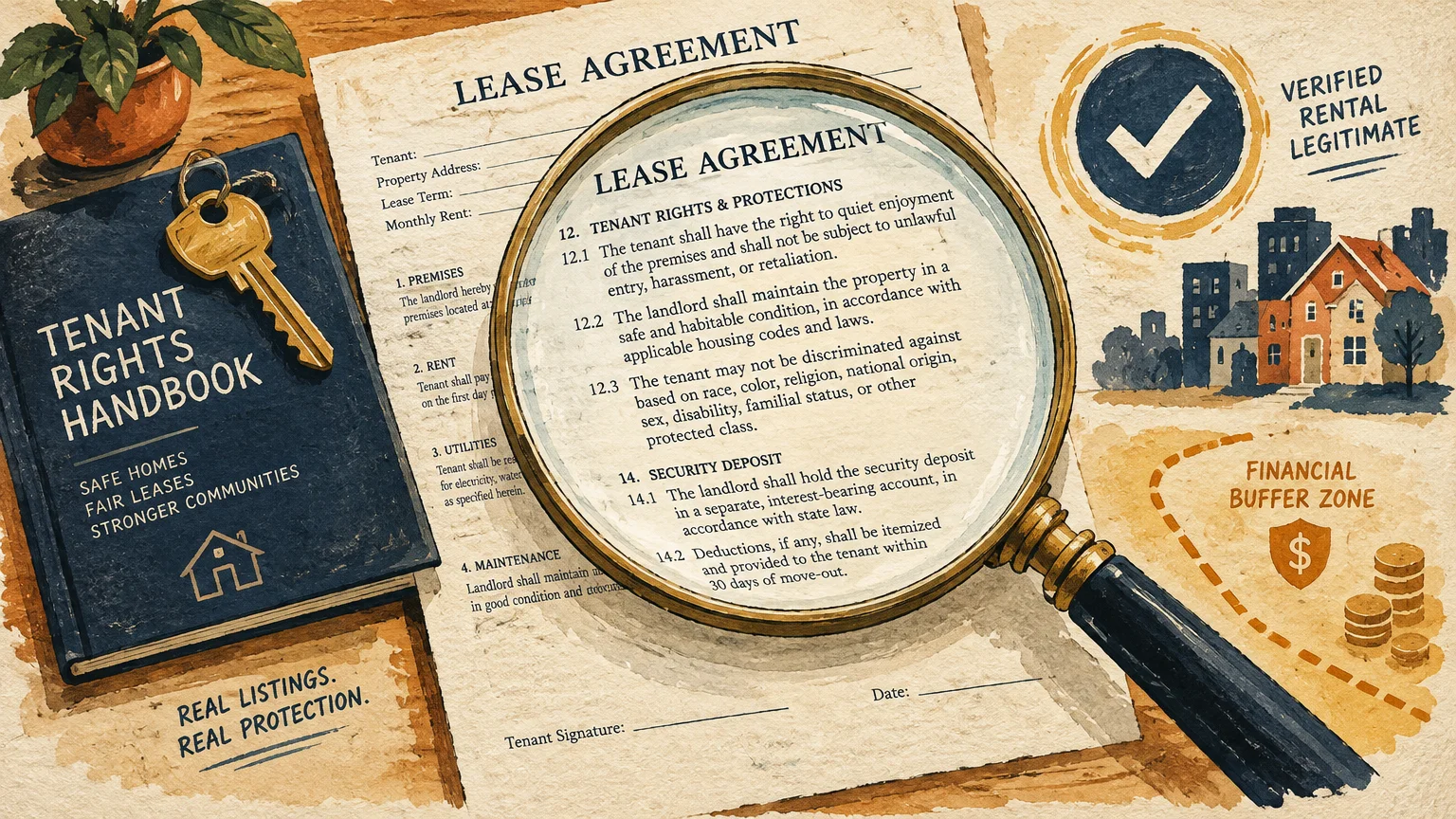
Crucial Safeguards: Scams, Benefit Cliffs, and Tenant Rights
Escalating rental demand creates ripe opportunities for dishonest operators targeting older adults. Online rental scams frequently list fraudulent properties to steal application fees and security deposits from prospective tenants.
Never wire funds or transfer digital payments to secure an apartment you have not inspected in person. Verify property ownership through county tax records or consult licensed local real estate agencies before providing sensitive personal data.
Stay mindful of potential benefit cliffs when supplementing rental income through part-time work or side ventures. Earning extra income could jeopardize eligibility for Medicaid, prescription subsidies, or local property tax relief programs.
Review municipal tenant protections and rental laws enforced by the Consumer Financial Protection Bureau. Understanding your legal rights regarding security deposit returns, notice periods, and lease non-renewals safeguards your financial interests.
Investigate subsidized housing options supported by the Department of Housing and Urban Development. Section 202 Supportive Housing for the Elderly offers income-restricted apartments designed specifically for seniors living on modest pensions.
Frequently Asked Questions About Senior Rents
Should you choose to rent or buy a home in retirement today?
Renting currently offers greater monthly cash flow flexibility than purchasing a home in most metropolitan markets. High mortgage interest rates and escalating property insurance make buying considerably more expensive each month.
Renting also frees you from maintenance responsibilities, expensive roof repairs, and special community property assessments. However, buying offers stable monthly payments, whereas rental leases expose your budget to annual rate hikes.
How can you negotiate rent increases on a fixed income?
Approach your landlord two to three months before your current lease contract expires. Emphasize your reliable payment history, excellent property care, and quiet occupancy habits during these conversations.
Offer to sign a longer eighteen-month or twenty-four-month lease agreement in exchange for a capped annual increase. Landlords frequently accept modest rent concessions to avoid the marketing costs and vacancy risks of tenant turnover.
What rental assistance programs exist for older adults?
The federal government provides Section 202 housing, which caps tenant rent at 30 percent of adjusted monthly income. This program helps individuals aged 62 and older access safe, age-appropriate residential communities.
You can also apply for Housing Choice Vouchers through your regional public housing agency. In addition, local charitable organizations, religious groups, and municipal aging offices offer emergency rental grants during temporary financial hardships.
How much of your retirement income should go toward rent?
You should strive to spend no more than 25 to 30 percent of your predictable monthly income on housing. This income baseline includes your Social Security benefits, defined-benefit pensions, and sustainable portfolio withdrawals.
Spending over 30 percent classifies your household as housing cost-burdened under federal definitions. If local rents exceed that threshold, downsizing your floor plan or moving to an adjacent suburb preserves vital discretionary income.
Your Next Steps: Take Action Within 48 Hours
Take proactive control of your retirement housing expenses rather than waiting for your next lease renewal notice. Small, deliberate actions taken today prevent stressful budget shortfalls tomorrow.
Begin by calculating your exact monthly housing costs, including baseline rent, renter insurance, parking, and utilities. Compare this total figure against your net monthly retirement income to determine your true housing ratio.
Next, survey current rental listings in your broader geographic market to track local pricing trends. Knowing prevailing market rates equips you to negotiate your upcoming lease from a position of factual strength.
Reach out to local senior advocacy organizations or aging agencies to learn about area-specific tenant rights. Establishing these connections builds confidence and ensures your housing strategy remains secure, sustainable, and stress-free.