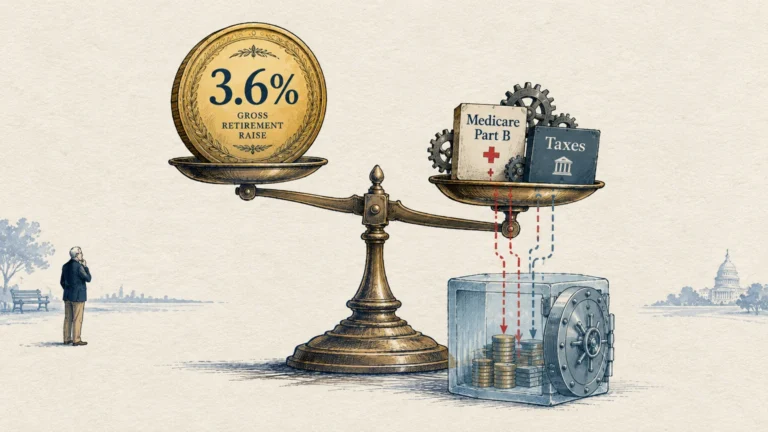
Choosing where to live in retirement can instantly protect thousands of dollars of your annual cash flow. You can keep more of your hard-earned wealth simply by relocating across state borders.
While many retirees focus only on state income tax, sales and property taxes silently drain your fixed income. The best states minimize your overall financial footprint across every revenue category.
This guide analyzes the twelve most tax-friendly states to help you preserve your nest egg. You will discover how strategic geography can safeguard your retirement lifestyle without sacrificing quality of life.
Understanding Total Tax Burden in Retirement
A state with zero income tax does not always guarantee a cheaper retirement. State governments must fund public infrastructure, which means low income taxes often bring higher levies elsewhere.
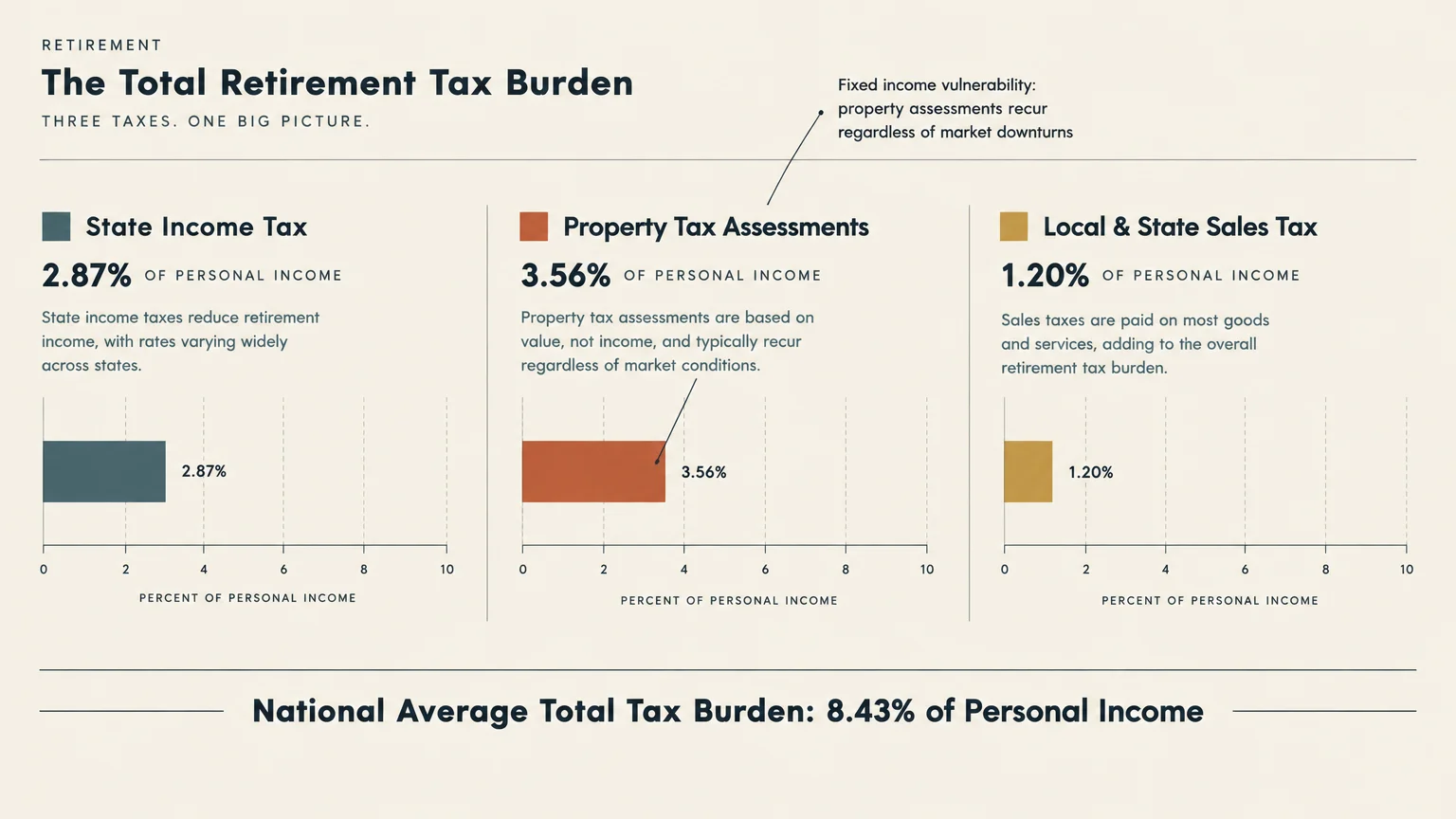
You must evaluate how personal income, property assessments, and local sales levies interact. The national average state and local tax burden currently consumes 8.43% of personal income across the country.
When you rely on a fixed distribution schedule, recurring property taxes can disrupt your monthly budget. A high property rate remains due every year, regardless of market downturns or personal financial stress.
Sales taxes also demand careful consideration because you pay them on everyday essentials. States that levy elevated sales taxes steadily erode your purchasing power whenever you purchase goods or services.
According to the Tax Foundation, evaluating comprehensive state competitiveness gives you a much clearer picture of your true living expenses.

Recent Policy Shifts and State Tax Updates
State tax codes continue to evolve across the country in favor of older Americans. Lawmakers recognize that retaining mature residents strengthens community stability and preserves local consumer spending.
Only eight states currently tax Social Security benefits, giving older Americans unprecedented geographic freedom. West Virginia completed its phase-out to create a 100% exemption, joining Kansas, Missouri, and Nebraska.
You can check benefit guidelines directly through the Social Security Administration to track federal reporting rules. Knowing these thresholds protects your baseline retirement cash flow.
At the federal level, eligible seniors aged 65 and older can claim an additional deduction. Qualified single filers earning under $75,000 can claim up to $6,000, while joint filers under $150,000 can claim $12,000.
You should review official updates from the Internal Revenue Service to verify your adjusted gross income eligibility. Proper documentation ensures you capture every dollar of this deduction.
Several states have also eliminated taxes on private pensions and defined contribution accounts. These sweeping legislative improvements allow you to design a far more resilient retirement distribution strategy.
The 12 States With the Lowest Total Taxes for Retirees
Finding your ideal retirement destination requires balancing multiple revenue codes against your household spending patterns. The following twelve states deliver exceptional tax efficiency for retirees seeking lasting financial freedom.
1. Alaska
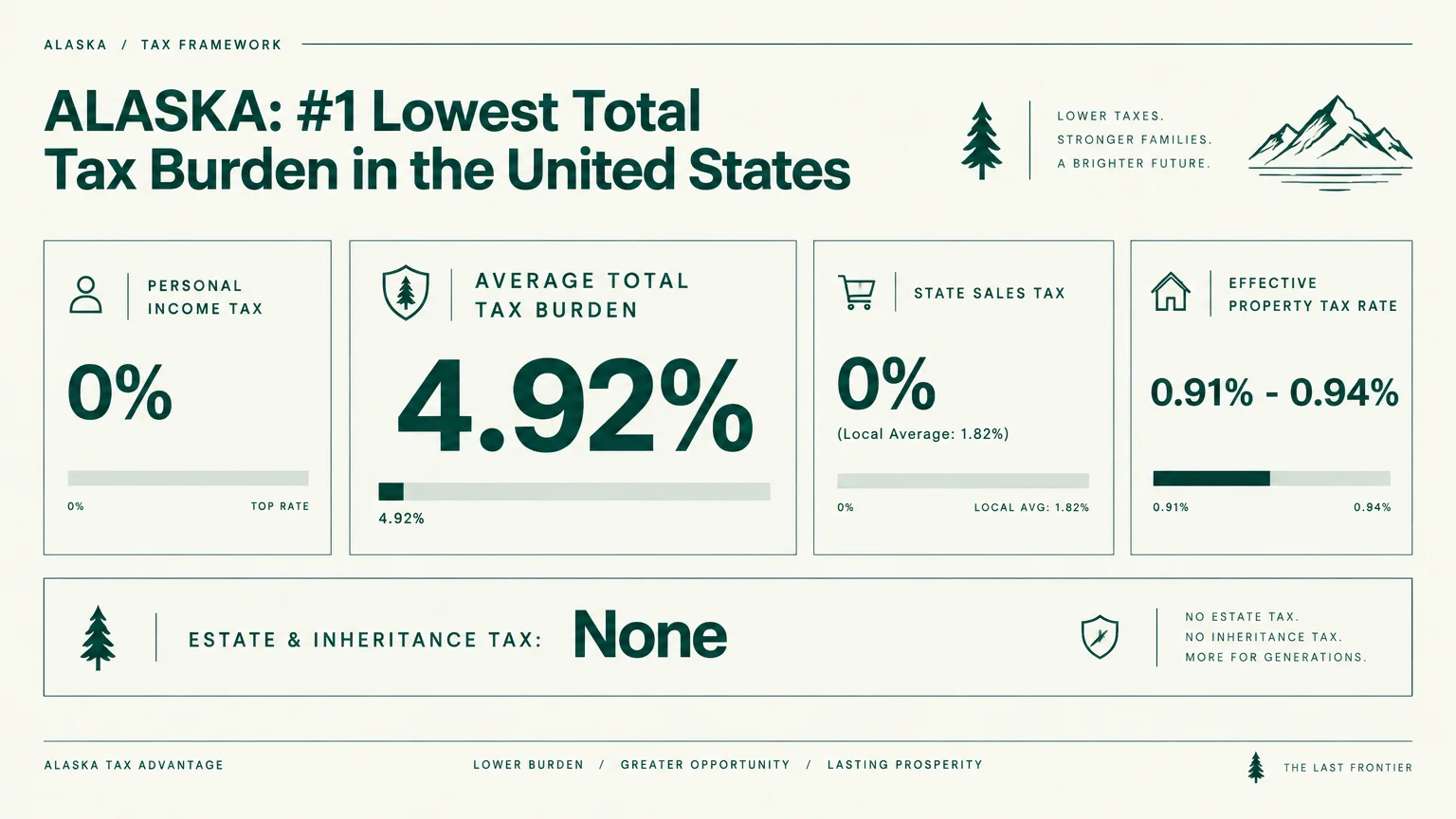
Alaska claims the title of the lowest overall tax burden in the United States. Residents pay an average total tax burden of just 4.92% of their personal income.
The state levies zero personal income tax, protecting all wages, pensions, and retirement account withdrawals. Furthermore, Alaska imposes no statewide sales tax, though local municipalities levy an average sales tax of 1.82%.
Homeowners encounter an effective property tax rate between 0.91% and 0.94%. Alaska also does not levy an estate or inheritance tax on your heirs.
In addition, eligible residents receive annual payouts from the Alaska Permanent Fund Dividend. This supplemental cash injection helps offset higher northern freight and utility costs.
While heating costs and shipping fees remain high, the absence of major state taxes provides immense budgetary relief. You can allocate more resources directly toward your healthcare, recreation, and travel goals.
2. Wyoming
Wyoming ranks first nationally for having the soundest and least burdensome tax structure on the State Tax Competitiveness Index. The Equality State imposes no personal income tax on any retirement revenue.
You will enjoy an exceptionally low effective property tax rate of roughly 0.55%. That low rate keeps housing overhead modest whether you buy a rural homestead or a suburban townhome.
Wyoming levies a modest 4.0% state sales tax, leaving more money in your pocket during daily shopping trips. The state also avoids estate and inheritance taxes completely.
Low population density keeps county administration lean and public services well-funded without reliance on nuisance fees. You avoid surprise vehicle property taxes and municipal gross receipts charges.
Active retirees who appreciate mountain landscapes, clean air, and fishing will thrive here. The state provides reliable fiscal peace of mind throughout your post-career life.
3. Nevada
Nevada constitutionally prohibits individual income tax. You pay zero state tax on pensions, 401(k) withdrawals, and traditional retirement accounts.
The state features an attractive effective property tax rate between 0.50% and 0.55%. Statutory caps on annual property tax increases protect homeowners from sudden real estate spikes.
Nevada balances its state budget through tourism, entertainment, and casino gaming revenues. The state sales tax sits at 6.85%, while combined state and local sales taxes average 8.24%.
Groceries and un-prepared foods remain exempt from sales tax across the state. This vital exemption shields your basic kitchen pantry budget from rising checkout tallies.
If you buy a home and manage retail consumption, Nevada provides powerful tax shelter. The state remains a prime destination for retirees seeking warm weather and active outdoor recreation.
4. Tennessee
Tennessee enforces zero personal income tax, keeping retirement distributions, capital gains, and dividend payouts completely untaxed. You never surrender your investment gains to state collectors.
Homeowners benefit from an exceptionally low effective property tax rate of just 0.54%. That modest rate allows you to maintain real estate without dreading annual reassessment shocks.
The state levies a 7.0% state sales tax to fund essential public infrastructure. Average combined state and local sales taxes reach 9.61%, making retail spending your primary tax liability.
You can lower your sales tax exposure by preparing fresh meals at home and moderating non-essential consumer purchases. The state offers property tax relief and tax freeze programs for qualifying low-income seniors.
Retirees who own real estate and maintain disciplined shopping habits discover immense savings here. Tennessee provides a temperate climate, vibrant musical heritage, and an exceptionally light residential tax burden.
5. Florida
Florida constitutionally bans personal income tax, making it a premier destination for American retirees. Your Social Security checks, corporate pensions, and retirement account withdrawals remain completely free from state taxation.
The Sunshine State maintains an effective property tax rate of approximately 0.78%. Generous homestead exemptions shield your primary residence from runaway taxable assessment increases under state law.
The state sales tax sits at 6.0%, with combined state and local sales rates averaging between 6.98% and 7.02%. Florida levies zero estate or inheritance taxes on your family assets.
Older residents also enjoy extensive recreational exemptions and community discounts throughout the state park system. Medical access remains robust due to world-class hospital centers clustered around major metropolitan areas.
You must factor escalating property insurance premiums into your overall coastal housing budget. Even with insurance headwinds, Florida’s overall tax framework provides exceptional financial security.
6. Delaware
Delaware stands out along the Mid-Atlantic by charging zero state or local sales tax. You will never pay an extra sales percentage at retail checkout counters or automobile dealerships.
The state imposes a low effective property tax rate of just 0.54%, keeping your residential overhead predictable. Delaware also excludes Social Security benefits from state taxation and charges no estate tax.
Delaware maintains a graduated income tax between 2.2% and 6.6% on general earnings. However, residents aged 60 and older can exclude up to $12,500 of qualified pension and retirement income.
Married couples where both spouses qualify can exclude up to $25,000 of retirement distributions together. This generous tax break significantly reduces or eliminates your annual state income tax bill.
The state combines low property taxes, zero sales tax, and accessible East Coast beaches. You can enjoy coastal living without the punitive tax burden found in nearby states.
7. South Dakota
South Dakota levies zero individual income tax, leaving your pensions, Social Security, and IRA distributions untouched. The state consistently ranks near the top of national business and fiscal health surveys.
The state sales tax sits at a reduced rate of 4.2% in effect through June 2027. This temporary rate reduction offers immediate breathing room for your household budget on daily transactions.
The effective property tax rate in South Dakota averages approximately 1.08%. The state completely exempts estates and inheritances from local taxes, preserving wealth for future generations.
Qualifying senior homeowners can participate in property tax relief programs that freeze home valuations. This statutory protection shields older adults living on fixed incomes from rising real estate trends.
Retirees who value fiscal responsibility, low crime, and welcoming communities will appreciate this reliable Midwestern state. Low general taxes ensure your savings last throughout retirement.
8. New Hampshire
New Hampshire joined the ranks of fully income-tax-free states on January 1, 2025, after repealing its Interest and Dividends Tax. You now pay zero state tax on earned income, retirement distributions, capital gains, and portfolio yields.
The Granite State charges zero state or local sales tax on retail purchases. Overall, New Hampshire boasts the second-lowest total tax burden in the country at just 5.38%.
The major trade-off lies in local property taxes, where the effective rate ranges between 1.40% and 1.57%. Municipalities rely on property taxes to fund local public services in place of broader income or sales taxes.
You can control this expense by downsizing into an energy-efficient condominium or modest single-story residence. Many towns also offer property tax exemptions for longtime senior residents who meet local residency guidelines.
New England retirees can enjoy mountain lakes and seasonal beauty without surrendering money to state income tax. New Hampshire offers superior fiscal stability when you manage your real estate footprint thoughtfully.
9. Texas
Texas levies no individual state income tax, shielding your pensions, wages, and retirement distributions. The state constitution requires a statewide voter referendum before lawmakers can enact any personal income tax.
The state enforces a 6.25% state sales tax, which funds infrastructure, universities, and public safety. Texas also levies no state inheritance or estate taxes, protecting your family transfers.
Homeowners encounter a relatively high effective property tax rate of 1.60%. That translates to roughly $8,000 per year on a $500,000 home before applying senior deductions.
Fortunately, robust senior homestead exemptions provide property valuation freezes and school tax reductions for homeowners aged 65 and older. These statutory protections significantly moderate your actual long-term tax payments.
Dynamic medical centers and abundant housing choices balance the property tax burden. You can thrive in Texas by targeting regions with lower municipal levies and taking advantage of every senior homestead reduction.
10. Washington
Washington imposes no state income tax on wages, Social Security payments, pensions, or 401(k) distributions. This structure allows traditional retirees to draw down standard retirement savings without state-level deductions.
The effective property tax rate in Washington stands at a reasonable 0.87%. However, the state relies heavily on consumer transactions, resulting in an average combined sales tax of 9.51%.
High-net-worth retirees must note that Washington levies a 7% tax on long-term capital gains over $278,000, rising to 9.9% on taxable gains above $1 million. The state also maintains an estate tax on estates exceeding approximately $2.2 million.
Retirees who rely primarily on standard distributions, pensions, and Social Security avoid these specific upper-bracket taxes. You can enjoy the cultural vitality and pristine scenery of the Pacific Northwest while protecting ordinary retirement income.
Senior property tax exemption programs exist across many Washington counties for qualifying older homeowners with limited incomes. These programs offer critical relief on local property levies as property values rise.
11. Pennsylvania
Pennsylvania operates a tax structure that treats retirees with exceptional generosity. The state completely exempts Social Security benefits, public and private pensions, and distributions from 401(k) and IRA accounts for adults aged 59½ and older.
Non-exempt earned income incurs a low flat rate, allowing working seniors to retain the vast majority of their earnings. The state sales tax stands at 6.0%, but Pennsylvania completely exempts groceries and everyday clothing.
These consumer exemptions provide substantial relief for household budgets facing rising supermarket prices. You avoid paying sales taxes on everyday wardrobe necessities and weekly nutrition.
Pennsylvania also features the Property Tax/Rent Rebate program, supporting eligible older adults and individuals with disabilities. This initiative delivers meaningful cash rebates on local property taxes and rent payments.
Retirees seeking established communities and renowned medical centers will discover exceptional overall value here. You can preserve your retirement savings while enjoying rich colonial history and four distinct seasons.
12. Mississippi
Mississippi exempts all qualified retirement income from state taxation, including Social Security, pensions, and retirement account distributions. Any other earned income faces a low flat tax rate of 4.0%.
The Magnolia State features low property tax assessments across most residential counties, keeping annual carrying costs minimal. Mississippi also boasts the lowest overall cost of living for retirees anywhere in the nation.
Your retirement dollars stretch significantly farther when purchasing real estate, home maintenance services, and local entertainment. Modest housing prices keep initial capital requirements low for relocating seniors.
Homeowners aged 65 and older qualify for a generous homestead exemption on the first $75,000 of their home’s true value. This provision often reduces county property taxes to negligible amounts for modest homes.
If you depend on a fixed pension, Mississippi offers a relaxed, affordable southern lifestyle. You can protect your nest egg while keeping your monthly living expenses remarkably low.

Three Strategy Pillars to Protect Your Retirement Wealth
Relocating to a tax-friendly jurisdiction forms only one piece of a comprehensive retirement blueprint. You must coordinate your taxes with your long-term health, family goals, and cash requirements.
Pillar 1: Proactive Income Planning
Structure your withdrawals across taxable, tax-deferred, and tax-free accounts to maintain control over your adjusted gross income. Careful timing prevents accidental spikes in Medicare premiums and Social Security tax thresholds.
Consider executing partial Roth conversions before mandatory distributions begin in your seventies. Paying tax during lower-income years shelters your assets before you move to states with different tax structures.
Coordinating your account drawdowns with your spouse minimizes joint tax brackets over multi-year windows. Strategic sequencing shields your nest egg from unnecessary federal and state tax friction.
Pillar 2: Intentional Lifestyle and Housing Design
Calculate your total cost of shelter before purchasing real estate in any new destination. High property taxes, home insurance premiums, and municipal utility fees can quickly erase income tax savings.
Renting for the first year after relocating gives you time to study local tax districts. You can test community amenities, transit options, and neighborhood dynamics before locking in significant capital.
Downsizing into a smaller footprint reduces your baseline property tax assessment and ongoing maintenance expenses. A manageable living space also accommodates changing physical mobility as you age.
Pillar 3: Health, Wellness, and Long-Term Care
A tax-friendly zip code loses its value if you cannot access quality medical specialists. Before you relocate, verify that local hospital networks participate in your chosen insurance plan.
Consult Medicare to evaluate regional advantage plans, supplemental policies, and prescription drug formularies. Ensuring seamless healthcare coverage protects your retirement fund from unexpected medical expenses.
Invest in preventive wellness routines, fitness facilities, and accessible recreation within your new community. Maintaining personal physical vitality remains the single best safeguard against catastrophic healthcare expenses in later years.

Expert Perspectives: Advice From Financial and Aging Specialists
Certified Financial Planner professionals advise clients to model their comprehensive tax footprint rather than chasing a single zero-rate headline. Real savings occur across the entire balance sheet over several decades.
Gerontologists also stress the importance of social infrastructure and mobility options as you age. Moving far from family to save on taxes can lead to isolation if community connections are weak.
You should interview local retirees to gather honest perspectives on municipal services and daily living expenses. On-the-ground reality often reveals unexpected costs that online calculators fail to capture.
Financial advisors recommend keeping detailed travel logs if you maintain residences in two different states. Clear documentation defends your primary residency against aggressive state tax auditors.
Legal counselors encourage updating your wills, health care directives, and powers of attorney to match your new state’s statutes. Ensuring legal documents conform to local probate codes prevents costly estate complications later.

Hidden Risks, Scams, and Tax Traps to Avoid
Relocating creates unique financial vulnerabilities that predatory scam artists frequently exploit. Fraudsters often target recent movers with bogus change-of-address fees, fake property reassessment notices, and deed scams.
You must also guard against sudden benefit cliffs in states that offer income-restricted senior tax exemptions. Exceeding an income cap by a single dollar can eliminate property tax freezes or homestead deductions.
The educational resources at AARP provide tools to help you identify fraud and protect your home equity. Remaining vigilant protects the money you saved through smart tax planning.
Pay close attention to domicile rules when leaving a high-tax state like New York or California. Former home states frequently audit departing residents to verify they severed primary legal and financial ties.
Update your driver’s license, voter registration, and primary banking accounts immediately upon moving. These formal actions establish indisputable proof of your new legal domicile.
Review property insurance availability before purchasing residential property in storm-prone or wildfire-exposed regions. Spiking insurance premiums can quickly overshadow any savings achieved through state income tax exemptions.
Frequently Asked Questions
Does a zero-income-tax state always save retirees money?
Not necessarily, because state governments often compensate with higher sales and property taxes. If you own an expensive home or spend heavily on consumer goods, your total expenses could rise.
You should run a personalized multi-year cash flow projection to measure net savings accurately. Comparing combined property, sales, and income taxes prevents costly moving mistakes.
How does relocating affect my Medicare coverage?
Original Medicare parts A and B travel with you anywhere within the United States. However, Medicare Advantage and Part D prescription plans feature regional provider networks and specific county service areas.
You must notify your plan administrators during the designated special enrollment window when you move. Updating your address ensures you avoid coverage lapses and costly out-of-network medical penalties.
Can my former state continue taxing my retirement distributions?
Federal law prohibits states from taxing non-resident pensions and distributions from qualified plans like 401(k)s and IRAs. Once you establish valid residency in a new state, your former state cannot tax those withdrawals.
However, your former state can still tax deferred compensation, business income, or rental profits generated within its borders. Consult a tax professional to review any lingering revenue streams.
What is the easiest way to establish legal residency in a new state?
You must spend at least 183 days per year in your new state to fulfill physical presence requirements. Additionally, you should purchase or lease a permanent home and move your valuable possessions.
Register to vote, obtain a new driver’s license, and register your vehicles in the new jurisdiction right away. Filing a declaration of domicile with the local county clerk further solidifies your status.
Your 48-Hour Tax Optimization Action Plan
Take control of your financial destiny by auditing your state and local tax expenses within the next 48 hours. Gather your previous year’s federal and state returns alongside your latest municipal property tax bill.
Calculate your combined annual tax liability as a clear percentage of your total retirement income. Comparing this exact figure against the national average of 8.43% reveals your true relocation potential.
Select two states from this list that match your lifestyle preferences, climate needs, and family priorities. Schedule a consultation with your financial planner to model a mock tax return in those target jurisdictions.
Small, decisive steps taken today create massive compound savings throughout your retirement years. Start planning now to keep more of your wealth and design the life you deserve.