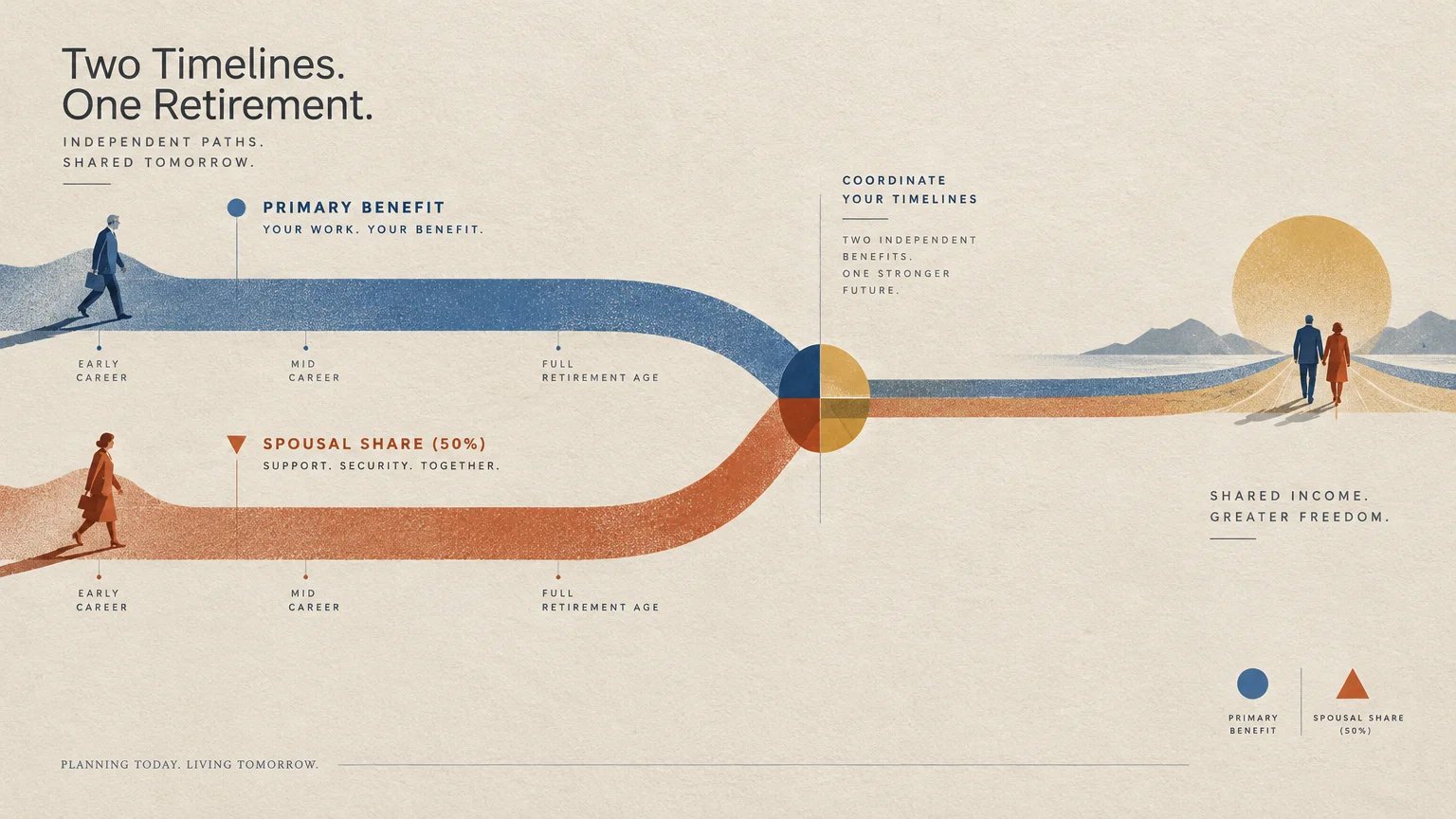
You can unlock thousands of dollars in retirement income by claiming Social Security spousal benefits correctly. Navigating these federal regulations protects your household budget and ensures you receive every dollar you earned.
Many couples misunderstand how spousal benefits work and inadvertently reduce their monthly lifetime income. Learning these guidelines today will help you coordinate your claiming dates and safeguard your family’s financial security.
Recent legislative updates have changed the landscape for married, divorced, and widowed Americans. Review these critical facts to make informed choices for your shared retirement journey.
Navigating the Modern Retirement Landscape
Modern retirees face evolving economic pressures, shifting longevity expectations, and complex legislative revisions. Coordinating your income streams ensures that both partners maintain purchasing power throughout a retirement that could easily span three decades.
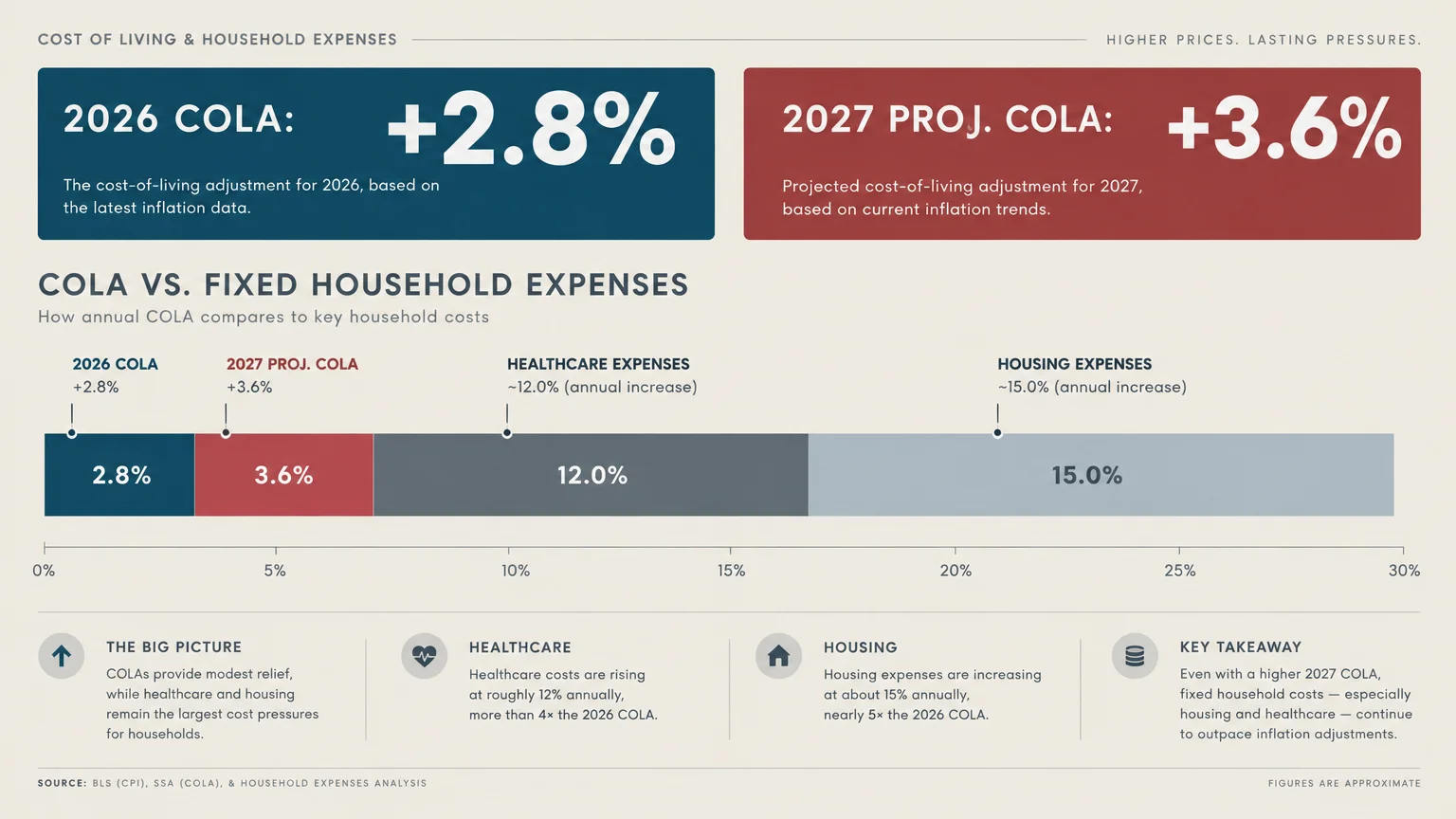
According to data from the Bureau of Labor Statistics, household expenditures on healthcare and housing continue to absorb significant portions of fixed retirement budgets. Making the most of guaranteed income sources is essential.
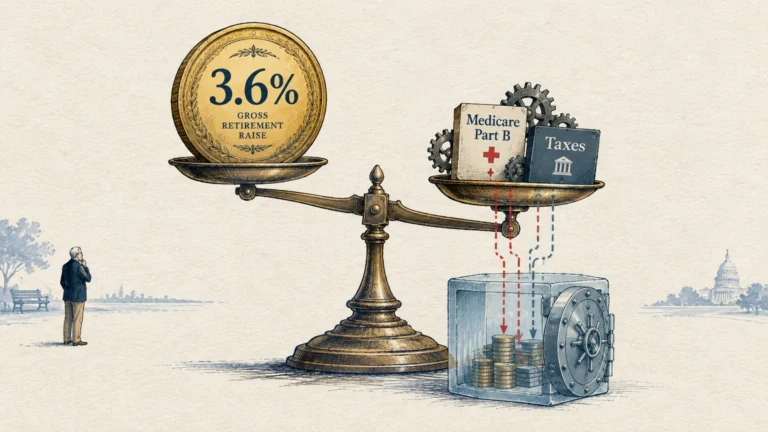
Social Security benefits received a 2.8% Cost-of-Living Adjustment in 2026 to help protect retiree wallets against persistent price increases. Furthermore, federal projections indicate a 3.6% adjustment for 2027 to address lingering inflationary pressures.
Couples must understand how spousal provisions operate within this changing economic framework. Without a deliberate claiming strategy, you risk permanently locking in lower monthly payments for the rest of your life.
Taking time to master these rules now gives you immediate leverage over your financial destiny. You can then direct your household income toward purposeful living, family milestones, and long-term vitality.
1. The Maximum Benefit Depends on Full Retirement Age Pay
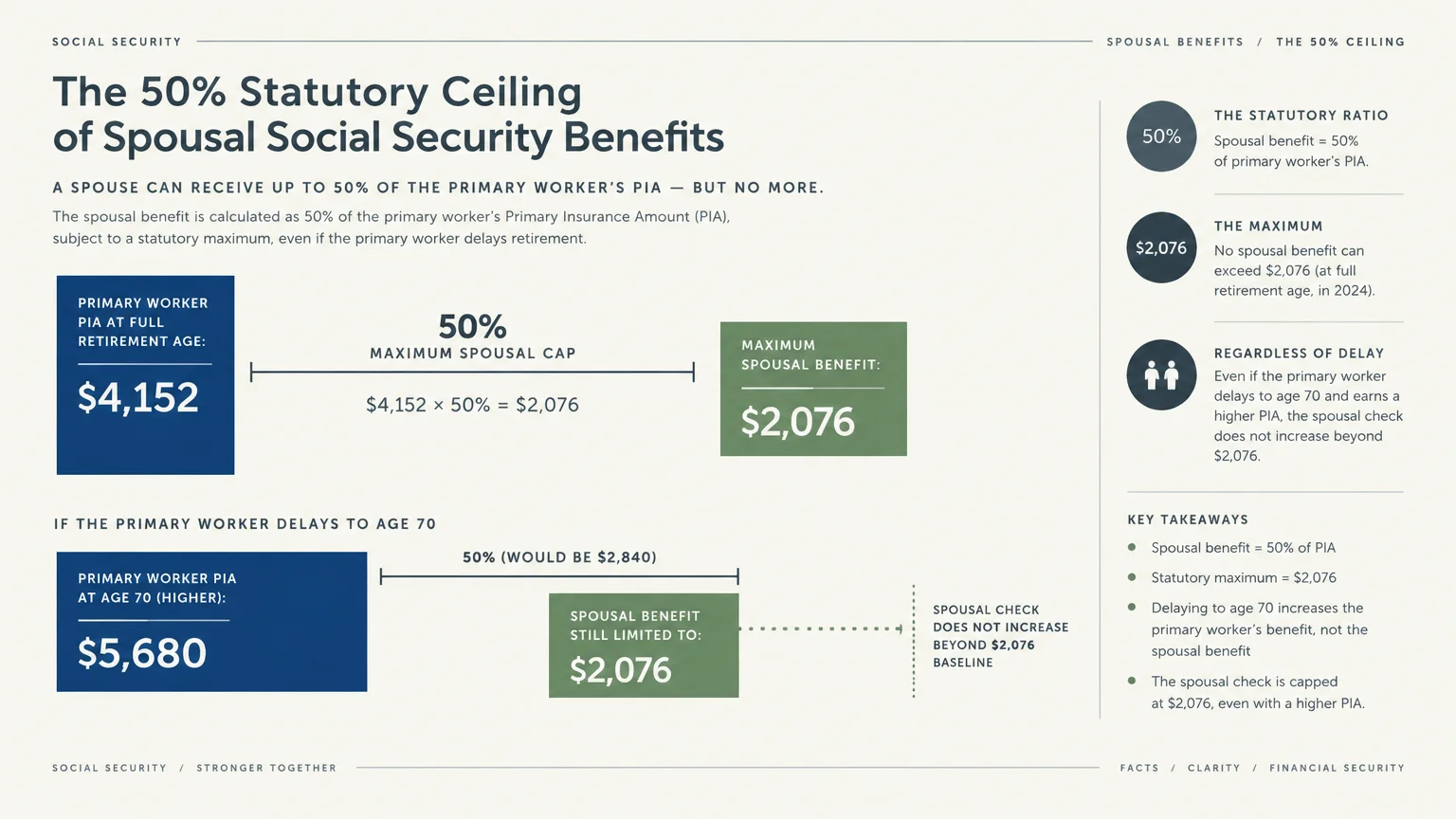
The maximum spousal benefit is capped at 50% of the primary worker’s Primary Insurance Amount. This figure represents the monthly benefit the worker earns upon reaching Full Retirement Age.
Many spouses assume their benefit equals half of their partner’s current monthly deposit. If your partner delays claiming until age 70 to earn higher credits, your spousal check does not increase accordingly.
Your spousal benefit anchors solely to your partner’s baseline benefit at Full Retirement Age. In 2026, the maximum monthly benefit for a primary worker retiring at Full Retirement Age is $4,152.
Consequently, the highest possible monthly spousal benefit in 2026 stands at $2,076. You cannot exceed this statutory ceiling regardless of how high your spouse’s final payment climbs.
Understanding this baseline amount allows you to budget your fixed household income with realistic figures. It prevents unpleasant surprises when the first deposit arrives in your checking account.
2. Delaying Past Full Retirement Age Yields Zero Extra Growth
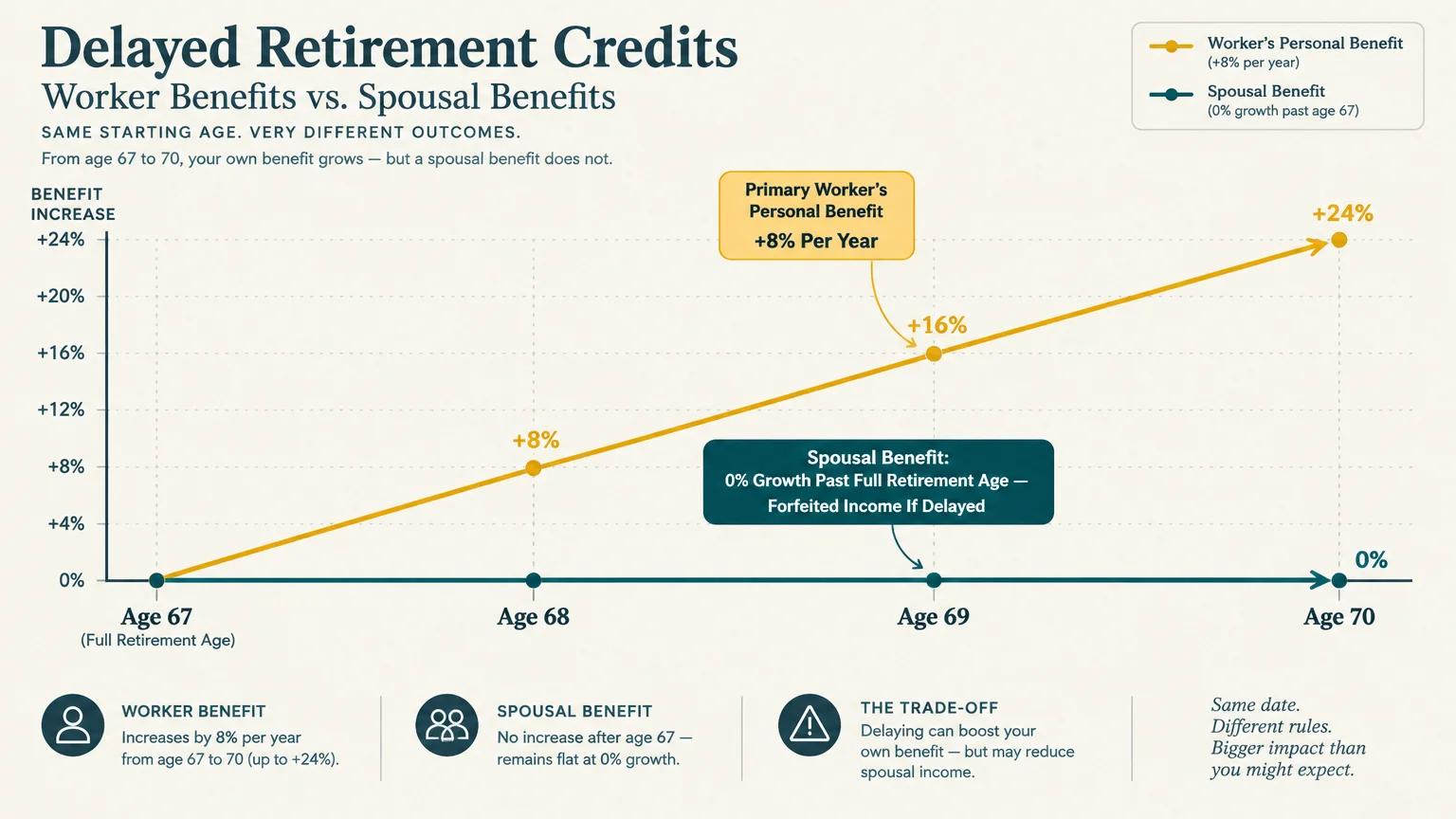
Workers who delay filing for their own retirement benefits earn delayed retirement credits. These credits boost a worker’s personal benefit by 8% per year between Full Retirement Age and age 70.
However, spousal benefits do not earn delayed retirement credits under any circumstances. Once you reach your Full Retirement Age, your spousal benefit reaches its absolute maximum potential.
Waiting until age 68, 69, or 70 to claim a spousal benefit yields zero extra dollars. You simply forfeit monthly payments that you could have used to fund lifestyle goals or savings.
If your Full Retirement Age is 67, you should claim your spousal benefit the month you turn 67. Leaving those funds untouched with the government creates an unrecoverable financial loss.
Mark your calendar ahead of your Full Retirement Age birthday to ensure timely filing. Prompt execution guarantees that you capture every single dollar designated for your household.
3. Early Claiming Triggers a Stiffer Cut Than Personal Benefits
You can claim a spousal benefit as early as age 62, but doing so carries a permanent financial penalty. Many retirees fail to realize that the early reduction rate for spousal benefits is unusually severe.
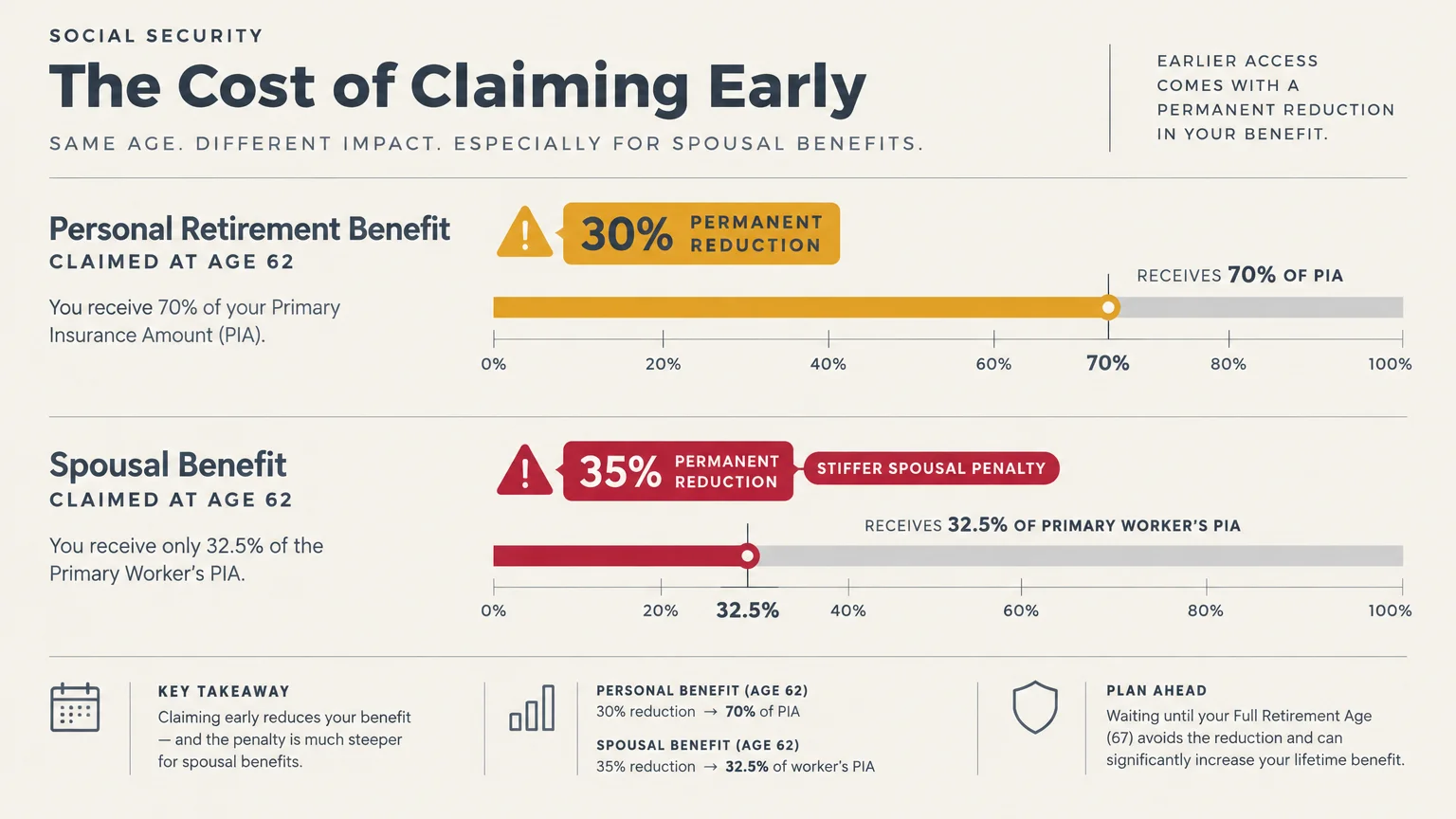
When workers claim their own retirement benefits at age 62 with a Full Retirement Age of 67, their check drops by 30%. In contrast, claiming a spousal benefit at age 62 triggers a 35% permanent reduction.
This steep reduction slashes your monthly payout from 50% of the worker’s Primary Insurance Amount down to just 32.5%. You lock in this lower percentage for the remainder of your life.
For someone entitled to a $2,076 maximum spousal benefit, claiming at age 62 slashes that payment down to approximately $1,349 per month. Over twenty years, this reduction costs your family tens of thousands of dollars.
Weigh your urgent cash needs against the long-term compounding impact of this permanent penalty. Waiting until your Full Retirement Age provides the full 50% baseline payment.

4. The Repeal of the Government Pension Offset Restores Stolen Income
Public servants previously faced a harsh statutory rule known as the Government Pension Offset. This provision reduced a public worker’s Social Security spousal benefit by two-thirds of their non-covered government pension.
For decades, retired teachers, police officers, and firefighters saw their spousal benefits reduced to zero dollars. This penalty caused widespread financial distress among public service households across the nation.
That injustice ended when the Social Security Fairness Act, Public Law 118-273, was signed into law on January 5, 2025. This landmark legislation permanently repealed both the Government Pension Offset and the Windfall Elimination Provision.
The law applies retroactively to January 2024, unlocking substantial retroactive payments and higher future checks. Public servants can now claim full spousal benefits without having their pensions penalize their household income.
If you previously had your spousal benefits wiped out by a public pension, verify your account status immediately. The Social Security Administration is actively processing updated records for affected retirees.
5. The Restricted Application Strategy Is Officially Extinct
Retirement books often tout a popular strategy called filing a restricted application. Under this old tactic, a spouse claimed only spousal benefits at Full Retirement Age while letting their own retirement benefit grow.
This allowed their personal check to earn 8% annual delayed retirement credits until age 70. However, Congress enacted a statutory phase-out that has now reached its final conclusion.
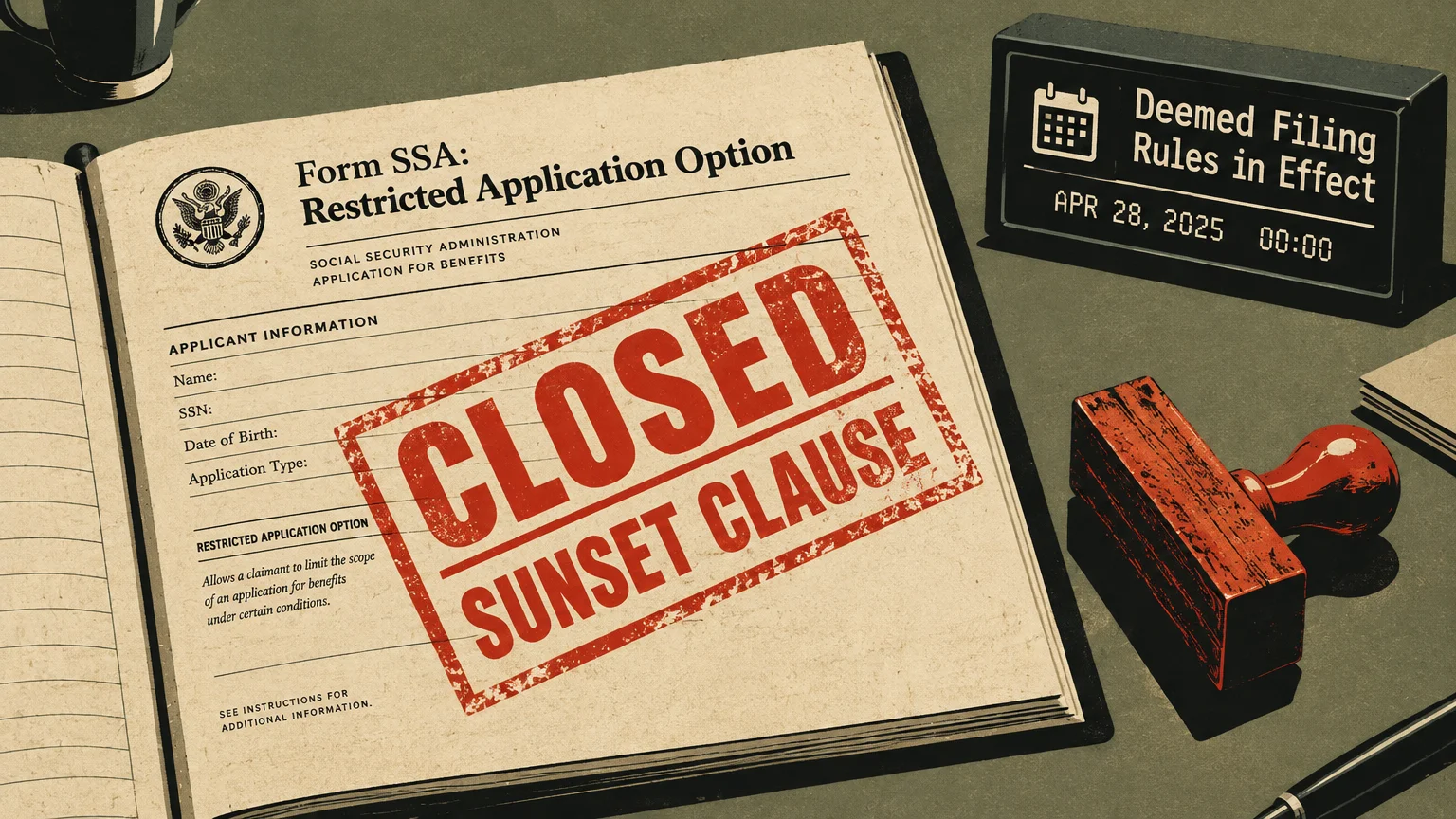
As of January 2, 2024, the final cohort of eligible retirees born before January 2, 1954 reached age 70. Consequently, the restricted application loophole is completely eliminated for all new claimants.
Today, everyone falls under universal deemed filing rules whenever they submit an application. When you apply for benefits, the system deems that you are filing for both your personal benefit and your spousal benefit.
The agency automatically compares both calculations and awards you the larger of the two amounts. You can no longer switch back and forth between claiming categories to manipulate lifetime payouts.
6. A Working Spouse Can Accidentally Freeze Your Monthly Checks
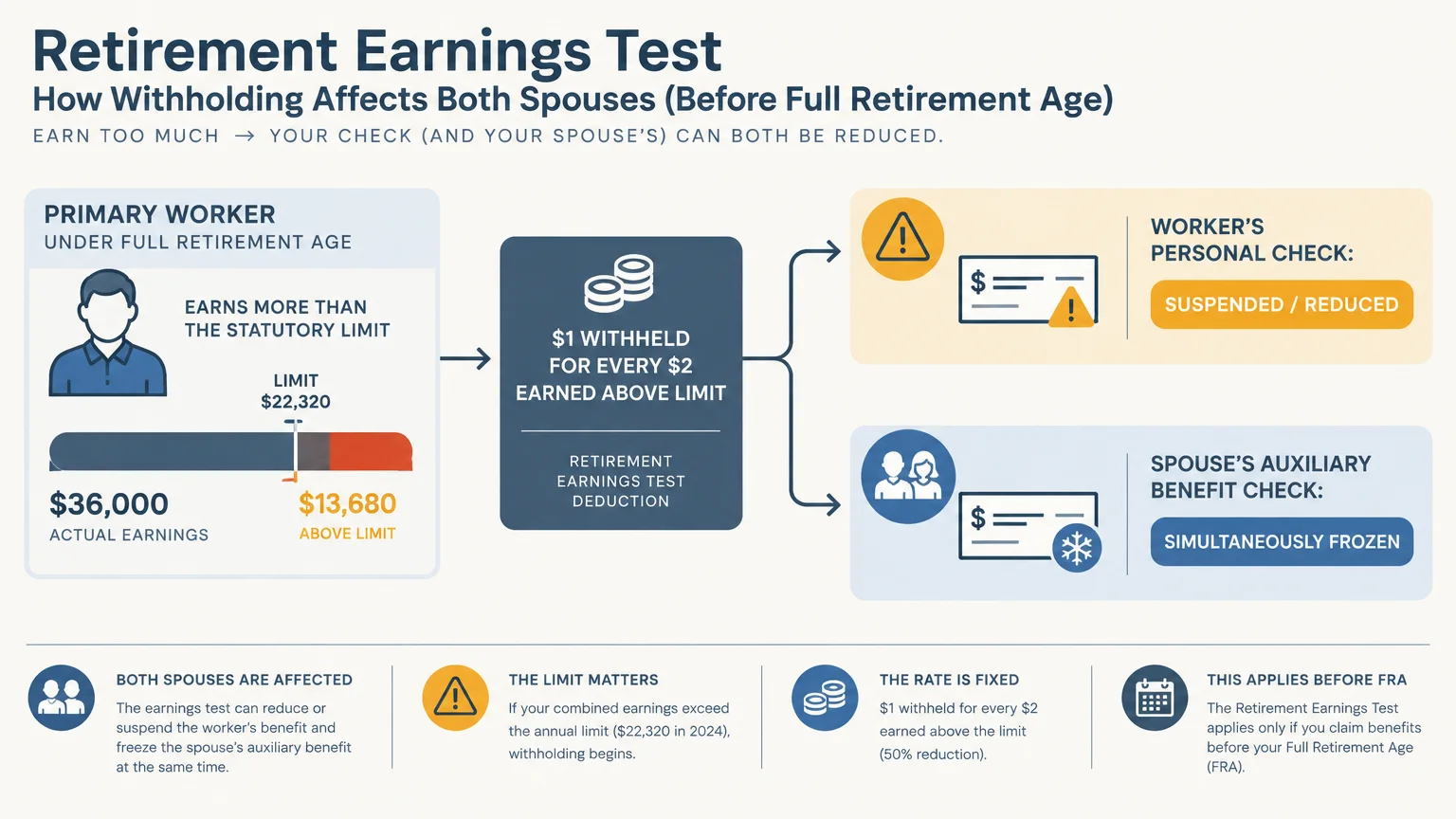
If you claim spousal benefits before reaching your Full Retirement Age, you must monitor the annual earnings limit. In 2026, the earnings limit for someone under Full Retirement Age for the entire year is $24,480.
The agency withholds $1 in benefits for every $2 you earn above that threshold. In the calendar year you reach Full Retirement Age, the limit rises to $65,160 with a deduction of $1 for every $3 earned.
Few people realize that your primary working spouse can also freeze your spousal benefit check. If your spouse claims early and earns excess wages, their high income reduces their retirement check and your spousal check simultaneously.
Your monthly spousal check halts until your working spouse’s earnings penalty clears. This dual withholding catches many dual-income households off guard and disrupts monthly cash flow.
Once the working partner reaches Full Retirement Age, the earnings test ceases completely. Until that birthday arrives, coordinate your household earnings to avoid disruptive payment suspensions.
7. Divorced Spouses Can Claim Privately Without Notifying an Ex
If you experienced a divorce after a long marriage, you may qualify for benefits on your former spouse’s record. You must have remained married for at least 10 consecutive years and currently be unmarried.
You must also be at least age 62 to submit your spousal application. Many divorced individuals fear that claiming on an ex-spouse will trigger conflict, contact, or litigation.
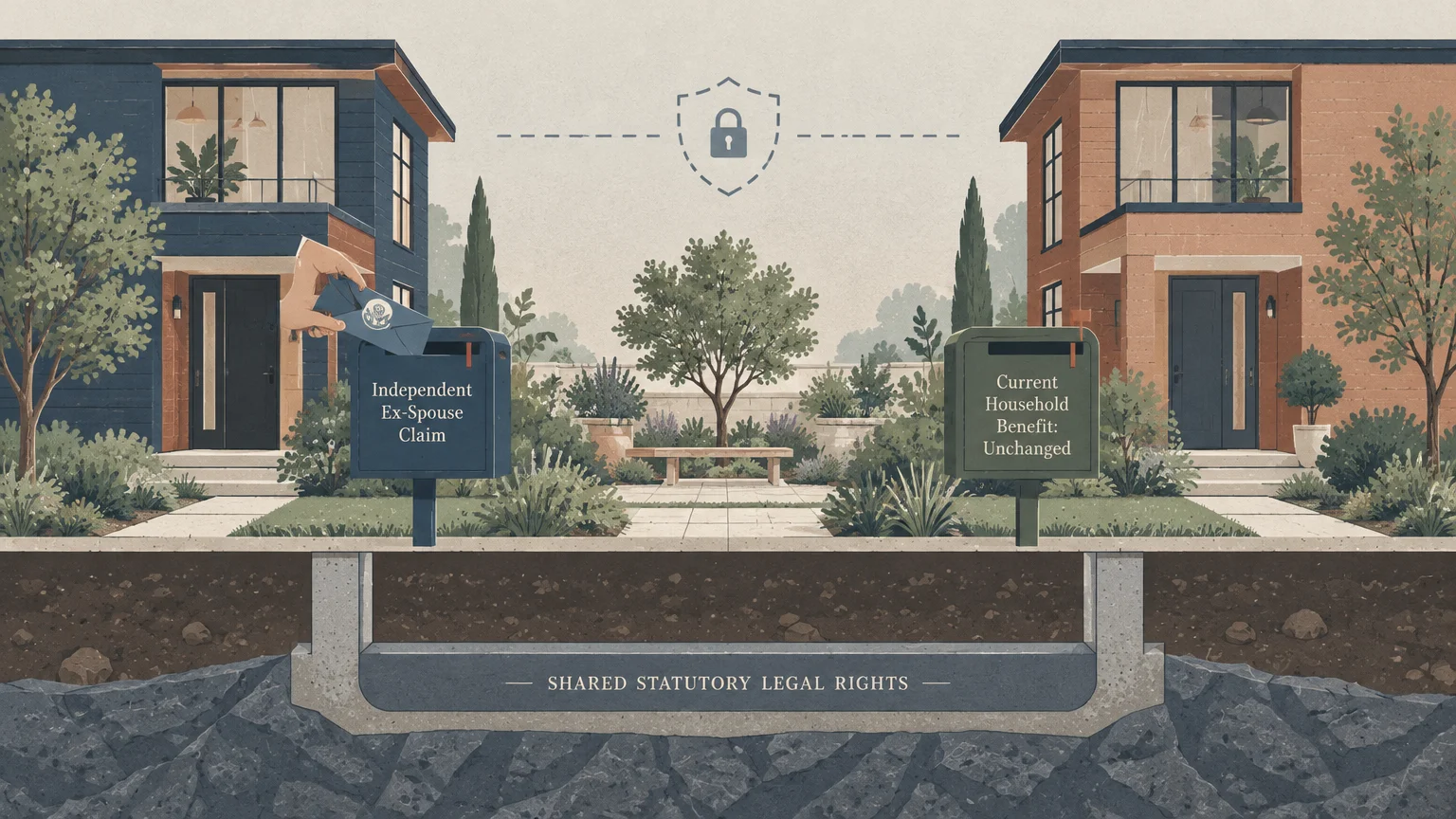
The federal government maintains strict privacy safeguards for former couples. The agency never informs your ex-spouse that you filed a claim on their work record.
Furthermore, your claim has zero impact on what your ex-spouse or their current partner receives. The system pays your earned spousal benefit without altering any other family member’s monthly check.
If you have been divorced for at least 2 continuous years, you can claim even if your ex has not filed yet. Both of you simply need to be at least age 62 to qualify for independent entitlement.

8. The Child-in-Care Exception Bypasses Normal Age Rules
Standard spousal benefits require you to reach at least age 62 before you can receive monthly payments. However, a major statutory exception exists for parents caring for eligible dependent children.
You can receive an unreduced spousal benefit at any age if you care for the primary worker’s qualifying child. The child must be under age 16 or have a qualifying disability that began before age 22.
This child-in-care benefit equals the full 50% of the worker’s Primary Insurance Amount. The standard early claiming reduction does not apply to parents in this qualifying situation.
This provision offers substantial financial relief to families raising young children or supporting adult offspring with special needs. It injects vital cash flow into households facing substantial medical or educational costs.
Keep in mind that the parent’s benefit ends once the youngest non-disabled child turns 16. At that milestone, you must wait until age 62 to resume standard spousal benefits.
9. Survivor Benefits Follow Completely Different Mathematical Rules
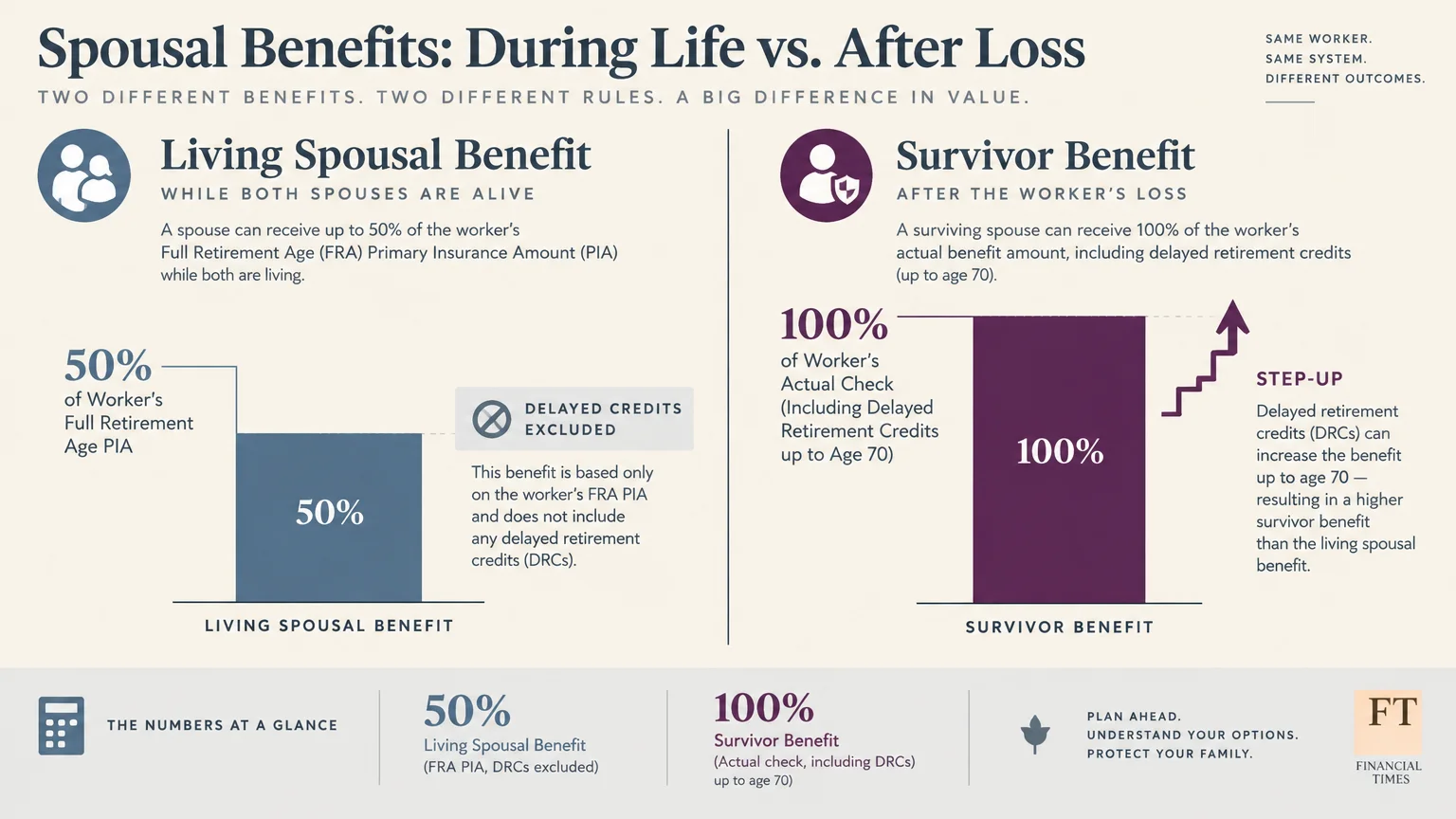
Spousal benefits and survivor benefits are distinct programs with entirely different payment structures. While your spouse lives, your spousal benefit caps at 50% of their Primary Insurance Amount.
When your spouse passes away, your spousal benefit transitions into a survivor benefit. Surviving spouses receive up to 100% of the deceased worker’s actual monthly benefit.
Survivor benefits include any delayed retirement credits the deceased worker earned by waiting until age 70. This distinction makes delaying the primary earner’s claim a valuable life insurance strategy.
You cannot combine both checks to receive 150% of your partner’s benefit. The system simply steps your check up to match the single higher payment amount.
Household income inevitably drops when a spouse dies because one Social Security payment disappears entirely. Planning for this transition protects the surviving partner from experiencing sudden poverty.
10. Medicare Premiums and Surcharges Can Drain Your Monthly Check
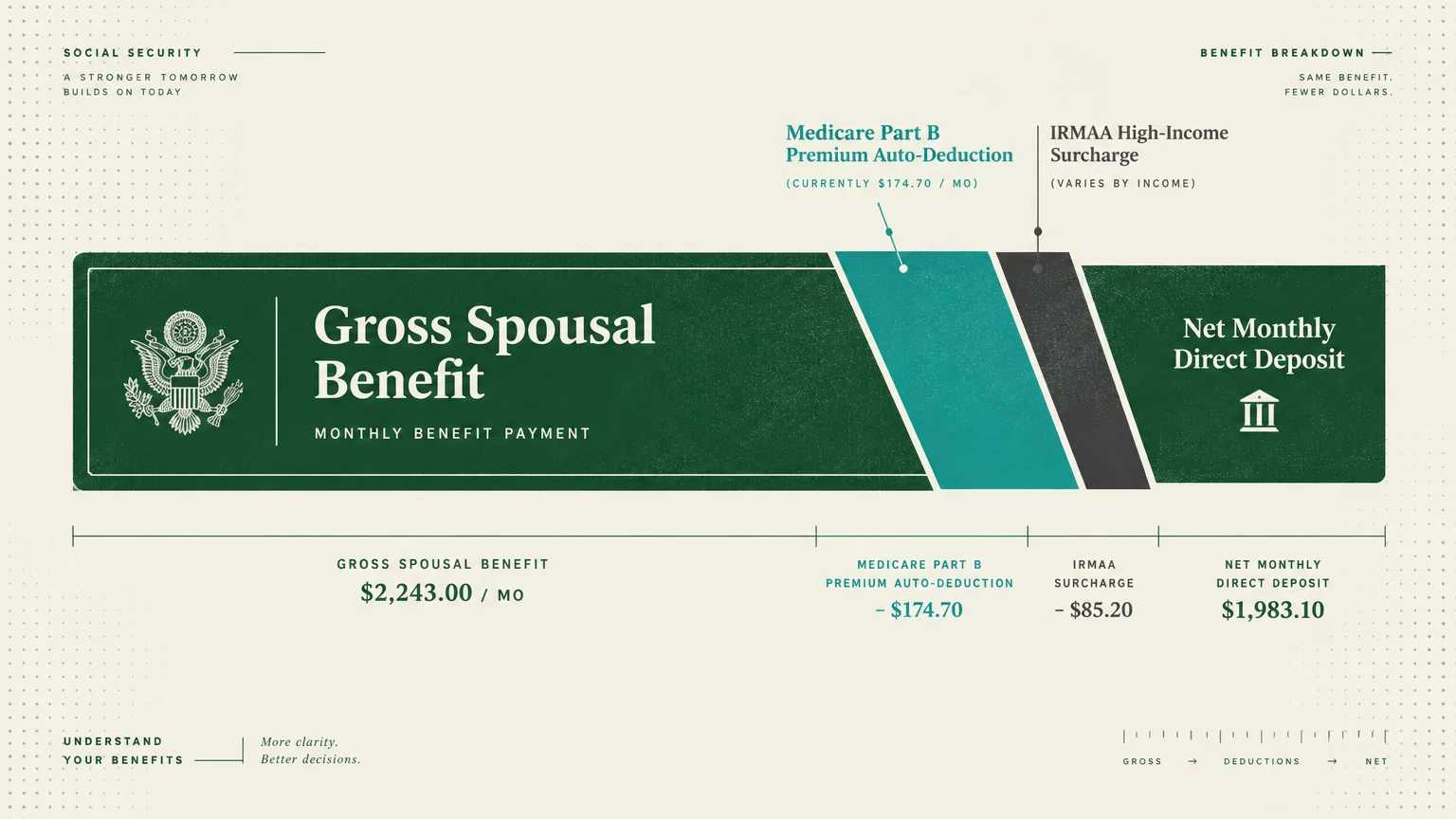
When you transition onto Medicare Part B at age 65, the government deducts premiums directly from your monthly Social Security check. This deduction noticeably reduces your net take-home deposit.
Couples with higher incomes face additional costs known as the Income-Related Monthly Adjustment Amount. The official guidelines on Medicare.gov outline how high earners pay steep surcharges for Part B and Part D.
These surcharges evaluate your modified adjusted gross income from tax returns filed two years prior. A large capital gain or retirement account withdrawal can push your joint income into higher surcharge tiers.
If your joint income crosses an adjustment threshold, both spouses pay the additional monthly charge. These combined deductions can consume a substantial percentage of a smaller spousal check.
Manage your taxable distributions carefully to avoid unnecessary Medicare premium spikes. Strategic tax planning keeps more spousal income in your household account where it belongs.
11. Remarriage Instantly Resets Your Benefits Eligibility
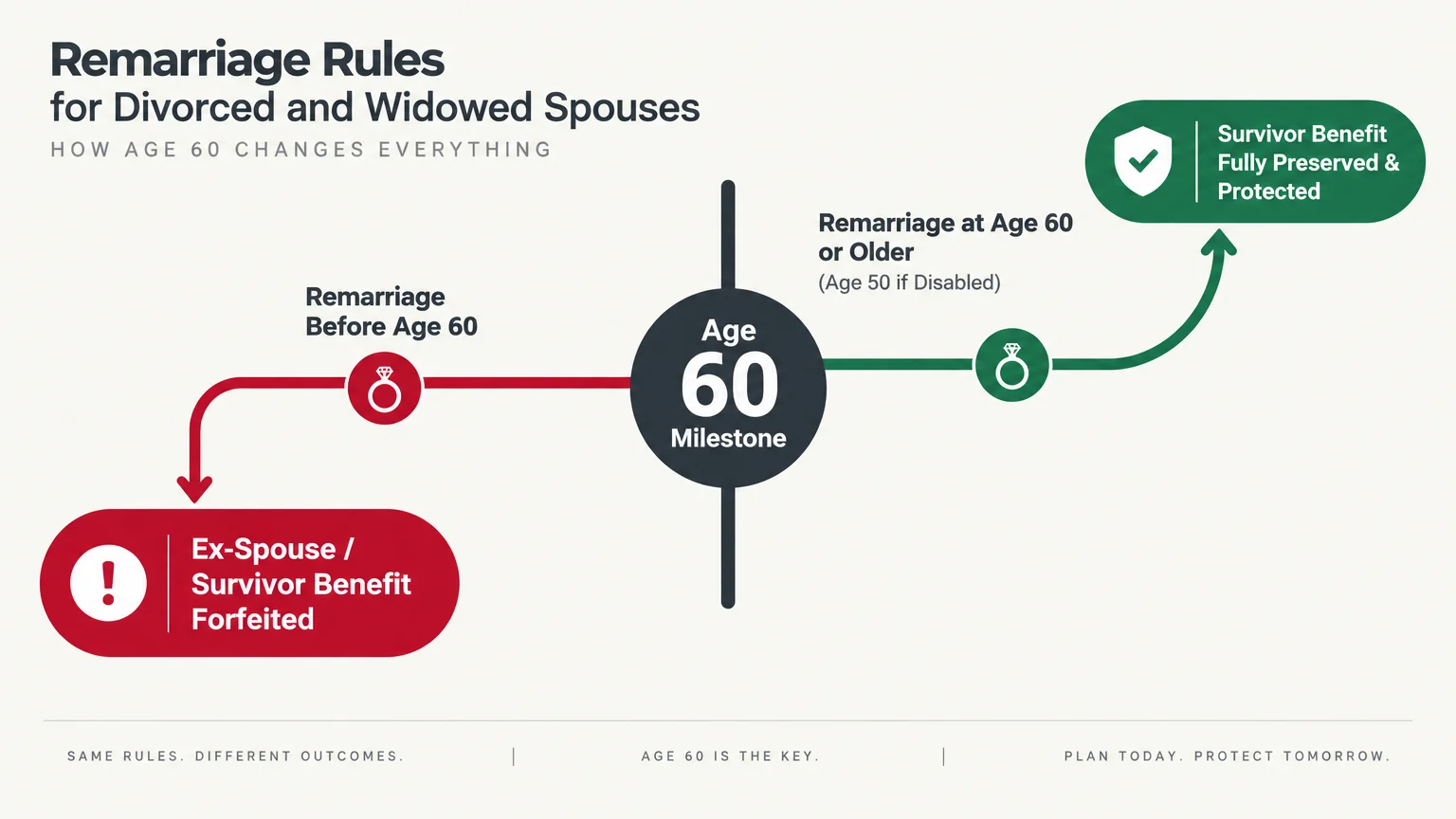
If you currently collect divorced spousal benefits, walking down the aisle terminates those monthly payments immediately. You cannot collect spousal benefits on a former partner while legally married to someone else.
However, your new marriage creates future benefit opportunities on your new spouse’s record. You must remain married for at least 1 continuous year to qualify for spousal benefits under your new partner’s account.
If your new marriage ends through divorce or death, your eligibility on your first ex-spouse’s record can resume. The law allows you to reclaim benefits on an earlier record once the subsequent marriage concludes.
Widows and widowers face different timing guidelines when contemplating marriage later in life. Remarrying after age 60 allows surviving spouses to retain survivor benefits from their deceased partner.
Review your financial records thoroughly before legalizing a new relationship in retirement. Understanding how marriage laws interact with federal benefits ensures your romantic choices do not create financial regret.
12. You Cannot Double Dip by Combining Both Benefit Streams
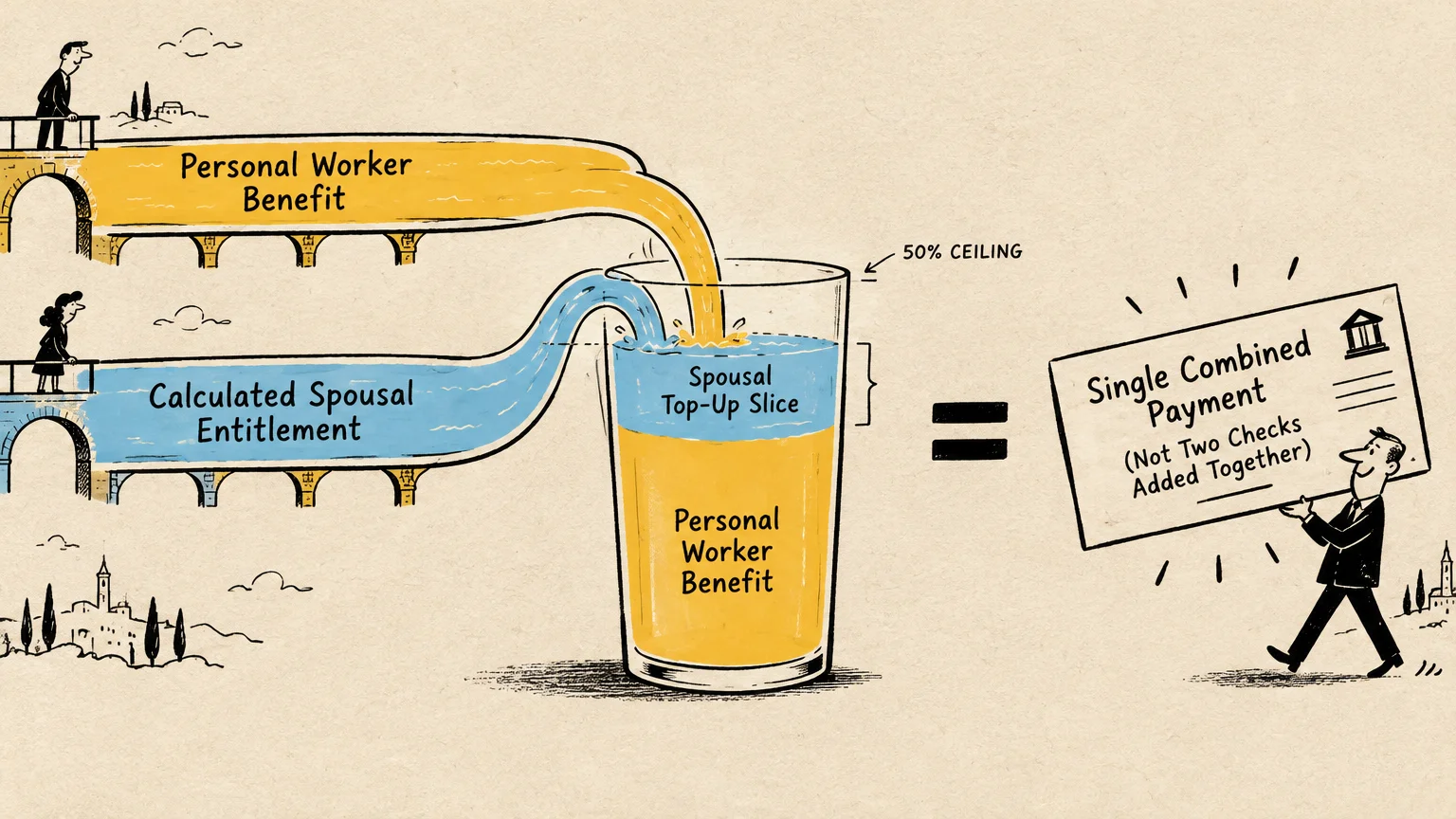
A widespread myth suggests that a spouse receives their own retirement check plus an extra 50% from their partner. In reality, the federal government never stacks two full benefits together.
The system always pays your personal retirement benefit first based on your own career earnings record. If your spousal entitlement exceeds your personal benefit, the agency adds a supplemental payment.
This top-up brings your total monthly check up to the maximum spousal amount for which you qualify. If your personal benefit is higher than the spousal benefit, you receive zero spousal funds.
For example, if your personal check is $1,200 and your spousal entitlement is $1,500, you receive $1,500 total. The government pays your $1,200 personal benefit plus a $300 spousal supplement.
Review your combined household numbers to verify whether a spousal top-up applies to your situation. Clear expectations prevent budgeting errors when planning your joint retirement income.
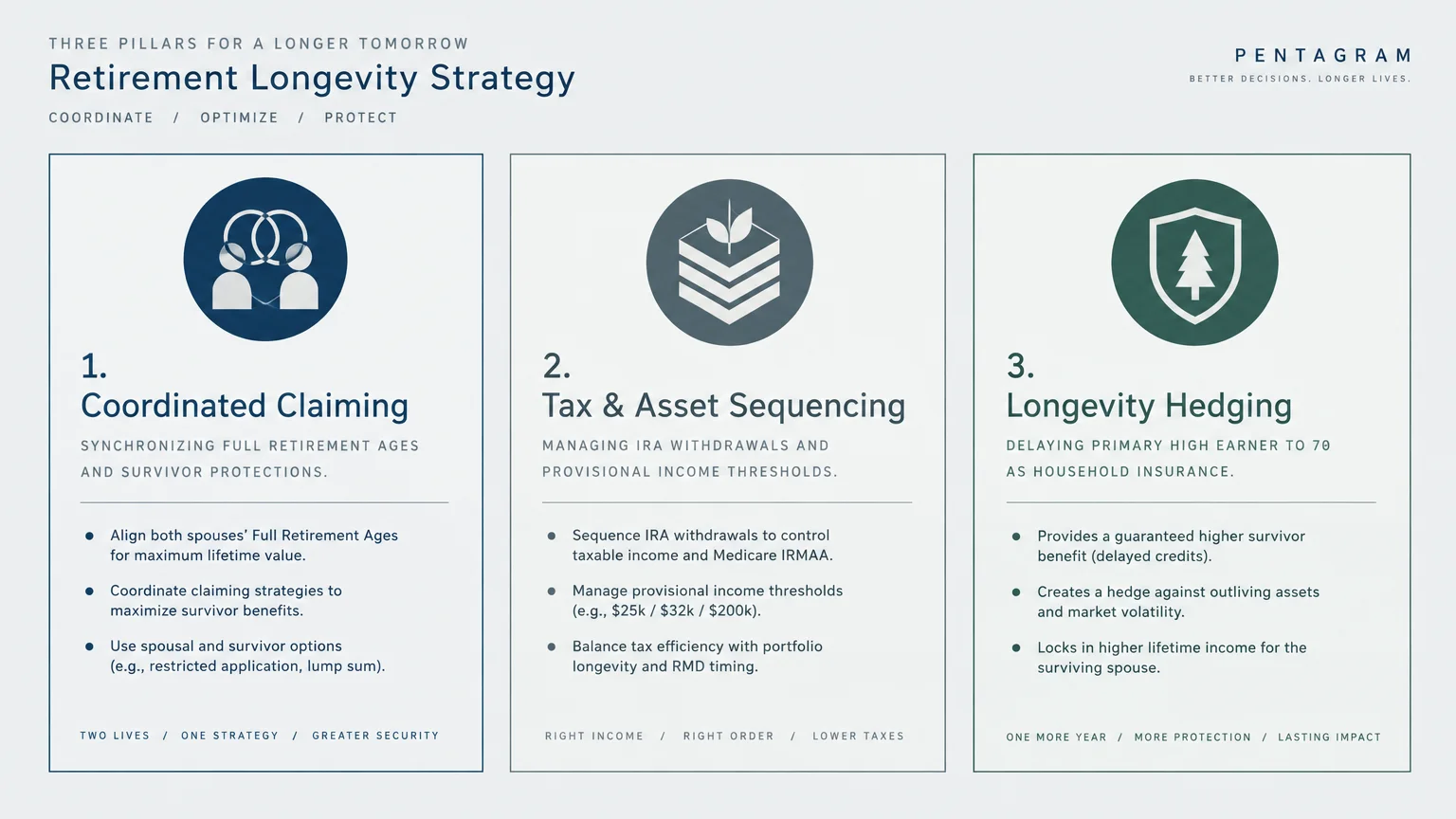
Three Strategic Pillars for Household Longevity
Maximizing spousal benefits forms the foundation of a comprehensive retirement plan. Integrating income timing, daily lifestyle design, and health maintenance allows both partners to thrive together for decades.
Pillar One: Income Planning and Cash Flow Optimization
Coordinate your claiming dates to maximize cumulative household cash flow over both lifetimes. Having the higher earner delay their claim often provides the strongest financial shield for the surviving spouse.
Coordinate your claims alongside personal savings, individual retirement accounts, and traditional pensions. Review the rules published by the Internal Revenue Service to manage tax liabilities on your distributions.
Staggering your filing ages allows one partner to provide immediate income while the other partner’s benefit grows. This balanced approach protects your liquid assets from early depletion during market downturns.
Build an emergency cash reserve covering at least twelve months of essential living expenses. Maintaining this buffer ensures you never have to file for early benefits out of desperation.
Pillar Two: Lifestyle Design and Purposeful Aging
Retirement represents an opportunity to redesign your daily routine around shared values and personal growth. Sustainable lifestyle design ensures your financial resources support meaningful activities and lasting fulfillment.
Establish open communication with your spouse regarding travel dreams, volunteer commitments, and everyday living expenses. Budgeting together eliminates tension and aligns your spending with your core life priorities.
Invest time in community engagement, cultural pursuits, and lifelong friendships outside of your professional network. Strong social ties enhance cognitive longevity and emotional well-being throughout your senior years.
Design your living environment to accommodate changing physical needs as you grow older. Thoughtful home modifications now prevent expensive relocations or institutional care later in life.
Pillar Three: Health, Wellness, and Caregiving Realities
Protecting your physical health is just as critical as protecting your retirement nest egg. Medical expenses and unexpected caregiving needs can strain even the most meticulously planned household budget.
Commit to daily physical movement, balanced nutrition, and preventive medical screenings to maintain your independence. Proactive self-care reduces the likelihood of chronic illnesses that drain both energy and wealth.
Discuss potential long-term care preferences with your partner before health challenges arise. Having an actionable plan for in-home support or assisted living protects both spouses from overwhelming caregiver burnout.
Designate durable powers of attorney and healthcare proxies while you both possess full mental capacity. Securing these legal authorizations shields your family from chaotic probate battles during health emergencies.

Expert Voices: Advice From Financial Planners and Gerontologists
Financial planners frequently warn couples against making hasty Social Security claiming decisions based solely on emotion. Rash choices can permanently depress your household standard of living.
Certified Financial Planner Marcus Vance notes that spouses often underestimate the power of joint longevity modeling. “Couples should plan for at least one partner living well into their nineties,” Vance explains.
Gerontologists emphasize that financial stability directly impacts physical and emotional health in retirement. Chronic stress over fixed income shortfalls accelerates cognitive decline and undermines immune function.
Dr. Elena Rostova, a specialist in healthy aging, urges retirees to treat retirement planning as a wellness intervention. “Predictable cash flow gives seniors the peace of mind required for active community engagement,” Rostova observes.
Retirement transition coach Arthur Campbell reminds clients that shared purpose outshines pure financial arithmetic. “Money is simply fuel for the relationships and experiences you cherish most,” Campbell emphasizes.
Safeguards Against Scams and Costly Claiming Traps
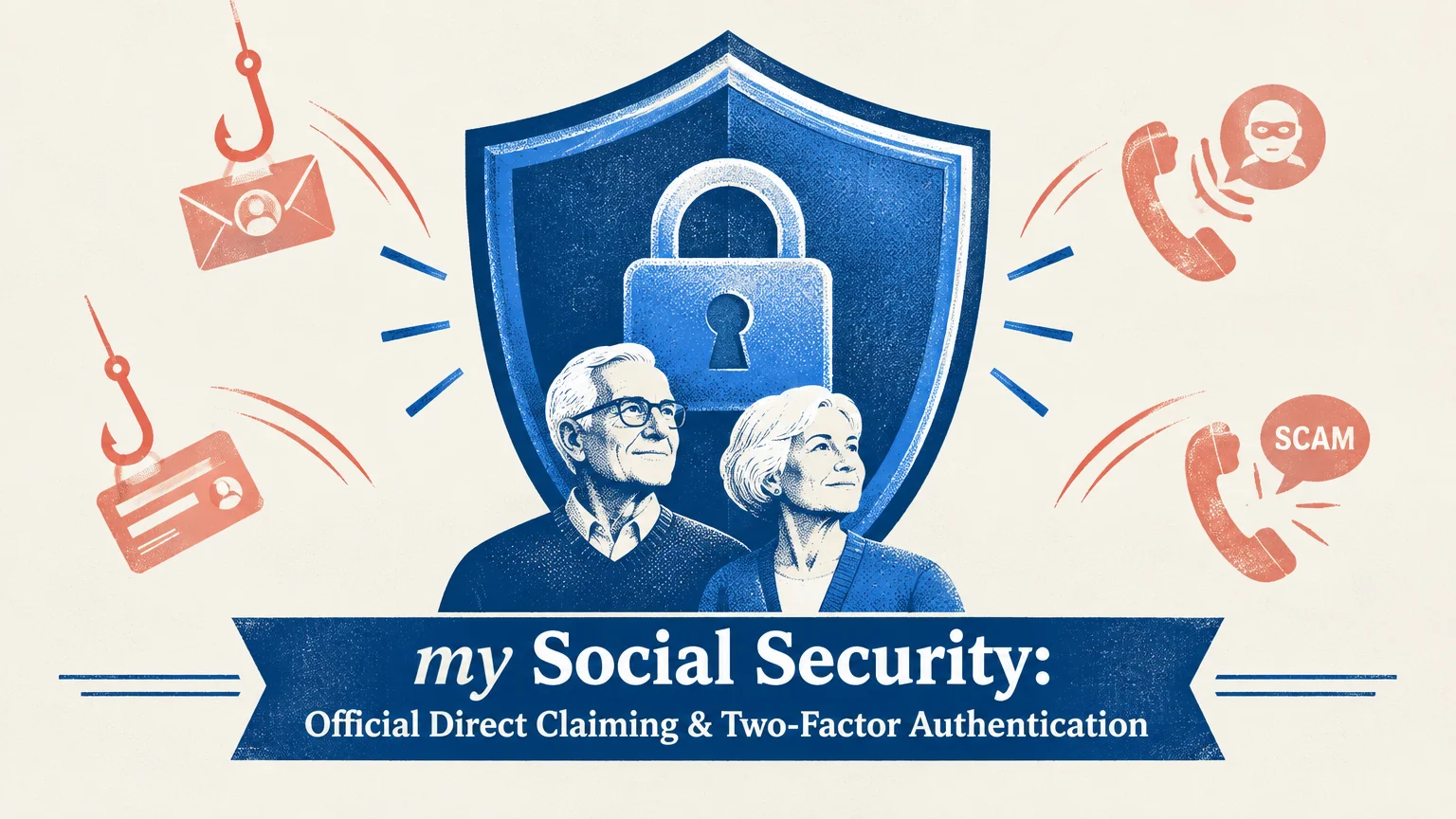
Criminal syndicates increasingly target seniors by impersonating government officials over the phone and through email. Never share your Social Security number or banking credentials with unverified callers.
The government will never demand immediate wire transfers or threaten arrest over benefits discrepancies. Review guidance from AARP retirement resources to stay updated on the latest financial scams.
Create your personalized online portal on the official federal website before identity thieves attempt to do so. Setting up multi-factor authentication locks down your earnings record against unauthorized access.
Beware of claiming benefit cliffs when transitioning between employment and retirement. Earning even slightly above statutory thresholds while claiming early can trigger clawbacks and administrative headaches.
Audit your annual earnings statements regularly to ensure every year of work history is accurately recorded. Correcting clerical errors early ensures your baseline calculations reflect your true lifetime earnings.
Frequently Asked Questions About Spousal Benefits
Can I collect spousal benefits if I never worked outside the home?
Yes, you can qualify for spousal benefits even if you have zero career work credits of your own. As long as your spouse is insured and eligible, you can receive up to 50% of their baseline benefit.
You must be at least age 62 and married for at least 1 continuous year to qualify. Your payments do not reduce the amount your working partner receives each month.
This statutory design specifically protects homemakers and caregiving partners who dedicated their adult lives to raising children and managing homes. It ensures both partners enjoy guaranteed retirement security.
Does my spouse have to file before I can receive spousal benefits?
If you are currently married, your spouse must file for their own retirement benefits before you can claim spousal benefits. You cannot receive payments on their record until their claim becomes active.
The only major exception applies to divorced spouses who have been legally separated for at least 2 continuous years. In that case, you can claim independently once both of you reach age 62.
Coordinate your application timeline directly with your partner to avoid submitting an application that federal workers will immediately reject. Mutual timing ensures a smooth, uninterrupted rollout of benefits.
What happens to my spousal benefit if my partner passes away?
Your spousal benefit converts into a survivor benefit upon the death of your partner. Survivor benefits can equal up to 100% of the deceased worker’s actual monthly payment.
You must contact the federal agency promptly to submit the death certificate and adjust your monthly benefit. You will receive the single higher amount rather than combining two checks.
Surviving spouses can claim these payments as early as age 60, subject to standard early claiming reductions. Delaying your claim until your Full Retirement Age delivers the full survivor payment.
Are Social Security spousal benefits subject to federal income taxes?
Federal income taxes apply to spousal benefits depending on your combined household income. If your joint income exceeds statutory thresholds, up to 85% of your benefits may become taxable.
Coordinate your withdrawals from taxable accounts and tax-advantaged accounts with a qualified advisor. Proper distribution timing minimizes the portion of your Social Security benefits lost to taxation.
You can request voluntary federal tax withholding directly from your monthly Social Security check using form W-4V. Withholding taxes upfront prevents unpleasant surprises when filing annual tax returns.
Your Next Steps: The 48-Hour Household Challenge
Securing your retirement income does not require months of agonizing research or complicated spreadsheets. You can make measurable progress toward optimizing your spousal benefits starting today.
Commit to taking one constructive action within the next 48 hours to strengthen your financial future. Log into your personal federal account alongside your partner and print out your latest benefit estimates.
Compare your projected Full Retirement Age numbers and discuss how your claiming dates can support your joint lifestyle goals. Having an honest conversation today removes anxiety and builds shared confidence.
Schedule an appointment with a trusted fee-only advisor if your situation involves pensions, divorce decrees, or business income. Professional guidance ensures you execute your claiming strategy smoothly.
Your earned benefits represent decades of dedication, discipline, and hard work. Claim every dollar you deserve and build a fulfilling retirement on your own terms.