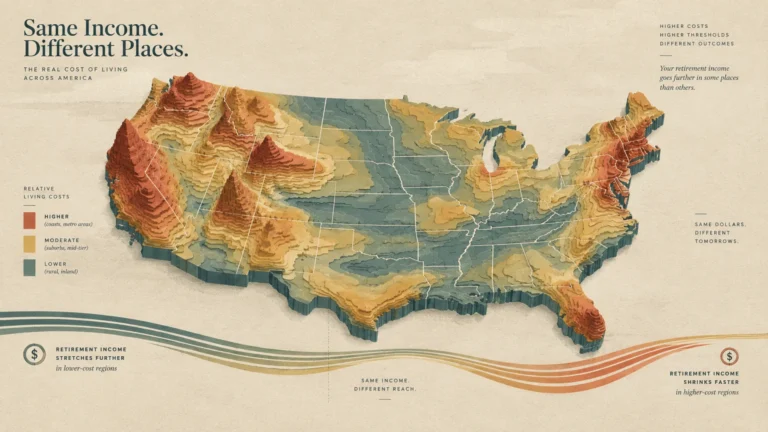
Your retirement location shapes your career options, healthcare access, and tax burden just as much as your investment portfolio does. Moving across state lines or staying put can dramatically change how long your hard-earned money lasts.
Over eleven million older Americans now remain in the workforce to stay engaged and protect their nest eggs. Where you live directly dictates whether local employers welcome your experience or push you aside.
This comprehensive state guide reveals where older employees thrive, where career barriers persist, and how you can optimize your working retirement.
A Demographic Shift: Why Millions of Seniors Keep Working
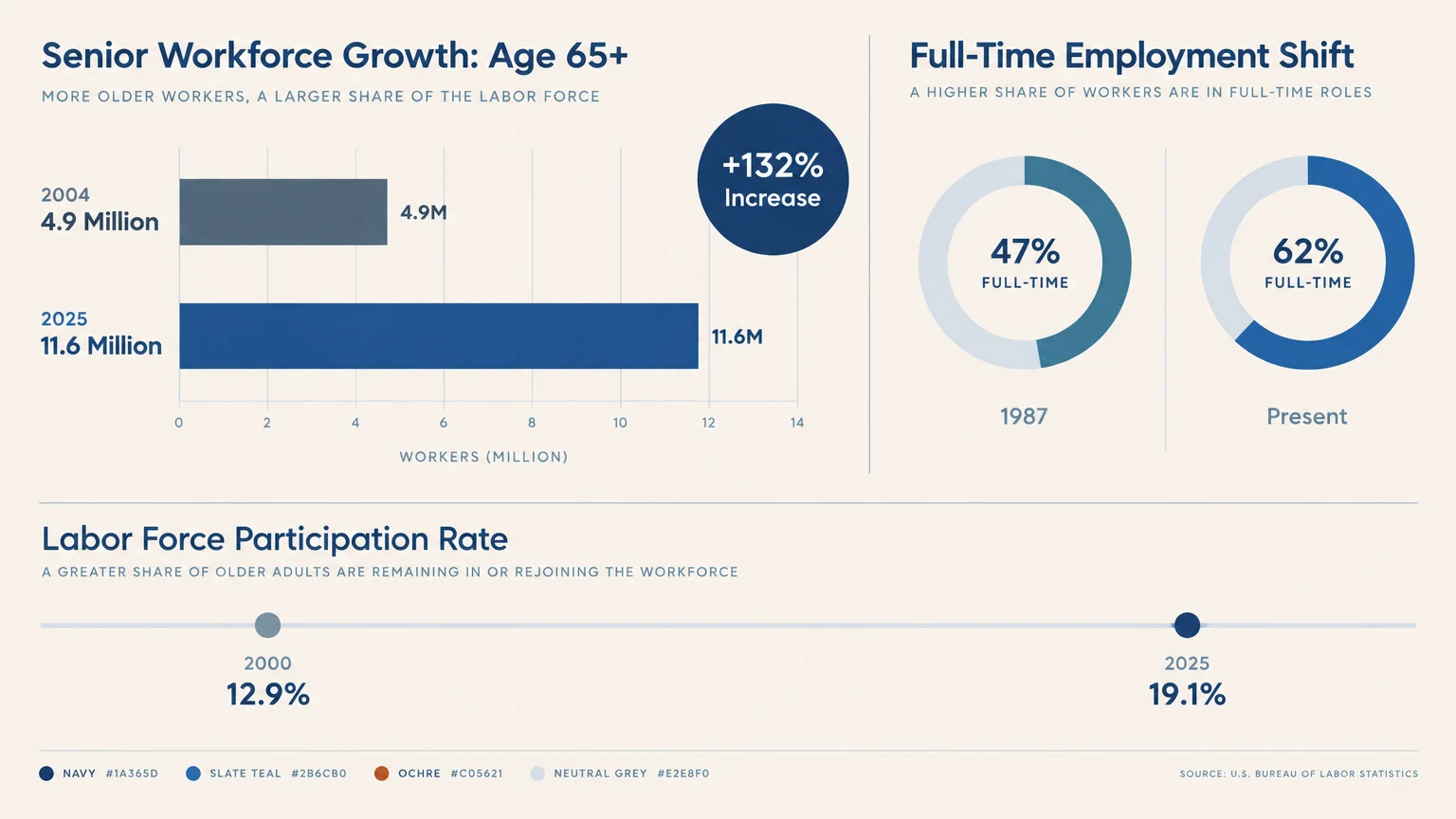
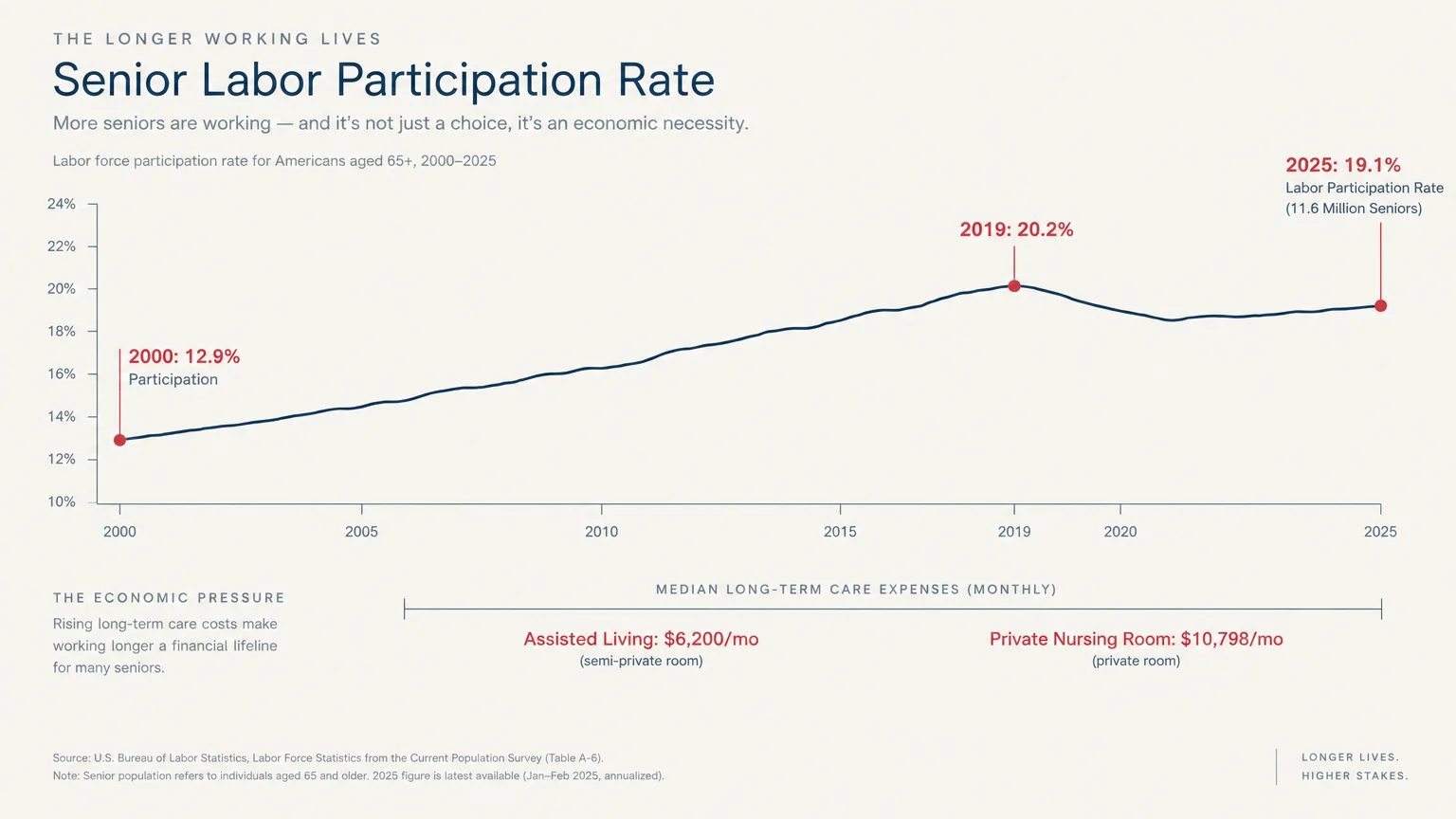
A record 11.6 million Americans aged 65 and older participate in the national workforce today. That figure marks an impressive 132% increase from 4.9 million older workers in 2004.
According to a federal report from the Bureau of Labor Statistics, the labor force participation rate for Americans aged 65 and older reached 19.1% in 2025. That level stands substantially higher than the 12.9% recorded in 2000.
While the participation rate reached a recent peak of 20.2% in 2019, modern labor dynamics reflect durable structural changes across the economy. Mature workers represent the fastest-growing demographic segment across the American labor market.
The nature of senior employment has shifted decisively away from occasional seasonal shifts toward permanent, committed careers. Among older Americans who currently work, 62% hold full-time positions, compared to just 47% in 1987.
Many older adults choose to stay on the job simply because they value intellectual engagement and community connection. For others, staying employed provides vital protection against longevity risk and volatile financial markets.
A survey from Goldman Sachs found that 58% of Americans fear they will outlive their retirement savings. Working a few additional years provides a dependable paycheck while allowing your investment accounts more time to compound.
Healthcare expenses also drive seniors to seek stable employer benefits before stepping away from work completely. Median monthly costs reach $6,200 for assisted living and $10,798 for a private nursing home room, creating major balance sheet pressure.
Earning steady wages in your sixties and seventies buffers your portfolio against these substantial late-life medical costs. It also delays distributions from taxable retirement accounts during market drawdowns.
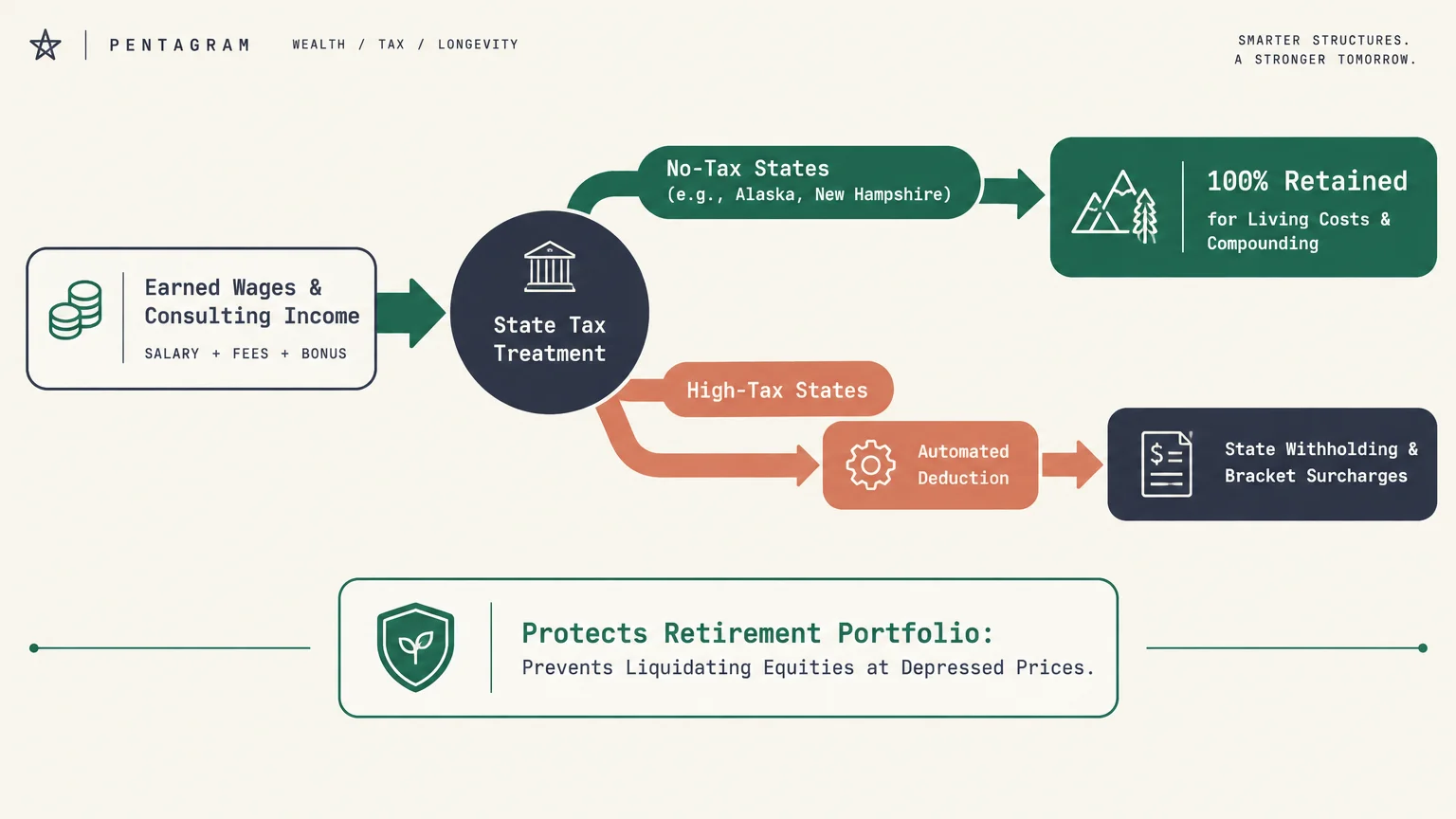
Maintaining a steady stream of earned income provides profound peace of mind during economic downturns. You can cover daily living expenses directly from your paycheck rather than liquidating equities at depressed prices.
The Top 10 States for Older Workers
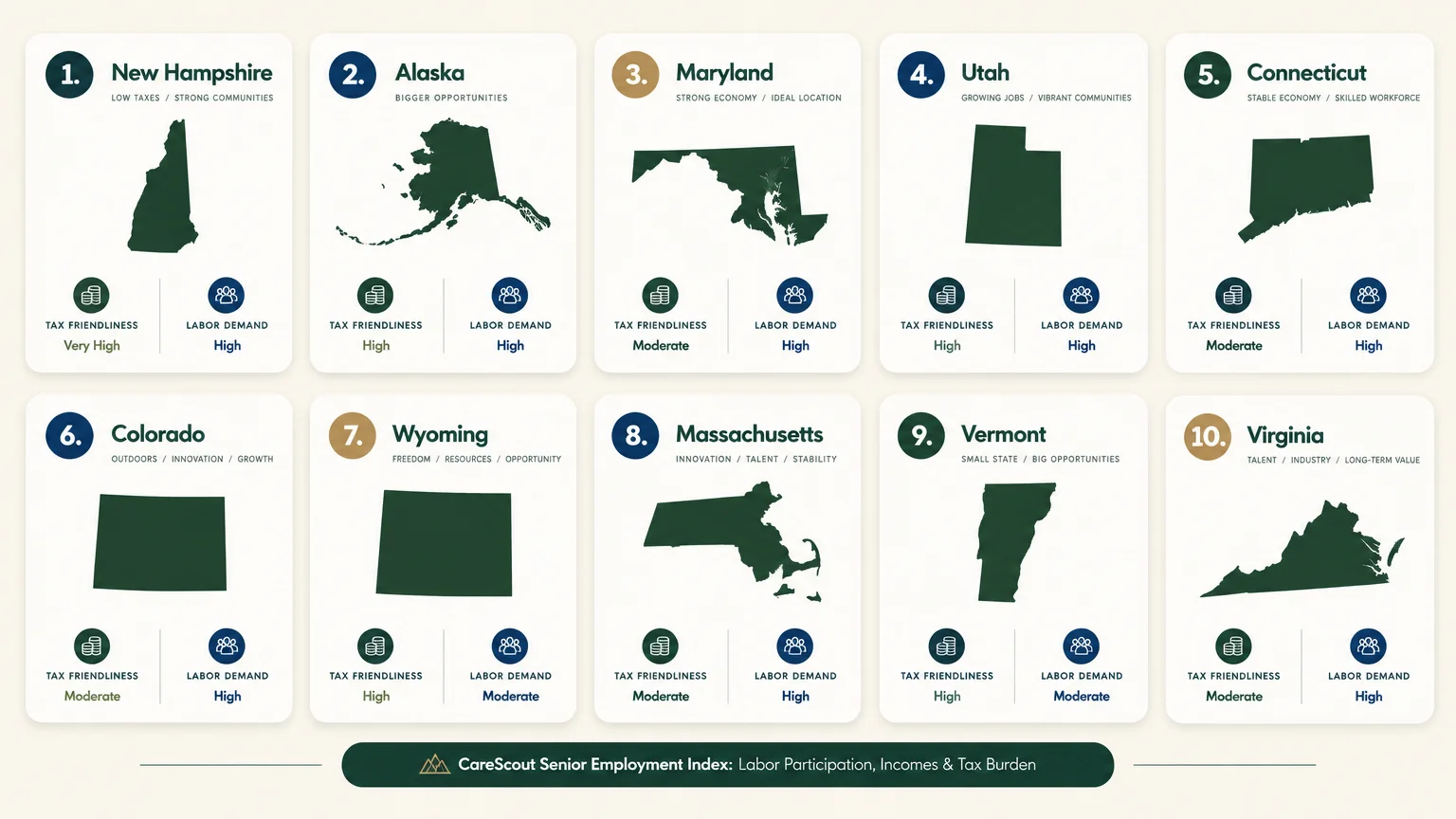
A study published by CareScout evaluated all fifty states and Washington, D.C., to identify the top environments for mature workers. The researchers analyzed labor participation rates, median incomes, remote work availability, tax burdens, and age discrimination reports.
The resulting index provides an objective blueprint for older employees seeking vibrant career options in supportive communities. Five of the top ten states cluster in the Northeast, while Western states also post strong results.
New Hampshire captured the first overall ranking in the nation for mature job seekers. Alaska secured second place, followed closely by Maryland in third and Utah in fourth.
Connecticut earned fifth place, while Colorado took sixth and Wyoming claimed seventh. Massachusetts, Vermont, and Virginia completed the top ten list in eighth, ninth, and tenth positions.
Alaska excels by offering high median wages and zero state personal income tax for working residents. Experienced professionals in Alaska find consistent demand across supply logistics, public administration, and natural resource management.
Maryland provides strong compensation packages and extensive openings for specialized knowledge workers. The state’s proximity to federal research centers and technological corridors creates dependable career channels for experienced personnel.
Utah pairs an energetic entrepreneurial ecosystem with high senior labor participation. Communities throughout Utah actively support seasoned workers who wish to launch independent consulting practices or small businesses.
Connecticut delivers competitive salaries and broad opportunities across insurance, engineering, and corporate management. While regional living expenses run high, generous corporate compensation packages frequently offset those recurring overhead costs.
Colorado cultivated an expansive remote work ecosystem that benefits older employees seeking schedule flexibility. Working from home allows mature Colorado professionals to eliminate hazardous winter driving while maintaining high earning power.
Wyoming provides strong economic incentives through zero personal income taxes and minimal regulatory interference. Seasoned workers in Wyoming benefit from lower corporate compliance barriers and steady demand in local services.
Massachusetts leverages its world-class healthcare networks, research universities, and financial institutions to support older workers. Mature employees in Massachusetts frequently secure lucrative advisory roles that reward deep institutional wisdom.
Vermont pairs vibrant civic life with high labor participation, creating an inclusive workplace climate for experienced residents. Working seniors in Vermont enjoy strong community backing and accessible local employers.
Virginia rounds out the top tier with strong defense contracting, government operations, and technology hubs. Older professionals in northern Virginia enjoy steady access to high-paying knowledge-sector roles with competitive health benefits.

Why New Hampshire Takes the Top Spot
New Hampshire achieved the number-one overall ranking by excelling across multiple financial and cultural metrics. The state provides an ideal environment for older workers who want to maximize their net earnings.
State tax policy in New Hampshire imposes a 0% personal income tax rate on wages. That policy means you keep the entirety of your earned paycheck without state-level deductions eroding your wealth.
New Hampshire also achieved a 36.1% labor force participation rate among older residents in the study. Local businesses actively recruit mature candidates rather than passing them over for younger applicants.
Workplace age equity represents another major strength for the Granite State. New Hampshire recorded only 18 age discrimination complaints per 100,000 older workers, the third-fewest in the nation.
A separate Census Bureau analysis revealed that New Hampshire and Vermont tied for first place with 28.6% of residents aged 65 and older still working. This high proportion demonstrates that senior employment is widely embraced across the state.
Employers in New Hampshire routinely adapt workplace responsibilities to accommodate older staff members. You can find part-time schedules, seasonal contracts, and remote arrangements across healthcare, retail, and manufacturing sectors.
The absence of a general sales tax further boosts your spending power within New Hampshire. When you combine zero income tax with zero sales tax, your working dollars go substantially further.
The Bottom 10 States for Older Workers
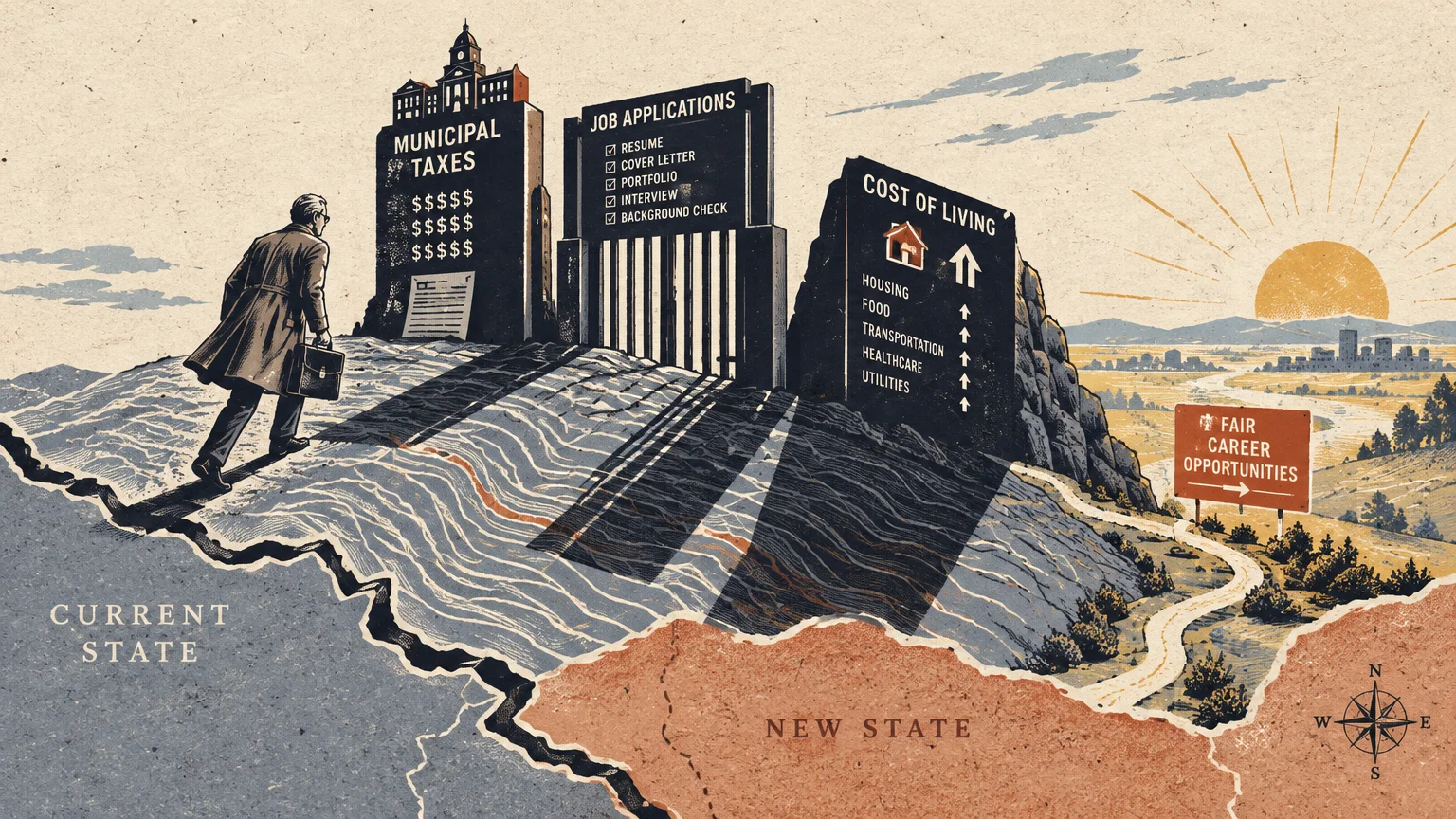
At the opposite end of the spectrum, several states present steep obstacles for older job seekers. Common hurdles include lower median compensation, limited remote employment, and elevated rates of age bias.
Mississippi finished fifty-first, ranking last overall in the CareScout assessment. Mature workers in Mississippi face restricted high-paying job opportunities, lower employer health coverage rates, and few telecommuting positions.
Arkansas placed fiftieth, struggling with lower median household incomes and limited corporate recruiting pipelines for older adults. Finding second-career opportunities that provide comprehensive retirement or medical benefits remains challenging across the state.
West Virginia took forty-ninth place, burdened by difficult economic transitions in legacy industrial communities. West Virginia recorded the lowest senior labor force participation rate in the country at just 16.7%.
Alabama ranked forty-eighth, where older workers face fewer transition pathways into flexible service or technology fields. Many open roles in Alabama require physical labor that may present safety concerns for older individuals.
Louisiana finished forty-seventh due to sluggish economic growth and elevated complaints regarding employment practices. Mature job seekers along the Gulf Coast frequently confront a lack of public retraining programs.
Michigan landed at forty-sixth, reflecting ongoing manufacturing restructuring and localized economic friction. Industrial consolidation has reduced the availability of traditional corporate positions that once supported experienced supervisors.
South Carolina ranked forty-fifth, pairing rapid retiree population growth with an economy centered heavily on hospitality. Mature professionals often struggle to secure senior corporate positions outside a few growing urban centers.
Indiana placed forty-fourth, where manufacturing and agricultural jobs dominate the private sector. Knowledge workers seeking advisory, analytical, or remote positions may find limited enthusiasm among local employers.
Missouri took forty-third place, characterized by lower median earnings and uneven employment creation outside its primary cities. Many rural counties lack the high-speed digital infrastructure required to support independent home-based consulting.
Wisconsin rounded out the bottom tier in forty-second position. Older employees face relatively high income tax brackets alongside limited state programs designed to integrate mature talent into modern businesses.
Senior Labor Force Participation Across the Nation
Senior labor participation rates reveal how comfortable older adults feel remaining in regional job markets. A detailed analysis of U.S. Census Bureau data shows distinct geographic clusters of working seniors.
Northeastern and Midwestern states lead the country in keeping older adults actively employed. Following Vermont and New Hampshire at 28.6%, South Dakota captured third place with 27.6% of seniors working.
Massachusetts recorded a 27.2% participation rate among residents aged 65 and older. Maryland and New Jersey tied next at 26.8%, while Connecticut posted an impressive 26.5% senior workforce rate.
These high participation figures stem from a combination of robust service economies and higher living costs. Older workers in these regions often stay employed to preserve capital while enjoying active social routines.
Conversely, West Virginia sits at the bottom of the nation with only 16.7% of seniors working. Limited job diversity and public health challenges contribute to lower participation across the Appalachian region.
Understanding these regional variations helps you evaluate whether your home state offers a welcoming job market. If local participation numbers run low, finding flexible and well-paid work may require additional effort.

High-Growth Jobs for Experienced Employees
Selecting an expanding career track can dramatically improve your employment prospects in later life. Federal employment data indicates that older workers are achieving remarkable growth in specialized analytical and organizational roles.
Federal labor figures analyzed by CareScout reveal that librarian roles grew by 109% among older workers between 2022 and 2025. These positions offer structured schedules, intellectual stimulation, and valuable community impact without excessive physical strain.
Facilities manager positions expanded by 80% among mature workers over the same time period. Organizations actively recruit seasoned leaders who know how to manage commercial contractors, handle building maintenance, and control operational budgets.
Paralegal positions filled by older employees surged by 72%, reflecting high demand for analytical legal research. Law firms depend on mature professionals who demonstrate meticulous accuracy, writing capability, and professional discretion.
Purchasing agent roles rose by 50% among older workers, while business operations specialist positions grew by 48%. These critical positions reward decades of commercial negotiation skills, logistical oversight, and sound executive judgment.
Many forward-looking corporations now sign the age-friendly employer pledge administered by AARP. These employers publicly commit to evaluating experienced applicants solely on qualifications rather than age.
Certified age-friendly companies frequently institute phased retirement options, ergonomic workstations, and flexible weekly hours. Working for these organizations allows you to contribute your skills without risking personal exhaustion.
Pillar 1: Income Planning and State Tax Optimization
Working in retirement requires thoughtful income planning to protect your financial nest egg. Earning wages can unintentionally alter your income tax bracket, phase out deductions, or impact your Social Security benefits.
Choosing to live and work in zero-income-tax states like New Hampshire, Alaska, or Wyoming prevents state deductions from eroding your earnings. High-tax states take a noticeable cut from every hourly wage or consulting fee.
You must also track regulations enforced by the Internal Revenue Service regarding earned compensation and mandatory retirement accounts. Collecting full-time wages alongside required minimum distributions can push your total earnings into higher marginal brackets.
If you decide to claim Social Security before your full retirement age, your earned wages trigger an earnings limitation test. Exceeding that annual threshold causes the federal government to withhold a designated portion of your monthly check.
Those withheld Social Security funds are not lost permanently; your monthly payment increases once you attain full retirement age. Still, you should model your annual cash flow to prevent unexpected liquidity constraints.
Divert excess earned income into tax-advantaged accounts such as traditional individual retirement arrangements or health savings accounts. This proactive strategy shields current earnings from income tax while building a dedicated healthcare reserve.
Consult a certified financial planner to run multi-year tax projections that account for earned income, dividends, and distributions. Precise financial modeling ensures your active paycheck builds lasting wealth rather than unnecessary tax liabilities.

Pillar 2: Workplace Flexibility and Lifestyle Design
Your second-act career should support your personal values rather than drain your physical energy. Designing a sustainable working retirement requires setting firm boundaries around your weekly schedule and working conditions.
Remote work represents an ideal solution for older adults who want to bypass daily driving and congested highways. Telework allows you to perform strategic consulting or operational tasks from the comfort of your home office.
States with robust broadband infrastructure and high remote-work adoption rates make home-based employment straightforward. You can easily deliver services to clients nationwide regardless of where your primary home is located.
If you favor on-site work, consider the walkability and mass transit options available within your local neighborhood. Accessible public transportation reduces your dependence on personal automobiles and protects your independence as you age.
Negotiate alternative arrangements such as job sharing, compressed workweeks, or seasonal consulting agreements with prospective employers. Many organizations gladly offer flexible schedules in exchange for deep institutional experience.
Protecting your personal time ensures you can nurture family connections, pursue lifelong hobbies, and maintain daily exercise routines. A successful working retirement integrates intellectual productivity with personal happiness and rest.
Pillar 3: Healthcare Coordination and Medicare Rules
Maintaining your health is essential if you plan to work comfortably throughout retirement. You must also learn how private workplace insurance coordinates with federal healthcare benefits to prevent costly administrative penalties.
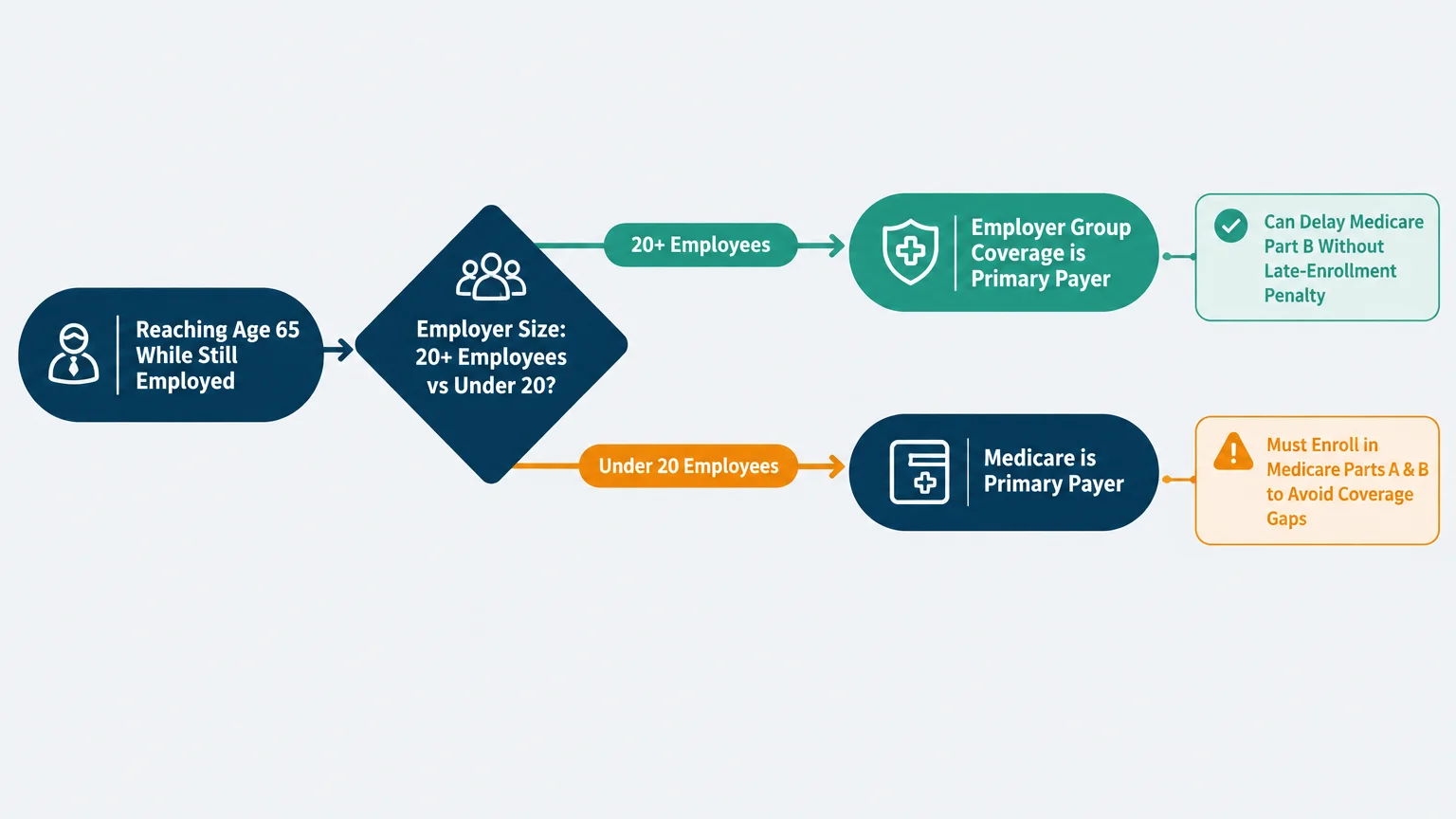
Review all official enrollment guidance from Medicare as you approach your sixty-fifth birthday, even if you remain employed full-time. Delaying your enrollment without qualifying employer health coverage triggers lifetime premium surcharges.
If your employer retains twenty or more workers, their group health insurance serves as your primary insurance provider. In that setting, you can generally postpone enrolling in Medicare Part B without incurring late penalties.
If your company employs fewer than twenty workers, Medicare becomes your primary coverage provider at age sixty-five. You must enroll during your initial enrollment period to ensure your medical claims are paid properly.
Look for employers that provide comprehensive wellness benefits, ergonomic desk setups, and vision or dental plans. Quality employer benefits can substantially reduce your out-of-pocket medical expenses during your working years.
Incorporate daily physical movement, healthy nutritional choices, and adequate sleep into your weekly working routine. Protecting your physical vitality ensures you remain competitive, energized, and satisfied in your career.

Safeguards: Navigating Benefit Cliffs, Scams, and Age Bias
While working provides immense financial advantages, you must guard against common pitfalls that target older workers. These traps include deceptive employment scams, workplace age discrimination, and unexpected benefit phaseouts.
The Equal Employment Opportunity Commission enforces federal statutes that shield workers aged forty and older from discriminatory employment practices. You have legal recourse if an employer treats you unfairly due to your age.
Maintain objective records of your professional achievements, positive supervisor reviews, and finished projects throughout your employment. Keeping comprehensive documentation protects your professional standing if management changes or corporate downsizings occur.
Watch out for sophisticated employment scams that post fraudulent remote positions on social media platforms. Never pay upfront fees for home-office equipment, and never provide your bank details before validating a company’s background.
Be mindful of municipal benefit cliffs where higher earned income disqualifies you from local senior assistance programs. Earning slightly more money might eliminate valuable property tax freezes or subsidized transit passes in your municipality.
Monitor your modified adjusted gross income to prevent triggering Medicare premium surcharges known as income-related monthly adjustments. Crossing specific annual thresholds can substantially increase your monthly Part B and Part D premiums.

Expert Perspectives: Financial Planners and Gerontologists
Financial planners emphasize that remaining employed during early retirement provides profound mathematical benefits for your portfolio. Working reduces the total number of years your investments must fully support your daily household expenses.
Certified financial planners note that earning even modest wages allows your retirement assets to compound uninterrupted. That extended growth horizon significantly lowers the probability of running out of money later in life.
Gerontologists highlight the cognitive and emotional advantages of continuing to work during your senior years. Regular workplace challenges stimulate neural pathways, support memory retention, and enhance critical thinking skills as you age.
Scientific research indicates that social isolation presents a severe health threat to aging Americans across every demographic group. Working provides an active social network, regular daily interactions, and a renewed sense of shared mission.
Finding personal meaning in your daily efforts proves far more fulfilling than simply collecting an extra paycheck. Align your late-career pursuits with causes and organizations that match your deepest values.
Frequently Asked Questions About Older Workers
Will earning wages reduce my Social Security payments?
If you have already attained your full retirement age, you can earn as much as you like without benefit reductions. Your earnings will never decrease your monthly Social Security payments once you pass that mark.
If you claim early benefits before your full retirement age, the Social Security Administration withholds benefits if you exceed annual earnings limits. However, the agency increases your monthly payout permanently once you reach full retirement age.
How do I identify age-friendly employers during my job search?
Look for companies that demonstrate multigenerational workforce representation and offer flexible scheduling options. Organizations that participate in recognized corporate age pledges demonstrate an active commitment to hiring mature talent.
Examine corporate career websites to see whether mature workers are featured in marketing imagery and leadership teams. Inclusive companies proudly showcase workers of all generations across their internal communication materials.
Do I need Medicare Part B if I work for a large company?
If your company employs twenty or more employees, their group health insurance plan generally serves as primary coverage. In that situation, you can safely delay Part B enrollment until you officially retire.
Always verify with your corporate benefits coordinator that your employer coverage meets federal creditable coverage standards. Obtaining written confirmation prevents unexpected coverage gaps and late enrollment penalties when you leave the workforce.
How can I modernize my resume for today’s job market?
Limit your resume history to the most recent ten to fifteen years of relevant career experience. Remove your college graduation years and older technical certifications to maintain a modern, forward-looking presentation.
Highlight your familiarity with current digital tools, cloud platforms, and project management applications in your profile summary. Demonstrating fluency with modern technology reassures hiring managers that you will integrate seamlessly into their team.
Your 48-Hour Working Retirement Checklist
Take proactive control of your retirement trajectory today by evaluating how your state supports your career plans. Making deliberate adjustments now can significantly improve your financial security and personal satisfaction.
Within the next 48 hours, calculate your estimated take-home pay under your state’s current income tax brackets. Compare those projections against zero-income-tax states like New Hampshire to understand the potential tax savings.
Next, revise your resume to focus on high-growth fields like operations, procurement, facilities management, or research consulting. Emphasize your ability to solve complex organizational problems and mentor younger team members.
Finally, research local companies that have signed age-friendly employer commitments or offer remote consulting arrangements. Reaching out to one professional contact this week can open the door to an exciting next chapter.