
You worked hard to build your nest egg, but passing it down can shatter family harmony without intentional planning. Thoughtful inheritance strategies protect your family relationships and preserve your hard-earned wealth.
Sibling rivalries and silent assumptions often turn a generous legacy into bitter legal fights. You can eliminate misunderstandings and safeguard your children’s bonds by taking control of the estate process today.
Clear legal structures and honest conversations ensure your true wishes bring your family together rather than driving them apart. Here is how you can build a lasting legacy that prevents unnecessary heartache.
The Realities of the Modern Wealth Transfer
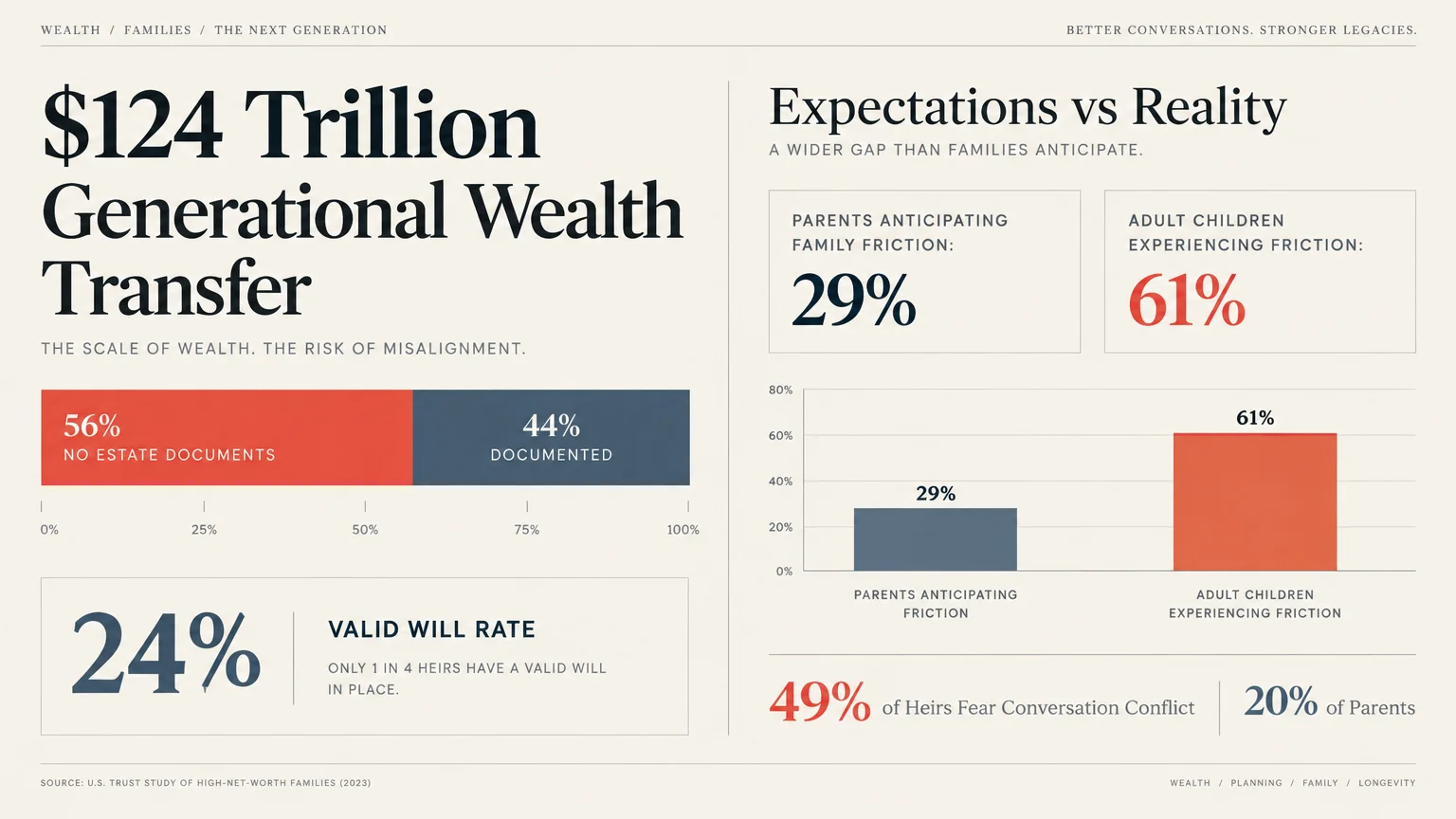
American families currently stand in the middle of a historic generational transition. Financial researchers project that older generations will transfer approximately $124 trillion to younger heirs and charitable causes over the coming decades.
Yet the vast majority of households remain unprepared for this massive wealth migration. According to Trust and Will’s 2026 Estate Planning Report, 56% of American adults have no estate planning documents in place.
Basic protections are reaching historic lows across the country. Caring.com’s 2025 study and LegalZoom’s 2026 report found that only 24% of American adults maintain a valid will, the lowest rate since tracking began.
When you pass away without clear directions, the state probate court decides who gets your assets. State intestacy laws divide property through rigid statutory formulas that ignore unique family dynamics and individual needs.
This lack of communication triggers significant emotional distress for grieving adult children. The 2026 Wells Fargo Wealth Transfer Study revealed that 61% of adult children reported negative experiences tied to inherited wealth.
In contrast, only 29% of parents anticipated that their estates would generate family friction. This sharp disconnect shows that parents routinely underestimate how easily inheritance disputes emerge.
The same study found that 49% of adult children believe inheritance conversations could trigger family conflict, compared to just 20% of parents. Silence breeds anxiety, leaving children to guess your true intentions.
Federal tax laws have also stabilized under the One Big Beautiful Bill Act. The federal lifetime estate and gift tax exemption sits at $15 million per individual, or $30 million for married couples.
While the top federal estate tax rate remains 40% above those thresholds, taxes rarely trigger family fallout. Unresolved childhood resentments, perceived favoritism, and poor communication spark bitter battles far more often than tax liabilities.

1. Separate Equal from Equitable Distributions
Parents often assume that dividing an estate into perfectly identical shares represents the fairest path forward. However, treating adult children identically can actually create profound resentment when their personal lives and contributions differ dramatically.
A 2026 study by Kiplinger and Morning Consult found that 71% of parents plan to split their assets equally. Yet only 50% of adult children want or expect an equal division.
Furthermore, one-third of adult children expect sibling friction over their eventual inheritances. Many heirs recognize that distributions based on financial need or caregiving contributions feel much fairer than a rigid mathematical split.
Consider a child who stepped away from their professional career to manage your medical appointments and daily household needs. Awarding that caregiver child the exact same inheritance as an uninvolved sibling often breeds justified anger.
Family businesses and operating real estate present a similar challenge. Liquidating a family business to pay off non-participating siblings can destroy the enterprise, while forcing siblings into unwanted co-ownership invites conflict.
You can balance these differences through life insurance policies that provide cash inheritances to uninvolved siblings. Meanwhile, you can transfer operational assets directly to the child running the family enterprise.
Equitable distribution focuses on fairness, individual circumstances, and practical reality. When you choose an equitable division over an identical split, document your reasoning so your children understand your motives.

2. Give While Living to Clarify Expectations
Transferring assets during your lifetime lets you enjoy the impact of your generosity while you are still here. It also removes the uncertainty that so often haunts post-mortem inheritance distributions.
Adult children increasingly favor early financial support over waiting decades for an uncertain bequest. The Kiplinger and Morning Consult survey revealed that 45% of adult children prefer receiving financial help now.
In contrast, only 14% of parents favor giving early aid, preferring to hold assets until death. This hesitation often holds back children during critical milestones like purchasing a first home or funding education.
You can take advantage of official IRS guidelines on gift taxes to distribute wealth without triggering tax penalties. The annual gift tax exclusion allows you to give up to $19,000 per recipient each year.
Married couples can combine their individual allowances to gift up to $38,000 per recipient without filing a gift tax return. These lifetime transfers steadily reduce the size of your future taxable estate.
The tax code also provides powerful exemptions for direct payments made for tuition or medical care. Payments made directly to educational institutions or medical providers do not count toward your annual gift limits.
Lifetime gifting provides an invaluable window into how your heirs handle financial windfalls. You can evaluate their maturity and refine your long-term estate structure if an heir demonstrates poor money management.

3. Neutralize Tangible Personal Property Disputes
Family feuds rarely begin over brokerage balances or real estate deeds. Instead, bitter disputes almost always erupt over sentimental heirlooms, photo albums, jewelry, and everyday personal keepsakes.
Financial assets come with straightforward dollar valuations that divide easily on paper. Sentimental possessions carry subjective emotional meaning, turning ordinary items into fierce battlegrounds for childhood validation.
You can prevent painful arguments by creating a legally recognized personal property memorandum. Most state probate systems allow you to attach this separate, flexible document directly to your primary will.
List specific items alongside the full name of the exact beneficiary you wish to receive them. You can update this personal list whenever you wish without paying an attorney to amend your will.
For items not explicitly named on your list, establish an objective selection mechanism in your instructions. A rotating draft system allows siblings to take turns choosing items one by one based on lottery numbers.
Instruct your executor to prohibit family members from removing items from your home before official inventory completion. Establishing firm ground rules prevents aggressive siblings from claiming disputed treasures before others arrive.
4. Protect Blended Families with Structured Trusts
Blended families encounter the most treacherous legal and emotional pitfalls in modern estate planning. Second marriages and stepchildren create competing loyalties that standard wills cannot resolve effectively.
A 2026 study by the Society of Trust and Estate Practitioners revealed that 71% of estate professionals identify blended family structures as a primary driver of inheritance disputes.
That study found that clashes between biological children and a surviving stepparent represent 68% of dispute cases. Unequal treatment among siblings drives 37%, while disputes between biological children and stepchildren trigger 27%.
Leaving your assets outright to a surviving spouse creates a significant risk of disinheriting your biological children. The surviving spouse can change their estate plan later, directing your wealth to their own biological heirs.
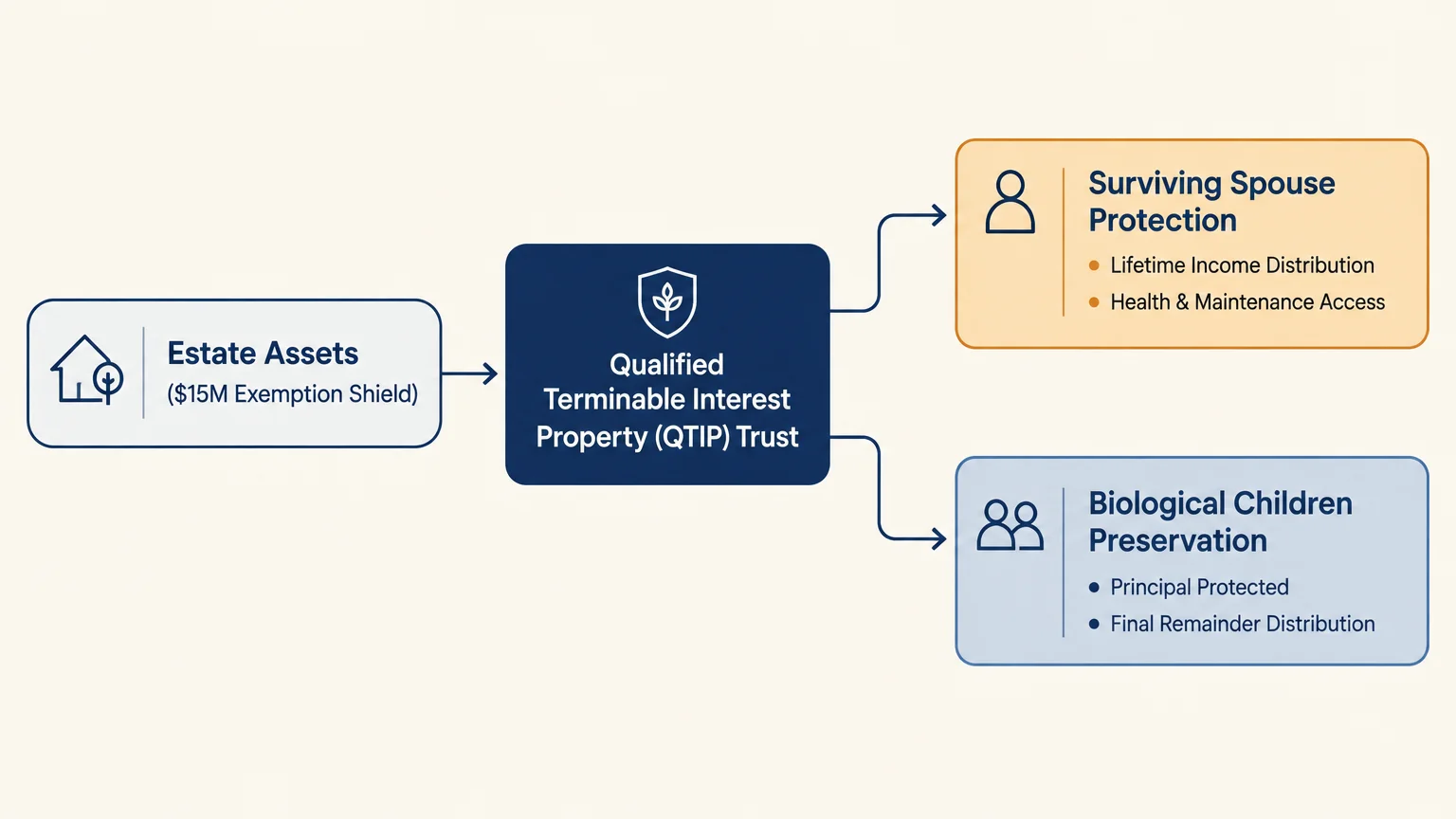
You can eliminate this danger by establishing a Qualified Terminable Interest Property trust, commonly called a QTIP trust. This specialized trust pays your surviving spouse investment income and discretionary principal throughout their lifetime.
Upon the surviving spouse’s death, the remaining principal passes exclusively to your biological children as you originally specified. This legal framework cares for your partner while protecting your biological family’s long-term legacy.

5. Appoint an Independent or Corporate Fiduciary
Naming your eldest child as your sole executor often ignites instant resentment among siblings. Brothers and sisters frequently view the chosen executor as an overreaching authority figure rather than an impartial administrator.
Estate administration requires grueling work, including gathering records, paying outstanding debts, and filing final tax forms. Grieving siblings often mistake administrative delays or legal requirements for personal hostility or financial secrecy.
You can remove this emotional friction by appointing an independent corporate trustee or private professional fiduciary. Bank trust departments, trust companies, and licensed fiduciaries administer estates with complete objectivity and professional compliance.
While professional fiduciaries charge management fees, their oversight prevents expensive, relationship-ending lawsuits among your heirs. They carry out your instructions strictly by the book, absorbing any potential frustration from beneficiaries.
Alternatively, consider appointing an adult child and an institutional firm as co-trustees. The professional firm manages complex paperwork, while your child contributes personal family insight without bearing legal exposure alone.
6. Audit and Update Beneficiary Designations
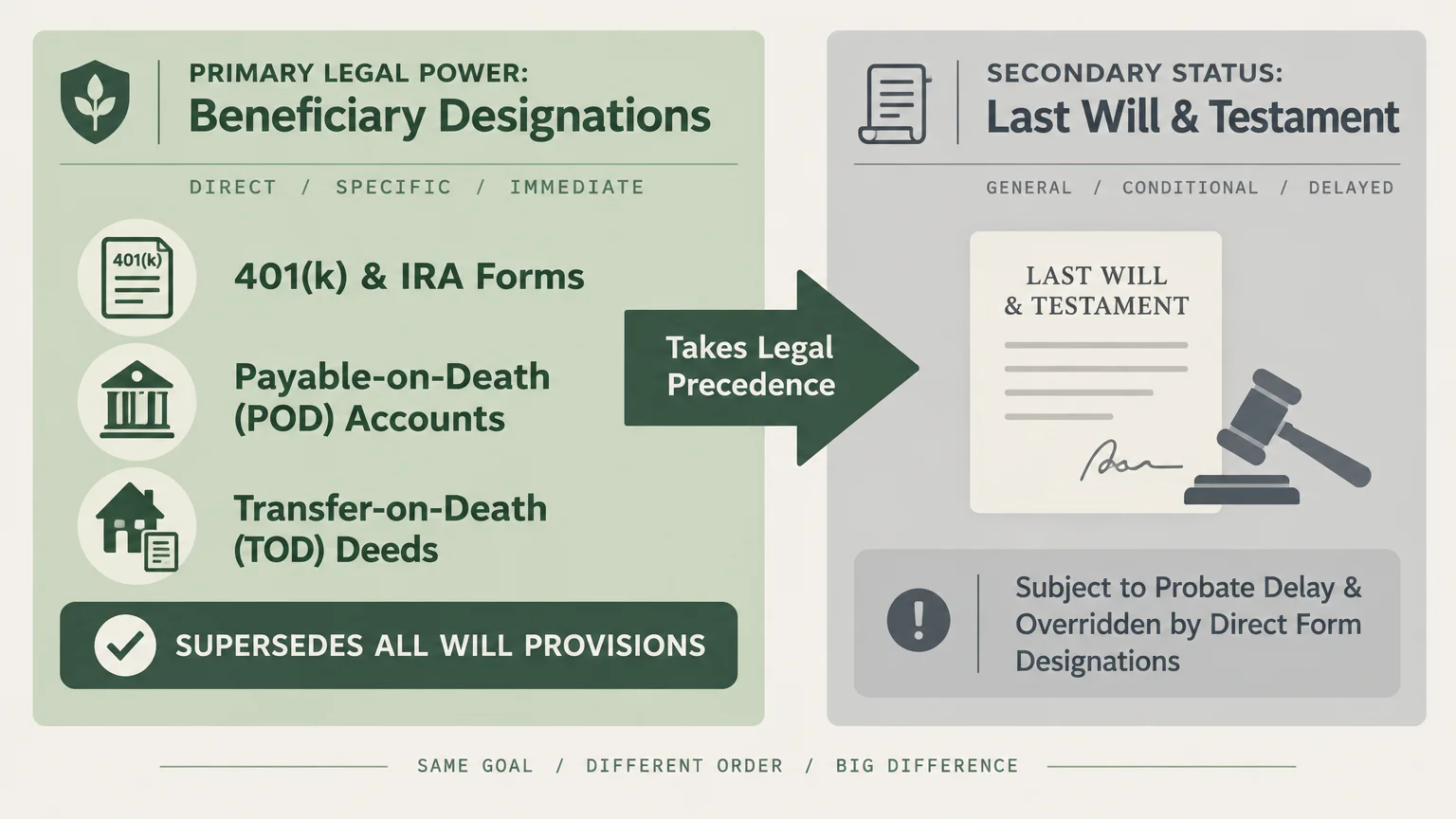
Many people mistakenly assume that their last will and testament governs all of their financial assets. In reality, contractual beneficiary designations completely supersede instructions written inside your will.
Retirement assets such as 401(k) accounts, IRAs, annuities, and life insurance policies transfer directly to named beneficiaries. Bank accounts with payable-on-death designations also bypass probate and transfer ownership automatically upon death.
If you named an ex-spouse decades ago, that individual legally receives those funds when you die. The probate court cannot override that valid contract, even if your will leaves everything to your current family.
Failing to name contingent beneficiaries can also drag your accounts into prolonged probate proceedings. If your primary beneficiary predeceases you without named backups, the asset defaults to your probate estate with severe tax implications.
Audit your financial accounts annually to ensure every beneficiary form reflects your current family structure. Coordinate these forms with your broader estate plan so your assets flow exactly where you intend.

7. Formalize Caregiver Compensation
When parents require daily care, one adult child almost always shoulders the heavy caregiving responsibilities. Without legal documentation, financial transfers to that caregiver often trigger intense suspicion among uninvolved siblings.
Siblings living out of state may accuse the caregiving child of financial exploitation or undue influence. These suspicions frequently boil over into ugly courtroom challenges once probate opens.
You can protect all parties by drafting a formal, written personal care agreement before providing compensation. Review reliable guidelines through AARP family caregiving resources to determine reasonable market rates for local elder care services.
The written contract must specify daily caregiving tasks, work schedules, and exact payment arrangements. Clear accounting records demonstrate to siblings and courts that every payment represented legitimate compensation rather than improper gifts.
Formal contracts also safeguard your future Medicaid eligibility if you eventually need nursing home care. Medicaid caseworkers examine financial transfers during a five-year lookback period, penalizing unwritten arrangements as unauthorized gifts.

8. Write a Non-Binding Letter of Intent
Formal estate documents speak exclusively in rigid legal language that offers zero emotional comfort to grieving survivors. A letter of intent, often called an ethical will, allows you to communicate with warmth and clarity.
This non-binding personal letter explains the emotional values, personal hopes, and practical reasoning behind your financial distributions. It provides the crucial context that legal contracts cannot offer.
Use your letter of intent to explain why you structured specific inheritances or trust provisions as you did. When heirs read your personal reasoning, they are far less likely to blame siblings for unequal allocations.
You can also use this space to record cherished family stories, life lessons, and individual blessings for each child. These personal words often bring far greater healing and closure than monetary inheritances.
Keep this letter alongside your primary estate documents where your executor can easily locate it after your death. Your heartfelt words can disarm lingering resentments before conflict ever takes root.

9. Facilitate Structured Family Wealth Meetings
Secrecy remains the single most common cause of family inheritance drama. When adult children discover unexpected estate terms while navigating grief, surprise quickly curdles into suspicion and bitter legal battles.
Trust and Will’s 2026 Death and Inheritance Report revealed that 1 in 4 Americans have never talked to their family about inheritance. Breaking this silence eliminates damaging assumptions.
That same study found that 38% of families hold inheritance discussions during ordinary visits or casual phone calls. Furthermore, Christmas represents the number one occasion that families actively avoid for these sensitive talks.
The Wells Fargo wealth transfer study showed that 93% of parents know their plans, but only 54% of adult children know what to expect. You must close this dangerous communication gap.
Schedule a dedicated family meeting during a calm, ordinary weekend rather than during emotional holiday gatherings. Select a neutral setting and distribute a clear, structured agenda in advance so everyone feels prepared.
Consider hiring an estate planning attorney or financial planner to facilitate the discussion neutrally. A professional presence keeps the conversation constructive, helping adult children ask candid questions without emotional friction.

10. Include No-Contest Clauses and Protective Thresholds
If you suspect an heir might challenge your estate plan, establish powerful legal disincentives against litigation. An in terrorem clause, commonly known as a no-contest clause, penalizes litigious beneficiaries directly.
This provision dictates that any beneficiary who challenges your will or trust in court forfeits their entire inheritance. The forfeited assets then pass automatically to your remaining heirs.
However, a no-contest clause only functions if you leave the potential challenger a meaningful sum of money. Disinheriting an angry child completely leaves them with nothing to lose by suing your estate.
Leave a substantial enough bequest that the heir faces a genuine, painful financial risk if their lawsuit fails. That calculated risk encourages disgruntled family members to accept your terms peacefully.
Review state enforceability guidelines using resources from American Bar Association estate planning guides. Some states limit no-contest enforcement if a contestant demonstrates probable cause, requiring careful legal drafting.
Expert Perspectives on Wealth and Family Dynamics
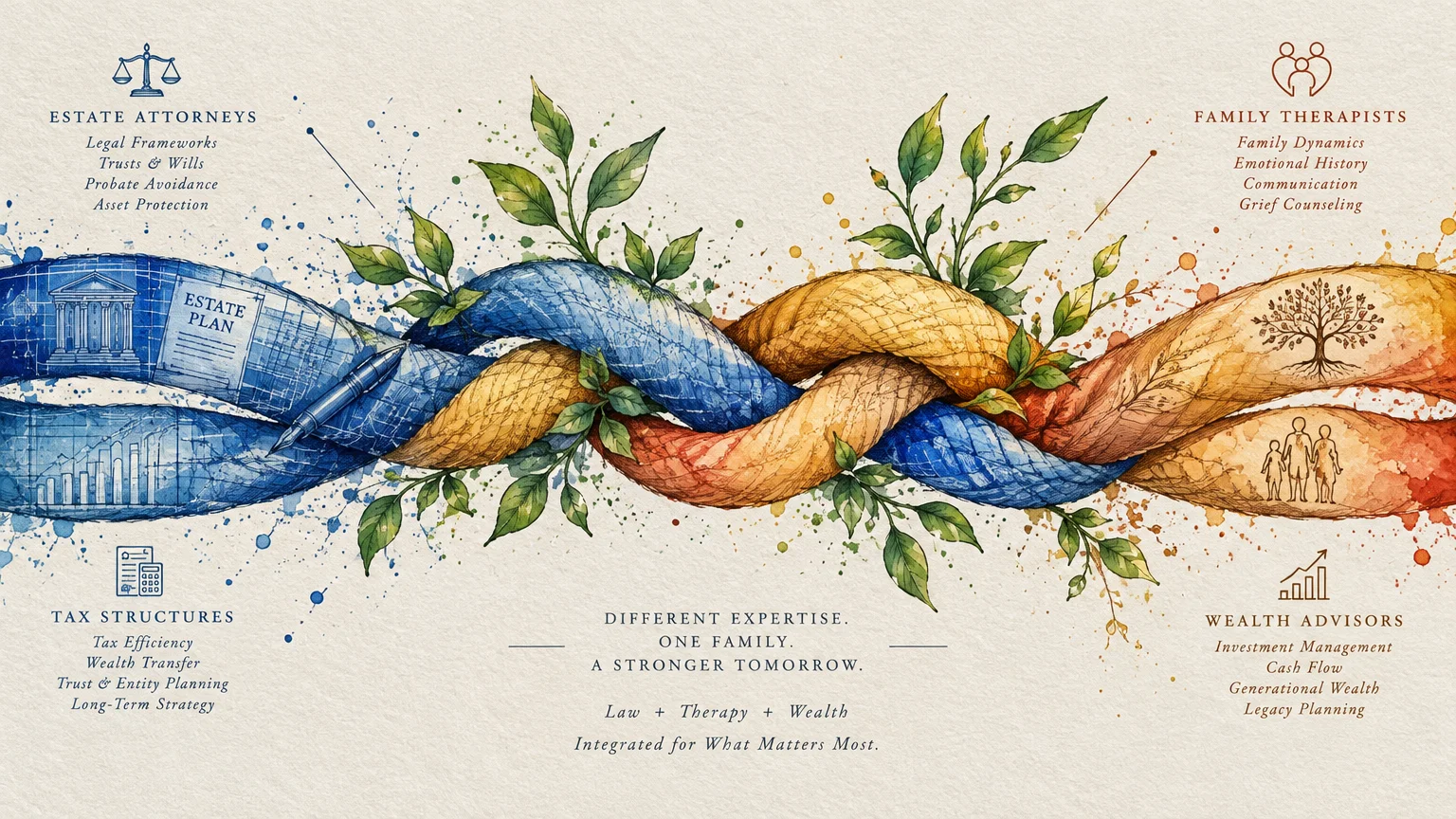
Seasoned financial advisors recognize that inheritance battles rarely stem from genuine financial need. Instead, they reflect lifelong sibling rivalries, birth-order dynamics, and lingering searches for parental approval.
Certified Financial Planner professionals emphasize that family equity matters far more than mathematical equality. Structuring an estate requires aligning your personal values with the real-world capabilities of your heirs.
Gerontologists point out that the death of a surviving parent shatters the family’s traditional stabilizing force. Without parental oversight, adult siblings often revert to childhood communication habits and unresolved emotional disputes.
When parents maintain complete secrecy, children project their own insecurities onto the estate plan. Proactive transparency dispels emotional confusion, giving your children the clarity they need to remain united.
Legal experts advise reviewing your complete estate plan every three to five years. Updating documents after divorces, births, deaths, or major tax changes keeps your legacy plan resilient and effective.

Safeguards Against Elder Scams and Benefit Cliffs
Protecting your legacy requires safeguarding your wealth from external predatory threats as well as internal family disputes. Aging retirees face unprecedented risks from sophisticated financial scammers and aggressive exploitation.
Establish a durable power of attorney that names co-agents or requires independent monitoring for significant transactions. This dual-layer oversight prevents dishonest caregivers or manipulative relatives from draining your accounts quietly.
You must also protect vulnerable heirs who depend on government assistance programs from devastating benefit cliffs. Leaving an outright cash bequest to an heir with disabilities can instantly terminate their essential benefits.
Review official asset limitations under Social Security Administration benefit rules for Supplemental Security Income and Medicaid. Exceeding minimal statutory resource thresholds can suspend vital income and specialized medical care.
Establish a third-party Special Needs Trust to hold your loved one’s inheritance safely. The trustee can pay for therapy, housing comforts, and education while preserving your heir’s public benefits.
Additionally, incorporate spendthrift trust provisions to protect adult children facing divorce, bankruptcy, or aggressive creditors. Spendthrift protections keep trust principal shielded from outside lawsuits, ensuring your money stays within your family.
Frequently Asked Questions
How do I handle an adult child who needs more financial help than others?
Unequal inheritances demand open, compassionate communication rather than secretive execution. Explain your thoughtful reasoning directly to all your children while you are healthy to prevent post-mortem resentment.
Consider placing that child’s inheritance inside a lifetime trust with an independent trustee overseeing distributions. A trust structure protects the funds from rapid depletion while ensuring steady, lifelong financial support.
Balance unequal cash distributions by gifting non-monetary assets or designating life insurance proceeds to other siblings. When children see your balanced approach, they understand that support does not equal favoritism.
What is the best way to divide a family vacation home without fights?
Deeding a vacation property to multiple siblings jointly almost always sparks bitter disagreements over repairs, operating expenses, and calendar scheduling. Disparities in usage and income quickly turn a beloved cabin into an emotional battleground.
Transfer the property into a limited liability company or dedicated trust with a clear operating agreement. Specify scheduling rules, maintenance funding responsibilities, and mandatory buyout terms for any sibling wanting to exit.
Provide an ongoing maintenance endowment through a life insurance policy to cover property taxes and major repairs. If your children cannot reach a consensus, sell the property and distribute the cash proceeds.
When should I talk to my adult children about their inheritance?
Start inheritance discussions while you are active, healthy, and capable of leading a relaxed conversation. Postponing these discussions until health emergencies occur forces families to make critical choices under immense emotional stress.
Avoid major holidays like Christmas or Thanksgiving, when family stress runs high. Instead, choose an ordinary weekend or schedule an organized family conference dedicated specifically to your estate planning goals.
You do not need to reveal exact portfolio numbers if you prefer financial privacy. Focus on sharing your overarching philosophy, appointed fiduciaries, and the location of your vital estate documents.
How can I protect my estate from an heir’s future ex-spouse?
Direct, outright inheritances often get commingled with joint marital property in joint checking or investment accounts. Commingling assets can subject your hard-earned wealth to division during a bitter divorce proceeding.
Shield your legacy by transferring inheritances into an irrevocable lifetime trust for your child’s benefit. Designate an independent trustee to oversee trust distributions, keeping ownership separate from your child’s personal marital estate.
Because your child does not own the principal directly, courts cannot treat trust assets as marital property. This structure insulates your wealth from divorce proceedings and preserves it for your bloodline.
Your 48-Hour Estate Harmony Checklist
Designing an airtight estate plan does not have to happen overnight. Taking small, purposeful steps today builds tremendous momentum and secures peace of mind for your entire family.
Within the next 48 hours, log into your retirement, banking, and life insurance accounts to check your beneficiary designations. Confirm that primary and contingent designations match your current family wishes and estate intentions.
Next, send a warm message to your adult children proposing an informal conversation about your long-term legacy goals. Breaking the silence early transforms estate planning from an awkward taboo into a unifying family milestone.
Your proactive leadership today spares your loved ones from unnecessary legal battles and fractured bonds tomorrow. Take that single step this week to ensure your wealth serves as a lasting family blessing.