
You can turn your lifetime of professional communication and storytelling experience into substantial supplemental income from home. Writing side gigs offer flexible opportunities to boost your monthly cash flow without sacrificing your hard-earned leisure time.
Many retirees discover that freelancing satisfies their desire for intellectual stimulation while protecting their retirement savings against persistent inflation. Seasoned wordsmiths possess valuable knowledge that businesses and private clients eagerly pay for.
Remote writing gives you complete control over your working hours, physical location, and creative energy. Here is your comprehensive guide to building a lucrative writing venture in retirement.
The Financial Landscape for Working Retirees
Earning extra income through writing can transform your retirement budget. However, you must navigate specific federal compensation metrics and earnings thresholds to protect your overall benefits.
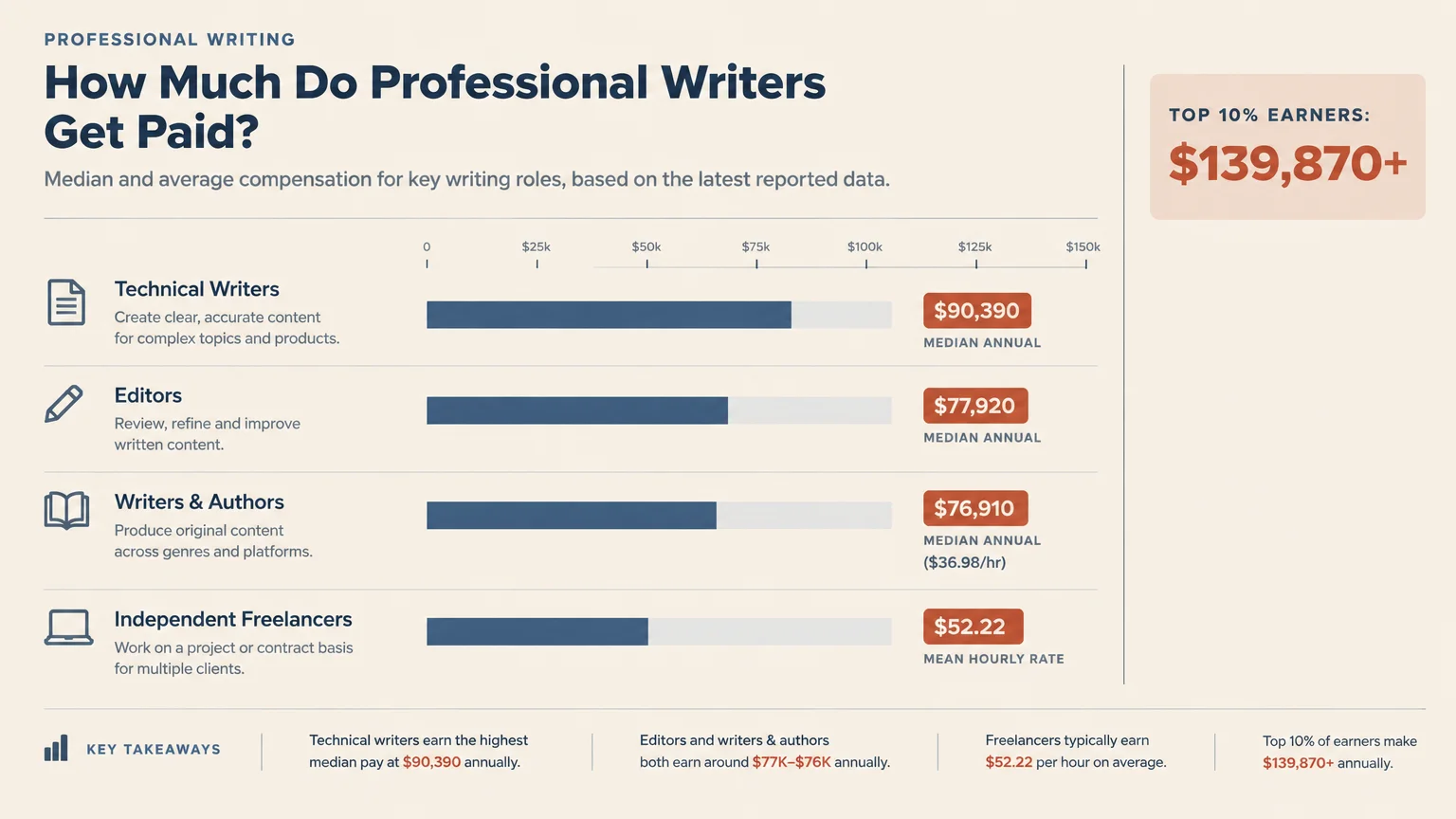
Data from the U.S. Bureau of Labor Statistics reveals that writers and authors command a median annual wage of $76,910. That rate translates to approximately $36.98 per hour for standard writing contracts.
Highly skilled independent writers often achieve far greater compensation. The top 10 percent of professional writers earn more than $139,870 annually.
For freelance specialists, industry data shows an even higher average return. Independent artists, writers, and performers earn an hourly mean wage of $52.22.
Editing and technical communication also offer substantial financial rewards for experienced seniors. Editors earn a median annual wage of $77,920, while technical writers earn $90,390.
Many retirees choose project-based pricing rather than billing by the hour. Quoting fixed rates for deliverables allows you to earn more as your writing speed increases.
Tracking your working hours against project revenue helps you calculate your true hourly rate. This habit ensures your freelance commitments align with your financial targets.
Social Security Earnings Limits to Watch
If you claim retirement benefits before reaching Full Retirement Age, you must monitor your freelance earnings. The Social Security Administration enforces annual earnings test limits that can temporarily withhold your monthly payments.
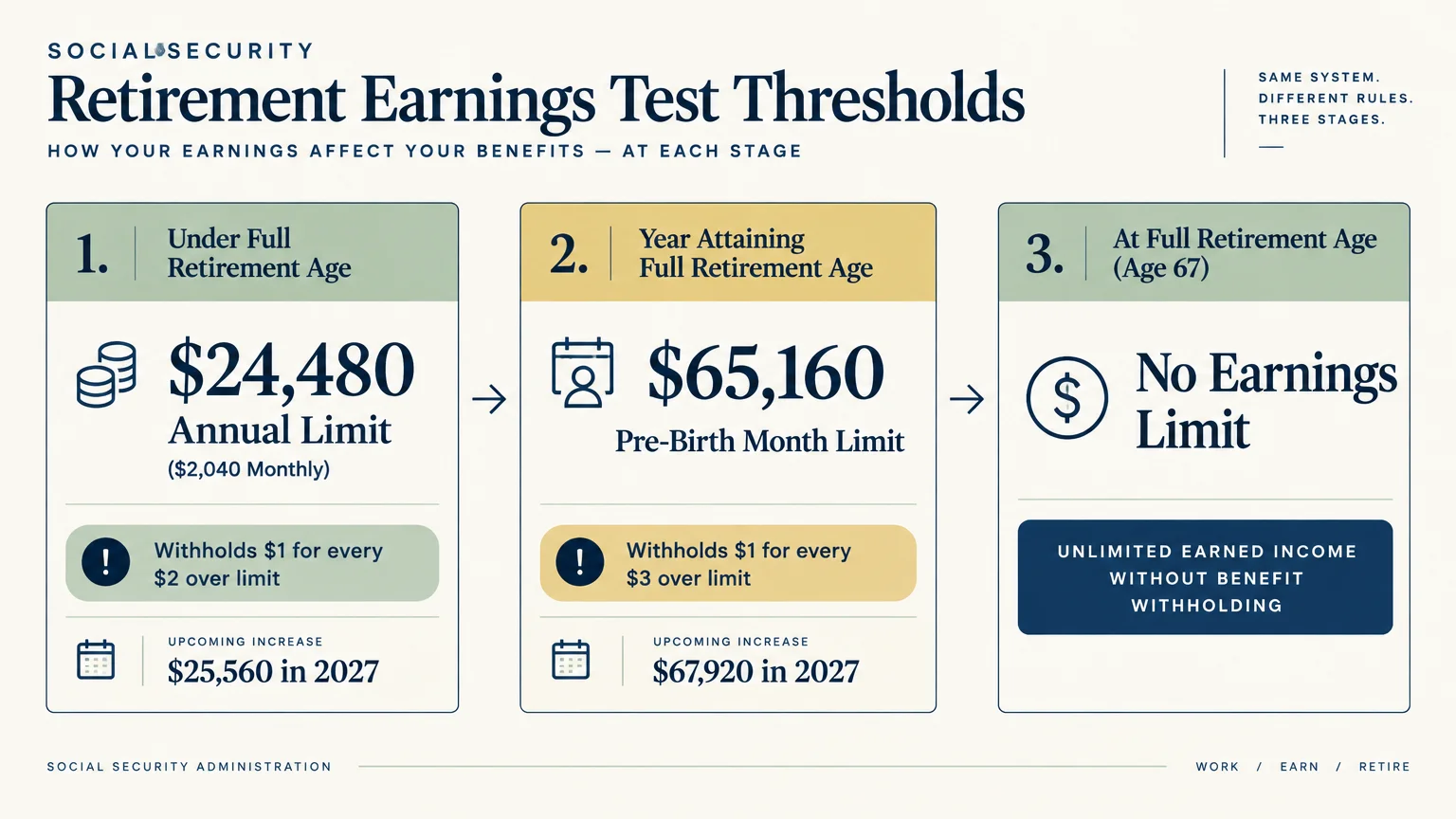
For retirees under Full Retirement Age throughout 2026, the annual earnings limit stands at $24,480. That figure equals a monthly threshold of $2,040.
If your net writing profit exceeds $24,480, Social Security withholds $1 of benefits for every $2 earned above the cap. In 2027, that earnings limit increases to $25,560.
The rules ease considerably during the specific calendar year you attain your Full Retirement Age. In 2026, the earnings cap rises to $65,160 for the months before your birth month.
For that transitional period, the government withholds only $1 for every $3 earned above the limit. In 2027, that transitional threshold jumps to $67,920.
Once you reach Full Retirement Age, which is age 67 for anyone born in 1960 or later, all earnings restrictions vanish. You can earn an unlimited amount without losing any Social Security income.
The Social Security Administration only counts earned income from wages or net business profits against these limits. Investment returns, pension payouts, and retirement account withdrawals do not count toward the earnings cap.
If the government withholds benefits due to excess earnings, those funds are not lost permanently. Social Security recalculates your monthly benefit upward once you achieve Full Retirement Age.
IRS Tax Reporting and 1099 Rules for Freelancers
Understanding your tax obligations ensures that your supplemental writing income remains profitable and compliant. Recent statutory changes have altered how freelance clients and payment processors report your earnings.
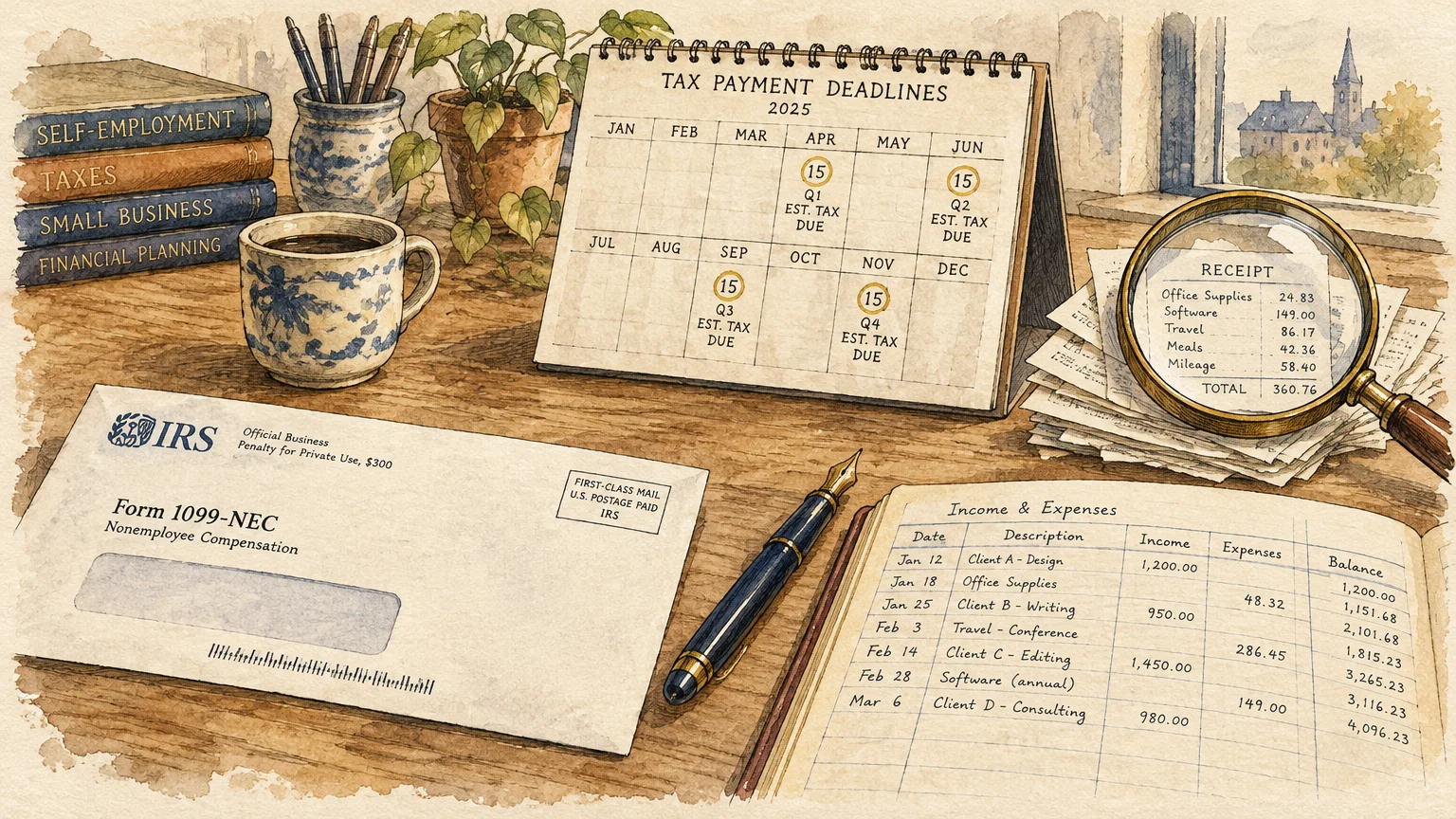
Under the One Big Beautiful Bill Act, clients only issue Form 1099-NEC when paying you $2,000 or more in a calendar year. This update raised the previous $600 reporting baseline.
Digital payment networks also operate under revised guidelines. The federal reporting threshold for Form 1099-K requires more than $20,000 in gross payments and more than 200 distinct transactions.
Regardless of whether clients send tax forms, you must report all freelance profits. The Internal Revenue Service requires you to report net self-employment earnings of $400 or more.
Self-employment income faces both standard income tax and self-employment taxes for Medicare and Social Security. Setting aside roughly twenty-five to thirty percent of each freelance check prevents unwelcome tax surprises.
Filing Schedule C alongside your annual Form 1040 allows you to report your gross writing revenue and claim allowable expenses. Accurate bookkeeping ensures you pay tax only on net profits rather than total client invoices.
Consulting an enrolled agent or certified public accountant familiar with self-employment rules can uncover valuable deductions. Professional tax guidance prevents costly reporting mistakes and ensures regulatory compliance.
Three Strategic Pillars for Freelance Longevity
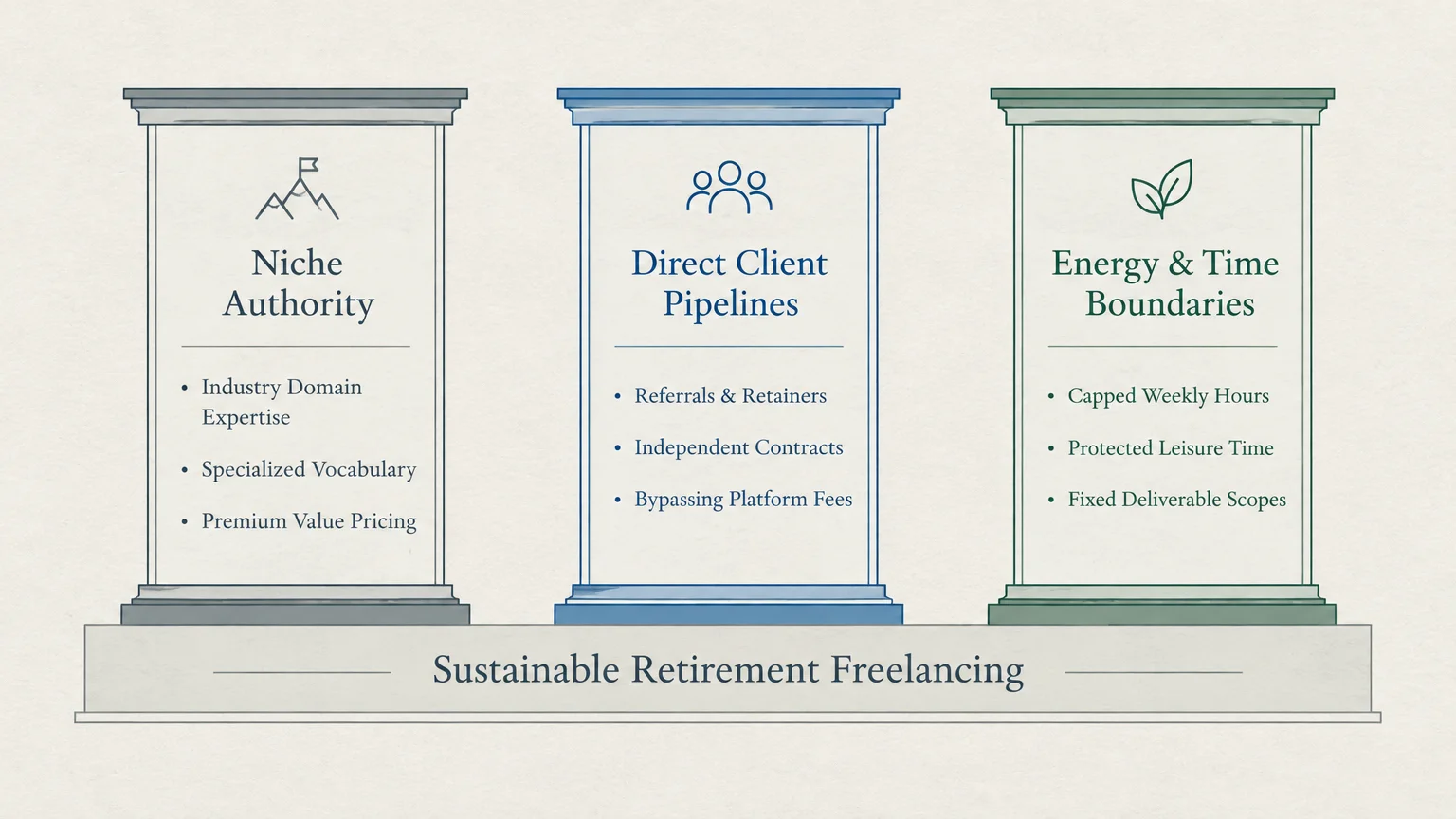
Building a successful writing venture in retirement requires a balanced operational framework. You must align your financial targets, daily routine, and physical well-being to achieve lasting satisfaction.
Income Planning and Expense Management
Establish a dedicated business bank account to separate your freelance cash flow from personal savings. This clear separation simplifies recordkeeping and substantiates business deductions during tax season.
You can deduct legitimate operational expenses like professional subscriptions, web hosting fees, and dedicated home office space. Lowering your taxable net earnings directly reduces your self-employment tax burden.
Making quarterly estimated tax payments protects you from IRS underpayment penalties. Schedule these payments in April, June, September, and January to stay ahead of your annual tax bill.
Ergonomics and Lifestyle Design
Working from home should enhance your retirement lifestyle rather than induce physical strain. Invest in an ergonomic office chair, an external monitor, and a supportive keyboard to safeguard your posture.
Set clear boundaries around your writing schedule so freelance assignments do not eclipse your leisure time. Limit your working calendar to specific days or blocks of morning hours.
Communicate your availability clearly to prospective clients from the initial consultation. Protecting your personal autonomy ensures your side gig remains an enjoyable pursuit.
Incorporate regular breaks into your writing sessions to prevent joint stiffness and eye strain. Brief walks between writing sessions keep your mind fresh and support physical circulation.
Dictation software provides an ergonomic alternative when arthritis or repetitive strain makes continuous typing uncomfortable. Modern voice-to-text tools allow you to produce draft manuscripts simply by speaking clearly.
Cognitive Health and Purpose
Writing stimulates neuroplasticity by forcing your brain to synthesize complex ideas, organize narratives, and solve verbal puzzles. Studies highlighted by AARP show that intellectual engagement bolsters cognitive reserve in older adults.
Freelancing also combats social isolation by connecting you with editors, business owners, and interview subjects across the country. Engaging with creative communities provides valuable purpose and camaraderie during retirement.
Engaging in regular research exposes you to novel concepts, industries, and perspectives. This continuous learning process stimulates creative problem-solving and keeps your mental faculties agile.
Retirement often brings an unexpected loss of professional identity and routine. Freelance writing reestablishes that sense of productivity while giving you a meaningful platform to share insights.

10 Lucrative Side Gigs for Retirees With a Talent for Writing
Your background and natural voice can unlock diverse freelance avenues. Explore these ten proven writing ventures to find the perfect fit for your schedule and financial goals.
1. Memoir and Family History Ghostwriting
Many families want to preserve ancestral stories, military experiences, or personal lessons for future generations. They often lack the time or writing skill required to assemble an engaging manuscript.
As a memoir ghostwriter, you interview clients, transcribe personal recordings, and shape raw recollections into polished chapters. This gig rewards empathetic listeners who know how to ask thoughtful questions.
You can market your services to local historical societies, senior living communities, and genealogical clubs. Ghostwriters typically charge per project, commanding substantial fees for completed legacy books.
You can offer tiered packages that include audio recording, edited transcripts, and bound keepsake books. Offering tangible family heirloom volumes allows you to charge premium prices for your time.
Interviewing older relatives also requires emotional patience and narrative intuition. Helping families capture their private heritage provides immense personal fulfillment for empathetic senior writers.
2. Grant Writing for Community Nonprofits
Charitable organizations and civic groups rely heavily on external grant funding to finance their daily community operations. However, small nonprofits rarely possess full-time staff dedicated solely to writing detailed funding applications.
If you can analyze complex application guidelines and craft compelling mission-driven arguments, grant writing offers consistent remote work. Your research identifies foundation opportunities and presents measurable community outcomes.
Organizations gladly pay premium rates to reliable contractors who produce winning grant proposals. This role delivers deep personal satisfaction because your words directly fund vital social programs.
Grant writers must track detailed application deadlines and organize supporting financial documentation meticulously. Successful applications require clear narrative descriptions of how funds will achieve measurable community outcomes.
You can connect with local animal shelters, community arts programs, and food banks to build an initial client roster. Many nonprofits prefer hiring seasoned freelancers over large, expensive consulting firms.
3. Technical and B2B Industry Writing
Decades of career experience in finance, engineering, legal compliance, or healthcare give you specialized domain expertise. Business-to-business companies pay handsomely for writers who already understand complex technical subject matter.
Technical writers command a median annual wage of $90,390 according to national labor figures. You can produce technical white papers, case studies, trade articles, and software user manuals.
Corporate clients prefer hiring experienced professionals because you require virtually no industry training. You can pitch trade magazines and corporate marketing departments directly through professional networking platforms.
Corporate marketing teams publish regular case studies to illustrate how their products solve customer problems. These case studies require interviewing enterprise clients and synthesizing data into narrative success stories.
B2B content contracts often provide steady, recurring assignments with reliable corporate payment schedules. Securing two or three corporate clients can produce consistent monthly income with minimal marketing effort.
4. Local Business Copywriting and Web Content
Neighborhood enterprises like accounting firms, remodeling contractors, and medical practices need fresh marketing copy. Many local business owners struggle to write effective website landing pages and customer email newsletters.
You can write informative blog posts that answer common customer questions and improve local search engine rankings. Your maturity and understanding of consumer psychology help you craft clear, persuasive sales messaging.
Building relationships with local small business owners provides steady monthly retainer work. A handful of local clients can deliver predictable cash flow year-round.
You can offer introductory audit packages where you evaluate a local business owner’s existing website copy and email sequences. Recommending actionable improvements builds immediate trust and leads to ongoing copywriting retainers.
Writing email newsletters for local service providers helps them retain past customers and attract repeat business. These recurring communication projects provide reliable monthly retainers for organized writers.
5. Independent Newsletter Publishing on Substack
If you prefer writing about personal passions rather than client assignments, newsletter publishing offers creative independence. Platforms like Substack allow you to build an audience and charge recurring subscription fees.
Substack charges no upfront fees to publish your newsletter. Once you enable paid subscriptions, the platform deducts a 10 percent service fee from your gross earnings.
Payment processing through Stripe adds an additional fee of 2.9 percent plus thirty cents per transaction. Stripe also applies a 0.7 percent fee for recurring billing management.
A newsletter covering specialized gardening, regional history, or financial planning can attract thousands of dedicated subscribers. Consistent weekly writing turns casual readers into loyal recurring patrons.
Successful newsletter writers focus on narrow subject niches where they hold distinct personal authority or passionate interest. Sharing unique life lessons, niche hobbies, or historical deep dives attracts devoted readers.
You can offer free weekly editions while reserving specialized deep dives or community discussions for paying members. This hybrid model steadily expands your subscriber base while rewarding your most loyal supporters.
6. Freelance Proofreading and Editorial Review
If you spot grammatical errors in restaurant menus and published books, editorial review matches your eye for detail. Proofreaders polish manuscripts, academic research papers, and corporate reports before public release.
Editors earn a median annual wage of $77,920, reflecting the high professional demand for clean written communication. You can focus strictly on sentence flow, punctuation accuracy, and tonal consistency.
Editorial work requires minimal self-promotion once you establish relationships with independent book authors and content agencies. You can review manuscripts from anywhere using standard document editing software.
Specializing in specific publishing formats like non-fiction manuscripts, academic dissertations, or self-published fiction can distinguish your editorial services. Authors value proofreaders who understand genre conventions and industry style manuals.
You can start by proofreading manuscripts for independent writers in online self-publishing communities. Satisfied authors often return for multiple books and refer fellow writers to your proofreading service.
7. Self-Publishing eBooks on Amazon KDP
Publishing your own books no longer requires traditional literary agents or costly print runs. Amazon Kindle Direct Publishing lets you upload manuscripts and sell eBooks to millions of readers globally.
Amazon pays authors royalty rates of either 35 percent or 70 percent on digital book sales. To qualify for the lucrative 70 percent royalty tier, price your eBook between $2.99 and $9.99.
Retirees often publish cozy mystery novellas, specialized how-to manuals, or personal retirement memoirs. A published book collection produces passive royalty payments month after month.
Amazon also provides free print-on-demand services, enabling you to sell paperback versions without holding physical inventory. Paperback editions appeal to older readers who prefer physical reading copies.
Investing in an eye-catching cover design and writing a compelling sales blurb significantly boosts digital book sales. Consistent genre releases help you build a profitable backlist over time.
8. Writing for the Medium Partner Program
Medium offers an established digital readership for personal essays, cultural commentary, and professional advice. Writers earn recurring revenue based on how long paying members spend reading their articles.
To enroll in the Medium Partner Program, you must hold an active Medium membership. That membership costs $5 per month or $50 per year.
High-performing articles continue to generate passive revenue long after initial publication. This platform offers an ideal training ground to test story concepts and develop a dedicated writing voice.
Publishing your work in established Medium publications exposes your stories to thousands of existing readers immediately. Editors of these publications curate strong submissions and feature them prominently across the platform.
Medium readers appreciate authentic, vulnerable reflections on aging, career lessons, and personal philosophy. Your life experience gives you a natural storytelling advantage over younger writers on the platform.
9. Curriculum and Educational Content Writing
Educational publishing firms, vocational training programs, and online academies constantly need structured learning materials. They look for experienced writers to draft test questions, syllabus modules, and instructional handbooks.
Former educators and corporate trainers thrive in this analytical environment. You can break complex academic theories into accessible, bite-sized lessons for adult students or young learners.
Many educational writing jobs operate on flexible contract terms with predetermined milestones. You receive clear assignment rubrics and complete the deliverables on your personal schedule.
Corporate training departments pay writers to develop onboarding handbooks, compliance tutorials, and professional development seminars. Your corporate background helps you create realistic business scenarios that resonate with adult learners.
Educational writing assignments often provide clear editorial rubrics and predictable payment terms. This structured workflow suits writers who prefer precise guidelines over open-ended creative assignments.
10. Freelance Feature and Travel Journalism
If your retirement includes frequent travel or unique hobbies, monetize those experiences through freelance feature writing. Regional tourism magazines, alumni publications, and specialty websites buy original destination features and personal essays.
Editors look for vivid sensory descriptions, practical itinerary tips, and compelling human stories. Pitching brief story synopses allows you to secure paid assignments before packing your bags.
While travel writing requires pitching persistence, it turns personal vacations into income-producing adventures. You can also negotiate press passes or travel perks that reduce your vacation costs.
Pitching regional lifestyle magazines allows you to cover local cultural festivals, culinary traditions, and historic landmarks. Editors frequently buy informative profiles highlighting unique artisans and community leaders in your area.
Writing travel articles requires providing practical advice, such as accessible transportation routes, lodging recommendations, and budget tips. Readers appreciate actionable travel guidance written from an experienced perspective.

Navigating Online Freelance Marketplaces
Digital marketplaces connect independent writers with global clients seeking immediate talent. However, you must account for platform fee structures when calculating your net project earnings.
Upwork charges freelancers a flat 10 percent service fee across all client billings. This deduction applies automatically to your hourly contracts and fixed-price milestones.
Fiverr operates under a different financial model, charging a flat 20 percent commission fee on all completed orders. Factor these transaction fees into your pricing proposals to protect your hourly profit margins.
Crafting a focused profile that highlights specific industry credentials attracts higher-paying clients on freelance marketplaces. Avoid listing generic skills in favor of concrete solutions you provide to businesses.
Submitting tailored project proposals that directly address a client’s posted challenge sets you apart from automated applications. Clients appreciate articulate, professional communication from experienced writers.
Many successful retirees use these platforms to gather initial client reviews and portfolio samples. Eventually, you can transition toward direct client referrals that bypass marketplace commissions entirely.

Expert Perspectives on Second-Act Writing Careers
Financial and health professionals increasingly view freelancing as a pillar of successful retirement planning. Purposeful work provides tangible financial insulation while enhancing personal well-being.
Certified Financial Planner professionals emphasize the tax flexibility that freelance writing delivers to older households. Strategic business deductions can offset self-employment taxes while allowing retirees to fund solo retirement plans.
Gerontologists note that creative writing reinforces cognitive health far better than passive entertainment. Maintaining deadlines and organizing narratives sharpens executive function and short-term recall.
Retired professionals frequently report that freelancing restored their sense of structure and daily accomplishment. Earning independent income confirms that your accumulated knowledge remains valuable in the modern economy.
Safeguarding Your Retirement: Scams, Contracts, and Healthcare Pitfalls
Entering the freelance marketplace requires healthy skepticism and careful risk management. Protecting your identity, personal savings, and healthcare benefits must remain your highest operational priority.
Spotting Remote Work Scams
Dishonest operators frequently target older adults searching for flexible home-based employment. Avoid any client who asks for upfront training fees or sends large advance checks to purchase office equipment.
Legitimate freelance clients never ask you to wire funds or provide sensitive bank login details. Conduct background research on potential clients before signing agreements or delivering work.
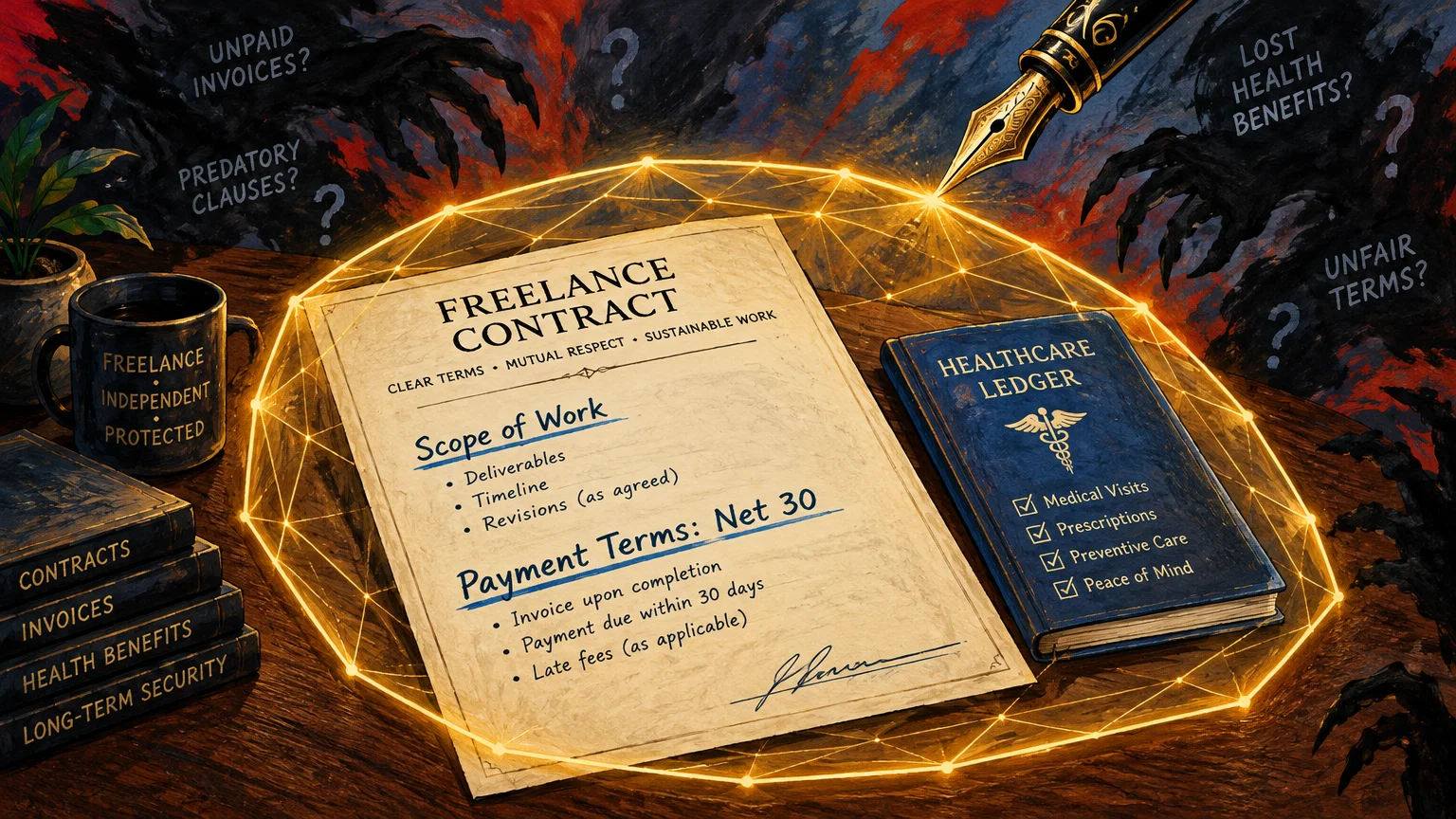
Demand a written agreement detailing project scope, revision limits, and payment deadlines before starting any assignment. Requiring a fifty percent upfront deposit from new clients safeguards your time and effort.
Include clear clauses covering scope creep in your written contracts so clients cannot demand unpaid extra revisions. Charging specific fees for additional draft rounds protects your working hours from expanding unexpectedly.
Establish clear kill fee provisions in your client contracts to protect your income if a project is canceled midstream. A standard kill fee guarantees payment for work completed prior to cancellation.
Avoiding Medicare Premium Increases
Significant freelance profits can inadvertently trigger higher premiums for your healthcare coverage. The federal Medicare program assesses surcharges based on your modified adjusted gross income from two years prior.
These surcharges, known as the Income-Related Monthly Adjustment Amount, raise your monthly Part B and Part D costs. Exceeding income thresholds by even one dollar activates higher monthly premium brackets.
Coordinate with a qualified tax advisor to monitor your combined net earnings, pension income, and investment distributions. Managing your freelance volume ensures you avoid triggering sudden healthcare cost spikes.
Frequently Asked Questions About Retirement Writing Gigs
Aspiring senior writers often face specific administrative and practical questions before launching their freelance ventures. Here are answers to common concerns regarding retirement writing careers.
How does freelance writing income impact my Social Security benefits?
If you reached Full Retirement Age, you can earn unlimited writing income without reducing your benefits. Social Security pays your full benefit check regardless of your freelance earnings.
If you collect benefits before Full Retirement Age, annual earnings limits apply to your net self-employment profit. In 2026, Social Security withholds $1 for every $2 you earn above $24,480.
Do I need to pay quarterly estimated taxes on my writing earnings?
You must make quarterly estimated payments if you expect to owe at least $1,000 in federal taxes. Net self-employment income of $400 or more requires reporting to the IRS.
Making regular quarterly payments protects you from underpayment penalties at tax time. A tax professional can help calculate accurate quarterly vouchers based on your projected freelance profit.
Which writing gig is easiest to start with no published portfolio?
Local business copywriting and proofreading offer the fastest entry points for beginners without published clips. You can demonstrate your skills immediately by reviewing existing website copy or drafting sample marketing emails.
Highlighting past professional workplace communication also reassures prospective clients about your reliability. Most small business owners care more about clear communication and punctuality than formal literary credentials.
Will freelance writing income affect my Medicare Part B and Part D premiums?
Writing income increases your modified adjusted gross income, which can trigger Medicare premium surcharges. These Income-Related Monthly Adjustment Amount brackets apply two years after the tax year in which you earn the income.
If your total income remains below federal surcharge thresholds, your Medicare premiums stay at standard rates. Monitor your total income carefully to prevent unexpected healthcare fee increases.
Your 48-Hour Starting Plan
Launching a profitable writing side gig does not require months of exhaustive preparation. Taking small, focused steps over the next forty-eight hours will generate immediate momentum.
Choose two writing niches that align with your personal background or favorite hobbies today. Draft two concise writing samples that demonstrate your command of tone, clarity, and narrative structure.
Reach out to three local business owners or research three non-profit grant opportunities before the weekend arrives. Your second act as an independent writer begins with a single proactive conversation.