
Knowing your retirement contribution ceilings for 2027 lets you shield more income from taxes and accelerate your nest egg. Recent policy shifts under the SECURE 2.0 Act offer older workers unprecedented opportunities to stash away record amounts.
Staying ahead of these adjustments protects your wealth against lingering inflation and unexpected market swings. Whether you are still working or easing into retirement, strategic saving ensures your money works as hard as you did.
From enhanced workplace plan catch-ups to finalized health account caps, the rules reward proactive savers. Here are the essential contribution limits and strategic moves you need to plan your financial roadmap for 2027.

Navigating the 2027 Retirement Policy Shifts
Economic indicators tracked by the Bureau of Labor Statistics directly determine annual cost-of-living adjustments across federal retirement programs. These adjustments help your savings preserve purchasing power as consumer prices fluctuate over time.
The SECURE 2.0 Act continues its multi-year rollout, introducing structural changes that reshape how pre-retirees accumulate wealth. While the official autumn adjustment announcements confirm exact figures, statutory formulas already establish clear projections for the coming tax year.
Understanding these thresholds early allows you to structure your household cash flow before the new calendar year starts. You avoid the stress of last-minute financial scrambles while capitalizing on new tax-saving incentives.
A well-timed contribution strategy also keeps your taxable income within target tax brackets. Every dollar you shelter today compounds tax-deferred, providing reliable financial security throughout your retirement years.
Limit 1: 401(k), 403(b), and TSP Elective Deferrals
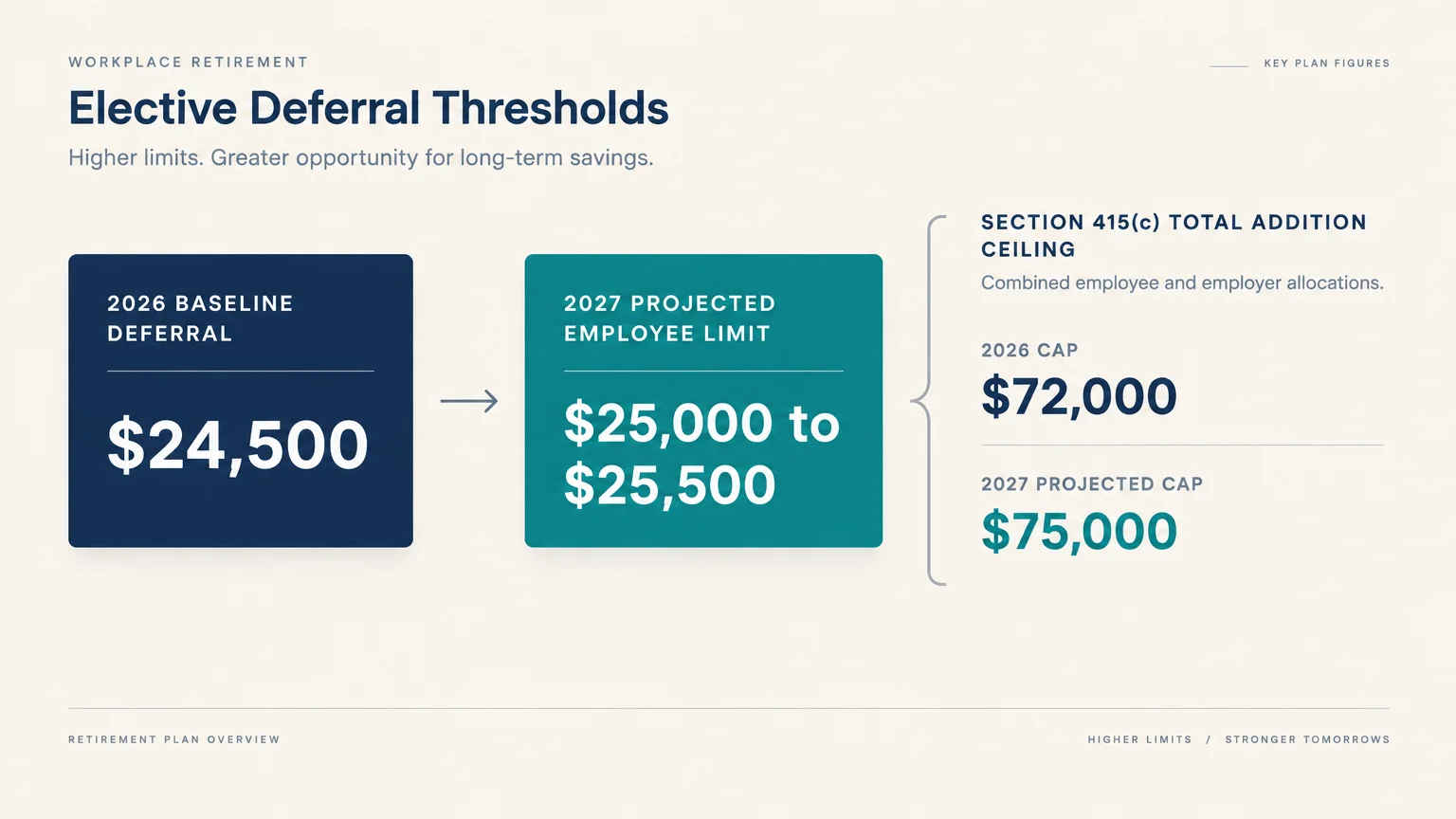
Workplace retirement plans remain the primary wealth-building tool for millions of American employees. For 2026, the standard employee elective deferral baseline stands at $24,500.
Actuarial projections from Milliman indicate that the 2027 employee elective deferral cap will rise to either $25,000 or $25,500. This increase reflects statutory inflation indexing designed to keep personal savings aligned with broader living costs.
This annual limit applies across all standard defined-contribution accounts, including private 401(k) plans, nonprofit 403(b) accounts, and the federal Thrift Savings Plan. Your personal contributions reduce your gross taxable wages dollar-for-dollar on your Form W-2.
Employer matching contributions and profit-sharing allocations provide an additional savings boost beyond your salary deferrals. Under Internal Revenue Code Section 415(c), the combined employer and employee contribution limit is projected to reach $75,000 for 2027.
That comprehensive limit represents a notable jump from the $72,000 ceiling established for 2026. High-earning professionals and business owners with generous profit-sharing plans can leverage this cap to accumulate substantial assets.
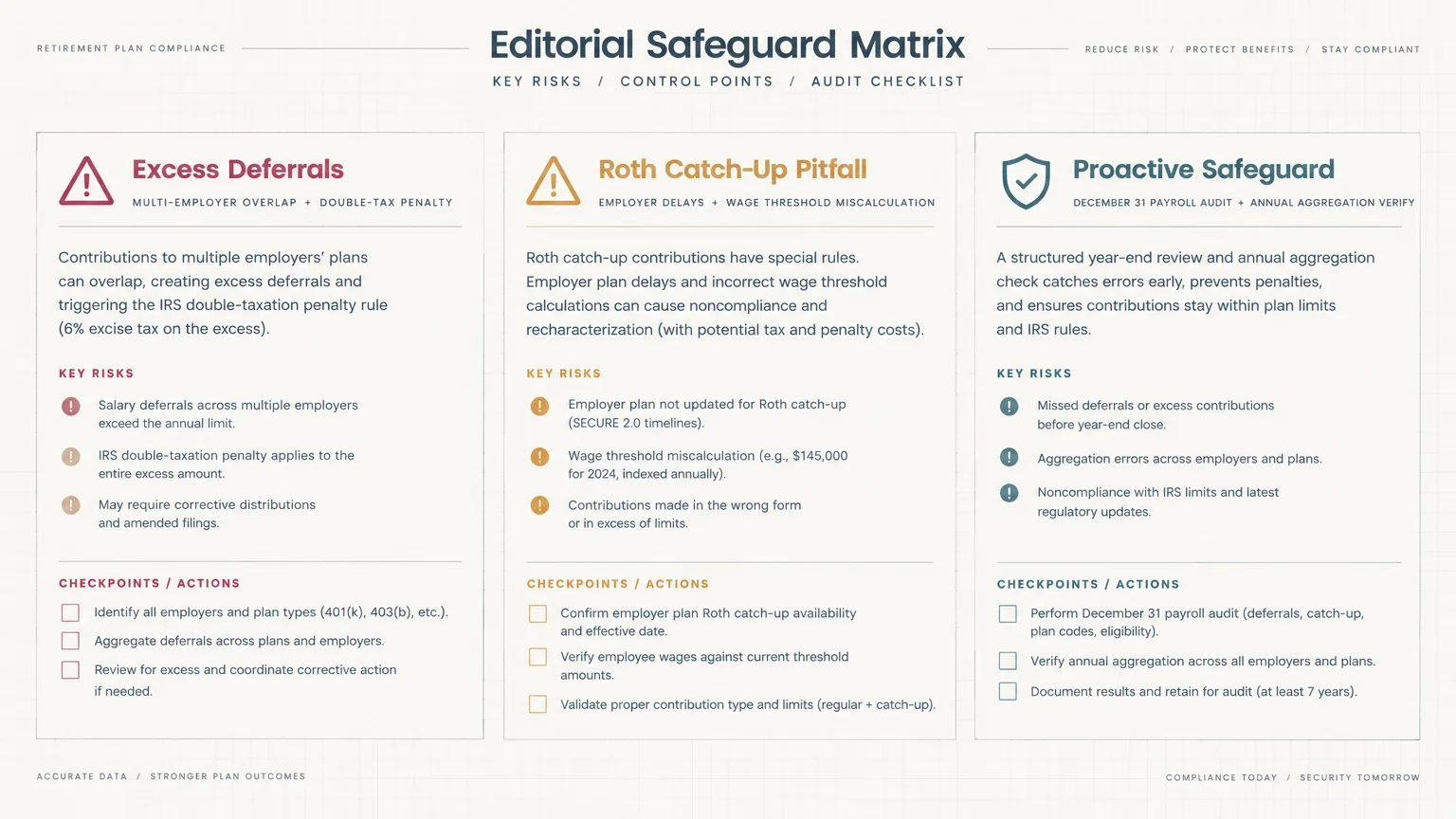
If you participate in multiple workplace retirement plans during the year, remember that the individual employee deferral limit covers all accounts combined. You must monitor your aggregate contributions to avoid costly excess deferral penalties.
Limit 2: Workplace Catch-Up and the Super Catch-Up for Ages 60 to 63
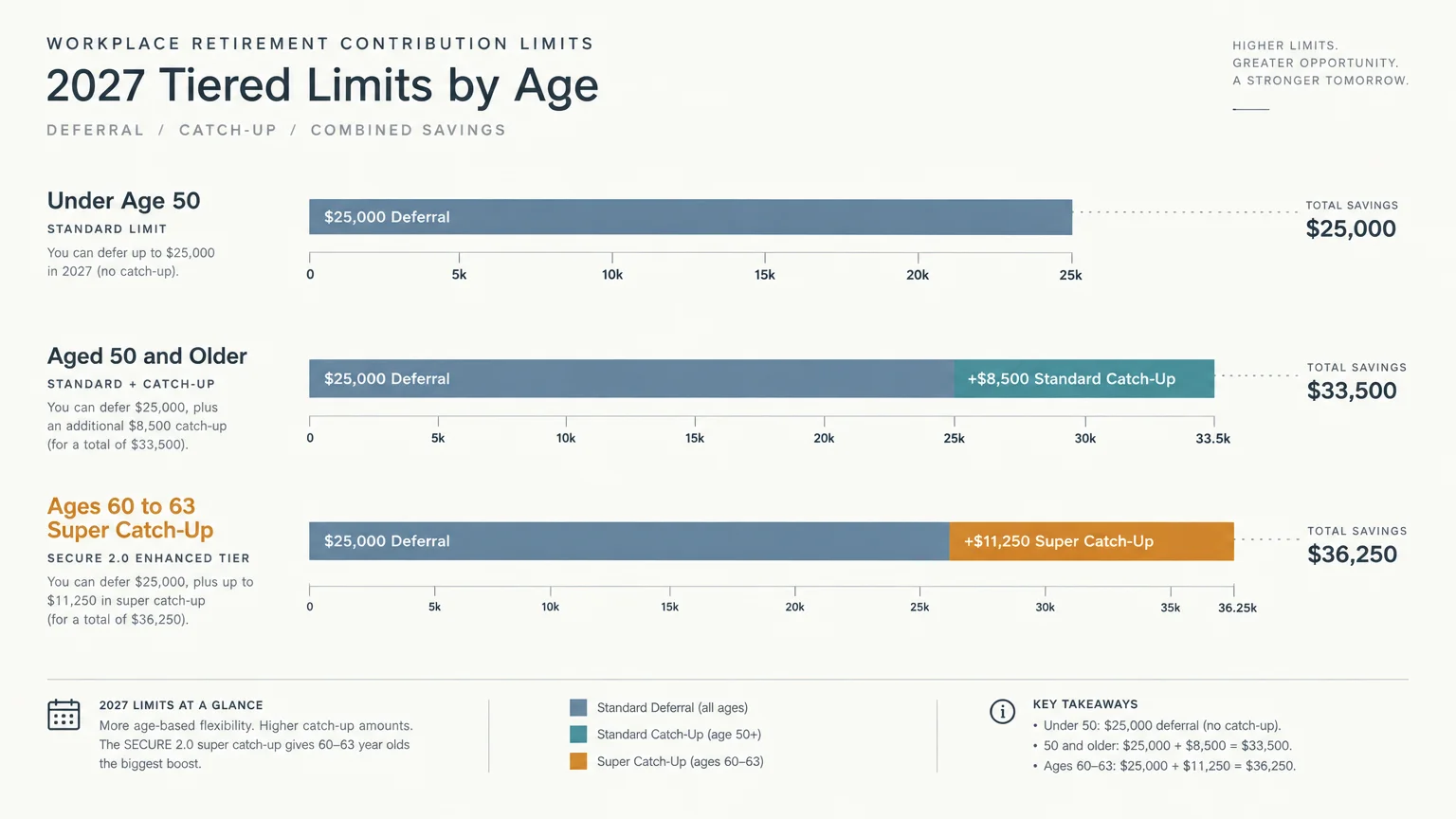
Older workers carry distinct savings advantages designed to help them bridge late-career funding gaps. The standard catch-up contribution for employees aged 50 and older is projected to rise to $8,500 for 2027.
Combining the standard catch-up with the baseline employee deferral allows workers aged 50 and above to save between $33,000 and $34,000. This reliable boost lets you direct late-career wage gains straight into tax-advantaged accounts.
The landmark super catch-up provision established by SECURE 2.0 delivers an even larger savings opportunity. Employees who attain age 60, 61, 62, or 63 during the calendar year qualify for an expanded catch-up tier.
By statute, this enhanced limit equals the greater of $10,000 or 150 percent of the standard age 50 catch-up limit. After reaching $11,250 in 2026, the super catch-up is projected to increase to $11,750 for 2027.
A 62-year-old employee could defer over $36,000 directly from salary through this provision alone. When paired with employer contributions, total plan additions for eligible workers can climb to $86,750.
Once you reach age 64, your allowed catch-up reverts to the standard age 50 limit. Planning your contributions around these exact four calendar years maximizes your final working accumulation phase.
Limit 3: The Mandatory Roth Catch-Up Wage Threshold
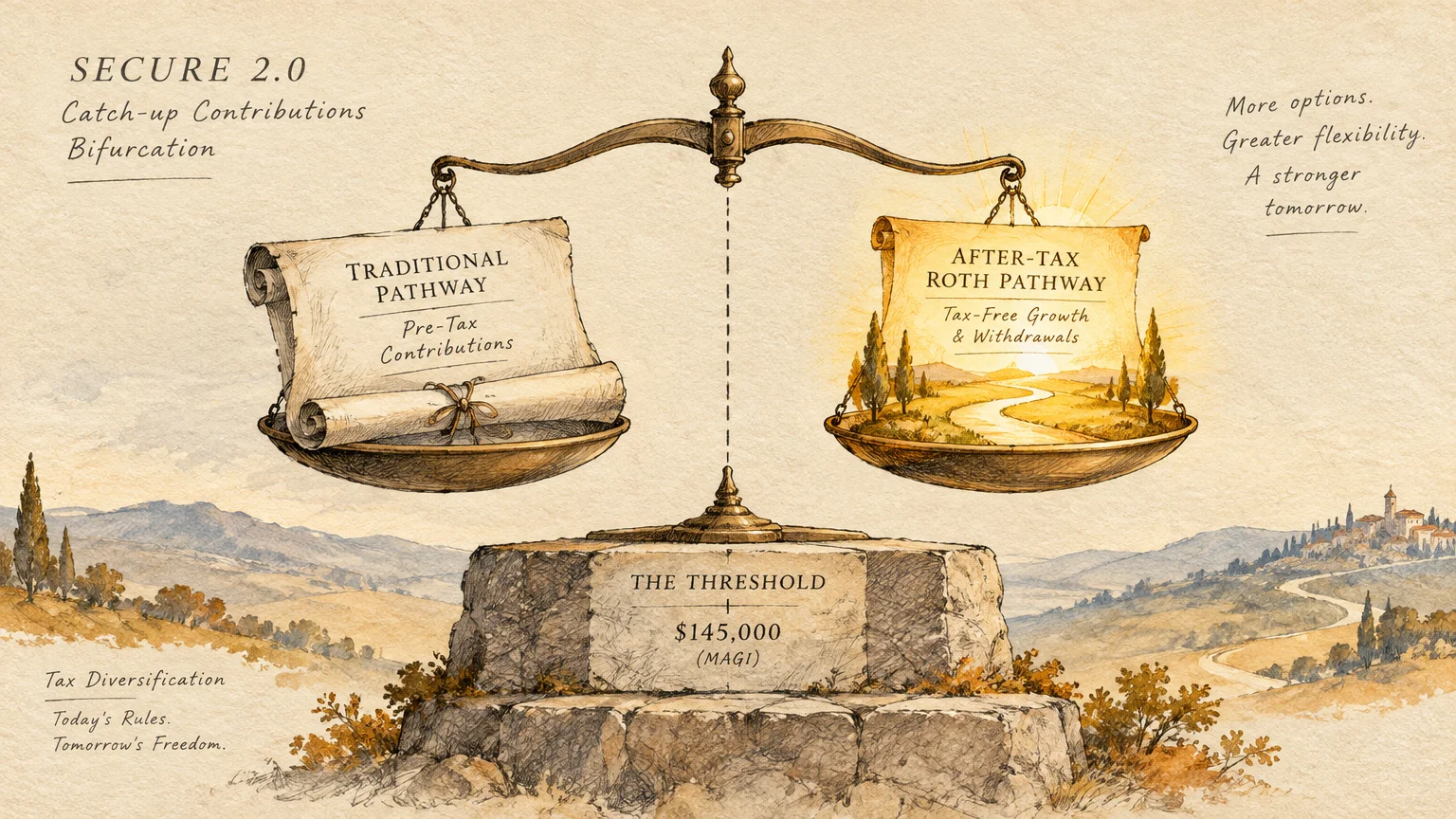
A fundamental structural change takes full mandatory effect for workplace plan catch-up contributions in 2027. Under this federal mandate, certain high-earning older workers can no longer make pre-tax catch-up deposits.
If your prior-year FICA wages from your employer exceeded $150,000, all subsequent catch-up dollars must enter an after-tax Roth account. The original $145,000 statutory base was increased to $150,000 for 2026 and continues annual inflation indexing for 2027.
The wage test evaluates Box 3 Social Security wages on your prior-year Form W-2 from your current workplace. If you switched employers mid-year, earnings from your previous employer do not count toward your new employer’s calculation.
Directing catch-up contributions into a Roth bucket eliminates the upfront tax deduction for those specific dollars. However, your principal and investment earnings will grow completely tax-free for the rest of your life.
You must confirm that your employer’s retirement plan actually maintains a designated Roth option. If an employer does not support Roth contributions, federal law prohibits high earners from making any catch-up contributions whatsoever.
Consult your human resources representative to review plan documents and payroll settings before January. Preparing your payroll allocations early prevents administrative rejections and unintended contribution halts.

Limit 4: Traditional and Roth IRA Contribution Maximums
Individual Retirement Accounts provide essential flexibility for workers seeking tax efficiency outside workplace programs. For 2026, the baseline annual IRA contribution limit sits at $7,500 for individuals under age 50.
Because IRA limits adjust in specific $500 increments, projections indicate the baseline limit will likely remain at $7,500 for 2027. A higher year-end inflation calculation could potentially trigger an adjustment to $8,000.
Catch-up contributions for IRA owners aged 50 and older are now permanently indexed for inflation under SECURE 2.0. The catch-up limit sits at $1,100, permitting older savers to contribute a total of $8,600 across their IRAs.
Remember that you have until April 15, 2027, to complete your IRA contributions for the 2026 tax year. This grace period allows you to calculate your final tax liability before designating your savings year.
Married couples where one spouse does not earn income can utilize a spousal IRA to double their family savings. As long as one partner generates sufficient earned income, the couple can fund two separate accounts up to $17,200.
Income phaseout ranges restrict direct contributions to Roth IRAs for higher-earning households. Savers whose modified adjusted gross income exceeds these limits can explore backdoor Roth conversions to secure long-term tax exemption.
Limit 5: Health Savings Account (HSA) Finalized Thresholds
The Internal Revenue Service has already released official 2027 Health Savings Account parameters in Revenue Procedure 2026-24. These finalized numbers provide absolute clarity for healthcare budgeting and pre-retirement wealth accumulation.
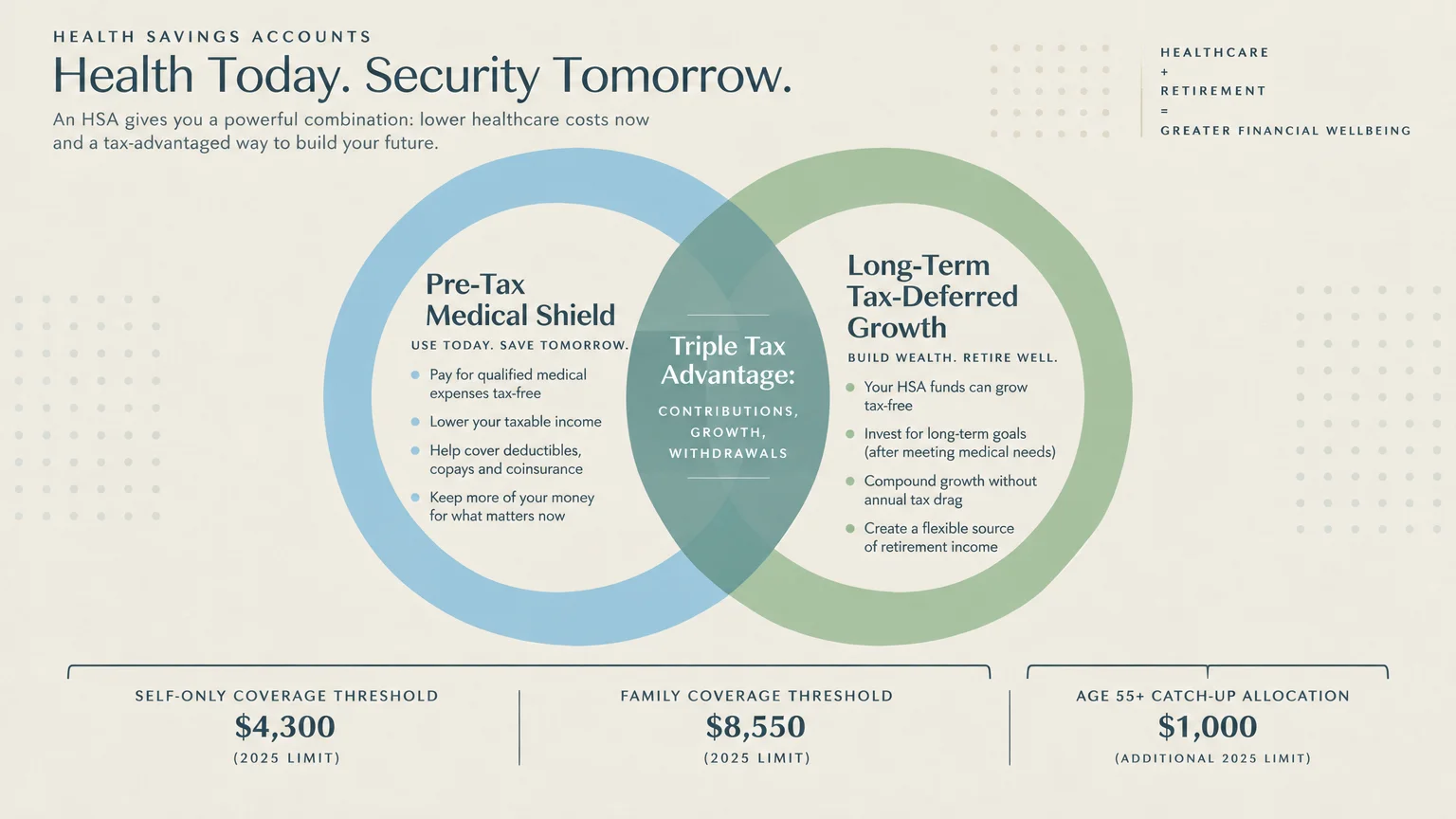
For individuals with self-only high-deductible health coverage, the annual HSA contribution limit increases to $4,500. For individuals maintaining family coverage, the contribution cap expands to $9,000 for 2027.
Account holders aged 55 and older can contribute an additional $1,000 catch-up amount. Unlike workplace retirement plans, this $1,000 catch-up allowance remains fixed by statute and does not adjust for inflation.
To qualify for HSA contributions, your health insurance policy must meet high-deductible criteria. For 2027, the minimum annual deductible is $1,750 for self-only coverage and $3,500 for family plans.
Pre-retirees often utilize HSAs as stealth retirement accounts by paying current medical expenses out of pocket. This tactic allows your invested HSA balance to compound entirely undisturbed over decades.
HSAs provide a rare triple-tax advantage: contributions are tax-deductible, growth is tax-free, and withdrawals for qualified medical expenses incur no taxes. After age 65, you can withdraw funds for any purpose without penalty, paying ordinary income tax.
You must stop contributing to an HSA once you enroll in Medicare benefits. Planning your enrollment timing avoids retroactive coverage penalties and unwanted excise taxes on late contributions.

Limit 6: SIMPLE IRA Deferrals for Small Business Owners and Consultants
Many pre-retirees and seniors operate consulting practices, small businesses, or freelance enterprises during their transition out of the traditional workforce. The SIMPLE IRA offers an inexpensive, low-administration retirement vehicle tailored for small firms.
For 2026, the standard employee elective deferral limit under a SIMPLE IRA is $17,000. Statutory projection models indicate this deferral ceiling will expand to $17,500 for the 2027 tax year.
SECURE 2.0 created an enhanced incentive that grants higher limits to eligible small employers with 25 or fewer workers. At these qualifying businesses, the 2027 deferral limit is projected to reach $19,100.
The standard catch-up contribution for SIMPLE IRA participants aged 50 and older is projected at $4,000. Participants aged 60 through 63 receive an enhanced super catch-up allowance of $5,250.
Employers sponsoring a SIMPLE IRA must provide either a dollar-for-dollar match up to three percent or a two percent non-elective contribution. These employer funds belong to the worker immediately through mandatory full vesting.
If you earn self-employment income through consulting, establishing a SIMPLE IRA allows you to shelter substantial earnings. You can simultaneously reduce your business net income and build personal wealth.

Limit 7: Qualified Charitable Distributions (QCDs) for Seniors
Retirees aged 70½ and older can transfer funds directly from a Traditional IRA to a qualifying 501(c)(3) nonprofit organization. This tax-advantaged gifting strategy is officially called a Qualified Charitable Distribution, or QCD.
A QCD bypasses your adjusted gross income entirely, keeping your reported income lower than if you took a standard cash withdrawal. This direct transfer protects you from bumping into higher marginal tax brackets.
The annual individual QCD exclusion limit reached $111,000 for 2026 under permanent inflation adjustments enacted by SECURE 2.0. The limit will adjust upward again for the 2027 calendar year.
Married couples can each execute a QCD from their individual accounts, enabling annual charitable gifts exceeding $222,000. Seniors can also complete a one-time split-interest gift of up to $55,000 to a charitable remainder trust.
Starting in 2027, the IRS requires custodians to identify and report all QCDs using mandatory Code Y on Form 1099-R. This mandatory reporting removes ambiguity, ensuring tax examiners recognize that your distribution is non-taxable.
For seniors aged 73 and older, QCD gifts count directly toward satisfying your annual Required Minimum Distributions. You support meaningful charitable causes while efficiently eliminating unwanted taxable distribution mandates.
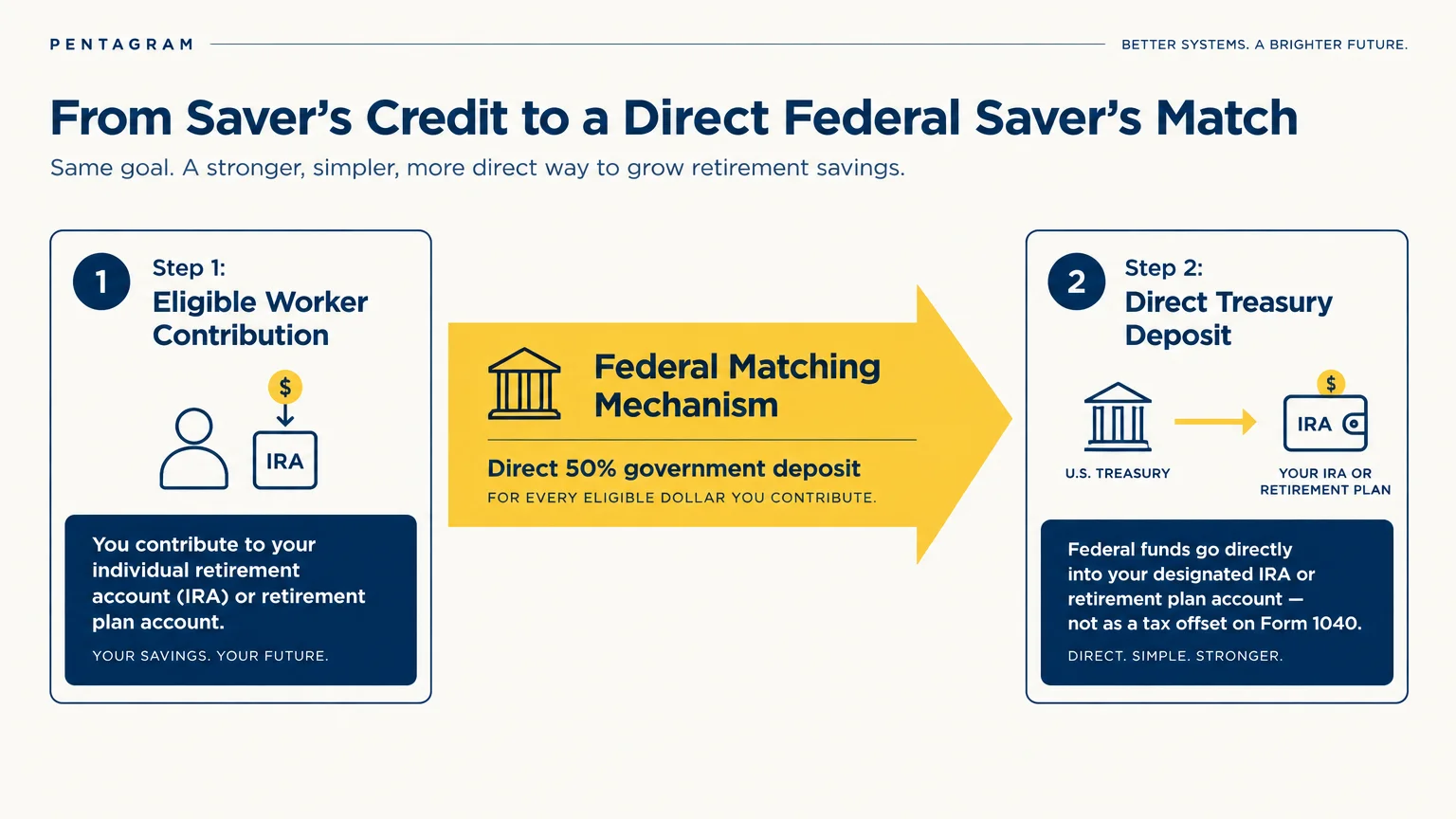
Bonus Policy Shift: The Federal Saver’s Match Debuts in 2027
The year 2027 marks the official rollout of the federal Saver’s Match, replacing the former nonrefundable Saver’s Credit. This structural reform transforms a passive tax credit into a direct government cash contribution.
Under this program, the federal government provides a 50 percent matching contribution on eligible retirement savings up to $2,000. Qualified individuals receive up to $1,000 deposited straight into their designated retirement account.
The match targets lower- and middle-income workers based on adjusted gross income thresholds established by Congress. Semi-retired individuals working part-time jobs can qualify as long as they report earned income.
Because the government deposits the match directly into your IRA or workplace plan, it accelerates compound account growth. Even better, this federal matching payment does not count against your annual statutory contribution limits.
You claim the Saver’s Match when completing your 2027 federal tax return in early 2028. This program delivers an immediate 50 percent return on modest contributions for qualifying workers.

Three Strategic Pillars to Maximize Your Savings
Mastering statutory account limits represents only the first step toward enduring financial security. You must integrate these thresholds into a cohesive life plan covering income, lifestyle, and health.
Pillar 1: Income Planning and Tax Diversification
Spreading your retirement assets across pre-tax, Roth, and taxable brokerage accounts gives you essential withdrawal flexibility. This structural balance lets you control your taxable income year by year during retirement.
Carefully managed withdrawals help you keep your taxable income below threshold levels that trigger surcharges. Maintaining low provisional income protects your Social Security Administration monthly benefits from heavy taxation.
Up to 85 percent of your Social Security benefits become taxable when provisional income exceeds modest thresholds. Strategic withdrawals from tax-exempt Roth accounts allow you to cover spending without increasing your provisional income.
Consider executing partial Roth conversions during lower-income years between your career exit and mandatory distributions. Converting balances during this window reduces the future tax burden created by Required Minimum Distributions.
Pillar 2: Lifestyle Design and Purposeful Spending
Successful retirement planning demands thoughtful lifestyle preparation alongside disciplined portfolio management. Designing your daily schedule and personal goals creates structure when full-time employment concludes.
Research published by AARP demonstrates that purposeful activity and social connection strongly correlate with healthy aging. Transitioning gradually through part-time consulting or volunteer work preserves your professional network.
Phased retirement keeps your earned income flowing while you sample new hobbies and community pursuits. This gradual shift eases the emotional adjustment that often accompanies abrupt departures from the workplace.
Budgeting for meaningful travel, continuing education, and family milestones gives your savings clear purpose. Aligning your financial resources with your personal values creates authentic life satisfaction.
Pillar 3: Healthcare Security and Longevity Planning
Out-of-pocket medical bills remain one of the most unpredictable expenses facing older Americans. Developing a separate healthcare funding plan protects your core investment portfolio from unexpected hospital costs.
Maximizing HSA contributions during your final working years builds a dedicated medical reserve fund. You can draw on these tax-free dollars to pay Medicare premiums and dental expenses throughout retirement.
Evaluate your family health history to determine whether private long-term care insurance or hybrid annuities make sense. Securing care coverage prevents catastrophic nursing home expenses from depleting family wealth.
Investing time in daily physical movement, balanced nutrition, and preventive health screenings lowers long-term medical spending. Preserving personal mobility directly enhances your independence and quality of life as you age.

Expert Insights and Perspectives
Financial planners consistently observe that automation is the most reliable way to capture higher account limits. When you schedule payroll deductions in advance, you remove emotional hesitation from long-term investing.
Certified Financial Planner Marcus Vance emphasizes that early review cycles yield the greatest tax advantages. He recommends auditing your workplace deferral percentages every November before new statutory limits take effect.
Vance points out that spreading contributions evenly across twelve months optimizes employer matching formulas. Frontloading contributions too quickly can inadvertently cause you to miss monthly employer matches later in the year.
Gerontologist Dr. Elena Rostova notes that financial confidence directly enhances physical and cognitive vitality. Her clinical studies reveal that seniors who feel financially organized demonstrate lower rates of stress-related illness.
Retiree Linda Morales shares that utilizing catch-up provisions during her early sixties transformed her retirement readiness. Redirecting compensation bonuses into her 401(k) allowed her to delay Social Security claims until age 70.
Delaying her claim permanently increased Morales’s guaranteed lifetime benefit by roughly eight percent per year. Her disciplined catch-up savings provided the bridge income needed to make that claiming strategy possible.
Critical Risks, Traps, and Safeguards
Unsuspecting savers often encounter hidden tax cliffs when navigating complex retirement plan rules. One of the most painful pitfalls is the Income-Related Monthly Adjustment Amount, commonly known as IRMAA.
IRMAA imposes substantial surcharges on your Medicare Part B and Part D premiums if your income exceeds specific tiers. Crossing an IRMAA income threshold by a single dollar triggers the full surcharge for the entire year.
Large retirement account withdrawals, capital gains, or sudden Roth conversions can unintentionally push you into an IRMAA bracket. Modeling your distributions two years in advance protects you from these retroactive healthcare surcharges.
Retirees must also protect their hard-earned assets against increasingly aggressive financial fraud and identity theft. Criminals routinely target older adults through spoofed government communications and fabricated investment opportunities.
Enable multi-factor authentication on every financial account you maintain, using authenticator apps rather than basic text messages. Never authorize account transfers or disclose sensitive credentials based on unsolicited telephone inquiries.
When transferring retirement accounts between custodians, always execute direct institutional transfers rather than receiving physical checks. Direct rollovers eliminate the danger of missing the strict 60-day deposit window and incurring withholding penalties.
Regularly review your designated primary and contingent beneficiaries across every bank and brokerage account. Beneficiary designations supersede instructions written in your will, making regular record updates essential.
Frequently Asked Questions
Can I contribute to both a 401(k) and an IRA in 2027?
Yes, you can contribute to both account types during the same tax year. However, active participation in a workplace plan may limit your eligibility to deduct Traditional IRA contributions based on your income.
How does the age 60 to 63 super catch-up affect my taxes?
Super catch-up contributions reduce your taxable income if directed into a traditional pre-tax account. However, if your prior-year FICA wages exceeded $150,000, federal law requires you to make those catch-up deposits on an after-tax Roth basis.
What happens if I accidentally overcontribute to my retirement accounts?
Excess contributions trigger a six percent excise tax every year until the excess money is formally withdrawn. You should notify your plan administrator immediately to remove excess funds and attributable earnings before the tax filing deadline.
Can both spouses make HSA catch-up contributions?
Yes, both spouses can make the $1,000 catch-up contribution if each partner is at least 55 years old. However, each spouse must open a separate HSA account to hold their individual catch-up funds.
Your 48-Hour Retirement Action Plan
Take one concrete step within the next 48 hours to position your finances for maximum growth. Log in to your primary workplace benefits portal and verify your current elective deferral percentage.
Calculate whether your current payroll deduction rate will capture all available employer matching dollars. Increasing your savings rate by just one percent provides meaningful compounding returns over time.
If you are age 50 or older, verify that your payroll preferences account for updated catch-up opportunities. A quick conversation with your plan administrator ensures your automated deductions reflect incoming 2027 rules.
Proactive planning puts you firmly in control of your financial destiny. By mastering these contribution limits today, you guarantee peace of mind, flexibility, and freedom for your retirement tomorrow.