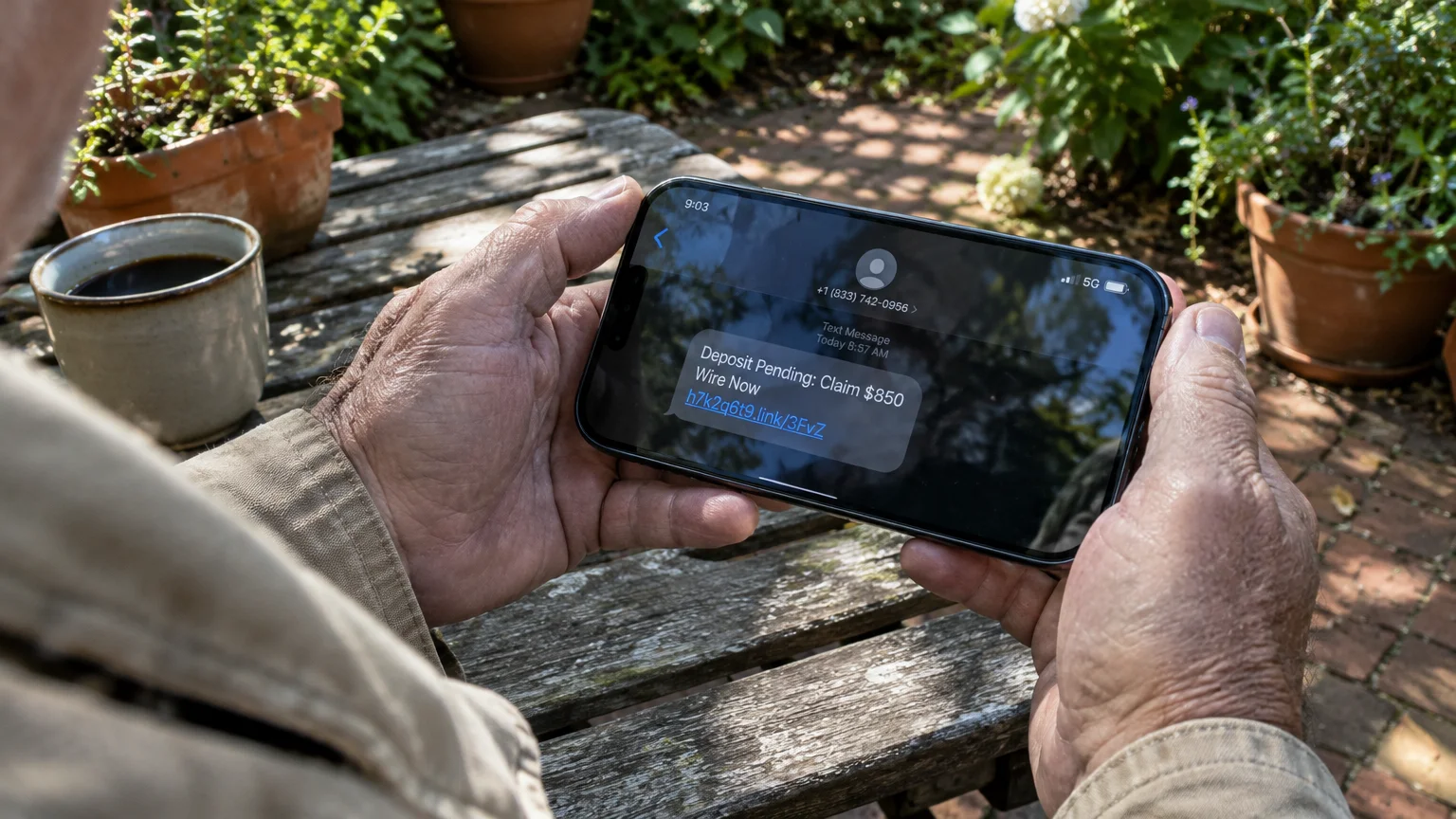
A sudden text alert claiming an unexpected cash deposit awaits you can easily capture your attention during a busy morning. Learning to identify deceptive payment notices immediately protects your hard-earned retirement assets from predatory cybercriminals.
Sophisticated fraud syndicates routinely target older Americans with fabricated wire alerts and fake rebate notifications. You can disarm these digital traps before they disrupt your hard-won lifestyle and financial stability.
This comprehensive guide explains the primary warning signs of illegitimate payment alerts and delivers actionable defenses to safeguard your personal accounts today.
The Expanding Landscape of Digital Smishing Scams
Mobile deception has evolved into a multi-billion-dollar enterprise that directly threatens household stability across the United States. Criminal syndicates use automated short message service systems to blast millions of deceptive alerts directly into consumer pockets daily.
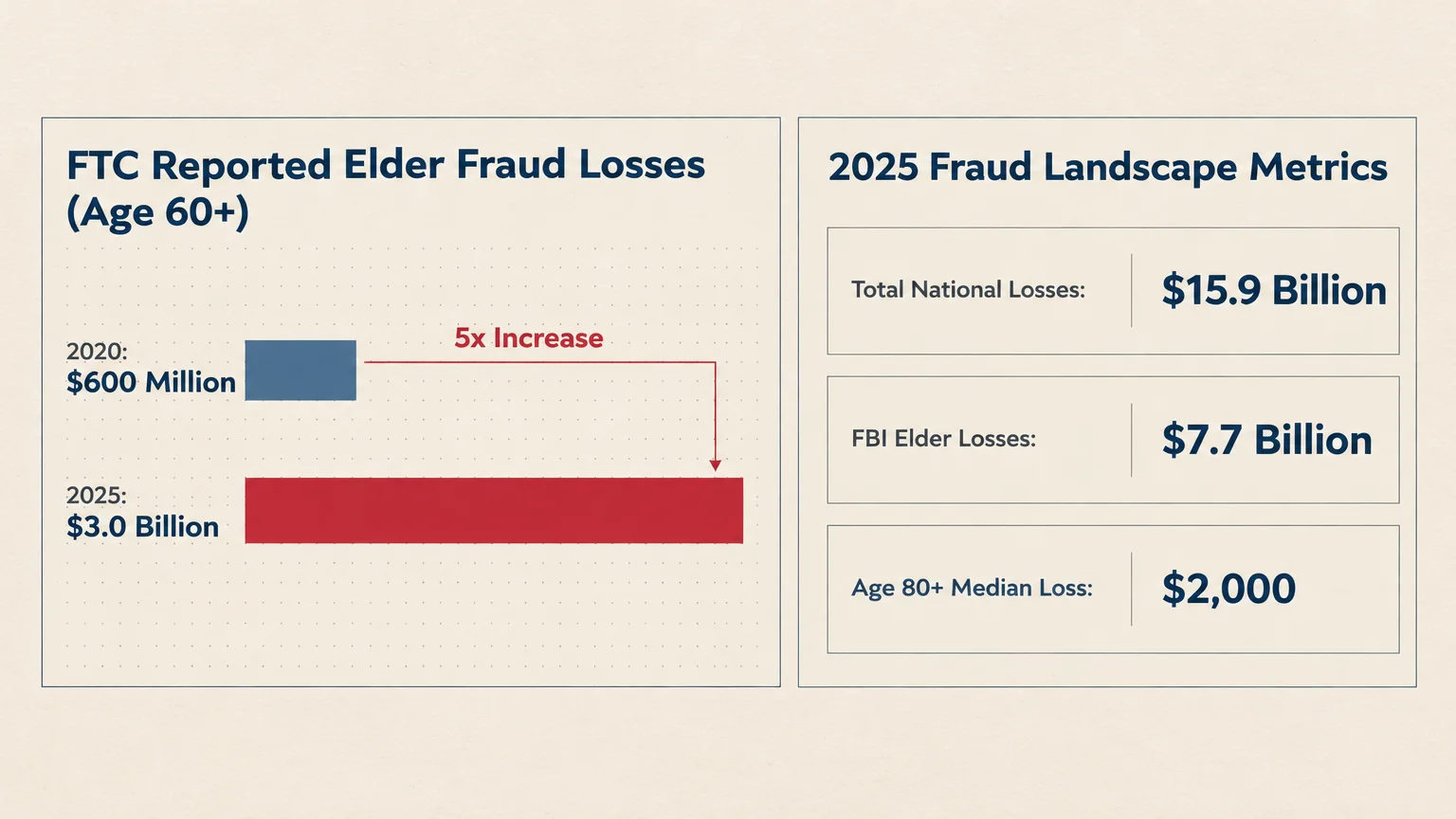
According to data from the Federal Trade Commission, Americans reported losing an unprecedented $15.9 billion to fraud across all demographics in 2025. This record represents an alarming 25% increase over total losses recorded in 2024.
Imposter scams remained the single most frequently reported fraud category nationwide, responsible for $3.5 billion in total consumer losses. Criminals posing as legitimate commercial businesses and financial institutions accounted for nearly $1 billion of that total.
Government agency impersonators extracted another $920 million from citizens who believed they were resolving tax obligations or claim issues. Meanwhile, fraudulent text messages alone caused $470 million in documented losses during 2024.
Older adults bear a disproportionately heavy burden from these predatory communications. The Federal Trade Commission’s Protecting Older Consumers report revealed that adults aged 60 and older reported losing $3 billion to fraud in 2025.
That figure marks a dramatic fivefold jump from the $600 million older adults reported lost in 2020. Because many victims feel too embarrassed to report their experiences, true elder fraud losses range between $13.3 billion and $119.5 billion.
Data compiled by the FBI Internet Crime Complaint Center confirms this escalating national crisis. In 2025, Americans aged 60 and older submitted 201,266 individual fraud complaints to federal authorities.
Elder losses reported to federal investigators surged by 59% from 2024 to reach an astonishing $7.7 billion in 2025. That total translates to an average loss of roughly $38,500 for every senior victim who filed an official complaint.
Retirees in advanced age groups face especially severe economic threats when hostile actors breach their defenses. The Federal Trade Commission determined that adults aged 80 and older suffered the highest median individual loss at $2,000 in 2025.
Text-based smishing succeeds because smartphones foster immediate intimacy and trust that traditional email communications rarely duplicate. Mobile notifications demand instant visual attention, catching readers when their defensive guard is down.
When you depend on a fixed retirement budget, an unexpected four-figure loss can destabilize your everyday security. Learning to recognize illegitimate incoming payment alerts gives you the critical leverage required to protect your accumulated wealth.

Three Strategic Pillars of Fraud Prevention in Retirement
Pillar 1: Financial Architecture and Income Safeguards
Protecting your retirement income requires deliberate structural firewalls between your daily cash flow and your core assets. You should never conduct mobile transactions from the same account that holds your long-term savings or pension distributions.
Establish an isolated checking account with a strictly limited balance solely for routine retail purchases and mobile applications. If an intruder compromises that digital transaction account, your primary retirement capital remains completely insulated from unauthorized access.
Peer-to-peer payment networks have adjusted their operational infrastructure to address ongoing security concerns. In March 2025, Zelle officially phased out its standalone mobile app for sending and receiving consumer payments.
Users now access Zelle exclusively through verified mobile applications provided by their participating bank or credit union. This direct integration provides stronger bank-level encryption, but it cannot prevent scammers from tricking you into sending funds voluntarily.
Configure instant transaction notifications through your bank’s primary web portal rather than relying on unverified SMS messages. Check your monthly bank statements thoroughly on personal computers to catch unauthorized activity before minor leaks become catastrophic.
Avoid linking debit cards directly to high-balance investment portfolios or money market funds. Credit cards offer far more robust statutory fraud protections, shielding your underlying bank balances from temporary disruption during disputes.
Pillar 2: Lifestyle Design and Communication Boundaries
Designing a secure digital lifestyle means establishing absolute boundaries regarding how you respond to inbound mobile communications. Adopt a strict operational policy that you will never tap links contained inside unexpected payment alerts.
Treat your private cellular number as a protected asset rather than a public bulletin board. Modern telecommunications carriers provide sophisticated call and text screening utilities designed to intercept suspicious traffic automatically.
You can immediately report suspicious messages by forwarding them directly to 7726 at no cost. This industry-wide service informs network engineers about malicious routing origins so they can block future deliveries across the country.
Create a mutual verification system with your family members and trusted financial representatives for any unusual money requests. If someone contacts you claiming an urgent payment requires your attention, confirm that claim through an established independent telephone number.
Never allow an incoming message to dictate the speed of your financial choices. Stepping away from your device gives you the space required to evaluate the authenticity of any unexpected correspondence.
Pillar 3: Emotional Wellness and Cognitive Protection
Financial predators specialize in manipulating human psychology rather than breaking complex cryptographic encryptions. Deceptive payment notices intentionally produce intense emotional arousal, swinging between thrilling excitement and sharp financial panic.
When an unexpected text claims that thousands of dollars await your claim, your brain releases an immediate surge of dopamine. This natural biological reaction diminishes executive brain function, prompting quick compliance before critical logic can evaluate the notification.
Pausing for a full sixty seconds before responding allows this acute emotional surge to subside completely. That deliberate cognitive pause restores your objective analytical reasoning, enabling you to detect obvious logical inconsistencies.
Eradicating personal embarrassment surrounding digital fraud is equally vital for healthy retirement living. If you ever interact with a dubious text, speaking openly with family or advisors prevents the destructive silence that fraudsters exploit.
Fraud syndicates thrive when victims feel isolated, ashamed, or hesitant to ask for guidance. Maintaining open communication with your personal community keeps you emotionally supported and digitally secure throughout your retirement years.
7 Critical Signs a Payment Coming Your Way Message Is a Scam
Sign 1: You Must Pay an Upfront Fee to Claim Your Money
Legitimate organizations never require you to submit an upfront payment to release incoming funds or prize disbursements. If a message insists you must remit an administrative fee, insurance premium, or courier charge, you are facing an absolute swindle.
This deceptive maneuver represents the textbook advance-fee scheme adapted for modern mobile text messaging. Criminals promise that a small fee of fifty or one hundred dollars will immediately unlock several thousand dollars in pending transfers.
Scammers frequently demand these advance fees through irreversible methods like retail gift cards, cryptocurrency, or peer-to-peer applications. Once you transfer that initial deposit, the perpetrator vanishes instantly and your capital is lost forever.
When an authentic commercial business or governmental agency owes you money, they remit the full balance directly to your account. Any legitimate administrative expenses are always deducted automatically from the gross distribution prior to disbursement.
Never transmit personal funds to facilitate the release of an unverified windfall. Treat any demand for prepayment as definitive proof that the entire payment proposition is fraudulent.
Sign 2: The Message Imposes Artificial Urgency and Hard Deadlines
Fabricated payment notifications rely heavily on artificial countdowns to force hasty consumer decisions. You will often encounter warnings asserting that your funds expire within twenty-four hours or will be permanently canceled by midnight.
This relentless psychological pressure aims to short-circuit your standard verification process before you can investigate the sender. Con artists recognize that if you pause to consult your spouse or financial planner, their deceptive scheme fails completely.
Authentic financial institutions and commercial firms do not terminate genuine distributions simply because you took time to review paperwork. Legitimate insurance claims, corporate dividends, and legal settlements provide generous processing periods accompanied by formal postal mailings.
Whenever a text notification demands immediate action under the explicit threat of forfeiture, put your phone down immediately. Manufactured urgency represents one of the most reliable indicators of an active cyber fraud attempt.
Sign 3: Impersonation of Government Agencies Like the IRS or SSA
Government agency impersonation remains a dominant strategy deployed by cybercrime syndicates targeting older Americans. Deceptive text messages claiming to deliver missed stimulus checks or special rebates frequently bombard cellular subscribers across the country.
Phishing and smishing operations earned the top position on the 2026 Dirty Dozen tax scam roster published by the Internal Revenue Service. Scammers routinely circulate texts promising an imaginary $1,400 Economic Impact Payment or Recovery Rebate Credit.
Official federal tax policy remains perfectly clear regarding electronic consumer communications. The Internal Revenue Service never initiates contact through text messages, emails, or social media channels to request personal banking information for disbursements.
The Social Security Administration and Medicare follow identical operating procedures to protect public integrity. Genuine government bodies distribute official financial notifications and benefit updates through physical postal mail delivered to your registered home address.
If an unsolicited mobile text claims to deliver federal funds upon verifying your identity, delete the message without responding. Government agencies will never text you links asking for your banking details or Social Security credentials.
Sign 4: Suspicious Links, Shortened URLs, and Random QR Codes
Fraudulent payment notices depend on embedded hyperlinks to steer you toward malicious web destinations. These text links often utilize URL shortening services or display slight misspellings of well-known commercial brand names to deceive casual observers.
Tapping one of these compromised links opens a forged website designed to mirror your authentic banking portal. These phishing pages prompt you to enter private passwords, security question answers, and account numbers directly into criminal databases.
Fraudsters also embed Quick Response codes directly inside image attachments to bypass text-based automated security screening. Scanning an unknown QR code with your smartphone camera can trigger immediate silent downloads of dangerous credential-stealing spyware.
Never interact with raw hyperlinks or barcode images delivered by unfamiliar senders. If you believe an alert might be authentic, navigate independently to the institution’s official website using a separate browser session.
Sign 5: The Accidental Overpayment Refund Trap
The accidental overpayment scam manipulates your natural honesty to extract real money from your accounts. You receive a text notification declaring that someone mistakenly sent hundreds or thousands of dollars into your mobile digital wallet.
The sender quickly follows up with emotional messages pleading for your help to refund their supposed bookkeeping mistake. They may even transmit fabricated screenshots of processed transactions to convince you that the erroneous funds arrived.
In reality, the initial deposit was generated using stolen credit cards or counterfeit checks that your financial institution will eventually void. If you willingly send a refund from your balance, your bank subtracts the fake deposit later.
This reversal leaves you personally liable for every dollar you transmitted to the criminal. Never attempt to manually resolve an alleged transfer error; instruct the sender to let their banking institution handle the correction formally.
Sign 6: Requests to Move the Conversation to Alternative Platforms
Legitimate commercial enterprises handle customer service inquiries through authenticated web portals, official enterprise hotlines, or corporate email systems. Fraudulent operators, however, constantly urge targets to shift communications to third-party messaging apps like WhatsApp or Telegram.
Moving conversations off cellular text networks allows criminals to evade mobile carrier spam filters and complicate law enforcement investigations. These private messaging platforms provide end-to-end encryption that conceals perpetrator identities while granting them unregulated access to you.
A legitimate banking representative or corporate treasurer will never direct you to continue a financial conversation through an external mobile application. When a message requests that you connect with an outside chat handle, discontinue all engagement immediately.
Sign 7: Generic Greetings, Vague Details, and Mismatched Contact Data
Mass smishing operations blast identical fraudulent templates to tens of thousands of random mobile numbers every single hour. Because scammers lack detailed customer records during initial contact, their text alerts feature generic greetings like Dear Customer or Valued Client.
These messages provide intentionally vague transaction details, referencing an anonymous deposit or unsettled transaction without naming your account number. Con artists rely on ambiguity, hoping you will mistakenly associate their message with an actual purchase you made recently.
Scrutinize the originating sender information visible at the very top of your mobile messaging screen. Fraudulent notices claiming to represent domestic organizations frequently originate from foreign country codes, personal cell numbers, or nonsensical email gateways.
Authentic financial institutions always address you by your formal name and reference the last four digits of your account. The presence of generic salutations combined with murky payment descriptions indicates an undeniable scam.

Expert Perspectives on Financial Security and Aging
The Certified Financial Planner View: Isolating Primary Capital
Professional wealth managers stress that intelligent account architecture serves as your greatest defense against predatory cyber schemes. Segmenting your retirement assets prevents a single compromised transaction from threatening your lifelong solvency.
Robert Thornton, CFP®, emphasizes that retirees should avoid linking primary brokerage accounts to handheld mobile devices. He stresses that keeping core capital in distinct accounts with limited electronic transfer privileges eliminates catastrophic exposure.
Thornton recommends that clients mandate dual-authorization protocols for all substantial electronic disbursements with their trusted advisors. Implementing manual verbal confirmation steps ensures that high-pressure text scams cannot siphon away retirement balances.
He also notes that establishing separate spending accounts simplifies budgeting while creating a practical buffer against everyday fraud. This protective barrier ensures that unexpected digital disruptions remain minor inconveniences rather than life-altering financial crises.
The Gerontological Perspective: Managing Emotional Hijacking
Gerontological research demonstrates that susceptibility to predatory financial messages stems from psychological manipulation rather than any loss of intelligence. Dr. Evelyn Reed, a research gerontologist, explores how acute stress prompts degrade executive cognitive performance.
Her clinical research shows that unexpected notifications spark powerful autonomic reactions, raising heart rates and inducing mental tunnel vision. Under high arousal, the human brain instinctively seeks immediate relief rather than conducting methodical verification.
Dr. Reed advocates for a mandatory waiting ritual whenever retirees encounter unexpected incoming financial correspondence. Stepping away from your phone for ten minutes restores neurological equilibrium, allowing rational executive control to reassert itself.
She also emphasizes the importance of eliminating social stigma surrounding digital deception in retirement communities. When older adults discuss suspicious messages openly without fear of judgment, entire peer networks become more resilient against fraud.
Retiree Case Experience: Lessons from the Front Lines
Examining practical real-world scenarios demonstrates how disciplined verification protocols protect hard-earned retirement assets. Arthur Miller, a 71-year-old retired aerospace technician living in Ohio, received a convincing text notification regarding an uncollected state tax settlement.
The message displayed an authentic-looking state department logo and urged Arthur to click a link to claim an overdue $850 rebate. Instead of complying with the urgent prompt, Arthur contacted the state revenue department using their published public hotline.
State tax representatives confirmed that the message was entirely fraudulent and praised Arthur for his cautious verification approach. His deliberate refusal to act on impulse kept his direct deposit banking credentials completely secure.
Similarly, Clara Vance, a 68-year-old retired nurse in Florida, received a text claiming an accidental payment required an immediate refund. Remembering common overpayment scam warnings, she refused to transfer funds and reported the incident to her bank immediately.
Her decisive refusal to send money shielded her checking account from a painful four-hundred-dollar loss. These real experiences prove that calm skepticism remains your most effective tool against aggressive modern fraud.
Crucial Risks, Safeguards, and Regulatory Realities
The Dangerous Reality of Regulation E and Push Payments
Many consumers believe that commercial banks will automatically reimburse any funds stolen through mobile messaging deceptions. In reality, federal protections under Regulation E apply primarily to unauthorized electronic fund transfers, such as when a criminal hacks your password.
Regulation E offers virtually no mandatory consumer protections for authorized push payments where you willingly approve the transfer. When a fraudulent message convinces you to transmit funds through a mobile application, banking regulations classify that transaction as consumer-authorized.
The Consumer Financial Protection Bureau continues analyzing digital wallet risks, but banks generally treat authorized push payments like physical cash. Once you approve an outbound payment, your financial institution is not legally obligated to reverse the charge.
This regulatory reality underscores why you must never send funds under pressure from an incoming text alert. Assuming that modern digital transfers are final and irreversible helps you maintain vital caution before approving any payment.
Essential Protocols if You Responded to a Fraudulent Message
If you accidentally tapped a suspicious link or transferred money to an imposter, you must act immediately to contain the damage. Taking swift defensive measures significantly limits your overall financial exposure and halts cascading identity theft.
First, telephone your bank’s fraud prevention department to report the compromise and freeze all impacted checking or savings accounts. Request that your bank cancel linked debit cards, reissue account numbers, and reset your online banking credentials.
Next, submit a comprehensive fraud complaint directly to the Federal Trade Commission through their official reporting portal at ReportFraud.ftc.gov. You should also register an electronic incident complaint with the FBI Internet Crime Complaint Center at ic3.gov.
Older adults seeking dedicated, compassionate guidance should contact the Department of Justice National Elder Fraud Hotline directly. Calling 1-833-FRAUD-11 (1-833-372-8311) connects you with specialized case managers who assist you throughout the recovery process.
Finally, contact the three major credit bureaus to place a comprehensive security freeze across your personal credit files. Freezing your credit prevents malicious actors from opening fraudulent loan accounts or credit cards using your compromised personal information.
Additionally, request an Identity Protection PIN from the Internal Revenue Service to safeguard your annual tax filings. This unique six-digit identifier prevents fraudsters from submitting false tax returns in your name to steal future refunds.
Frequently Asked Questions About Payment Scams
Can my bank refund my money if I willingly sent it through a payment app?
Financial institutions generally do not reimburse funds that you willingly transfer yourself, even if a scammer deceived you into doing so. Federal rules under Regulation E differentiate sharply between unauthorized account intrusions and voluntary authorized push payments.
Because authorized peer-to-peer transfers operate much like cash exchanges, receiving banks are not required to return transferred capital. You must always confirm the recipient’s identity through trusted channels before executing any mobile payment transfer.
Some financial institutions may attempt a voluntary recall request on your behalf, but successful recoveries remain rare. Treat every outgoing mobile payment as a final, non-refundable cash transaction.
What should I do if I accidentally clicked a link in a suspicious text?
Immediately disconnect your mobile phone from cellular data and Wi-Fi networks to sever communication with remote criminal servers. Disconnecting your connection prevents malicious scripts from transmitting harvested credentials or downloading secondary payloads.
Using a separate secure computer, update the passwords on your email accounts, financial institutions, and primary retirement portals. Implement multi-factor authentication across all accounts to ensure compromised passwords alone cannot grant access.
Finally, install a verified mobile security application on your phone to scan for hidden spyware or malicious tracker programs. Monitoring your monthly cellular bill for unauthorized carrier charges provides an additional layer of safety.
Why do I keep receiving text messages about government stimulus checks?
Cybercrime syndicates continuously reuse government stimulus themes because these topics spark instant public interest and emotional curiosity. The IRS 2026 Dirty Dozen warnings specifically highlight how scammers exploit public memories of economic relief programs.
Automated bots distribute millions of deceptive texts promising $1,400 economic relief checks to random telephone numbers across the country. Fraudsters understand that even a tiny fraction of compliant recipients generates substantial illicit profits.
Delete these messages immediately knowing that genuine federal agencies never issue payments or collect banking details through unsolicited text alerts. Official government correspondence regarding benefits always arrives through physical postal mail.
Does forwarding a scam text message to 7726 cost anything on my phone bill?
Forwarding suspicious mobile text messages directly to 7726 is completely free across all major telecommunications carriers in the United States. The numeric code corresponds to the letters SPAM on standard phone keypads.
When you forward deceptive texts to 7726, carrier security teams analyze the transmission data to identify illicit network origins. This intelligence allows telecom providers to block malicious phone numbers and protect millions of consumers nationwide.
Taking two seconds to forward every suspicious notification transforms you into an active defender of the broader mobile ecosystem. It represents an effortless, cost-free habit that strengthens digital security for all retirees.
Your 48-Hour Scam Prevention Action Plan
Securing your retirement assets does not require complex technical skills or costly security subscriptions. You can substantially strengthen your personal defenses by executing four straightforward tasks over the next forty-eight hours.
Start today by contacting your mobile carrier or accessing their app to turn on all available spam-blocking protections. Major cellular networks offer free automated filters that intercept malicious text traffic before it enters your inbox.
Next, review your primary bank account settings to activate instant transaction notifications and enable two-factor authentication. Choosing an authenticator application or physical hardware key provides far superior protection compared to basic text verification codes.
Save the National Elder Fraud Hotline number, 1-833-372-8311, directly into your smartphone contact directory today. Having this trusted federal resource readily available ensures you can access immediate expert guidance whenever an unexpected message raises doubts.
Finally, discuss these seven payment scam warning signs with a friend, neighbor, or family member during your next conversation. Sharing this vital knowledge eliminates stigma, builds community resilience, and keeps your loved ones financially secure.