
You can bring in extra cash during retirement without handing a big portion back to the government. Strategic tax choices allow you to boost your bank balance while keeping your taxable income low.
Many retirees fear that taking on part-time work or monetizing hobbies will trigger steep tax penalties and reduce their federal benefits. Fortunately, federal tax laws offer accessible avenues to protect your hard-earned revenue.
Discover how you can expand your personal wealth by pairing practical side ventures with legal tax shelters and updated senior deductions.

Navigating Today’s Retirement Tax Landscape
Rising everyday costs push millions of older adults to seek supplemental revenue streams. Whether you want to beat inflation or fund travel, earning extra cash makes financial sense.
Recent data from the Bureau of Labor Statistics reveals that older Americans represent one of the fastest-growing segments of the independent workforce. Many seniors now pursue flexible consulting, tutoring, or seasonal ventures.
Generating revenue brings excitement, but it also creates potential friction with the tax code. Adding ordinary income can inadvertently bump your taxable income into a higher bracket.
Unplanned earnings can also trigger unexpected taxes on your Social Security payments. Fortunately, recent federal policies provide unprecedented tax relief options for aging households.
You can protect your cash flow by coordinating your earning activities with available statutory deductions. Smart planning transforms extra earnings into lasting financial security rather than an annual tax headache.
Strategy Pillar: Proactive Income Planning
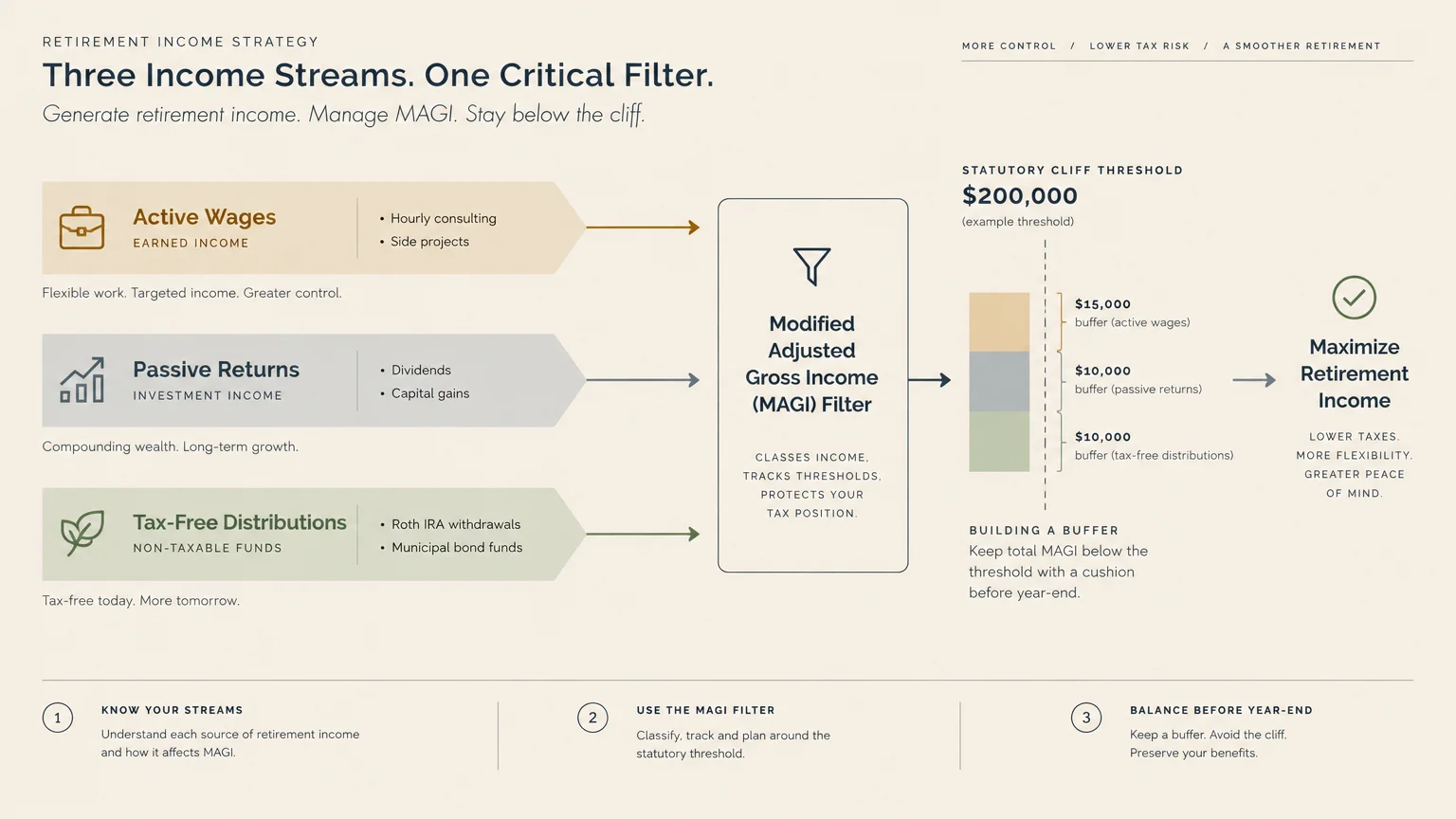
Proactive income planning requires you to classify every incoming dollar by its specific tax treatment. Not all income faces the same tax rates or reporting thresholds.
The Internal Revenue Service treats active wages differently from passive investment returns or tax-free distributions. Knowing these technical differences lets you arrange your side earnings efficiently.
You must balance active earnings alongside mandatory retirement distributions and federal benefits. Creating balance prevents sudden spikes in your Adjusted Gross Income (AGI).
Smart income planning focuses on your Modified Adjusted Gross Income (MAGI). Keeping your MAGI below specific statutory cliffs protects your wealth against backdoor income surcharges.
When you anticipate extra earnings early in the year, you gain full control over your tax outcomes. You can adjust deductible expenses or contributions before December ends.
1. Maximize Enhanced Senior Standard Deductions to Shield Revenue
Recent legislative updates provide seniors with significant deductions to offset new active earnings. The standard deduction shields a substantial baseline of ordinary income from federal taxation.
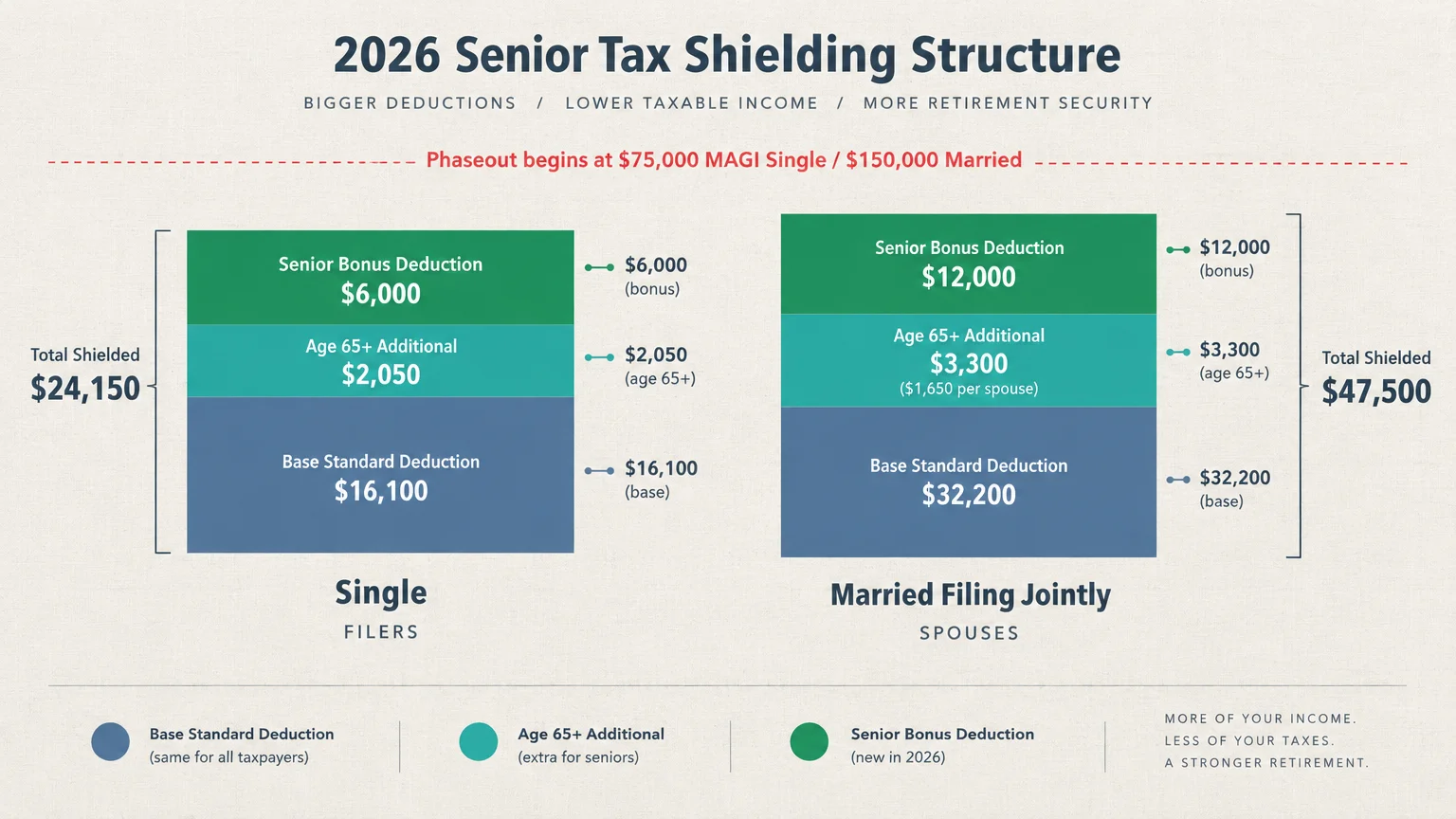
For the 2026 tax year, the base standard deduction reaches $16,100 for single filers and $32,200 for married couples filing jointly. Heads of household receive a base standard deduction of $24,150.
Retirees age 65 and older qualify for an additional standard deduction. Single filers claim an extra $2,050, while married taxpayers receive $1,650 per qualifying spouse.
Under the One Big Beautiful Bill Act (OBBBA), seniors age 65 and older can claim an additional Senior Bonus Deduction. This temporary provision allows an extra deduction of up to $6,000 per person.
A married couple where both partners are 65 or older can claim a $12,000 Senior Bonus Deduction. This below-the-line deduction remains accessible whether you itemize your deductions or take the standard deduction.
The Senior Bonus Deduction begins phasing out at a 6% rate for MAGI above $75,000 for single filers. For married couples filing jointly, the phaseout starts at $150,000.
Combining these deductions allows a single senior to shield up to $24,150 from federal taxation. A qualifying married couple can shield up to $47,500 in total ordinary revenue.
These generous deduction thresholds create massive capacity for supplementary income. You can earn thousands in consulting or retail work before paying a single dollar in federal income tax.

2. Collect Tax-Free Rental Income Using the Augusta Rule
You can generate thousands of dollars in supplemental revenue by renting your home for short periods. Internal Revenue Code Section 280A(g), commonly known as the Augusta Rule, provides this unique benefit.
The rule allows homeowners to rent their primary residence or vacation home for up to 14 days each year. You pay zero federal income tax on that rental revenue.
You do not even need to report qualifying 14-day rental proceeds on your federal tax return. The income remains entirely excluded from your Adjusted Gross Income.
This strategy works especially well if you live near major annual events, golf tournaments, festivals, or conventions. High local lodging demand allows you to charge premium nightly rates without tax consequences.
You cannot deduct rental expenses or home depreciation against Augusta Rule revenue. The tax-free nature of the gross earnings far outweighs the inability to write off minor cleaning costs.
Always document the rental dates and prove that your rental rates match fair market values in your area. Keeping clear records protects your tax-free status in the event of an IRS inquiry.

3. Realize Investment Gains in the Zero Percent Tax Bracket
Generating portfolio cash flow does not always mean incurring heavy investment taxes. Retirees can strategically harvest profits from taxable brokerage accounts without paying federal capital gains taxes.
The tax code provides a 0% federal tax bracket for long-term capital gains and qualified dividends. You qualify if you hold assets for more than one year before selling them.
In 2026, single filers qualify for the 0% rate if total taxable income remains at or below $49,450. Married couples filing jointly qualify with taxable income up to $98,900.
Heads of household can access the 0% capital gains threshold with taxable income up to $66,200. These figures apply to your taxable income after taking your standard and senior deductions.
A married couple taking the full $47,500 deduction could realize significant gross income while keeping taxable income below $98,900. They can collect thousands in long-term profits completely tax-free.
Downsizing your primary residence offers an even larger capital gains exclusion under IRS Section 121. Seniors can exclude up to $250,000 of home sale profit for singles or $500,000 for married couples.
To qualify for the home sale exclusion, you must own and live in the property for two of the five years preceding the sale. This lets you tap built-up home equity without tax burdens.
4. Clear Income Capacity Using Qualified Charitable Distributions
Retirees with traditional Individual Retirement Accounts must eventually take Required Minimum Distributions (RMDs). These mandatory withdrawals add ordinary income to your tax return and reduce room for side earnings.
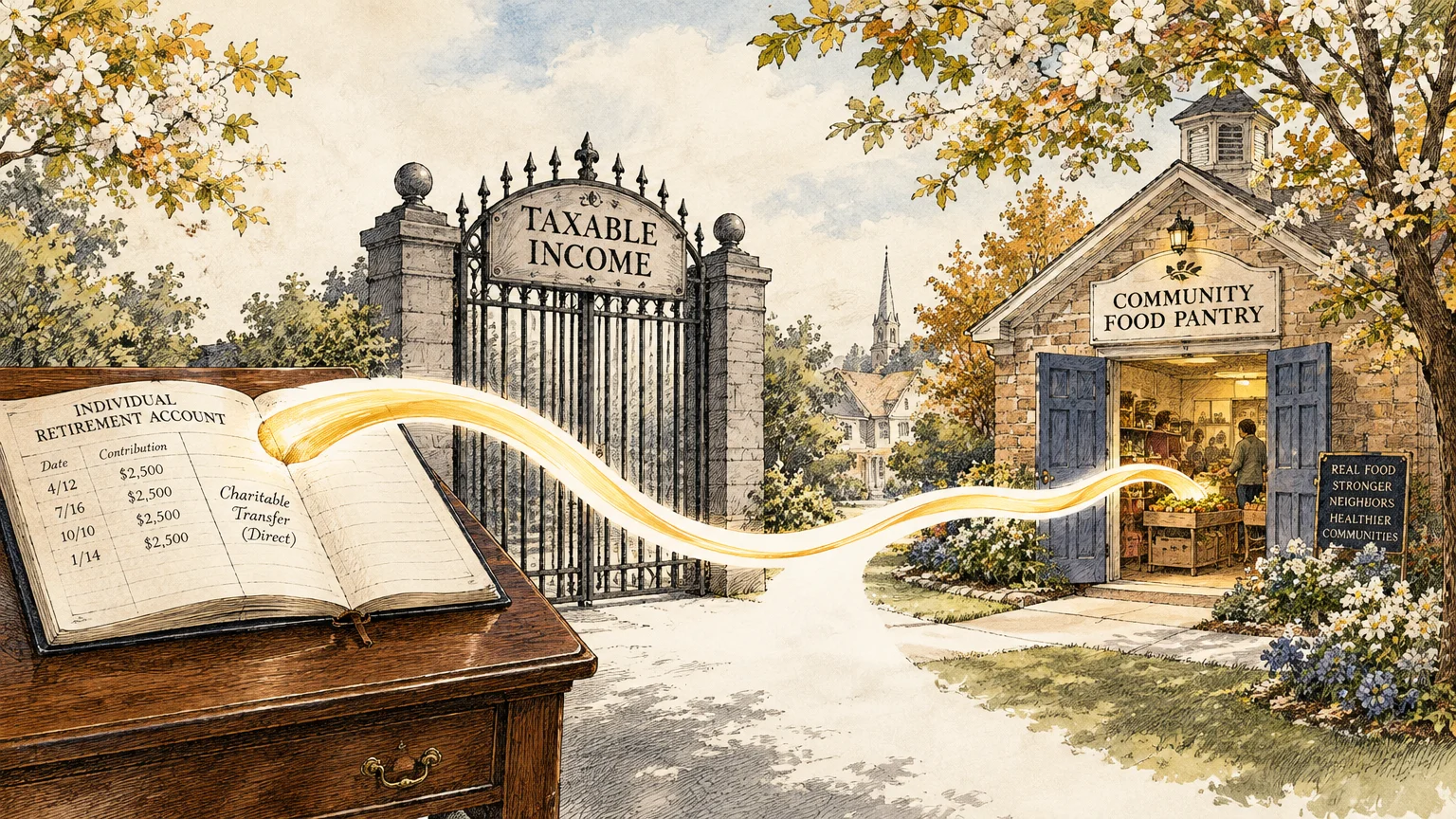
If you are age 70½ or older, you can deploy Qualified Charitable Distributions (QCDs) to eliminate this problem. A QCD transfers money directly from your IRA custodian to a qualified charity.
In 2026, you can transfer up to $111,000 per individual using a QCD. Married couples with separate IRAs can donate up to $222,000 combined from their accounts.
Qualified Charitable Distributions count toward your annual RMD once you reach age 73. Crucially, the distributed funds do not count toward your Adjusted Gross Income.
Removing the distribution from your AGI creates room to absorb new freelance or side-gig income. You can earn supplemental cash without pushing your overall earnings into higher tax brackets.
Keeping your AGI lower through QCDs also helps you avoid surcharges on Medicare premiums. It delivers community impact while shielding your personal cash flow from federal taxation.

5. Neutralize Side Earnings with Retirement Account Catch-Ups
When you earn income from active work, you regain the ability to contribute to tax-advantaged retirement accounts. Contributing earned income directly reduces your taxable revenue for the current year.
For 2026, older workers can contribute up to $7,500 into a Traditional IRA. Savers age 50 and older can add an increased catch-up contribution of $1,100, reaching an $8,600 maximum.
If you perform contract work or operate a small business, you can open an employer-sponsored retirement plan. Workplace plans such as Solo 401(k) accounts provide much larger contribution limits.
The standard employee deferral limit reaches $24,500 in 2026. Workers age 50 and older can make an additional catch-up contribution of $8,000, bringing total deferrals to $32,500.
Workers who turn age 60, 61, 62, or 63 during 2026 qualify for special super catch-up contributions. These individuals can contribute an extra $11,250 instead of the standard catch-up limit.
Eligible workers between 60 and 63 can shelter up to $35,750 of earned income in a 401(k) plan. This deferral wipes out the tax liability generated by high-paying consulting projects.
Be aware of SECURE 2.0 rules regarding high earners. If your prior-year FICA wages exceeded $150,000, your catch-up contributions must go into a post-tax Roth account rather than a pre-tax account.

6. Utilize New Deductions for Tips and Hourly Overtime
Retirees often choose hourly service jobs, retail roles, or hospitality positions to stay active in their communities. These jobs provide social interaction alongside regular hourly compensation.
Recent tax provisions under the OBBBA offer substantial tax relief for workers earning tips or overtime wages. Eligible taxpayers can deduct up to $25,000 in qualified service tips from their taxable income.
The law also creates a dedicated deduction for overtime compensation. Qualifying workers can deduct up to $12,500 in overtime pay, while married couples filing jointly can deduct up to $25,000.
These deductions apply directly to your taxable wages, lowering your taxable income. You keep more take-home cash from busy shifts without triggering higher income taxes at year-end.
Keep precise records of your pay stubs, allocated tips, and recorded overtime hours. Your employer must track these categories accurately on your annual Form W-2 to substantiate your claims.
7. Draw From Roth IRAs and Health Savings Accounts
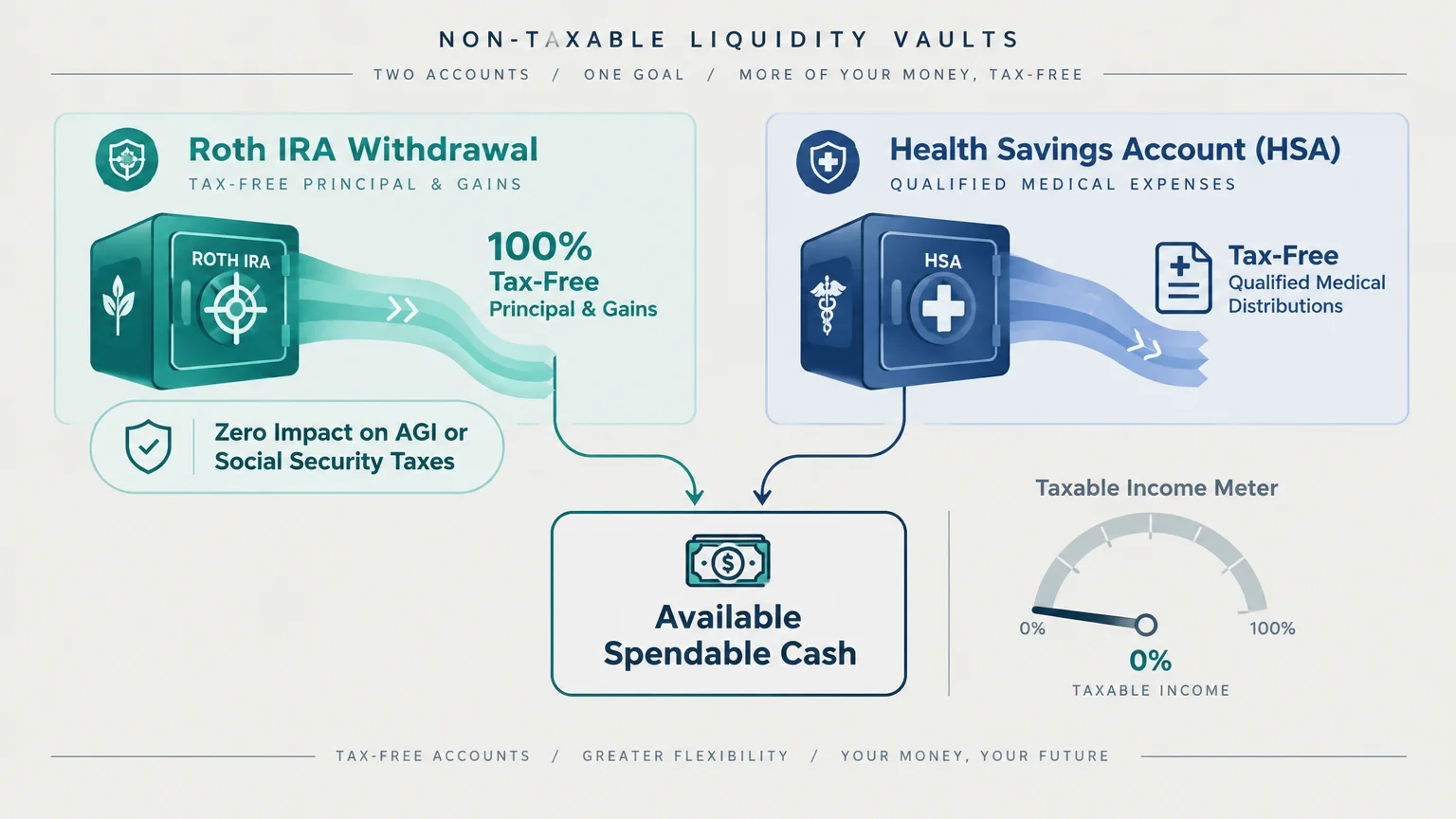
Strategic withdrawals from specialized accounts allow you to inject tax-free liquidity into your monthly budget. Roth IRAs and Health Savings Accounts (HSAs) offer unmatched tax flexibility for older adults.
Qualified distributions from a Roth IRA are completely free from federal income tax. Because you funded the account with after-tax money, withdrawals never add to your Adjusted Gross Income.
Health Savings Accounts function like a medical super-IRA once you transition into retirement. Withdrawals used for qualified medical expenses remain completely tax-free at all times.
Using HSA money to cover dental care, prescriptions, and optical exams frees up ordinary pension cash for everyday living. This strategy effectively boosts your spending power without increasing your reportable income.
Crucially, Roth distributions and qualified HSA withdrawals do not count toward your provisional income. Protecting your provisional income prevents your Social Security benefits from becoming taxable.
The Social Security Administration calculates provisional income by adding your AGI, non-taxable interest, and half of your annual Social Security benefits. Crossing specific thresholds makes your benefits taxable.
Benefits become up to 50% taxable if your provisional income exceeds $25,000 for singles or $32,000 for married couples. Taxes reach 85% above $34,000 for singles or $44,000 for married couples.
Because Roth and HSA distributions do not enter the provisional income equation, they protect your benefits. You can collect extra cash without triggering the dreaded Social Security tax torpedo.

Strategy Pillar: Lifestyle Design and Purpose-Driven Work
Earning supplemental cash in retirement should enhance your daily life rather than cause stress. Thoughtful lifestyle design ensures that work activities support your health, mobility, and personal happiness.
Peer-reviewed aging research shows that purposeful activity helps preserve cognitive performance in older adults. Maintaining a part-time venture fosters routine, intellectual challenge, and social connectivity.
Consider micro-businesses that adapt easily to physical mobility needs and shifting energy levels. Online tutoring, specialized consulting, pet sitting, and handmade crafts provide revenue with minimal physical strain.
Design your work around your desired lifestyle rather than adopting rigid corporate schedules. Set boundaries on weekly client hours so your side business never overtakes your leisure time.
Older adults from diverse cultural backgrounds often turn lifelong passions into successful micro-enterprises. Culinary instruction, genealogy research, and neighborhood sewing services generate consistent revenue while serving community needs.
Strategy Pillar: Preserving Health Coverage and Benefits
Financial gains from side work mean little if unexpected income spikes undermine your healthcare budget. You must track how higher gross income affects your federal health insurance premiums.
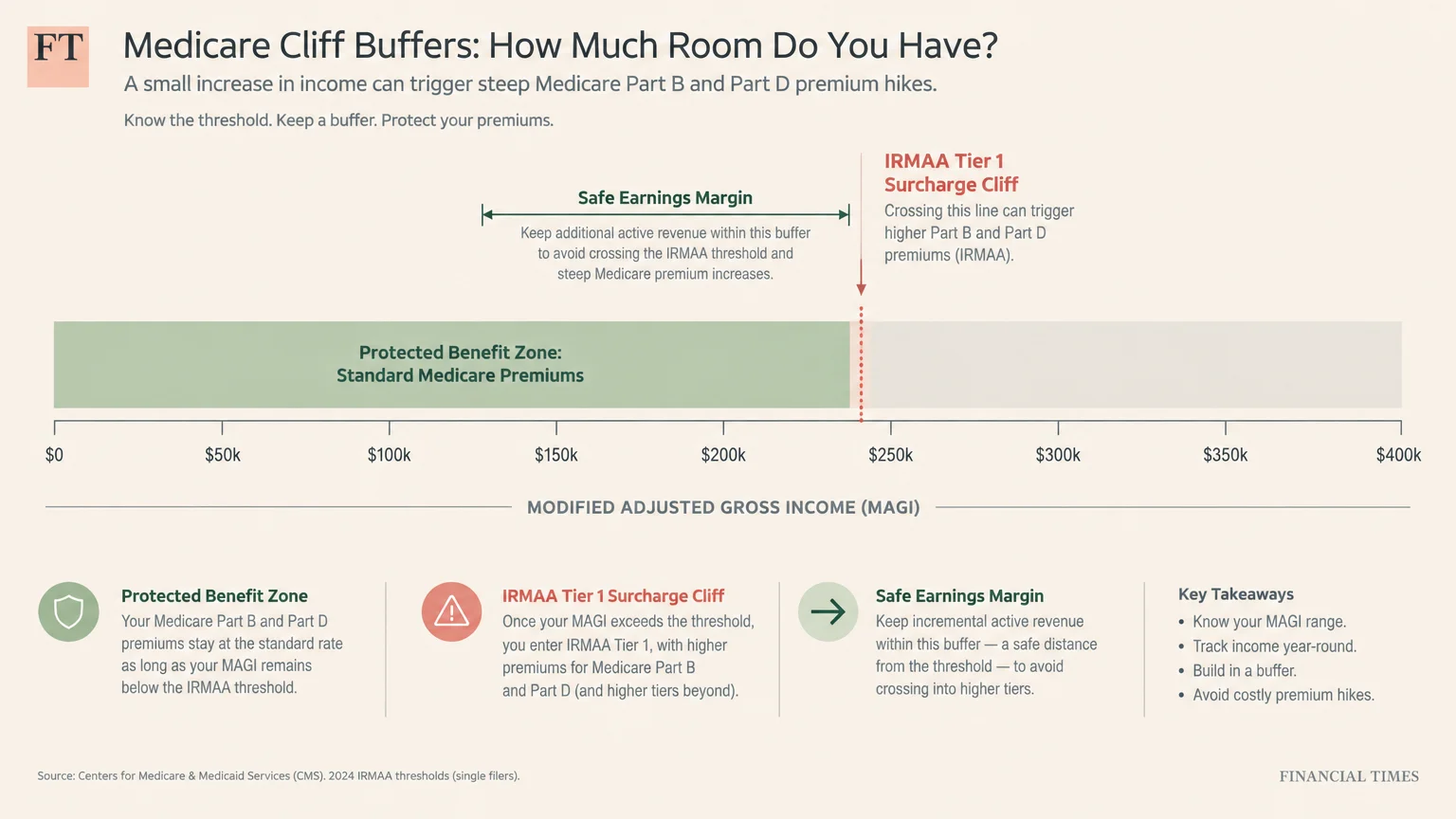
Higher income can trigger the Income-Related Monthly Adjustment Amount (IRMAA) on Medicare Part B and Part D. Crossing an IRMAA bracket by a single dollar increases your monthly healthcare costs.
Review official thresholds published by Medicare each autumn to understand where surcharges begin. IRMAA calculations look back at your tax returns from two years prior.
If you take on higher-paying consulting projects, pair that income with retirement catch-ups or deductible business expenses. Offsetting revenue protects you from unexpected premium adjustments two years later.
Physical wellness forms the foundation of any sustainable earning strategy. Avoid taking on labor-intensive side roles that risk injury or drain the energy you need for retirement.

Expert Perspectives on Earning in Retirement
Certified Financial Planner (CFP®) professionals frequently warn clients about hidden marginal tax rates. When multiple benefit phaseouts collide, an extra dollar of income can trigger surprising tax liabilities.
Financial planners recommend running multi-year tax projections before launching a commercial venture. Forecasting your revenue helps you harvest deductions systematically and keep your net profits safe.
Leading gerontologists emphasize that autonomy remains the most critical ingredient for healthy retirement work. Choosing projects you enjoy promotes mental vitality and prevents burnout during your golden years.
Consider the experience of Martin and Elena, retired educators who founded a seasonal home-watch business. They generated $18,000 in gross revenue during their first year of operation.
By using the $12,000 OBBBA Senior Bonus Deduction and deductible mileage, they eliminated federal tax on their business earnings. They enjoyed active community engagement while keeping their full Social Security benefits intact.
Critical Risks and Financial Safeguards to Watch
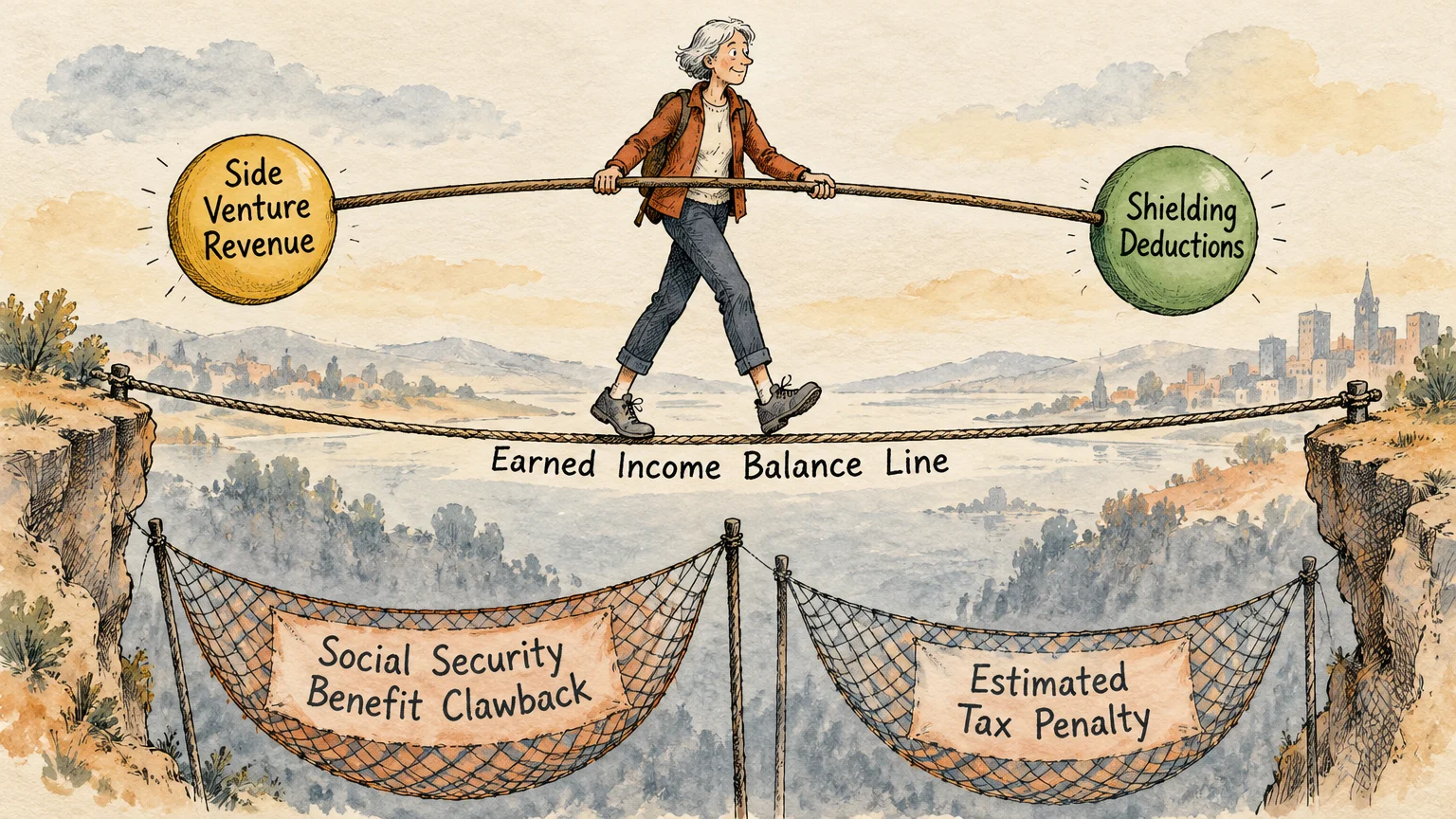
Earning extra money requires awareness of structural tax traps and unscrupulous commercial operators. Protecting your wealth demands active vigilance and accurate record keeping.
If you collect Social Security before reaching your Full Retirement Age (FRA), watch the annual earnings test. In 2026, you can earn up to $24,480 without losing any benefit money.
The Social Security Administration withholds $1 of benefits for every $2 earned above the $24,480 threshold. If you reach your FRA during 2026, the limit jumps to $65,160.
In the year you reach FRA, the SSA withholds $1 for every $3 earned above the limit before your birth month. Once you reach Full Retirement Age, the earnings test disappears entirely.
Watch out for freelance scams targeting older adults who seek work-from-home employment. Fraudulent operators often promote fake data-entry roles or mystery-shopper gigs that require upfront equipment fees.
Advocacy groups like AARP recommend verifying any potential employer through independent business bureaus. Never transfer personal funds or deposit third-party checks as part of an employment onboarding process.
Remember that independent contractor income faces self-employment tax for Social Security and Medicare. Setting aside roughly 15% of net freelancing earnings prevents unpleasant surprises when filing estimated taxes.
Submit quarterly estimated tax payments if you anticipate owing more than $1,000 in combined federal taxes. Meeting safe-harbor payment thresholds shields your family from costly underpayment penalties.
Frequently Asked Questions About Senior Side Income
Can I earn freelance income without paying self-employment tax?
Self-employment tax applies to net business earnings exceeding $400 in a calendar year. You cannot eliminate this tax, which funds Social Security and Medicare.
However, you can significantly reduce your net earnings by tracking legitimate business write-offs. Deducting home office space, mileage, software tools, and supplies lowers your taxable self-employment base.
How does part-time income affect my Medicare Part B and Part D premiums?
Part-time income only impacts Medicare premiums if your Modified Adjusted Gross Income crosses statutory IRMAA tiers. Surcharges do not apply until income exceeds substantial thresholds.
The federal government assesses IRMAA using your tax return from two years prior. Monitoring your AGI ensures you stay safely beneath the first surcharge bracket.
What records must I keep to claim the 14-day Augusta Rule?
Maintain an accurate written calendar documenting the exact dates your home was rented to guests. Retain bank statements showing received payments and evidence of local rental market rates.
Printed listings of comparable neighborhood rentals substantiate that your charged rates matched regional market pricing. These records prove compliance if the IRS requests documentation.
Will earning money from a creative hobby trigger an IRS audit?
Earning money from hobbies will not automatically trigger an audit if you report gross receipts properly. The IRS expects taxpayers to report all income from crafts, art, or informal services.
Be cautious when attempting to deduct business losses from personal hobbies. The IRS requires you to demonstrate an ongoing profit motive before allowing business deductions against other income.
Take Action in the Next 48 Hours
Building tax-free revenue streams does not require an accounting degree, but it does demand deliberate execution. The best way to secure your financial footing is by taking one concrete step right away.
Take an hour over the next 48 hours to review your current Adjusted Gross Income on your most recent tax return. Identify which deductions and income limits match your current earning activities.
Reach out to a qualified tax professional or financial advisor to discuss the Senior Bonus Deduction and retirement account catch-ups. Establishing a clear tax strategy today ensures you keep every dollar of supplemental income tomorrow.