A sudden phone call claiming your Social Security benefits face immediate suspension can derail your peace of mind in seconds. Learning to identify predatory winter imposters shields your hard-earned retirement income from aggressive financial criminals right now.
Fraud syndicates weaponize end-of-year payment updates and annual cost-of-living adjustments to disorient retirees across the country. They manufacture fake legal emergencies, demanding immediate payments or personal banking details before you can verify their claims.
Arming yourself with verified facts ensures your monthly checks stay completely safe, uninterrupted, and under your control throughout the colder months.
The Winter Impersonation Crisis in Numbers
Cold winter weather coincides with a documented surge in predatory telecommunications fraud targeting American retirees.
The Federal Trade Commission exposed the severity of this criminal industry in its report, Protecting Older Consumers 2025–2026, released on October 19, 2026.
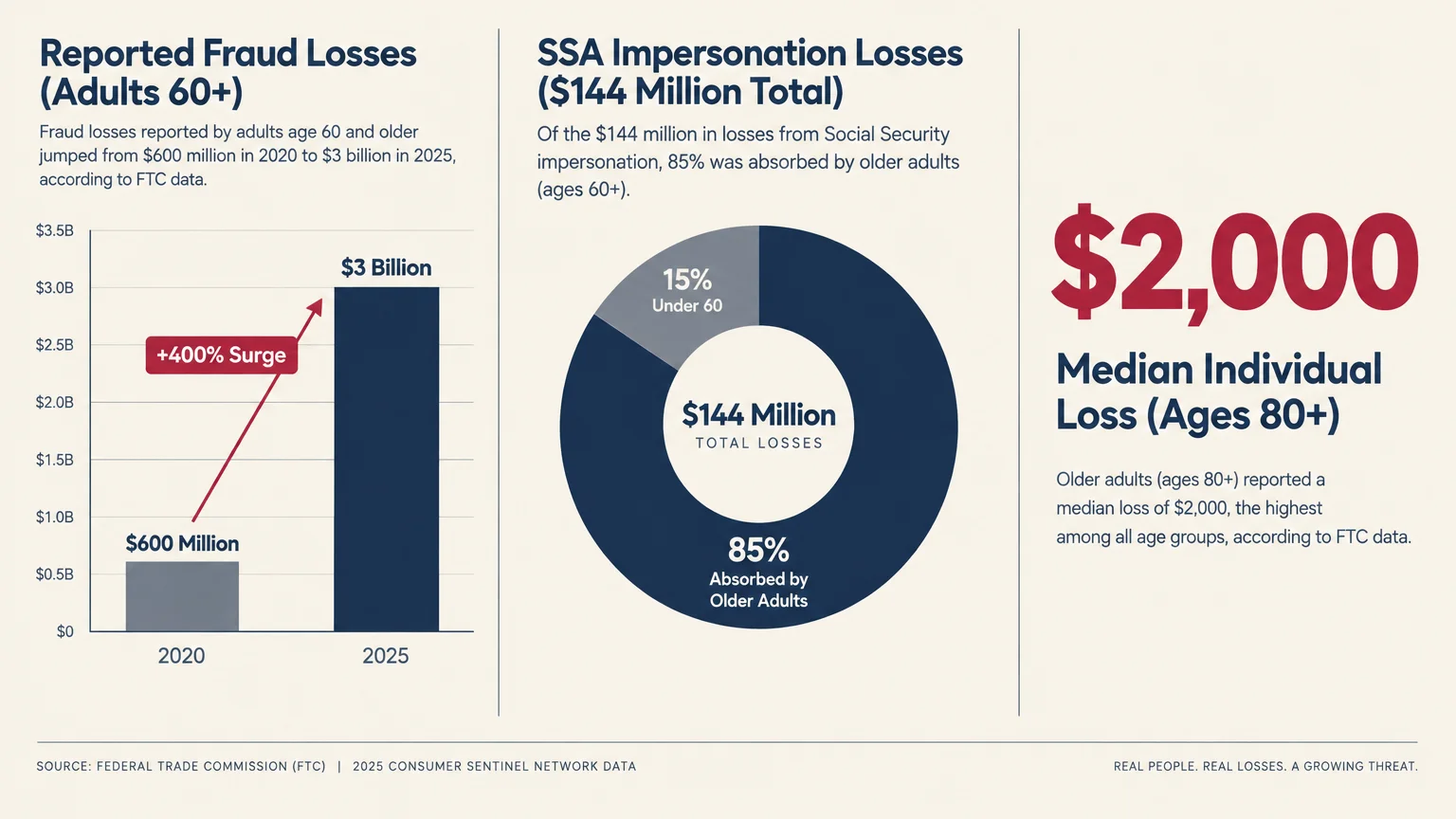
Adults aged 60 and older reported losing $3 billion to fraud in 2025 alone.
That alarming figure marks a fivefold increase—a 400 percent surge—from the $600 million reported in 2020.
Official complaints capture only a small fraction of the true economic damage inflicted on retired households.
The FTC estimates that actual fraud losses for older consumers ranged between $13.3 billion and $119.5 billion in 2025.
Government impersonation schemes ranked second in total financial losses for older adults, trailing only fraudulent investment schemes.
The FTC recorded more than 330,000 complaints regarding government impersonation in 2025, representing a 25 percent increase over the prior year.
Scammers masquerading as Social Security Administration personnel generated $144 million in reported losses across all age groups in 2025.
Older adults absorbed 85 percent of those devastating Social Security impersonation losses.
While scammers initiate contact across multiple channels, phone calls produce the highest median financial losses for seniors.
Adults aged 80 and older experienced the highest median individual loss at $2,000 per incident.
Additionally, a 2026 report by the U.S. Senate Special Committee on Aging, titled Artificial Intelligence and Older Americans, revealed sobering FBI data.
Total fraud losses among adults 60 and older reached $7.7 billion in 2025, up from $4.8 billion in 2024.

Why Criminals Exploit the Winter Policy Calendar
Scammers intentionally coordinate their deceptive phone campaigns with seasonal government announcements and regulatory milestones.
On October 14, 2026, the Social Security Administration officially announced a 3.6 percent cost-of-living adjustment for 2027.
This 3.6 percent bump will increase average monthly retirement checks by approximately $75, lifting benefits from $2,095 to $2,170.
Nearly 72 million Social Security beneficiaries will receive these increased monthly payments beginning in January 2027.
Meanwhile, roughly 7.3 million Supplemental Security Income recipients see their adjusted payments arrive earlier, on December 31, 2026.
The agency also established strict procedural deadlines that criminals readily manipulate to confuse anxious retirees.
Beneficiaries had to opt into paperless communications by November 18, 2026, to view their 2027 COLA notice online.
Online notices became accessible in late November 2026, while physical paper notices enter mailboxes throughout December 2026.
Fraud syndicates exploit the weeks between the initial autumn announcement and the arrival of official winter paperwork.
They know you expect correspondence regarding your new benefit amount and exploit this anticipation to lower your natural defenses.
Furthermore, the maximum amount of earnings subject to the Social Security tax rises from $184,500 in 2026 to $192,300 in 2027.
Imposters use these shifting tax thresholds to manufacture false tax compliance issues that terrify working seniors.
1. The 2027 COLA Activation Fee Scheme
On October 21, 2026, the SSA Office of the Inspector General issued an urgent public warning regarding COLA fraud.
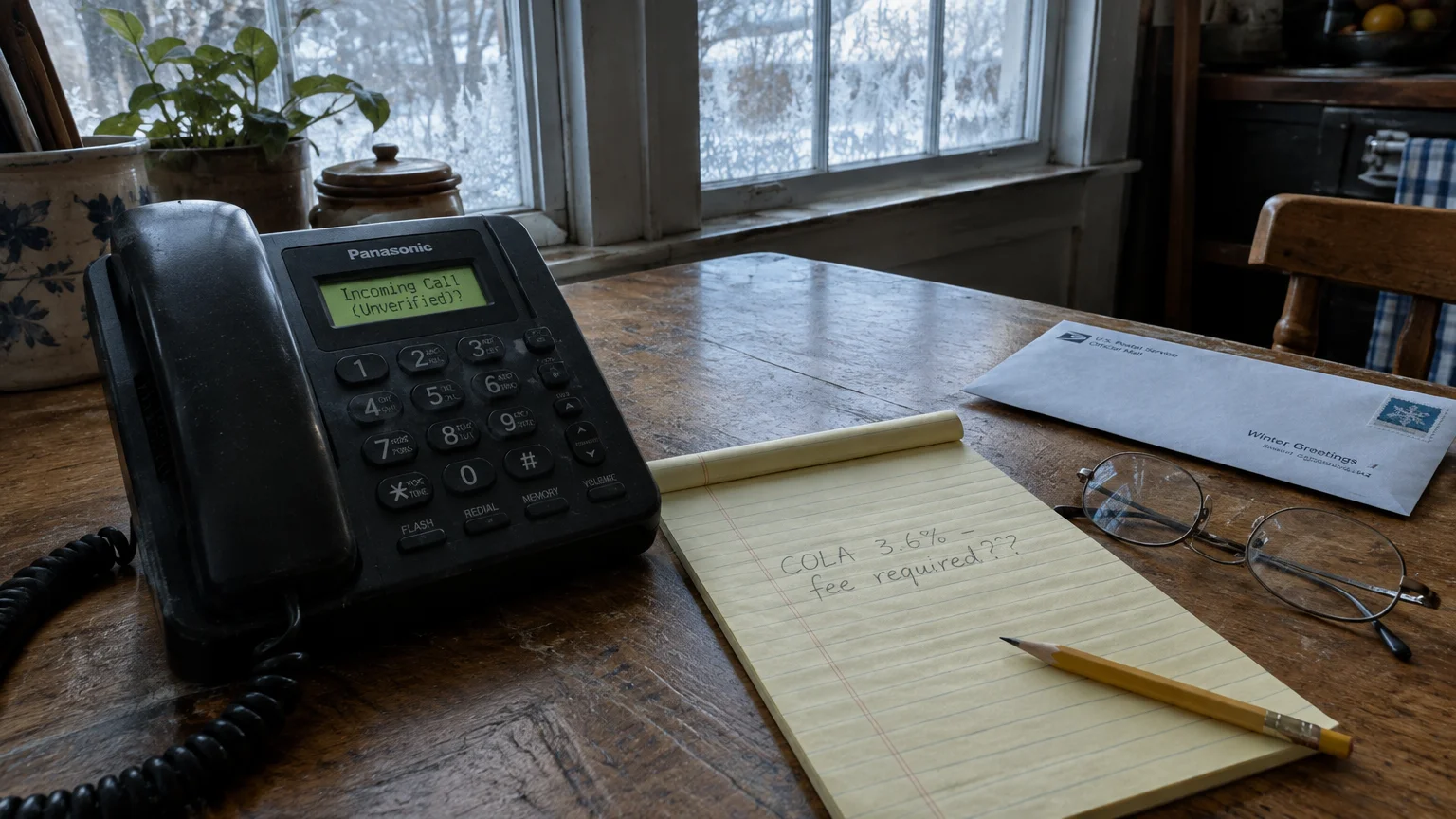
Imposters contact beneficiaries claiming they must pay an administrative fee to unlock the new 3.6 percent cost-of-living adjustment.
The caller insists that rising inflation requires personal verification before the government can release your $75 monthly increase.
They demand personal banking details, credit card numbers, or gift card codes to complete this fabricated activation process.
The scammer warns that failing to verify your details immediately will forfeit your cost-of-living adjustment for all of 2027.
Federal law dictates that all annual cost-of-living adjustments apply automatically to every eligible recipient.
You never need to apply, register, verify information, or pay fees to receive your higher monthly benefit payment.
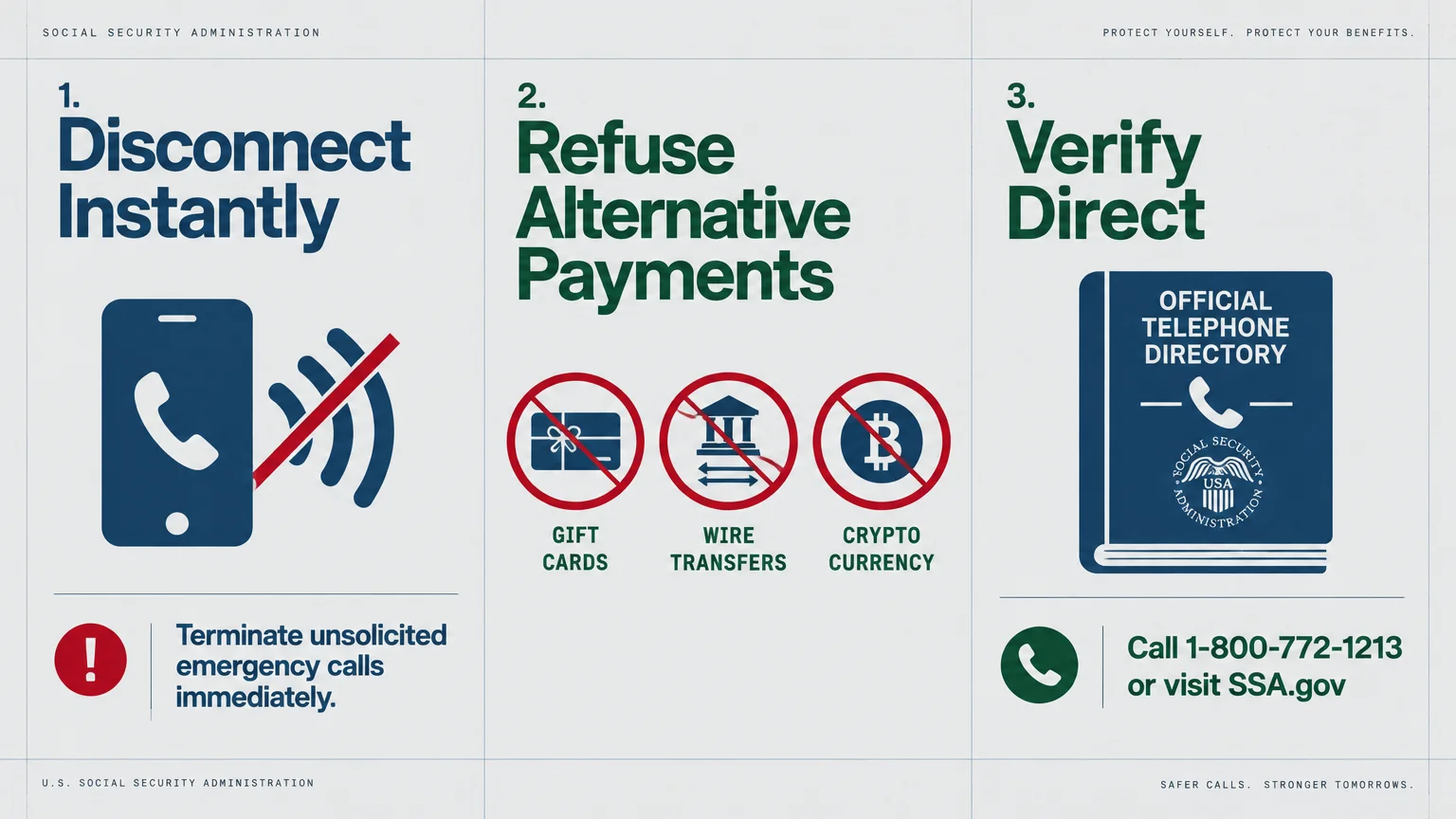
If anyone calls demanding payment to deliver your 2027 benefit adjustment, terminate the call immediately.
2. The Bogus Benefit Boost Recalibration Call
On September 21, 2026, the SSA OIG published a targeted alert exposing fraudulent benefit boost promotions.
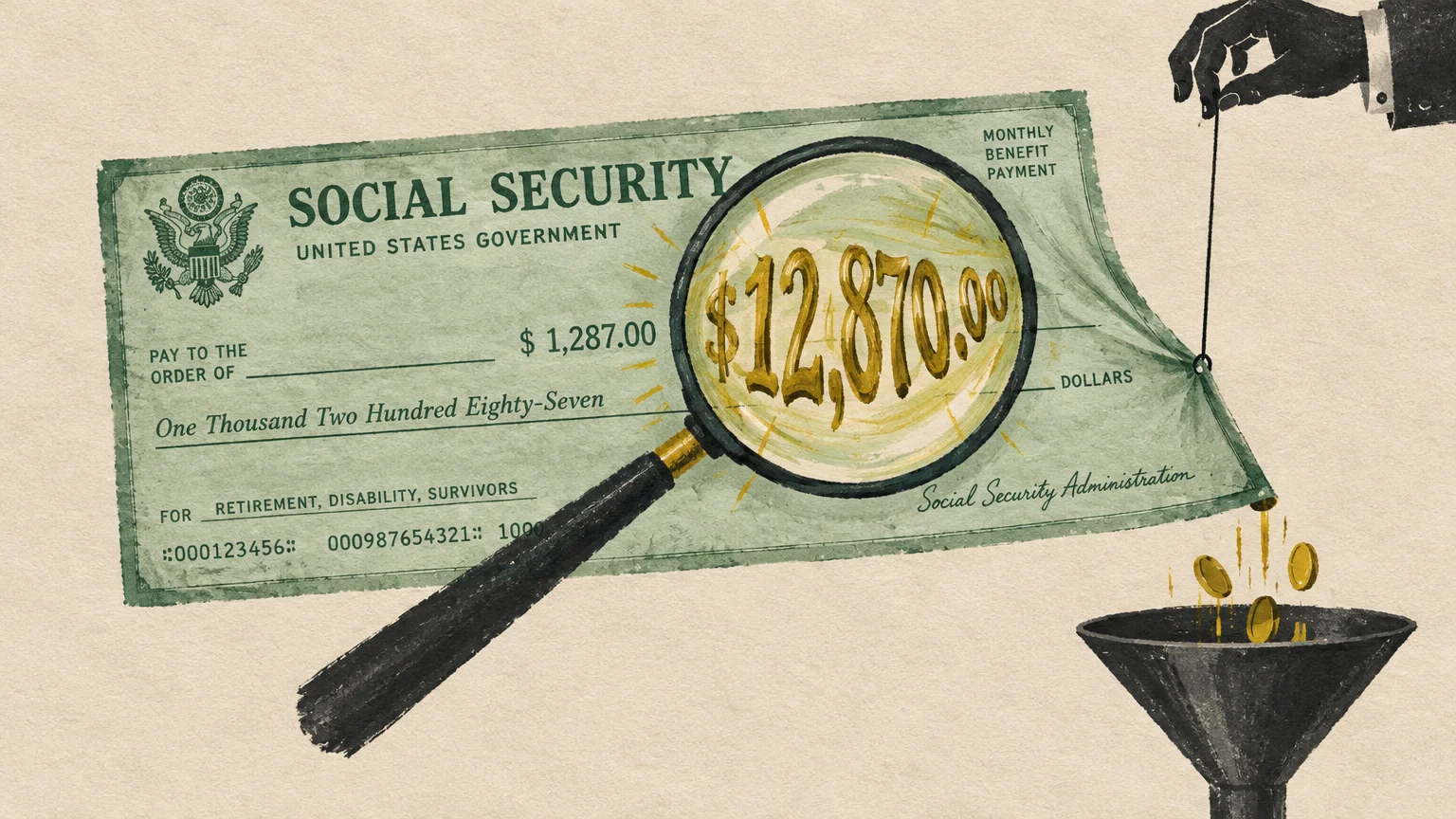
Deceptive callers target seniors by offering to permanently recalculate and increase their monthly retirement checks.
The caller claims that recent congressional legislation created secret administrative mechanisms to maximize baseline payouts.
They request an upfront service charge or enrollment fee to file specialized recalibration paperwork on your behalf.
They also press for your full Social Security number, date of birth, and complete banking routing details.
Social Security benefits depend entirely on your highest thirty-five years of earnings indexed for national wage growth.
No outside agency, commercial service, or private consultant possesses the authority to alter statutory federal benefit formulas.
Sharing your sensitive data with these callers guarantees identity theft rather than higher monthly retirement income.

3. The Real Employee Identity and Fake Credential Trap
Scammers increasingly impersonate actual public servants to convince skeptical retirees that their demands are legitimate.
On April 28, 2026, the SSA OIG issued a major alert titled New Wave of Imposter Scams.
The alert revealed that criminals now steal the real names and titles of active agency personnel from public websites.
While keeping you on the telephone, the imposter sends a photo of a government badge to your mobile device.
These forged digital credentials feature official seals, realistic employee photographs, and fabricated agency serial numbers.
The caller insists that this visual proof confirms their federal authority and demands immediate compliance with their instructions.
Authentic Social Security Administration personnel will never send images of badges or credentials to your smartphone.
Never rely on a digital badge sent via text or email to verify the identity of an unexpected caller.
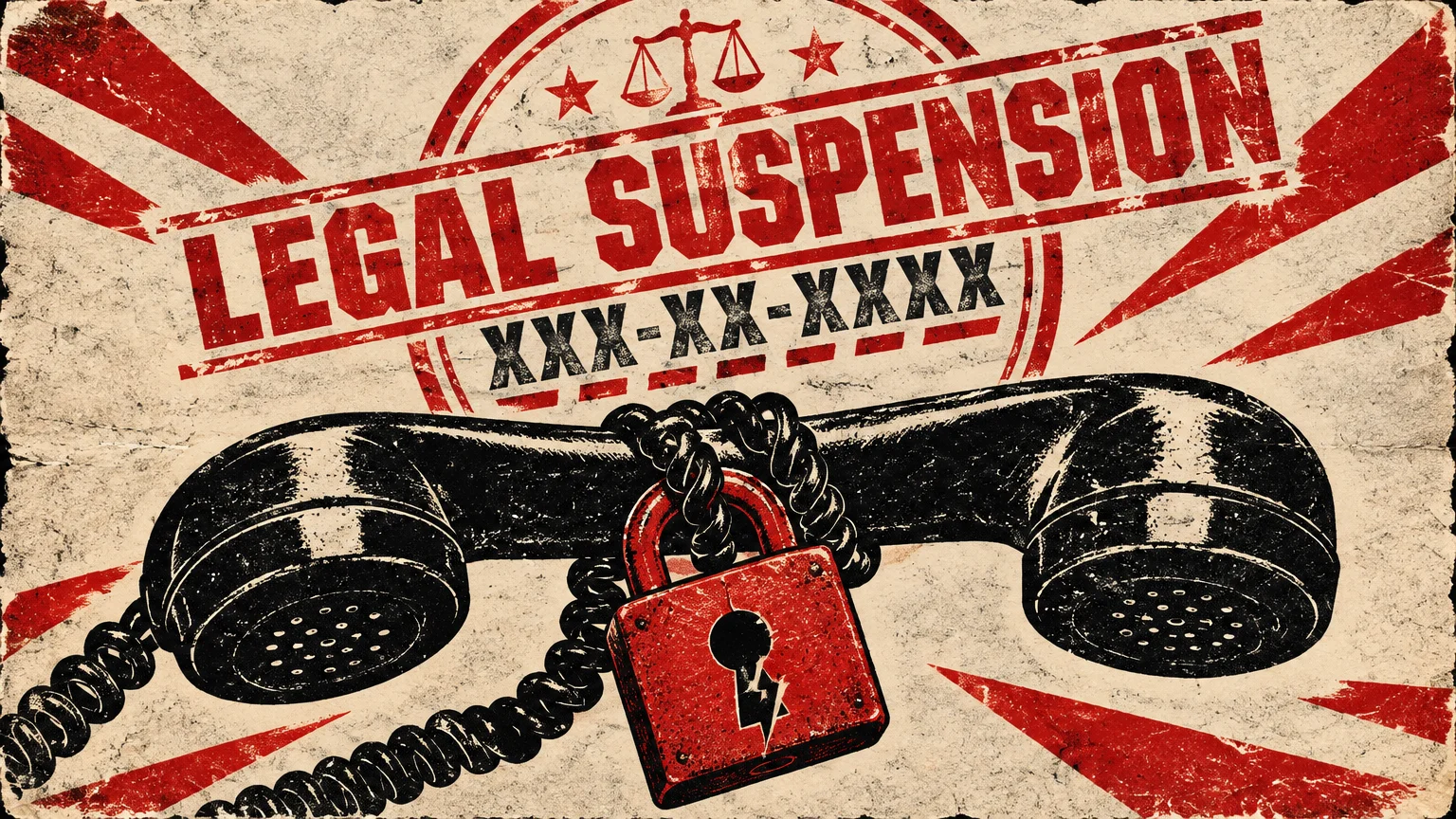
4. The Suspended Social Security Number and Legal Arrest Hoax
High-pressure intimidation remains one of the most destructive psychological weapons utilized by predatory call center syndicates.
A frantic caller claims your Social Security number has been linked to drug trafficking or cross-border money laundering.
They state that local law enforcement officers or federal marshals are currently traveling to your home to arrest you.
The imposter claims the federal government suspended your Social Security number to prevent further illegal transactions under your name.
To avoid immediate arrest and clear your criminal record, they insist you must pay a significant legal bond.
The Social Security Administration never suspends, revokes, freezes, or cancels a citizen’s Social Security number under any circumstance.
Federal agencies never contact citizens by telephone to threaten immediate arrest, property seizures, or mandatory cash bonds.
Any voice on the phone threatening law enforcement detention is a criminal attempting to manipulate your emotions.
5. The Safe Government Account Transfer Ruse
In this insidious scheme, the fraudster poses as an investigator protecting you from internal banking corruption.
The caller claims that rogue employees at your local bank branch are attempting to steal your life savings.
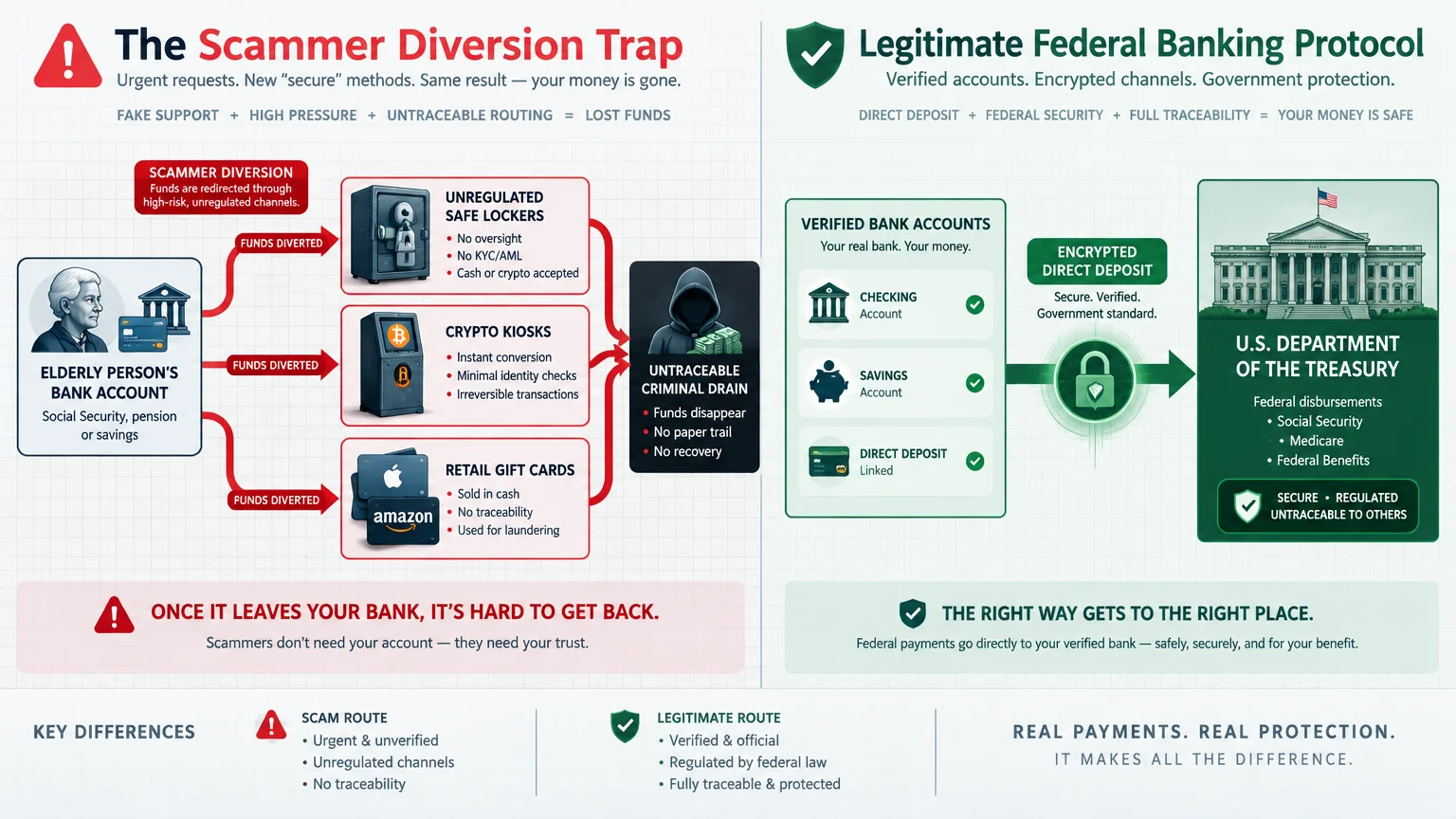
To safeguard your assets, they instruct you to withdraw money from your accounts immediately before the bank freezes them.
The caller directs you to convert cash into retail gift cards, purchase physical gold, or deposit money into cryptocurrency kiosks.
In other cases, they provide wiring instructions to move funds into a secure government safety locker account.
The Social Security Administration does not operate protective financial accounts, safety deposit vaults, or digital currency repositories.
Once you transfer cash or provide gift card codes to these callers, recovering your funds becomes virtually impossible.
Legitimate federal agencies will never direct you to liquidate personal assets or transfer funds to external accounts.
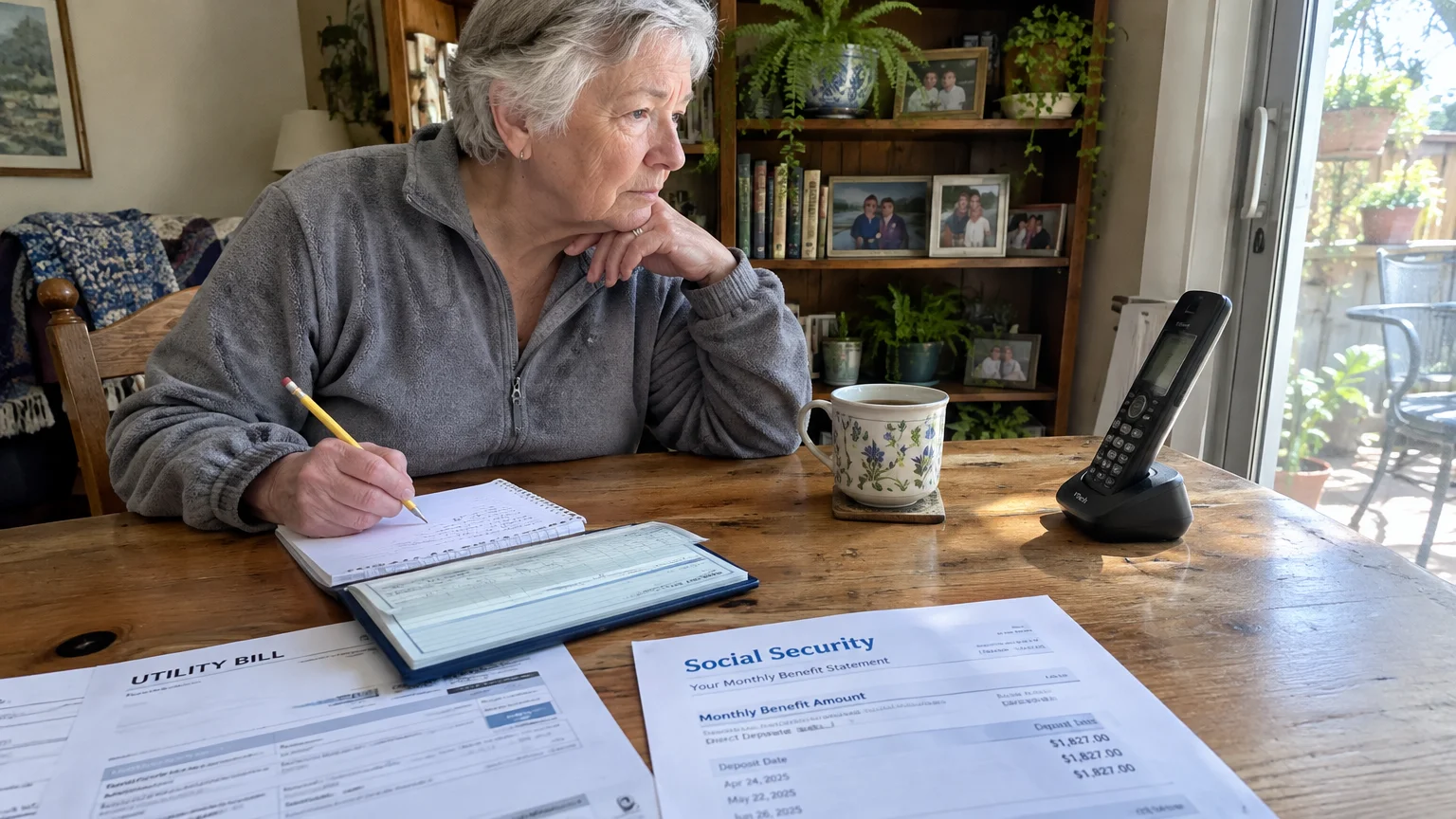
6. The Direct Deposit Diversion and Overpayment Demand
Fraud syndicates aggressively target the mechanics of how you receive your monthly Social Security income.
The caller claims that an internal audit revealed you received thousands of dollars in accidental benefit overpayments.
They warn that your future monthly payments will cease immediately unless you reimburse the government during the phone call.
They demand payment through instant peer-to-peer mobile applications, wire transfers, or prepaid debit cards.
Alternatively, the caller pretends they are preparing your file for the January 2027 cost-of-living adjustment.
They request your routing number and checking account information under the pretext of updating your electronic deposit records.
Criminals then use that stolen banking data to redirect your scheduled benefit payments into offshore accounts.
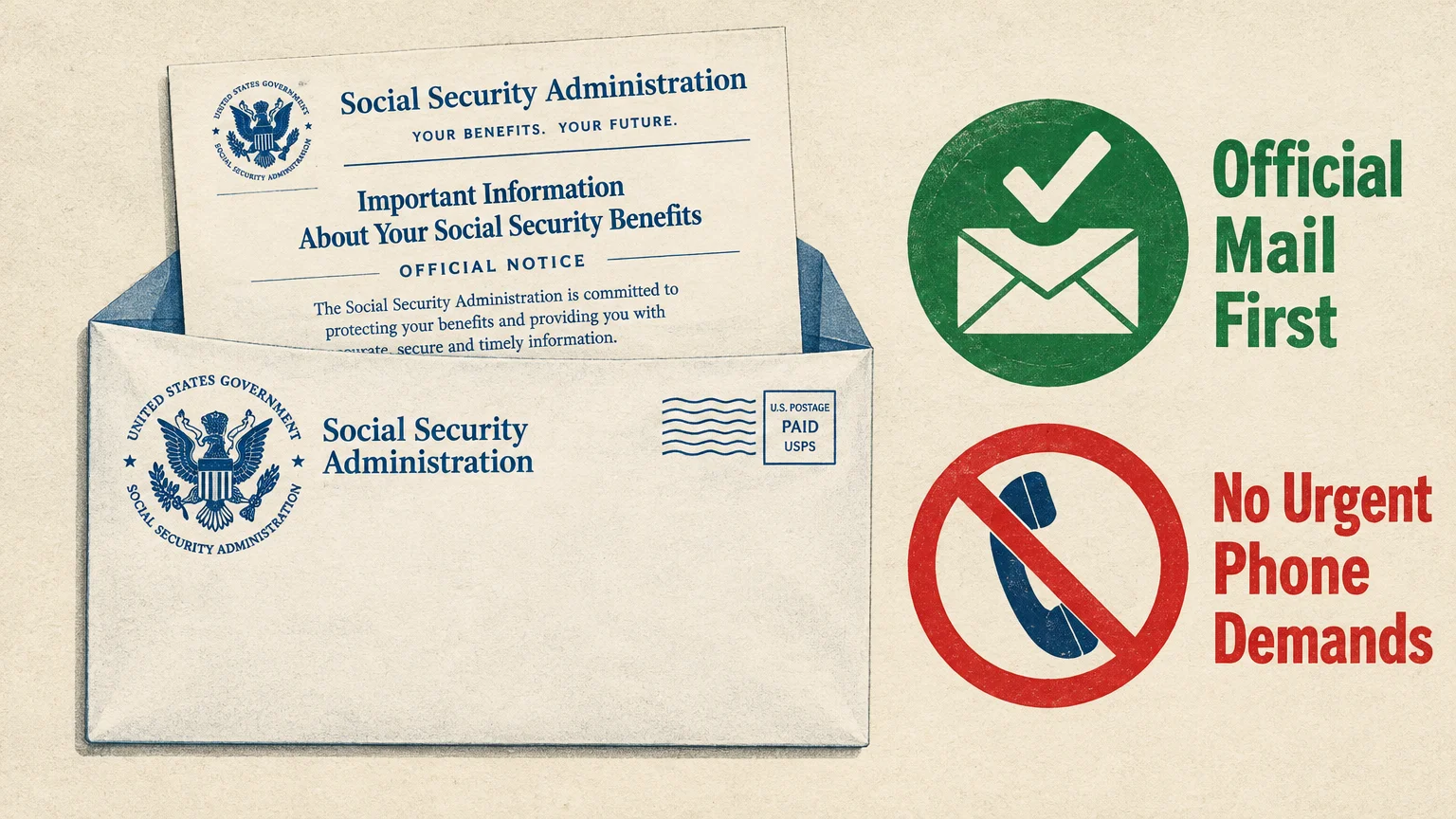
Authentic overpayment notifications arrive exclusively through the United States Postal Service, accompanied by detailed formal appeal guidelines.
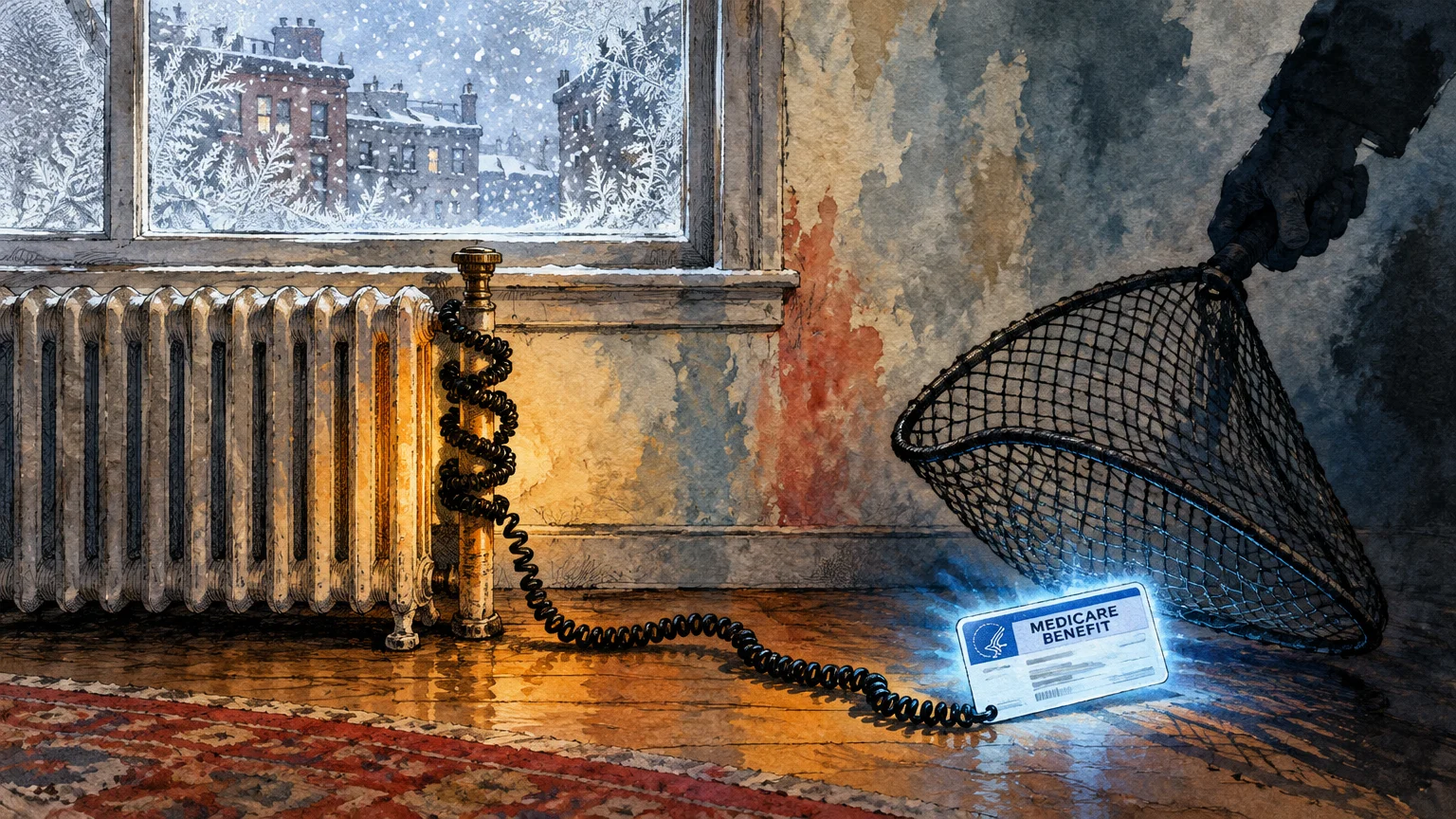
7. The Winter Fuel Assistance and Medicare Coordination Con
Rising winter utility bills create genuine financial pressure for millions of American retirees living on fixed budgets.
Predatory callers exploit this economic strain by promoting fictitious federal energy assistance programs linked to Social Security benefits.
The caller promises to reduce your heating bills by hundreds of dollars through a special winter hardship grant.
To qualify for this fictional subsidy, they insist you must confirm your Medicare number and Social Security details.
They often reference the recent conclusion of the Medicare open enrollment period to make their offer sound official.
Once scammers acquire these sensitive identifiers, they file fraudulent medical claims and compromise your existing credit profile.
Legitimate heating assistance programs, such as the Low-Income Home Energy Assistance Program, operate through local state agencies.
The federal government never places cold calls offering utility discounts in exchange for personal identifying information.

8. The AI Voice-Cloning Beneficiary Emergency Scheme
Rapid advancements in artificial intelligence allow criminal syndicates to execute terrifyingly convincing voice impersonation scams.
The Senate Special Committee on Aging highlighted this growing technological threat in its landmark 2026 investigative report.
The report revealed that elder fraud losses surged to $7.7 billion in 2025 as criminals adopted AI tools.
Scammers capture brief audio snippets of agency officials or your loved ones from social media videos.
They process these audio samples through voice cloning software to generate speech that mimics exact vocal tones and inflections.
You might receive a call from someone who sounds identical to a government investigator or your own grandchild.
The caller claims your relative is incarcerated and needs immediate cash from your Social Security deposits for bail.
Never rely solely on voice recognition when unexpected callers demand urgent financial transactions or personal identifying numbers.
Always verify the situation independently by contacting your relative directly on their established personal phone number.
Three Strategic Pillars to Protect Your Retirement Nest Egg
Income Planning Safeguards
Protecting your retirement income requires establishing robust digital and operational barriers around your financial records.
Begin by creating and claiming your personal account on the official Social Security Administration website.
Creating your account prevents identity thieves from opening an unauthorized profile using your stolen personal information.
Activate multi-factor authentication on your account, using an authenticator application rather than standard text message verification.
Review your electronic benefit statement regularly to confirm that your lifetime earnings history and contact records remain accurate.
Enroll in automated deposit alerts with your retail bank to receive instant notifications when monthly deposits arrive.
Contact the major credit bureaus to place a security freeze on your credit files to prevent unauthorized credit openings.
A credit freeze stops predatory syndicates from establishing fraudulent loan accounts even if they acquire your Social Security number.
Lifestyle Design and Daily Habits
Shielding yourself from phone scams requires embedding practical defensive habits into your daily household routines.
Establish a household rule to let all incoming calls from unrecognized numbers go directly to your voicemail system.
Legitimate organizations and government agencies leave detailed messages, while automated criminal dialers frequently disconnect without recording.
Modern telecommunications technology allows overseas fraudsters to display local numbers or official agency names on your caller identification.
Never assume an incoming call is genuine simply because your phone displays the name of a federal agency.
Establish a confidential family code word with your children and grandchildren to verify urgent emergency calls.
Keep a physical list of verified contact numbers near your telephone rather than searching online during stressful moments.
Take your time with every financial conversation, refusing to let any caller rush you into making immediate choices.
Health and Cognitive Wellness
Protecting your financial independence also involves caring for your physical health, mental resilience, and social connections.
Winter weather frequently restricts outdoor activity, leading to increased isolation for retirees living alone.
Social isolation increases vulnerability to phone scams, as lonely individuals often welcome conversations with friendly strangers.
Neuroscience research indicates that high-stress situations trigger emotional panic, temporarily impairing the brain’s executive decision-making centers.
Scammers intentionally induce acute panic to short-circuit your logical thinking and force impulsive compliance.
Combat this vulnerability by establishing a personal rule to pause for twenty-four hours before responding to unexpected financial demands.
Maintain active social connections by scheduling weekly phone calls with friends, family members, or local community groups.
Discussing incoming suspicious phone calls with your personal network helps demystify scam tactics and reinforces your defenses.

Expert Perspectives on Elder Financial Defense
Financial and gerontological experts agree that proactive defense systems are essential for safeguarding retirement assets.
Certified Financial Planner professionals recommend designating a trusted contact person on all your brokerage and bank accounts.
A trusted contact does not have access to your money or authority to make transactions on your behalf.
Instead, financial institutions contact this designated individual only if they detect suspicious account activity or potential exploitation.
This simple administrative step provides an invaluable early warning system against large-scale unauthorized fund transfers.
Gerontologists emphasize that families must eliminate shame and guilt from discussions surrounding modern consumer fraud.
Criminal syndicates operate professional call centers equipped with sophisticated scripts designed to deceive even the sharpest minds.
Treating scam encounters as everyday consumer hazards encourages seniors to report suspicious calls immediately rather than suffering in silence.
Open dialogue among family members transforms financial security into a shared, empowering household priority.
Official Rules: How the Real Social Security Administration Communicates
Under Commissioner Frank J. Bisignano, the Social Security Administration follows strict protocols when communicating with the American public.
The agency primarily contacts citizens by telephone under specific, well-defined administrative circumstances.
Agency staff may call you if you recently filed an application for retirement, disability, or survivor benefits.
They might also contact you if you currently receive benefits and requested assistance with your ongoing record.
However, if a genuine issue exists regarding your account, the agency always sends an official postal letter first.
Official agency employees will never threaten you with arrest, legal prosecution, or the suspension of your benefits.
They will never demand payment through gift cards, cryptocurrency, wire transfers, prepaid debit cards, or mailed cash.
Furthermore, agency representatives will never demand immediate payment over the telephone to prevent severe legal consequences.
If you suspect a caller is an imposter, hang up immediately and report the call to the SSA Office of the Inspector General.
You can independently verify any communication by calling the agency’s official customer service line at 1-800-772-1213.
You can also review scam warnings and defense resources through the AARP Fraud Watch Network.
Submit formal complaints about fraudulent calls directly through the official scam reporting portal to help authorities track emerging syndicates.
Frequently Asked Questions About Winter Social Security Scams
Can the Social Security Administration ever suspend your Social Security number?
No, the federal government does not suspend, freeze, or cancel Social Security numbers under any circumstances.
Your Social Security number remains permanently assigned to you throughout your entire lifetime.
Any caller claiming your number is suspended due to criminal activity or fraud is attempting to deceive you.
Do you have to apply or pay a fee to receive your 2027 COLA increase?
You do not need to submit an application, verify personal data, or pay fees to receive your increase.
The 3.6 percent cost-of-living adjustment applies automatically to all eligible payments beginning in January 2027.
Supplemental Security Income recipients will receive their automatic payment adjustments starting on December 31, 2026.
What should you do if an unexpected caller sends you a photo of an official badge?
Hang up the phone immediately and block the caller’s telephone number on your device.
The Social Security Administration never sends digital images of employee credentials or law enforcement badges to citizens.
Scammers manufacture convincing counterfeit credentials to intimidate victims and bypass natural skepticism.
How can you verify if a notice about benefit overpayments is legitimate?
Authentic overpayment notices arrive exclusively through official postal mail sent by the United States Postal Service.
Legitimate written notices explain the exact calculation error and provide formal instructions for filing an appeal or waiver.
If someone calls demanding immediate overpayment reimbursement over the phone, terminate the call without sharing any personal information.
Your 48-Hour Action Plan for Retirement Security
Safeguarding your retirement income begins with taking proactive, concrete steps before fraudulent callers target your home.
Commit to implementing one practical defensive measure within the next forty-eight hours to secure your finances.
Log into your personal Social Security account to verify that your direct deposit banking information remains completely accurate.
Contact your home telephone and mobile service providers to activate their free automated spam and robocall blocking features.
Write down official agency contact numbers and place them in an easily accessible location next to your telephone.
Share these eight winter scam tactics with a friend, neighbor, or family member during your next conversation.
Taking decisive preventive action today guarantees that your retirement income remains safe, secure, and entirely under your control.