
Your monthly retirement income is not set in stone, even after you file your initial paperwork. Recent legislative shifts and updated Social Security Administration rules can put hundreds of extra dollars directly into your bank account each month.
While the average retired worker currently collects between $2,064 and $2,087 per month following the 2.8% cost-of-living adjustment in January 2026, strategic adjustments can push your personal payout much higher. Understanding these policy changes helps you protect and grow your household cash flow.
From historic pension offset repeals to new tax deductions for older adults, knowing which levers to pull ensures you never leave earned money on the table.
The Policy Snapshot: How New SSA Terms Reshape Your Monthly Check
Many Americans assume that once they claim their retirement benefits, the only way their payment grows is through an annual inflation bump. In reality, a wave of recent Social Security changes has altered how the agency calculates, withholds, and adjusts monthly payouts.
Understanding these new SSA terms is the fastest way to spot opportunities for a retiree benefit increase. Whether you retired years ago or plan to step away from full-time work soon, the rulebook looks very different today than it did just two years ago.
The 2026 and 2027 Cost-of-Living Adjustments
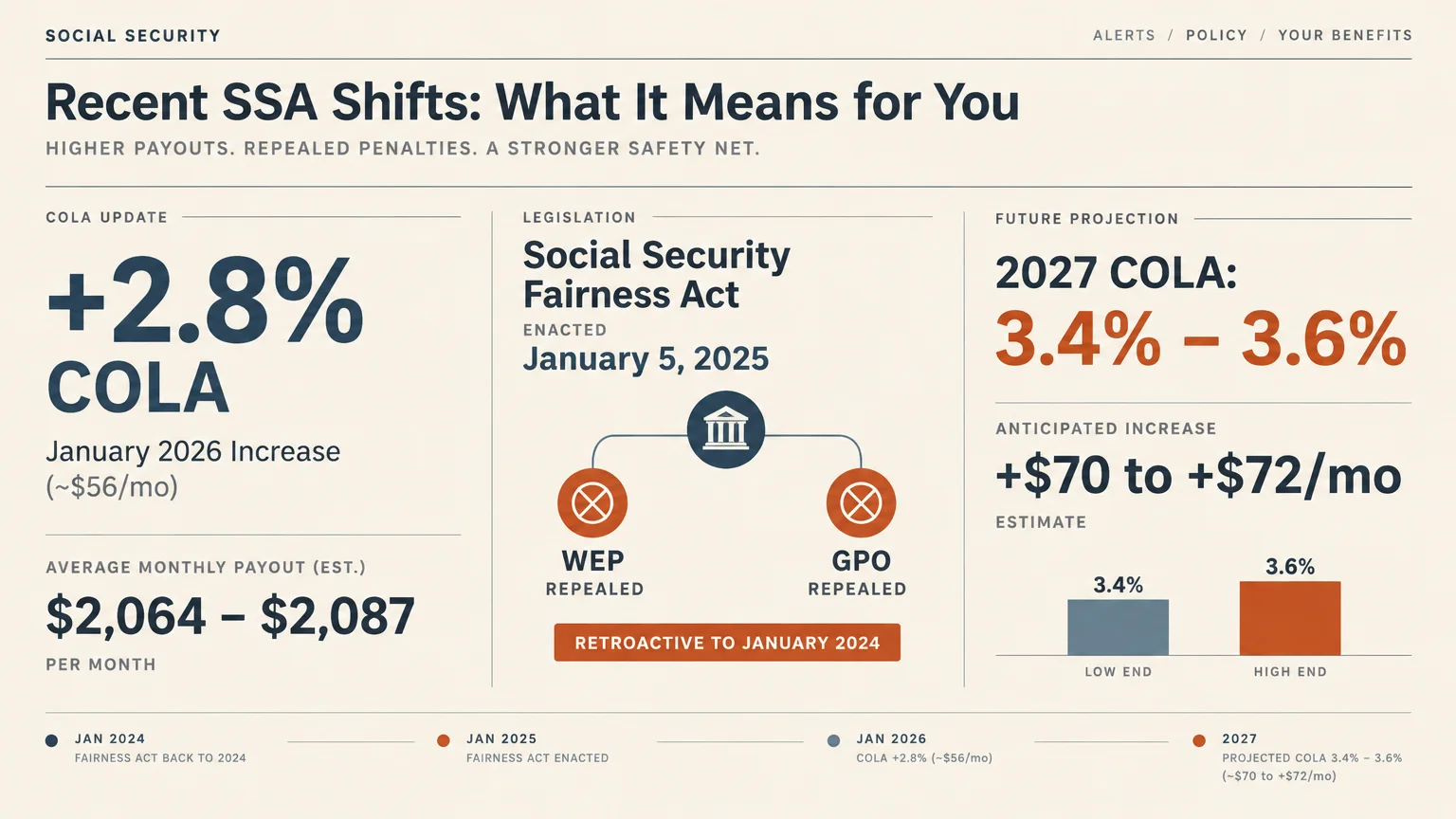
In January 2026, beneficiaries received a 2.8% cost-of-living adjustment, which added roughly $56 per month to the typical retired worker’s check. By late 2026, that brought the average monthly retirement benefit into the $2,064 to $2,087 range.
The next milestone arrives on October 14, 2026, when the agency announces the official adjustment taking effect in January 2027. Independent forecasts from The Senior Citizens League and the AARP Social Security resource center project the 2027 increase will land between 3.4% and 3.6%.
A bump of that size would add roughly $70 to $72 per month to the average retiree check. Because the agency ties these calculations directly to Bureau of Labor Statistics inflation data from the third quarter, persistent price pressures in housing and services directly fuel larger adjustments.
The Social Security Fairness Act Repeals WEP and GPO
The single biggest structural change for millions of retirees came when the Social Security Fairness Act was signed into law on January 5, 2025. This landmark legislation completely repealed the Windfall Elimination Provision and the Government Pension Offset, making the changes retroactive to January 2024.
For decades, those two provisions slashed or completely erased Social Security benefits for public servants—including teachers, firefighters, police officers, and federal workers under the old Civil Service Retirement System—who also earned pensions from employers that did not withhold Social Security payroll taxes.
With both penalties gone, eligible retired public servants and their spouses now qualify for their full, unreduced earned and spousal benefits. However, some affected retirees still need to update their records or file a new spousal application to trigger their bigger Social Security checks.
Full Retirement Age Hits the 67 Milestone
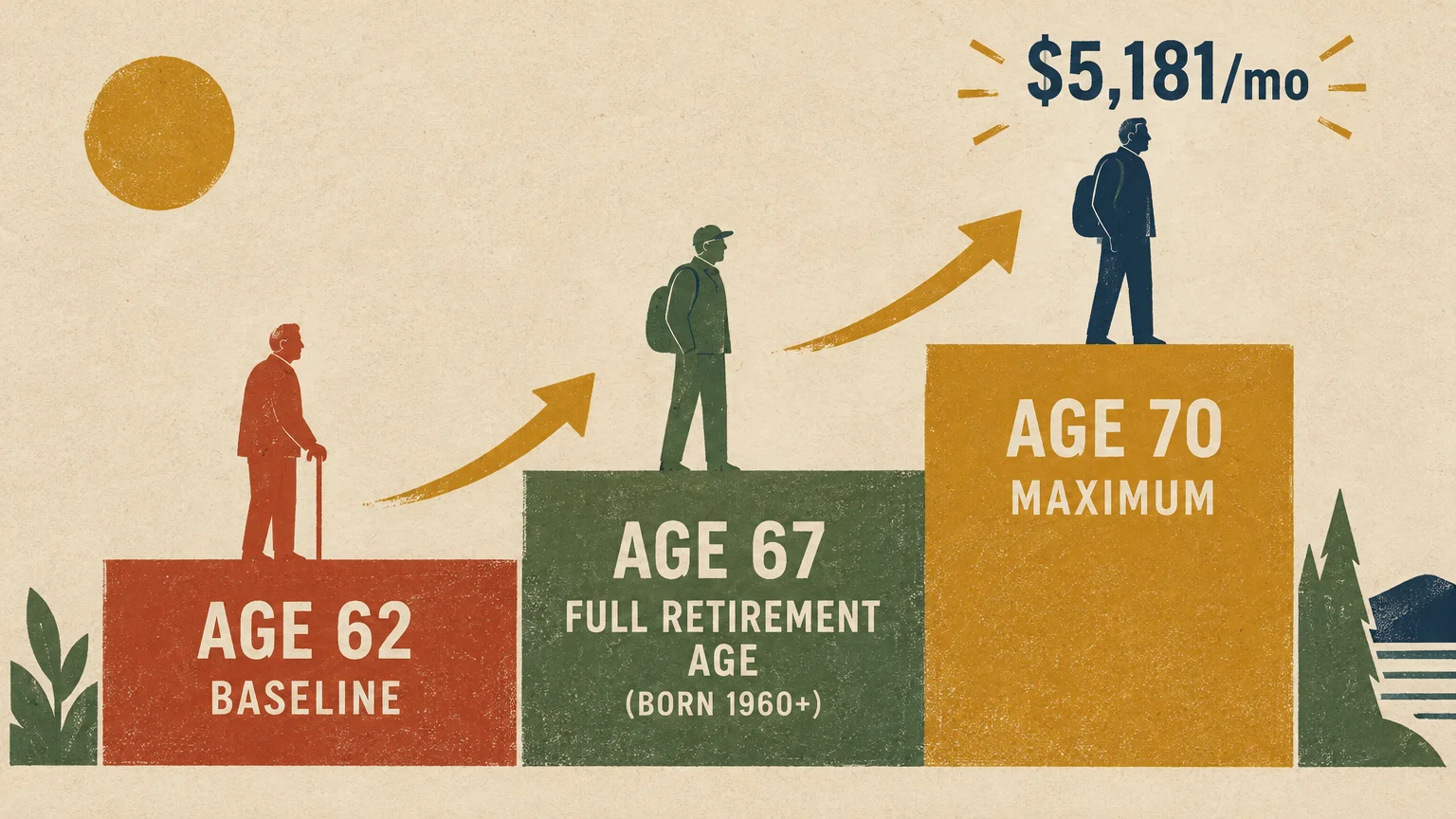
Another major shift involves the final phase-in of the 1983 Social Security Amendments. Under this schedule, anyone born in 1960 or later has a Full Retirement Age of exactly 67, and workers born in 1960 begin reaching that milestone in 2027.
Your Full Retirement Age serves as the baseline for your entire benefit calculation. Claiming at age 62 results in a permanent reduction, while waiting until age 70 unlocks the maximum possible monthly payout—which stands at $5,181 per month in 2026 for high earners.
Knowing where your birth year falls on this timeline prevents accidental permanent reductions. It also dictates when you become eligible for certain recalculation credits and penalty-free work earnings.
Pillar One: Income Planning Moves to Unlock Bigger Checks
Waiting passively for an annual inflation adjustment is rarely the best way to maximize your lifetime income. Active income planning allows you to use the latest Social Security rules update to increase your gross benefit and keep more of it after taxes.
You have several legitimate administrative Mechanisms to boost your check, even if you have already started collecting benefits. Reviewing your options systematically can uncover hidden cash flow for your household budget.
Claiming Newly Uncapped Spousal and Survivor Benefits
If you or your spouse worked in public service and received a non-covered government pension, the repeal of the Government Pension Offset is a financial game-changer. Previously, the offset reduced a spouse’s or widow’s Social Security benefit by two-thirds of their government pension, often reducing the payout to zero.
Because the penalty was so severe, thousands of retired teachers, police officers, and municipal workers never bothered submitting an application for spousal or survivor benefits. If you never applied, the agency cannot automatically pay you the newly restored benefit.
You must contact the agency and file a formal claim for spousal or widow benefits to start collecting those payments. Once approved, your household will receive the full spousal entitlement—up to half of your partner’s full retirement benefit, or up to the full amount for survivors.
Even if you previously applied and had your benefits withheld under the old offset rules, verify that the agency has your current direct deposit and mailing details on file. You can check your payment history and benefit verification letter directly through the Social Security Administration online portal.
Replacing Zero-Earning or Low-Earning Years on Your Record
The agency calculates your baseline retirement check using your highest 35 years of wage-indexed earnings. If you spent time out of the workforce raising children, caring for aging parents, or managing a health condition, your record may contain zeros or very low-earning years.
Continuing to work part-time or seasonally—even after you start collecting monthly benefits—automatically triggers an annual earnings review. If your current earnings exceed one of the lowest years in your 35-year calculation history, the agency replaces the lower year and recalculates your benefit upward.
High earners who remain in the workforce should also note the rising Social Security taxable maximum. The cap on annual earnings subject to the payroll tax stands at $176,100 in 2026 and is projected to climb to roughly $184,000 in 2027.
While paying payroll taxes on a higher salary threshold increases your current tax bill, it also pads your top 35 earning years. The agency normally processes these automatic work recomputations in the fall following the tax year, sending any retroactive increase directly to your bank account.
Turning the Retirement Earnings Test Into a Future Raise
Many pre-retirees fear working while collecting benefits before Full Retirement Age because of the Retirement Earnings Test. In 2026, if you are under Full Retirement Age for the entire year, the agency withholds $1 in benefits for every $2 you earn above $24,480.
If you reach your Full Retirement Age during 2026, a much more generous threshold applies. You can earn up to $65,160 in the months prior to your birthday month, and the agency only withholds $1 for every $3 you earn above that limit.
What most retirees miss is that money withheld under the earnings test is not lost forever. Once you reach your Full Retirement Age, the agency recalculates your monthly benefit upward to credit you back for every single month that benefits were withheld.
In effect, working above the earnings limit before Full Retirement Age forces a partial delay of your benefits, resulting in a permanently bigger check for the rest of your life. Once you hit the exact month of your Full Retirement Age, the earnings cap vanishes completely, and you can earn any amount without penalty.
Using the Withdrawal or Suspension Rules Strategically
If you claimed Social Security early at age 62 because of a layoff or health scare, and your financial situation has since improved, you have two powerful do-over options. The first option applies if you started receiving benefits less than 12 months ago.
Within that initial 12-month window, you can file Form SSA-521 to withdraw your original application completely. You must repay all benefits you and your family received, including any money withheld for Medicare premiums or taxes, which resets your record as if you never claimed.
What if you claimed more than a year ago and cannot afford to pay back past checks? Once you reach your Full Retirement Age—such as age 67 for those born in 1960—you can ask the agency to voluntarily suspend your benefit payments.
While your check is suspended, you earn delayed retirement credits worth 8% per year for every year you wait, up until age 70. You do not have to repay a single dime of the benefits you already collected, and you can restart your larger payments at any time.
Capturing the New $6,000 Federal Senior Tax Deduction
Increasing your gross check is only half the battle; what matters most is your net spendable income after federal taxes. Under federal rules that have never been indexed for inflation, up to 85% of your Social Security benefits become subject to federal income tax once your combined income crosses modest thresholds.
Fortunately, recent federal tax rules effective for tax years 2025 through 2028 offer major relief for older taxpayers. Seniors who turn 65 by December 31 of the tax year now qualify for a new federal tax deduction of up to $6,000 per person.
For a married couple where both spouses are 65 or older, this rule can shield up to $12,000 of additional income from federal taxation each year. By lowering your taxable income, you keep a larger percentage of your annual COLA bump and retirement account withdrawals.
You can review how this deduction interacts with your specific filing status by checking Internal Revenue Service tax guidance for seniors before making year-end retirement account withdrawals. Coordinating your IRA distributions with this deduction through tax year 2028 prevents unnecessary tax drag on your Social Security checks.

Pillar Two: Lifestyle Design Around Changing Benefit Rules
Financial rules do not exist in a vacuum; they shape how you spend your days, where you live, and how you support the people you love. Designing your retirement lifestyle around these new SSA terms ensures your daily routines reinforce your financial security rather than undermining it.
Whether you live on a tight fixed budget, manage mobility limitations, or share a home with extended family, smart lifestyle adjustments help stretch every dollar of your benefit increase. Small changes in how you structure work and housing can yield substantial financial rewards.
Pacing Part-Time Purposeful Work
Many retirees return to part-time work not just for the paycheck, but for social connection and mental stimulation. If you are younger than your Full Retirement Age in 2026, structuring your hours to keep your gross wages just below $24,480 lets you keep every dollar of both your paycheck and your Social Security check.
For retirees with physical mobility challenges, remote consulting, virtual tutoring, or seasonal customer support roles offer accessible ways to earn up to the limit from home. You eliminate commuting costs while adding a steady second income stream that also builds your 35-year earnings history.
If you receive a job offer that pushes you slightly over the $24,480 limit—or the $65,160 limit in the year you reach Full Retirement Age—communicate openly with the agency at the start of the year. Reporting your expected earnings early prevents sudden mid-year check stoppages and allows the agency to budget your withholdings smoothly.
Optimizing Household Cash Flow for Diverse Living Arrangements
Retirement in America looks very different across cultural backgrounds and family structures. Millions of older adults live in multigenerational households where resources, caregiving duties, and housing expenses are pooled across three generations.
If you live in a multigenerational home and are raising or financially supporting a grandchild, you should check whether your family qualifies for auxiliary benefits under your work record. When a retiree has legal custody or meets strict dependency criteria for a minor grandchild whose parents are deceased or disabled, the child may qualify for a monthly payment without reducing the grandparent’s own check.
For solo agers living on a strict fixed budget, predictability is the top priority. When the 2.8% COLA hit in January 2026—and when the projected 3.4% to 3.6% increase arrives in January 2027—consider routing half of that monthly increase into a dedicated high-yield emergency reserve.
Even setting aside $35 per month from a $70 COLA increase builds a $420 annual buffer for home accessibility upgrades, dental work, or unexpected appliance repairs. Automating that transfer on the day your Social Security check arrives keeps lifestyle creep from absorbing your raise.
Coordinating Spousal Timing as a Team
Married couples have a distinct advantage when navigating the shift to a Full Retirement Age of 67. Instead of both spouses claiming at the same time, treating your claiming dates as a staggered household project protects both current cash flow and long-term survivor security.
Often, the lower-earning spouse claims earlier—around age 62 or Full Retirement Age—to bring immediate cash into the household and reduce pressure on retirement savings. Meanwhile, the higher-earning spouse delays claiming until age 70, working toward that $5,181 maximum monthly benefit cap in 2026.
Why does that matter so much for your future lifestyle? When one spouse passes away, the smaller of the two Social Security checks disappears entirely, while the larger check continues as the survivor benefit.
By maximizing the higher earner’s check today, you guarantee the surviving spouse retains the highest possible inflation-protected income when living alone later in life. This strategy is especially vital for women, who statistically live longer and face higher solo healthcare expenses in their eighties and nineties.
Pillar Three: Health and Wellness Strategies That Protect Your Net Check
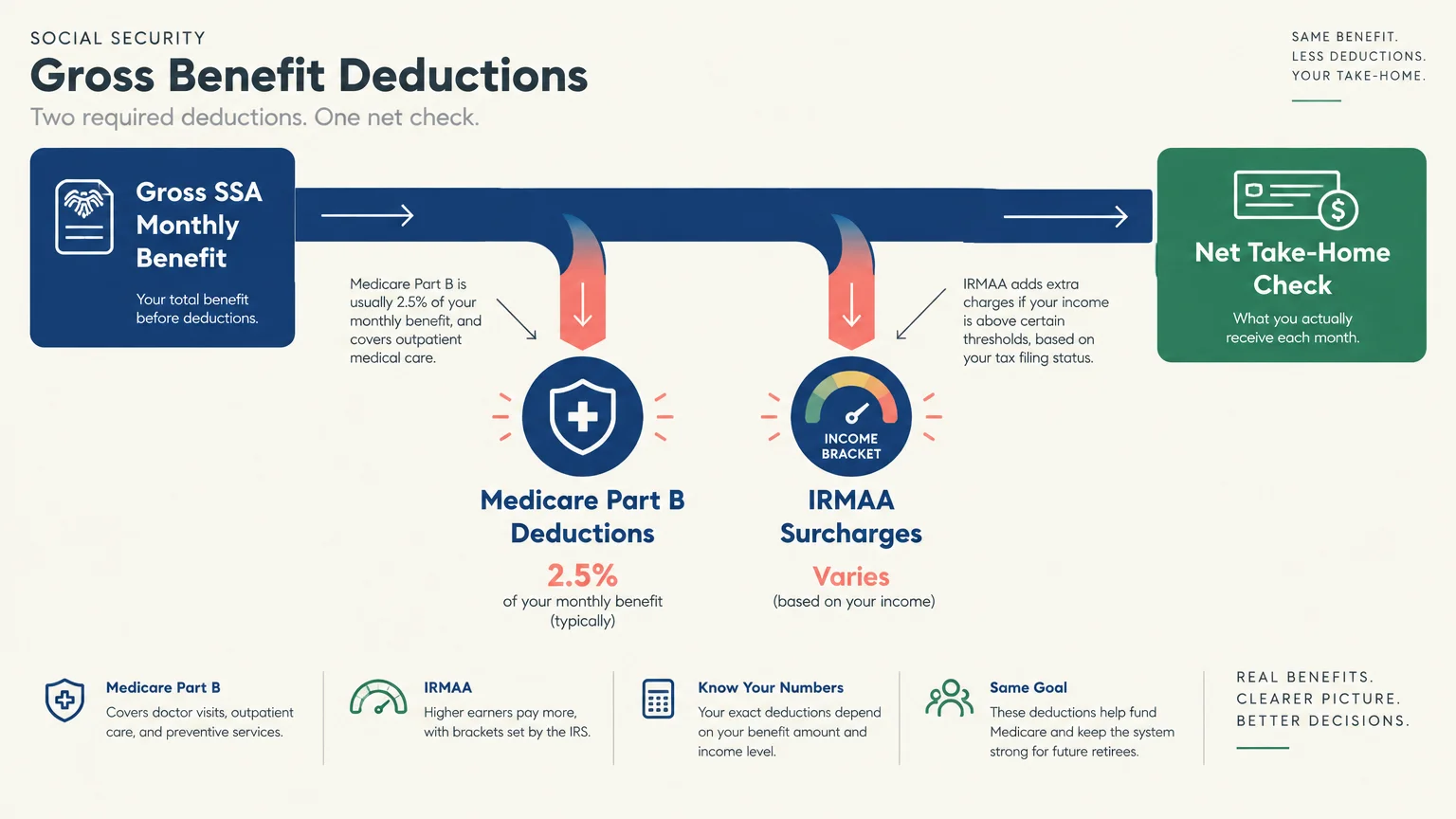
Your gross Social Security benefit is the number printed at the top of your award letter, but your net check is what actually pays for groceries and utilities. Healthcare costs—specifically Medicare premiums deducted directly from your payment—represent the single biggest deduction between those two numbers.
Managing your health and your Medicare enrollment proactively keeps rising medical deductions from swallowing your annual benefit increases. A few administrative checkups can preserve hundreds of dollars in net income each year.
Understanding the Medicare Part B Offset
For most retirees enrolled in both programs, Medicare Part B premiums are deducted automatically from monthly Social Security checks before the money ever reaches your bank. In 2026, the standard Medicare Part B premium is $202.90 per month.
Looking ahead, projections from the Centers for Medicare and Medicaid Services estimate the standard Part B premium will rise by roughly 5% to around $213.05 per month in 2027. That projected rise of roughly $10 per month will absorb a noticeable slice of the forecasted $70 to $72 monthly COLA bump for 2027.
Fortunately, federal law includes a crucial safeguard known as the Hold Harmless provision for most beneficiaries who have their Part B premiums deducted from Social Security. This rule states that an annual increase in the standard Medicare Part B premium cannot exceed the dollar amount of your annual COLA increase, preventing your net check from dropping year over year.
You can review your current premium tier and coverage deductibles using official Medicare cost resources during the fall open enrollment period. Comparing your options annually ensures you are not overpaying for supplemental or prescription drug coverage.
Appealing High-Income Medicare Surcharges After Retirement
While the Hold Harmless rule protects middle-income and low-income retirees, it does not apply if you pay an Income-Related Monthly Adjustment Amount, commonly called IRMAA. The Social Security Administration determines whether you owe this Medicare surcharge by looking at your tax return from two years prior.
If you retired recently, your tax return from two years ago likely reflects your peak full-time working salary—or a one-time spike from the retroactive lump-sum payouts triggered by the January 5, 2025 Social Security Fairness Act. As a result, the agency might slap a hefty monthly surcharge onto your Part B and Part D premiums, shrinking your net Social Security check by hundreds of dollars a month.
You do not have to accept that surcharge if your income has dropped due to a qualifying life-changing event, such as work stoppage, work reduction, divorce, or the death of a spouse. File Form SSA-44 with the agency to report your reduced current income and request an immediate recalculation of your Medicare premiums.
Once the agency approves your Form SSA-44 appeal, they remove or lower the surcharge and refund any excess premiums already withheld from your checks during the year. This single piece of paperwork often restores thousands of dollars in annual net retirement income for recent retirees.
Using Medicare Savings Programs for Fixed Budgets
What if your monthly benefit is well below the $2,064 to $2,087 national average, and the $202.90 monthly Part B premium in 2026 feels overwhelming? Millions of older adults qualify for state-administered Medicare Savings Programs but never apply because they assume they earn too much or own a home.
Your primary residence and one vehicle are generally excluded from the asset test for these assistance programs, and several states have eliminated asset limits altogether. If your income qualifies you for the Qualified Medicare Beneficiary program, the state pays your entire $202.90 monthly Part B premium—instantly boosting your net Social Security check by that full amount.
Getting an immediate raise of over $200 a month on a tight fixed income relieves enormous financial pressure. Contact your local State Health Insurance Assistance Program to run a free, confidential screening for these premium-relief programs.
Reducing the Physical Stress of Benefit Administration
Navigating rule updates, pension offsets, and tax forms can take a real toll on your physical and emotional well-being. Gerontology research consistently shows that financial uncertainty and bureaucratic friction elevate cortisol levels, disrupt sleep, and worsen hypertension in older adults.
Protect your health by breaking administrative tasks into manageable, low-stress steps rather than spending hours on hold with a call center. Schedule appointments in advance, keep a dedicated binder with copies of every form you submit, and ask a trusted family member or friend to join you on complex phone calls as a second set of ears.

Voices From the Field: What Financial Pros and Retirees Are Seeing Now
Seeing how these new SSA terms play out in real households brings the numbers to life. Financial planners, aging specialists, and retirees across the country are actively adjusting their strategies to capture these rule changes.
Their experiences highlight why proactive verification beats passive waiting every single time. From tax coordination to pension restorations, real-world preparation makes a measurable difference.
The Certified Financial Planner Perspective
Certified Financial Planner professionals emphasize that the window between 2025 and 2028 presents a unique tax-planning opportunity for pre-retirees and retirees over age 65. Because the new federal tax deduction provides up to $6,000 per person for seniors who turn 65 by December 31 of the tax year, planners are helping clients rethink how they bridge the gap to age 70.
By using the extra $6,000 deduction—or $12,000 for an eligible couple—to offset modest withdrawals from traditional IRAs or 401(k) plans, retirees can afford to delay claiming Social Security a year or two longer. Every year you delay past your Full Retirement Age adds an 8% permanent boost to your base benefit, which then compounds with every future COLA, including the projected 3.4% to 3.6% increase in 2027.
Planners also warn clients who received retroactive lump-sum payouts from the WEP and GPO repeal to check their tax withholding. Adding a temporary spike in Social Security income can inadvertently push more of your regular benefits into the taxable bracket if you do not plan ahead.
The Gerontologist View on Predictable Cash Flow
Gerontologists who study aging in place point out that predictable, inflation-adjusted monthly income is one of the strongest predictors of long-term independence. Unlike investment portfolios that fluctuate with stock market swings and require complex withdrawal decisions, a bigger Social Security check arrives automatically every month regardless of cognitive or physical decline.
When a retiree secures an extra $150 or $300 a month through a WEP repeal adjustment or a Medicare Savings Program enrollment, that reliable cash flow often pays for the exact support services that keep them out of institutional care. Hiring a home health aide for a few hours a week, using grocery delivery, or paying for accessible transportation becomes sustainable when funded by guaranteed monthly income.
A Retired Public Servant’s Real-World Boost
Consider the experience of a retired public school teacher in Ohio who spent decades paying into a state teacher retirement system after working ten years in private-sector retail jobs during her twenties and early thirties. For years, the Windfall Elimination Provision slashed her earned Social Security check by hundreds of dollars a month, while the Government Pension Offset prevented her from collecting any survivor benefit after her husband passed away.
After the Social Security Fairness Act became law on January 5, 2025, her own monthly retirement check jumped automatically, and she received a retroactive adjustment dating back to January 2024. Even more importantly, she scheduled an appointment to file a new survivor benefit claim on her late husband’s record—an application she had previously skipped because the old offset rule would have wiped out the payment.
Today, her monthly check matches her late husband’s full benefit amount, transforming her monthly budget and allowing her to afford needed home modifications without draining her emergency savings. Her story proves that reviewing old assumptions under new rules can unlock life-changing income.
Risks and Safeguards: Overpayment Clawbacks, Benefit Cliffs, and Scams
While new SSA terms create exciting paths to bigger checks, recent policy adjustments have also introduced serious administrative traps. Protecting the money you already receive is just as important as qualifying for an increase.
Being aware of the agency’s updated overpayment recovery policies, means-tested benefit cliffs, and emerging fraud schemes shields your household from sudden financial shocks. A few preventative habits can keep your monthly income safe.
The 50% Overpayment Withholding Rule
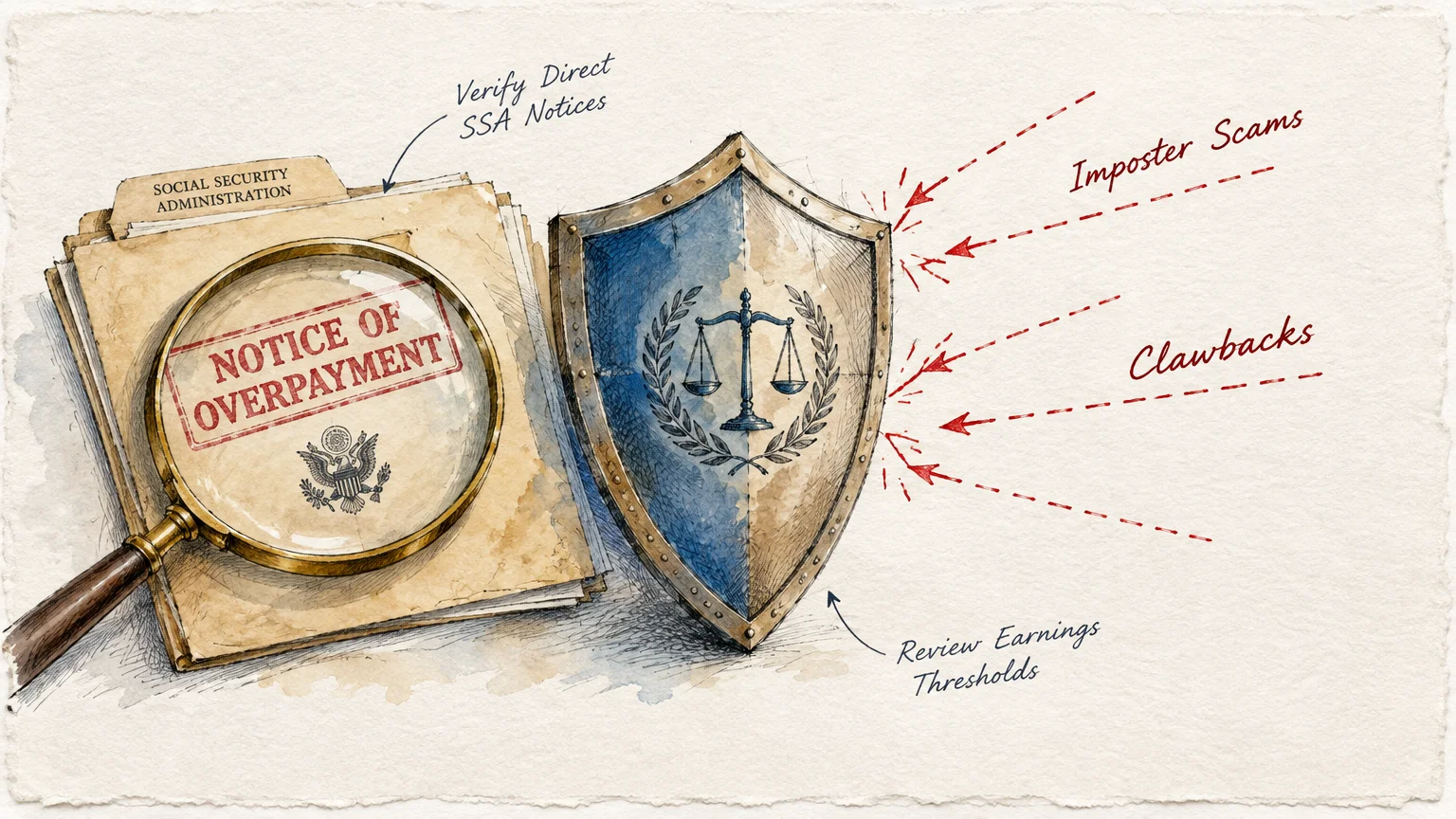
One of the sharpest administrative risks facing beneficiaries today involves how the Social Security Administration collects overpayments. An overpayment happens when the agency calculates that they paid you more than you were owed—often due to unreported work earnings, delayed processing of pension records, or internal agency calculation errors that occurred years earlier.
Overpayment recovery rules have gone through a roller coaster of changes recently. While the agency lowered the default overpayment clawback rate to a gentle 10% in March 2024, officials reversed course in early 2025, briefly reinstating a harsh 100% withholding rate in March 2025 before settling on a new standard.
For any new Title II overpayment notices—which cover retirement, survivor, and disability benefits—issued after April 25, 2025, the default withholding rate is now 50% of your monthly check. Losing half of an average $2,064 to $2,087 monthly check overnight can devastate a retiree living on a fixed budget.
Fortunately, you have clear legal protections if you receive an overpayment notice in the mail. Note that for Supplemental Security Income recipients, the overpayment cap remains at 10%, and across programs, repayment plans can now be stretched up to 60 months upon request.
If losing 50% of your check would prevent you from paying for ordinary living expenses like food, rent, utilities, or medical care, immediately contact the agency to request a lower monthly withholding rate stretched over up to 60 months. Furthermore, if the overpayment was not your fault and you cannot afford to pay it back, file Form SSA-632 to request a full waiver of the debt.
Avoiding Benefit Cliffs on Means-Tested Support
For low-income retirees, a bigger Social Security check can occasionally trigger an unintended consequence known as a benefit cliff. When your gross monthly income rises—whether from the 2.8% COLA in 2026, the projected 3.4% to 3.6% COLA in 2027, or a newly restored spousal payment—it might push you just a few dollars over the strict income eligibility cap for Medicaid, Supplemental Nutrition Assistance Program benefits, or low-income housing subsidies.
Losing thousands of dollars in annual Medicaid dental, vision, and long-term care coverage because your Social Security check went up by $60 a month is a painful financial trap. Before making an optional claiming change or picking up extra part-time work, verify the exact income thresholds for any state or federal assistance programs you rely on.
In many states, you can use legal tools such as a Qualified Income Trust or specific medical expense deductions to spend down excess income and preserve your Medicaid eligibility. Consulting a local Area Agency on Aging counselor helps you map out these exact thresholds before your income changes.
Spotting Scams Tied to the Fairness Act and COLA Increases
Whenever major Social Security changes hit the news, criminals immediately tailor their scripts to exploit confusion among older adults. Following the January 5, 2025 repeal of the Windfall Elimination Provision and Government Pension Offset, scammers began calling, texting, and emailing retirees with promises to “expedite” their retroactive payments or activate their upcoming 2027 COLA bump for a processing fee.
Remember this ironclad rule: the Social Security Administration will never charge you a fee to recalculate your benefit, process a WEP or GPO repeal increase, or apply an annual cost-of-living adjustment. Anyone demanding a fee, asking for payment via gift cards or wire transfers, or pressuring you to share your personal identification number over the phone is a criminal.
If you receive an unsolicited call claiming there is a problem with your Social Security number or promising a benefit boost if you verify your bank account immediately, hang up the phone. Always initiate contact yourself by calling the agency’s official toll-free number or logging directly into your verified online account.
Frequently Asked Questions About Getting a Bigger Social Security Check
Do I need to pay a third-party service to get my WEP or GPO increase under the Social Security Fairness Act?
No, you should never pay anyone to unlock your benefits under the Social Security Fairness Act signed on January 5, 2025. If you were already receiving a reduced Social Security check alongside your public pension, the agency processes the removal of the Windfall Elimination Provision and Government Pension Offset automatically, retroactive to January 2024.
However, if you never applied for spousal or survivor benefits in the past because the Government Pension Offset would have reduced your payment to zero, you must contact the agency directly to file a new application. Filing that application directly with the agency is completely free.
When will I know the exact dollar amount of my 2027 Social Security check?
The Social Security Administration will announce the official 2027 cost-of-living adjustment percentage on October 14, 2026, and independent forecasts currently project an increase between 3.4% and 3.6%. However, your exact net monthly check depends on your 2027 Medicare Part B premium deduction, which is projected to rise roughly 5% from $202.90 in 2026 to around $213.05 in 2027.
The agency mails personalized COLA notices throughout December, and you can view your exact 2027 gross and net monthly payment amount in your online account message center in late November or early December 2026. The bigger payment will arrive in your January 2027 check.
If I was born in 1960, how does reaching Full Retirement Age at 67 in 2027 affect my work earnings?
If you were born in 1960, your Full Retirement Age is exactly 67, which you will reach on your birthday month in 2027. While working throughout 2026, you are subject to the $24,480 annual earnings limit if you are collecting benefits early.
During the calendar year 2027, a much higher earnings limit applies to the months before you turn 67, and only $1 is withheld for every $3 you earn above that higher threshold. Beginning with the exact month you turn 67 in 2027, the earnings limit disappears forever, and the agency will also recalculate your check upward to credit you back for any benefits previously withheld due to work.
How does the new $6,000 senior tax deduction help me keep more of my Social Security check?
Effective for tax years 2025 through 2028, taxpayers who turn 65 by December 31 of the tax year qualify for a new federal tax deduction of up to $6,000 per person. While this deduction does not change the gross check sent by the Social Security Administration, it lowers your taxable income on your federal tax return.
By reducing your overall tax bill, you keep more of your retirement income in your bank account rather than sending it to the IRS in April. If you currently have voluntary federal taxes withheld from your monthly Social Security check using Form W-4V, lowering your tax liability may allow you to reduce your monthly tax withholding and immediately increase your net monthly deposit.
Your 48-Hour Action Plan to Capture Every Dollar You Deserve
Reading about new SSA terms won’t grow your retirement income unless you apply these rules to your own record. You do not need to overhaul your entire financial life at once; taking one focused step over the next 48 hours puts you firmly in control of your future cash flow.
Start today by logging into your personal online account to review your latest earnings record and benefit verification letter. Verify that every year of work is recorded accurately—especially if you worked part-time in 2025 or 2026—and check that your bank details and mailing address are up to date.
If you or your spouse ever worked in public service and earned a pension from a non-covered employer, make a phone call tomorrow morning to confirm whether you now qualify for a new spousal or survivor claim following the January 5, 2025 repeal of the WEP and GPO penalties. Finally, if you will be 65 or older by December 31, make a note in your tax folder to claim the up to $6,000 senior tax deduction on your return so you keep every hard-earned dollar right where it belongs.